Andy Galpin’s Hypertrophy Program: Maximize Muscle Growth Fast

0

Dr. Andy Galpin is a renowned expert in the field of strength training and muscle hypertrophy. As a Professor of Kinesiology at California State University, Fullerton, he has dedicated his career to researching and teaching the science behind building strength, muscle size, and endurance. Through his extensive work in the field, Dr. Galpin has developed a comprehensive hypertrophy program designed to guide both amateur and professional athletes in optimizing their training and performance.

The key principles of Dr. Galpin’s hypertrophy program focus on understanding the physiological processes that contribute to muscle growth, as well as the practical application of these principles through various training methods. This approach combines evidence-based science with real-world exercise techniques to help individuals effectively stimulate muscle growth and achieve their personal fitness goals. In addition to his hypertrophy program, Galpin has partnered with Momentous to release multiple supplement stacks such as his Jet Lag & Athletic Foundation stacks among others. By following Dr. Galpin’s program, athletes can ensure they are maximizing the effectiveness of their workouts while minimizing the risk of injury or overtraining.

Andy Galpin’s Hypertrophy Program Overview

Key Principles

Dr. Andy Galpin, a Professor of Kinesiology at California State University, Fullerton, has developed a hypertrophy program based on his extensive research and experience in the field of exercise science. The key principles of his program include:

  1. Individualization: Recognizing that each person has unique training needs and goals, the program emphasizes individualized approaches to exercise and nutrition.
  2. Evidence-based approach: Dr. Galpin’s program relies on the most up-to-date scientific research to inform its methods, ensuring that trainees receive safe and effective guidance.
  3. Balancing Intensity and Volume: Striking a balance between high-intensity workouts and sufficient volume to elicit muscle growth is a critical aspect of the program.
  4. Progressive Overload: This principle involves gradually increasing the training stimulus (weight, reps, sets, etc.) over time, which is essential for continued adaptation and growth.
  5. Variability: Introducing variety in exercises and training methods can help prevent plateaus and reduce the risk of overuse injuries.

RELATED READING: Dr. Andy Galpin’s Supplement List: The Complete Guide

Program Goals

The main goals of Andy Galpin’s hypertrophy program include:

  • Muscle growth: Through a combination of tailored training and nutrition strategies, the program aims to increase muscle size (hypertrophy) and strength.
  • Improved performance: The program is designed to enhance athletic performance in various sports and activities by focusing on developing strength, power, and endurance.
  • Injury prevention: By emphasizing proper exercise technique, recovery practices, and addressing muscle imbalances, the program seeks to minimize the risk of injury.
  • Longevity: The approach taken by Dr. Galpin is meant to promote lifelong fitness and wellness, ensuring that trainees can continue to enjoy the benefits of training well into their later years.

By adhering to these key principles and goals, Andy Galpin’s hypertrophy program offers a comprehensive approach to muscle growth and overall fitness, backed by extensive scientific research and practical experience.

RELATED READING: Dr. Andrew Huberman’s Fitness Protocol

Understanding Hypertrophy

Hypertrophy refers to the increase in the size of skeletal muscle through growth stimulation and training. It plays a significant role in building strength and enhancing one’s physical appearance. Dr. Andy Galpin, an expert in exercise physiology, has developed a hypertrophy program to help individuals seeking to gain muscle mass.

Mechanisms of Muscle Growth

There are two primary mechanisms contributing to muscle growth: mechanical tension and metabolic stress. Mechanical tension involves the force applied to a muscle during resistance training, while metabolic stress is the result of muscle fatigue and the accumulation of metabolic byproducts.

  1. Mechanical Tension: This results from the force generated by a muscle during contraction against an external load. When the load is greater than the muscle’s ability to generate force, it creates an overload, leading to muscle fiber damage and activation of repair mechanisms.
  2. Metabolic Stress: This occurs when a muscle undergoes repeated contractions, leading to the buildup of metabolites such as lactate, inorganic phosphate, and hydrogen ions. The accumulation of these molecules can lead to an increase in muscle fiber size.

Training Variables

When designing a hypertrophy program, several training variables need careful consideration. These variables include** frequency, intensity, volume, and exercise selection**.

  • Frequency: It refers to the number of training sessions per week dedicated to a specific muscle group. Dr. Galpin’s research suggests aiming for a minimum of 10 work sets per muscle per week, with 15-20 sets being better and up to 25 sets for well-trained individuals1.
  • Intensity: Intensity refers to the weight used during exercise, typically expressed as a percentage of an individual’s one-repetition maximum (1RM). Higher intensities are associated with greater mechanical tension, thus stimulating hypertrophy.
  • Volume: This accounts for the total amount of work performed in a training session, calculated by multiplying sets, reps, and load. Increasing volume can effectively increase metabolic stress, contributing to muscle growth.
  • Exercise Selection: This involves choosing specific exercises that target the desired muscle groups. Compound exercises that work multiple muscle groups may provide a higher degree of mechanical tension, while isolation exercises can focus on developing specific muscles.

Dr. Andy Galpin has designed a comprehensive hypertrophy program, keeping these training variables in mind to find the optimal balance for stimulating muscle growth.

RELATED READING: The Supplements Andrew Huberman Took To Raise His Testosterone

Program Structure and Guidelines

Training Phases

Dr. Andy Galpin suggests dividing hypertrophy training into different phases. Each phase focuses on specific training adaptations to ensure the athlete achieves their desired goals. Some primary training phases to consider are:

  • Strength phase
  • Power phase
  • Endurance phase

By periodizing the program, athletes can maximize muscle growth and optimize performance.

Exercise Selection

Choosing the right exercises is crucial in Dr. Andy Galpin’s Hypertrophy Program. Essential lifts for muscle hypertrophy include:

  1. Compound movements
    • Bench press
    • Squats
    • Deadlifts
    • Overhead press
  2. Isolation exercises
    • Biceps curls
    • Triceps extensions
    • Leg curls
    • Calf raises

Incorporate both compound and isolation movements to target all muscle groups and develop functional strength.

Sets and Repetitions

According to Dr. Galpin’s recommendations, aim for 10-20 sets per muscle group when training for hypertrophy. The rep range should be between 6-30, with athletes getting close to failure during each set. Vary the repetitions within this range to promote muscle growth and avoid plateaus.

Muscle GroupSetsRepetitions
Chest10-206-30
Back10-206-30
Legs10-206-30
Shoulders10-206-30

Rest Periods

The rest periods during hypertrophy training must allow for sufficient recovery between sets, ensuring optimal muscle stimulation. Dr. Galpin recommends shorter rest periods of around 30-90 seconds to increase the accumulated fatigue and promote muscle growth. As the focus shifts towards strength and power phases, increase rest periods to promote recovery and prime the body for high-intensity efforts.

Related Reading: Dr. David Sinclair’s Supplement List for Longevity

Nutrition and Recovery Strategies

According to Dr. Andy Galpin, nutrition plays a crucial role in muscle hypertrophy and recovery. In this section, we will discuss the dietary guidelines and the importance of sleep and stress management in achieving optimal results from his hypertrophy program.

Dietary Guidelines

Dr. Galpin emphasizes the importance of protein and carbohydrates in muscle development and recovery. It’s essential to ingest adequate amounts of protein and carbohydrates post-workout to facilitate muscle protein synthesis and recovery2. Some key guidelines for optimal nutrition include:

  • Consume a balanced diet with an adequate amount of protein, carbohydrates, and healthy fats.
  • Ensure proper intake of essential amino acids (EAA) and leucine to stimulate muscle protein synthesis3.
  • Stay hydrated to support optimal muscle function and recovery.
  • Fill nutritional gaps with supplementation. Galpin has partnered with Momentous Supplements, you can check out his supplement stacks on their website.

Sleep and Stress Management

Adequate sleep is a crucial component of recovery, as the body repairs and rebuilds tissue during rest. Dr. Galpin suggests that individuals should aim for at least 7-9 hours of sleep per night to ensure proper recovery and optimize training efforts4.

In addition to sleep, effective stress management is essential for overall health and muscle development. Prolonged stress can hinder recovery and negatively impact training performance. Implementing stress-reduction techniques such as meditation, deep breathing, and mindfulness practices can help manage stress levels and enhance recovery.

By following these guidelines, individuals can improve their nutrition and recovery, ultimately maximizing the results from Andy Galpin’s Hypertrophy Program.

RELATED READING: Dr. Andrew Huberman’s Diet: Foods, Time-Restricted Eating, & Dietary Guidelines

Results and Performance Tracking

Dr. Andy Galpin’s hypertrophy program emphasizes the importance of tracking results and adjusting the program based on individual performance. Continuously measuring progress and fine-tuning the training routine ensures that trainees can take full advantage of their time and effort in the gym.

Measuring Progress

Dr. Galpin suggests that trainees use a loose tracking system, such as a notebook or a digital app, to keep track of weights used, sets, and repetitions completed during each workout. By noting down these details, trainees can monitor their progress over time and identify areas where adjustments may be needed. Some indicators of progress include:

  • An increase in the weights lifted
  • A higher number of repetitions per set
  • An improvement in exercise technique

It is essential to maintain a balance between performance tracking and staying focused on the training itself. Over-emphasizing one aspect may lead to losing sight of the overall goal: muscle hypertrophy.

Adjusting the Program

Once progress has been identified and recorded in the tracking system, Dr. Andy Galpin recommends considering adjustments to the program based on the 10-Step Approach To Designing A Training Program. Some ways to adjust the program for optimal hypertrophy include:

  • Altering the exercise selection to include various compound or isolation movements
  • Increasing volume (sets and repetitions) based on the capacity of the trainee, with 15-20 sets per muscle group per week recommended for most individuals
  • Shifting the intensity by incorporating heavier or lighter loads, depending on individual recovery capacity

By staying open to making adjustments in the hypertrophy program, trainees can ensure that they consistently progress toward their muscle-building goals and optimize their time and efforts in the gym.

Footnotes

  1. Reddit Discussion on Dr. Andy Galpin’s Hypertrophy Recommendations
  2. Optimal Protocols to Build Strength & Grow Muscles | Dr. Andy Galpin
  3. 55 Minute Physiology — Andy Galpin, PhD
  4. Guest Series: Dr. Andy Galpin – Maximize Recovery To Achieve Fitness …

Andrew Huberman’s Vitamin D Protocol: Dosage & Brand

Professor and famous neuroscientist Andrew Huberman has made substantial advances to our understanding of the brain and perception. His podcast, “The Huberman Lab Podcast,” is very well-liked, and it has him talking about his research in the fields of neuroscience, psychology, and human performance.

Huberman delves into the intriguing world of the brain in his podcast, discussing cutting-edge research and breaking down otherwise inaccessible subjects for a wide audience. Neuroplasticity, sleep, stress management, vision, learning, and mental health are just some of the many topics he discusses.

Huberman equips his listeners with ideas and skills to increase their well-being, cognitive function, and performance thanks to his knowledge and straightforward delivery. He frequently conducts in-depth interviews with prominent figures in the field, resulting in stimulating discussions that shed light on the subject from a variety of angles.

This podcast is interesting to a wide range of people, from scientists to those just curious about how the brain works and how it affects our daily lives. Huberman’s podcast is helpful for anyone who wants to learn more about how the brain works and how to maximize one’s potential because of his ability to bridge the gap between cutting-edge research and practical application.

Many people listen to “The Huberman Lab Podcast” because of Huberman’s infectious enthusiasm for teaching and his knack for breaking down difficult subjects for a general audience. It’s a great resource for people who are curious about the brain, as it provides a balanced mix of scientific knowledge, helpful tips, and stimulating debates that get people thinking about the infinite potential of the human mind.

Momentous has partnered with Huberman Lab and is what Huberman currently takes for the majority of his supplements. Use code ‘brainflow’ for 15% off on the Momentous website

Andrew Huberman Vitamin D Dosage & Brand

Andrew Huberman supplements with 5,000 to 10,000 IUs of Momentous Vitamin D per day. As a neuroscientist and health and wellness advocate, Andrew Huberman may decide to take vitamin D for a number of reasons supported by research. Bone health, immune system function, and general well-being are just a few of the many areas where vitamin D is recognized to play an important role in the body.

Vitamin D is essential to human health and regulates the activity of over a thousand genes in the vast majority of our cells19. Andrew claims in an interview that his vitamin D levels are within the normal range because he takes between 5,000 and 10,000 IU of vitamin D every day. Since Huberman is partnered with Momentous Supplements, he takes their Vitamin D, which you can pick up on their website.

RELATED READING: Andrew Huberman Takes These Supplements Everyday

Benefits of Vitamin D Supplementation

Keeping blood levels of vitamin D at a healthy level is a common rationale for taking the supplement. Deficiency in vitamin D is a common health problem, especially in colder climates or during shorter winter days. Supplementation can assist assure appropriate levels, especially when natural sun exposure is limited because vitamin D is predominantly produced in the skin upon exposure to sunshine.

In addition to its role in bone health, vitamin D has been linked to other health advantages. Given its possible impacts on respiratory health, studies show that vitamin D may play a role in maintaining immune system function. Maintaining an adequate vitamin D level has been shown to enhance immune responses and minimize the incidence of respiratory infections in some research.

Vitamin D has also been connected to psychological health and modulation of mood. Depressive disorders like seasonal affective disorder (SAD) and low vitamin D levels have been linked in studies. Sufficient vitamin D levels have been linked to supporting positive mood and mental well-being.

Vitamin D needs might vary from person to person based on characteristics like age, sex, region, lifestyle, and general health. Supplement recommendations should be made after consulting with a healthcare provider or trained dietitian to determine individual requirements and goals. Check out the video below of Dr. Rhonda Patrick discussing the benefits associated with Vitamin D supplementation with Joe Rogan.

RELATED ARTICLES

Andrew Huberman’s Fitness Protocol: The Complete Guide

We’re all trying to improve our lifespan, but what about our healthspan? Why would you want to live 100+ years old if you spend 30 of them in a motor scooter? Our healthspan is our quality of life in those extra years.

As we age, our physical abilities start to decline gradually. This decline typically begins after age 25, as our heart’s maximum capacity, known as VO2 max, decreases by about 10 percent every decade. After the age of fifty, this decline can accelerate, with a potential drop of up to 15 percent according to this 2016 study. Therefore, while you may be able to hike five miles effortlessly now, by the time you reach 70 years old, you might need to take a break to climb a few flights of stairs.

Physical fitness is essential for overall mental health, physical health, and longevity. When you follow the Andrew Huberman fitness protocol, you can meet your individual needs while following what science has proven to be effective for overall short-term and long-term health. Continue reading to find out more about the Andrew Huberman fitness program.

2024 Update: Momentous has partnered with Huberman Lab and is what Huberman currently takes for the majority of his supplements. Use code ‘brainflow’ for 15% off on the Momentous website. 

What is the Andrew Huberman Foundational Fitness Protocol?

Andrew Huberman created his fitness protocol to address all significant fitness goals. In addition to his supplement routine, Huberman’s fitness protocol includes endurance, strength, hypertrophy, and cardiovascular training. He acknowledges that a range of practices can achieve maximum activity within his protocol.

All parts of the protocol, such as the schedule and exercises, can be modified to meet your exact needs. It’s intended that the protocol is flexible so you can work it into your everyday life.

Andrew Huberman’s workout keeps some principles in mind. The basic concepts around fitness are limited; however, many different methods exist.

There are nine main concepts of Andrew Huberman’s training: 

  • Skill
  • Speed
  • Power
    • This is a combination of speed and strength. 
  • Strength 
  • Hypertrophy
    • This is growing muscle mass. 
  • Muscular endurance
  • Anaerobic power
    • This is the ability to produce and sustain work in short bursts. 
  • VO2 max
    • This is your max heart rate. 
  • Long-endurance
    • This is 30 or more minutes with no break.

You must have progressive overload to see results and make the main concepts work. You can add reps, increase or add weight, change the frequency, or vary the complexity. Progressive overload occurs when you push yourself beyond your limits. This causes changes to the body because of stress placed upon it. You will undoubtedly hit a plateau if you do the same exercises repeatedly. This is why you need progressive overload.

RELATED READING: Andrew Huberman’s Daily Supplement Stack

Fitness Tips to Keep in Mind

There are two fundamental principles for resistance training to maximize your results with the foundational protocol. The first principle is to alternate your training schedules (A & B) to gain the most strength and muscle mass growth.

Each month you should switch between Schedule A and Schedule B.

Schedule A: ~4-8 repetitions (heavier weights) and 3-4 sets per exercise with 2-4 minutes rest between sets
Schedule B: ~8-15 repetitions (moderate-lighter weights) and 2-3 sets per exercise with ~90 seconds rest between

The second principle is to select two exercises per muscle group each day. The first exercise should focus on shortening or contracting the muscle at its end range. These include leg curls, leg extension, and seated calf raise. The second exercise should resist the muscle group while it’s lengthened. This includes deep squats, standing calf raises, or incline press.

Any workout with weight should be about 50 to 60 minutes of hard work, the ideal amount of time to be adequate and aid recovery. It would be best if you always warm up, and your workout time should be at most 75 minutes with a warmup. The 75 minutes does include rest time between sets.

Whatever exercise you choose, you must be able to perform it correctly. This means you must follow it through the full range of motion. In addition, you must use proper form. If you can’t perform the exercise correctly, it’s not the best exercise for you. Adjust the exercise according to your strengths and weaknesses.

The specific days you perform each workout are unimportant; however, spacing between them is critical because it helps with proper recovery. If you miss a day, you can double up on some other workouts later in the same week. You can also swap days if that fits better in your schedule. For example, some days, you won’t have time to do the longer cardio workout.

It’s important to note that if you switch your workout days, you should use cold submersion, such as an ice bath, when not doing resistance training. If you want an ice bath on a resistance training day, you should wait about 6 to 8 hours after training. Or you could have an ice bath before training.

Additional Tips

Breathing is an integral part of the Andrew Huberman workout program. You should spend 3 to 5 minutes after each training session doing yoga nidra, as it helps you to relax your mind and body while helping with muscle recovery.

You want to remain flexible. You should do 30 to 60-second static stretches three times a week. A good plan is to have three days of cardio, three days of weight training, and one day of hot/cold recovery. It would help if you considered stretching before you go to bed and after you wake up in the morning.

To get the most effectiveness out of your cardio, you should vary it. One day your cardio should be long-endurance, one day should be high-intensity sprints, and one day of moderate cardio. Consider neck exercises to help correct posture and reduce the risk of injury. A great way to pump out toxins is to have 20 minutes in the sauna and five minutes in an ice bath or cold shower.

Andrew Huberman Fitness Protocol

Listed below is a breakdown of the Andrew Huberman Fitness Protocol.

Day 1 (Sunday): Long Endurance Workout

  • >30 minutes Zone 2 cardio, ideally 60-75 minutes (work up to it)
    • Zone 2 cardio: breathing faster than normal, but just able to maintain a conversation
    • Aim for 180-200 minutes of Zone 2 cardio per week

The focus for day one is long endurance. Ideally, Sunday is day 1. This day should include more than 30 minutes of Zone 2 cardio. Zone 2 cardio means you are breathing faster than average. You should be able to hold a conversation, but barely. You want about 180 to 200 minutes of Zone 2 cardio each week.

This workout session should be 60 to 75 minutes long. You may have to work up to that amount of time. Examples of cardio exercises are rowing, jogging, swimming, or hiking. You can use a weight vest if you want to increase the difficulty. Focus on nasal breathing.

Deliberate breathing helps to bring down the nervous system while relaxing the body and mind. It also helps with muscle recovery. After each training session, you should work on your slow and deliberate breathing for three to five minutes.

RELATED READING: Dr. Andrew Huberman’s Sleep Cocktail

Day 2 (Monday): Legs Resistance Training

  • 10-minute warmup + 50-60 minutes of training
  • Alternate Schedule A & B monthly

Day 2 is leg day baby! A recent meta-analysis done by the British Journal of Sports Medicine suggests that strength training was associated with almost a 20 percent lower risk of cancer, diabetes, lung cancer, cardiovascular disease, and all-cause mortality. Again, you should alternate between Schedule A and Schedule B (see above). You want a 10-minute warm-up and about 50 to 60 minutes of training.

This workout includes exercising the quadriceps, hamstrings, and calves. Huberman advises doing one exercise for each group in the lengthened position and one in the shortened position.

To work the quadriceps, Huberman recommends leg extensions and hack squats. Leg extensions have the muscle in the lengthened position, and hack squats have it shortened. To work your calves, you should do standing raises and seated raises. For the hamstrings, you would do leg curls and glute ham raises.

You want to lower your heart rate between sets when doing resistance training. You can do this with physiological sighs. A physiological sigh is when you take two full inhalations through the nose and one complete exhalation through the mouth. You want to try to release all the air in your lungs during the exhale.

RELATED READING: How Tim Ferriss Naturally Tripled His Testosterone

Day 3 (Tuesday): Heat & Cold Exposure/Recovery

  • Sauna (20 minutes) + Ice Bath/Cold Shower (5 minutes) repeat 3-5x
    • Start slowly when using deliberate heat & cold exposure

The focus of day three should be recovery from exposure to heat and cold. This should happen on Tuesday. 

This day should include 20 minutes in the sauna followed by 5 minutes in an ice bath or cold shower. You should repeat this three to five times. You should start slowly and build up to the time amounts and reps. You want to be deliberate in your usage of heat and cold exposure.

RELATED READING: David Sinclair’s Anti-Aging Supplement Stack

Day 4 (Wednesday): Torso & Neck Resistance Training

  • 10-minute warmup +50-60 minutes training
  • Push/Pull Training
  • Alternate Schedule A & B monthly
  • Commonly overlooked; however, specifically training the neck will reduce the risk of injury and correct posture

The daily focus of day four is torso and neck resistance training. This workout session also indirectly trains your arms. 

You should have a 10-minute warm-up and about 50 to 60 minutes of training for this session. This is also considered push and pull training. The neck is commonly overlooked but should be trained to help reduce injury. It can also help you gain correct posture. You should also alternate Schedule A and Schedule B each month for this session.

Examples of these types of exercises are incline press and cable crossover for the chest. The first exercise is in the lengthened position, and the second is in the shortened position. For the back, you should perform a chin-up and a pull-up. You could also choose a seated row and a dumbbell row. For shoulders, you should do shoulder presses and lateral raises. Watch the video below for Huberman’s neck exercises.

RELATED READING: Joe Rogan’s Legendary Supplement Stack

Day 5 (Thursday): Cardiovascular Training

  • 35 minutes of moderate-intensity cardio
    • 75-80% of maximum effort

The daily focus on day five is cardiovascular training. It is 35 minutes of moderate-intensity cardio. Moderate intensity means using about 75 to 80% of your maximum effort.

Examples of these exercises include running, rowing, cycling, and jumping jacks. You can also stair-climb. Another great exercise is jumping rope, but preferably ideally done outside.

RELATED READING: Does Andrew Huberman Take NMN?

Day 6 (Friday): High-Intensity Interval Training (HIIT)

  • 20-60 seconds all-out sprint + 10 seconds rest x 8-12 rounds
  • Sprint: try to get to maximum heart
  • rate
  • Max. Heart Rate = 220 minus your age

The daily focus on day six is High-Intensity Interval Training (HIIT). Falling on Friday, this workout indirectly trains your legs. According to AARP, studies have shown that on a cellular level, HIIT workouts can slow down the aging process.

This session should include 20 to 60 seconds at an all-out sprint followed by 10 seconds of rest. You should do this 8 to 12 times. During the sprint, you want your heart rate up to its maximum. To determine that, you take 220 and subtract your age.

Examples of these exercises include assault bikes, sprint/jog intervals, rowing, and ski machine. You should perform this exercise with perfect form to prevent injury.

RELATED READING: Andrew Huberman’s Optimal Morning Routine

Day 7 (Saturday): Arms, Neck & Calves Training

  • 10-minute warmup + 50-60 minutes of training
  • Alternate Schedule A & B
  • Indirectly trains torso (especially if you include dips)

The daily focus of day seven is arms, neck, and calves. Again, this should be done on Saturday. We once again train the neck as Huberman is a big believer in training the neck, which he considers a highly avoided and underlooked but vital aspect of total body stability, strength, and safety.

This session includes a 10-minute warm-up and 50 to 60 minutes of training. You should alternate Schedule A & Schedule B. This can indirectly train your torso.

Examples of these exercises include incline curls and dumbbell curls for the biceps—overhead extensions and tricep dips or regular dips for the triceps. Standing calf raises and seated calf raises for calves. For neck exercises, watch the same video for day four.

FAQs

What are Andrew Huberman’s best protocols?

Huberman has a multitude of beneficial protocols such as his sleep protocol, supplement protocol, as well as his fitness protocol described above.

What exercises does Andrew Huberman do?

Andrew Huberman incorporates many strength training exercises into his fitness routine such as leg extensions, hack squats, calf raises, leg curls, incline presses, cable crossovers, pull-ups, rows, dumbbell curls, tricep dips, and many others.

Should I Train While Fasting or After Eating?

This is mainly based on personal preference. If you train fasted, you should train before noon, as long as you don’t feel sluggish. If you have limited time, it’s always better to train than not to train. If training keeps you awake, you may not want to train at night. 

Should I Train if I Feel Sick?

If you have mild cold symptoms, short, lighter training may help you feel better. Lighter training means you decrease the duration and/or intensity by 50% or more. If you are severely sick, skipping training and giving yourself time to recover is better. After you recover, slowly go back to your regular training program over three to seven days. According to Huberman, “Consider skipping your workout if you are under chronic stress…Focus on getting a good night’s sleep or relaxing, and double up on workouts later in the week.

Joe Rogan’s CBD Product List – Brands & Dosages

0
If you have ever listened to the Joe Rogan Experience, then you know that Joe is an avid fan of CBD. CBD – also known as cannabidiol – is the second most active ingredient in cannabis and is derived from the hemp plant. CBD does not cause a “high” if taken by itself, unlike THC. According to the World Health Organization, CBD “does not appear to have abuse potential or cause harm.” CBD has several benefits such as relieving chronic pain, relieving anxiety and depression, having neuroprotective properties, and promoting overall relaxation and better sleep.

Joe Rogan CBD Products

CBDMD Gummies

Joe is a huge fan of CBDMD, and they even sponsor his podcast. In my opinion, CBDMD has the best CBD products on the market. Rogan claimed their CBD Gummies helped heal arthritis in his toes during a podcast with long-distance runner and professional bowhunter Cameron Hanes. CBDMD sports an endless number of products including CBD gummies, oils, capsules, topical creams, drinks, and even CBD products for your pet. CBDMD has the strongest CBD at the best price point and even has its products tested by a third-party lab, so you know exactly what you are getting. CBDMD also lets you try their products for 60 days risk-free. In addition, CBDMD has a subscribe and save model where you can get 25% off your first order, free shipping, and your 4th order is free. Be sure to visit their website to check out their arsenal of products. RELATED READING: Joe Rogan’s Legendary Supplement Stack

Joe Rogan’s CBDMD Code

Since CBDMD partners with the Joe Rogan Experience, listeners can get 25% off their order of CBDMD products if you use the code ‘ROGAN’ at checkout on their website.

Kill Cliff CBD Drink

Rogan has recently partnered with Kill Cliff when they launched their CBD drink with a flavor called Flaming Joe. The Kill Cliff website describes the flavor as: “STRAIGHT OUTTA THE MIND OF JOE ROGAN AND RIGHT INTO YOUR DRINKHOLE. EXPERIENCE THIS ONE OF A KIND SPICY PINEAPPLE FROM OUT OF THIS WORLD. IT’S PRETTY MUCH LIKE HAVING A LUAU IN YOUR MOUTH AND ALL YOUR TASTE BUDDIES ARE INVITED.” Kill Cliff CBD Flaming Joe contains 25mg of CBD, electrolytes, B-vitamins, and is only 20 calories per can. You can only get Kill Cliff CBD Flaming Joe on their website. They also offer a variety pack with additional flavors. RELATED READING: Dr. Andrew Huberman’s Supplement List

 
View this post on Instagram
 

A post shared by Joe Rogan (@joerogan)


Tony Robbins’ Intense Morning Routine

0
“There is a powerful driving force inside every human being that, once unleashed, can make any vision, dream, or desire a reality.” – Tony Robbins
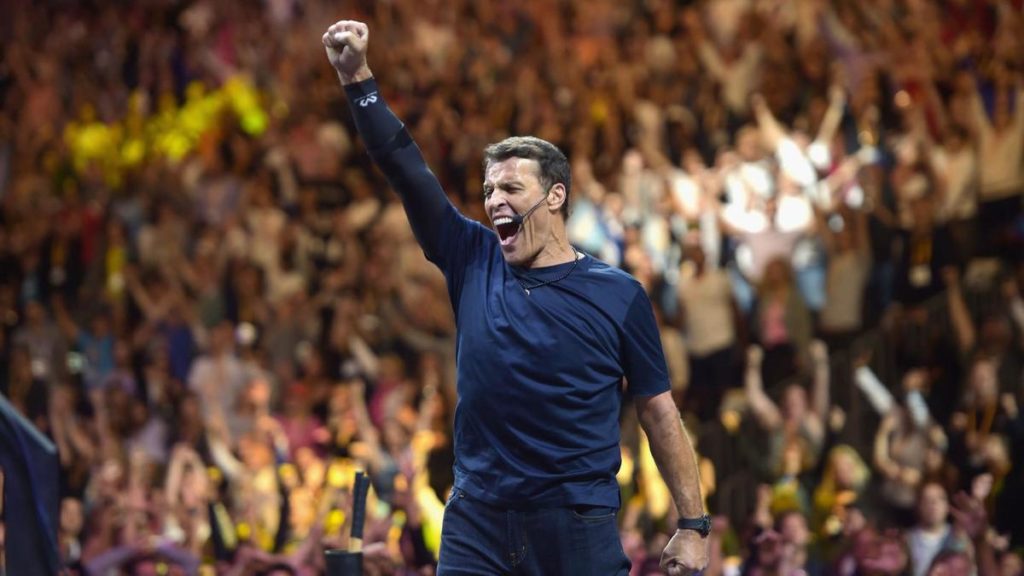
Over the last 30 years, Tony Robbins has established himself as the number one motivational coach in the world. His work, such as New York Times best-seller Awaken The Giant Within, has inspired hundreds of thousands of people. Tony has been known to work grueling 18-hour days, while usually only catching around four hours of sleep. Robbins, at age 57, is a fully charged machine capable of withstanding jumping on his feet all day, motivating and shouting at enormous crowds, and being at peak performance during his most intense seminars. He seems to have a never-ending flow of energy, which he credits in part due to his intense and highly unusual morning routine. This morning routine has been heavily researched, and works extremely well. Tony starts off everyday with the same routine that he calls “priming”. He does this routine every single day no matter where he is in the world. This routine can be done in under 10 minutes and works wonders for improving your focus and energy for the rest of the day. RELATED: Tom Brady’s TB12 Supplement Stack

Tony Robbins Morning Routine

Tony’s morning routine has three main steps:

  • Cold Exposure – typically an ice bath
  • Priming Exercise
  • Fueling up with a nutritious breakfast

Wake up and do a cold plunge

Robbins has both a sauna and cold plunge pool in each of his seven homes. You don’t need a cold plunge pool to do this, a simple cold shower will work. The benefits of taking a cold shower in the morning are endless. The purpose of exposing yourself to the cold is a neurology state change. The cold water will snap you out of your usual morning grogginess better than a double shot of espresso. By taking a cold shower, your body actually increases its production of endorphins. In fact, taking a 5 minute cold shower 2-3 times per week was shown to relieve symptoms of depression in a clinical trial. Cold showers work as a sort of electroshock therapy, with the cold water sending electrical impulses to your brain that shock your system into increasing your energy, alertness, focus, and clarity. A simple cold shower in the morning can increase your feelings of well-being and put you in a positive state of mind. You’d be surprised how much better you feel in the morning by taking a cold shower. It is important to start slowly by ending your normal shower with 30 seconds of cold water, and then begin working your way up to colder, longer showers. RELATED: Tim Ferriss’ Morning Routine

Prime for the day

After the cold plunge, the energetic entrepreneur will engage in a series of mindfulness and breathing exercises that “prime” him to be more grateful throughout the day. By “priming” yourself and your emotions each morning, you will ensure the tone of your day is not set by stress, anger, or fear – but instead, by  gratitude and optimism. Below is a 15 minute video of Tony’s priming routine for the morning.
Here are the steps of Tony Robbins’ Priming Exercise:

1. “Breath walking”

After the cold plunge, Robbins does a series of breathing exercises to change the way he feels and get in the right “state”. The science behind these exercises is called “breath walking.” You’ll use this technique to stimulate your lymph nodes, while simultaneously energizing your body. You’ll start by inhaling four times through your nose, and then exhale haling four times through your mouth. The breaths are to be purposeful, short breaths, one after the other. Four quick breaths in through the nose, followed by short quick breaths exhaled out of the mouth.
  1. Inhale four breaths in a row, in a fairly quick fashion, through your nose.
  2. Immediately exhale four breaths in a row, in the same tempo, through your mouth.
  3. Repeat the inhaling and exhaling 30 times without interruption and then breath normally for a little while.
  4. Repeat step 1-3 above three times. Ie. the whole exercise is 30 x 3 complete breaths.
RELATED: Dr. Rhonda Patrick’s Morning Smoothie Recipe

2. Create an emotional state of enormous gratitude

In this step, you create an enormous state of gratitude. You do so by acknowledging and appreciating both people and situations that you are grateful for. Tony uses the first few minutes to focus on something that makes him feel grateful. Think of someone or something in you life that you feel grateful for and feel the gratitude fill up your body. Think of how lucky you are to have whatever it is you are focusing on. Be sure to do this for at least three minutes, and even more if you have the time.

3. Visualize yourself thriving in the future

For the last few minutes, visualize what you want to create in your life. Focus on the future, and envision everything you will be grateful for, but be sure to picture it as if it already exists. By doing this daily, your mind will begin to build certainty around this future you have envisioned for yourself, and help you achieve it in resourceful ways. Affirm this vision. Tell yourself it will be accomplished. Your mind and body will follow. Everything we create in our life is first created in our mind as thoughts, feelings, or desires. RELATED: Joe Rogan’s Diet and Workout Routine

Finally, fuel up.

Once Robbins finishes the visualization techniques, he will then eat a nutritious breakfast. Tony firmly believes that breakfast is the most important meal of the day. Tony starts every day by going green. Tony will typically eat a salad topped with other nutritious veggies, finishing it off with a piece of grilled fish. On Tony’s website, he talks about the various breakfasts he will have. The important thing to is to start your day off with something healthy that will fuel your body with nutrients and vitamins. The typical American breakfast of eggs and bacon is not the way to go if you want to start the day off like Tony. It is important to note that Tony follows the diet of Dr. Gundry, the author of The Plant Paradox. After completing this morning routine, Robbins is ready to take on the day with energy, optimism, and a positive outlook. Check out the video below of Tony’s Robbins morning routine.