
A friend swears BPC-157 fixed the knee two surgeons had given up on. Some podcast host keeps calling TB-500 “the Wolverine drug.” And your feed, somehow, is full of skin before-and-afters tagged GHK-Cu.
So you go looking for a straight answer, and instead you fall into a swamp. Dense abstracts nobody translates. Acronyms tossed around like everyone already knows them. A Reddit thread where four people are arguing about reconstitution math and somehow none of them agree.
This guide is the shortcut around all of that. What these compounds are, which three are worth a beginner’s attention, what the evidence really supports, and how to choose your first one without burning three hundred dollars finding out the hard way.
- BPC-157 for a specific injury, gut trouble, or slow recovery
- TB-500 for whole-body wear and tear rather than one bad spot
- GHK-Cu for skin, collagen, and visible aging
One thing before anything else, because it decides whether the rest of this works. These are sold as research compounds in an unregulated market, and vendor quality is the single biggest variable in your result. We buy from Amino Club, which tests every batch seven times and publishes the certificate of analysis. Code BRAINFLOW takes 20% off.
BEGINNER STARTING POINT
Amino Club: all three healing peptides
BPC-157, TB-500, and GHK-Cu, tested 7x with batch-specific COAs you can read before you order. Blends available if you would rather reconstitute one vial than three.
Shop Amino Club → Save 20%Use code BRAINFLOW for 20% off. Sold for research use only.
Nearly half off everything at Everest Peptides
Everest Peptides' card processor is offline right now, so instead of waiting it out they're running a bank payment sale. Every peptide is 40% off, and code BRAINFLOW stacks another 15% at checkout. Pay with Zelle or Pay by Bank, same day shipping before 3pm ET, every batch third-party tested with the COA on the product page. Rated 4.9 on Trustpilot.
Shop the 40% off sale Code BRAINFLOW at checkout. Zelle and Pay by Bank only during the sale.What a Peptide Is, Without the Textbook
Think of amino acids as letters. String a handful together and you get a word. Keep going past fifty and you’ve basically written a paragraph, which is roughly what a protein is. Peptides sit in between: short enough to be specific, long enough to say something.
Your body writes thousands of these little messages every day, and they work like instructions sent to your cells. Cut your finger and a wave of peptides shows up almost immediately, carrying some version of stop the bleeding, close the gap, start rebuilding.
Therapeutic peptides are just synthetic copies of messages your body already knows how to send. You’re not introducing something foreign. You’re turning the volume back up on a signal that’s gotten quieter than it used to be, and aiming it at whatever needs the help.
Every Word You Are About to Hit, Translated
Most of what makes this topic feel impenetrable comes down to six or seven words nobody bothers to explain. Learn them once and the rest of the internet suddenly makes sense.
- Lyophilized. Freeze-dried. The white dust at the bottom of the vial that looks like nothing and is easy to mistake for an empty container.
- Reconstitution. Adding liquid to that powder to make it usable. Instant coffee, essentially.
- Bacteriostatic water. Sterile water with a preservative that keeps bacteria from multiplying, which is why a mixed vial lasts weeks instead of hours.
- Subcutaneous. Just under the skin, into the fat layer. Shallow, short needle, not into muscle or vein.
- Angiogenesis. Growing new blood vessels. More plumbing to an injured area means more oxygen and materials arriving.
- Systemic vs local. Whole-body versus one spot. This distinction is the entire difference between TB-500 and BPC-157.
- mcg and mg. A microgram is one thousandth of a milligram. A 5 mg vial holds 5,000 mcg. Getting these two confused is the most expensive mistake in the hobby.
That last one is worth reading twice. Peptide doses are small enough that mixing up mcg and mg isn’t a rounding error, it’s an accidental thousand-fold overdose. Read every label twice before you draw anything into a syringe.
Why Everybody Is Suddenly Talking About Them
Part of it is results. People are getting relief from tendon problems that months of physical therapy never touched, and gut issues that probiotics barely made a dent in. And part of it is momentum, because this year the medical establishment finally started paying attention too.
A January 2026 review in JAAOS Global Research and Reviews mapped BPC-157, TB-500, and GHK-Cu across pathways like PI3K/Akt, mTOR, TGF-beta, and AMPK. That’s medical-journal language for “we’re taking this seriously,” and it’s a real shift from the gym-bro folklore label these compounds used to carry.
Then the regulatory ground moved too. In April 2026, the FDA pulled BPC-157, TB-500, and injectable GHK-Cu off the 503A Category 2 list. And on July 23 and 24 of that year, the FDA’s Pharmacy Compounding Advisory Committee voted to add BPC-157 and TB-500 to the 503A bulks list, 8 to 6 with one abstention on each vote.
Read that last part carefully, because a lot of people online are getting it wrong.
- The vote is advisory. FDA does not have to follow it, and the agency’s own scientific reviewers had recommended against all seven peptides on the docket.
- Nothing became legal to compound that week. Rulemaking takes six to twelve months at minimum.
- None of these are FDA-approved drugs, and this process would not make them so.
- What it does signal is direction. These compounds are inching from gray market toward regulated access.
BPC-157 Is Where Most People Start
Body Protection Compound-157 is a chain of 15 amino acids, built around a sequence first found in human gastric juice. That origin isn’t just a fun fact for trivia night. It’s the reason BPC-157 survives stomach acid better than almost any other peptide, and it’s exactly why an oral version can exist at all.
Picture a construction site where the access road is too narrow, the crew is short-handed, and nobody’s told anyone the job is urgent. BPC-157 widens the road, calls in extra hands, and flags the whole thing as a priority. In plain terms that’s angiogenesis, collagen production, and growth factor signaling, and it seems to happen all at once rather than one step at a time. The 2021 Frontiers in Pharmacology review rounds up the wound healing side of things, from skin incisions to burns to fistulas.
One study worth remembering by name: Cerovecki and colleagues, in the Journal of Orthopaedic Research, found it improved ligament healing in rats through several different routes, including oral.
This is usually who reaches for it first.
- A nagging joint or tendon problem that has outlasted rest and rehab
- Gut trouble, since the peptide came from gastric tissue and shows a real affinity for it
- Recovery that has gotten slower with age or training volume
- No needles required, which removes the biggest barrier for most first-timers
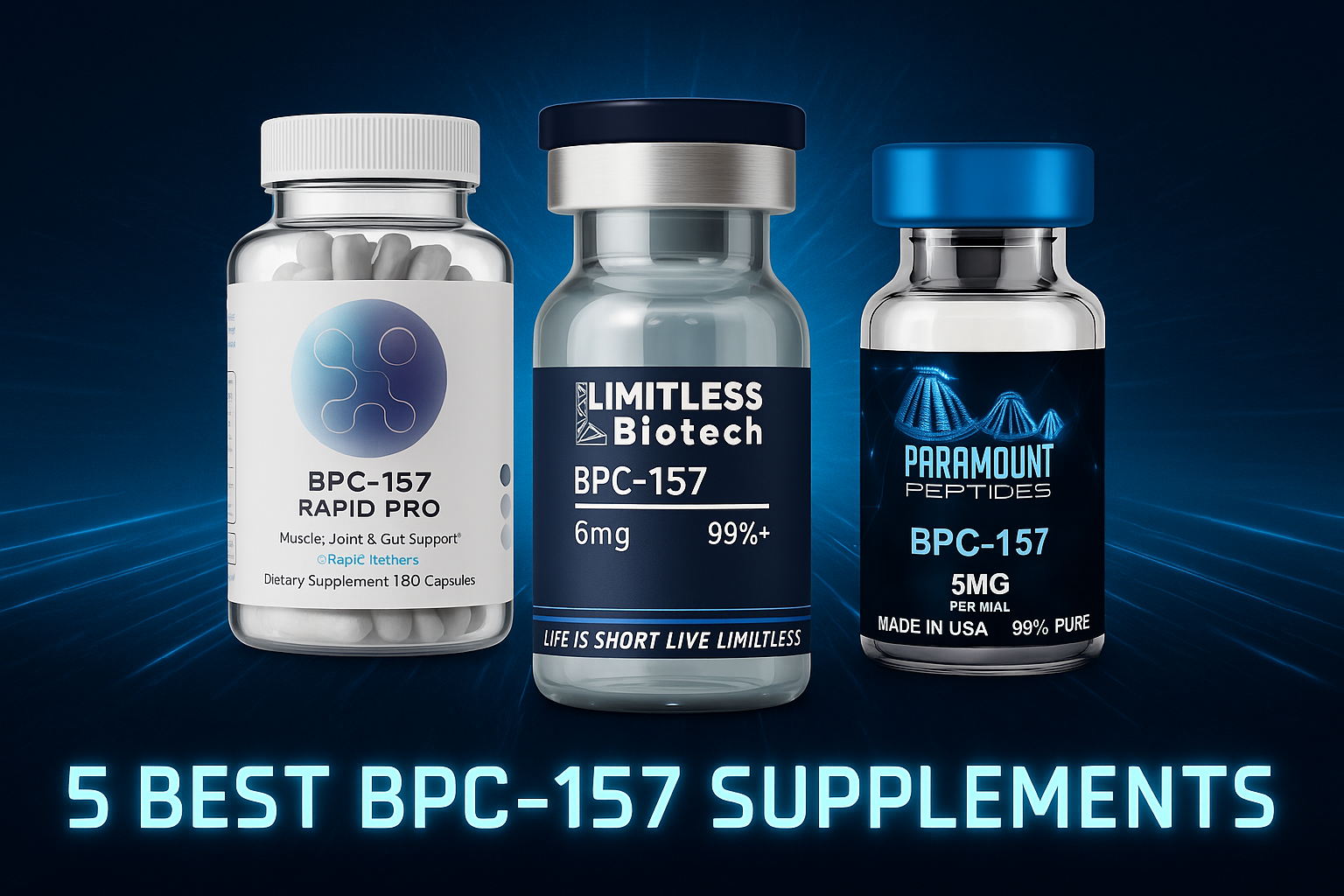
For research-grade injectable BPC-157, Amino Club carries it with published COAs, and code BRAINFLOW takes 20% off. If needles are a hard no, Infiniwell’s BPC-157 Rapid Pro is built around an oral absorption enhancer designed to get the peptide past stomach acid intact, and code WELCOME15 saves 15% on a first order.
EASIEST WAY TO START
Infiniwell BPC-157 Rapid Pro
The best oral BPC-157 we have used. No syringes, no bacteriostatic water, no reconstitution math. For a beginner still deciding whether this whole thing is for them, it removes every barrier at once.
Shop Infiniwell → Save 15%Use code WELCOME15 for 15% off your first order.
TB-500 Works Everywhere at Once
Thymosin beta-4 lives in nearly every cell you have, concentrated in platelets, white blood cells, and wound fluid. Damage tissue anywhere in your body and it floods the area within minutes. TB-500 is a synthetic 7 amino acid fragment of that protein, built around the part that handles cell migration.
The practical difference from BPC-157 comes down to reach. BPC-157 tends to do its best work near the exact spot you’re treating. TB-500 spreads out through your whole system after a dose, which makes it a better fit when the problem isn’t one bad joint but five years of accumulated mileage everywhere.
Its main trick is transport, not construction. Cells move around by building and dismantling an internal scaffold made of actin, and TB-500 binds the raw actin units that scaffold is made from. The practical upshot is repair cells that can physically travel toward damage instead of sitting nearby doing nothing useful. It also drives new blood vessel growth and seems to leave behind less scar tissue in the process.
That transport piece matters more than it sounds like it should. A cell cannot repair tissue it never reaches, and slow-healing structures like tendons and ligaments stay slow precisely because so little blood supply reaches them in the first place.
The number everyone repeats is 61% faster re-epithelialization by day seven in a rat wound model. What most articles leave out is that it came from research on full-length thymosin beta-4, all 43 amino acids of it, not the 7 amino acid fragment sold as TB-500. The fragment keeps the migration and blood vessel activity, but it isn’t the identical molecule that produced that headline number, and skipping that detail is exactly the kind of thing that makes this space hard to trust.
TB-500 is also almost never a beginner’s first purchase on its own. It makes the most sense stacked with BPC-157, a combination people have nicknamed the Wolverine Stack. Amino Club stocks research-grade TB-500 with full lab testing, 20% off with code BRAINFLOW.
GHK-Cu Is the One With Actual Human Data
GHK-Cu is a copper-binding tripeptide your body makes on its own, and then quietly stops making as much of. Plasma levels sit around 200 ng/mL at age 20 and drop to roughly 80 ng/mL by 60, and that decline tracks visible aging and slower healing closely enough to be a little unsettling.
It behaves less like a single ingredient and more like a supervisor walking the job site. Collagen types I and III, elastin, glycosaminoglycans, new blood vessel growth, and even control over the enzymes that break down your skin’s structure over time. A 2015 review in BioMed Research International covers those skin regeneration pathways in detail, and a 2018 follow-up from Pickart and Margolina used Broad Institute Connectivity Map data to track expression shifts across roughly 4,000 human genes.
The number people love repeating, a 28% average rise in collagen density with top responders clearing 50%, comes from an ultrasound study of just 21 subjects using topical gel daily for three months. Small, and a bit industry-adjacent for comfort. Still the closest thing to real human proof that any peptide on this page can claim.
One thing worth knowing if you’re new to this: GHK-Cu is the only one of the three with a decades-long history as an actual cosmetic ingredient, which means the topical route is well worn and about as low-commitment as this stuff gets.
We buy Amino Club’s GHK-Cu, which ships with published lab results on the batch. Code BRAINFLOW saves 20%.
The Three Compared
The Evidence Check Nobody Gives Beginners
Every vendor page and half the podcasts out there will tell you the research is impressive. It is. What they won’t tell you is what kind of research it is.
A 2025 systematic review in the Orthopaedic Journal of Sports Medicine, led by Vasireddi and colleagues, screened 544 articles on BPC-157 spanning 30 years. Only 36 met their inclusion criteria. Of those 36, thirty-five were animal studies. One was in humans.
That’s not a reason to walk away from any of this. No adverse effects turned up across any of those studies, and the mechanism holds up consistently across totally different tissue types. It is a good reason to keep your expectations calibrated, though, and to be a little suspicious of anyone selling you certainty they don’t have.
Picking Your First One
Match the peptide to whichever problem is loudest in your life right now. Not to whichever one has the best marketing.
- One specific injury. Bad shoulder, tennis elbow, Achilles, knee. BPC-157, and the oral route is a perfectly reasonable place to begin.
- Gut problems. Bloating, IBS-type symptoms, general digestive misery. Oral BPC-157, which has the most direct tissue affinity of anything here.
- Everything hurts a little. Years of training, multiple old injuries, general stiffness. TB-500 makes more sense than injecting five separate spots.
- Skin and visible aging. GHK-Cu, topically. Lowest barrier to entry of the three and the best human evidence.
Run it for four to six weeks before you add anything. Two peptides started in the same week teach you nothing about either.
Effort is a real variable here, and most beginners underrate it badly. Topical GHK-Cu asks almost nothing of you beyond remembering to put it on. Oral BPC-157 asks you to swallow something daily. Injectable anything asks you to reconstitute, refrigerate, measure, and stick yourself with a needle on a schedule for six straight weeks. The best protocol on paper means nothing if it’s not one you’ll still be running in week five.
Reconstitution, Explained Like You Have Never Done It
This is the step that scares off most beginners, and it really shouldn’t. There’s no chemistry degree required here. You’re adding water to a powder, and then doing exactly one division problem.
- Let the vial and the bacteriostatic water come to room temperature, then wipe both rubber tops with an alcohol swab.
- Draw up your water and inject it slowly down the inside glass wall of the peptide vial. Never blast it straight onto the powder, which shears the peptide and foams the solution.
- Set it down and let it dissolve on its own. Gentle swirling is acceptable. Shaking is not. The finished solution should be completely clear, and cloudiness means something is wrong.
- Refrigerate it right away and note the date on the vial.
Now for the math, which really is just one line of arithmetic. The amount of water you add sets the concentration, and the concentration tells you exactly how far to pull the plunger.
Say you put 2 mL of bacteriostatic water into a 5 mg vial. That’s 5,000 mcg spread across 2 mL, or 2,500 mcg per mL. A standard insulin syringe marks 100 units per mL, so each unit holds 25 mcg. Want a 250 mcg dose? That’s 10 units on the barrel.
Less water means a smaller, more comfortable injection volume but chunkier measurement. More water gives you finer precision on small doses. Neither approach is wrong, and the peptide itself really doesn’t care either way.
Once it’s mixed, the clock starts running. Reconstituted peptide generally holds up for around 28 days refrigerated between 2 and 8 degrees Celsius, kept out of light, never frozen. Dry powder in the fridge lasts a lot longer than that. A vial left on a warm bathroom counter for one careless afternoon is, more often than people realize, the actual reason a protocol quietly stops working.
Commonly Discussed Dosing Protocols
Everything in the table below is reported information, not instruction. No randomized human trial has ever pinned down an optimal dose for any of these three. What’s out there comes from three places instead: animal studies converted through body-surface scaling, the patterns compounding pharmacies used back when these were still being prepared, and years of people comparing notes online. Treat all of it as background for a conversation with a provider who knows this space, not as a plan to follow on your own.
Three patterns here are worth understanding rather than just memorizing, because they explain why the schedules look so different from one another.
- BPC-157 gets dosed daily because it clears fast. Its elimination half-life after injection is under 30 minutes, so frequent small doses beat occasional large ones for something that leaves your system that quickly.
- TB-500 gets dosed twice a week because it lingers. Tissue levels stay meaningful for days at a time, so injecting it daily just adds discomfort without adding any real effect. Monday and Thursday is the pattern most protocols settle on.
- TB-500 uses a loading phase because it’s building up tissue saturation first. Jumping straight to maintenance dosing is the classic beginner mistake, and it tends to produce a cycle that never quite does anything.
Notice the unit switch between compounds, too. BPC-157 gets discussed in micrograms, TB-500 in milligrams. Someone who reads a TB-500 protocol and applies those same numbers to BPC-157 has just multiplied their dose by a thousand without meaning to. This is exactly why the mcg-versus-mg distinction earlier in this guide matters more than it might have seemed at the time.
As for cycling, most reported protocols run six to eight weeks on followed by roughly four weeks off, with the reasoning usually being that it prevents receptor sensitivity from dulling. That reasoning is plausible, not proven. No study has established that these compounds need a washout period, and the cycle lengths floating around online are conventions people picked up somewhere, not findings anyone tested.
None of this is a recommendation to go administer anything to yourself. These compounds are sold for laboratory research use, dosing has never been validated in a controlled human trial, and the sensible move is bringing these numbers to a provider who knows this space, not to a syringe on your kitchen counter.
A Realistic Timeline
These are community and practitioner patterns, not results from a controlled trial. Keep a two-line note each week if you can manage it. Memory is a famously bad tool for tracking gradual change, and without some kind of record you’ll end up either crediting the peptide for a good week or blaming it for a bad one, neither of which tells you much.
Telling a Real Vendor From a Nice Label
This is the part that decides your outcome, and beginners underweight it every single time.
A published evaluation by Verbeke and colleagues found that only 44% of research-grade peptides tested met the 95% purity their suppliers claimed, and in several cases the dominant compound sitting in the vial wasn’t even the right sequence. Independent testing labs keep reporting similar gaps between claimed and measured purity across the wider consumer market too.
A few green flags are worth insisting on before you buy anything.
- Batch-specific COA. The lot number on the document should match the vial in your hand. A generic PDF from two years ago proves nothing.
- HPLC plus mass spectrometry. Purity and identity are two different questions. You want both answered.
- A visible chromatogram. A percentage on its own is a claim. The trace is the evidence.
- 99% or higher purity and a named testing lab you can look up.
And a few red flags that should make you close the tab. Prices well below everyone else. Crypto-only checkout. No lot numbers on the COA. Identical purity figures showing up across totally unrelated compounds. Marketing copy that makes actual therapeutic claims about something sold as a research chemical.
TESTED 7X, COAS PUBLISHED
Amino Club: research-grade peptides
BPC-157, TB-500, GHK-Cu, and premixed blends. Batch-specific certificates of analysis with real HPLC and mass spec data, published where you can read them before you spend anything.
Shop Amino Club → Save 20%Use code BRAINFLOW for 20% off. Sold for research use only.
Five Mistakes Beginners Keep Making
- Starting three at once. Feel better and you can’t say why. Feel worse and you can’t say what to stop. Either way you’ve learned nothing.
- Buying on price alone. A degraded vial doesn’t just fail quietly. It convinces you the whole category is nonsense, when really you just never tried a real one.
- Skipping the foundation. Peptides amplify whatever your body is already doing. Wrecked sleep and barely any protein is a pretty small number to multiply.
- Quitting on day five. Most reported change shows up somewhere between weeks two and four. Five days isn’t a fair trial, it’s just impatience.
- Sloppy storage. Reconstituted peptide left on a warm bathroom counter degrades fast. Keep it in the fridge, out of the light, and use it within a few weeks.
Safety and the Legal Situation
These are research compounds, not approved medications, and that distinction has real consequences. There’s no official dosing guidance, no standardized manufacturing requirements at the research-grade tier, and only limited long-term data in humans.
The safety signal that does exist is reassuring, as far as it goes. Animal studies haven’t managed to establish a toxic threshold for BPC-157, and a 2025 pilot gave healthy adults intravenous BPC-157 up to 20 mg with no adverse events, though that study only involved two people, so take it for what it’s worth. Reported side effects from user communities skew mild: injection site irritation, an occasional headache, some brief fatigue early on.
One theoretical concern deserves genuine weight, though. BPC-157 and TB-500 both promote angiogenesis, which is exactly what you want happening around an injury and, unfortunately, exactly what a tumor wants too. Anyone with a personal or family history of cancer should get screened and talk to a physician before starting either one.
Competitive athletes should stop reading and reconsider here. BPC-157 is WADA-prohibited under S0 and TB-500 under S2, both banned at all times in and out of competition, with no therapeutic use exemption on offer. BPC-157 also sits on the US Department of Defense’s prohibited list. GHK-Cu falls into a different category as a long-standing cosmetic ingredient, but check its current status with your own governing body rather than taking any single article’s word for it, including this one.
Stacking, Once You Know How You Respond
Combining compounds comes after you’ve already run one on its own, never instead of that step.
- BPC-157 with TB-500. This is the Wolverine Stack. One handles local repair and collagen organization, the other handles systemic cell migration. It’s the most popular healing combination out there, and for a defensible reason.
- BPC-157 with GHK-Cu. Recovery plus tissue quality. A solid fit for anyone past 35 who wants to heal faster and look a little better while doing it.
- All three together. The widest pathway coverage you can get. Some vendors sell them premixed under blend names like GLOW, which at least spares you reconstituting three separate vials.
Typical cycles run six to eight weeks on, four weeks off. Introduce the second compound about a week after the first rather than both on the same day, so if anything unexpected happens you know exactly where it came from.
Beginner Peptide FAQ
Where can I buy healing peptides?
We buy research-grade BPC-157, TB-500, and GHK-Cu from Amino Club, where every batch ships with a published COA and code BRAINFLOW takes 20% off. For oral BPC-157 without needles or reconstitution, Infiniwell’s Rapid Pro uses code WELCOME15 for 15% off a first order.
Which peptide should a total beginner start with?
BPC-157, for most people, since it covers the widest range of common complaints and an oral option exists. If your interest is skin rather than injury, go with GHK-Cu instead, since applying a topical asks almost nothing of you.
Do I have to inject them?
Not to get started. BPC-157 is unusually stable in stomach acid, which is why oral formulations work for it. GHK-Cu has the most topical human data of the three. TB-500 is the one that generally requires injection.
Are healing peptides legal?
They are sold in the United States as research compounds for laboratory use, not as approved drugs or supplements. BPC-157 and TB-500 received favorable advisory votes from the FDA’s compounding committee in July 2026, but those recommendations are non-binding and rulemaking has not happened yet.
What are the common dosing ranges?
Reported figures tend to cluster around 200 to 500 mcg daily for subcutaneous BPC-157, or 500 to 1,500 mcg daily if it’s oral, run over a four to eight week cycle. TB-500 gets discussed in milligrams instead: roughly 4 to 5 mg a week during a loading phase, then 2 to 2.5 mg weekly once you’re in maintenance. GHK-Cu shows up topically at a 1% to 5% concentration. None of these numbers come from a controlled human trial.
Why is TB-500 dosed weekly and BPC-157 daily?
It comes down to how fast each one clears your system. BPC-157 has a half-life under 30 minutes after injection, so it needs daily dosing just to keep a signal present. TB-500 stays biologically active in tissue for days at a time, which is why twice weekly during loading and once weekly afterward is the pattern almost every protocol lands on.
How much does a first run cost?
A single research-grade vial plus bacteriostatic water and syringes generally runs well under a hundred dollars before any discount code, and it covers several weeks. Oral formulations price out differently. The truly expensive version of any of this is buying cheap and having to buy it twice.
What if I feel nothing after a month?
Check the product before you blame the protocol. Purity gaps and degradation from bad shipping or careless storage are the most common explanation by far. After that, it’s worth asking whether the underlying issue is structural rather than something a healing signal could ever fix.
The Short Version
Healing peptides are messages, not miracles. They tell tissue to rebuild faster and inflammation to settle down sooner, and the mechanism behind that is real enough that orthopaedic journals are now writing about it seriously instead of rolling their eyes.
The evidence is also earlier in its life than the internet tends to let on, and the market around it is still largely unregulated. Both of those things are true at the same time, and a beginner who can hold onto both will end up making far better decisions than someone who just picks a side and stops thinking.
Pick the peptide that matches your loudest problem. Buy it from somebody who publishes their lab work instead of just claiming it exists. Start low, give it a month, and write down what happens along the way.
One peptide. Six weeks. Then figure out what comes next.
BPC-157, TB-500, and GHK-Cu are not FDA-approved for any indication. All information here is for educational and research purposes only and is not medical advice.
These compounds are sold as research chemicals for laboratory use only. Consult a qualified healthcare provider before beginning any protocol.
This article contains affiliate links. BrainFlow may earn a commission on qualifying purchases at no additional cost to the reader. We only recommend sources we trust.