I am going to tell you exactly what I did, what happened, and what I would change if I started over. No fluff, no vague promises. Just the protocol, the timeline, and honest results from someone who was skeptical going in.
For years I dealt with gut issues that were annoying enough to mess with my daily life but not severe enough for any doctor to take seriously. Bloating after meals that had nothing obviously wrong with them. Digestion that was unpredictable no matter how clean I ate. A general heaviness in my stomach that I just accepted as my normal.
I tried probiotics, digestive enzymes, L-glutamine, bone broth, elimination diets. Some of it helped around the edges. None of it fixed the actual problem.
Then I ran a BPC-157 protocol, and within six weeks the difference was hard to argue with. Here is the whole story.
Nearly half off everything at Everest Peptides
Everest Peptides' card processor is offline right now, so instead of waiting it out they're running a bank payment sale. Every peptide is 40% off, and code BRAINFLOW stacks another 15% at checkout. Pay with Zelle or Pay by Bank, same day shipping before 3pm ET, every batch third-party tested with the COA on the product page. Rated 4.9 on Trustpilot.
Shop the 40% off sale Code BRAINFLOW at checkout. Zelle and Pay by Bank only during the sale.What I Tried Before (and Why It Failed)
I want to start here because it matters. I was not someone who jumped straight to peptides. I did the slow, responsible thing first, and I did it for years. Probiotics were my first move. I cycled through expensive brands, soil-based organisms, the works. They helped a little with regularity but did nothing for the bloating. Then came digestive enzymes, which made meals feel slightly easier but again did not touch the root issue.
I went deep on diet. Cut gluten for three months. Cut dairy. Tried low FODMAP. Each one gave me marginal improvement, enough to convince me I was onto something, but never enough to actually solve it. I added L-glutamine and bone broth because everyone online swears by them for gut lining repair. Mild help at best.
The most frustrating part was the inconsistency. Some weeks I would feel almost normal and think I had finally cracked it. Then the same meal that was fine on Monday would leave me bloated and heavy on Thursday. There was no pattern I could pin down, which made it impossible to manage through diet alone.
Looking back, the pattern is obvious. Everything I tried was either feeding the microbiome, supplying raw materials, or removing irritants. Not one of those things sent a direct repair signal to the gut lining itself. And the lining was the actual problem.
Related: BPC-157 for Gut Health: The Complete Guide
The thing that finally changed everything was oral BPC-157. The exact product I used is below, and I will walk through the whole protocol in a minute.
What Finally Worked for Me
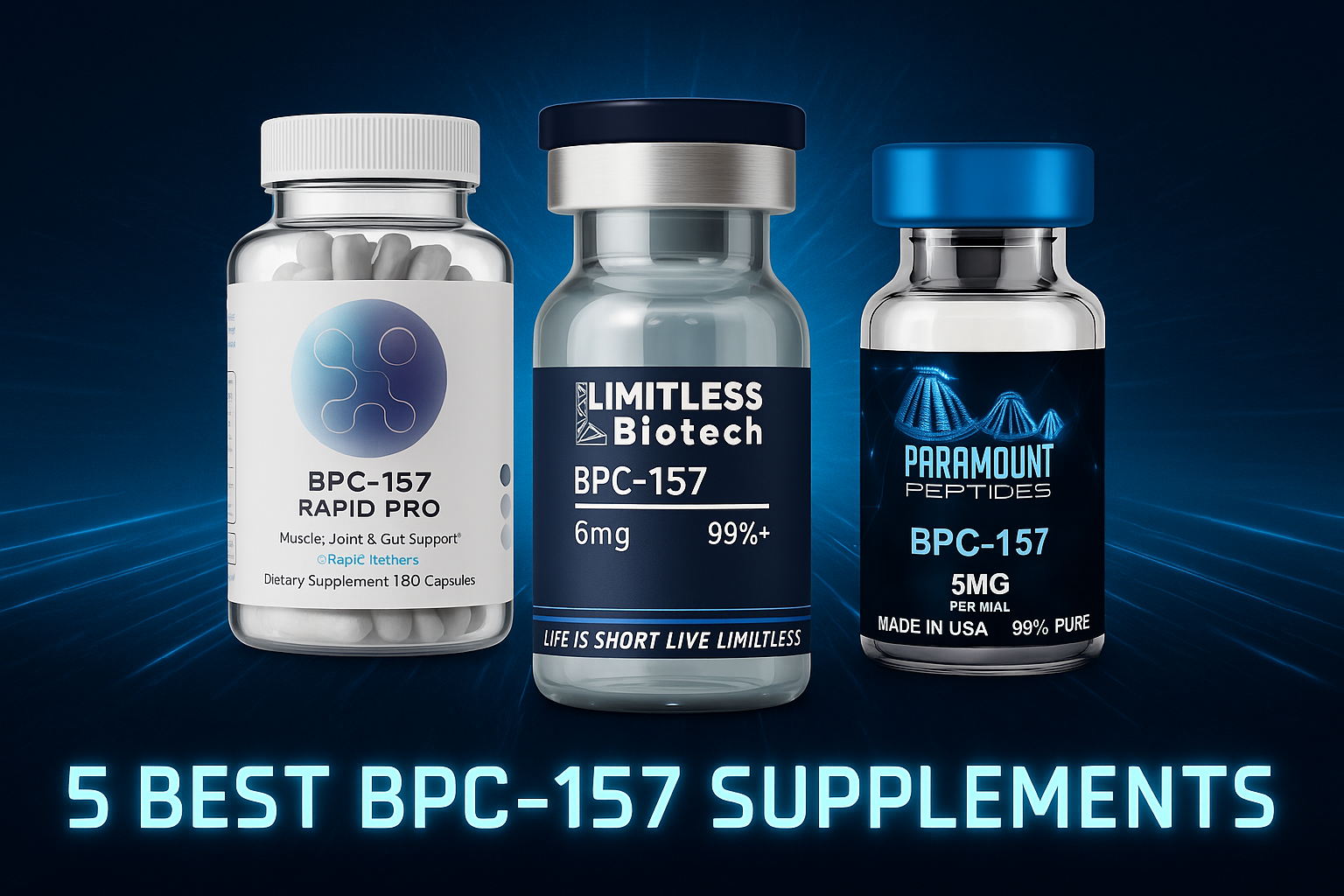
Infiniwell BPC-157 Rapid Pro
The best oral BPC-157 on the market. 500mcg per capsule with SNAC absorption tech, no needles, no mixing. This is the exact product I ran for my gut protocol. Code BRAINFLOW saves 15%.
Why I Finally Tried BPC-157
I had been writing about peptides for BrainFlow for a while before I ran BPC-157 on myself. I knew the research cold. I knew it was discovered in human stomach acid and that it was one of the few peptides stable enough to survive the trip through gastric juice. I knew the preclinical data showed consistent gut healing across ulcers, IBD models, leaky gut, and NSAID damage.
But knowing the science and actually trying it are two different things. What finally pushed me over the edge was a realization about everything I had already failed with. Probiotics add bacteria. Glutamine fuels cells. Enzymes break down food. None of them tell damaged tissue to repair itself.
BPC-157 does exactly that. It promotes mucosal barrier repair, drives new blood vessel formation at injury sites, and lowers inflammatory cytokines. A systematic review presented at the 2025 American College of Gastroenterology meeting pulled together 36 studies and confirmed its pro-healing effects throughout the entire GI tract, from ulcers to inflammatory bowel models. You can read the abstract in the American Journal of Gastroenterology.
Leaky gut was the angle that interested me most, since that was likely my issue. A separate review on PubMed looked at how BPC-157 stabilizes intestinal permeability and restores tight junction proteins after NSAID damage. Tight junctions are the seals between your gut cells, and when they break down, that is the leaky gut everyone talks about. Restoring them was exactly what I needed.
That repair signal was the piece I had been missing for years. So I decided to run a clean six-week protocol and track everything.
The Exact Protocol I Ran
I went with oral BPC-157 because my goal was gut healing specifically. Oral delivery puts the peptide in direct contact with the gut lining as it moves through your digestive tract, which is exactly where I needed it working. The injected form reaches gut tissue through the bloodstream and works too, but for a gut-first protocol, oral was clearly the better fit for what I was trying to accomplish.
Here is precisely what I did:
- Product: Infiniwell BPC-157 Rapid Pro, 500mcg per capsule with SNAC absorption technology
- Dose: 500mcg in the morning and 500mcg in the evening, both on an empty stomach
- Timing: 30 to 60 minutes before my first and last meals of the day
- Cycle length: Six weeks on, then a four week break
- Support stack: L-glutamine (5g daily), a quality probiotic, and zinc carnosine
Empty stomach timing matters more than people think. BPC-157 is stable in stomach acid, but taking it before food gives it a clean window to interact with the gut lining before digestion kicks into high gear. I set phone reminders so I would not forget the morning and evening doses.
I chose Infiniwell’s Rapid Pro because the SNAC absorption tech actually addresses the main knock against oral peptides, which is poor uptake. It is the formulation I had already been recommending to readers, and physicians use it, so it felt like the obvious choice. Code BRAINFLOW saves 15% if you want to run the same thing.
Week by Week: What Actually Happened
I kept a daily log through the whole cycle. Bloating, digestion, energy, sleep, mood, anything I noticed. Here is how it played out.
Week 1. Not much, truthfully. A little less bloating after dinner by day five or six, but it was subtle enough that I wondered if I was imagining it. No side effects beyond a very mild nausea the first two mornings, which went away on its own. I almost talked myself into thinking it was not working.
Week 2. This is when things got real. The post-meal heaviness I had lived with for years started lifting. I could eat a normal dinner and not feel like I needed to lie down afterward. Bloating dropped noticeably. This tracks with what the research describes, where many users report reduced bloating and cramping within the first 7 to 10 days.
Week 3 and 4. The improvements compounded. Digestion became predictable in a way it had not been in years. Foods that used to cause low-level discomfort stopped bothering me. And here is the part I did not expect: my energy and mental clarity improved. I felt sharper in the afternoons, less of that foggy slump I had blamed on coffee timing for years.
Week 5 and 6. By this point the gut stuff felt mostly resolved. No more daily heaviness, minimal bloating, consistent digestion. The mood and energy lift held steady. I finished the cycle feeling like a different person from who started it.
The afternoon clarity surprised me most. It took me a while to connect it, but it makes sense. Your gut produces around 90% of your body’s serotonin, and when chronic gut inflammation disrupts that, the effects show up as brain fog and low mood. Calming the gut quieted that whole noisy feedback loop.
Want Research-Grade Instead?
Amino Club BPC-157
If you want research-grade BPC-157, Amino Club is where I source mine. Third-party lab tested, 99%+ purity, and just $39.99. Code BRAINFLOW saves 20%.
The Gut-Brain Thing Nobody Warned Me About
I went into this expecting better digestion. I did not expect my head to clear up. But the gut-brain axis is real, and it turned out to be one of the biggest benefits of the whole protocol.
Here is the mechanism as I understand it. Your gut and brain are in constant communication through the vagus nerve, the immune system, and neurotransmitter production. When your gut lining is inflamed and leaky, it sends distress signals upstream around the clock. That chronic low-grade alarm shows up as brain fog, irritability, and that vague “off” feeling that is hard to describe.
BPC-157 has documented effects on this axis. Research shows it influences serotonin and dopamine systems when administered peripherally, and a review in Pharmaceuticals covered its activity across both the brain-gut and gut-brain directions. So fixing the gut did not just fix my digestion. It turned off a stress signal my brain had been receiving for years.
If you have gut issues and also deal with brain fog or low mood, pay attention to this. They might be more connected than you think.
See also: Complete Guide to BPC-157: Benefits, Dosage, and Research
What I Paired It With
BPC-157 was the engine, but I did not run it alone. The support stack mattered, and I think it sped up my results.
- L-glutamine (5g daily). Glutamine is the primary fuel source for the cells that line your gut. BPC-157 tells those cells to repair. Glutamine gives them the energy to actually do it. This pairing comes up constantly in the gut healing community for good reason.
- Probiotic. Once the lining started healing, I wanted to repopulate with good bacteria. I think of it as fixing the soil before planting. BPC-157 handled the soil, the probiotic handled the planting.
- Zinc carnosine. This one has its own research base for gut lining protection and ulcer healing. Running it alongside BPC-157 covered more ground and felt like a smart insurance policy.
- Cleaning up my diet. I kept gluten, alcohol, and processed seed oils low through the whole cycle. Not because BPC-157 required it, but because giving the peptide a clean environment to work in just made sense.
I am convinced the stack worked better than BPC-157 would have on its own. The peptide sends the repair signal, but the supporting players make sure the raw materials and environment are there to follow through.
One thing I want to flag about timing: I took the L-glutamine separately from the BPC-157, usually with a meal rather than on an empty stomach. The probiotic I took at night. There is no hard science saying you have to separate them, but it felt cleaner to give the BPC-157 its own empty-stomach window. If you run a similar stack, do not overthink the timing, just stay consistent day to day.
What I Would Do Differently
A few things I learned that I would change next cycle. First, I would not panic in week one. I almost quit because the early results were so subtle. If I had trusted the research instead of expecting instant magic, that first week would have been less stressful. Gut healing takes time, and the early days are quiet because the repair is happening at a level you cannot feel yet.
Second, I would track my diet more precisely. I kept a loose log, but I wish I had been more rigorous about noting which foods triggered what, especially as my gut improved and I started reintroducing things. That data would have been gold for understanding my own triggers.
Third, I would look into research-grade options on a future cycle. My gut was the priority this time, so oral made sense. But for the joint and tendon stuff I also deal with, research-grade BPC-157 covers more ground. A 2021 review in Frontiers in Pharmacology covered how it accelerates healing across skin, tendon, and other tissues. If you want research-grade, Amino Club carries it for $39.99 with code BRAINFLOW for 20% off.
Worth reading: BPC-157 Oral vs Injection: Which Route Works Better?
The Honest Limitations
I want to be straight with you, because too much peptide content online reads like an infomercial.
This was an experiment with a sample size of one. My results are my results. Yours could be faster, slower, or different. BPC-157 is also not FDA-approved for human therapeutic use. It is classified as a research peptide, and the bulk of the strong data comes from animal studies, even though the human anecdotal reports are extensive and consistent.
Anyone with a diagnosed condition like Crohn’s, colitis, or ulcers should not treat BPC-157 as a replacement for working with a gastroenterologist. Treat it as a possible complement and have the conversation with your doctor first, especially if you take other medications.
I also cannot tell you my results were purely from the BPC-157. I cleaned up my diet, ran a support stack, and was paying close attention to my body. All of that probably contributed. What I can tell you is that I had tried most of those other things before without this level of result, and the peptide was the new variable.
So take my experience as a real data point, not as proof of anything universal. This was not a controlled study. It was one person paying attention and changing a few things at once, with the peptide as the standout addition. Your body, your history, and your gut are all different from mine, and your results might be too.
Would I Do It Again?
Without hesitation. The cycle gave me back something I had basically given up on, which was eating a normal meal without thinking about my gut afterward. That alone was worth it. The bonus clarity and energy were the kind of thing you do not fully appreciate until you have it back.
What stuck with me most was how much mental bandwidth my gut issues had been quietly eating. When you spend years low-key managing your digestion, planning around it, bracing for the heaviness after meals, you do not realize how much energy that takes until it stops. Getting that back changed more than just my stomach.
I plan to run a maintenance cycle once or twice a year, and I would not hesitate to do another full round if my gut symptoms ever crept back. For me, it moved from a peptide I wrote about to a tool I actually rely on.
Where to Get What I Used
If you want to run something similar, here is exactly what I used and trust. Quality matters enormously here, because a degraded or underdosed product will give you nothing and convince you the whole thing is a scam.
- Infiniwell BPC-157 Rapid Pro (oral). The best oral BPC on the market and what I ran for my gut protocol. 500mcg capsules, SNAC absorption tech, no needles. Code BRAINFLOW saves 15%.
- Amino Club BPC-157 (research-grade). Where I source my research peptides. Worth considering if you want research-grade alongside the oral protocol. Just $39.99, and code BRAINFLOW saves 20%. They carry a huge catalog beyond BPC too.
Amino Club is where I source my research peptides. Transparent third-party lab testing on every batch, fast shipping, and a deep catalog if you want to explore beyond BPC-157.
For the support stack, any quality L-glutamine, probiotic, and zinc carnosine from a reputable brand will do. Those are standard supplements you can find anywhere, so there is no need to overthink the sourcing on those. Just make sure the L-glutamine is unflavored and the probiotic has a decent CFU count and a few different strains.
That is the whole stack. Nothing exotic, nothing complicated. The BPC-157 was the star, the supplements were the supporting cast, and a cleaner diet set the stage. Total cost for the cycle ran me a little over a hundred dollars once you factor in the discount, which felt like a bargain compared to the years I spent buying supplements that did not solve the problem.
Final Thoughts
Maybe you have been fighting gut issues for years and feel like you have tried everything. I get it. I was there. The thing that finally worked for me was not another probiotic or another elimination diet. It was a compound that actually told my gut lining to repair itself.
BPC-157 is not magic, and it is not a substitute for good food, decent sleep, and managing stress. But as the missing piece on top of all that, it did for me what nothing else had. Six weeks, a simple protocol, and a gut that finally felt completely normal again.
If you decide to try it, start with a clean protocol, track everything in a daily log, give it the full cycle, and source it from somewhere you actually trust. Then judge the results for yourself. That is the only honest way to know if it works for you the way it worked for me.
See also: BPC-157 Dosage Calculator and Protocol Guide
This is a personal account, not medical advice. BPC-157 is a research peptide and is not FDA-approved for human use. Talk to a healthcare provider before starting any peptide protocol, especially if you have a diagnosed condition or take medication. If you are dealing with serious or persistent digestive symptoms, please see a doctor.