
Athletes call it the Wolverine peptide, and once you see what it does for stubborn injuries, the nickname makes sense.
BPC-157 has gone from an obscure research compound to one of the most talked-about peptides among athletes, biohackers, and regular people stuck with injuries that won’t heal. Joe Rogan has credited it with fixing damage that should have taken months in a matter of weeks. Pro athletes use it to get back on the field faster. And thousands of everyday people are using it for everything from torn tendons to chronic gut problems.
Andrew Huberman, the Stanford neuroscientist, described his own experience on his podcast. He had an L5 root compression injury from deadlifts that wasn’t healing with massage or electric therapy, and said that after just two BPC-157 injections he was pain-free with the symptoms gone.
Dr. William Seeds, who has spent over a decade working with peptides in clinical settings, calls the results he’s seen “amazing” and describes peptide therapy as offering physicians “nearly miraculous opportunities” for treating injury and disease.
After digging through the research and comparing notes with dozens of users, the pattern is hard to miss: BPC-157 works for a lot of people when other treatments have failed. It also isn’t FDA-approved, the human trials are thin, and quality swings wildly from one vendor to the next. This guide covers what the science shows, how people use it, and what to realistically expect, updated in September 2026 with the actual outcome of July’s FDA advisory vote.
Key Takeaways
- 15-amino-acid peptide derived from a protective protein in human gastric juice, researched mainly for tendon, ligament, gut, and nerve repair
- The animal evidence is broad and consistent. The human evidence is three small, uncontrolled pilot studies sharing an author and a journal, not proof
- Real elimination half-life is under 30 minutes, not the “4 to 6 hours” repeated everywhere online, and no oral bioavailability figure has ever been published for any species
- On July 23, 2026, an FDA advisory committee voted 8-6 to recommend it for compounding again. That’s a non-binding recommendation, not a legal change
- Still not FDA-approved, still banned by WADA for competitive athletes, still entirely dependent on which vendor you trust
Nearly half off everything at Everest Peptides
Everest Peptides' card processor is offline right now, so instead of waiting it out they're running a bank payment sale. Every peptide is 40% off, and code BRAINFLOW stacks another 15% at checkout. Pay with Zelle or Pay by Bank, same day shipping before 3pm ET, every batch third-party tested with the COA on the product page. Rated 4.9 on Trustpilot.
Shop the 40% off sale Code BRAINFLOW at checkout. Zelle and Pay by Bank only during the sale.What’s In This Guide
- What Is BPC-157?
- How BPC-157 Works in Your Body
- Has BPC-157 Been Tested in Humans?
- BPC-157 Benefits: What the Research Shows
- BPC-157 Dosage and Protocols
- Oral vs Injectable BPC-157
- BPC-157 Half-Life
- How Long Does BPC-157 Take to Work?
- BPC-157 Side Effects and Safety
- Special Considerations: Cancer and Erectile Function
- BPC-157 vs TB-500
- Pentadeca Arginate (PDA) vs BPC-157
- Is BPC-157 Legal in 2026?
- BPC-157 Results: Real User Experiences
- Where to Buy BPC-157
- FAQ
What Is BPC-157?
BPC-157 stands for Body Protection Compound-157. It’s a chain of 15 amino acids derived from a protective protein that occurs naturally in human gastric juice. Your stomach makes this compound to protect and repair its own lining. Scientists isolated the active sequence and synthesized it into a stable, more potent form.
Think of it as a repair signal your body already recognizes. Once it’s in your system, it travels to damaged areas and speeds up healing. Most supplements target one system. BPC-157 appears to help repair muscle, tendons, ligaments, gut tissue, and even nerves, which is a big part of why it gets so much attention.
The trait that really separates it from other peptides is stability. Most peptides fall apart fast in the digestive tract. BPC-157 survives stomach acid and stays active throughout the body, so you can take it orally for gut issues or inject it for musculoskeletal problems, and it works systemically either way.
You’ll sometimes see it listed under other names on vendor sites and in older research: BPC-15, PL-10, PLD-116, PL 14736, and Bepecin. Same compound, same 15-amino-acid sequence, just different naming conventions from different points in its research history.
Research published in Current Pharmaceutical Design describes BPC-157 as acting on several healing pathways at once, which helps explain why it seems useful across such a wide range of conditions.
One quick note on sourcing before we go deeper, because it’s the single biggest reason people get no results. For injectable, I use Paramount Peptides (code BRAINFLOW for 10% off). They synthesize it in-house in the US and post a lot-specific COA from Accumark Labs on the product page, so you can check the batch before you pay, which matters more than most people realize. For oral capsules, Infiniwell’s BPC Rapid Pro is the one I reach for, covered in the oral vs injectable section below.
How BPC-157 Works in Your Body
BPC-157 triggers several healing mechanisms at the same time, and that overlap is what makes it effective across so many different injuries. What it’s doing under the hood:
- Boosts growth factors. It increases growth factor production in damaged tissue, essentially flipping your cells into repair mode. A study in the Journal of Applied Physiology found it upregulates growth factor receptors and activates the FAK-paxillin pathway that controls cell movement and tissue repair.
- Builds new blood vessels (angiogenesis). Tendons and ligaments heal slowly because they barely have a blood supply. By driving new vessel growth, BPC-157 pipes oxygen and nutrients into areas that normally can’t repair themselves. Research in the Journal of Molecular Medicine tied its effects to VEGF receptor activation.
- Modulates inflammation. It doesn’t blunt inflammation across the board. It regulates the response, dialing down the harmful part while letting healing proceed. Research in Gut frames this as “cytoprotection,” shielding cells from damage while promoting repair.
- Fights oxidative stress. It shows antioxidant activity and may switch on genes involved in tissue regeneration, creating an environment where healing happens faster and more completely.
BrainFlow Recommended Source
Paramount Peptides: Research-Grade BPC-157
10mg vial, $63.75, and code BRAINFLOW takes 10% off (about $57.38). Synthesized in-house in Southern California, 99%+ purity by HPLC, with a lot-specific COA from Accumark Labs posted on the page and 17 documented batches behind it. Ships next business day from the US, with price breaks at 5 and 10 vials. For targeted injury work, injectable is the fastest route.
Shop Paramount BPC-157 →For laboratory and research use only. Not for human consumption.
Has BPC-157 Been Tested in Humans?
Short answer: barely, and it matters for how you read every claim in this article. The vast majority of BPC-157 research, well over 30 studies since the 1990s, comes from rats, mice, and cell cultures out of one research group at the University of Zagreb. Only three small human studies have ever been published, and being straight about their limits is what separates a useful guide from a sales page.
All three studies were published in the same journal, Alternative Therapies in Health and Medicine, and Dr. Edwin Lee is an author on every one of them. None had a control group. None was blinded. The knee study relied on patients recalling pain from months earlier over the phone, which is memory, not measurement. Two people is nowhere near enough to catch a side effect that shows up in 1 in 100 users.
That doesn’t make the results meaningless, both interstitial cystitis and chronic knee pain are conditions that don’t typically resolve on their own, and the direction of the signal is consistent across all three. But it’s a reason to treat this as promising and unproven, not as settled science, and it’s exactly the gap that keeps BPC-157 out of mainstream medicine regardless of how strong the animal data looks.
BPC-157 Benefits: What the Research Shows
Based on the animal research and a large body of user reports, BPC-157’s benefits cluster into a few clear areas. The evidence is strongest for tendon and ligament repair, gut healing, and general tissue regeneration. Sorted by how solid the science is:
Tendon and Ligament Repair
This is where BPC-157 has its most impressive track record. People dealing with torn Achilles tendons, rotator cuff injuries, tennis elbow, or chronic tendinitis routinely report real improvement in weeks rather than months.
A study in the Journal of Orthopaedic Research found BPC-157 promoted Achilles tendon healing in rats, with more load-bearing capacity, better functional scores, and faster collagen development than controls. It works by stimulating the fibroblasts that rebuild tendon tissue while organizing collagen into stronger repairs. Since tendons barely have a blood supply, which is exactly why they heal so slowly, the peptide’s vessel-building effect goes right at the bottleneck.
For a deeper look at which injuries respond fastest, see our BPC-157 vs TB-500 comparison and the Wolverine stack guide.
Gut Healing
Given that it was discovered in gastric juice, BPC-157 is in its element with digestive issues. It heals stomach ulcers, repairs intestinal damage from NSAIDs like ibuprofen, and has shown benefit for inflammatory bowel conditions in animal studies.
Research in Current Medicinal Chemistry looked specifically at BPC-157 for ulcerative colitis and found it strengthens the gut barrier and promotes mucosal healing. People with IBS, Crohn’s, or leaky gut often report relief within the first couple of weeks. For gut work specifically, oral tends to be the better route, since the peptide makes direct contact with the tissue you’re trying to heal.
Muscle and Bone Recovery
BPC-157 speeds muscle regeneration after tears, strains, and hard training, and users frequently return to full strength faster than expected. For bone, research in Biomedicines shows it improves healing at the muscle-tendon junction and may support bone density at injury sites.
Nerve Protection and Brain Health
One of the more surprising findings is BPC-157’s effect on the nervous system. Research in the Journal of Orthopaedic Surgery and Research found it improved spinal cord injury healing and drove functional recovery in rats. It appears to protect against nerve damage, reduce brain inflammation, and may help with peripheral nerve issues like sciatica.
A review in Current Neuropharmacology describes BPC-157 acting on a “brain-gut axis,” with effects on both central and peripheral tissue. Plenty of users report better mood, sharper focus, and less anxiety as a side benefit.
BPC-157 Dosage: Protocols and How People Use It
There are no official dosing guidelines, since BPC-157 isn’t FDA-approved. What follows is drawn from user surveys, practitioner experience, and scaling from animal research. It’s educational, not medical advice, and it describes how the compound is used in a research context. For an interactive breakdown, our BPC-157 dosage calculator guide goes deeper on protocols and cycling.
Dosing by Condition
How to Reconstitute Injectable BPC-157
Injectable BPC-157 comes as a freeze-dried powder that gets mixed with bacteriostatic water before use. Getting this part right matters, because sloppy handling can wreck the peptide.
Let the vial come to room temperature for about 15 minutes first. Never reconstitute cold peptide. Draw the bacteriostatic water into an insulin syringe. For a 10mg vial, 2ml of water gives 5 mg/ml (5000 mcg/ml), so 10 units on a U-100 syringe is 500mcg and 5 units is 250mcg. For a 5mg vial, the same 2ml gives 2.5 mg/ml, and 0.1ml equals 250mcg.
Aim the water at the glass wall and let it run down slowly rather than spraying it onto the powder. Then swirl gently until everything dissolves. Never shake it, since that can damage the peptide. The solution should turn clear. If it stays cloudy, the peptide may be compromised.
Store reconstituted BPC-157 in the fridge and use it within 3-4 weeks. Unreconstituted powder keeps in the freezer for a year or more.
Administration and Cycling
In research and practitioner settings, BPC-157 is given subcutaneously, and for localized injuries it’s often administered near the affected area. The peptide distributes systemically no matter where it goes, but many users prefer dosing close to the problem site for musculoskeletal issues. For gut healing or general systemic support, the abdomen is the standard site. Most protocols run once or twice daily, with twice-daily splits aimed at steadier levels, though plenty of people do fine on a single daily dose.
Most people cycle rather than run it forever. Acute injuries usually need 2-4 weeks at full dose. Chronic injuries often run 4-6 weeks on, then 2-4 weeks off. Some athletes use a 250mcg daily maintenance block during heavy training, then take a month off. Post-surgery, a common approach is 500-750mcg daily for 4-6 weeks. Always loop in a qualified provider before starting any peptide protocol.
Oral vs Injectable BPC-157: Which Works Better?
This is the most common question I get, and the honest answer depends on what you’re treating. The quick version:
My take: injectable for specific injuries where you want targeted, faster effects, and oral for gut problems or general systemic support. Some people run both, dosing near an injury while taking oral for overall benefits. For a full breakdown, see oral vs injection BPC-157.
Infiniwell’s BPC Rapid Pro delivers 500mcg per capsule with SNAC absorption technology, the same enhancer used in approved oral peptide drugs, so more of the peptide gets past the stomach instead of being destroyed on the way down. Code IW15 takes 15% off, and our full Infiniwell Rapid Pro review goes deeper on the formulation.
BrainFlow Pick for Oral BPC-157
Infiniwell BPC Rapid Pro: No Needles Required
500mcg per capsule with SNAC absorption technology, the same enhancer used in pharmaceutical oral peptides. Thousands of reviews, 4.8-star rating, third-party tested, US-shipped. The go-to for gut healing or systemic support without injections. Code IW15 saves 15%.
Try Infiniwell BPC Rapid Pro →For research and educational purposes. Consult a healthcare provider before use.
BPC-157 Half-Life: How Long It Stays Active
This section corrects something that’s wrong nearly everywhere else you’ll read about BPC-157, including older versions of this guide. A “4 to 6 hour half-life” gets repeated constantly across vendor sites and forums. There’s no published study behind that number.
The only real pharmacokinetic data comes from a 2022 study in Frontiers in Pharmacology that dosed rats and beagle dogs intravenously and intramuscularly, then tracked the compound with radiolabeling. The actual elimination half-life: under 30 minutes, in both species, at every dose tested. That’s roughly ten times shorter than the number everyone quotes.
The same study measured absolute bioavailability by intramuscular injection at roughly 14 to 19% in rats and 45 to 51% in dogs. The part that matters most for how you use this compound is this: that study had no oral arm. Nobody has ever published an oral bioavailability figure for BPC-157, in any species. Anyone quoting one is making it up.
This is the single most common mix-up in the entire BPC-157 conversation, and it’s worth sitting with. “Stable in stomach acid” and “absorbed into your bloodstream” are two completely different claims. BPC-157’s acid stability is real and unusual for a peptide, most fall apart in your stomach before they get anywhere. Surviving your stomach only clears the first hurdle. Getting from your intestine into circulation is a separate, unmeasured step, and surviving first-pass metabolism in the liver is a third. Being acid-stable doesn’t tell you anything about the other two.
That doesn’t make oral BPC-157 pointless. For gut-specific goals, the target tissue is the digestive lining itself, so direct contact may be the whole point, and how much reaches your bloodstream may not matter much. Absorption enhancers like SNAC, used in Infiniwell’s capsules, exist precisely to help peptides clear that second hurdle, and it’s a legitimate, FDA-recognized approach used in approved oral peptide drugs elsewhere. But if your goal is a shoulder tendon or a knee, swallowing BPC-157 rests on a step nobody has measured for this specific compound. Injectable remains the route with real absorption data behind it.
One practical takeaway from the short half-life: a single daily injection doesn’t maintain a steady blood level on this data. It’s the actual reason most protocols split the dose into two smaller injections rather than one, even though no human trial has tested any specific schedule.
How Long Does BPC-157 Take to Work?
Right after dosing, this is the question I get most, and the answer comes down to what you’re treating and how fresh the injury is. Most people feel something within 3-7 days, but full repair runs on a much longer clock:
The pattern is consistent: tissues with good blood supply (muscle, gut, skin) respond fast, while tendons, ligaments, and nerves take the long road. Acute beats chronic every time. If you’re not seeing anything by the windows above, it’s usually a product-quality problem or an underdose rather than the peptide failing.
BPC-157 Side Effects and Safety
The safety profile is one of the strongest things BPC-157 has going for it, though a few real caveats come with that.
There’s one dedicated preclinical safety study, run across four species: mice, rats, rabbits, and dogs. A single dose produced no effects attributable to the compound in any of them. On repeated dosing, dogs tolerated it with no abnormal changes versus untreated controls, with one exception worth naming rather than glossing over: a drop in creatinine (a kidney function marker) at the highest dose tested, 2 mg/kg, far above anything discussed for human use.
It wasn’t seen at lower doses, and the animals recovered on their own within two weeks of stopping. The study also found no genetic toxicity and no harm to developing embryos. One correction while we’re here: you’ll see sites claim BPC-157 has “no established LD50” and a “negative Ames test.” The actual study doesn’t state either of those things. What it supports is the summary above, not more than that.
User reports line up with the animal data. Most people tolerate it without trouble. When side effects show up, they’re usually mild: redness at injection sites, some fatigue in the first few days, occasional headaches, or unusually vivid dreams. These often fade after the first week.
A few things worth watching that go beyond the basics. BPC-157 can lower blood pressure, so anyone on BP medication should keep an eye on their numbers. Some people get histamine-like reactions at the start, which a lower opening dose usually fixes. Because it nudges dopamine and serotonin, mood typically improves, though that also means there can be a small adjustment when you stop.
One mechanism worth understanding in real terms rather than waving off with a generic “talk to your doctor”: at high concentrations, nitric oxide interferes with how the body inserts heme into proteins, and it changes the activity of CYP enzymes, the liver’s main system for clearing medications. Since BPC-157 modulates the nitric oxide system, this is a concrete, plausible reason it could theoretically change how fast your body processes other drugs you’re taking, not a vague catch-all disclaimer. If you’re on other medications, that’s the specific thing to flag to a provider.
Who Should Avoid BPC-157
- Pregnant or nursing women, since no safety data exists for these populations
- Anyone with active cancer, due to theoretical concerns about growth promotion (more on this below)
- People with severe low blood pressure, who should be cautious given its BP-lowering effect
- Anyone on anticoagulants or blood pressure medication, given the vascular and nitric-oxide activity described above; additive effects are plausible but haven’t been formally studied
- Anyone with an active infection, since its immune-modulating effects could theoretically blunt pathogen clearance, an unstudied but reasonable concern
- Competitive athletes, because BPC-157 is named explicitly under WADA’s S0 class, banned at all times
The biggest caveat across the board: no controlled long-term human clinical trials have been completed. BPC-157 looks safe based on everything we currently know, but everything we know has real limits, and most of it comes from one research group. Quality also swings hard between vendors, and a contaminated or degraded product can cause problems that pure BPC-157 wouldn’t.
Special Considerations: Cancer and Erectile Function
BPC-157 and Cancer
The relationship between BPC-157 and cancer is complicated, and it deserves more than a one-line disclaimer. Its primary mechanism is upregulating VEGFR2, the receptor that drives new blood vessel formation. That pathway is active in roughly half of human cancers, and a compound that promotes it carries an obvious theoretical worry: it could feed an existing tumor’s blood supply.
The research doesn’t point cleanly in one direction, and a fair accounting has to say so. BPC-157 also inhibits tumor necrosis factor-alpha, a driver of cancer progression, and some published work shows it suppressing uncontrolled cell growth and counteracting VEGF-driven tumor development rather than promoting it, the opposite of what the angiogenesis mechanism alone would predict.
The honest read is that it appears to push angiogenesis up or down depending on the tissue and context, and nobody has resolved which direction wins out in a person with an actual tumor, because that study has never been run. That unresolved state, not a confirmed danger, is why the practical guidance stays the same: avoid BPC-157 if you have active cancer or a recent history of it. “Unresolved” isn’t a risk worth taking with a tumor.
Erectile Function
An unexpected benefit male users mention often is improved erectile function. The mechanisms fit: BPC-157 raises dopamine (which drives arousal), improves blood vessel function, and may repair vascular tissue. Some men with venous leak or Peyronie’s disease have reported improvement, though there’s no clinical evidence for that specific use. It’s not why most people try it, but it comes up enough to be worth a mention.
BPC-157 vs TB-500
These two get compared constantly because both are healing peptides, but they work through different mechanisms and pair well rather than competing. The breakdown:
For tendons, ligaments, or gut issues, BPC-157 is usually the first pick. For muscle injuries, systemic inflammation, or overall recovery, TB-500 may edge it out. A lot of people stack both for serious injuries, running BPC-157 daily alongside TB-500 twice weekly for 4-8 weeks, and the combination reportedly beats either one alone. If you want to run them together, Paramount sells a Wolverine Blend with 10mg of each peptide in one vial (code BRAINFLOW saves 10%).
Pentadeca Arginate (PDA) vs BPC-157: Is It Better?
You’ll increasingly see capsules and vials marketed as BPC-157 “arginate” rather than the standard acetate salt, sometimes branded as PDA or Pentadeca Arginate, with claims that the arginate form is more stable or absorbs better orally. Worth addressing directly since it’s showing up everywhere right now.
There’s no published pharmacokinetic study of a BPC-157 arginate salt. Searching the peer-reviewed literature on BPC-157 formulation turns up nothing on arginate specifically. Every source making the stability or absorption claim is a vendor selling the product, not an independent study.
That’s not proof arginate is worthless, absence of evidence isn’t evidence of absence, and salt form can affect a compound’s solubility and stability in other contexts. But given what the previous section covers about oral bioavailability never being measured for BPC-157 in any form, a superiority claim resting entirely on marketing copy isn’t something to pay a premium for. If a vendor is calling PDA “the legal version” of BPC-157, that’s also worth a skeptical eyebrow: a different salt form doesn’t put a compound in a different regulatory category, and PDA carries the same research-use-only status as standard BPC-157.
Is BPC-157 Legal? What Happened in 2026
If you read an older version of this article, or almost anything else published before August, the regulatory picture has moved since then. This is what’s true right now.
Updated September 2026
On September 29, 2023, the FDA placed BPC-157 on the 503A “Category 2” list, its list of bulk substances that “may present significant safety risks.” The agency’s stated reasoning: potential immunogenicity concerns for certain routes of administration, complications characterizing the active ingredient and its impurities, and limited human safety data. Category 2 meant licensed compounding pharmacies could not legally prepare it, though personal possession was never criminalized.
On April 15, 2026, the FDA reopened the question, removing BPC-157 (along with TB-500 and injectable GHK-Cu) from Category 2 and referring it for a formal advisory review rather than deciding its status unilaterally.
That review happened on July 23 and 24, 2026. The FDA’s Pharmacy Compounding Advisory Committee voted on seven peptides for the 503A Bulks List. BPC-157 passed 8 to 6 with one abstention, part of a favorable bloc that also included TB-500, KPV, MOTS-c, Semax, and Epitalon. Only DSIP was voted down. The committee did this against the written recommendation of its own FDA scientific staff, who had advised against listing any of the seven.
What this does and doesn’t mean: a favorable PCAC vote is a recommendation, not a rule. The FDA is not obligated to follow it, and formal notice-and-comment rulemaking, the actual step that would let compounding pharmacies prepare BPC-157 again, has not started and typically runs 8 to 24 months once it does. Nothing became legal to compound the day after the vote that wasn’t legal the day before. BPC-157 is still not an FDA-approved drug, research-grade material sold for laboratory use is unaffected either way, and it remains on the WADA prohibited list for competitive athletes regardless of what the FDA eventually decides.
For athletes specifically, the situation is unambiguous and none of the above changes it. BPC-157 is named explicitly under WADA’s S0 (Non-Approved Substances) class, banned at all times, in and out of competition, with no therapeutic use exemption available. A validated anti-doping urine test has existed since 2017, sensitive to 0.1 ng/mL, and detects BPC-157 for at least four days after use. That’s the actual measured window from the detection study, not a guess, and it’s shorter than the “2 to 4 weeks” figure that gets repeated online. Given how little margin that leaves and how much is riding on it, treating it as detectable indefinitely is the only sane approach if you’re tested.
Internationally, BPC-157 is generally available as a research chemical across the UK, Canada, and most of Europe, while Australia requires a prescription pathway.
BPC-157 Results: Real User Experiences
User reports skew overwhelmingly positive, but specific cases tell you more than vague testimonials. A few representative ones:
Achilles tendinitis, 8 months of PT with minimal improvement: “Started injecting 300mcg twice daily near the tendon. By week 2 the morning stiffness was gone. Week 4 I could run again without pain. I finished 6 weeks total. That was 8 months ago and it hasn’t come back.”
Post rotator cuff surgery, age 52: “Surgeon told me 12-16 weeks minimum before I could lift overhead. Started BPC at 500mcg/day right after surgery. At my 6-week checkup he said the healing looked like I was 8-10 weeks out. Back to light lifting at week 9.”
Chronic gut issues (IBS-D for 12 years): “Tried every elimination diet, probiotics, even prescription meds. Nothing worked long term. Took oral BPC-157 at 500mcg morning and night. First week was rough, more cramping. Week 2 things calmed down. By week 5 I was having normal bowel movements for the first time in over a decade. Still doing well 6 months later.”
Tennis elbow, 2 years chronic: “This one surprised me because it was an old injury I’d basically given up on. Injected 250mcg twice daily about an inch from where it hurt most. Took longer than the acute injury reports I’d read, probably 5 weeks before I noticed real improvement. But by week 8 the pain was maybe 80% gone. Not a miracle cure but way better than anything else I tried.”
Not every report is glowing. Some people see little to nothing, especially with very old injuries or conditions that have causes BPC-157 can’t touch. Roughly 20-30% of reports fall into the non-responder bucket, so set your expectations accordingly.
Where to Buy BPC-157: Trusted Sources
Source quality matters more than price with peptides. Contaminated, underdosed, or degraded product won’t work and can cause problems that pure BPC-157 wouldn’t. After testing multiple vendors and comparing notes with dozens of users, two sources consistently stand out.
Paramount Peptides (Injectable)
Paramount Peptides is my go-to for injectable BPC-157. They synthesize it in-house in Southern California, verify every lot by HPLC and mass spec, and post a lot-specific COA from Accumark Labs, an independent lab, that you match to the number on your vial. Seventeen documented batches sit on the product page, which says more about consistency than any single report can.
The 10mg vial is $63.75, code BRAINFLOW takes 10% off, and the price drops again at 5 and 10 vials if you’re running a longer cycle. Orders ship the next business day from the US, so no customs delays.
- Accumark Labs COA on every lot, matched to the lot number printed on your vial
- Synthesized and purified in-house in the USA, 99%+ purity by HPLC
- 5mg, 10mg, and 20mg vials, plus a BPC-157/TB-500 Wolverine Blend
- Prices shown without an account, volume pricing at 5 and 10 units
- Next-business-day shipping, free on orders over $300
Infiniwell (Oral)
For people who want the benefits without injections, Infiniwell’s BPC Rapid Pro is the best oral option I’ve found. Their SNAC absorption technology helps the peptide survive stomach acid and reach circulation, and at 500mcg per capsule the dosing is convenient and consistent. They’re third-party tested, ship from the US, carry a 4.8-star rating across thousands of reviews, and offer subscribe-and-save for ongoing use. Code IW15 takes 15% off a first order.
- SNAC absorption enhancement (used in pharmaceutical oral peptides)
- 500mcg per capsule, no needles
- Third-party tested, US-shipped
- Strong review base and subscribe-and-save options
What to Look For in Any Source
If you shop elsewhere, run through this checklist before you buy:
- Third-party COA from an independent lab, not just the seller’s own word
- HPLC purity of 98% or higher, since lower means more contaminants
- Mass spectrometry confirming the correct molecular weight (1419.54 Da)
- Endotoxin testing below 0.25 EU/mL
- Batch-specific testing with a COA that matches your vial’s lot number
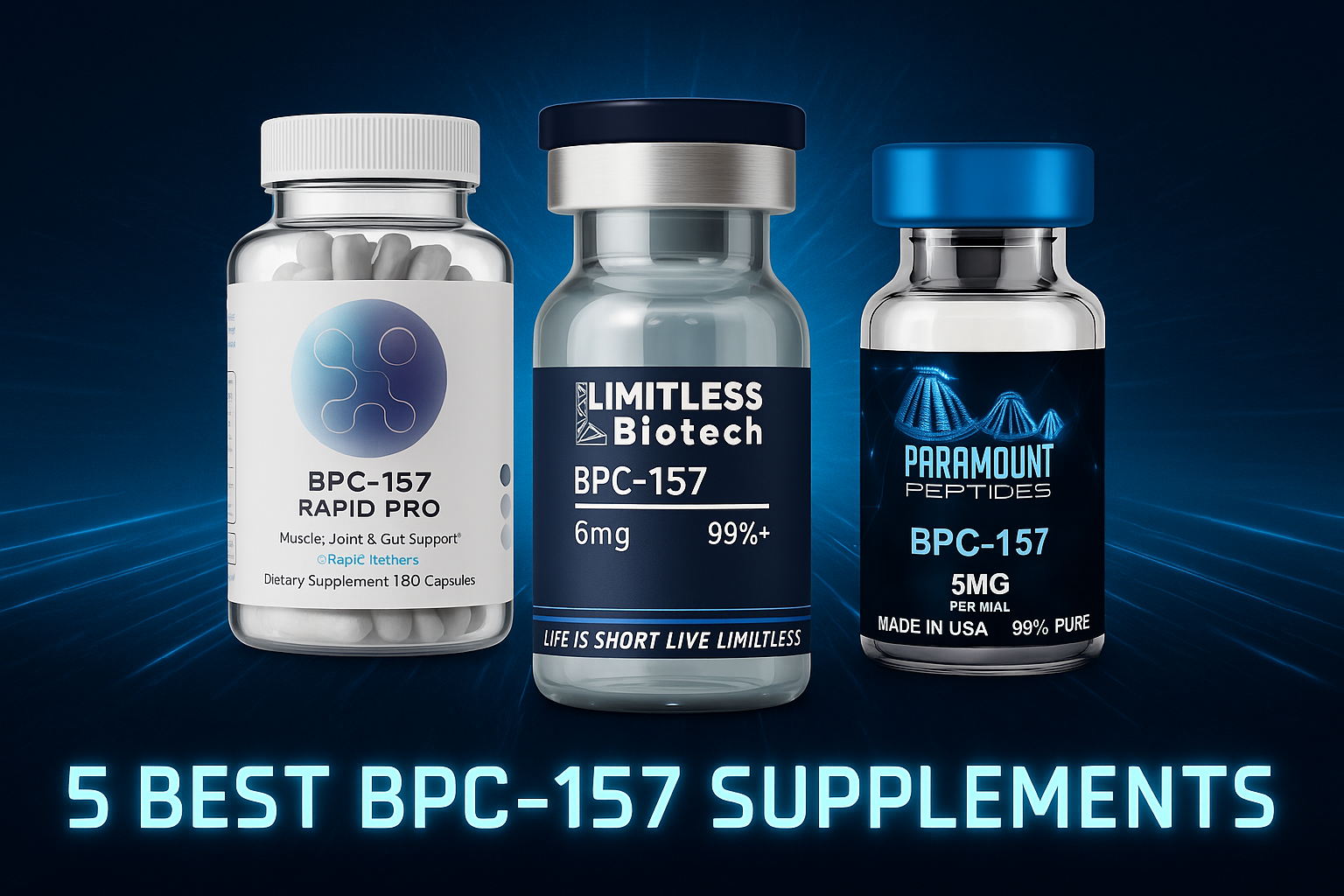
Walk away from any vendor with no COA, purity under 95%, suspiciously low prices, crypto-only payment, no verifiable reviews, or a Gmail address instead of a real company domain. For more picks, see our roundup of the 5 best BPC-157 supplements.
Frequently Asked Questions
How quickly does BPC-157 work?
Most users notice initial improvement within 3-7 days, with significant changes by weeks 2-3. Acute injuries respond faster than chronic ones, and gut issues often improve within the first week or two.
What is the best dosage of BPC-157 for tendons?
Research-context protocols for tendon and ligament injuries typically run 250-500mcg per day injectable, often dosed near the injury, for 4-6 weeks. Severe or post-surgical cases sometimes go higher. See the dosing table above for a full breakdown.
Is oral or injectable BPC-157 better?
Injectable is faster and better for targeted musculoskeletal injuries. Oral is better for gut conditions, where direct contact with intestinal tissue helps, and for general systemic support. Many people use both.
Can I use BPC-157 long-term?
Some people have used it for months or years without reported issues, but long-term safety data doesn’t exist. Most practitioners recommend cycling, usually 4-8 weeks on followed by 2-4 weeks off.
Should I stop training while using BPC-157?
Unlike traditional injury recovery, many people maintain moderate training while using it, and it often allows activity that would normally be off the table. Don’t push through severe pain, but light to moderate exercise is usually fine.
Does BPC-157 work for old injuries?
Many users report improvement in chronic, years-old injuries, though it takes longer than with fresh ones. Old scar tissue and structural changes can cap how much improvement is possible.
Will BPC-157 show up on a drug test?
Standard employment drug tests don’t screen for peptides. WADA-compliant sports testing can and does detect it. A validated urine test has existed since 2017, sensitive to 0.1 ng/mL, and the measured detection window is at least four days after use, shorter than the “2 to 4 weeks” figure that circulates online, but that’s a floor from one study, not a guarantee. If you’re a tested athlete, don’t use it at all.
What’s the shelf life of reconstituted BPC-157?
Use reconstituted BPC-157 within 3-4 weeks when refrigerated. Unreconstituted powder lasts 1-2 years in a freezer.
Can women use BPC-157?
Yes. It appears equally effective and safe for women. Avoid it during pregnancy and breastfeeding due to the lack of safety data.
Does BPC-157 build muscle?
It has mild anabolic effects and improves recovery, which lets you train more often, but it isn’t primarily a muscle-builder. The main payoff is faster recovery from training and injury.
Is BPC-157 legal in 2026?
It’s not FDA-approved and not a controlled substance. On July 23, 2026, an FDA advisory committee voted 8-6 to recommend adding it back to the 503A compounding list, but that’s a non-binding recommendation, not a rule change, and formal rulemaking hasn’t started. It’s sold for research use, remains legal to purchase in that context in the US, and is banned by WADA for competitive athletes regardless of the compounding question. See the full update above.
What is BPC-157’s actual half-life?
Under 30 minutes, based on the only published pharmacokinetic study, done in rats and dogs. The “4 to 6 hours” figure you’ll see elsewhere doesn’t trace back to any published source.
Is Pentadeca Arginate (PDA) better than regular BPC-157?
There’s no published evidence that the arginate salt form is more stable or better absorbed than standard BPC-157 acetate. The claim comes from vendors selling it, not from research. It also carries the same legal status as regular BPC-157, so “the legal version” framing some sellers use isn’t accurate.
Where can I buy BPC-157?
For injectable, Paramount Peptides (10mg for $63.75, code BRAINFLOW for 10% off), made in-house in the US with an Accumark Labs COA on every lot. For oral capsules, Infiniwell BPC Rapid Pro (code IW15 for 15% off). Whichever you pick, match the COA to the lot number on your vial before you use it.
Is BPC-157 Worth It?
BPC-157 is a strange case. The animal research is strong, the safety profile looks excellent, and thousands of users report real benefit. It’s also not FDA-approved, the human trials are limited, and gray-market quality control is inconsistent.
For people stuck with injuries that won’t heal, chronic gut issues, or post-surgical recovery that’s stalled, it offers a research-backed option when conventional treatments have come up short. The mechanisms make biological sense, and for a lot of people it’s worth a shot.
If you do, source is everything. US-made, third-party tested peptides cost more than random suppliers, but you get what you pay for. Start conservative, track your response, and ideally work with a provider who understands peptides. For injectable, I recommend Paramount Peptides (code BRAINFLOW for 10% off). For oral, Infiniwell BPC Rapid Pro (code IW15 for 15% off).
Scientific References
- Sikiric P, et al. (2018). “Brain-gut axis and pentadecapeptide BPC 157: Theoretical and practical implications.” Current Neuropharmacology, 16(8), 1035-1045. PMC6142015
- Seiwerth S, et al. (2018). “BPC 157 and standard angiogenic growth factors.” Current Pharmaceutical Design, 24(18), 1972-1989. PubMed
- Chang CH, et al. (2014). “The promoting effect of pentadecapeptide BPC 157 on tendon healing.” Journal of Applied Physiology, 116(3), 274-285. PubMed
- Hsieh MJ, et al. (2017). “Therapeutic potential of pro-angiogenic BPC157 is associated with VEGFR2 activation.” Journal of Molecular Medicine, 95(3), 323-333. PubMed
- Sikiric P, et al. (2020). “Stable gastric pentadecapeptide BPC 157 and organoprotection.” Gut, 69(12), 2333-2334. BMJ Gut
- Krivic A, et al. (2006). “Achilles detachment in rat and stable gastric pentadecapeptide BPC 157.” Journal of Orthopaedic Research, 24(5), 982-989. PubMed
- Sikiric P, et al. (2013). “Focus on ulcerative colitis: stable gastric pentadecapeptide BPC 157.” Current Medicinal Chemistry, 20(34), 4306-4316. PubMed
- Japjec M, et al. (2021). “Stable gastric pentadecapeptide BPC 157 as therapy for the disabled myotendinous junction in rats.” Biomedicines, 9(11), 1547. PMC8614789
- Perovic D, et al. (2019). “Stable gastric pentadecapeptide BPC 157 can improve the healing course of spinal cord injury.” Journal of Orthopaedic Surgery and Research, 14(1), 199. PMC6598286
- He L, et al. (2022). “Pharmacokinetics, distribution, metabolism, and excretion of body-protective compound 157 in rats and dogs.” Frontiers in Pharmacology, 13. PMC9794587
- Xu C, et al. (2020). “Preclinical safety evaluation of body protective compound-157.” Regulatory Toxicology and Pharmacology, 114. PubMed
- Lee E, Padgett B. (2021). “Intra-articular injection of BPC 157 for multiple types of knee pain.” Alternative Therapies in Health and Medicine, 27(4), 8-13. PubMed
- Lee E, Walker C, Ayadi B. (2024). “Effect of BPC-157 on symptoms in patients with interstitial cystitis: A pilot study.” Alternative Therapies in Health and Medicine, 30(10), 12-17. PubMed
- Lee E, Burgess K. (2025). “Safety of intravenous infusion of BPC157 in humans: A pilot study.” Alternative Therapies in Health and Medicine. PubMed
- Cox HD, Miller GD, Eichner D. (2017). “Detection and in vitro metabolism of the confiscated peptides BPC 157 and MGF R23H.” Drug Testing and Analysis. PubMed
- U.S. FDA. (2023). “Certain Bulk Drug Substances for Use in Compounding That May Present Significant Safety Risks (BPC-157 added September 29, 2023).” FDA
- U.S. FDA. (2026). “Pharmacy Compounding Advisory Committee, July 23-24, 2026 meeting materials.” FDA
- World Anti-Doping Agency. (2026). “2026 Prohibited List, S0: Non-Approved Substances.” WADA
This article is for informational and research purposes only. BPC-157 is not FDA-approved for any medical use. The FDA placed it on the Category 2 list in September 2023, removed it from that list in April 2026, and an FDA advisory committee voted 8-6 in July 2026 to recommend it for the 503A compounding list, a non-binding recommendation still awaiting formal rulemaking. It is banned by WADA for competitive athletes. Do not use any peptide without consulting a qualified healthcare provider, and always source from reputable, third-party tested suppliers.
Last updated September 2026.
3 Comments