BPC-157 usually takes one to two weeks to produce the first change you can point to, and four to eight weeks to deliver most of its effect. Fresh soft-tissue injuries and irritated guts sit at the fast end, where some people report a difference inside a week. Chronic tendon problems, ligaments, and nerve injuries sit at the slow end, often eight to twelve weeks or longer.
That spread is the whole story. A three-week-old hamstring strain and a ten-year-old rotator cuff run on different clocks, and the route you use (oral or injectable), the dose, and the quality of the vial all shift the schedule again. Anyone quoting a single number for how long BPC-157 takes to work is guessing.
I’ve run BPC-157 on and off for a couple of years and traded notes with hundreds of readers about how it went for them. This guide lays out the week-by-week pattern most people see, then breaks the timeline down by condition using the animal research, the handful of small human studies, and real-world reports. It was updated in September 2026 after the FDA advisory committee vote, and every study citation was re-checked against PubMed.
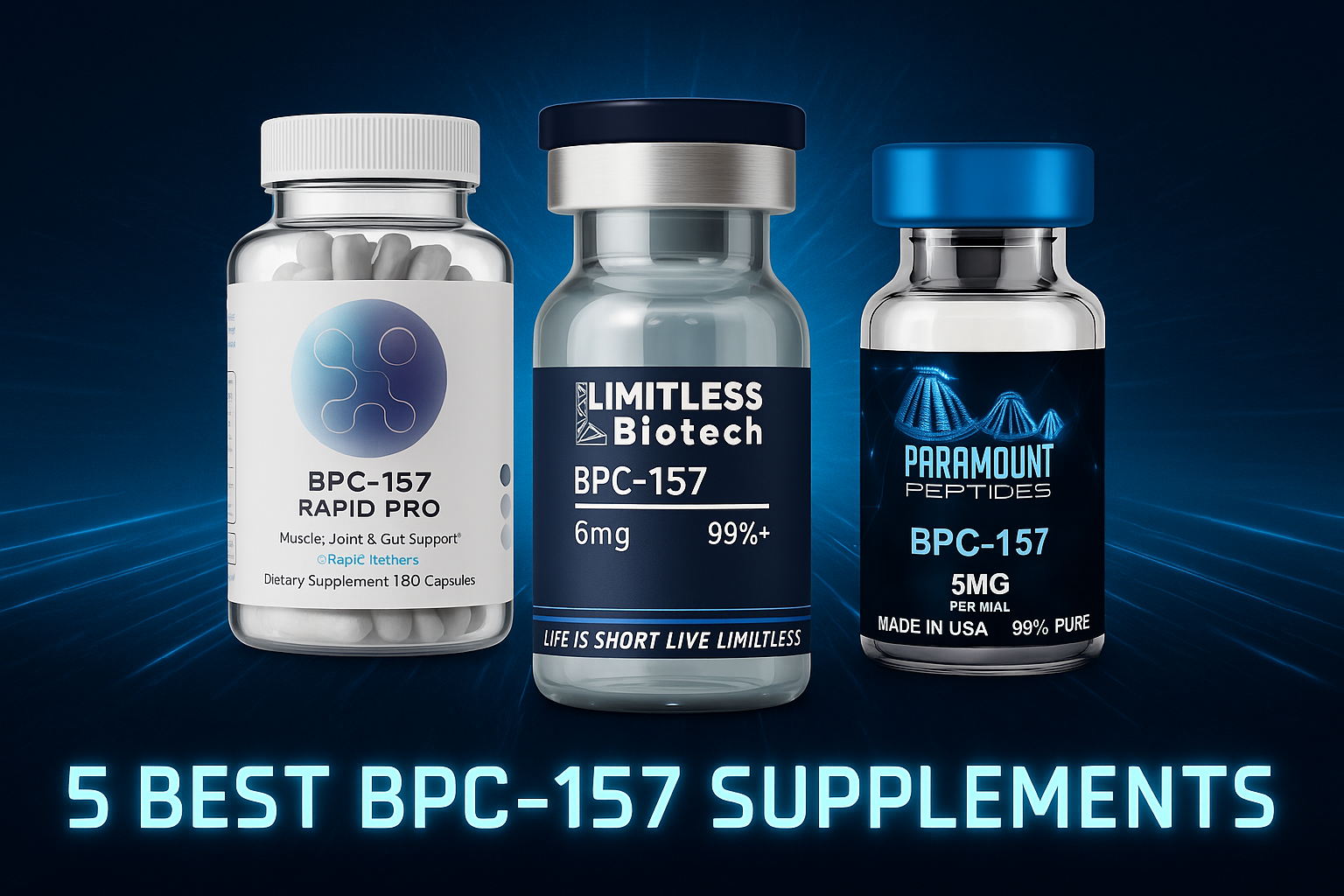
One note on sourcing before the timelines. A bad vial is the single most common reason people get nothing from BPC-157, so every number below assumes a properly tested product. For injectable I now use Paramount Peptides, which synthesizes in-house in California and posts a lot-specific COA on every vial (code BRAINFLOW saves 10%). For oral I use Infiniwell Rapid Pro (code WELCOME15 saves 15% on a first order).
In this guide
- Quick Answer and Timeline by Condition
- BPC-157 Results Week by Week
- Tendon, Muscle, Joint, and Ligament Timelines
- Gut Healing Timelines
- Nerve, Post-Surgical, and Skin Timelines
- Signs BPC-157 Is Working
- Why Timelines Vary So Much
- Oral vs Injectable Speed
- Does Dose Change the Timeline?
- What Speeds Up or Slows Down Results
- The 4-Week and 8-Week Checkpoints
- Legal Status (September 2026)
- Where to Buy BPC-157
- FAQ
Nearly half off everything at Everest Peptides
Everest Peptides' card processor is offline right now, so instead of waiting it out they're running a bank payment sale. Every peptide is 40% off, and code BRAINFLOW stacks another 15% at checkout. Pay with Zelle or Pay by Bank, same day shipping before 3pm ET, every batch third-party tested with the COA on the product page. Rated 4.9 on Trustpilot.
Shop the 40% off sale Code BRAINFLOW at checkout. Zelle and Pay by Bank only during the sale.Quick Answer: How Long Does BPC-157 Take to Work?
Most people notice the first change within 3 to 7 days for acute injuries and inflamed joints, and within 1 to 2 weeks for gut conditions and tendon problems. Clear, measurable progress usually lands between weeks 2 and 4. A full protocol runs 4 to 8 weeks for acute problems and 8 to 12 weeks or longer for chronic injuries and nerve damage.
Gut lining responds fastest. Muscle and skin come next. Tendons, ligaments, and cartilage are slow because they have poor blood supply, and nerves are slowest of all. Old injuries take roughly twice as long as fresh ones.
That is the 30,000-foot view. In practice, the timeline you get comes down to the specific tissue you are treating, and the spread is wide. A gut ulcer and a chronic ligament tear are barely playing the same sport. The table below maps every common use to when people typically see first effects, real progress, and the end of a protocol. Each row is unpacked with the research behind it further down.
BPC-157 Results Week by Week
Conditions differ, but the shape of the response is surprisingly consistent. Almost everyone who responds moves through the same phases in the same order. What changes by condition is how long each phase lasts.
Days 1 to 3: Mostly Nothing, and That Is Normal
Most people feel nothing in the first 72 hours, and that is the expected outcome. BPC-157 clears the bloodstream fast (more on the half-life below), so there is no drug level building up and no acute effect to notice. A few users describe a warm or loose feeling around an injury on day one. Treat that as placebo or local irritation until it repeats. Injection-site redness, a mild headache, or a flat mood for a day or two show up in some reports and usually pass on their own.
Days 4 to 7: The First Flicker
The first real signal tends to arrive around day four to seven, and it is almost always an inflammation signal. The repair signals come later. Morning stiffness eases, a joint that ached at rest goes quiet, and gut users notice less bloating after meals. None of that means tissue has rebuilt yet. It means the local inflammatory environment is shifting, which is the step that has to happen before structural healing can start.
Week 2: Where Responders Usually Know
Week two is the point where most responders can tell. Pain at rest drops noticeably, range of motion improves, and gut symptoms settle into a pattern instead of flaring at random. The animal data lines up with this window. In the classic Achilles transection study, treated rats showed better biomechanical properties within days and markedly better tendon structure by day 14. Human tissue is slower, but the two-week mark is a fair checkpoint for the first measurable change.
Weeks 3 to 4: Function Comes Back
By weeks three and four the wins turn functional. Users describe being able to grip, squat, sleep on the bad shoulder, or eat a trigger food without paying for it. Acute muscle strains are often close to resolved here. This is also where I’d expect chronic cases to show their first clear improvement, and where a total lack of change should prompt a look at product quality and dose (see the checkpoints section).
Weeks 5 to 8: Structural Work, Slower Gains
Weeks five through eight are slower and less exciting. The inflammatory relief has already happened. What is left is collagen remodeling and tissue maturation, which move at the pace of biology, and the peptide cannot rush them. Gains keep coming in smaller steps. Most acute injuries reach the end of their protocol in this window, and many people running 8-week cycles stop here.
Weeks 9 to 12: Chronic Injuries and Nerves
Extended runs make sense for chronic tendinopathy, ligament tears, plantar fasciitis, IBD, and nerve injuries, all of which routinely need 8 to 12 weeks to show their full response. There is no controlled human data on continuous use past 12 weeks, so most community protocols cycle off at that point (see the FAQ on cycle length).
After You Stop: What Holds and What Fades
Structural gains hold. If a tendon rebuilt or an ulcer closed, stopping the peptide does not undo it, and BPC-157 needs no taper or post-cycle protocol. Purely anti-inflammatory relief in a joint that is still degenerating can fade over a few weeks, which is why arthritis users often run maintenance cycles. Gut users with an ongoing trigger (daily NSAIDs, alcohol, an autoimmune flare) usually see symptoms creep back unless the trigger is handled too.
Tendon, Muscle, Joint, and Ligament Timelines
Tendon Injuries (Achilles, Rotator Cuff, Elbow, Plantar Fascia)
Tendons heal slowly because they have limited blood supply, so nutrients and repair signals take their time reaching the damage. BPC-157 appears to help on two fronts, promoting new blood vessel growth (angiogenesis) and improving how collagen fibers organize at the injury site.
A 2003 study on transected rat Achilles tendons found treated animals had better biomechanical properties within the first days and cleaner collagen organization with more tensile strength than controls by day 14. Later cell work showed the peptide directly stimulates tendon fibroblast outgrowth, survival, and migration, which is the cellular machinery a tendon needs to rebuild. Tendon-to-bone healing after Achilles detachment improved as well, even when a corticosteroid was used to impair it.
Achilles tendonitis tends to follow this pattern:
- Days 2 to 5, less morning stiffness and easier walking
- Weeks 2 to 3, light activity back on the table and a real drop in pain
- Weeks 4 to 6, full protocol for acute cases
- Weeks 8 to 12, full protocol for chronic cases
Rotator cuff injuries are stubborn. The shoulder has worse blood supply than the Achilles, and most people have fought shoulder pain for years before they try a peptide. Plan on 1 to 2 weeks for initial relief, 4 to 8 weeks for functional improvement, and 12 weeks or more for meaningful change in a partial tear.
One Excel Male forum member wrote that within two weeks of 250 mcg twice daily his pain “improved by ~70%” on a two-year chronic shoulder issue that had not responded to physical therapy. That is a good result. It is also one report, so weight it accordingly.
Tennis elbow and golfer’s elbow usually respond faster. The tissue is easier to reach and often less chronically beaten up. Most reports cluster around less pain gripping and typing by days 4 to 7, most activities back to normal by weeks 2 to 4, and full resolution by weeks 4 to 8.
Plantar fasciitis is one of the slower responders. The fascia has extremely limited blood supply, so expect subtle change at 1 to 2 weeks, real improvement at 4 to 6 weeks, and major progress at 8 weeks or beyond. Extended protocols are common for chronic cases.
Muscle Strains and Tears
Muscle bounces back faster than tendon because it has excellent blood supply, so the angiogenic effect has something to work with from day one.
A 2010 study on crushed calf muscle in rats tracked healing at days 1, 2, 4, 7, and 14. BPC-157 improved functional, macroscopic, and histological recovery at every interval, and it fully reversed the healing impairment caused by a systemic corticosteroid. That last detail matters for anyone coming off a cortisone shot.
One reader with a partial biceps tendon tear told me BPC-157 had him back in the gym in three weeks with no pain. Partial tears at the muscle-tendon junction tend to land between the muscle and tendon timelines.
Joint Pain and Arthritis
Joints show one of the fastest early responses, probably because the first wave of relief comes from reduced inflammation rather than structural repair. The anti-inflammatory effect shows up in days. Cartilage and synovial changes, if they happen at all, take much longer.
The only published human study on musculoskeletal BPC-157 is a 2021 case series of 12 patients who received a single intra-articular injection for knee pain. Eleven of the twelve reported improvement, and seven of the twelve said the relief lasted more than six months, according to the 2025 HSS Journal systematic review that examined it. It is small and uncontrolled, and it is also the best human evidence we have.
What to expect for joint pain:
- Days 4 to 7, anti-inflammatory relief, less stiffness, reduced swelling
- Weeks 2 to 4, functional improvement, better mobility, less pain with activity
- Weeks 4 to 8, peak effect (this is often where things plateau)
- Ongoing, many people run maintenance cycles for chronic arthritis
“By day 4, I noticed for the first time in almost 10 years I woke up in the morning and had no knee soreness or stiffness,” one user wrote. “I’m 305 lbs, so my knees take a beating.”
Ligament Injuries
Ligaments heal slowly, slower than tendons in some cases. They have minimal blood supply and the collagen matrix takes a long time to reorganize.
A 2010 study on transected medial collateral ligaments in rats found improved healing out to 90 days whether BPC-157 was injected, applied locally, or given in drinking water. The route mattered less than the fact that it was given at all.
For MCL sprains and tears, expect first effects at 2 to 3 weeks, significant progress at 4 to 6 weeks, and a full protocol at 8 to 12 weeks. Non-surgical ACL injuries follow a similar schedule. After ACL reconstruction, users typically report first effects at 2 to 4 weeks, real progress at 6 to 8 weeks, and a full protocol at 12 weeks or more.
BrainFlow Recommended Source for Injectable
Paramount Peptides: BPC-157 (US-Made, Lot-Tested)
Paramount synthesizes BPC-157 in-house in Irvine, California, and has for over 12 years. Every vial ships with a lot-specific third-party COA (Accumark Labs) at 99%+ HPLC purity, and their purity guarantee refunds your order plus $100 in testing costs if an independent lab ever finds a vial under spec. Public pricing, card checkout, 48-hour processing. The 10mg vial is $63.75, and code BRAINFLOW brings it to $57.38.
Shop Paramount BPC-157 → Save 10%Use code BRAINFLOW for 10% off. Sold for research use only.
Gut Healing Timelines
BPC-157 was first isolated from human gastric juice, and it stays stable in stomach acid for more than 24 hours. That is unusual for a peptide, and it is the main reason oral dosing works for digestive conditions when it works poorly for most other peptides.
For gut issues I reach for oral over injectable. You want the peptide in contact with the damaged lining. Infiniwell Rapid Pro pairs the arginate salt of BPC-157 with SNAC, the absorption enhancer used in oral semaglutide, and it is the oral product I have had the most consistent reader feedback on. Code WELCOME15 takes 15% off a first order.
Leaky Gut and Intestinal Permeability
A 2020 study found BPC-157 raised expression of the tight-junction proteins ZO-1 and occludin and, in the authors’ words, “recovered all leaky-gut-syndrome-deranged molecular pathways” in cell and animal models of NSAID damage.
Timeline for leaky gut:
- Days 7 to 10, less bloating and fewer food reactions
- Weeks 2 to 3, better digestion and fewer symptoms overall
- Weeks 4 to 6, significant improvement in permeability symptoms
Gastric Ulcers and NSAID Damage
Ulcers are among the fastest responders. In a 2004 study, BPC-157 at 800 ng/kg cut ulcer formation by up to 65.6% across three rat ulcer models, outperforming famotidine given at 40 mg/kg, a dose 50,000 times higher by weight.
If you take ibuprofen or aspirin regularly and deal with stomach issues, this is the use case with the deepest animal evidence behind it. BPC-157 specifically counteracts that kind of damage.
IBS and IBD
For IBS symptoms, initial relief usually shows up at 7 to 10 days with less urgency and reduced cramping. By 2 to 3 weeks, bowel patterns start normalizing, and things tend to stabilize around 4 to 6 weeks.
BPC-157 reached Phase II clinical trials for ulcerative colitis under the name PL 14736, one of the few peptides to get that far in human testing, though the results were never published. A 2017 study found it healed experimental colitis in rats while repairing damaged intestinal tissue and improving blood flow through collateral vessels.
For IBD (Crohn’s, UC), expect an initial response at 1 to 2 weeks with reduced urgency and less blood, then noticeable improvement at 3 to 6 weeks with fewer flares and better absorption. Many people stay on an ongoing maintenance protocol.
GERD and Acid Reflux
A 2006 study found something most articles skip past. In rats with prolonged esophagitis and sphincter failure, BPC-157 restored lower esophageal sphincter pressure and reversed the esophagitis. That is a different mechanism from a PPI, which lowers acid and leaves the sphincter alone.
For reflux specifically, a sublingual spray makes sense because the peptide coats the esophagus on the way down. Infiniwell’s BPC LX Pro spray (linked below) is built for that, held under the tongue for about a minute before swallowing. I compared the sublingual options in my best BPC-157 sprays roundup.
BrainFlow Pick for Oral BPC-157
Infiniwell: Oral BPC-157 for Gut Healing
For gut conditions, oral BPC-157 puts the peptide in direct contact with the damaged lining. Infiniwell formulates for absorption (arginate salt plus SNAC in the Rapid Pro capsules, a lipid emulsion in the sublingual spray), manufactures in cGMP US facilities, and third-party tests through MS Bioanalytical. Capsules for leaky gut, IBS, and IBD. Spray for reflux.
Rapid Pro Capsules → Save 15% BPC LX Pro Spray → Save 15%Use code WELCOME15 for 15% off a first order. Sold for research use only.
Nerve, Post-Surgical, and Skin Timelines
Nerve Damage and Neuropathy
Nerve tissue heals the slowest of anything. Peripheral nerves regenerate at roughly 1 mm per day under ideal conditions, and BPC-157 cannot change that arithmetic. What it appears to do is improve the healing environment and protect the nerve tissue that is left.
A 2010 study on transected sciatic nerves in rats found BPC-157 improved functional recovery and electrophysiological readings over the weeks after injury, whether it was injected or applied at the repair site.
What to expect with nerve damage:
- Weeks 3 to 4, subtle improvements in sensation
- Weeks 6 to 8, better function, less pain
- Weeks 8 to 12 and beyond, meaningful recovery (this one rewards patience)
Post-Surgical Healing
Surgery is controlled injury, and controlled injury is what most of the BPC-157 research models. Plenty of patients and providers use it to shorten recovery from orthopedic procedures, and it pairs well with a rehab program because the tissue gets both the signal to repair and the load that tells it how.
Wound-healing improvements usually show up at 5 to 10 days with faster incision closure. Tissue repair follows at 3 to 4 weeks with less inflammation and better mobility, and full recovery is often pulled forward to 4 to 8 weeks versus what you would see without it. Check with the surgeon before adding anything post-op.
Burns and Skin Wounds
Skin responds fastest of all tissues thanks to excellent blood supply and high regenerative capacity. A study in mice found a BPC-157 cream improved burn-wound healing compared with controls, and it also blunted the stomach lesions that severe burns trigger.
Timeline by wound type:
- Minor cuts and abrasions, first effects in 1 to 3 days, full healing in 1 to 2 weeks
- Burns, first effects in 3 to 5 days, major progress in 1 to 2 weeks, full healing in 2 to 4 weeks
- Surgical wounds, first effects in 5 to 7 days, full healing in 4 to 6 weeks
Signs BPC-157 Is Working (and What Doesn’t Count)
Because the early effect is anti-inflammatory, the first signs are subtle and easy to talk yourself into. Track something you can measure before you start so you are not relying on vibes at week three.
Early signs (days 4 to 14)
- Less morning stiffness
- Less pain at rest, especially at night
- A joint that stops announcing itself during normal movement
- Less bloating and more regular bowel patterns for gut users
- Slightly better sleep (common in reports, mechanism unclear)
Functional signs (weeks 2 to 4)
- More range of motion
- Grip, squat, or overhead work with less pain
- Faster bounce-back after training
- A trigger food that no longer causes a flare
Structural signs (weeks 4 to 8 and beyond)
- Swelling that goes down and stays down
- Pain-free loading, which is the only sign that means much for a tendon
- Closed wounds and normalized bowel patterns that hold after you stop
Warmth or tingling at the injection site, a burst of energy, or feeling good on day two are not evidence the peptide is working. Neither is a single good day, since chronic injuries have good days anyway. Look for a trend over 7 to 10 days.
A 0 to 10 pain score each morning, a phone-video range-of-motion check once a week, and one loaded test (a rep count, a hold time, a distance) are enough for an injury. Gut users do well with a simple symptom log. For wounds, dated photos.
Why BPC-157 Timelines Vary So Much
Blood Supply Matters Most
BPC-157 promotes angiogenesis, the formation of new blood vessels. That process works best when there is already decent vascular access to the area, which is why blood supply is the single biggest predictor of how fast you will respond.
This is why your buddy’s muscle strain healed in two weeks while your Achilles is dragging into month two. Different tissue, different clock.
Acute vs Chronic Injuries
Fresh injuries heal faster than old ones. Acute injuries usually show first effects at 3 to 7 days, real progress at 2 to 3 weeks, and complete healing at 4 to 6 weeks. Chronic injuries (years old) show first effects at 2 to 4 weeks, progress at 4 to 6 weeks, and may need 8 to 12 weeks or more for a full protocol.
Old injuries come with scar tissue, altered biomechanics, and compensation patterns that built up over years. BPC-157 can still help, but it is working through a lot more accumulated damage, and the compensation patterns usually need rehab to unwind.
How Long BPC-157 Stays in Your System (the Half-Life Paradox)
A 2022 pharmacokinetic study in rats and dogs put the elimination half-life under 30 minutes (about 15 minutes in rats and 5 in dogs), and the intact peptide could not be detected in blood four hours after an intramuscular dose. Bioavailability by that route was 14 to 19% in rats and 45 to 51% in dogs. For practical purposes, a dose is out of your system the same day.
A compound that clears in hours producing healing measured in weeks seems like a contradiction until you consider the mechanism. BPC-157 appears to work by switching on cellular programs (growth factor expression, angiogenic signaling, nitric oxide pathways) that keep running after the peptide is gone. There is no blood level to maintain. Each dose is a signal, and the repair work continues between signals.
That is also why splitting the daily amount into two doses is common practice, and why missing a single day rarely sets a protocol back.
Oral vs Injectable: Which Works Faster?
Injectable works faster for most conditions. Oral wins for the gut. That is the short version, and the long version mostly adds detail about where the damaged tissue sits.
Bioavailability explains most of the gap. Injected BPC-157 reached the bloodstream at roughly half the dose in the dog pharmacokinetic work, and less in rats. Oral BPC-157 in a plain acetate capsule survives stomach acid but absorbs poorly across the gut wall, which is fine when the gut wall is the target and a problem when a tendon is. Formulations with an absorption enhancer close some of that gap, which is why the oral product matters more than the oral dose.
Injectable makes sense for tendon, muscle, and ligament injuries, joint pain where you can dose near the site, post-surgical recovery, and any situation where speed is the priority. Oral makes sense for leaky gut, ulcers, IBS, IBD, reflux, general systemic support, travel, and anyone who would rather not use a needle.
Some protocols run both. Oral in the morning for gut and systemic support, injectable in the evening near the injury. That combination shows up a lot among athletes juggling a gut issue and a nagging tendon at the same time.
Does Dose Change the Timeline?
Yes, within limits. Commonly discussed protocols run 250 to 500 mcg per day, often split into two doses, and the most common animal dose (10 mcg per kilogram) would work out to 700 to 900 mcg for an adult, so nobody in the 250 to 500 range is overdosing relative to the research. Underdosing stretches the timeline. Doubling a dose that already works does not halve it, because the tissue sets the repair rate once enough peptide is present.
Body-weight scaling is community practice rather than something the studies tested, but it is reasonable. A 130 lb person and a 230 lb person running the same 250 mcg are running wildly different per-kilogram doses. Heavier users and severe injuries tend to sit at the top of the range. If you have been at 250 mcg for four weeks with no change at all, the dose is one of the first things to look at.
Reconstitution math trips up more people than the dose itself. A 10mg vial in 2 mL of bacteriostatic water is 500 mcg per 0.1 mL (10 units on an insulin syringe). The BPC-157 dosage guide linked below has a calculator that does the conversion for any vial size and water volume.
What Speeds Up or Slows Down Results
Things that shorten the timeline:
- Dosing near the injury site. BPC-157 works systemically no matter where it goes, but plenty of users report better localized results when the dose goes in close to the affected area.
- Loading the tissue as it heals. Tendons remodel in response to load, so a progressive rehab program does part of the work the peptide cannot. Case reports describe faster-than-expected rehab milestones when the two are combined.
- Stacking with TB-500. The most popular combination by far. BPC-157 handles local repair while TB-500 adds systemic anti-inflammatory and cell-migration support, and some users report recovery times cut roughly in half.
- Sleep, protein, and the raw materials. Collagen peptides, vitamin C, zinc, and omega-3s give the body what it needs to build the tissue the peptide is signaling for.
Things that stretch it out:
- Chronic injuries. Plan for roughly double the timeline of an acute one.
- Training through the pain. Relative rest still matters. The peptide accelerates repair, and continued damage cancels it out.
- A bad vial. Independent testing of gray-market peptides keeps turning up underfilled vials, wrong sequences, and endotoxin contamination, and a bad vial looks exactly like a non-response. This is why I only recommend lot-tested sources like Paramount (code BRAINFLOW).
- Underdosing for body weight, covered above.
- The wrong route for the condition. Oral for a tendon works but slowly. Injectable for a gut lining misses the direct-contact benefit.
- Stopping too early. Many people quit at two weeks expecting a miracle in days. For anything beyond acute inflammation, 4 to 8 weeks is the real window.
- Daily NSAIDs and corticosteroid shots, both of which blunt tendon and muscle repair in the research, even though BPC-157 partially counteracts them.
The 4-Week and 8-Week Checkpoints (What If It Isn’t Working?)
Give it time first, then be ruthless about it. These are the points where no change at all starts to mean something.
At the checkpoint, work through the fixes in this order, because they get more expensive as you go.
- Check the product first. It is the most common culprit by a mile, so switch to a vendor with lot-specific third-party testing before you change anything else.
- Dose comes next. Move toward the top of the range for your body weight, or add a second daily dose if you have been running one.
- Route is third. Oral for a tendon is slow, and injectable for a gut lining misses the point, so match the route to the tissue.
- Fourth, question the diagnosis. A full-thickness tear, a complete rupture, or bone-on-bone arthritis responds poorly to any peptide, and BPC-157 does better with inflammatory conditions than with pure degenerative wear. Get imaging if you have not.
- Only then give it more time. Chronic cases can take 8 to 12 weeks before they show anything, so if the product, dose, and route check out, extend before you quit.
Non-Responder Reports
Not everyone responds, and that deserves saying out loud. Two forum quotes to keep expectations grounded:
“Tried BPC 157 250mcg 2x daily into shoulder for four weeks – it did nothing for me.”
“I’m on my second vial…only benefit so far is my wallet is lighter.”
Reports like these make up maybe 20 to 30% of what I see. Most people get something. It is not universal, and anyone telling you it works for everyone is selling something.
BPC-157 Legal Status (September 2026 Update)
Where things stand after the July 2026 vote. BPC-157 sat on the FDA’s Category 2 list (bulk substances with significant safety concerns for compounding) from 2023 until April 2026, when the agency removed it as part of the broader peptide review HHS announced that February.
On July 24, 2026, the FDA’s Pharmacy Compounding Advisory Committee voted 8 to 6, with one abstention, to recommend adding BPC-157 to the 503A bulk drug substances list, which would let licensed compounding pharmacies prepare it on prescription. Details are on the FDA meeting page.
That vote is advisory. The FDA has not started the rulemaking that would make it official, and nothing is expected before 2027. Until then BPC-157 remains unapproved for any indication and is sold for research use only. WADA still prohibits it for tested athletes under S0 (non-approved substances).
Where to Buy BPC-157 (Tested Sources)
Product quality is the biggest single variable in your timeline, bigger than route or dose. A mislabeled or underfilled vial produces a perfect imitation of a non-response, and you will never know which one you got unless the vendor publishes lot-level testing. These are the sources I use and recommend to readers.
Paramount Peptides (Injectable, Made in the USA)
Paramount Peptides is my current pick for injectable BPC-157 and the source I now point readers to. They have synthesized peptides in-house in Irvine, California for over 12 years, which puts them in a small group of US vendors that make the product instead of relabeling imported powder.
Every lot gets a third-party COA from Accumark Labs (the 10mg BPC-157 listing currently shows 16 lot-specific reports) at 99%+ HPLC purity, and their purity guarantee refunds the order plus $100 toward testing if an independent lab ever finds a vial under spec. Pricing is public, checkout takes a card, orders process within 48 hours, and shipping is free over $300.
A 10mg vial lasts 40 days at 250 mcg per day or 20 days at 500 mcg. The 10mg also drops to $60.56 at 5 to 9 vials and $57.53 at 10 or more before the code, and the 20mg vial ($86.45 with the code) is the better buy for anything longer than a month. Full breakdown, including the testing and the ordering experience, in my Paramount Peptides review. Code BRAINFLOW takes 10% off.
Infiniwell (Oral, Best for Gut Protocols)
Infiniwell is a Dallas-based company that specializes in oral peptides, manufactured in cGMP US facilities and third-party tested by MS Bioanalytical, an ISO-accredited lab. The Rapid Pro capsules (500 mcg each) use SNAC, the same absorption enhancer found in oral semaglutide, to get BPC-157 across the gut wall. The BPC LX Pro sublingual spray is the one I use for reflux.
They are premium-priced. Reader feedback has justified it for most people who have written in, with leaky gut, IBS, and GERD the most common wins. One reader with chronic gastritis saw improvement within 10 days after striking out with two other oral brands. Code WELCOME15 takes 15% off a first order.
Everest Peptides (Budget Option, Bank Transfer or Zelle Only)
Everest Peptides is the cheapest tested BPC-157 I know of right now. The vial lists at $49.99, BPC-157 is 25% off sitewide, code BRAINFLOW takes another 10%, and paying by Zelle saves a further 10%, which stacks out to about $30. Every batch is tested by Freedom Diagnostics for purity, endotoxins, and heavy metals. The catch is payment. Everest is not taking cards at the moment, so it is bank transfer or Zelle only. If that works for you, the price is hard to beat.
What to Look For in Any BPC-157 Source
- A third-party COA from an independent lab, matched to the lot number on your vial
- HPLC purity of 98% or higher (lower purity means more contaminants)
- Mass spectrometry confirming the correct molecular weight (BPC-157 is 1419.5 Da)
- Endotoxin testing below 0.25 EU/mL for anything injectable
- Public pricing and a normal checkout
Walk away from any vendor with no COA available, purity below 95%, suspiciously low prices, crypto-only payment, no verifiable reviews, or a Gmail address instead of a company email domain.
Frequently Asked Questions
How long does BPC-157 take to work for tendonitis?
Most people notice reduced pain within 2 to 7 days, with significant improvement around 2 to 3 weeks. A full protocol for acute tendonitis takes 4 to 6 weeks. Chronic tendonitis can run 8 to 12 weeks, and loading the tendon with a rehab program during that time matters as much as the peptide.
Does BPC-157 work immediately?
No. Some people feel subtle effects within 1 to 2 days, and that is reduced inflammation or placebo. Structural repair takes weeks. Expect 3 to 7 days minimum before anything you can point to, and closer to two weeks for tendons and gut conditions.
What week do most people see BPC-157 results?
Week two is the most common answer in reader reports and forum threads, with the first flicker around days 4 to 7 and clear functional change by weeks 3 to 4. If nothing has moved by week four on an acute injury, something about the product, dose, or route is probably off.
How long does BPC-157 take to work for gut issues?
Gut conditions are among the fastest responders. Ulcers and NSAID damage often improve in 2 to 7 days, leaky gut and IBS in 7 to 10 days, and reflux in about a week. Most gut protocols run 4 to 6 weeks, with IBD often needing ongoing maintenance.
Is oral or injectable BPC-157 faster?
Injectable is faster for most conditions, with effects typically beginning in 3 to 5 days versus 7 to 14 days for oral. The exception is the gut, where oral wins because the peptide contacts the damaged lining directly.
How long does BPC-157 stay in your system?
Not long. Pharmacokinetic work in animals puts the half-life under 30 minutes, with the peptide gone from blood within a few hours. The healing effect outlasts the peptide because each dose switches on repair processes that keep running on their own.
How long should I take BPC-157?
Commonly discussed protocols run 4 to 8 weeks. Acute injuries may need only 4 weeks. Chronic injuries often run 8 to 12. People who use it long term usually cycle 4 to 8 weeks on and 2 to 4 weeks off, since there is no human data on continuous use beyond 12 weeks.
Why is my BPC-157 not working?
In order of likelihood, the usual suspects are a bad or underfilled vial, underdosing for body weight, the wrong route for the condition, structural damage that needs surgery, and stopping too early. Switch to a lot-tested vendor first, then adjust dose, then route, then extend the timeline.
How do I know if BPC-157 is working?
Early signs include less morning stiffness, less pain at rest, and better sleep. Functional wins like improved range of motion and doing things that used to hurt usually follow within 2 to 4 weeks. Track a pain score and one measurable test from day one so you can see the trend.
What happens when you stop taking BPC-157?
Nothing dramatic. It does not require a taper or post-cycle protocol and does not cause rebound. If real tissue healing happened, the benefits hold after you stop. Purely anti-inflammatory relief in a still-degenerating joint may fade over a few weeks, and some chronic conditions need periodic maintenance cycles.
Can I speed up BPC-157 results?
Somewhat. Dose near the injury site, pair it with a progressive rehab program, match the dose to your body weight, stack it with TB-500 for soft-tissue injuries, and use a product with a real COA. Sleep and protein intake matter more than most people expect.
Where can I buy BPC-157?
For injectable, Paramount Peptides (synthesized in-house in the USA, lot-specific Accumark COAs, purity guarantee, code BRAINFLOW for 10% off). For oral, Infiniwell Rapid Pro (code WELCOME15 for 15% off a first order). Both are sold for research use only.
Setting Your Expectations
BPC-157 is a healing accelerator that still needs time to do its job. For most people the arc looks like this:
- Days 3 to 7, anti-inflammatory effects and subtle pain reduction
- Weeks 2 to 3, noticeable functional improvement
- Weeks 4 to 8, significant or complete healing for acute issues
- Weeks 8 to 12 and beyond, full protocol for chronic conditions and nerves
Gut conditions respond toward the faster end. Tendons and ligaments take longer. Nerves are slowest. Acute injuries heal faster than chronic ones, and injectable beats oral for anything outside the gut.
The research behind all of this is promising and still mostly animal work, with a small number of human studies and one systematic review that calls for proper trials. Set realistic expectations, use a tested product, track something measurable, and give it the full window before you decide whether it works for you.
For injectable, I recommend Paramount Peptides (code BRAINFLOW for 10% off). For oral, Infiniwell Rapid Pro (code WELCOME15 for 15% off a first order), linked in the FAQ above.
References
- Staresinic M, et al. Gastric pentadecapeptide BPC 157 accelerates healing of transected rat Achilles tendon and in vitro stimulates tendocytes growth. J Orthop Res. 2003. PMID: 14554208
- Chang CH, et al. The promoting effect of pentadecapeptide BPC 157 on tendon healing involves tendon outgrowth, cell survival, and cell migration. J Appl Physiol. 2011. doi: 10.1152/japplphysiol.00945.2010
- Krivic A, et al. Achilles detachment in rat and stable gastric pentadecapeptide BPC 157: promoted tendon-to-bone healing and opposed corticosteroid aggravation. J Orthop Res. 2006. doi: 10.1002/jor.20096
- Vasireddi N, et al. Emerging Use of BPC-157 in Orthopaedic Sports Medicine: A Systematic Review. HSS J. 2025. PMC12313605
- Pevec D, et al. Impact of pentadecapeptide BPC 157 on muscle healing impaired by systemic corticosteroid application. Med Sci Monit. 2010. PMID: 20190676
- Cerovecki T, et al. Pentadecapeptide BPC 157 (PL 14736) improves ligament healing in the rat. J Orthop Res. 2010. PMID: 20225319
- Lee E, Padgett B. Intra-Articular Injection of BPC 157 for Multiple Types of Knee Pain. Altern Ther Health Med. 2021. PMID: 34324435
- Park JM, et al. BPC 157 Rescued NSAID-cytotoxicity Via Stabilizing Intestinal Permeability and Enhancing Cytoprotection. Curr Pharm Des. 2020. PMID: 32445447
- Xue XC, et al. Protective effects of pentadecapeptide BPC 157 on gastric ulcer in rats. World J Gastroenterol. 2004. PMID: 15052688
- Duzel A, et al. Stable gastric pentadecapeptide BPC 157 in the treatment of colitis and ischemia and reperfusion in rats: New insights. World J Gastroenterol. 2017. PMID: 29358856
- Petrovic I, et al. An experimental model of prolonged esophagitis with sphincter failure in the rat and the therapeutic potential of gastric pentadecapeptide BPC 157. J Pharmacol Sci. 2006. PMID: 17116974
- Gjurasin M, et al. Peptide therapy with pentadecapeptide BPC 157 in traumatic nerve injury. Regul Pept. 2010. PMID: 19903499
- Mikus D, et al. Pentadecapeptide BPC 157 cream improves burn-wound healing and attenuates burn-gastric lesions in mice. Burns. 2001. PMID: 11718984
- He L, et al. Pharmacokinetics, distribution, metabolism, and excretion of body-protective compound 157, a potential drug for treating various wounds, in rats and dogs. Front Pharmacol. 2022. PMC9794587
- Regeneration or Risk? A Narrative Review of BPC-157 for Musculoskeletal Healing. Curr Rev Musculoskelet Med. 2025. PMC12446177
- U.S. FDA. July 23-24, 2026 Meeting of the Pharmacy Compounding Advisory Committee. FDA advisory committee calendar
BPC-157 is not FDA-approved for any indication. The July 2026 advisory committee vote was a non-binding recommendation and did not change its regulatory status. All information here is for educational and research purposes only and is not medical advice.
BPC-157 is sold as a research compound for laboratory use only. The timelines above are drawn from animal studies, a small number of human reports, and reader experience, and individual results vary widely. Consult a qualified healthcare provider before beginning any protocol.
This article contains affiliate links. BrainFlow may earn a commission on qualifying purchases at no additional cost to the reader. We only recommend sources we trust.
Last updated September 2026.