
Somewhere around your mid thirties, your skin stops cooperating. One late night shows up on your face for three days instead of one. A single blemish leaves a mark that hangs around for a month. The serum that used to do something now does nothing at all.
That is not a moisturizer problem. It is a signaling problem. The cells that build collagen, clear inflammation, and patch damage are all still in there. They are just receiving quieter instructions than they used to.
Peptides turn the volume back up. Not the collagen powder in your smoothie (completely different thing, and we sort that out further down). Short chains of amino acids that dock onto your cells and tell them to get back to work.
Five of them have research worth your attention. And four of those five just cleared an FDA advisory panel vote on July 23 and 24 of 2026, which makes right now a strange and very interesting moment to be reading about this.
- GHK-Cu for collagen, firmness, and texture
- BPC-157 for scars, slow healing, and post-procedure recovery
- KPV for redness, acne, eczema, and rosacea
- TB-500 for stubborn wounds and deep tissue repair
- Epitalon for the cellular clock underneath all of it
One sourcing note before we go further, because it matters more than anything else in this article. These are sold as research compounds, and purity swings wildly between vendors. We buy ours from Amino Club, which tests every batch seven times and publishes the COAs. Code BRAINFLOW takes 20% off.
START HERE
Amino Club: every peptide on this list
GHK-Cu, BPC-157, KPV, TB-500, and Epitalon, all tested 7x with full certificates of analysis you can read before you buy. Fast domestic shipping.
Shop Amino Club → Save 20%Use code BRAINFLOW for 20% off. Sold for research use only.
Nearly half off everything at Everest Peptides
Everest Peptides' card processor is offline right now, so instead of waiting it out they're running a bank payment sale. Every peptide is 40% off, and code BRAINFLOW stacks another 15% at checkout. Pay with Zelle or Pay by Bank, same day shipping before 3pm ET, every batch third-party tested with the COA on the product page. Rated 4.9 on Trustpilot.
Shop the 40% off sale Code BRAINFLOW at checkout. Zelle and Pay by Bank only during the sale.Why Peptides Do What a $90 Serum Cannot
Most skincare works on the roof. Moisturizers trap water in the top layer. Retinol speeds up turnover near the surface. Vitamin C mops up free radicals on the way in. Useful, all of it, but shallow by design.
Signaling peptides go after the wiring instead. When GHK-Cu reaches a fibroblast, it does not sit on top of the cell looking pretty. It changes what that cell decides to build.
Painting a wall makes the room look better for a while. Rewiring the panel behind it changes what the room can do. That is roughly the gap between a good serum and a good peptide.
The catch, and you should hold onto this for the whole article, is that most of the evidence lives in cell cultures and rodents. Some of it is excellent. Very little of it is a large human trial. Anyone selling you certainty here is selling you something.
GHK-Cu Is the One to Start With
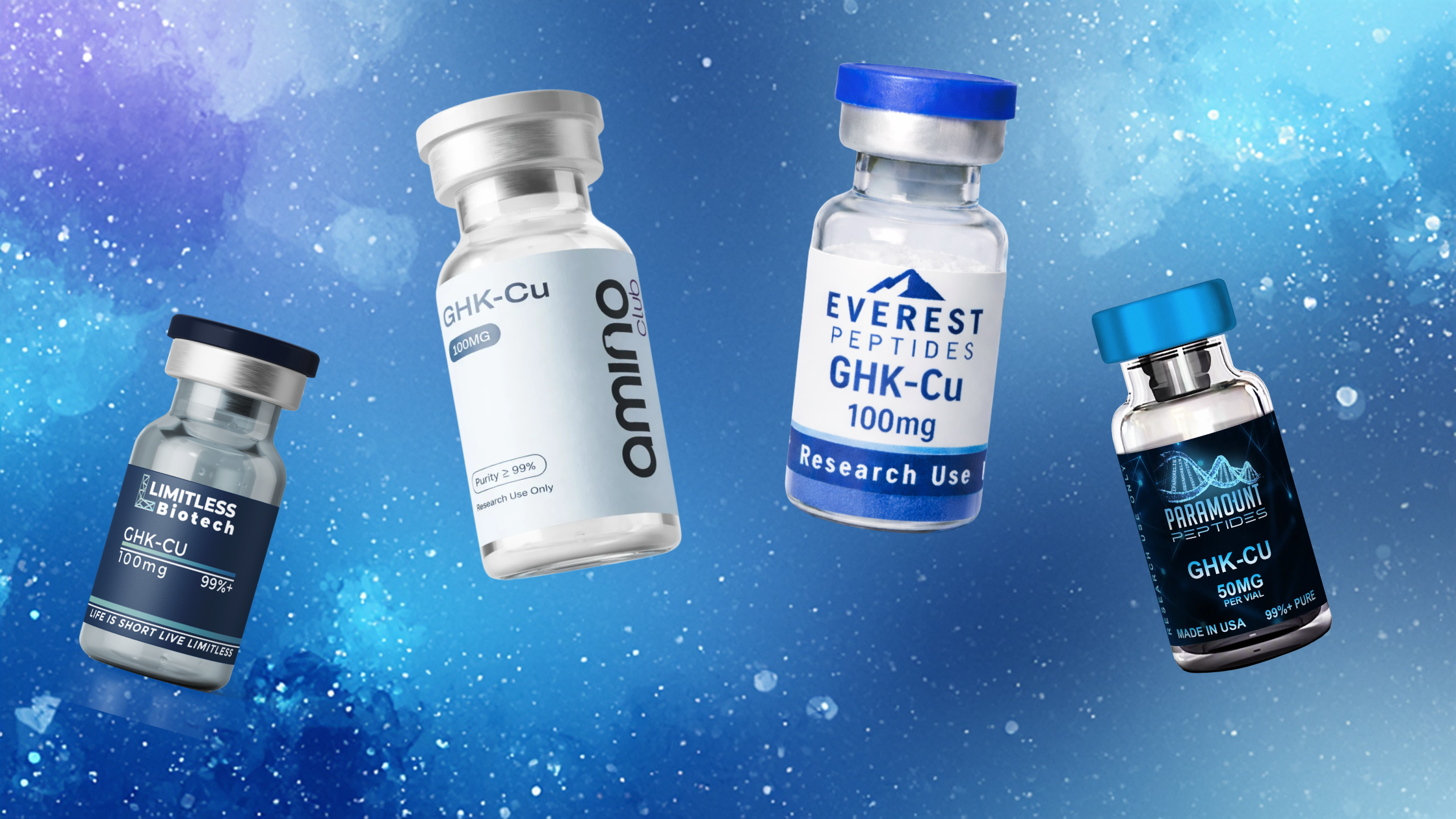
Your body makes GHK-Cu on its own. It also stops making very much of it. Plasma levels run around 200 ng/mL at age 20 and drop to roughly 80 ng/mL by 60, and that curve tracks the mirror pretty closely.
Structurally it is three amino acids (glycine, histidine, lysine) wrapped around a copper ion. Functionally it behaves less like an ingredient and more like a foreman. A 2015 review in BioMed Research International walks through the collagen, elastin, and glycosaminoglycan data, and a 2018 follow-up from Pickart and Margolina mapped shifts across roughly 4,000 human genes, many tied to repair and antioxidant defense.
The number people quote most often comes from an ultrasound study of 21 subjects using GHK-Cu gel daily for three months. Average collagen density rose 28%, and the top quartile of responders hit 51%. Small sample, industry-adjacent, worth knowing both things at once. It still lines up with what four decades of separate lab work predicted.
What separates it from every other anti-aging ingredient is range. Collagen types I and III, elastin, blood vessel growth, antioxidant activity, and control over the enzymes that chew through your skin’s structural proteins. Most compounds do one of those.
Give it eight to twelve weeks before you judge it. The visible change is structural, and structure takes time.
We run Amino Club’s GHK-Cu, which ships with a published certificate of analysis on every batch. Code BRAINFLOW takes 20% off.
BPC-157 Belongs in a Skin Article, Not Just a Gym One
Ask ten people what BPC-157 does and nine will say gut or joints. The skin data has been sitting there since 2001 and almost nobody in the beauty world reads it.
In that 2001 study published in Burns, BPC-157 cream was tested against silver sulfadiazine, the standard burn treatment at the time, in mice with deep partial thickness burns. Two weeks in, the BPC-157 group had reversed the poor re-epithelialization seen in untreated animals. Silver sulfadiazine did not manage the same. Treated skin also came back stronger and more elastic on tensiometry.
The mechanism is what makes it interesting for scars specifically. Rather than pushing one lever, BPC-157 nudges several at once. Nitric oxide signaling, ERK pathway activation, growth factor receptor expression, blood vessel formation, and collagen organization. The 2021 Frontiers in Pharmacology review collects the whole body of work, from incisions to alkali burns to diabetic ulcers.
Fair warning on the evidence quality. The overwhelming majority of that research comes out of a single lab group in Zagreb. Replication from independent teams is thinner than the enthusiasm online would suggest.
Worth trying if your issue is any of the following.
- Post-procedure downtime after microneedling, lasers, or peels
- Acne marks and scars that refuse to fade
- Wounds and cuts that take forever to close cleanly
- Skin that stays inflamed long after the trigger is gone
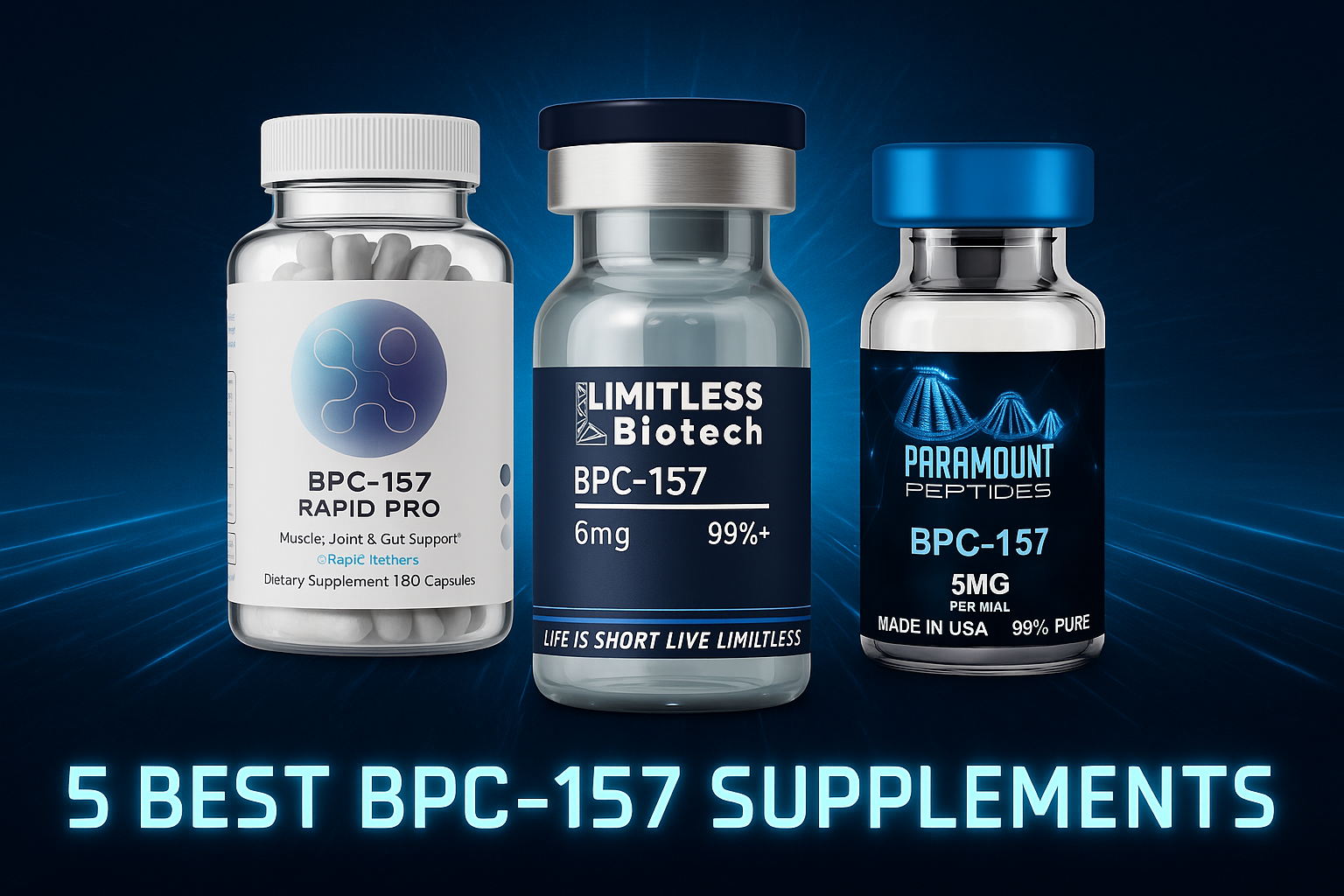
For research-grade injectable BPC-157, Amino Club carries it with full COAs, and code BRAINFLOW takes 20% off.
If needles and reconstitution are a hard no for you, the oral route exists. Infiniwell’s BPC-157 Rapid Pro is the formulation our readers keep coming back to, and code WELCOME15 saves 15% for first-time customers.
NO NEEDLES REQUIRED
Infiniwell BPC-157 Rapid Pro
The best oral BPC-157 formulation we have used. No mixing, no bacteriostatic water, no fridge math. Take it and get on with your day.
Shop Infiniwell → Save 15%Use code WELCOME15 for 15% off your first order.
KPV Turns Down Angry Skin Without Steroids
Redness that shows up for no reason. Cheeks that flare after a workout, a glass of wine, or a cold walk to the car. Acne that is less about oil and more about the fact that everything on your face is permanently irritated.
KPV is three amino acids long (lysine, proline, valine), clipped from the tail end of alpha-MSH. Tiny molecule, and it keeps the parent hormone’s anti-inflammatory punch while dropping the pigmentation effects.
Its main move is blocking NF-kB, which functions as the master switch for inflammatory gene expression inside your cells. Flip that switch off and production of TNF-alpha, IL-1 beta, and IL-6 falls with it. Those are the molecules doing the swelling, the redness, and the slow structural damage underneath.
City dwellers should read this next part twice. A 2025 study in Toxicology exposed human keratinocytes to PM10 fine particulate matter, the stuff hanging in traffic air. KPV restored cell viability, cut IL-1 beta secretion, shut down the ERK and p38 MAPK and NF-kB axis, and suppressed caspase-1 activation. Air pollution ages skin. KPV interfered with the mechanism.
It is also quietly antimicrobial. Alpha-MSH fragments containing the KPV sequence show activity against Staphylococcus aureus, including methicillin-resistant strains, and against Candida albicans, without flattening immune function generally. For acne skin, where bacteria and inflammation feed each other in a loop, that combination is unusually well matched.
The honest limitation nobody mentions: KPV is very hydrophilic and penetrates intact skin poorly on its own. Slapping it in a basic cream and expecting deep results is optimistic. Delivery method matters here more than with GHK-Cu, and there are no registered human clinical trials for KPV in dermatology yet.
We source ours from Amino Club at $39.99 for 10mg, which code BRAINFLOW brings down to about $32.
TB-500 Moves Cells Toward the Damage
Cut yourself and your body floods the area with thymosin beta-4, a protein stored in platelets, white blood cells, and wound fluid. It is one of the first instructions your tissue receives after injury.
The classic 1999 paper in the Journal of Investigative Dermatology tested it in a rat full-thickness wound model. Re-epithelialization rose 42% over saline controls by day four and as much as 61% by day seven. Wounds contracted at least 11% more. In a Boyden chamber, keratinocyte migration jumped two to three-fold within four to five hours from as little as 10 picograms of peptide.
Read that carefully, because most articles gloss over it. That study used full-length thymosin beta-4, all 43 amino acids. TB-500 is a synthetic 7 amino acid fragment of it. The fragment keeps the migration and blood vessel effects, but it is not the identical molecule the headline numbers came from, and anyone quoting 61% for TB-500 specifically is stretching.
Where it earns its spot is next to BPC-157. The two cover different halves of the repair process rather than duplicating each other.
- BPC-157 handles blood vessel formation and how neatly collagen gets laid down
- TB-500 handles getting keratinocytes and fibroblasts to physically migrate into the gap
Structure plus movement. That combination is why the pairing shows up in so many recovery protocols, and Amino Club stocks TB-500 with full COAs. Code BRAINFLOW for 20% off.
Epitalon Plays a Much Longer Game
The other four peptides work on your skin. Epitalon works on the clock inside your skin cells, which is a different proposition entirely and needs different expectations.
Telomeres are the caps on the ends of your chromosomes. Every cell division shaves a little off. Get short enough and the cell stops dividing and goes senescent. In skin that reads as thinning, slack, slow healing, and the dull look no cream has ever fixed.
Epitalon is four amino acids (alanine, glutamic acid, aspartic acid, glycine) developed from a bovine pineal extract in Soviet-era research. It has been shown to activate telomerase and elongate telomeres in human cell cultures, and a 2025 replication in normal epithelial and fibroblast cell lines found dose-dependent lengthening through hTERT upregulation.
It also supports melatonin output through the pineal gland, which tends to show up as better sleep. Sleep is not a soft benefit for skin. Growth hormone release peaks in deep sleep, and that is when the repair crew clocks in.
Now the part the supplement blogs leave out. A 2025 review in the International Journal of Molecular Sciences covering 25 years of Epitalon research states plainly that its mechanism of action remains unresolved, and that short and long-term toxicity, genotoxicity, and carcinogenicity data are simply absent from the published literature. There are no placebo-controlled Western human trials. The rodent lifespan numbers people love to quote are mixed and regimen-dependent.
Most people run it in short cycles, 10 to 20 days once or twice a year, rather than daily. That pattern comes from the original research protocols, not from anything anyone has optimized in humans. Amino Club carries research-grade Epitalon, 20% off with code BRAINFLOW.
The Five Skin Peptides Side by Side
How to Stack Them Without Wasting Money
These five do not compete for the same receptors, so combining them compounds rather than cancels. That does not mean you should buy all of them in week one.
- Start with GHK-Cu alone. Give it two months. It is the single highest-yield entry point and you need a clean baseline to judge anything else against.
- Add BPC-157 if repair is the bottleneck. Scarring, post-procedure downtime, anything that heals badly.
- Add KPV instead if inflammation is the bottleneck. Chronic redness, breakouts, reactive skin. Do not add both at once or you will never know which one worked.
- Bring in TB-500 only alongside BPC-157. On its own for cosmetic skin goals it is the least compelling buy on this list.
- Cycle Epitalon separately. Short runs, once or twice a year, judged on sleep rather than on your face.
GHK-Cu with BPC-157 is the pairing that comes up most often in skin protocols. One rebuilds structure, the other speeds resolution. Some vendors sell them premixed with TB-500 added, marketed under blend names like GLOW and KLOW.
Collagen Powder Is Not the Same Thing
The word “peptide” does double duty on supplement shelves, and it confuses almost everyone. Collagen peptides are hydrolyzed collagen protein. They hand your body raw material, mostly glycine and proline, which it can use to build new collagen if it decides to. They are the bricks on the pallet.
The five on this list are messages. GHK-Cu tells fibroblasts to build. BPC-157 tells blood vessels to form. KPV tells your immune system to stand down. One delivers supplies, the other runs the job site.
You can drink collagen every morning for a year and still have sluggish repair and a permanently irritated face, because supplies were never the problem. Both have a place. If your budget only stretches to one, the signaling side does more per dollar.
The FDA Just Voted on Four of These Five
This is the freshest thing in the article, so pin it to memory. On July 23 and 24 of 2026, the FDA’s Pharmacy Compounding Advisory Committee reviewed seven peptides for the Section 503A bulk drug substances list.
BPC-157, KPV, and TB-500 each passed 8 to 6 with one abstention. Epitalon passed on day two. The committee voted against the recommendation of the FDA’s own scientific review team, which had advised adding none of them.
Four important caveats before anyone gets carried away.
- The vote is advisory. FDA is not obligated to follow it.
- Nothing became legal to compound on July 24. Rulemaking runs six to twelve months minimum.
- None of these are FDA-approved drugs, and this process would not change that.
- GHK-Cu was not on the agenda at all. It sits in cosmetic ingredient territory, which is a separate lane.
What it does tell you is direction of travel. These compounds are drifting from gray market toward regulated pathways, and that is a meaningfully better world for anyone using them.
Get These Right Before You Buy Anything
Peptides are amplifiers. Amplify a shaky foundation and you get a louder shaky foundation.
- Sleep. Repair happens in deep sleep. Six broken hours undoes a lot of expensive signaling.
- Sunscreen. Building collagen while UV dismantles it is treading water at a premium price.
- Vitamin C, zinc, copper, protein. Vitamin C is a required cofactor for collagen synthesis. Run low and even the best peptide underdelivers.
- Third-party testing. Ask for the COA. Any vendor that hesitates has answered your question.
- Storage. Most research peptides ship lyophilized, need bacteriostatic water to reconstitute, and belong in the fridge away from light once mixed.
Where to Buy These Peptides
Purity and handling separate a product that works from a vial of expensive powder. Two vendors we buy from ourselves.
For research-grade GHK-Cu, KPV, TB-500, Epitalon, BPC-157, and the premixed skin blends, Amino Club tests every batch seven times and publishes the results. Code BRAINFLOW saves 20% on the whole order.
For oral BPC-157 without reconstitution or needles, Infiniwell’s BPC-157 Rapid Pro is our pick, and code WELCOME15 takes 15% off a first order.
TESTED 7X, COAS PUBLISHED
Amino Club: research-grade skin peptides
GHK-Cu, KPV from $39.99 for 10mg, TB-500, Epitalon, BPC-157, and the GLOW and KLOW blends. Read the certificate of analysis before you order.
Shop Amino Club → Save 20%Use code BRAINFLOW for 20% off. Sold for research use only.
Skin Peptide FAQ
Where can I buy these peptides?
We buy research-grade GHK-Cu, KPV, TB-500, Epitalon, and BPC-157 from Amino Club, where code BRAINFLOW takes 20% off and every batch ships with a published COA. For an oral BPC-157 option, Infiniwell’s Rapid Pro uses code WELCOME15 for 15% off a first order.
How long until I see anything?
GHK-Cu research shows measurable change starting around week four, with the meaningful shift landing between weeks eight and twelve. Repair peptides like BPC-157 and TB-500 show up faster on an active wound or fresh procedure. Epitalon operates on a scale you cannot see in a mirror at all.
Which one should I pick if I only buy one?
GHK-Cu, unless your primary complaint is inflammation rather than aging. Redness, breakouts, and reactive skin point toward KPV instead.
Can I use these with retinol and vitamin C?
Vitamin C is a cofactor for collagen synthesis, so it works with GHK-Cu rather than against it, though some people prefer separating them by a few hours. Retinol pairs fine for most, but if your barrier is already irritated, layering an acid and a strong retinoid on top of a new peptide is asking for trouble.
Are these legal?
They are sold in the United States as research compounds for laboratory use, not as approved drugs or dietary supplements. BPC-157, KPV, TB-500, and Epitalon received favorable advisory votes from the FDA’s compounding committee in July 2026, but that recommendation is non-binding and rulemaking has not happened yet.
Do I have to inject them?
Routes discussed in the research include topical, oral, and injectable depending on the compound. GHK-Cu has the most topical human data of the five. KPV penetrates intact skin poorly without a delivery vehicle. Oral BPC-157 formulations exist and are the usual starting point for people who want nothing to do with needles.
The Short Version
Your skin runs on instructions. Those instructions get quieter with age, and no amount of surface product fixes a signaling problem.
GHK-Cu has the deepest evidence and belongs first in almost every case. BPC-157 and TB-500 earn their place when repair is the weak link. KPV is the move for skin that is inflamed rather than aged. Epitalon is a bet on the long horizon, and an honest one only if you accept how thin the human data still is.
The people getting real results are not buying five vials and hoping. They pick one, run it properly for two months, keep sleep and sun protection handled, and build from there.
Start with one. Watch what your skin does. Then decide.
GHK-Cu, BPC-157, KPV, TB-500, and Epitalon are not FDA-approved for any indication. All information here is for educational and research purposes only and is not medical advice.
These compounds are sold as research chemicals for laboratory use only. Consult a qualified healthcare provider before beginning any protocol.
This article contains affiliate links. BrainFlow may earn a commission on qualifying purchases at no additional cost to the reader. We only recommend sources we trust.