25 Best Gifts for Biohackers in 2026 (Actually Worth Buying)

I’ve been deep in the biohacking world for years now. I’ve tried the gadgets, wasted money on junk, and eventually found the stuff that actually works. This list is what I’d genuinely recommend to someone who wants to optimize their health without burning cash on gimmicks.

I own some of these, I’ve tested others extensively, and a few are still on my own wishlist. But everything here serves a real purpose and has either solid research behind it or enough anecdotal evidence from people I trust to make the cut.

Let’s get into it.

Wearables and Trackers

Oura Ring (Gen 4)

The Oura Ring sits on your finger and tracks sleep, HRV, activity, and recovery without looking like you’re wearing medical equipment. I switched from a wrist tracker years ago and never looked back. The sleep data is genuinely useful. You get detailed breakdowns of deep sleep, REM, and light sleep stages plus a readiness score each morning.

What I actually use it for: figuring out how alcohol, late meals, or training intensity affect my sleep. Turns out one glass of wine doesn’t wreck my HRV. Three does. That kind of personal data is worth the investment.

The Gen 4 added daytime heart rate monitoring which was the main thing missing before, and the battery lasts about a week. It’s the tracker I recommend most often.

Check Price โ†’

Fitbit Sense 2

If you want something more versatile than the Oura, the Fitbit Sense 2 is solid. It does sleep tracking, heart rate, stress monitoring via an EDA sensor, and workout logging. It’s not as accurate for sleep as the Oura in my experience, but it does a lot more overall and makes a good entry point for someone who’s new to health tracking.

Check Price โ†’

Whoop 4.0

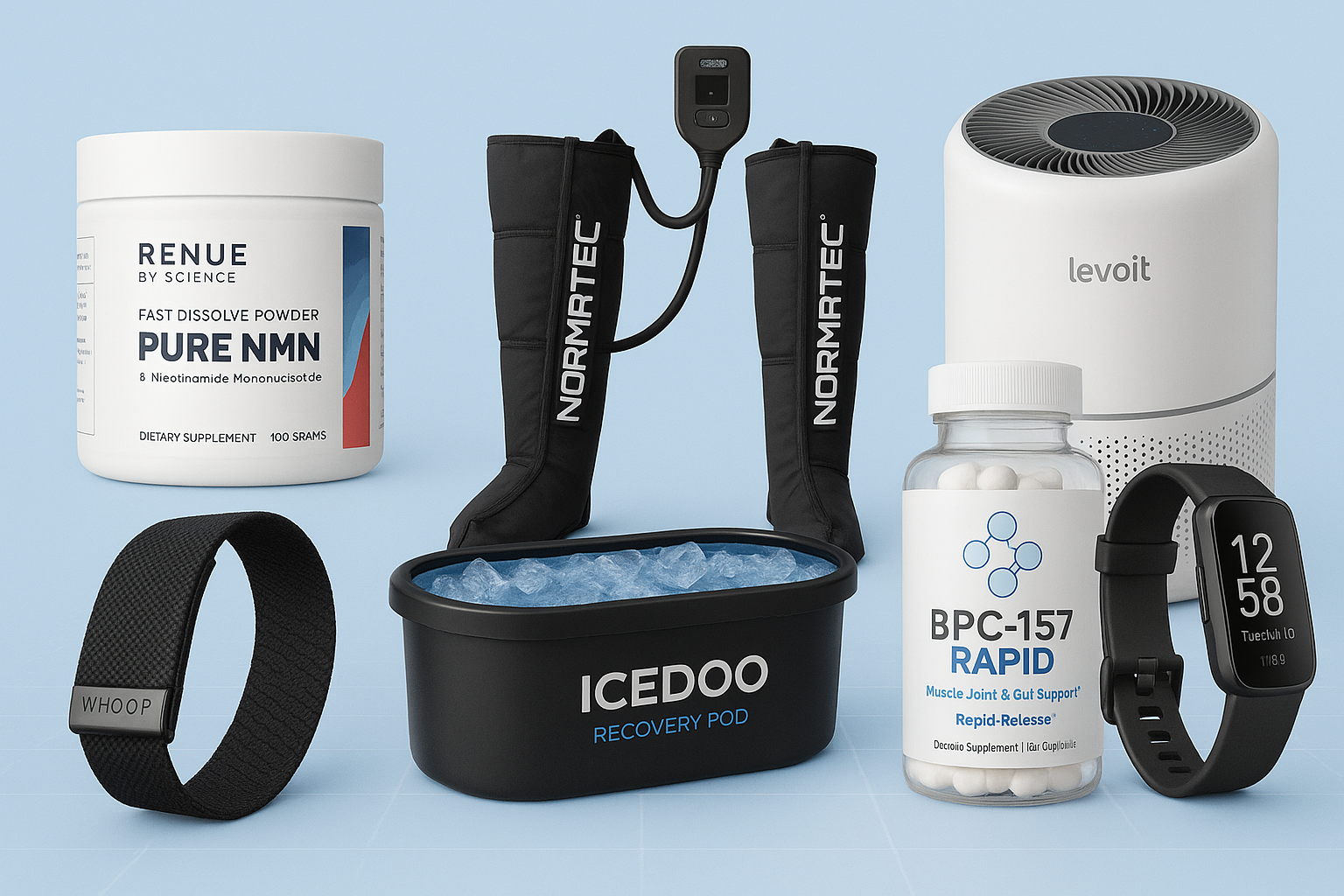
The Whoop is what serious athletes use. It tracks strain, recovery, and sleep with a focus on telling you how hard you can push on any given day. No screen, which some people love and others hate. The subscription model is annoying but the data and coaching insights are legit.

If the person you’re shopping for is really into training optimization, Whoop might be the better choice over Oura.

Check Price โ†’

Muse 2 Meditation Headband

Meditation is one of those things where it’s hard to know if you’re doing it right. The Muse headband fixes that. It reads your brainwaves via EEG and gives you real time audio feedback. When your mind wanders, you hear storms. When you’re focused, birds chirp. It sounds gimmicky but it actually works for training attention.

I use mine a few times a week. It’s made meditation feel less like guessing and more like actual practice with measurable progress.

Check Price โ†’

Blue Light Blocking Glasses

Simple, cheap, effective. Wearing blue light blockers for an hour or two before bed helps protect melatonin production. I keep a pair of Livho glasses on my desk and throw them on after sunset if I’m still working. They’re like $15 to $25 and make a noticeable difference in how fast I fall asleep.

They’re not life changing, but they make a solid stocking stuffer for anyone who stares at screens late.

Check Price โ†’

Recovery Gadgets

Red Light Therapy Panel

Red and near infrared light therapy boosts cellular energy production (ATP), speeds muscle recovery, improves skin health, and may help with inflammation and mood. I stand in front of mine for 10 to 15 minutes most mornings.

You don’t need to drop $500+ on a Joovv to get the benefits. This affordable red light panel delivers the same wavelengths at a fraction of the price. Once you feel the difference in recovery and energy, you’ll use it daily.

Check Price โ†’

Portable Infrared Sauna

Full sized saunas are expensive and take up space. This portable sauna box runs under $150 and gives you most of the benefits in a fraction of the footprint. You still get the heat exposure that’s linked to cardiovascular benefits, lower blood pressure, reduced inflammation, and longevity markers.

I use mine a few times a week. Twenty to thirty minutes while watching something on my phone. You sweat like crazy and feel great after. Way more practical than building out a sauna room.

Check Price โ†’

Cold Plunge Tub

Cold exposure has exploded in popularity thanks to Wim Hof and Huberman. The research backs it up too. Regular cold plunging boosts mood, reduces inflammation, helps with muscle soreness, and releases norepinephrine which makes you feel alert and focused.

You can fill a chest freezer with water and DIY it, or you can get a purpose built tub like the Icedoo cold plunge. I do 2 to 3 minutes at around 50ยฐF a few times a week. It sucks every time, but the mental clarity after is worth it.

Check Price โ†’

Theragun Prime

Massage guns are everywhere now but quality varies wildly. The Theragun Prime hits the sweet spot between power and price. It goes deep enough with its 16mm stroke depth to actually release tight muscles without feeling like a toy.

I use mine on my back and legs after training. It takes five minutes and makes a real difference in how I feel the next day. If you know someone who lifts or runs, they’ll use this constantly.

Check Price โ†’

NormaTec Compression Boots

These are the inflatable leg sleeves you see athletes wearing on Instagram. They use pulsing air pressure to move fluid out of your legs and improve circulation. After a long run or leg day, twenty minutes in the Hyperice NormaTec 3 makes your legs feel fresh again.

They’re a splurge, but if you’re shopping for someone who takes recovery seriously, NormaTec boots are a premium gift that actually gets used.

Check Price โ†’

Renue by Science Longevity Supplements

Renue by Science makes some of the most legit longevity supplements on the market. Their top sellers are NMN (nicotinamide mononucleotide) for NAD+ boosting, LIPO Quercetin for senolytic support, and their Liposomal Fisetin. All three target cellular aging pathways that researchers like David Sinclair talk about.

What sets Renue apart is their liposomal delivery and third party testing. You’re actually absorbing what you’re paying for. If someone’s into longevity and wants to support NAD+ levels or clear senescent cells, this is where I’d start. Code BRAINFLOW saves 15% at checkout.

Check Price โ†’

Weighted Blanket

There’s nothing fancy here. Just a 15 to 20 pound blanket that makes you feel like you’re being hugged. The deep pressure touch increases serotonin and melatonin which helps with anxiety and sleep quality. I use one every night.

It’s not high tech but it works. It’s a good gift for anyone who has trouble winding down at night.

Air Purifier

Indoor air quality matters more than most people realize. A good HEPA air purifier removes dust, pollen, mold spores, and other particulates you’re breathing all day. The Levoit air purifier is solid and affordable.

This is more of a “gift for the house” but if someone spends a lot of time indoors working or sleeping, cleaner air supports everything else they’re trying to optimize.

Check Price โ†’

Supplements and Nutrition

Athletic Greens AG1

AG1 is the greens powder you’ve seen advertised on every podcast. Tim Ferriss calls it his “all in one nutritional insurance” and it’s his top single supplement pick. One scoop has 75+ vitamins, minerals, probiotics, and whole food extracts.

Is it necessary if you eat perfectly? Probably not. But most people don’t eat perfectly, and AG1 fills gaps and supports gut health without you having to think about it. Mix it with water in the morning and you’re covered.

Check Price โ†’

Momentous Supplements

Momentous makes some of the cleanest supplements on the market. Everything is NSF certified which means it’s tested for banned substances and purity. They make creatine, magnesium L-threonate, collagen, protein, and more.

Ferriss has praised their quality and I’ve used their magnesium and creatine myself. If you’re putting together a supplement stack for someone, Momentous is a brand you can trust isn’t cutting corners.

Check Price โ†’

Collagen Peptides

Collagen supports skin elasticity, joint health, hair, nails, and muscle recovery. It’s one of those supplements that’s easy to take (tasteless powder in coffee or smoothies) and has enough research behind it to be worth using long term.

Momentous Collagen Peptides is my go to since it has the same NSF certified quality as their other products. Just mix it into your morning coffee and forget about it.

Check Price โ†’

Four Sigmatic Mushroom Coffee

Functional mushrooms like Lion’s Mane, Chaga, and Cordyceps have real benefits for focus, immune function, and energy. Four Sigmatic makes mushroom infused coffee and elixirs that taste decent and give you the benefits without having to take a bunch of capsules.

Lion’s Mane specifically is solid for cognitive support. The mushroom coffee makes a good gift for someone who wants to upgrade their morning routine without adding complexity.

Check Price โ†’

MCT Oil

MCT oil (medium chain triglycerides) converts quickly to ketones, giving your brain and body fast fuel. It’s the key ingredient in Bulletproof Coffee and useful for anyone doing keto or intermittent fasting.

Bulletproof Brain Octane (pure C8 MCT) is the gold standard. Add it to coffee, smoothies, or salad dressings. Helps with mental clarity and sustained energy without blood sugar spikes.

Check Price โ†’

Peptides

Peptides have become one of the most exciting areas in biohacking. Compounds like BPC-157, TB-500, and various growth hormone secretagogues are being used for everything from injury recovery to gut healing to anti-aging. If you know someone who’s into this space, quality sourcing matters more than almost anything else.

Paramount Peptides

For injectable research peptides, Paramount Peptides is where I point people. They carry BPC-157, TB-500, and pretty much every other peptide you’d want for recovery or optimization research. Third party tested, US based, and they actually stand behind their products.

You’ll need to create an account to see pricing on their site, but it’s well worth it. The quality is there and they’re not trying to hide behind sketchy overseas shipping. Code BRAINFLOW saves 15% on your order.

Shop Paramount Peptides โ†’

Infiniwell Oral BPC-157

Not everyone wants to inject. Infiniwell BPC-157 Rapid Pro is an oral formula that’s stabilized to survive stomach acid and actually absorb. It’s particularly useful for gut issues like leaky gut, IBS, or general digestive repair since BPC-157 originated from gastric juice anyway.

If someone’s curious about peptides but not ready to pin, oral BPC from Infiniwell is a good entry point. Clean company, legit product, no needles required. Code IW15 saves 15% at checkout.

Check Price โ†’

Tools and Testing

23andMe Health + Ancestry Kit

DNA testing gives you data you can’t get any other way. 23andMe shows health predispositions, carrier status for certain conditions, and traits that can inform diet and lifestyle choices. Plus the ancestry stuff is interesting.

Some people use their raw genetic data with third party tools to dig even deeper into things like methylation and detox pathways. It’s a one time test that provides insights you can use for years.

Check Price โ†’

Books

Boundless by Ben Greenfield

Boundless is basically an encyclopedia of biohacking. Ben Greenfield covers everything: sleep optimization, cognitive enhancement, fitness protocols, nutrition strategies, supplements, and longevity tactics. It’s dense but incredibly useful as a reference.

If someone wants one book that covers all the major biohacking topics with actual protocols they can implement, this is it.

Check Price โ†’

Lifespan by David Sinclair

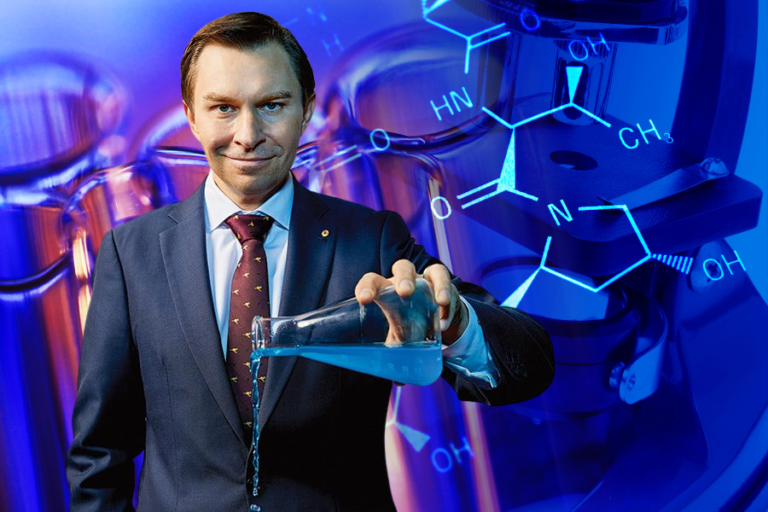
Dr. David Sinclair is a Harvard geneticist who studies aging. Lifespan explains why we age at the cellular level and what research suggests we can do about it. He covers NAD+ boosters, fasting, exercise, and other interventions that may extend healthspan.

It’s written accessibly even though the science is complex. Anyone interested in longevity will find this book eye opening.

Check Price โ†’

Smarter Not Harder by Dave Asprey

Dave Asprey (Bulletproof founder) takes a different angle. His approach is about getting maximum results with minimum effort. Smarter Not Harder covers efficient workouts, nutrition hacks, stress reduction, and ways to optimize without spending hours on protocols.

It’s a good pick for someone who’s interested in biohacking but doesn’t want it to become a full time job.

Check Price โ†’

Why We Sleep by Matthew Walker

If you’re going to optimize one thing, make it sleep. Matthew Walker’s Why We Sleep explains why sleep affects literally everything: memory, immune function, mood, creativity, longevity. He also gives practical advice for improving sleep quality.

This book will change how you think about sleep. Required reading for anyone serious about health.

Check Price โ†’

The Bottom Line

You don’t need all of this stuff. Nobody does. But if you’re shopping for someone who’s into health optimization, or you want to treat yourself, these are the products that actually deliver results.

Start with the basics: good sleep tracking, quality supplements, and maybe a recovery tool or two. Build from there based on what matters most. The expensive gadgets are nice but the fundamentals (sleep, nutrition, movement, stress management) still matter more than any device.

Whatever you choose, make sure it’s something that’ll actually get used. The best biohacking gift is one that becomes part of someone’s daily routine.

30 Best Gifts for Runners in 2026 (From a Runner Who’s Tested Them)

0

I run. Not fast, not always far, but consistently enough that I’ve burned through more gear than I’d like to admit. Some of it was worth every penny. Most of it sits in a drawer collecting dust.

This list is the stuff that doesn’t end up in the drawer. Whether you’re shopping for a beginner who just signed up for their first 5K or a marathon veteran chasing a BQ, these are gifts that actually get used.

The Shoes (Yes, You Can Gift These)

Buying running shoes for someone else is risky. But if you know their size and what they like, these are the ones worth gifting.

Nike Vaporfly 3

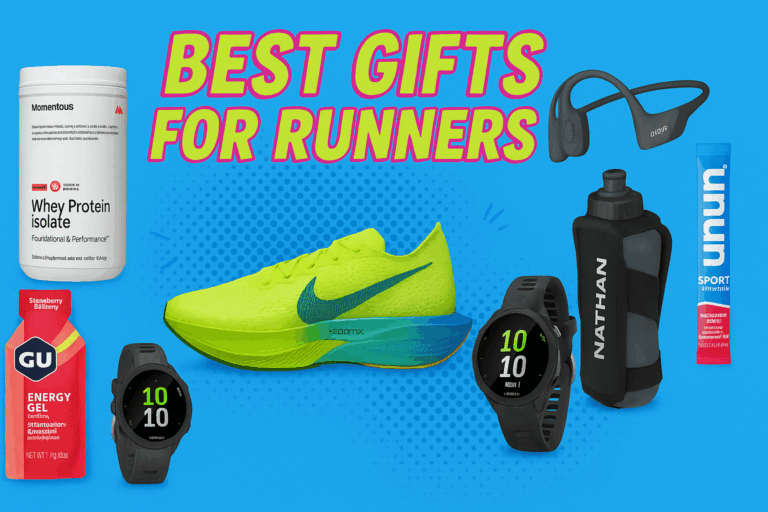
The carbon plate racing shoe that changed everything. These aren’t for daily training. They’re for race day, for PRs, for the runs that matter. The ZoomX foam and carbon plate combo genuinely makes you faster. Not by much, maybe 2-4%, but when you’re chasing a time goal, that matters.

They’re expensive and they won’t last more than 200-300 miles. But for a serious runner who hasn’t tried super shoes yet? This is a memorable gift.

Check Price โ†’

Balega Blister Resist Socks

Nobody asks for socks. But every runner who gets good socks immediately understands. Balega’s blister resist line has enough cushion to feel plush without being bulky, and they actually prevent hot spots on long runs. I’ve done 20 milers in these without a single issue. Buy a 3-pack and call it a day.

Check Price โ†’

Watches and Wearables

A GPS watch changes how you train. Period. Here’s what’s actually worth buying in 2025.

Garmin Forerunner 265

The sweet spot for most runners. AMOLED display that’s actually readable in sunlight, accurate GPS, solid heart rate tracking, and training metrics that help you understand if you’re overdoing it or ready to push harder. Battery lasts about two weeks in smartwatch mode or 20+ hours of GPS tracking.

If you’re not sure which Garmin to get someone, this is the one. It does everything a serious runner needs without the $800+ price tag of the Fenix line.

Check Price โ†’

Coros Pace 3

Coros has been eating Garmin’s lunch on value. The Pace 3 costs half what comparable Garmins do and the battery life is absurd. We’re talking 24 days in watch mode and 38 hours of GPS. For ultramarathoners or anyone who hates charging things, it’s hard to beat.

The interface isn’t as polished as Garmin’s and the third-party app ecosystem is smaller, but for pure running functionality, it delivers.

Check Price โ†’

Apple Watch Ultra 3

For runners already locked into Apple’s ecosystem who want one device for everything. The Ultra 3 adds satellite communications for off-grid adventures and bumps battery to 42 hours. It’s not the best pure running watch, but it’s the best smartwatch that also happens to run well. Action button for quick workout starts, always-on display, and 5G connectivity so you can leave your phone at home.

Check Price โ†’

Polar H10 Chest Strap

Wrist-based heart rate is convenient but not always accurate, especially during intervals. A chest strap fixes that. The Polar H10 is considered the gold standard for accuracy and pairs with pretty much everything including Garmin, Apple, Peloton, and apps like Strava. If your runner is serious about using HR zones to guide their workouts, this is the upgrade.

Check Price โ†’

Audio Gear

Shokz OpenRun Pro 2

Bone conduction headphones let you hear music and your surroundings at the same time. Cars, bikes, other runners, dogs. You hear it all. For road running, this is a safety thing. For trail running, it just makes the experience better.

The Pro 2 improves on the original with better bass and longer battery. Sound quality won’t match AirPods. That’s the tradeoff. But after running with bone conduction for a year, I can’t go back to earbuds that block everything out.

Check Price โ†’

Goodr Running Sunglasses

Twenty five bucks for sunglasses that don’t bounce, don’t slip when you sweat, and come in ridiculous colors. Goodr figured out that runners don’t need $200 Oakleys. They need cheap glasses they won’t cry about losing. The polarized lenses are decent, the frames are light, and they have a cult following for good reason.

Check Price โ†’

Hydration and Fuel

Long runs require calories and fluids. Here’s how to carry them without hating your life.

Nathan SpeedDraw Plus Insulated Flask

Handheld bottles took me a while to get used to. Now I prefer them over vests for anything under 15 miles. The Nathan SpeedDraw stays cold for hours, has a pocket for your phone and gels, and the grip is comfortable enough that you forget you’re holding it. Well, almost.

Check Price โ†’

SPIbelt Running Belt

The original bounce-free running belt. Stretchy enough to hold a phone, keys, gels, and cards without flopping around. I wear mine for every race. Some people prefer vests, but for minimalists who hate carrying stuff, the SPIbelt is the answer.

Check Price โ†’

Maurten Gel 100

What the elites actually use. Maurten’s hydrogel technology is easier on the stomach than traditional gels because it encapsulates the carbs and releases them gradually. No sugar spike, no GI distress for most people. They’re expensive and the taste is… neutral. But for runners who’ve had bad experiences with other gels, Maurten is worth trying.

Check Price โ†’

GU Energy Gels Variety Pack

If you’re not sure what gels someone likes, a variety pack lets them experiment. GU has been around forever and the flavors range from great (salted caramel) to questionable (birthday cake). Some have caffeine, some don’t. A 24-pack will get a marathoner through a full training cycle.

Check Price โ†’

Nuun Sport Electrolyte Tablets

Drop a tablet in water, wait for it to fizz, drink. Simple electrolyte replacement without the sugar overload of Gatorade. I use these after hot runs and during long efforts. The citrus fruit flavor is my favorite. A 4-pack of tubes makes a solid stocking stuffer.

Check Price โ†’

Recovery Tools

You can’t run hard if you don’t recover. These are the tools that actually help.

TriggerPoint GRID Foam Roller

Foam rolling hurts in the good way. The GRID has a hollow core so it doesn’t deform over time, and the textured surface digs into tight spots without being torture. I roll my IT bands, calves, and quads after most runs. Five minutes makes a noticeable difference in how I feel the next day.

Check Price โ†’

Theragun Mini

The full-size Theraguns are overkill for most people. The Mini fits in a gym bag, costs half as much, and still delivers enough percussion to work out knots. I use it on my calves when they get angry and on my hip flexors after long sits. Battery lasts long enough that I rarely think about charging it.

Check Price โ†’

OOFOS Recovery Slides

Slides you put on after a run when your feet hate you. The foam is absurdly soft and the arch support actually feels good instead of aggressive. Some people wear these as house shoes. For post-long-run shuffling around, they’re perfect.

Check Price โ†’

Hyperice NormaTec 3 Compression Boots

A splurge, no question. The NormaTec 3 is the gold standard in recovery compression. These pneumatic sleeves inflate and squeeze your legs in waves, flushing out metabolic waste and improving circulation. Designed by an MD/PhD and used by elite athletes everywhere. Seven levels of compression, Bluetooth app connectivity, and a rechargeable battery that lasts 2+ hours. Do they work? The science is mixed but the feeling is undeniable. Twenty minutes in these after a hard effort and your legs feel reset. If budget isn’t an issue and your runner takes training seriously, this is the gift they’ll brag about.

Check Price โ†’

Supplements Worth Taking

Momentous Collagen Peptides

Joint health matters more the longer you run. Collagen supplements have some evidence behind them for reducing exercise-related soreness and supporting connective tissue. Momentous makes a clean, NSF-certified version that dissolves in coffee or smoothies without any weird taste. One scoop a day is the standard protocol.

Check Price โ†’

Momentous Creatine

Creatine isn’t just for lifters. Endurance athletes benefit too, especially for repeated high-intensity efforts like intervals and hill sprints. It also supports cognitive function, which is nice when you’re grinding through mile 20. Five grams a day, every day. Simple.

Check Price โ†’

Momentous Grass-Fed Whey Protein

After a long run, you need protein to rebuild. A quality whey powder makes it easy to get 20-25g without cooking. Momentous Grass-Fed Whey is what I use. Clean ingredients, NSF certified for sport, and it actually mixes well without clumping. Chocolate after a hard workout hits different.

Check Price โ†’

Apparel That Actually Works

Sprints Running Hat

Sprints has become the cult favorite running hat brand, and for good reason. They make lightweight, breathable hats with wild patterns and funny slogans that runners actually want to wear. The “Cheaper Than Therapy Running Club” design is perfect for anyone who knows running is their therapy. Mesh vents, built-in sweatband, and they only weigh about 1.7 ounces. At $35, they’re priced right for a gift that’ll get worn every run.

Check Price โ†’

Baleaf Running Jacket

Baleaf has become the go-to brand for affordable running gear that actually performs. This lightweight jacket is water resistant, wind resistant, and packs down small enough to tie around your waist when you warm up. They make versions for men and women, and everything’s under $50. That’s Patagonia performance at a fraction of the price. Perfect for those days when it’s cold at the start but you know you’ll be shedding layers by mile two.

Check Price โ†’

Safety Gear for Early Mornings and Late Nights

Running in the dark is peaceful until a car doesn’t see you. Be visible.

Noxgear Tracer360 Visibility Vest

This thing lights you up like a Christmas tree. Fiber optic cables run through the vest and glow in multiple colors. Drivers see you from blocks away. It’s a bit much for daylight running but for 5am or 9pm miles, it’s legitimately useful. Rechargeable battery lasts several hours.

Check Price โ†’

Petzl Actik Core Headlamp

Rechargeable, bright enough to light a trail, and light enough that you forget it’s on your head. The red light mode preserves night vision and won’t blind oncoming runners. I use mine for pre-dawn runs and it’s never let me down. Essential for anyone running before sunrise or after sunset.

Check Price โ†’

Road ID

A bracelet or shoe tag with your name, emergency contact, and any medical info first responders should know. It’s not exciting but it matters. If something happens and you can’t speak, this speaks for you. Comes in different styles so it doesn’t look like a medical alert bracelet.

Check Price โ†’

Books That Make You a Better Runner

Daniels’ Running Formula by Jack Daniels

The training bible. Jack Daniels (yes, real name) coached Olympic athletes and this book breaks down the science of training into understandable, actionable plans. VDOT tables, workout prescriptions, periodization. Dense but worth it for anyone who wants to understand why they’re running certain workouts.

Check Price โ†’

Run Fast. Eat Slow. by Shalane Flanagan

A cookbook from an Olympic marathoner who actually cares about flavor. Real food recipes designed to fuel training without being boring health food. The superhero muffins are famous in running circles. Great for runners who want to eat better without eating sad.

Check Price โ†’

What I Talk About When I Talk About Running by Haruki Murakami

Part memoir, part meditation on why we run. Murakami is a novelist who runs ultramarathons, and this book explores the mental side of putting one foot in front of the other. It won’t make you faster but it might help you understand why you bother in the first place.

Check Price โ†’

Quick Picks Under $30

Not every gift needs to break the bank. These are all useful and affordable.

KT Tape โ€“ Kinesiology tape for supporting sore muscles and joints. Runners swear by it for knee pain and plantar fasciitis. Check Price โ†’

Body Glide โ€“ Anti-chafe balm that prevents the nightmare of bloody nipples and thigh rub on long runs. Essential for marathoners. Check Price โ†’

Lock Laces โ€“ Elastic no-tie laces that let you slip shoes on and off while keeping them snug. Popular for triathletes but useful for anyone. Check Price โ†’

Running Log Journal โ€“ Old school pen and paper tracking. Some runners prefer writing down miles to using apps. There’s something satisfying about filling in the pages. Check Price โ†’

What to Actually Buy

If you’re still not sure, here’s the cheat sheet by budget:

Under $25: Balega socks, Body Glide, Nuun tablets, Goodr sunglasses

$25-75: SPIbelt, foam roller, Sprints hat, Baleaf jacket, KT Tape variety pack, books

$75-200: Shokz headphones, Theragun Mini, Nathan handheld, OOFOS slides

$200-400: Coros Pace 3, Garmin Forerunner 265, running shoes

$400+: Apple Watch Ultra 3, Hyperice NormaTec 3, Garmin Fenix

Runners are particular about their gear. When in doubt, ask what they need or get a gift card to their favorite running store. But any of the items on this list will get used. That’s the whole point.

4 Best GHK-Cu Face Serums in 2026 (Tested & Ranked)

0

I’ve been using copper peptide serums for over a year now. The difference in my skin is noticeable enough that people have asked what I’m doing differently. The answer is GHK-Cu.

GHK-Cu (glycyl-L-histidyl-L-lysine copper) is a naturally occurring peptide that your body produces less of as you age. At 20, you have around 200ng/mL in your blood. By 60, that drops to about 80ng/mL. This decline correlates with slower wound healing, thinner skin, and more visible aging.

The research on GHK-Cu is actually solid. Studies show it stimulates collagen synthesis, increases skin thickness and density, and reduces fine lines. It’s not miracle marketing. The peptide genuinely signals your skin cells to behave younger.

But not all GHK-Cu serums are created equal. Concentration matters. Formulation matters. What else is in the bottle matters. I’ve tested most of the popular options and ranked them below.

Quick Comparison

Product Best For Price Code
Infiniwell GHK-Cu Best Overall ~$50 IW15 (15% off)
Limitless Anti-Wrinkle Best Multi-Peptide ~$45 BRAINFLOW (15% off)
The Ordinary Best Budget ~$32 โ€”
Biossance Sensitive Skin ~$68 โ€”

1. Infiniwell GHK-Cu Face Serum โ€“ Best Overall

Infiniwell is physician-formulated and it shows. This isn’t some random skincare brand that slapped copper peptides into a generic base. The company works with over 25,000 healthcare professionals who recommend their products, and the formulation reflects that clinical background.

The serum targets three mechanisms: reducing muscle activity that causes wrinkles, supporting elastin and glycosaminoglycan levels, and promoting collagen synthesis. It’s a comprehensive approach rather than just dumping GHK-Cu into a bottle and calling it a day. This multi-pathway approach aligns with research published in the International Journal of Molecular Sciences showing GHK-Cu stimulates collagen, elastin, and glycosaminoglycan synthesis simultaneously.

What I notice most is the texture. It absorbs cleanly without any greasy residue. The blue tint (from the copper) is visible when you pump it out but disappears as you work it into your skin. One pump covers your entire face. Most users report tighter, smoother skin within a few weeks, with improvements in fine lines and overall hydration.

The base includes wheat germ oil, glycerin, and lecithin for nourishment without heaviness. It layers well under moisturizer and sunscreen. Some users mention the pump mechanism can be finicky and require multiple pumps to get product flowing, but once it’s going, it works fine.

Infiniwell GHK-Cu Face Serum

Use code IW15 for 15% off your first order

Get Infiniwell GHK-Cu โ†’

Check Price โ†’

2. Limitless Life Anti-Wrinkle Research Formula โ€“ Best Multi-Peptide Blend

If you want to hit aging from every angle at once, the Limitless Life Anti-Wrinkle Formula is absurdly comprehensive. The ingredient list reads like a peptide encyclopedia: Copper Peptide (GHK-Cu), Argireline, Matrixyl 3000, SNAP-8, Leuphasyl, Syn-Ake, Syn-Coll, and Syn-Tacks. Each targets a different mechanism of skin aging.

Argireline and SNAP-8 work like topical Botox alternatives, reducing muscle contractions that cause expression lines. Matrixyl 3000 stimulates collagen production. Syn-Ake mimics the effects of temple viper venom (sounds weird, works well) to relax wrinkles. Syn-Coll and Syn-Tacks support the skin’s structural matrix. A study in BioMed Research International found that copper peptide formulas improved collagen production in 70% of women tested, outperforming both vitamin C and retinoic acid.

On top of the peptide stack, you get DMAE for skin tightening, hyaluronic acid for hydration, and a bunch of organic oils (argan, squalane, grapeseed, evening primrose, jojoba) for nourishment. Plus CoQ10, alpha lipoic acid, green tea extract, and vitamins C, E, B5, B6, and B12. The formula is 72% organic with no parabens.

This is a 2oz cream formula rather than a thin serum, so it’s richer and works well as an all-in-one treatment. Reviews mention smoother skin and fading wrinkles within two weeks of consistent use. For the price and the sheer number of active ingredients, it’s hard to beat.

Limitless Life Anti-Wrinkle Formula

Use code BRAINFLOW for 15% off

Get Limitless Anti-Wrinkle โ†’

Check Price โ†’

3. The Ordinary Multi-Peptide + Copper Peptides 1% Serum โ€“ Best Budget

The Ordinary made peptide skincare accessible. At around $32 for 30mL, their Multi-Peptide + Copper Peptides serum delivers 1% GHK-Cu alongside Matrixyl 3000, Matrixyl Synthe’6, Argireline, Syn-Ake, and hyaluronic acid. That’s a serious ingredient list for the price.

The formula is vegan, cruelty-free, and free of alcohol, oils, silicone, fragrance, and gluten. It’s about as clean as budget skincare gets. The bright blue serum has an almost water-like consistency and absorbs in seconds without any residue. It layers well under other products.

Some people notice a faint metallic scent and slight tingling from the pH level, but it’s not irritating for most skin types. The main drawback is that The Ordinary formulas are no-frills. You’re getting the active ingredients without fancy delivery systems or stabilizers. For some people that’s fine. For others, a more sophisticated formulation delivers better results.

If you’re new to copper peptides and want to test the waters without spending much, this is where to start. Deciem offers a 365-day return policy as long as more than 50% of the product remains, which is generous for a skincare brand.

Check Price โ†’

4. Biossance Squalane + Copper Peptide Rapid Plumping Serum โ€“ Best for Sensitive Skin

If your skin reacts to everything, Biossance built this for you. The formula centers on sugarcane-derived squalane, a lightweight oil that’s incredibly gentle and non-irritating. Combined with vegan copper peptides, multiple forms of hyaluronic acid, and soothing ingredients like ectoin and paracress extract, it’s designed to calm as much as treat. A comprehensive review in Cosmetics journal notes that GHK-Cu has been shown to increase skin density and thickness while reducing wrinkles, making it effective even in gentler formulations.

Biossance is a clean beauty brand, so you won’t find fragrance, alcohol, or harsh actives. The serum is hypoallergenic and non-comedogenic. In their clinical testing, 100% of participants saw an instant hydration boost, and 97% reported improved firmness within a week. Those are solid numbers for sensitive skin users who usually have to sacrifice efficacy for gentleness.

The texture is silky and melts into skin without stickiness. It feels rich but doesn’t clog pores. At $68 for 50mL, it’s pricier than The Ordinary but you’re paying for a formula specifically engineered to not irritate reactive skin while still delivering copper peptide benefits.

Check Price โ†’

How to Use GHK-Cu Serums

Getting results from copper peptide serums requires using them correctly. Here’s what actually matters:

When to apply: Most people use GHK-Cu serums at night after cleansing and toning. Your skin repairs itself during sleep, so peptides applied in the evening can work alongside your body’s natural regeneration processes. That said, you can use them morning and night for faster results. A clinical study in the Journal of Biomaterials Science found that twice-daily application of GHK-Cu cream for 12 weeks significantly improved skin laxity, clarity, and reduced fine lines. If using in the morning, always follow with SPF.

How much to use: A little goes a long way. For serums, 3-4 drops or one pump typically covers your entire face and neck. Pat it in gently rather than rubbing. Let it absorb for a minute before applying moisturizer.

What NOT to mix with: Avoid using direct acids (glycolic, salicylic, lactic) at the same time as copper peptides. The low pH of acids can destabilize the peptide and reduce effectiveness. Use acids in the morning and copper peptides at night, or alternate days. Vitamin C is controversial โ€“ some formulas play well together, others don’t. If you notice your serum changing color or texture when combined, separate them.

What works well together: Hyaluronic acid, niacinamide, and retinol all pair nicely with GHK-Cu. Many people layer copper peptide serum under a retinol product at night for enhanced anti-aging effects.

When to Expect Results

This is where most people give up too early. GHK-Cu works by signaling cells to produce more collagen and repair tissue. That takes time.

Week 1-2: You’ll likely notice improved hydration and a subtle tightening sensation. Some people report a “glow” almost immediately. These are surface-level effects from the supporting ingredients.

Week 4-6: Texture improvements become visible. Skin feels smoother and more resilient. Fine lines start softening. This is when collagen synthesis effects begin showing up.

Week 8-12: Noticeable reduction in wrinkle depth. Improved elasticity and firmness. This is when deeper structural changes manifest at the surface. Research published in Aging and Disease confirms that GHK-Cu’s anti-inflammatory and tissue remodeling properties become most apparent with consistent long-term use.

Month 3+: Cumulative benefits continue. Most studies showing significant wrinkle reduction and skin thickness improvements run 8-12 weeks. Continued use maintains and builds on results.

Consistency matters more than concentration. Using a 1% serum daily will outperform a stronger product used sporadically. Build it into your routine and stick with it.

Which GHK-Cu Serum Should You Buy?

Here’s the simple breakdown:

For most people: Go with Infiniwell. It’s physician-formulated, absorbs cleanly, and delivers results without unnecessary complexity. The IW15 code makes the price reasonable, and the company has clinical credibility behind it.

For maximum anti-aging firepower: The Limitless Life Anti-Wrinkle Formula packs more peptides and actives into one product than most entire skincare routines. If you want to address wrinkles from multiple angles simultaneously, this is it. Use code BRAINFLOW for 15% off.

For budget-conscious beginners: The Ordinary lets you test copper peptides for around $30. It’s no-frills but effective. Good for seeing if your skin responds well before investing more.

For sensitive or reactive skin: Biossance formulated specifically for people who can’t tolerate most actives. If other serums have irritated you, start here.

Whatever you choose, give it at least 8 weeks of consistent use before judging. GHK-Cu works, but it works on biological timelines, not marketing timelines. The results are worth the patience.

Andrew Huberman’s Daily Routine: The Complete 2026 Protocol (With Timestamps)

I’ve been following Andrew Huberman’s routines for over three years now, and here’s what I’ve learned: the guy is meticulous. Every single thing he does – from the moment he wakes up to when his head hits the pillow – is backed by neuroscience research. And honestly? Most of it works.

Huberman is a neuroscientist and tenured professor at Stanford who runs the Huberman Lab podcast. He’s become the go-to source for science-backed health protocols, and his daily routine is basically a masterclass in optimizing your brain and body.

I’ve compiled everything he’s shared across hundreds of podcast episodes, newsletters, and interviews into one complete breakdown. Fair warning: this is detailed. But that’s the point. Huberman doesn’t do vague advice.

Quick Reference: Huberman’s Daily Timeline

Here’s the skeleton of his day. We’ll break down each piece below.

๐ŸŒ… Morning Protocol
๐Ÿ˜ด
5:30-6:30amWake up naturally (no alarm)
๐Ÿ’ง
6:00amHydration + AG1 + electrolytes
5 min
๐Ÿง˜
6:00-6:20amNSDR / Yoga Nidra
10-20 min
โ˜€๏ธ
6:30-6:45amMorning sunlight exposure
10-15 min
๐ŸงŠ
~7:00amCold shower/plunge
1-3 min
๐Ÿ‹๏ธ
7:30-9:00amWorkout (fasted)
60-90 min
โ˜•
10:00amFirst caffeine (yerba mate)
๐Ÿง  Midday Protocol
๐Ÿ’ป
10am-5pmDeep work blocks
๐Ÿฝ๏ธ
~1:00pmFirst meal (break fast)
๐Ÿ”„
3:00pmOptional: afternoon NSDR
10-20 min
๐ŸŒ™ Evening Protocol
๐Ÿšด
6:30pmEvening cardio (some days)
30-60 min
๐Ÿ
7:00pmDinner (starchy carbs)
๐Ÿ”ด
9:00pmSwitch to red lights
๐Ÿ’Š
9:30-10:00pmSleep supplements
๐Ÿ˜ด
10:30-11:00pmLights out

Now let’s get into the why behind each of these.

Morning Protocol (5:30am – 10:00am)

Huberman’s mornings are engineered. Every step serves a specific neurological purpose.

Wake-Up: No Alarm, Natural Rise

He wakes between 5:30 and 6:30am without an alarm. This isn’t just preference – waking naturally means you’re emerging from a lighter sleep phase rather than being jolted out of deep sleep. The result is less grogginess and more stable energy throughout the day.

If you need an alarm, Huberman suggests setting it for the latest acceptable time rather than hitting snooze repeatedly. Those fragmented sleep chunks between snoozes are basically worthless. He discussed this extensively in his guest series with sleep expert Dr. Matt Walker, where they covered optimal sleep structure and why fragmented sleep sabotages recovery.

The Morning Hydration Stack

First thing he does: drinks water. Two full glasses minimum. You lose a surprising amount of fluid overnight through breathing and sweating, and dehydration tanks cognitive performance fast.

But he doesn’t just drink plain water. His morning “wake-up cocktail” has three components:

Why electrolytes first thing? Huberman puts it simply: “The nervous system and neurons particularly depend on electrolytes to fire properly.” Your brain literally runs on salt. Starting the day with electrolytes helps everything from focus to mood.

NSDR: The 20-Minute Brain Reset

Before doing anything demanding, Huberman spends 10-20 minutes on Non-Sleep Deep Rest (NSDR). This is usually a guided Yoga Nidra session while still in bed.

NSDR isn’t meditation exactly – it’s a specific relaxation protocol backed by serious research. A 2002 study published in Cognitive Brain Research (Kjaer et al.) used PET scans to show that Yoga Nidra increases dopamine release in the brain by up to 65%. Huberman has cited this study multiple times, including in his episode on Tools to Enhance Working Memory & Attention, where he explained how NSDR can restore dopamine reserves depleted by stress or poor sleep.

A more recent 2024 study in Nature Scientific Reports confirmed that Yoga Nidra creates distinct brain connectivity patterns different from regular rest or sleep – validating what Huberman has been saying for years.

There are free NSDR scripts on YouTube (Huberman has released several himself). You don’t need an app or subscription. Just lie down, follow the audio, and let your nervous system reset before the day begins.

Morning Sunlight: The Non-Negotiable

Within the first hour of waking, Huberman goes outside for 10-15 minutes of sunlight exposure. He’s called this “the single best thing you can do” for energy, mood, metabolism, and sleep quality that night.

The science: bright light in your eyes triggers a cortisol spike (the healthy morning kind) and sets your circadian clock. This timing affects everything downstream – when you’ll feel tired, when you’ll be most alert, how well you’ll sleep. In his episode with Dr. Samer Hattar, Chief of the Section on Light and Circadian Rhythms at the National Institute of Mental Health, Huberman explored how light powerfully shapes mood, sleep, and mental health by aligning our internal circadian clock.

The protocol varies by weather:

  • Sunny day: 5-10 minutes of direct sun
  • Overcast: 15-20 minutes (clouds filter light intensity)
  • Before sunrise: Use bright indoor lights, then get outside as soon as the sun’s up

No sunglasses during this. You need the light hitting your retinas. And no, looking through a window doesn’t count – glass filters out too much of the relevant wavelengths.

Cold Exposure: The Dopamine Hack

After sunlight, Huberman does a cold shower or plunge. Typically 1-3 minutes at 40-55ยฐF, about 3-4 times per week.

This isn’t about being tough. Cold exposure causes a massive spike in norepinephrine, adrenaline, and dopamine. In his Episode 66 on Deliberate Cold Exposure, Huberman cited a study published in the European Journal of Applied Physiology (ล rรกmek et al., 2000) showing that cold water immersion at 14ยฐC increased plasma dopamine concentrations by 250% and norepinephrine by 530%. Unlike caffeine, this elevation lasts for hours without a crash.

He expanded on the metabolic and mental health benefits in his conversation with Dr. Susanna Sรธberg, who conducted the research establishing minimum thresholds for cold exposure benefits.

Huberman credits regular cold exposure with improving his focus, metabolism, and mental resilience. The discomfort is the point. You’re training your brain to stay calm and functional under stress.

If you’re starting out, even 30 seconds of cold at the end of a regular shower works. Build up from there.

Morning Workout (Fasted)

Huberman typically works out between 7:30 and 9:00am, still fasted (he won’t eat until around 1pm). His weekly training split looks like this:

Day Focus Type
Sunday Endurance Zone-2 cardio (jog, bike, row)
Monday Legs Heavy strength training
Tuesday Recovery Sauna + cold cycling
Wednesday Torso Push/Pull Heavy strength training
Thursday Cardiovascular HIIT / intense intervals
Friday High Intensity HIIT / circuits
Saturday Rest Active recovery or off

On strength days, he takes cognitive enhancers 30-60 minutes before training:

Between sets, he uses a breathing technique called the physiological sigh: two quick inhales through the nose, then a long exhale through the mouth. This rapidly lowers heart rate and helps recovery between efforts. A 2023 Stanford study published in Cell Reports Medicine (which Huberman co-authored) found that just 5 minutes of cyclic sighing daily produced greater improvements in mood and reduction in physiological arousal than mindfulness meditation.

โ†’ See also: Andrew Huberman’s Complete Fitness Protocol

Delayed Caffeine: Why He Waits Until 10am

Here’s one that surprises people: Huberman doesn’t touch caffeine until 90-120 minutes after waking. His first cup isn’t until around 10am.

The reason is adenosine. This chemical builds up while you sleep and makes you feel groggy in the morning. Your body naturally clears it in the first couple hours after waking. If you drink caffeine immediately, you’re just masking the adenosine – it’s still there, and when the caffeine wears off, it hits you all at once. That’s the afternoon crash.

Huberman broke down the complete science in his Episode 101 on Using Caffeine to Optimize Mental & Physical Performance. He explained that morning sunlight triggers a cortisol spike that can clear residual adenosine – but if you drink caffeine immediately, you block this natural process and set yourself up for an afternoon crash.

By waiting, Huberman lets the adenosine clear naturally. When he does have caffeine, it amplifies his alertness rather than just blocking tiredness. He prefers yerba mate over coffee – says it gives smoother energy with less dehydration.

Midday Protocol (10:00am – 5:00pm)

Deep Work Blocks

After caffeine kicks in, Huberman tackles his most demanding cognitive work. This is when he writes, researches, and does anything requiring sustained focus. He saves meetings, emails, and lighter tasks for later when mental energy naturally dips.

The key insight: schedule your hardest thinking for when you’re biologically primed for it. For most people following Huberman’s light/wake protocol, that’s mid-to-late morning.

First Meal Around 1pm (Intermittent Fasting)

Huberman practices intermittent fasting with a feeding window of roughly 12-16 hours. His first meal typically comes around 1pm – about 12 hours after his previous dinner.

This midday meal is usually protein-focused with vegetables. He keeps carbs relatively low during the day unless it follows an intense workout. After a heavy leg session, for example, he’ll add rice or potatoes to replenish glycogen. On easier days, it’s mostly meat and vegetables.

โ†’ See also: Andrew Huberman’s Diet Breakdown

Afternoon NSDR (When Needed)

If energy dips around 3pm (and it does for most people), Huberman will do another 10-20 minute NSDR session. He’s described this as hitting a “reset button” for the afternoon. Even a short session can restore focus and mood for the remaining work hours.

This isn’t a nap. It’s a guided relaxation that keeps you conscious but deeply rested. Many people find it works better than coffee for afternoon slumps.

Evening Protocol (5:00pm – Bedtime)

Evening Cardio (Some Days)

On days without a morning strength workout, Huberman often does cardio around 6:30pm. He’s mentioned that cardio may actually be more beneficial in the evening than weight training – it doesn’t interfere with sleep the way intense lifting can.

This is typically 30-60 minutes of zone-2 work: jogging, rowing, or cycling at a conversational pace. Nothing too intense. The goal is cardiovascular health and active recovery, not exhaustion.

Dinner: Carbs for Sleep

Huberman’s dinner strategy is the opposite of what most people do. While he keeps carbs low during the day, his evening meal is starch-heavy: pasta, rice, potatoes.

The reasoning: carbohydrates increase serotonin and tryptophan, which help you fall asleep. By front-loading protein during the day (for alertness) and back-loading carbs at night (for sleep), you’re working with your body’s natural rhythms rather than against them.

He avoids heavy red meat at dinner since it digests slowly and can disrupt sleep. Instead, he opts for fish, chicken, or lighter proteins alongside those starchy carbs and vegetables.

Dinner happens around 7pm – roughly 3-4 hours before bed. This gives time for digestion before sleep.

Light Management: Red Lights After 9pm

Starting around 9pm, Huberman switches all his lighting to red or amber. He’s said this practice “greatly improved” his sleep quality.

The science: blue and bright white light suppress melatonin production. Red/amber wavelengths don’t. By switching to dim, warm lighting in the hours before bed, you’re letting your brain produce the melatonin it needs for deep sleep.

His specific advice: “Avoid viewing bright lights – especially bright overhead lights – between 10pm and 4am. Use only as much light as needed. Candlelight and moonlight are fine.”

He uses actual red party bulbs in lamps around the house. Simple and cheap. Some people use blue-blocking glasses instead, which also work.

The Sleep Supplement Stack

About 30-60 minutes before bed, Huberman takes his sleep supplement stack. He’s said this combination “greatly improved his ability to fall and stay asleep.” He outlined this complete protocol in his Sleep Toolkit episode, which remains one of the most comprehensive resources on science-backed sleep optimization.

๐ŸŒ™Sleep Supplement Stack
Source: Episode #84
๐Ÿง 
Magnesium L-Threonate
Crosses blood-brain barrier, promotes relaxation
145mg
๐Ÿต
L-Theanine
Calms without sedation, improves sleep quality
100-400mg
๐ŸŒผ
Apigenin
Chamomile extract, mild sedative effect
50mg
โ„๏ธ
Glycine
Lowers body temperature for deeper sleep
2g
๐Ÿง˜
GABA
Inhibitory neurotransmitter, promotes calm
100mg
๐Ÿ’ค
Myo-Inositol
Every 2-3 nights โ€ข Improves sleep depth
900mg

The core three (magnesium, theanine, apigenin) he takes every night. Glycine, GABA, and myo-inositol get rotated in a few times per week. He doesn’t use melatonin regularly – considers it more useful for jet lag than daily sleep.

Momentous is Huberman’s official supplement partner – they make versions of all these formulated to his specs. Code BRAINFLOW saves 15%.

โ†’ See also: Andrew Huberman’s Sleep Cocktail: Complete Breakdown

Lights Out: 10:30-11:00pm

With supplements taken and red lights on, Huberman winds down with quiet activities – usually reading something non-stimulating. No screens. By 10:30-11:00pm, he’s asleep.

He aims for 7-8 hours, which means waking naturally around 5:30-6:30am to start the cycle again. His bedroom is kept very dark and cool – both important for sleep quality.

Huberman calls sleep “the best nootropic.” Every other protocol in his routine – the light exposure, the exercise timing, the supplement stack – ultimately serves one goal: optimizing those 7-8 hours of recovery.

Complete Supplement Schedule

Here’s everything Huberman takes, organized by timing. Click any supplement name to shop it directly.

โ˜€๏ธ
Upon Waking
๐Ÿฅค
AG1 (Athletic Greens)
Vitamins, minerals, probiotics โ€ข Uses since 2012
1 scoop
โšก
LMNT Electrolytes
Sodium, potassium, magnesium for neural function
1 packet
๐ŸŒฟ
Tongkat Ali
Free testosterone + LH support โ€ข Tim Ferriss #660
400mg
๐Ÿ“…
Daily Foundational
๐ŸŸ
Omega-3 Fish Oil (EPA)
Brain health, mood โ€ข Thorne or Carlson brand
2-3g EPA
โ˜€๏ธ
Vitamin D3
Immune, bone, hormone support
5,000 IU
๐Ÿ’ช
Creatine Monohydrate
Cognitive + muscle function
5-10g
๐ŸŽฏ
Situational (Pre-Workout)
๐Ÿง 
Alpha-GPC3-5x/week max
Focus + mind-muscle connection
300mg
โšก
L-Tyrosine1x/week max
Dopamine precursor for motivation
500mg
๐Ÿ”๏ธ
Rhodiola Rosea
Pre-workout energy + cortisol modulation
100-200mg
๐ŸŒ™
Before Bed
Episode #84
๐Ÿง 
Magnesium L-Threonate
Crosses blood-brain barrier, promotes relaxation
145mg
๐Ÿต
L-Theanine
Calm without sedation, improves sleep quality
100-400mg
๐ŸŒผ
Apigenin
Chamomile extract, mild sedative effect
50mg
โ„๏ธ
Glycine3-4x/week
Lowers body temperature for deeper sleep
2g
๐Ÿง˜
GABA3-4x/week
Inhibitory neurotransmitter, promotes calm
100mg
๐Ÿ’ค
Myo-InositolEvery 2-3 nights
Sleep depth + quality โ€ข Episode #78
900mg

For the complete breakdown of everything he takes and why, check out our full guide to Andrew Huberman’s supplements.

๐Ÿงฌ Get Huberman’s Exact Supplements

Momentous is Huberman Lab’s official supplement partner. They carry his sleep stack, cognitive enhancers, and foundational supplements – all formulated to his specifications.

Save 15% with code BRAINFLOW โ†’

Key Protocols Explained

The Physiological Sigh (Instant Calm)

Huberman uses this breathing technique throughout the day, especially between workout sets or during stressful moments. It’s the fastest way to lower your heart rate voluntarily.

How to do it: Take a deep breath in through your nose, then without exhaling, take a second shorter inhale on top of it (your lungs will feel very full). Then exhale slowly and completely through your mouth.

One or two of these can shift you from stressed to calm in under a minute. Huberman has called it “the fastest real-time tool for reducing stress.” He covered the complete science behind this in his episode on How to Breathe Correctly for Optimal Health, Mood, Learning & Performance.

NSDR vs. Meditation vs. Napping

People often confuse these. Here’s how Huberman distinguishes them:

  • Meditation – Active focus practice. You’re directing attention (to breath, mantra, etc.)
  • NSDR/Yoga Nidra – Passive relaxation. You follow a guide and let go of control. Brain enters a state similar to sleep but you stay conscious.
  • Napping – Actual sleep. Can cause grogginess if too long or timed wrong.

NSDR gives many of the restorative benefits of sleep without the grogginess risk. That’s why Huberman uses it as a tool rather than napping.

Why Morning Sunlight Matters So Much

Of everything in Huberman’s routine, he’s most emphatic about morning light. It affects:

  • Cortisol timing (energy and alertness)
  • Melatonin timing (when you’ll feel sleepy)
  • Dopamine levels (mood and motivation)
  • Metabolism and body temperature rhythms

Miss this window consistently and everything downstream suffers. Get it right and the rest of the day falls into place more easily. If you only adopt one thing from Huberman’s routine, make it this.

FAQ: Huberman’s Daily Routine

What time does Andrew Huberman wake up?

Between 5:30 and 6:30am, naturally without an alarm. He prioritizes consistent wake times to maintain circadian rhythm stability.

Why does Huberman delay his coffee until 10am?

Adenosine (the chemical that makes you feel tired) builds up during sleep. Your body naturally clears it in the first 90-120 minutes after waking. If you drink caffeine immediately, you mask the adenosine without clearing it – leading to an afternoon crash when the caffeine wears off. Waiting lets you clear it naturally, so caffeine amplifies alertness rather than just blocking tiredness.

What supplements does Huberman take for sleep?

His nightly stack includes Magnesium L-Threonate (145mg), L-Theanine (100-400mg), and Apigenin (50mg). On 3-4 nights per week, he adds Glycine (2g) and GABA (100mg). He takes these 30-60 minutes before bed. Momentous makes these formulated to his specs – code BRAINFLOW saves 15%.

Does Huberman do intermittent fasting?

Yes. He typically fasts 12-16 hours, eating his first meal around 1pm and finishing dinner by 7-8pm. He works out fasted in the morning and saves starchy carbohydrates for his evening meal to promote better sleep.

How long is Huberman’s cold exposure?

1-3 minutes at 40-55ยฐF, about 3-4 times per week. He usually does this in the morning after sunlight exposure. Studies show cold water can increase dopamine by up to 250% for several hours without a crash.

What is NSDR and how long does Huberman do it?

Non-Sleep Deep Rest is a guided relaxation protocol similar to Yoga Nidra. Huberman does 10-20 minutes in the morning and sometimes again in the afternoon if energy dips. It’s different from meditation – you follow audio guidance and let go rather than actively focusing. Research shows it can restore dopamine and reduce cortisol.

Why does Huberman use red lights at night?

Blue and bright white light suppress melatonin production, making it harder to fall asleep. Red/amber light doesn’t have this effect. By switching to red bulbs around 9pm, Huberman allows his brain to produce melatonin naturally, improving both sleep onset and quality.

What does Huberman eat for dinner?

Starchy carbohydrates (rice, pasta, potatoes) with vegetables and lighter proteins like fish or chicken. He intentionally eats more carbs at night because they increase serotonin and tryptophan, which promote sleep. He avoids heavy red meat at dinner since it digests slowly.

Bottom Line

Huberman’s routine is comprehensive, but you don’t need to adopt everything at once. If I had to prioritize, these are the highest-impact habits:

  1. Morning sunlight – 10-15 minutes within an hour of waking
  2. Delayed caffeine – wait 90-120 minutes after waking
  3. Consistent sleep/wake times – anchor your circadian rhythm
  4. Dim lights after sunset – especially avoiding overhead lights
  5. The sleep supplement stack – magnesium, theanine, apigenin

Start with those five. Once they’re habits, layer in cold exposure, NSDR, and the workout timing. The full routine takes months to dial in, but each piece adds value on its own.

The underlying principle is simple: work with your biology instead of against it. Light in the morning, darkness at night. Stress early, recovery later. Every protocol serves that rhythm.

Related Reading


Sources: This article draws from multiple Huberman Lab podcast episodes and peer-reviewed research including: Sleep Toolkit | Deliberate Cold Exposure (Ep. 66) | Caffeine Optimization (Ep. 101) | ล rรกmek et al. (2000) European Journal of Applied Physiology | Kjaer et al. (2002) Cognitive Brain Research | Stanford Breathing Study (2023) Cell Reports Medicine

David Sinclair’s Supplement List 2026: The Complete Protocol

David Sinclair just shook up his supplement protocol again. In his June 2025 interview with Peter Diamandis, the Harvard geneticist dropped some surprises: he’s ditched taurine and TMG, switched from daily metformin to berberine, and now only takes rapamycin four times per year. If you’ve been following his old protocol, it’s time for an update.

At 55, Sinclair looks and feels significantly younger than his age, which he credits partly to his carefully selected supplements and lifestyle practices. He’s been remarkably open about his personal regimen, sharing details in interviews, podcasts, and his bestselling book Lifespan.

This guide covers Sinclair’s complete supplement stack as of late 2025, including exact dosages, why he takes each one, and what’s changed. I’ve tracked down his actual quotes from various interviews to make sure everything here is accurate.

Quick note: This is Sinclair’s personal experiment on himself. He’s not recommending everyone follow his exact protocol. Always consult with your healthcare provider before starting any new supplement regimen, especially prescription medications.

David Sinclair’s Current Supplement Stack (2025)

Here’s everything in Dr. Sinclair’s confirmed stack as of his June 2025 interview, with dosages and timing:

SupplementDoseTimingPurpose
NMN1 gramMorning with yogurtNAD+ precursor for cellular energy
Resveratrol1 gramMorning with coconut yogurtSirtuin activation
Vitamin D34,000-5,000 IUMorningImmune and bone health
Vitamin K2180-360 mcgWith D3Cardiovascular health
Fisetin500 mgMorningSenolytic (clears old cells)
Spermidine1-2 mgMorningTriggers autophagy
Alpha Lipoic Acid~500 mgEmpty stomachMitochondrial antioxidant
Fish Oil/Omega-3VariesWith foodBrain and heart health
Berberine1 gramMorningAMPK activation (replaced metformin)
NattokinaseNot specifiedDailyArterial plaque reduction
CoQ10~100 mgNightlyCounteracts statin depletion
Low-Dose Aspirin81 mgDailyAnti-inflammatory
Statin80 mgDailyCholesterol (Rx)
Rapamycin~6 mg4x per yearmTOR inhibitor (Rx)
Metformin1 gramOccasionallyAMPK activation (Rx)

What He Stopped Taking in 2025

In his June 2025 interview, Sinclair confirmed he’s no longer taking:

  • Taurine – Despite the 2023 hype around taurine for longevity, Sinclair has dropped it from his stack
  • TMG (Trimethylglycine) – Previously taken as methylation support for NMN, now discontinued
  • Quercetin – Dropped in 2023 due to concerns about interfering with SIRT6 and NRF2

Sinclair approaches aging from multiple angles simultaneously, which reflects how complex the aging process actually is. Let me break down each supplement and explain why he considers them worth taking.

NMN: The Cornerstone of Sinclair’s Protocol

If there’s one supplement that defines Sinclair’s approach to longevity, it’s NMN. This molecule serves as a precursor to NAD+, which is critical for cellular energy production and DNA repair. As we age, our NAD+ levels naturally decline, and this decline is linked to many aspects of aging.

Sinclair takes a full gram of NMN every morning, mixing the powder into yogurt or a smoothie. In his book Lifespan, he wrote “I take NMN every morning, often mixed in my yogurt (along with resveratrol).” The reason he chooses NMN over similar compounds like NR (nicotinamide riboside) comes down to unpublished research showing NMN improved endurance in mice by 50%, while NR didn’t show the same benefit. For a deeper dive into his exact protocol, check out our analysis of David Sinclair’s NMN & Resveratrol Protocol.

You might wonder why not just take NAD+ directly? Sinclair has explained that NAD+ molecules are too large to effectively enter cells. NMN, being smaller, can slip into cells and then convert to NAD+ where it’s needed. He stores his NMN in the freezer to maintain stability, something worth noting if you decide to try it yourself.

The FDA created some controversy in late 2022 by banning NMN as a dietary supplement in the U.S., claiming it was under investigation as a drug. Despite this, NMN remains available through various channels, and Sinclair continues taking it daily.

The results Sinclair reports are impressive, though anecdotal. He claims his blood work resembles that of someone decades younger. While human trials are still catching up, early studies have shown improvements in insulin sensitivity and muscle strength with NMN supplementation. If you’re interested in trying NMN yourself, read our in-depth review of Renue By Science NMN to understand what makes a quality product. There are also natural ways to boost NAD levels if you prefer to start there.

Resveratrol: The Red Wine Molecule That Started It All

Resveratrol gained fame as the compound in red wine that might explain the French Paradox, but for Sinclair, it’s much more than a curiosity. This polyphenol activates sirtuin enzymes, particularly SIRT1, which play key roles in DNA repair and metabolic regulation.

Every morning, Sinclair takes a gram of resveratrol mixed into coconut yogurt (he’s switched from regular yogurt in recent years). The fat in the yogurt is essential since resveratrol is fat-soluble and needs it for proper absorption. In a 2019 interview with Dr. Rhonda Patrick, he mentioned “I take resveratrol, about a gram or so every morning in my yogurt” because it “may help my cardiovascular system.”

A gram is a massive dose compared to what you’d get from wine. You’d need to drink hundreds of glasses to get that much resveratrol, which obviously defeats the purpose. Sinclair often jokes about this, saying supplements are a much cleaner delivery method.

He doesn’t fuss with expensive branded versions either, preferring simple bulk powder. Renue by Science Pure Resveratrol Powder (use code ‘brainflow’ for 15% off) is a reliable option that many biohackers use. Just remember to take it with fat for absorption.

The NMN and resveratrol combination is intentional. Sinclair believes they work synergistically: NMN provides the fuel (NAD+) that sirtuins need, while resveratrol activates those sirtuins. Together, they potentially amplify the anti-aging effects beyond what either could achieve alone. We’ve done a full review of Renue By Science Resveratrol if you want to learn more about quality resveratrol supplementation.

Berberine: The New Metformin Replacement

This is the biggest change in Sinclair’s 2025 protocol. In his June 2025 interview with Peter Diamandis, Sinclair revealed he’s largely switched from metformin to berberine because metformin was hard on his stomach.

Berberine is a plant compound extracted from bark and roots that activates many of the same longevity pathways as metformin. Both activate AMPK, lower blood glucose, and improve insulin sensitivity. The key difference? Berberine doesn’t require a prescription and tends to be easier on the digestive system for many people.

Sinclair now takes about 1 gram of berberine in the morning. He still keeps metformin around and takes it occasionally, but berberine has become his primary AMPK activator.

Research backs up the switch. Studies show berberine can lower blood glucose and triglycerides similarly to metformin, activate autophagy through the AMPK pathway, and reduce inflammatory biomarkers and cardiovascular disease risk. Clinical trials typically use 500mg to 1 gram taken 2-3 times daily, though Sinclair appears to take his full dose in the morning.

If you’re interested in berberine, take it with food (yogurt or olive oil works well) since it’s fairly insoluble. Thorne Berberine is a quality option.

Nattokinase: The New Addition for Arterial Health

Another new addition to Sinclair’s stack is nattokinase, an enzyme found in the Japanese fermented food natto. In his June 2025 interview, Sinclair mentioned adding it based on a Chinese study showing impressive results for arterial plaque.

The study (Chen et al. 2022) showed nattokinase reduced carotid artery plaque size by up to 36% in approximately two-thirds of participants. Nattokinase works by breaking down fibrin, a protein involved in blood clot formation, which may help reduce clotting and improve blood flow.

Given Sinclair’s family history of heart disease and his focus on cardiovascular health (he’s been on a statin since age 29), adding nattokinase makes sense as another layer of arterial protection. Double Wood Nattokinase provides 4,000 FU per serving and is a solid choice if you want to add this to your stack.

The Vitamin D3 and K2 Partnership

While not as exotic as NMN or resveratrol, vitamins D3 and K2 form a key foundation in Sinclair’s stack. These two work together in ways that many people don’t realize.

Sinclair aims for 4,000 to 5,000 IU of vitamin D3 daily. In a 2020 tweet, he noted that doctors recommend 400 to 4,000 IU daily, and he personally takes “at least 2,500 IU daily.” He pairs this with 180 to 360 micrograms of vitamin K2, specifically the MK-7 form.

The reason for taking them together is worth understanding. Vitamin D helps your body absorb calcium, but K2 directs that calcium to your bones rather than letting it accumulate in your arteries. Without K2, the calcium mobilized by vitamin D could actually contribute to arterial stiffness. In a 2021 interview with Dr. Steven Gundry, Sinclair specifically mentioned taking K2 “for my blood vessels.”

Given his family history of heart disease, this combination makes sense. Thorne Vitamin D3 and Life Extension Super K are both solid choices if you’re looking to add these to your routine.

Spermidine: Mimicking the Benefits of Fasting

Despite its unfortunate name (yes, it was first discovered in semen), spermidine is found throughout our bodies and in foods like wheat germ, mushrooms, and aged cheese. What makes it special for longevity is its ability to trigger autophagy, the cellular cleaning process that removes damaged components.

In a 2020 Instagram Live chat, Sinclair revealed: “I’ve recently started taking spermidine as well, because we want to induce autophagy. And that would help induce what fasting would already do or accentuate the benefits of fasting.” He takes between 1 and 2 mg daily, viewing it as a way to boost the autophagy he’s already promoting through intermittent fasting.

The research on spermidine is promising. Studies in mice have shown it can extend lifespan and improve cardiovascular health. Human trials have found links to improved memory and heart health markers. For Sinclair, it’s another tool to keep cells in a cleaner, more youthful state by continuously prompting them to clear out cellular junk. For more details on how and why Sinclair uses this compound, see our analysis of David Sinclair’s Spermidine Protocol.

Renue by Science Liposomal Spermidine provides a high-quality option for those interested in trying this lesser-known longevity compound.

Fisetin: The Senolytic That Made the Cut

Senolytics are compounds that help destroy senescent cells, those “zombie” cells that accumulate with age and pump out inflammatory factors. Fisetin is a natural senolytic that Sinclair has kept in his stack even after dropping quercetin.

Sinclair used to take 500 mg each of both fisetin and quercetin daily with yogurt. But in 2023, he dropped quercetin from his regular routine while continuing with fisetin at 500 mg daily.

Why the change? New research suggested that high-dose quercetin might interfere with certain longevity proteins like SIRT6 and NRF2. Too much quercetin could potentially work against some of the anti-aging pathways Sinclair is trying to activate. Plus, you can get plenty of quercetin from a healthy diet rich in onions, capers, and apples.

Fisetin, found naturally in strawberries and persimmons, remains in his stack. Mayo Clinic research has shown it can clear a significant percentage of senescent cells in mice and extend their remaining lifespan. By removing these problematic cells, fisetin helps reduce the chronic inflammation they cause.

If you’re following Sinclair’s current approach, Double Wood Fisetin is a solid choice.

Alpha Lipoic Acid: A Personal Favorite Returns

Alpha lipoic acid holds a special place in Sinclair’s heart since it was the focus of his PhD research decades ago. This unique antioxidant is both fat and water-soluble, allowing it to work throughout the body, including in the mitochondria where energy is produced.

After years of not mentioning it, Sinclair reintroduced ALA to his routine. In a 2021 interview with Dave Asprey, he revealed he takes around 500 mg daily. His decision was influenced by meeting Dr. Denham Harman, who proposed the free radical theory of aging and had been taking ALA most of his life, remaining active into his nineties.

ALA supports mitochondrial function by helping convert glucose into ATP energy. As mitochondrial efficiency declines with age, ALA might help counteract that decline. Sinclair takes it on an empty stomach for better absorption, which fits well with his intermittent fasting schedule. Double Wood’s ALA supplement provides an affordable option at around $9 on Amazon.

CoQ10: Protecting Against Statin Side Effects

Coenzyme Q10 might seem like an odd addition to a cutting-edge longevity stack, but for Sinclair, it’s necessary. He mentioned on Twitter in 2020 that he takes CoQ10 every night specifically because he’s on a statin.

Statins, while excellent for lowering cholesterol, have an unfortunate side effect: they reduce the body’s production of CoQ10. This happens because the same biochemical pathway that produces cholesterol also produces CoQ10. The depletion can lead to muscle aches and fatigue, which is why many doctors recommend CoQ10 supplementation for statin users.

Sinclair likely takes around 100 mg nightly, though he hasn’t specified the exact dose. Beyond just counteracting statin side effects, CoQ10 serves as an antioxidant that protects cell membranes and supports mitochondrial function. Pure Encapsulations CoQ10 is a high-quality choice for this important cofactor.

Fish Oil: A Late Addition to the Stack

Fish oil wasn’t part of Sinclair’s original protocol. He didn’t mention it at all in his 2019 book Lifespan. But by 2023, he had incorporated fish oil supplements into his routine.

While Sinclair hasn’t specified his exact dose, he’s aware that experts like Dr. Andrew Huberman and Dr. Peter Attia take substantial amounts, around 2 grams of EPA and 1.5 grams of DHA daily. Given Sinclair’s mostly plant-based diet, supplementing with omega-3s makes sense to ensure he’s getting these essential fatty acids. Andrew Huberman’s supplement list shares several overlaps with Sinclair’s, showing some consensus among longevity experts.

The benefits of omega-3s for aging are well-documented. They reduce inflammation, support brain health, and may even slow telomere shortening. Some studies have found that people with higher omega-3 levels in their blood have lower mortality rates and slower biological aging. Sinclair has noted that algae oil might be a better choice than fish oil since it’s plant-based and doesn’t have the heavy metals that can be in fish oil. Nordic Naturals Ultimate Omega, which Dr. Rhonda Patrick uses, is a great choice for quality fish oil.

The Prescription Medications: Metformin, Statins, Aspirin, and Rapamycin

Four prescription or over-the-counter medications round out Sinclair’s pharmaceutical approach to longevity.

Metformin was previously a daily staple, but Sinclair now only takes it occasionally due to stomach issues. When he does take it, it’s about 1 gram, and he skips it on days when he exercises hard at the gym because some evidence suggests metformin might blunt the beneficial effects of exercise on muscle growth.

His reasons for keeping metformin around are both personal and scientific. His family has a history of diabetes, and metformin is excellent at preventing it. But beyond that, metformin activates AMPK, shifting the body into a metabolic state similar to fasting. It essentially tricks your cells into thinking they’re in a mild energy crisis, triggering protective and repair mechanisms. Now that he’s switched primarily to berberine, he gets similar benefits without the GI distress.

The statin story is particularly interesting. Sinclair has been on 80 mg of a statin (likely atorvastatin) since age 29. Genetic testing through 23andMe revealed he had high cardiovascular disease risk, prompting his doctor to start him on preventive therapy unusually early. On the Joe Rogan podcast, he joked that his genetic results basically said “give up now” regarding heart disease risk.

Low-dose aspirin at 81 mg daily rounds out his cardiovascular protection. While recent guidelines have become more cautious about recommending aspirin for everyone, Sinclair continues taking it for its anti-inflammatory effects and potential cancer prevention benefits. He’s aware of the bleeding risk but has decided the potential benefits outweigh the risks in his case. Bayer Low-Dose Aspirin is available cheaply if you’re considering this addition, though definitely discuss it with your doctor first given the bleeding risks.

Rapamycin represents the experimental edge of Sinclair’s protocol. This immunosuppressant drug has shown remarkable life-extending properties in animal studies by inhibiting mTOR. But here’s the update: Sinclair now only takes rapamycin about four times per year, not weekly as previously thought. In his June 2025 interview, he mentioned that recent research on epigenetic aging found rapamycin didn’t appear to have effect on that measure, whereas things like fasting, acarbose, and metformin did better.

The Lifestyle Foundation That Makes It All Work

Sinclair constantly emphasizes that supplements are maybe 20% of his longevity strategy. The other 80% comes from lifestyle choices that anyone can implement:

Intermittent fasting is non-negotiable for him. He typically skips breakfast, having just black coffee in the morning, then eating lunch and dinner. Sometimes he’ll even skip lunch for a more extended fast. This eating pattern activates many of the same longevity pathways his supplements target.

His diet leans heavily plant-based with minimal sugar and processed foods. Red meat is rare in his diet because animal protein can raise IGF-1 and mTOR, potentially accelerating aging. He does eat some fish occasionally but gets most of his nutrition from vegetables, legumes, nuts, and healthy fats like olive oil.

Exercise is important, combining both high-intensity interval training for cardiovascular fitness and weight training to maintain muscle mass. Remember, he skips metformin on heavy workout days to maximize exercise benefits.

He regularly uses saunas and cold exposure, despite admitting he hates being cold. These hormetic stressors activate protective cellular responses that may contribute to longevity.

Perhaps most importantly, Sinclair obsessively tracks his biomarkers. He uses continuous glucose monitors, gets regular blood panels, and even tests his epigenetic age. This data-driven approach lets him see what’s working and adjust accordingly.

Should You Copy Sinclair’s Stack?

Sinclair’s regimen represents one of the most scientifically-informed personal longevity protocols out there. By targeting multiple aging mechanisms simultaneously, he’s essentially trying to stack the deck in favor of a longer, healthier life.

He often reports that his biological markers resemble those of someone much younger than his chronological age. While this is anecdotal, it’s interesting coming from someone with his scientific credentials and access to testing.

However, Sinclair himself admits we’re still in somewhat uncharted territory. “While I stand by these supplements, the truth is we are not exactly on solid ground… Most of them remain in a gray area, intriguing, yes, but far from proven.” Human trials are ongoing for many of these interventions, but definitive results will take years.

If you’re thinking about following his lead, start slowly. The basics like vitamin D, omega-3s, and intermittent fasting have broad scientific support and are relatively safe for most people. The more aggressive interventions like metformin and rapamycin require medical supervision and aren’t right for everyone.

What’s most instructive about Sinclair’s approach is how he personalizes it. Because of his family history, he prioritizes cardiovascular health with early statin use. When new research emerges, like the nattokinase studies, he’s willing to experiment. When evidence suggests something might not be working, like with quercetin and taurine, he’s willing to drop it.

The takeaway isn’t necessarily to copy Sinclair’s exact stack, but to adopt his mindset: stay informed, track your results, be willing to experiment carefully, and remember that no amount of supplements can replace good lifestyle habits.

Will Sinclair’s protocol help him live to 120? Only time will tell. But at 55, he appears to have the energy and vitality of someone much younger, and he’s inspired millions to take their healthspan into their own hands. Whether or not we can truly reverse aging, Sinclair’s approach shows we might at least be able to slow it down considerably.

Frequently Asked Questions

What supplements does David Sinclair take in 2025?

As of his June 2025 interview with Peter Diamandis, Sinclair takes NMN (1g), resveratrol (1g), vitamin D3, vitamin K2, fisetin (500mg), spermidine (1-2mg), alpha lipoic acid (~500mg), fish oil, berberine (1g), nattokinase, CoQ10, low-dose aspirin (81mg), a statin (80mg), and rapamycin (about 4x per year). He has stopped taking taurine and TMG.

Why did David Sinclair stop taking metformin?

Sinclair found metformin hard on his stomach. He now only takes it occasionally and has largely switched to berberine, which provides similar AMPK-activating benefits without the GI distress. Berberine is also available without a prescription.

Does David Sinclair still take taurine?

No. Despite the 2023 hype around taurine for longevity, Sinclair confirmed in his June 2025 interview that he is not taking taurine or TMG.

What brand of NMN does David Sinclair use?

Sinclair has made a point not to endorse specific brands. However, he takes 1 gram of NMN powder daily, mixed with yogurt. Many in the longevity community trust Renue By Science for pharmaceutical-grade NMN with third-party testing.

Why does Sinclair take resveratrol with yogurt?

Resveratrol is fat-soluble and needs fat for proper absorption. Sinclair mixes his 1 gram of resveratrol into coconut yogurt (he’s switched from regular yogurt) to maximize bioavailability. Olive oil also works.

How often does David Sinclair take rapamycin?

As of June 2025, Sinclair takes rapamycin about 4 times per year, not weekly as some sources previously reported. He mentioned that recent research on epigenetic aging found rapamycin didn’t appear to have effect on that measure.

What is the Sinclair NMN and resveratrol protocol?

Sinclair takes 1 gram of NMN and 1 gram of resveratrol every morning, mixed into coconut yogurt. He believes they work synergistically: NMN provides NAD+ that sirtuins need as fuel, while resveratrol activates those sirtuins. He stores his NMN in the freezer to maintain stability.

Why did David Sinclair add nattokinase to his stack?

Sinclair added nattokinase based on a Chinese study (Chen et al. 2022) showing it reduced carotid artery plaque size by up to 36% in approximately two-thirds of participants. Given his family history of heart disease and his long-term statin use, arterial health is a priority for him.