Walk into any health store or scroll through any wellness feed and you will see peptides and supplements mentioned in the same breath. Collagen peptides next to multivitamins. BPC-157 alongside fish oil. GHK-Cu grouped in with vitamin C serums. They share shelf space, but that is about where the similarities end.
It makes sense that people lump them together. Capsules, powders, promises to make you healthier. Both sit in that gray area between food and medicine that confuses pretty much everyone.
But peptides and supplements are not the same thing. Not even close. They work through completely different mechanisms, they solve different problems, and understanding when to use each one (or both) can save you a lot of wasted money and frustration.
This guide breaks down how they actually work, when each one makes sense, and why the smartest approach usually involves both.
Nearly half off everything at Everest Peptides
Everest Peptides' card processor is offline right now, so instead of waiting it out they're running a bank payment sale. Every peptide is 40% off, and code BRAINFLOW stacks another 15% at checkout. Pay with Zelle or Pay by Bank, same day shipping before 3pm ET, every batch third-party tested with the COA on the product page. Rated 4.9 on Trustpilot.
Shop the 40% off sale Code BRAINFLOW at checkout. Zelle and Pay by Bank only during the sale.The Simplest Way to Think About It
Supplements give your body raw materials. Peptides give your body instructions.
A vitamin C capsule hands your cells ascorbic acid, a building block they can use for collagen synthesis and antioxidant defense. But it does not tell them to actually start making collagen. It just drops off the supplies and hopes the construction crew shows up.
A peptide like GHK-Cu does the opposite. It binds to receptors on your fibroblasts and tells them to ramp up collagen and elastin production. It sends a specific signal to specific cells to do a specific job. The raw materials still need to be there, but the instruction is what gets things moving.
Once you understand that split, everything else about how they differ starts to make sense.
Related: GHK-Cu Complete Guide: Benefits, Dosage, and Research
How Supplements Work
Think about what a supplement actually does. If your diet is missing something, it covers the shortfall. Vitamin D if you do not get enough sun. Magnesium if stress is burning through your reserves. Omega-3s if you do not eat fish. Protein powder if you cannot hit your daily intake through food alone.
They work at the nutritional level, providing vitamins, minerals, amino acids, fatty acids, and plant compounds that your body needs to function. Your body needs vitamin C to synthesize collagen. It needs zinc for wound healing, magnesium for muscle recovery, omega-3s for inflammation control. Without enough of these raw materials, your cells cannot do their jobs no matter how strong the signals are.
Here is what supplements do well:
- Correct nutrient deficiencies (vitamin D, B12, iron, magnesium)
- Provide building blocks for biological processes (collagen powder, amino acids, omega-3s)
- Support baseline health and fill dietary gaps
- Offer broad, systemic nutritional support
Where supplements fall short is in telling your body what to do with those materials. You can take collagen powder every day and still have sluggish collagen production if the cells responsible for making it are not getting the right signals. The supplies are there. The work order is missing.
How Peptides Work (and Why It Is Different)
Peptides are signaling molecules. Short chains of amino acids, usually between 2 and 50, that bind to receptors on your cells and trigger specific biological responses. Your body already produces thousands of them. They regulate everything from tissue repair to immune function to hormone production.
When you use a therapeutic peptide, you are giving your body a concentrated dose of a signal it already recognizes. BPC-157 tells gut lining cells and damaged tissue to repair. TB-500 tells repair cells to migrate to injury sites. GHK-Cu tells skin cells to produce more collagen and reset gene expression toward younger patterns. Each one carries a specific message to a specific set of cells.
If you want to try research peptides in vial form, Paramount Peptides is the vendor I recommend to BrainFlow readers. American-owned, manufactured in-house in Southern California for over 12 years, with every batch verified via HPLC and mass spectrometry. Like most peptide companies, you will need to create a free account to view pricing. Code BRAINFLOW saves 15%.
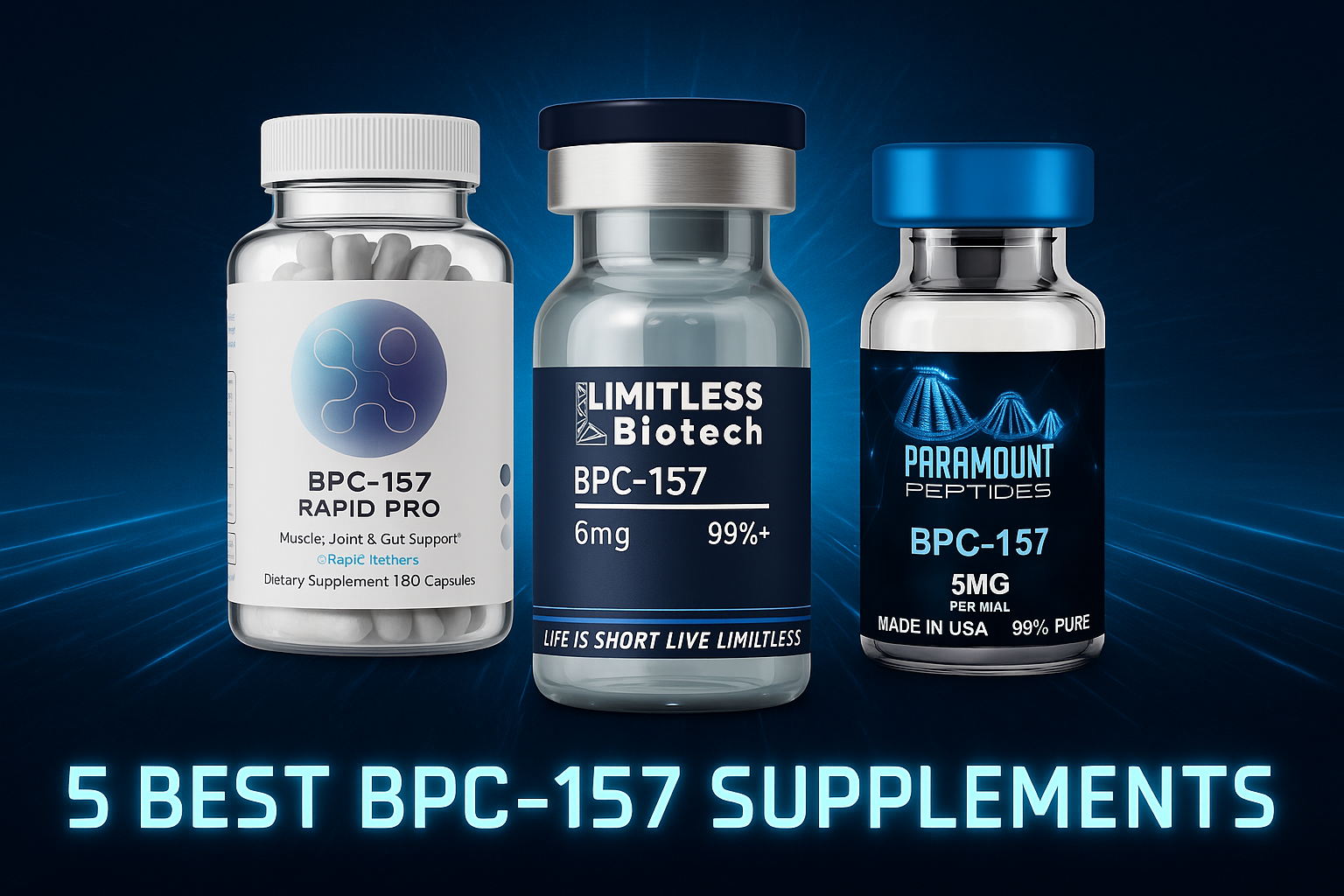
If you would rather skip the vials entirely, Infiniwell’s BPC-157 Rapid Pro is the oral option we trust. 500mcg per capsule with SNAC absorption technology. Physicians prescribe it, our community swears by it, and code BRAINFLOW takes 15% off.
Here is what makes peptides different from supplements:
- They act as cellular messengers, not raw material suppliers
- They target specific receptors and trigger specific biological responses
- They can influence gene expression (GHK-Cu affects over 4,000 human genes)
- They work at the signaling level, telling your body what to build and when
No supplement can do that. Your multivitamin is not going to tell a fibroblast to start producing collagen, and fish oil is not going to direct repair cells to a torn tendon. Supplements keep the lights on. Peptides call in the specialists.
See also: Complete Guide to BPC-157: Benefits, Dosage, and Research
Collagen Peptides vs Research Peptides: A Common Confusion
This trips people up more than anything else. The collagen peptides you put in your coffee are not the same category of compound as BPC-157 or GHK-Cu, even though they all have “peptide” in the name.
Collagen peptides are hydrolyzed protein. They are broken-down collagen that your body can absorb and use as raw amino acids (glycine, proline, hydroxyproline) to support its own collagen production. They are a supplement. They provide building materials.
Research peptides like BPC-157, TB-500, and GHK-Cu are bioactive signaling molecules. They do not just supply amino acids. They carry specific instructions that change cellular behavior. BPC-157 is 15 amino acids in a precise sequence that triggers angiogenesis and growth factor signaling. Scramble that sequence and the signal disappears, even though the raw amino acids are identical.
Think of it this way. Collagen peptides are like a pile of bricks delivered to a construction site. Research peptides are like the architect showing up with blueprints and telling the crew exactly what to build. Same materials, totally different outcome.
That explains why some people take collagen powder for months and see modest results, then add GHK-Cu and notice changes within weeks. The collagen was always helpful. But without the signal telling cells to build with it, the results had a ceiling. Adding the peptide raised that ceiling. Both types have value. Grocery store collagen for general support. Research peptides for targeted repair.
Best Oral BPC-157 on the Market
Infiniwell BPC-157 Rapid Pro
500mcg per capsule with SNAC absorption tech. No vials, no reconstitution. Just take two capsules daily. 4.8 stars from nearly 3,000 verified reviews. Code BRAINFLOW saves 15%.
How They Are Regulated Differently
On the regulatory side, supplements fall under DSHEA, the Dietary Supplement Health and Education Act of 1994. That means they can be sold without pre-market FDA approval as long as they do not claim to treat or cure a disease. The FDA can act after the fact if a product is unsafe, but there is no requirement for clinical trials before something hits the shelf.
Research peptides like BPC-157 and TB-500 sit in a different space entirely. They are not classified as supplements, and they are not FDA-approved for human therapeutic use. They are sold for research purposes only. Some peptides, like semaglutide and bremelanotide, have gone through full FDA approval for specific conditions. But the healing peptides most people in the biohacking community are interested in remain in the research category.
Does that mean they are unsafe? Not based on what we know. Animal safety data on compounds like BPC-157 is extensive, with no toxic effects found even at very high doses across dozens of studies. The regulatory framework just has not caught up with the science yet. Formal human clinical trials are still limited, but that gap is closing.
If that gap bothers you, fair enough. Stick with supplements for now and keep an eye on the research. But if you talk to people who have used quality peptides for healing, gut health, or skin, the anecdotal evidence is hard to dismiss. Thousands of people are not imagining their results. The practical trade-off is that supplements are simple to buy and use, while peptides require more homework about sourcing, handling, and protocols.
When Supplements Make More Sense
Get this part right first. Always. No peptide can fix a vitamin D deficiency, replenish magnesium your body burned through during a stressful week, or provide the omega-3 fatty acids your brain needs to manage inflammation.
Before even thinking about peptides, make sure the basics are covered:
- Vitamin D3 if you are not getting regular sun exposure (most people are low)
- Magnesium for sleep, stress, and hundreds of enzymatic reactions
- Omega-3s for inflammation management and brain health
- Protein at 0.7 to 1 gram per pound of body weight for tissue repair
- Vitamin C as a cofactor for collagen synthesis (peptides that boost collagen need this to work)
If your diet and supplement stack are dialed in and you are still not getting the results you want, that is usually when peptides enter the conversation. They are not a substitute for good nutrition. They are a layer on top of it.
Most people who come to peptides have already done the supplement thing for years. They are not beginners looking for shortcuts. They are experienced enough to know that vitamins and minerals alone have a ceiling, and they want the next level of tools to work with. But they still take their supplements every day. The peptide does not replace the stack. It sits on top of it.
Worth reading: BPC-157 Dosage Calculator and Protocol Guide
When Peptides Make More Sense
This is where peptides earn their spot. Got a nagging injury that is not healing despite rest and good nutrition? No vitamin is going to fix that. The raw materials are there. What is missing is the signal to use them. BPC-157 sends the repair signal. TB-500 drives cell migration to the injury site. Together they cover both sides of the healing equation in a way that no supplement stack can match.
Same story with skin aging. Take collagen powder, use vitamin C serums, stay hydrated. All good things. But if your fibroblasts are not getting the signal to produce, the results plateau. GHK-Cu sends that signal. A review in BioMed Research International covered how it modulates collagen, elastin, and glycosaminoglycan synthesis at the cellular level. No amount of vitamin C alone triggers that.
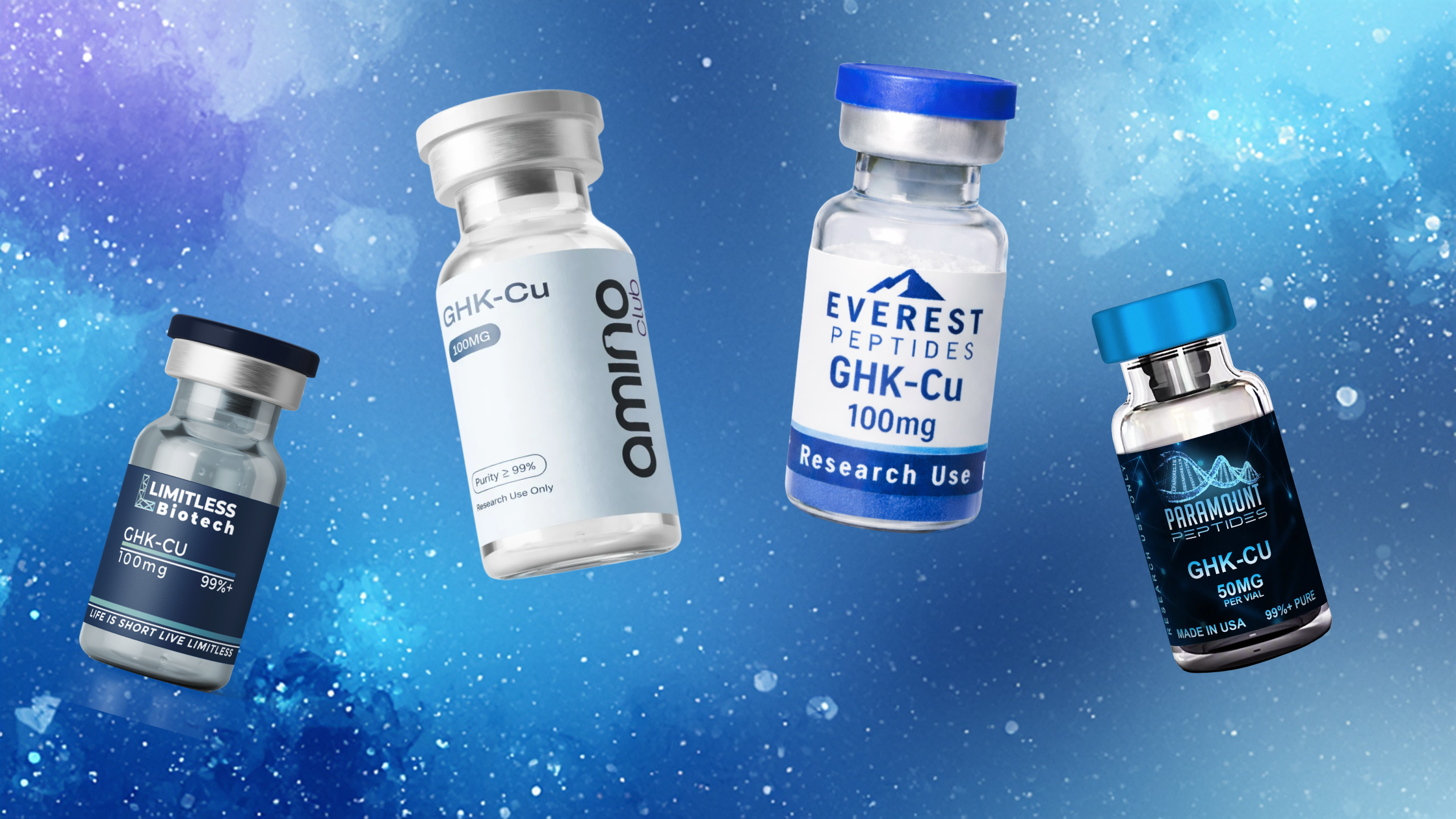
For topical use, Infiniwell’s GHK-Cu serum is something I and a lot of BrainFlow readers have been loving. You apply it directly where you want the collagen boost and the results speak for themselves. Code BRAINFLOW saves 15%. If you want GHK-Cu in vial form for research protocols, Paramount Peptides carries it with in-house American manufacturing and full HPLC verification. Code BRAINFLOW saves 15%.
Gut health is another area where peptides pick up where supplements leave off. Probiotics, glutamine, and digestive enzymes all play a role. But if the gut lining itself is compromised, those tools can only do so much.
BPC-157 targets the lining directly, promoting barrier repair and resolving inflammation at the tissue level. A 2021 review in Frontiers in Pharmacology covered its wound healing effects across skin, gut, and internal tissues. More recently, a 2025 systematic review presented at the American College of Gastroenterology confirmed those pro-healing effects across the entire GI tract.
The pattern is pretty clear: peptides make sense when the problem is not a lack of raw materials but a lack of action at the cellular level.
TB-500 is another good example. An injured tendon has all the collagen building blocks it needs from your diet and supplements. What it lacks is the signal to move repair cells to the site fast enough. Research on thymosin beta-4 showed it increased wound re-epithelialization by 61% at day seven by driving that cell migration. No supplement replicates that kind of targeted repair acceleration.
Why Using Both Is the Smart Play
Here is the thing most people miss: you do not have to pick one or the other. The best results happen when supplements and peptides work together.
Real-world example. Say you are running GHK-Cu to boost collagen production in your skin. GHK-Cu sends the signal to fibroblasts to start working. But collagen synthesis requires vitamin C as a cofactor. Without enough vitamin C in your system, those fibroblasts get the message but cannot follow through.
Flip it around. You take vitamin C every day but your fibroblasts are barely producing collagen because the GHK-Cu levels in your blood have dropped with age. The supplies are stacked up. Nobody is using them.
Running both means the signal is strong and the materials are available. That is when you see the best results.
Practitioners who work with peptides almost universally recommend getting nutrition and supplementation dialed in before adding anything else. The peptide amplifies what is already happening in your body. If nothing good is happening, there is nothing to amplify.
Some pairings that come up often in the community:
- GHK-Cu + vitamin C + collagen powder for skin health. Signal plus cofactor plus building materials.
- BPC-157 + L-glutamine + zinc carnosine for gut repair. Repair signal plus enterocyte fuel plus mucosal protection.
- TB-500 + omega-3s + magnesium for injury recovery. Cell migration signal plus anti-inflammatory support plus muscle relaxation.
Related: Wolverine Stack Guide: BPC-157 + TB-500 for Recovery
Cost Comparison: What Are You Actually Paying For?
On the cost side, supplements are cheap. A quality multivitamin runs $20 to $40 a month. Vitamin D, magnesium, and fish oil together might cost $30 to $50. Collagen powder is $25 to $40 for a month’s supply. You can build a solid supplement stack for under $100 a month.
Peptides cost more. A single vial of BPC-157 or GHK-Cu from a quality vendor typically runs $40 to $70 and lasts two to four weeks depending on dosing. A full four to six week cycle might cost $80 to $150. Oral BPC-157 from Infiniwell runs about $80 to $100 for a month’s supply before the discount (code BRAINFLOW takes 15% off). For vials, Paramount Peptides carries the full range with 12+ years of in-house American manufacturing behind every batch. Code BRAINFLOW saves 15%.
That sounds steep next to a $15 bottle of vitamin D. But compare a $100 peptide cycle to the cost of months of physical therapy that is not moving the needle, or a cabinet full of gut health supplements that are not solving the problem. When a peptide works where other things have failed, the cost per result is actually lower.
Worth noting: most peptides are cycled, not taken indefinitely. Four to eight weeks on, a few weeks off. Supplements tend to be daily, ongoing. So the annual cost difference is smaller than the monthly numbers suggest. Many people run one or two peptide cycles per year and take supplements every day. Over twelve months, the total investment in peptides might be $200 to $400. The supplement stack will be $600 to $1200.
Can You Replace Supplements with Peptides?
No. And you should not try.
No peptide can give your body vitamin D. None of them provide magnesium or omega-3 fatty acids. They do not supply the amino acid building blocks that your muscles need to recover from a hard training session. Those are nutrient gaps that only nutrients can fill.
Going all-in on peptides while ignoring basic supplementation is like hiring a personal trainer but refusing to eat. The coach can push you all day, but without fuel, nothing gets built. And the same goes the other way. If you are only taking supplements but your body is not using them efficiently because signaling has declined with age, you are leaving results on the table.
Supplements are the foundation. Peptides are the precision tools. The foundation has to be there first. Once it is, peptides can take your results to a level that supplements alone never will. That combination is what separates people who get good results from people who get great ones.
See also: BPC-157 Oral vs Injection: Which Route Works Better?
Mistakes People Make with Both
The biggest mistake with supplements is thinking more is better. Megadosing vitamin C or stacking five different greens powders does not speed up results. Your body can only absorb and use so much at once. The rest gets excreted. A focused stack of four or five well-chosen supplements beats a cabinet full of random bottles every time.
The biggest mistake with peptides is buying cheap. A $25 vial of “BPC-157” from some random website is almost certainly underdosed, degraded, or not even the right compound. Peptides are sensitive to heat, light, and handling. Quality control matters more here than with any supplement you will ever buy. If you are going to run a cycle, spend the money on a real product from a tested vendor.
Another common mistake is expecting peptides to work like supplements. People take a peptide for three days, feel nothing, and decide it does not work. Peptides need time. Most protocols run four to six weeks for a reason. Tissue repair, collagen production, and gut lining regeneration are slow processes. You would not plant a seed and dig it up after two days to check. Same logic applies here.
Quick Reference: Peptides vs Supplements
| Supplements | Peptides | |
|---|---|---|
| Function | Provide raw materials | Send cellular instructions |
| How they work | Fill nutritional gaps | Bind receptors, trigger responses |
| Regulation | FDA-regulated (DSHEA) | Research-use only (most) |
| Cost | $30-100/month ongoing | $80-150/cycle (4-8 weeks) |
| Best for | Baseline health, deficiencies | Targeted repair, signaling, anti-aging |
| Use pattern | Daily, ongoing | Cycled (weeks on, weeks off) |
Where to Buy Research Peptides
Made it this far? Good. Sourcing is the single most important decision you will make if you decide to try peptides. A bad product from a random vendor will give you zero results and convince you the whole category is worthless. Start with trusted vendors and you skip that problem entirely.
For research-grade peptides in vial form (BPC-157, TB-500, GHK-Cu, and blends like GLOW and KLOW), Paramount Peptides is what we use. American-owned and manufactured in-house in Southern California for over 12 years. Every batch verified via HPLC and mass spectrometry. Like most peptide companies, you will need to create a free account to view pricing. Code BRAINFLOW saves 15%.
For oral BPC-157, Infiniwell’s BPC-157 Rapid Pro is the best on the market. No vials, no reconstitution. Just capsules you take twice a day on an empty stomach. 4.8 stars from nearly 3,000 verified reviews. Code BRAINFLOW saves 15%.
Research Peptide Vials
Paramount Peptides
12+ years in-house USA manufacturing. HPLC verified. Code BRAINFLOW saves 15%.
Oral BPC-157
Infiniwell Rapid Pro
500mcg capsules with SNAC tech. No vials needed. Code BRAINFLOW saves 15%.
Supplements give your body what it needs. Peptides tell your body what to do with it. You probably need both, but knowing which gap you are trying to fill is the difference between spending smart and throwing money at the wall.
If you are just starting out, build your supplement foundation first. Get your vitamin D, magnesium, omega-3s, and protein dialed in. Run that for a few months and see what improves on its own. If you are still dealing with a stubborn injury, gut issues, skin aging, or slow recovery after the basics are handled, that is your signal to explore peptides.
Get the inputs right. Then add the instructions. That is the formula.