What Brand of NMN Does Andrew Huberman Take?

What Brand of NMN Does Andrew Huberman Take?

If you’re deep into the biohacking world like I am, you’ve probably been following Andrew Huberman’s supplement routine with laser focus. The Stanford neuroscientist and Huberman Lab podcast host has been refreshingly transparent about his NMN supplementation, and after months of research, I’ve compiled everything you need to know.

The Quick Answer:

  • Brand: Renue by Science NMN
  • Dosage: 1-2 grams daily
  • Form: Sublingual powder
  • Timing: Morning, within 1-2 hours of waking

I’ve been using the same Renue by Science NMN for years now, and you can save 15% on your order with code BRAINFLOW. Here’s the full story of Huberman’s NMN journey.

The Tweet That Got Everyone’s Attention

On October 24, 2023, Huberman confirmed his brand choice with a simple tweet: “I use the powdered NMN from Renue by Science.”

But this wasn’t his first time discussing NMN publicly. Back on October 28, 2022, he revealed:

“I started taking it daily about 4-5 months ago. I sense 3 effects but I can’t be sure it’s the NMN: my hair grows ridiculously fast, energy elevated (I take it in the morning), slight appetite reduction. May be placebo. People also like renue by science.

The next day, he followed up: “I’ve used Renue NMN in pure powdered form. I liked it.

This was huge – finally, a respected scientist sharing his actual brand preference without any sponsorship agenda.

The Joe Rogan Deep Dive: Full Protocol Exposed

During his March 2023 appearance on JRE, Huberman gave us the most detailed breakdown of his NMN protocol to date:

“I take a pretty high dose. The recommendation was anywhere from 500 milligrams to about a gram and a half. I take a powder and put it under my tongue… I personally take about 2 grams per morning under my tongue.”

He then dropped the specific brand bomb: “You can buy it from Renue by Science. I have no relationship with Renue by Science… The bags of it are the best way to go because you can buy it in pretty high volume and the bags are canisters.”

This level of transparency is exactly why the biohacking community trusts Huberman.

Current Stack: NMN + NR Combo (2024-2025)

In his AMA #12 episode from October 2023, Huberman revealed he’s actually stacking both NAD+ precursors (for his complete supplement routine, check out Dr. Andrew Huberman’s Supplement List: The Complete Guide):

  • NMN: 1-2 grams daily (sublingual powder from Renue by Science)
  • NR: 500mg daily (also from Renue by Science)
  • Timing: Within 1-2 hours of waking, 30 minutes to 2 hours before first meal
  • Method: Holds NMN powder under tongue for 30-45 seconds

“I do indeed take an NR supplement every day. I take 500 mg of NR. I also, and have separately taken, an NMN supplement. I take sublingual NMN. So, I’ll take anywhere from 1-2 grams of NMN as a sublingual powder.”

Why Renue by Science Beat Out Other Brands

Here’s where it gets interesting. Huberman originally used Momentous for his NMN, but they discontinued it after the FDA’s 2022 regulatory concerns. While many companies panicked and pulled NMN from their shelves, Renue by Science stood their ground (for a full comparison of top NMN brands, see our Best NMN Supplements 2025 guide).

As Huberman explained:

“Many supplement companies responded to that [FDA ruling] and said ‘ok, we won’t sell it’. Other companies such as Renue by Science have continued to sell it.”

For biohackers, this showed Renue’s commitment to the NAD+ community when others bailed.

The Exact Product He Uses

Renue by Science offers multiple NMN formulations, but Huberman specifically uses their pure NMN powder (β-Nicotinamide Mononucleotide):

  • 100g pure powder optimized for sublingual absorption
  • Third-party tested for purity and potency
  • Made in FDA-registered, cGMP-certified facilities
  • Zero artificial additives or preservatives
  • Best cost per gram (crucial when taking 1-2g daily!)

They also make liposomal NMN capsules for those who prefer capsules over powder, but Huberman keeps it simple with the pure powder.

I’ve personally been using Renue by Science for years, and their quality has remained consistently excellent. You can save 15% on any order with code BRAINFLOW – that adds up when you’re taking 1-2 grams daily like Huberman!

Real-World Effects: What Huberman Actually Feels

Throughout multiple podcasts and tweets, Huberman has consistently reported three main effects:

  1. Energy boost: “Definitely, subjective feeling of an increase in energy”
  2. Hair/nail growth: “My hair and nails grow at a ridiculous rate”
  3. Recovery enhancement: “Recovery from workouts was much better”

He takes it early because “it was giving me a lot of energy” – and when he stopped as a control experiment, these benefits faded. That’s some solid n=1 data right there.

The Disclaimers Every Biohacker Should Hear

What I respect most about Huberman is his scientific integrity. He’s crystal clear about:

  1. Zero financial ties: “I have zero financial relationship to any company that manufactures NMN”
  2. Not for longevity hype: “I do not take NR and NMN in order to increase my lifespan”
  3. Placebo possibility: He admits effects could be placebo since human data is limited
  4. Basics first: Supplements can’t fix poor sleep, bad diet, or lack of exercise

Why Sublingual? The Science of His Method

Huberman’s choice of sublingual powder isn’t random. This delivery method:

  • Bypasses stomach acid that can degrade NMN
  • Provides superior bioavailability compared to capsules
  • Delivers faster absorption directly into bloodstream
  • Avoids first-pass liver metabolism

For those of us optimizing every variable, this matters.

Huberman’s NMN Timeline

  • Mid-2022: Started daily NMN supplementation
  • October 2022: First public disclosure on Twitter, mentions Renue by Science
  • March 2023: Full protocol reveal on Joe Rogan Experience
  • October 2023: Updates protocol in AMA, confirms continued Renue use
  • 2024-2025: Maintains 1-2g NMN + 500mg NR daily stack

The Biohacker’s Takeaway

Huberman’s transparent documentation of his NMN journey gives us invaluable data for our own experiments. His choice of Renue by Science at 1-2 grams daily represents a thoughtful approach based on both science and personal experience.

But here’s the key: he’s not chasing immortality or making wild claims. He’s simply optimizing his daily energy and recovery. That’s the kind of grounded biohacking we need more of.

Remember, Huberman always emphasizes that no supplement can replace quality sleep, proper nutrition, consistent exercise, and stress management. NMN is just one tool in the optimization toolkit – but if you’re going to use it, at least now you know exactly what one of the world’s leading neuroscientists is taking.

Ready to try Huberman’s exact NMN protocol? Get the same Renue by Science NMN powder he uses and save 15% with code BRAINFLOW.

Chris Bumstead’s Push-Pull-Legs Workout: The Complete Guide

0

If you’ve been anywhere near the fitness side of social media lately, you’ve probably seen Chris “CBum” Bumstead. The dude’s physique is absolutely insane, and after winning Mr. Olympia Classic Physique five times in a row, everyone wants to know his secret.

Well, here’s the thing: CBum’s not hiding anything. He’s been pretty open about his training, and one of his go-to routines is the Push-Pull-Legs (PPL) split. This isn’t some fancy new program either. It’s a tried-and-true method that’s been around forever, but Chris has put his own spin on it.

I’ve spent way too much time analyzing his workouts, watching his training videos, and digging through interviews. Today, I’m breaking down exactly how Chris structures his PPL routine, including the specific exercises, sets, and reps he uses to build that championship physique.

Fair warning: this routine is brutal. But if you’re ready to train like a champion (or at least understand how one trains), let’s dive in.

Chris Bumstead’s Push-Pull-Legs Workout: The Complete Breakdown

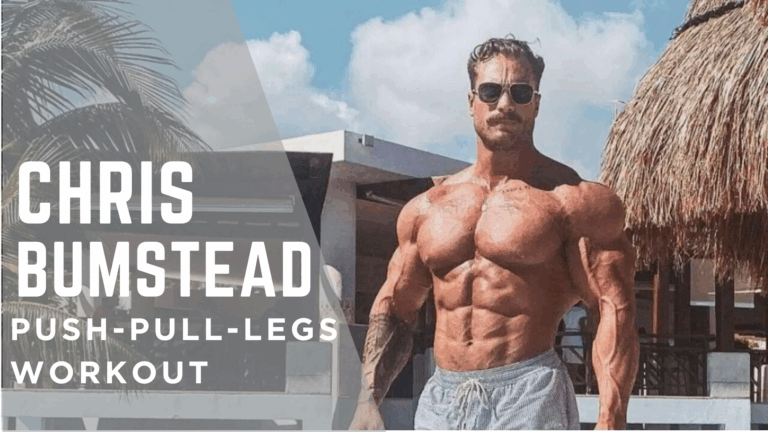
Chris Bumstead, 5x Classic Physique Mr. Olympia, has inspired many with his Push-Pull-Legs training approach

What Exactly Is Push-Pull-Legs?

Before we get into CBum’s specific routine, let’s make sure we’re all on the same page about PPL. “Push-Pull-Legs” (PPL) is a classic weight training split that organizes workouts by three main movement patterns:

  • Push Days target “pushing” muscles – primarily the chest, shoulders (deltoids), and triceps – via presses, dips, and extensions.
  • Pull Days target “pulling” muscles – mainly the back (latissimus dorsi, traps, etc.) and biceps – via rows, pull-ups/pulldowns, and curls.
  • Leg Days focus on the lower body – quads, hamstrings, glutes, and calves – via squats, leg presses, deadlifts, and other leg exercises.

This split ensures that muscles which often work together (e.g. chest, shoulders, triceps on push movements) are trained on the same day, allowing for better recovery between sessions. A traditional PPL routine might be done over 3 days per week (one push, one pull, one legs), but advanced lifters often expand it to a 6-day routine (push, pull, legs, then repeat) for higher frequency.

CBUM follows a 6-day PPL split, meaning he hits each major muscle group twice per week, using two different workouts for each category (as we’ll detail below).

Why CBum Swears By the 6-Day PPL Split

You might be thinking, “Why not just do a bro split like the old-school bodybuilders?” Well, Chris has actually tried different approaches, and he keeps coming back to PPL for some solid reasons:

Higher Training Frequency for Growth: By using a 6-day PPL, Chris can train each muscle group twice a week, rather than just once. He believes (and science agrees) that this higher frequency can maximize hypertrophy for advanced athletes. In fact, a 2016 scientific meta-analysis concluded that training a muscle group two times per week leads to significantly greater muscle growth than once per week. This routine allows Chris to capitalize on that twice-weekly stimulus for each body part.

Balanced Volume & Recovery: Instead of absolutely annihilating one muscle with countless sets in a single session (as in some bro-splits), PPL spreads the volume across two days. Chris likes that each workout has slightly fewer sets per muscle, which lets him train intensely without burning out. He can then hit that muscle again later in the week. This approach keeps him motivated and eager to train, as he mentioned – he actually enjoys going to the gym more on a push-pull-legs program. Research shows that distributing training volume throughout the week can optimize recovery and performance.

Reduced Overlap & Soreness: The push-pull-legs structure naturally sequences workouts so you’re not hitting the same muscles on back-to-back days. For example, you won’t have an intense chest workout followed by a heavy shoulder or triceps day, since those all fall under “push.” This separation helps prevent excessive soreness or interference between workouts. Chris has noted that combining complementary muscle groups in one session (like back and biceps on pull day) avoids overtraining issues that could happen if those muscles were split into separate days.

Simplicity and Consistency: Another reason Chris favors PPL is that it’s straightforward and easy to follow. With a simple three-day rotation (push, pull, legs), it’s clear what needs to be trained each day, even as the specific exercises can vary. This simplicity helps with consistency – an important factor in any program’s success. As Chris has said, the enjoyment and motivation he gets from this split means he’s more consistent with his workouts.

Hitting Weak Points Twice: Even top bodybuilders have areas to improve. In Chris’s case, he’s mentioned that his biceps and calves have been points of critique in competition. The PPL routine gives him the chance to target those weaker muscle groups twice a week, often with extra intensity techniques on those days. (You’ll see below that his pull days include multiple biceps exercises and drop sets, and his leg days give special attention to calves.) This increased frequency and focus can help bring up lagging body parts.

In short, Chris Bumstead’s 6-day push-pull-legs split lets him get the best of both worlds – the higher frequency and total training volume of a full-body or upper/lower routine, but with the focus and simplicity of a classic bodybuilding split. Studies confirm that increased training frequency, when properly managed, enhances muscle strength and hypertrophy in trained individuals.

Chris likes that this program allows him to train each muscle group twice per week for optimal gains, and he finds it “more straightforward to program” than complex splits. Now, let’s look at exactly how CBUM structures his famous PPL workouts.

The Weekly Schedule: How CBUM Structures His Training

Here’s what a typical week looks like for Chris:

  • Monday: Push Workout A (Chest Focus)
  • Tuesday: Pull Workout A (Upper Back Focus)
  • Wednesday: Leg Workout A (Hamstring/Glute Focus)
  • Thursday: Push Workout B (Shoulder Focus)
  • Friday: Pull Workout B (Lower Lat Focus)
  • Saturday: Leg Workout B (Quad Focus)
  • Sunday: Rest

Notice how he doesn’t just repeat the same workouts. Each session has a different emphasis, allowing him to hit muscles from various angles throughout the week.

He doesn’t simply copy the same push/pull/legs every time; instead, each workout day is unique. Chris uses six distinct sessions rather than repeating the exact same exercises twice. This means his “Push Day 1” has a different emphasis and exercise selection than “Push Day 2,” and similarly for pull and legs. The idea is to hit the muscles from different angles, with varied movements and rep ranges, over the course of the week. By doing so, he ensures every muscle fiber is worked, and he can address specific goals (like focusing one leg day more on quads and the other more on hamstrings, etc.).

Emphasis of Each Day: In Chris’s current PPL routine, the two push days and two pull days each have slightly different focus areas, and the two leg days target different parts of the legs:

  • Push Workout 1: Chest, Shoulders, Triceps – Pec (chest) heavy focus. This day starts with a big chest press and generally gives chest a bit more volume, while still hitting shoulders and triceps.
  • Push Workout 2: Shoulders, Chest, Triceps – Delt (shoulder) heavy focus. This day emphasizes shoulder movements more (starting with overhead presses, etc.), while chest and triceps take a secondary role.
  • Pull Workout 1: Back and Biceps – Upper lat/back focus. Emphasizes upper lats and thickness (e.g. pulldowns, heavy barbell rows) and standard biceps work.
  • Pull Workout 2: Back and Biceps – Lower lat/back focus. Includes movements targeting lower lats (like rack pulls, reverse-grip pulldowns/rows) and even more biceps isolation, including additional curl variations.
  • Leg Workout 1: Legs (Glutes & Hamstrings focus). This leg day hits posterior-chain movements (like lunges, Romanian deadlifts) to emphasize glutes and hamstrings, plus calves.
  • Leg Workout 2: Legs (Quads focus). This day prioritizes quads with squats and leg presses, while also working calves and some adductors.

this is where CBum’s approach gets really interesting. Instead of doing the same boring workouts twice a week, he’s got six completely different sessions lined up. Every workout hits the muscles from different angles with different exercises and rep schemes. Your body literally can’t adapt because you’re constantly throwing new stuff at it.

Think about it – most guys just repeat the same push day twice and wonder why they plateau. Chris? He’s playing 4D chess with his training. One push day you’re going heavy on flat bench, the next you’re burning out shoulders with overhead work. It’s this constant variation that keeps the gains coming and probably why the dude’s been dominating Classic Physique for years.

Alright, enough theory. Let’s get into the actual workouts – the exact exercises, sets, and reps that CBum uses to build that insane physique.

Push Day Workouts: Building That Classic V-Taper

This workout heavily targets the chest (pecs) at the start. Chris goes big on a bench press variation first, and even includes a chest flye exercise before triceps, to really exhaust the pecs. Shoulders and triceps are trained too, but chest is the star of Push Day 1. Here’s a sample of what Chris’s Push Workout 1 includes:

Push Day 1 – Chest, Shoulders & Triceps (Pec-Focused)

  • Barbell Bench Press (flat or incline) – 2 heavy sets of 5–8 reps, then 1 back-off set of 10–12 reps. This is the big chest strength mover. Chris often goes heavy (5–8 reps) for a couple sets to build power and size, then does a lighter, higher-rep set to pump more blood into the muscle.
  • Dumbbell Shoulder Press – 3 sets of 10–12 reps. A multi-joint press targeting the front delts (shoulders), with moderate reps for hypertrophy.
  • Chest Flyes (machine or dumbbell) – 3 sets of 10–12 reps. An isolation move to stretch and squeeze the chest muscles… doing these mid-workout further intensifies the chest focus.
  • Triceps Extensions – 4 sets of 7–10 reps, superset with the chest flyes. Right after each set of flyes, Chris immediately does a set of triceps extensions. This superset blasts the triceps while they’re already warmed up from pressing, and saves time.
  • Lateral Raises – 4 sets of 10–12 reps, with short rest (~30–60 sec). Raises for the side delts to cap the shoulders. Keeping rest periods short here increases intensity.
  • Dips – 3 sets to failure. He performs dips with an upright torso (to target triceps more than chest) as a finisher. Going to failure ensures maximum muscle fatigue on those triceps and lower chest.

Chris’s Push Day 1 is no joke… by the end, his chest, shoulders, and triceps have all been hammered. Notably, he includes some intensity techniques like supersets (flyes -> tricep extensions) and failure sets (dips) to push his muscles to the limit.

Push Day 2 – Shoulders, Chest & Triceps (Delt-Focused)

In the second push workout of the week, Chris shifts the priority to shoulders. This routine starts with shoulder-centric exercises and overall gives a bit more volume to deltoids, while still working chest and triceps sufficiently. A typical Push Workout 2 might look like this:

  • Close-Grip Bench Press – 3 sets of 8–10 reps. Using a closer grip on the barbell bench press shifts emphasis to the triceps (and also the front delts) while still hitting chest. It’s an interesting choice to lead a shoulder-focused day, but it nicely pre-exhausts triceps and chest before overhead work.
  • Standing Barbell Overhead Press – 3 sets of 10–12 reps. A big compound lift for shoulders (especially front delts), also engaging core stability since it’s standing. Moderate reps to build muscle endurance in the shoulders.
  • Pec Deck Flyes – 1 set of 8–10 reps, then 2 sets of ~40 seconds (time-under-tension). Here Chris does one heavy set of pec deck flyes for chest, then two “time limit” sets – instead of counting reps, he performs the exercise for 40 seconds straight each set. These extended sets really burn out the chest fibers.
  • Overhead Triceps Extension – 3 sets of 10–12 reps. An isolation move for the triceps (often done with a dumbbell or cable) to work the long head of the tricep.
  • Lateral Raises – 4 sets of 10–12 reps. More side delt work – shoulders are the focus, after all. Same volume as Push Day 1, but here he doesn’t necessarily rush the rest, unless…
  • Push-Ups – 3 sets to failure, superset with the last 3 sets of lateral raises. In a brutal finisher, Chris ends the workout by supersetting lateral raises with push-ups. After hitting 10–12 reps of lateral raises, he immediately drops down and does push-ups to failure. This superset ensures his shoulders (and chest/triceps from the push-ups) are completely spent by the end.

By splitting his push days like this, Chris gets to really zone in on what needs work. One day he’s all about that chest pump, the next he’s chasing those boulder shoulders. Sure, he’s still hitting all the push muscles both days, but this way he can bring up lagging areas without leaving anything behind.

It’s actually pretty genius when you think about it. Monday you’re going heavy on bench and crushing dips, Thursday you’re pressing overhead and burning out with those nasty timed flyes. Different angles, different muscle fibers getting torched. Your body never knows what’s coming next, which is exactly what you want for growth.

Pull Day Workouts: The Back Attack Blueprint

Next up are CBum’s two pull workouts. Both days train the back (upper and lower) and biceps, but with different exercises and emphasis. Chris’s back is a strong point, but he’s always working to refine it, and he also uses these days to hammer his biceps (since, as noted, arms were a weaker area for him). Here’s how his pull days break down:

Pull Day 1 – Back & Biceps (Upper Back Focus)

The first pull workout of the week emphasizes the upper lats and upper-back thickness. It starts with lat pulldowns and heavy barbell rows – great for width and thickness – then moves into biceps work and bodyweight pull-ups. A sample Pull Workout 1 looks like this:

  • Lat Pulldowns – 2 warm-up sets, then 3 working sets of 8–10 reps (on the last set, he does a drop set). Pulldowns target the latissimus dorsi (the broad back muscles) – a key to that V-taper. After warming up, Chris does three hard sets; on the final set, he’ll reduce the weight mid-set once he hits failure and continue pulling (drop set) to further exhaust the lats.
  • Bent-Over Barbell Rows – 2 warm-up sets, then 2 heavy sets of 6–8 reps, and 1 back-off set of 10–12 reps. This is a core exercise for back thickness (targeting lats, rhomboids, traps). Chris goes heavy (6–8 rep range) for two sets to build strength, then does a lighter, higher-rep back-off set to flush the muscles with blood.
  • Incline Dumbbell Curls – 4 sets of 10–12 reps. After the big back moves, Chris shifts focus to biceps. Incline dumbbell curls (performed lying back on a bench) give a great stretch on the biceps and isolate the arms.
  • Pull-Ups – 3 sets to failure. Even though he already did pulldowns, Chris also includes pull-ups (usually towards the end of the workout) to further work the back and arms with his body weight. He has mentioned he wants to improve his pull-up reps over time.
  • EZ-Bar Curls – 2 sets of 8–10 reps, then 2 sets of 40-second curls. To finish off the biceps, Chris uses the EZ-bar (angled bar) for curls. He does two normal heavy sets of ~8–10 reps, then two sets where instead of counting reps, he curls for time (40 seconds each). These timed sets act like a burnout, pumping the biceps to their limit.

Pull Day 1 is where things get nasty. Chris absolutely destroys his upper back with pulldowns and heavy rows, then follows up by nuking his biceps into oblivion. And he doesn’t just go through the motions either – we’re talking drop sets on pulldowns where you’re fighting for every rep, plus those brutal 40-second curl sets that make your arms feel like they’re going to explode.

By the time you walk out of the gym, your lats are so pumped you can barely fit through the door, and good luck trying to straighten your arms. That’s when you know you’ve had a proper pull session.

Pull Day 2 – Back & Biceps (Lower Lat and Mid-Back Focus)

The second pull workout shifts focus slightly to different areas of the back (like lower lats and spinal erectors) and continues to assault the biceps. It features rack pulls (a partial deadlift) and some variation of reverse-grip rowing or pulldowns, as well as multiple curl variations. Here’s a breakdown of Pull Workout 2:

  • Pull-Ups (warm-up) – 3 sets of pull-ups as a warm-up, often done while getting ready for the heavy rack pulls. Chris might do a few easy sets of pull-ups just to activate his back muscles and warm his shoulders before the big lifts, rather than starting cold.
  • Rack Pulls – 3 warm-up sets, then 2 working sets of 8–10 reps. A rack pull is like a deadlift variation where you pull from just below the knee (using a rack or blocks), which emphasizes the back (lower back, glutes, and traps) more than legs. Chris includes these to build back thickness and strength, without the full fatigue of a floor deadlift.
  • Hammer Curls – 3 sets of 10–12 reps. Back to biceps: hammer curls (holding dumbbells with thumbs up) target the brachialis and forearm as well as biceps. Doing them early in the workout ensures his arms aren’t completely exhausted before hitting them.
  • Reverse-Grip Row or Supinated Lat Pulldown – 3 sets of 10–12 reps. Chris will do either a barbell row with an underhand (supinated) grip or a lat pulldown with underhand grip. An underhand grip shifts emphasis to the lower lats and also involves the biceps strongly. Three moderate sets here continue to work the back from a different angle.
  • Cable Curls – 3 sets of 10–12 reps. Yet another biceps move – doing curls with a cable machine keeps constant tension on the muscle throughout the rep. By now, his biceps are getting a serious pump.
  • Cable Rows – 2 drop sets (around 20 total reps each). To finish off the back, Chris performs seated cable rows. He performs two extended drop sets – for example, he might row a certain weight until near-failure, reduce the weight and continue, aiming for ~20 cumulative reps per set. This is a final burnout for his mid-back muscles.
  • Dumbbell Curls (Run the Rack) – 1 extended set to failure. Finally, he does a brutal “run the rack” with dumbbell curls. This means starting with a relatively heavy dumbbell for some reps, then quickly grabbing a lighter pair when he can’t do anymore, cranking out more reps, then a lighter pair, and so on – essentially dropping weight multiple times with minimal rest. He continues this sequence until his biceps can’t lift even the lightest weights. This technique completely exhausts every last muscle fiber in the biceps.

Chris goes all-in on arms – between both pull days he’s hitting 4-5 different curl variations plus all the indirect bicep work from pulldowns and pull-ups. Makes sense since he’s admitted arms were a weak point.

His back training is just as intense though. Heavy rows and rack pulls for mass, nasty drop sets on cables for the pump. Every inch of his back gets destroyed across these two sessions – upper, lower, thick, wide, he covers it all.

Leg Day Workouts: Where Champions Are Made

Finally, we come to the leg days – where champions are truly made (and where Chris’s brutal work ethic shines). Chris Bumstead’s famous legs (sweeping quads and chiselled hamstrings) are developed with two separate leg workouts each week:

Leg Day 1 – Hamstrings & Glutes Focus

This first leg session emphasizes the posterior chain – glutes and hamstrings – while still hitting quads to a degree and calves. It includes lunges, deadlifts or RDLs, and other moves that target the back of the legs, ensuring those hamstrings get as much love as the quads. A typical Leg Workout 1 might include:

  • Walking Lunges – 3 warm-up sets (bodyweight), then 3 working sets of 12–15 steps each leg. Lunges work the entire leg, but by taking a long stride and focusing on the heel push, Chris can really activate the glutes and hams. He warms up with just bodyweight to loosen up, then adds weight (like holding dumbbells or a barbell) for 3 challenging sets per leg.
  • Romanian Deadlifts (RDLs) or Conventional Deadlifts – 2 warm-up sets, then 3 working sets (if RDL: 10–12 reps; if full deadlift: 6–8 reps). Chris will do either RDLs (keeping legs slightly bent and pushing hips back to target hamstrings) or sometimes a conventional deadlift for lower reps. Either way, this heavy hip-hinge movement is a cornerstone for building strong hamstrings and glutes.
  • Hip Thrusts or Glute Kickbacks – 3 sets of 10–12 reps. To further isolate the glutes, Chris includes either barbell hip thrusts (thrusting the hips up with a bar across the lap) or cable glute kickbacks. These exercises really zero in on the glute muscles. Doing them after heavy deadlifts ensures the glutes are thoroughly recruited.
  • Seated Calf Raises – 6 sets of 10–12 reps. Yes, 6 sets! Chris gives his calves extra attention. On this day he does seated calf raises, which target the soleus (the lower, endurance-oriented calf muscle) with a higher set count. He also employs a technique where after reaching 10–12 reps, he might do some “bounce” reps (short pulses) at the end to really fatigue the muscle.
  • Hamstring Curls – 4 sets total, done as a superset with the last 4 sets of calf raises. Specifically, 2 sets of ~10 reps, then 2 sets of ~40-second duration on the leg curl. For the final component, Chris multitasks: while hitting those 6 calf raise sets, he supersets the last four with hamstring curls. He might do a lying or seated leg curl machine. The first two of those superset rounds he’ll do about 10 controlled reps; the last two rounds he’ll switch to timed sets (40 seconds of curling). This approach absolutely fries the hamstrings, ensuring they’re not left behind on this ham-focused day.

By the time you’re done with Leg Day 1, your hamstrings and glutes are absolutely fried, and your calves feel like they’re about to burst through your skin. Chris mixes the heavy stuff (lunges and deads) with isolation work and then completely obliterates the calves with all those sets. Yeah, he hits the whole leg, but this day is definitely all about building that posterior chain – the muscles you can’t see in the mirror but everyone else notices.

Leg Day 2 – Quad Focus

The second leg workout of the week puts quadriceps front-and-center. Chris uses moves like squats and leg presses to blast his quads, while still finishing off calves (and a bit of hamstring work via machine). Here’s a look at Leg Workout 2:

  • Barbell Back Squats – 3 warm-up sets, then 3 sets of 8–12 reps, plus 1 heavy set of 4–6 reps. Squats are the king of leg exercises, and Chris incorporates them to build overall leg size and strength, especially in the quads. After warming up, he typically does three moderate-to-high rep sets (8–12 range) to stimulate hypertrophy, and then adds one extra heavy set of low reps (4–6) to tap into maximum strength and recruit high-threshold muscle fibers.
  • Leg Press – 2 sets of ~40 seconds each (continuous tension). Instead of counting reps on leg press, Chris might load up a weight and press for time – aiming to press non-stop (or with minimal pauses) for 40 seconds per set. This time-under-tension approach on the leg press is brutal for quads, creating a deep burn.
  • Leg Press Calf Raises – 2 sets to failure (at least ~10 reps), superset with leg press. Right after each timed leg press set, Chris transitions to calf raises on the leg press sled (simply by positioning feet lower on the platform and doing calf extensions). He does two sets of these, going to failure (typically 10+ reps). Even though he already trained calves on the other leg day, he hits them again here – ensuring both the soleus and gastrocnemius (upper calf) get plenty of work throughout the week.
  • Hip Adductor Machine – 4 sets of 10–12 reps. The adductors (inner thigh/groin muscles) are an important part of leg development and stability. Chris includes the hip adduction machine for sets of controlled reps to strengthen these often-neglected muscles.
  • Standing Calf Raises – 4 sets of 10–12 reps, then “bounce” reps to failure on the last set. This is a second calf exercise (targeting the gastrocnemius muscle due to the straight-leg position). He performs four sets; on the final set, after reaching 10–12 reps, he does partial “bounce” reps (quick short-range pumps) until he absolutely can’t continue. This is a common bodybuilder trick to fully exhaust the calves.
  • Leg Extensions – 2 sets of 10–12 reps, then 2 triple drop sets. To cap off the quad-focused day, Chris finishes with leg extensions. He does two normal sets in the hypertrophy rep range, then executes two triple drop sets. A triple drop set means he’ll do a set to failure, drop the weight and immediately continue, drop once more and continue, drop a third time and continue – that’s one triple drop set. Doing two of those at the end delivers an unbelievable burn to the quads and thoroughly fatigues them.

Leg Day 2 is quad city – heavy squats, those brutal timed leg presses, and triple drop sets on extensions that’ll make you want to cry. But Chris still hammers calves (because baby calves don’t win shows) and throws in adductor work so nothing gets left behind. All these intensity techniques – the timed sets, drop sets – that’s what separates the pros from weekend warriors. It’s not just about loading up the bar; it’s about making every rep count until your muscles literally can’t take anymore.

Having two different leg days is genius. You absolutely destroy hamstrings one day and quads the other, so you can actually give 100% to each instead of half-assing through some three-hour leg marathon. Plus your quads get to recover while you’re frying hamstrings and vice versa. Smart programming beats mindless volume every time

Key Training Principles from CBum’s Routine

After breaking down Chris’s entire program, some crucial training principles jump out. These aren’t just random bro-tips – they’re the strategies that separate champions from guys who look the same year after year.

  • Progressive Overload Is Everything: Chris doesn’t just wing it in the gym. He uses what’s called double progression – first you chase reps, then you chase weight. Let’s say you’re aiming for 10 reps on bench. You hit 8 reps week one, 9 reps week two, then finally nail all 10 on week three. Boom – next week you bump up the weight and start over. This systematic approach guarantees you’re always moving forward, not just going through the motions.
  • Frequency Beats Volume Every Time: Here’s what most guys get wrong – they think one massive chest day with 25 sets is the answer. Chris proves that hitting muscles twice a week with moderate volume crushes the old-school approach. Science backs this up too. Your muscles grow best with frequent stimulation, not just one weekly beatdown. Think about it: 6-8 quality sets twice a week beats 15 half-assed sets when you’re already gassed.
  • Variety Isn’t Just the Spice of Life: Chris hits every rep range imaginable. Heavy sets of 5 for strength, sets of 10-12 for size, 40-second timed sets for endurance, drop sets for intensity. Your muscles have different fiber types that respond to different stimuli. By mixing it up, you’re guaranteeing complete development. Plus, let’s be real – doing the same workout every week is boring as hell.
  • Intensity Techniques Are Tools, Not Torture: Drop sets, supersets, run-the-rack – Chris uses them all, but here’s the key: he doesn’t overdo it. These techniques usually show up on the last set or two of a muscle group, not every single exercise. It’s strategic intensity, not just beating yourself up for Instagram. Save the crazy stuff for when it counts.
  • Form and Feel Trump Everything: Watch any of Chris’s training videos and you’ll notice something – the dude’s form is textbook. After dealing with injuries, he’s gotten even more focused on proper technique and actually feeling the target muscle work. The weight is just a tool to create tension. If you can’t feel it in the right muscle, you’re just moving weight around like an idiot.
  • Recovery Isn’t Optional – It’s Mandatory: Even CBum knows when to pull back. After his Olympia wins and surgery, he’s scaled down to 3-4 workouts per week when needed. He’s mentioned being super sore after time off and adjusting accordingly. This is huge – the best bodybuilder in the world isn’t too proud to take it easy when his body needs it. Your muscles grow when you’re recovering, not when you’re training.
  • Listen to Your Body, Not Your Ego: Chris has been training long enough to know the difference between good pain and bad pain. Lower back fried from squats and deads? Maybe swap in some machine work for a week. Shoulders feeling sketchy? Skip the overhead press and hit lateral raises instead. The program is a guide, not gospel. Making smart adjustments is what keeps you training for decades, not months.

Can Regular Guys Follow This Routine?

Look, I’ll be straight with you. Chris Bumstead is a genetic freak who trains for a living. He’s also enhanced (like all pro bodybuilders). But that doesn’t mean you can’t learn from his approach. Here’s how to make it work for us mere mortals:

  • Scale the Volume to Your Level: Notice how many sets and intensity techniques Chris uses? Yeah, that’s probably too much for you right now. And that’s totally fine. If CBum does 5 sets, start with 3. If he’s doing drop sets on three exercises, pick one and see how you feel. You can always add more volume later, but you can’t un-overtrain yourself. Build up gradually – your joints will thank you.
  • Consider Starting with 3-4 Days Instead: Six days a week is brutal, especially if you have a real job, family, or any life outside the gym. Start with the basic 3-day split: Push on Monday, Pull on Wednesday, Legs on Friday. Feeling good? Add a fourth day. Maybe run it Push-Pull-Legs-Rest-Push-Pull-Rest or whatever fits your schedule. The point is consistency, not killing yourself trying to match a pro’s schedule.
  • Recovery Becomes Non-Negotiable: If you’re going to attempt higher frequency training, you better treat recovery like it’s part of your program. Because it is. Chris can eat 5,000 calories of clean food, sleep 9 hours, and take naps between meals. You probably can’t. So at minimum: get 7-8 hours of sleep, eat enough protein (shoot for 0.8-1g per pound of bodyweight), and don’t be stupid with your lifestyle choices. Party all weekend then wonder why you can’t recover? Come on.
  • Listen to Your Body (Seriously): Chris himself scales back when needed – after surgery he dropped to 3-4 days per week and went lighter. If a 5-time Mr. Olympia can check his ego, so can you. Feeling beat up? Take an extra rest day. Shoulder clicking during overhead press? Find a different movement. The goal is to train for years, not weeks. Smart adjustments keep you healthy.
  • You Don’t Need Every Fancy Technique: Triple drop sets? 40-second timed sets? Run-the-rack curls? These are all awesome tools, but they’re not mandatory. Confused by all the intensity techniques? Just do straight sets with good form and progressive overload. That alone will get you 90% of the results. Master the basics first, then add the fancy stuff when you’re ready.
  • Reality Check on Expectations: Someone online said it best: “Chris Bumstead has elite genetics, runs boatloads of gear, and does nothing except eat, sleep and train everyday. You have nothing in common.” Harsh but true. Use his routine as inspiration and education, not a promise that you’ll look like him. But here’s the thing – you can still make incredible progress following these principles. You just need realistic expectations and consistent effort.
  • Make It Your Own: The magic isn’t in doing exactly what Chris does. It’s in understanding WHY he does it and applying those principles to YOUR situation. Maybe you can only train 4 days. Cool – make them count. Maybe you need more recovery between leg days. Fine – adjust the schedule. The framework is solid; the details are flexible.

The Bottom Line

Chris Bumstead’s push-pull-legs routine is legit. It combines proven training principles with enough variety to keep things interesting and effective. The 6-day frequency allows him to hit muscles from multiple angles while managing fatigue.

Is it perfect for everyone? Hell no. But the framework is solid, and you can adapt it to your needs. Start with the basic structure, adjust the volume to your level, and focus on progressive overload.

Remember, even CBum didn’t start out doing this exact routine. He built up to it over years of training. Be patient, be consistent, and most importantly, enjoy the process.

Now stop reading and go hit the gym. Those gains aren’t going to make themselves.

6 Life-Changing Productivity Books That Actually Work

In today’s hyper-connected world, productivity isn’t just about doing more—it’s about doing what matters. After reviewing thousands of productivity books over the years, we’ve discovered that the best ones share a common thread: they transform how you think about work and life.

The productivity landscape has evolved dramatically. Remote work, digital distractions, and the constant pressure to “hustle” have made effective time management more crucial than ever. Yet the fundamentals remain unchanged: focus, habits, and systems.

We’ve curated this list of game-changing productivity books that have stood the test of time. Each one offers unique insights that can revolutionize how you approach your daily tasks and long-term goals.

Whether you’re struggling with procrastination, seeking work-life balance, or simply want to level up your efficiency, these books provide actionable strategies that actually work.

6 Life-Changing Productivity Books That Actually Work in 2025

1. Getting Things Done: the art of stress-free productivity

Image result for getting things done

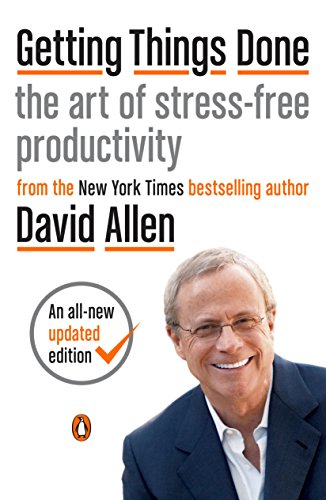
David Allen’s Getting Things Done remains the gold standard for personal productivity systems. First published in 2001, it has sold millions of copies and spawned an entire productivity movement.

The core principle is brilliantly simple: get everything out of your head and into a trusted external system. Allen argues that our brains are for having ideas, not holding them. When you try to mentally track dozens of tasks, you create unnecessary stress and reduce your ability to focus. Research from Scientific American confirms that mental clutter significantly impairs cognitive performance.

The GTD methodology introduces concepts like the “two-minute rule” (if something takes less than two minutes, do it now) and the importance of defining clear next actions for every project. These principles have become foundational in modern productivity thinking.

What makes this book essential reading in 2025 is its adaptability. While technology has evolved dramatically since its publication, the GTD system works seamlessly with everything from paper notebooks to sophisticated task management apps. It’s not about the tools—it’s about the mindset.

2. The Power of Habit

Image result for the power of habit

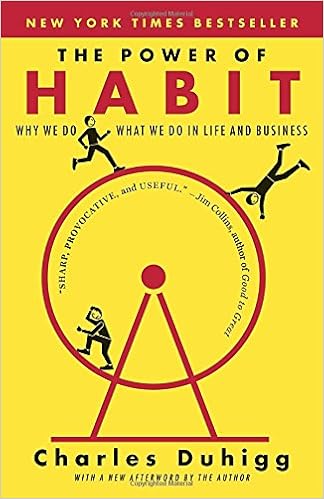
Charles Duhigg’s The Power of Habit revolutionized how we think about personal change. This Pulitzer Prize-winning journalist didn’t just write another self-help book—he delivered a masterclass in behavioral science.

The book’s central insight is the “habit loop”: cue, routine, and reward. Once you understand this framework, you can systematically change any behavior. Duhigg backs this up with fascinating case studies from Procter & Gamble’s marketing strategies to the transformation of Alcoa under Paul O’Neill. Studies published in the National Institutes of Health have validated the neurological basis of habit formation that Duhigg describes.

What sets this book apart is its scientific rigor. Duhigg spent years researching neuroscience and psychology to understand why we do what we do. He shows that willpower alone isn’t enough—you need to understand the mechanics of habit formation.

The practical applications are endless. Want to exercise regularly? Identify your cue (laying out workout clothes), establish a routine (morning run), and create a reward (smoothie afterward). This systematic approach transforms vague goals into concrete actions.

Years after publication, The Power of Habit remains essential reading because habits compound over time. Master the art of habit formation, and you’ve essentially learned how to reprogram your life for success.

 3. Eat That Frog!

Image result for eat that frog

Brian Tracy’s Eat That Frog! offers a counterintuitive approach to productivity: do your worst task first. With over 2 million copies sold, this compact guide has helped countless professionals overcome procrastination.

The title comes from a Mark Twain quote about eating a live frog first thing in the morning—after that, everything else seems easy. Tracy applies this metaphor to our daily work, arguing that we should tackle our most challenging or important task when our energy is highest.

The book introduces 21 practical techniques for conquering procrastination. From the ABCDE method of prioritization to the Law of Three (identifying your three most important tasks), each strategy is designed to help you focus on high-impact activities.

What makes Tracy’s approach particularly effective is its simplicity. In an era of complex productivity systems and apps, Eat That Frog! brings us back to basics: identify what matters most and do it first. No excuses, no elaborate setups.

The book is especially valuable for chronic procrastinators and perfectionists. By forcing yourself to complete your “frog” early, you build momentum that carries through the entire day. It’s a powerful psychological hack that transforms dread into accomplishment.

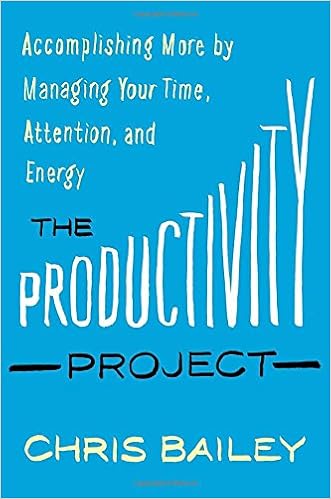
4. The Productivity Project

Image result for the productivity project

Chris Bailey took an unconventional path after college: he turned down lucrative job offers to spend a year becoming a human productivity guinea pig. The Productivity Project chronicles his fascinating journey and the insights he gained.

Bailey’s experiments ranged from extreme to enlightening. He worked 90-hour weeks, then cut back to 20. He lived in total isolation for 10 days. He survived on minimal sleep, eliminated caffeine and sugar, and even practiced meditation for hours daily. Each experiment was meticulously tracked and analyzed.

What emerged from this year-long project were three core elements of productivity: time, attention, and energy. Bailey discovered that managing these three resources is far more important than any specific technique or tool. You can have all the time in the world, but without attention and energy, you’ll accomplish nothing.

The book’s strength lies in its evidence-based approach. Bailey doesn’t just share opinions—he provides data from his experiments and interviews with leading researchers like Charles Duhigg and David Allen. This scientific rigor sets it apart from typical productivity advice.

Perhaps the most valuable lesson is Bailey’s emphasis on intentionality. Productivity isn’t about being busy; it’s about accomplishing what you intend to accomplish. This shift in perspective can transform how you approach both work and life.

5. Greater Balance, Greater Reward

Image result for greater balance greater reward

Jeff Kooz’s Greater Balance, Greater Reward stands out because it’s not just another productivity manual—it’s a personal transformation story that readers can actually relate to.

Like many young professionals, Kooz found himself trapped in a cycle of stress, poor health, and burnout after college. He struggled with obesity, anxiety, and the feeling that life was spinning out of control. Traditional self-help advice failed him repeatedly until he discovered a different approach.

The turning point came through what Kooz calls his “aha moment”—a realization that led him to lose 50 pounds in 90 days and maintain that weight loss for over a decade. But the physical transformation was just the beginning. Using the same five-step system, he’s accomplished seemingly impossible goals like recording albums in three months and writing entire books in just three days.

What makes this book valuable is its systematic approach to problem-solving. Kooz doesn’t promise overnight miracles. Instead, he provides a practical framework that can be applied to any challenge, whether it’s health, creativity, or productivity.

The five-step system emphasizes balance as the foundation of productivity. When your life is in balance—physically, mentally, and emotionally—you naturally become more productive. It’s a holistic approach that resonates in our era of burnout and work-life imbalance.

6. The Compound Effect

Image result for the compound effect

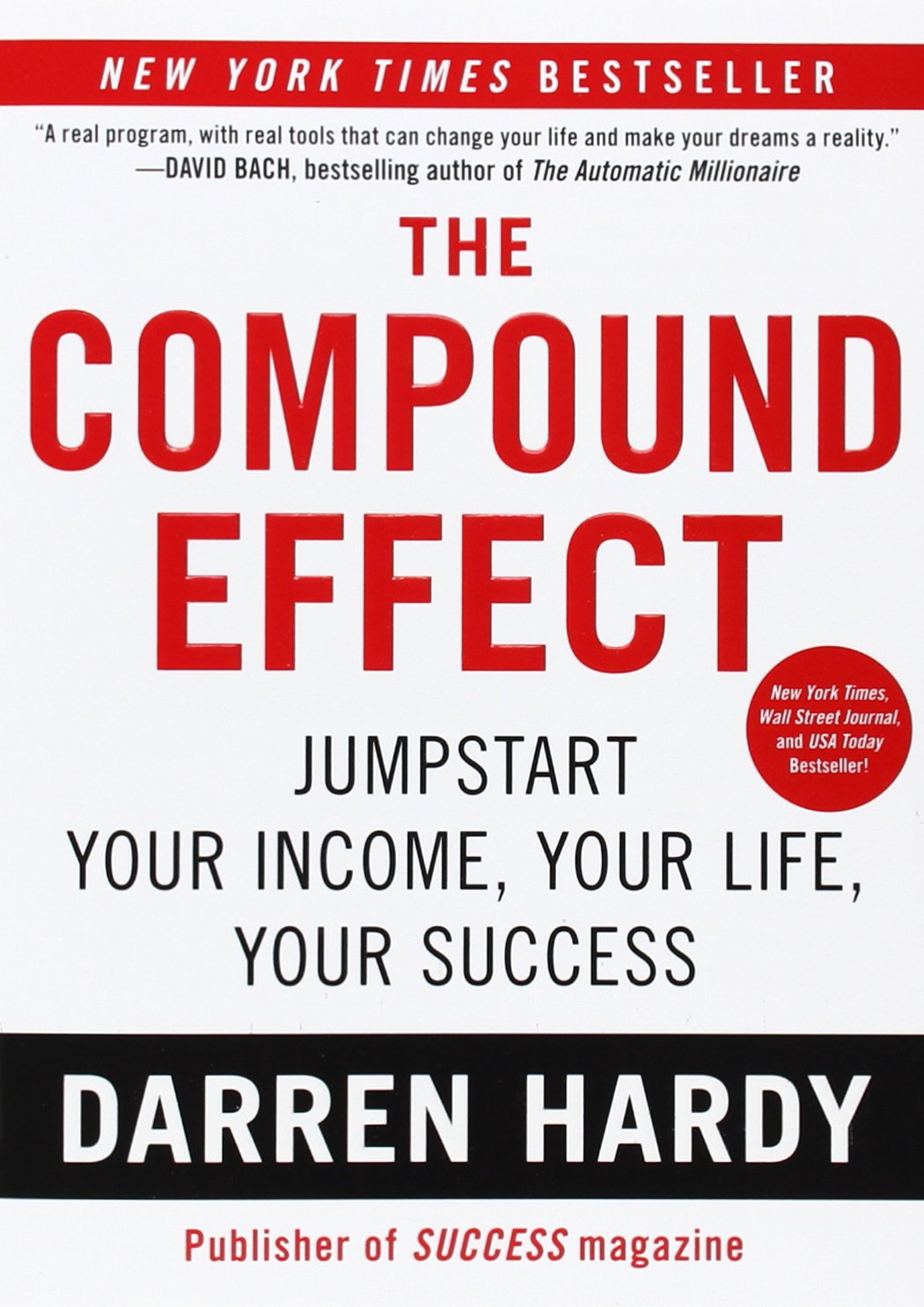
Darren Hardy’s The Compound Effect delivers a powerful message wrapped in simplicity: small, consistent actions create extraordinary results over time. As the former publisher of Success Magazine, Hardy distilled decades of interviews with top achievers into this fundamental principle.

The book’s premise challenges our instant-gratification culture. Hardy argues that success isn’t about massive action or dramatic changes. Instead, it’s about making slightly better choices consistently. A 1% improvement daily compounds into remarkable transformation over months and years.

Hardy illustrates this with compelling examples. Two friends start with identical lives. One watches 30 minutes less TV daily and reads instead. Another eats 125 fewer calories per day. Fast forward three years, and their lives look completely different. The reader becomes wiser and more successful; the dieter is 40 pounds lighter.

What sets this book apart is its focus on personal responsibility. Hardy doesn’t promise shortcuts or hacks. He emphasizes that every choice—no matter how small—either moves you toward your goals or away from them. There’s no neutral ground.

The Compound Effect includes practical tools like tracking sheets and daily routines that successful people use. But the real value lies in the mindset shift: understanding that today’s choices create tomorrow’s reality. It’s a philosophy that transforms how you view every decision, from what you eat for breakfast to how you spend your evenings.

 Start Your Productivity Journey Today

These six books represent different approaches to productivity, but they share a common truth: lasting change comes from understanding yourself and building better systems. Whether you start with GTD’s organizational approach or The Compound Effect’s philosophy of small changes, the key is to begin.

Remember, reading about productivity isn’t the same as being productive. Pick one book that resonates with your current challenges, implement its core strategies for at least 30 days, and track your results. The best productivity system is the one you’ll actually use.

Your future self will thank you for investing in these timeless principles today. Which book will you start with?

10 Self-Help Books Everyone Should Read (According to 500 Million Readers)

0

These books didn’t just change my perspective—they revolutionized how I approach every single day. Together, they’ve sold over 500 million copies, and once you dive into them, you’ll understand why. Each one left me with underlined passages, dog-eared pages, and insights I return to whenever life gets challenging.

After researching hundreds of self-help books and their impact, these 10 stand out as true game-changers:

What makes these books special? They don’t just inspire—they give you actual systems you can use. They’ve stayed relevant for decades (some for nearly a century!), and they’ve created movements that go way beyond their pages. Let me share why each one deserves a spot on your bookshelf.

1. Think and Grow Rich by Napoleon Hill

This 1937 classic is all about training your mind for success. Hill spent 20 years interviewing over 500 successful people to discover their secrets.

You might wonder how a book written during the Great Depression could still be relevant today.

Hill shows us that success starts with a burning desire and is achieved through persistent action and the right mindset. It’s not about luck or circumstances.

Highlights

  • Bestselling self-help book of all time (100+ million copies)
  • Introduces 13 principles for achieving wealth
  • Teaches the Mastermind principle
  • Shows how thoughts shape reality
  • Includes stories from Edison, Ford, and other legends
  • 4.19/5 Goodreads rating from 230,000+ readers
  • Still sells more copies today than when Hill was alive

My thoughts

Think and Grow Rich completely shifted how I view success. Before reading it, I thought successful people were just lucky or born with advantages I didn’t have.

This book taught me that success is actually a science. When I started applying the Mastermind principle by joining a group of ambitious entrepreneurs, everything accelerated. We met weekly to share goals and hold each other accountable.

The “burning desire” concept hit me hard. I realized I’d been wishy-washy about my goals, hoping things would work out instead of committing fully. Once I developed that burning desire Hill talks about, obstacles became temporary setbacks rather than permanent roadblocks.

Yes, some concepts like “sex transmutation” are weird, but the core principles are gold. This book gave me a success blueprint I still follow today.

2. The Alchemist by Paulo Coelho

This magical novel tells the story of Santiago, a shepherd boy who goes on a journey to find treasure and discovers something much more valuable: his Personal Legend.

How can a simple story about a shepherd boy sell over 120 million copies in 80+ languages?

Coelho shows us that when you pursue your dreams, the entire universe conspires to help you. It’s about trusting the journey even when the destination seems impossible.

Highlights

  • Guinness World Record for most translated book by a living author
  • Teaches through storytelling, not preaching
  • Introduces concepts like Personal Legend and Soul of the World
  • Only 900 copies in first Brazilian print run
  • Endorsed by Oprah Winfrey and Pharrell Williams
  • Spiritual without being religious
  • Polarizing Goodreads reviews (love it or hate it)

My thoughts

The Alchemist found me when I was at a crossroads in my career. I had a stable job but felt empty inside, like I was living someone else’s life.

Santiago’s journey mirrored my own fears about leaving security behind to chase my dreams. The quote “When you want something, all the universe conspires to help you achieve it” became my mantra during scary transitions.

What really got me was learning about Coelho’s own story. His parents institutionalized him three times as a troubled youth, yet he transformed himself after walking the Road of Santiago. If he could overcome that to become a global phenomenon, what was my excuse?

This book taught me to read the signs life gives us and trust that the journey itself is the real treasure. Whenever I doubt my path, I reread it and remember why I started.

3. You Can Heal Your Life by Louise Hay

This groundbreaking book connects our thoughts to our physical health, showing how negative thinking patterns can manifest as illness and how self-love can heal.

Can positive thinking and affirmations really heal physical ailments?

Louise Hay shows us that what we think about ourselves becomes our reality. By changing our thoughts and practicing self-love, we can transform our health and our lives.

Highlights

  • Sold over 50 million copies since 1984
  • Introduced affirmations and mirror work to mainstream
  • Includes specific affirmations for different conditions
  • Author healed herself from cancer using these methods
  • Founded Hay House Publishing
  • Supported AIDS patients in the 1980s
  • 16 weeks on New York Times bestseller list

My thoughts

You Can Heal Your Life found me during my darkest period. I was dealing with chronic health issues and feeling hopeless about ever getting better.

The first time I stood in front of my mirror saying “I love and accept myself exactly as I am,” I burst into tears. It felt ridiculous and untrue. But Louise Hay’s story of healing her own cancer kept me going.

What shocked me was realizing how cruel my inner dialogue was. I would never speak to a friend the way I spoke to myself. As I practiced the affirmations daily, something shifted. My health didn’t magically fix overnight, but my relationship with my body transformed.

The book taught me that self-love isn’t just fluffy feel-good stuff. It’s the foundation for everything. While I always recommend working with healthcare providers, adding Hay’s practices to my healing journey made all the difference. Now I can’t imagine my morning routine without mirror work.

4. How to Win Friends and Influence People by Dale Carnegie

This 1936 classic teaches you how to build better relationships by understanding human nature and treating people with genuine respect and interest.

Why would a book about making friends become one of the bestselling books of all time?

Carnegie shows us that success in life is 85% about our ability to communicate and get along with people. Technical skills only account for 15%.

Highlights

  • Over 30 million copies sold
  • Created the entire interpersonal skills genre
  • Warren Buffett still displays his Carnegie certificate
  • Time Magazine’s #19 most influential nonfiction book
  • Teaches win-win thinking
  • 4.22/5 Goodreads rating from 1+ million readers
  • Translated into almost every language

My thoughts

How to Win Friends completely transformed my work life. I used to be that person who always had to be right, constantly correcting others and wondering why people avoided me.

Carnegie’s first principle hit me like a brick: criticism is futile because it puts people on the defensive. I realized I’d been sabotaging every relationship by trying to prove how smart I was instead of making others feel valued.

The simple act of remembering people’s names changed everything. My barista, my mailman, my colleagues suddenly lit up when I used their names. Learning to genuinely listen instead of waiting for my turn to talk made meetings actually enjoyable.

Now I actively look for things to appreciate in others instead of flaws to point out. My relationships, both personal and professional, have never been stronger. If Warren Buffett credits this book with his success, who am I to argue?

5. The 7 Habits of Highly Effective People by Stephen Covey

This comprehensive guide takes you from dependence to independence to interdependence through seven powerful habits that address both character and competence.

How can seven habits transform not just individuals but entire organizations?

Covey shows us that true effectiveness comes from aligning our actions with timeless principles, not just learning quick-fix techniques.

Highlights

  • Over 40 million copies sold
  • #1 Most Influential Business Book of the 20th Century
  • Adopted by Saturn/GM, AT&T, and major corporations
  • Includes personal mission statement framework
  • Famous time management matrix
  • Integrates values and ethics with productivity
  • Time’s 25 Most Influential Americans

My thoughts

The 7 Habits gave me something I desperately needed: a complete life operating system. Before reading it, I was constantly busy but never making progress on what actually mattered.

Creating my personal mission statement was uncomfortable but transformative. For the first time, I had clarity on my values and long-term vision. Suddenly, saying no to things became easier because I knew what I was saying yes to.

The time management matrix blew my mind. I realized I was living in Quadrant 1 (urgent and important), constantly putting out fires. Learning to spend more time in Quadrant 2 (important but not urgent) changed everything. I started planning, building relationships, and preventing problems instead of just reacting.

But what really stuck was moving from independence to interdependence. I’d been so focused on doing everything myself that I missed the power of true collaboration. Now I think win-win and seek to understand before being understood. This book didn’t just make me more productive; it made me a better human.

6. Atomic Habits by James Clear

This modern classic breaks down the science of habit formation into a simple system that makes building good habits and breaking bad ones almost effortless.

How did a book about habits become the fastest-selling self-help book in recent history?

Clear shows us that massive success doesn’t require massive action. Instead, tiny 1% improvements compound into remarkable results over time.

Highlights

  • 25+ million copies sold in just 6 years
  • Four Laws of Behavior Change framework
  • Focuses on identity change, not just behavior
  • Practical techniques like habit stacking
  • 4.38/5 Goodreads rating from 700,000+ readers
  • Endorsed by Olympic athletes and Fortune 500 companies
  • Highest Amazon rating among habit books

My thoughts

Atomic Habits freed me from the all-or-nothing mentality that had sabotaged every previous attempt at self-improvement. I used to think I needed motivation and willpower to change. Wrong.

The identity shift concept changed everything. Instead of “I’m trying to quit smoking,” I became “I’m not a smoker.” Instead of “I want to write more,” I became “I’m a writer.” This subtle shift made new behaviors feel natural rather than forced. If you want to see Clear explain this brilliantly, check out his talk on identity-based habits – it’s only 15 minutes but completely changed how I think about change.

Habit stacking became my secret weapon. I linked new habits to existing ones: after I pour my morning coffee, I immediately write for 10 minutes. After I close my laptop at work, I immediately pack my gym bag. No thinking required.

The best part? Results compound. My 10-minute writing sessions turned into published articles. My gym bag packing led to the best shape of my life. Clear proves that you don’t need to overhaul your life. You just need to get 1% better each day.

7. Rich Dad Poor Dad by Robert Kiyosaki

This controversial book contrasts the money philosophies of two fathers: one highly educated but poor, the other with little formal education but wealthy.

Why does a book that challenges everything we’re taught about money and education spark such heated debates?

Kiyosaki shows us that financial education, not formal education, determines wealth. The rich think differently about money, and once you understand how, you can escape the rat race too.

Highlights

  • 32-40 million copies sold
  • Introduces assets vs. liabilities concept
  • Cash Flow Quadrant framework
  • 6+ years on New York Times bestseller list
  • Influenced Will Smith and Oprah
  • #1 personal finance book of all time
  • 4.09/5 Goodreads rating
  • Created Cashflow board game

My thoughts

Rich Dad Poor Dad made me angry at first. Really angry. I’d followed all the rules: got good grades, went to college, got a “safe” job. Yet I was living paycheck to paycheck while less educated people were building wealth.

The moment that changed everything was understanding the difference between assets and liabilities. My car that I was so proud of? Liability. The house I was killing myself to pay for? Also a liability. I’d been working hard to accumulate things that drained money from my pocket.

The Cash Flow Quadrant opened my eyes to why I felt trapped. As an employee, I was trading time for money with no leverage. I started learning about real estate and investing, slowly building income streams that didn’t require my constant presence.

Yes, some of Kiyosaki’s specific advice is controversial, and he’s had business failures. But the mindset shift was priceless. I stopped chasing promotions and started building assets. Now my money works for me instead of the other way around.

8. The Secret by Rhonda Byrne

This multimedia phenomenon presents the Law of Attraction as an ancient secret for achieving anything you want through the power of positive thinking and visualization.

Can thinking positive thoughts really attract wealth, health, and happiness into your life?

Byrne shows us that our thoughts are like magnets, attracting experiences that match our dominant mental state. By focusing on what we want rather than what we fear, we can manifest our desires.

Highlights

  • 30+ million copies sold
  • $300 million in combined book and film sales
  • Featured on Oprah multiple times
  • Time’s 100 Most Influential People
  • Introduced mainstream to Law of Attraction
  • Combines quantum physics with spirituality
  • 3.78/5 Goodreads rating from 600,000 readers

My thoughts

The Secret was my gateway drug into personal development. I watched the movie first during a particularly rough patch, desperate for anything that might help.

At first, the whole “ask, believe, receive” thing seemed too good to be true. But I was miserable enough to try anything. I created a vision board, started a gratitude journal, and practiced visualizing my ideal life every morning.

Here’s what surprised me: whether or not the universe was actually conspiring to help me, focusing on what I wanted instead of what I feared completely changed my mindset. I stopped dwelling on problems and started looking for opportunities. I became more positive, which made people want to be around me more, which opened doors.

The book gets a lot of hate for promoting “magical thinking,” and I understand why. But for me, it was the starting point that led to more practical books. The gratitude practice alone was worth it. Even if you’re skeptical about manifestation, learning to focus on what you want rather than what you don’t want is solid life advice.

9. The Power of Positive Thinking by Norman Vincent Peale

This 1952 classic blends practical psychology with faith-based principles to help readers overcome negative thinking and build unshakeable confidence.

How did a pastor’s book about positive thinking spend 186 weeks on the bestseller list and create an entire movement?

Peale shows us that combining faith with practical action creates a powerful force for overcoming any obstacle. It’s not just thinking happy thoughts; it’s aligning with a higher power while taking concrete steps.

Highlights

  • 5+ million copies sold
  • 186 consecutive weeks on NYT bestseller list (48 at #1)
  • Pioneered positive thinking movement
  • Influenced leaders from Reagan to Joel Osteen
  • Presidential Medal of Freedom recipient
  • Guideposts magazine founder
  • 54-year radio program
  • 4.0/5 Goodreads rating

My thoughts

The Power of Positive Thinking found me during a period of crippling anxiety. I couldn’t sleep, constantly worried about everything, and felt completely powerless.

Peale’s systematic approach to replacing worry with faith gave me practical tools I desperately needed. The technique of writing down worries and then physically throwing the paper away sounds simple, but it helped me externalize my fears instead of letting them loop endlessly in my head.

What really worked was his combination of prayer and action. I wasn’t just sitting around hoping things would get better; I was connecting with something bigger than myself while taking practical steps forward. The visualization exercises helped me see positive outcomes instead of always imagining worst-case scenarios.

Whether you’re religious or not, Peale’s core techniques work. President Reagan credited him with changing America’s mindset, and I can see why. This book taught me that faith (in God, the universe, or just yourself) combined with positive thinking and action is an unstoppable combination.

10. The Four Agreements by Don Miguel Ruiz

This compact book distills ancient Toltec wisdom into four simple agreements that can transform your entire life experience.

How can four simple agreements create such profound personal freedom?

Ruiz shows us that most of our suffering comes from agreements we made unconsciously about who we are and how life works. By replacing them with four new agreements, we can break free from self-limiting beliefs.

Highlights

  • 15+ million copies sold in the U.S.
  • Only 160 pages long
  • Based on ancient Toltec wisdom
  • Endorsed by Oprah and Tom Brady
  • Used by Deepak Chopra
  • 4.17/5 Goodreads rating from 200,000+ readers
  • Author was a surgeon before spiritual teacher

My thoughts

The Four Agreements hit me at exactly the right time. I was exhausted from people-pleasing, taking everything personally, and assuming the worst about every situation.

The second agreement, “Don’t take anything personally,” literally changed my life overnight. I realized that when someone was rude or dismissive, it was about their inner world, not mine. This single shift freed me from so much unnecessary pain. There’s an amazing animated summary of The Four Agreements that explains this concept beautifully in under 10 minutes.

The concept of “domestication” blew my mind. I saw how many of my beliefs about myself were just things others had told me that I’d accepted as truth. Breaking these unconscious agreements felt like waking up from a dream.

What I love most is the simplicity. Be impeccable with your word. Don’t take anything personally. Don’t make assumptions. Always do your best. That’s it. No complicated system or 10-step process. Just four agreements I can remember and practice daily.

Tom Brady calls it his personal mantra, and Oprah says it transformed how she thinks and acts. For such a short book, the impact is massive. When life gets overwhelming, I return to these four agreements and everything becomes clear.

Final thoughts: Start with one

These 10 books have collectively sold over 500 million copies, but honestly, the numbers don’t matter. What matters is finding the one that speaks to you right now.

Each book found me at different stages of my journey. Hill when I needed direction, Hay when I needed healing, Clear when I needed practical systems. They’re not just books sitting on my shelf; they’re trusted friends I return to whenever life throws me a curveball.

If you’re wondering where to start:

Don’t feel like you need to read all 10. Start with one that resonates with your current challenge. Read it slowly. Underline the parts that hit you. Actually do the exercises. Apply one concept before moving to the next book.

These books taught me that change doesn’t happen from reading; it happens from applying what you read. Pick one principle from one book and live it for 30 days. That single action will do more for you than reading all 10 books without applying anything.

Your future self is waiting. Which book will you start with today?

7 Longevity Hacks David Sinclair Uses to Lower Biological Age

David Sinclair might be the most interesting man in longevity science. The Harvard professor has spent 30 years studying aging, and somewhere along the way, he became his own best experiment. At 54, his blood work looks like a 31-year-old’s. That’s not genetic luck – it’s what happens when you turn your body into a living laboratory.

His book Lifespan: Why We Age and Why We Don’t Have To lays out his Information Theory of Aging. Basically, aging isn’t wear and tear – it’s corrupted software. And like any software problem, Sinclair thinks we can debug it.

The whole approach targets three master switches: sirtuins (our repair genes), mTOR (growth control), and AMPK (energy sensor). Hit these pathways right, and you’re essentially tricking your body into survival mode – where it actually maintains itself better. Here’s exactly how he does it.

1. NMN and Resveratrol: The Foundation

Every morning, Sinclair takes 1 gram of NMN and 1 gram of resveratrol as part of his daily supplement list. You may have not heard of these supplements, but the science is pretty compelling.

NMN boosts NAD+, which is basically cellular fuel. Problem is, we lose about half our NAD+ between 20 and 50. Without it, our sirtuin genes can’t do their repair work. Think of it like trying to run a Ferrari on regular gas – it’ll move, but not like it’s supposed to.

Resveratrol is the accelerator pedal. Sinclair discovered back in 2003 that it activates sirtuins, extending lifespan in everything from yeast to mice. Here’s the catch though – you need to take it with fat. Research shows absorption jumps 5x when mixed with yogurt or olive oil. Sinclair uses homemade yogurt.

He also adds 500-1000mg of TMG as insurance against methyl depletion. Long-term NMN use might drain your methyl groups, which you need for DNA repair. Better safe than sorry.

Quality is everything here. The supplement industry is like the Wild West, so stick with third-party tested brands. I use Renue By Science for both liposomal resveratrol and NMN powder – you can mix the NMN right into yogurt like Sinclair does. Use code ‘brainflow’ for 10% off.

2. Intermittent Fasting

Sinclair doesn’t eat breakfast or lunch. Just dinner, usually within an 8-hour window. But he’s not militant about it – sometimes he’ll grab a small salad if he’s actually hungry.

Morning routine? Coffee, tea, hot water, and a tiny bit of yogurt with his supplements. That’s it. He says staying hydrated makes fasting way easier, and honestly, he’s right.

The biology here is fascinating. Fasting cranks up NAD+ production, activates sirtuins, suppresses mTOR, and kicks AMPK into gear. Same pathways as the supplements, just triggered naturally. After three days, you get this deep cellular cleanup called chaperone-mediated autophagy. Obviously most of us aren’t doing 3-day fasts regularly, but even 16 hours helps.

Women might need to be more careful with fasting – hormones can get wonky. Start slow, see how you feel.

RELATED READING: Inside Andrew Huberman’s Daily Supplement Stack

3. Exercise That Actually Matters

Here’s Sinclair’s rule: be out of breath for 10 minutes every day. Not just elevated heart rate – actually huffing and puffing.

His routine is intense. A hundred push-ups every morning (I know, right?), weights once or twice a week with his son, and he never sits down – uses a standing desk with one of those under-desk steppers. The guy is constantly moving.

HIIT is the secret sauce because it creates hypoxic stress. Your cells think they’re dying, so they activate every repair mechanism they’ve got. Six months of this actually lengthens your telomeres.

Focus on legs and back especially. These big muscle groups signal your endocrine system to keep producing hormones like testosterone and growth hormone. Use it or lose it, literally.

Sinclair’s take: “Instead of killing yourself at the gym twice a week, do 20 minutes daily.” Consistency beats intensity every time. Plus you’re way less likely to get injured and quit.

RELATED READING: Andrew Huberman’s NAD+ Supplement Protocol

4. Cold Exposure

Sinclair plunges into 39°F water for 2-5 minutes, then hits the sauna. But even ending your shower with cold water works.

The numbers are crazy. Cold water at 57°F spikes noradrenaline by 530% and dopamine by 250%. You also activate SIRT3, which converts useless white fat into metabolically active brown fat. Brown fat is like a furnace – burns calories just to keep you warm.

His theory? We’re too comfortable. Our ancestors dealt with temperature swings that triggered these survival pathways. Now we live at a constant 72°F and wonder why we’re metabolically broken.

Start with 30 seconds of cold at the end of your shower. Work up from there. Yes, it sucks. Yes, you’ll hate it. But the energy boost after is undeniable, and you’ll probably stop getting sick as often. Worth it.

5. Plants Over Mammals

“I eat a lot of plants and try to avoid eating other mammals.” That’s Sinclair’s basic philosophy, but there’s nuance here.

He looks for stressed plants – the ones that had to fight to survive. Dark berries, bitter greens, colorful vegetables. These plants produce defense compounds that activate our longevity pathways when we eat them. It’s called xenohormesis – basically stealing another organism’s stress response.

Meat jacks up mTOR, which is great if you’re trying to build muscle at 25, not so great if you’re trying to live to 150. Sugar is worse – completely shuts down AMPK and sirtuins. Sinclair’s typical dinner: vegetables, nuts, whole grains, maybe some fish.

He’ll have a glass of Pinot Noir occasionally (highest resveratrol content), but jokes you’d need 52 bottles daily for a therapeutic dose. Stick to the supplements.

6. Sleep and Stress (Where He Struggles)

Here’s where Sinclair admits he’s human – he only sleeps 6 hours a night. He knows it’s not ideal but optimizes what he gets with an Eight Sleep mattress that adjusts temperature throughout the night. Cooler for deep sleep, warmer to wake up naturally.

He also tracks everything with an Oura Ring, wears blue-light blocking glasses after sunset and is in bed by 11 PM religiously. Even with just 6 hours, quality matters more than quantity.

For stress, he keeps it simple. Sinclair does a quick meditation daily and takes nature walks when possible. He also engages in kayaking on weekends. His best advice? “Surround yourself with people who are not jerks.” Chronic stress literally scrambles your epigenome – the software that tells your genes what to do. Bad sleep makes it worse by tanking NAD+ levels.

I splurged on the Bed Jet temperature mattress topper and it’s been game changing. Still working on the meditation thing though.

7. The Full Supplement Stack

Beyond NMN and resveratrol, Sinclair takes a pharmacy’s worth of stuff.

Metformin (800-1000mg) at night – it’s a diabetes drug that activates AMPK like exercise. Skips it on workout days since it can blunt exercise benefits. Fisetin (500mg) clears out senescent cells. Spermidine (1-2mg) for autophagy. Weekly rapamycin for mTOR suppression.

Daily vitamins: D3 (4,000-5,000 IU), K2 (180-360 mcg), alpha-lipoic acid (300mg), taurine (2g), baby aspirin (83mg). Recently dropped quercetin – new research suggests it might inhibit SIRT6 in younger people.

He tests everything quarterly with InsideTracker. No guessing, just data. Adjusts based on biomarkers, not feelings.

Look, you don’t need all this. Start with the basics – NMN, resveratrol, maybe metformin if your doctor’s cool with it. Add more if you want, but test regularly. These aren’t candy.

The Future Is Wild

What Sinclair’s doing now is just the warm-up. His lab is working on cellular reprogramming – literally resetting cells to a younger state using Yamanaka factors. He thinks gene therapy costs will drop from $400K to $100 in the next decade thanks to AI.

They’ve got compounds in trials showing 50-95% biological age reversal in four weeks. Four weeks! He co-founded Tally Health to make biological age testing accessible to everyone. No more guessing if this stuff actually works.

His prediction? “The first person to live to 150 has already been born.” Kids today will probably see 2125. Sounds insane until you look at the exponential progress in this field.

The cool thing about his protocol is how it all works together. Each intervention amplifies the others. It’s not about adding years to your life – it’s about adding life to your years. Healthspan, not just lifespan.

The Bottom Line

Sinclair’s approach flips aging on its head. Instead of treating symptoms, he’s hacking the source code. Every intervention – supplements, fasting, exercise, cold, diet – hits the same biological switches.

What I love is that most of this doesn’t require a PhD or a trust fund. Yeah, the supplements add up, but fasting is free. Cold showers are free. Walking is free. These practices have been around forever; we just finally understand why they work.

Start small. Pick one thing. I began with intermittent fasting, added NMN later, finally worked up the courage for cold showers. Track how you feel, get some blood work done, see what happens.

Sinclair says 80% of aging is under our control. That’s either terrifying or empowering, depending on how you look at it. For the first time in history, we might actually get to choose how we age. Not whether we age – that’s still coming for all of us – but how well we do it.

The science is moving fast. What we know today will seem primitive in 10 years. But the fundamentals – stressing your body just enough to trigger repair mechanisms – that’s probably not changing. We’re just getting better at it.

So yeah, living to 150 might sound crazy now. But so did antibiotics, organ transplants, and CRISPR. Sometimes crazy is just early.