Your appetite has changed. Your relationship with food has shifted. But your grocery store hasn’t gotten the memo.
Walking through those aisles now feels different. Half the stuff you used to grab without thinking doesn’t work for you anymore. The other half might leave you feeling terrible.
You need a new list. One built specifically for how your body works now.
Forget the generic “eat healthy” advice. This is a targeted grocery list for people on Ozempic, Wegovy, Mounjaro, Zepbound, or any other GLP-1 medication. Foods that support your results, minimize side effects, and taste good enough to eat week after week.
Screenshot the table below, take it to the store, and stock your kitchen with foods that work with your medication instead of against it. The rest of the article explains why each item made the cut.
The Protein Section: Your New Best Friend
Protein isn’t optional anymore. It’s the single most important macronutrient for GLP-1 users.
When you eat less overall, you risk losing muscle along with fat. Ohio State University recommends at least 60 grams of protein daily while on GLP-1 medications. If you’re strength training (which you should be), you need even more.
The hard part is that your appetite has vanished, so eating enough protein takes deliberate effort.
If you’re also researching peptides for fat loss, we broke down the top options worth looking into. And for the research-minded readers who go a step further into compounds studied for muscle and recovery, the box below is where I point them.
1. Eggs
Cheap. Versatile. Packed with 6 grams of protein each plus vitamins and healthy fats.
Hard boil a dozen on Sunday and you’ve got grab-and-go protein all week. Scrambled eggs take five minutes when you don’t feel like cooking. Egg muffins reheat beautifully for busy mornings.
Keep at least two dozen in your fridge at all times.
2. Chicken Breast
Hard to beat for lean protein. About 31 grams per 4-ounce serving with minimal fat.
Buy it fresh or frozen. Grill a batch on the weekend and slice it for salads, wraps, or just eating plain when you need quick protein. Rotisserie chicken from the deli works too when you’re short on time or energy.
Chicken digests easier than fattier meats, which matters when your stomach is sensitive.
3. Greek Yogurt
Make it Greek yogurt specifically. The thicker strain has close to double the protein of the regular stuff.
Plain Greek yogurt packs about 17 grams of protein per cup. It’s also easier to digest than many solid proteins, which makes it a lifesaver on days when eating feels difficult.
Buy plain and add your own berries. The flavored versions are loaded with sugar you don’t need.
4. Cottage Cheese
Cottage cheese has made a real comeback, and the protein numbers explain why. One cup delivers about 28 grams.
It’s also super versatile. Eat it plain. Mix with fruit. Blend into smoothies. Use as a base for savory bowls with cucumber and everything bagel seasoning.
The texture takes getting used to if you’re not a fan, but the protein payoff makes it worth trying.
5. Fish (Salmon, Cod, Tilapia)
Fish provides high-quality protein plus omega-3 fatty acids that support heart health and reduce inflammation.
Salmon is the star for omega-3s. Cod and tilapia are leaner and even easier to digest. Canned tuna and salmon work when you need something fast.
Aim for fish at least twice a week.
6. Protein Powder
Sometimes you just can’t eat enough solid food to hit your protein targets. Protein powder fills the gap.
Orgain is what sits on my counter right now. 21 grams per scoop, no weird aftertaste, and it blends into pretty much anything. Toss it in a smoothie, stir it into oatmeal, or just shake it up with water when you need protein and can’t face cooking.
Protein Per Serving, at a Glance
Everything above in one place, with the easiest way to get each one down on a rough day.
We put together a full list of high-protein snacks for GLP-1 users if you need more ideas beyond what’s here.
The Produce Section: Fiber and Nutrients
Vegetables and fruits provide fiber, vitamins, and minerals your body needs even more now that you’re eating less overall. Fiber also helps with the constipation many GLP-1 users experience.
One important note. Cooked vegetables digest easier than raw during the adjustment period. If raw salads make you bloated or uncomfortable, steam or roast your veggies instead.
7. Leafy Greens
Spinach. Kale. Arugula. Mixed greens.
Low in calories, high in nutrients, and gentle on your digestive system when cooked. Sautéed spinach with garlic takes three minutes and pairs with everything.
Fresh greens for salads. Frozen spinach for cooking. Both work.
8. Berries
Blueberries, strawberries, raspberries, and blackberries are lower in sugar than most fruits while being packed with antioxidants and fiber.
They satisfy sweet cravings without the blood sugar spike of candy or pastries. Frozen berries are just as nutritious as fresh and way more affordable.
Add them to yogurt, blend into smoothies, or eat them plain as a snack.
9. Cruciferous Vegetables (With a Caveat)
Broccoli, cauliflower, and Brussels sprouts are about as nutrient-dense as vegetables get. But they’re also notorious for causing gas.
If bloating is already a problem for you, go easy on these during the early weeks. Cooking them thoroughly helps. Some people tolerate them fine. Others need to limit them permanently.
Experiment and see how your body responds.
10. Avocados
Healthy fats, fiber, and potassium in one package. Avocados add creaminess and satisfaction to meals without the digestive issues that come with heavy dairy.
Half an avocado on eggs, in a salad, or mashed on toast makes everything better.
Buy them firm and let them ripen at home so you always have one ready when you need it.
The Whole Grains Section: Smart Carbs
Carbs aren’t the enemy here, but the refined ones that spike your blood sugar won’t do you any favors.
Focus on whole grains that provide sustained energy and fiber. These digest slower and keep you satisfied longer.
11. Oats
Steel-cut or rolled oats. Not the instant packets loaded with sugar.
Oats provide fiber that helps with regularity (a common concern on GLP-1s) and give you steady morning energy. Make overnight oats for zero-effort breakfasts. Cook a batch on the weekend and reheat portions throughout the week.
Add protein powder or Greek yogurt to boost the protein content.
12. Quinoa
Quinoa is technically a seed, but it cooks like a grain and provides something most grains don’t. Complete protein.
One cup of cooked quinoa has about 8 grams of protein plus fiber and iron. Use it as a base for bowls, mix into salads, or serve as a side dish.
It cooks in 15 minutes and keeps in the fridge for days.
13. Brown Rice
A staple that’s easy to digest and pairs with almost any protein.
Buy it in bulk or grab the microwavable pouches for convenience. Brown rice provides more fiber and nutrients than white rice without being hard on your stomach.
More on this: How to Exercise on GLP-1 for Fat Loss and Muscle Retention
The Pantry Essentials: Supporting Players
These items round out your meals, add flavor, and provide backup options for days when cooking feels impossible.
14. Nuts and Nut Butters
Almonds, walnuts, and pistachios provide healthy fats, protein, and fiber in a portable package.
A small handful makes a satisfying snack. Almond butter on apple slices hits the spot when you want something sweet but substantial.
Watch portions since nuts are calorie-dense. But a measured serving is a perfect GLP-1 friendly snack.
15. Canned Beans and Lentils
Beans bring serious fiber and protein. Black beans, chickpeas, and lentils work in soups, salads, bowls, or as sides.
Canned versions are just as nutritious as dried and way more convenient. Rinse them to reduce sodium.
Keep several cans in your pantry for quick meal additions.
The Hydration and Digestion Helpers
What you drink matters as much as what you eat. And a few key items can make side effect management much easier.
Ginger Tea
Nausea is the most common GLP-1 side effect. Ginger helps.
Real ginger root works, but boxed ginger tea is just easier. Keep a box in the pantry. When nausea creeps in, brew a cup and sip it over twenty minutes. It won’t eliminate the queasiness completely but it takes the sharp edge off.
Fiber Supplement
If constipation becomes an issue (and it does for many people), a fiber supplement helps keep things moving.
Getting enough fiber through food alone is tough when your appetite barely exists. Metamucil bridges the gap. Stir a scoop into water once a day. It’s bland and unglamorous, but it keeps things moving, especially in those first few weeks when everything feels backed up.
Electrolyte Packets
When you’re eating less and potentially dealing with nausea or diarrhea, electrolyte imbalances happen. You might feel tired, dizzy, or just off.
I started using LMNT electrolyte packets and the difference was noticeable within a couple days. Less brain fog, fewer headaches, and my energy leveled out. I toss one in my water bottle every morning now. They taste good without being overly sweet, which matters when your stomach is already iffy.
Match the Food to the Symptom
Most GLP-1 side effects have a food answer. This is the cheat sheet I wish someone had handed me in week one.
What to Skip at the Store
Just as important as knowing what to buy is knowing what to leave on the shelf.
Fried foods are the biggest offender. Anything breaded, battered, or deep-fried will sit in your stomach like a rock and make nausea ten times worse.
Put the soda back. Sweet tea and juice too. Those are empty calories that spike your blood sugar and work against your medication.
Walk past the frozen dinner aisle. Same goes for chips, cookies, and anything with an ingredient list you can’t pronounce. Ultra-processed foods offer barely any nutrition and tend to trigger the worst GI symptoms.
Full-fat ice cream, heavy cream, and rich cheeses? They digest slowly and can ramp up nausea on injection days especially.
And alcohol. It’s empty calories on top of everything else. It taxes your liver (which is already processing medication), and it wrecks your willpower around food choices.
The Swap List
You don’t have to give up the category, just the version that fights your medication.
A Sample Week’s Grocery List
A typical grocery run looks like this, with a rough idea of how far each item stretches so you don’t overbuy.
This gives you the building blocks for breakfasts, lunches, dinners, and snacks without overbuying or wasting food.
Meal Prep Makes Everything Easier
When you feel lousy, you’re not going to want to cook. Having food ready to grab makes the difference between eating well and ordering pizza.
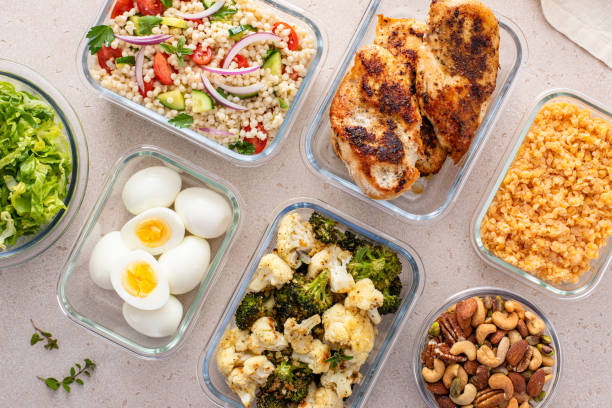
Spend an hour on Sunday prepping basics. Grill chicken. Hard boil eggs. Cook a batch of quinoa. Wash and chop vegetables. Portion out snacks.
Invest in decent glass storage containers for this. Plastic stains, warps, and holds onto smells. Glass goes from fridge to microwave to table without any of that. Load them up on prep day and you’ve got five days of meals waiting for you when cooking sounds miserable.
Want to support your GLP-1 results beyond the medication alone? Our guide on boosting GLP-1 naturally through food and supplements covers the other side of it.
Track What You Eat (For a Few Weeks)
With a reduced appetite, it’s easy to under-eat without realizing it. Tracking helps you make sure you’re hitting your protein targets and getting enough nutrition overall.
A simple kitchen scale removes all the guesswork from portioning. Most people overestimate protein and underestimate fats by a pretty wide margin. Weighing your food for even two weeks recalibrates your sense of what a real serving looks like. After that, you can probably eyeball it.
You don’t need to weigh everything forever. But a few weeks of accurate tracking teaches you what proper portions look like.
Building Sustainable Habits
Think of this grocery list as a framework rather than a diet, a way of eating that supports your body while you’re on GLP-1 medications.
The foods that work for you now will likely become your permanent staples. Your tastes are changing, and your relationship with food is shifting with them. Roll with it.
Stock your kitchen with foods that make you feel good. Skip the stuff that doesn’t serve you anymore. Make eating well as easy as possible by having the right ingredients on hand.
A smaller group of readers takes it a step further and looks into research peptides like BPC-157 and GHK-Cu for the muscle and skin side of fast weight loss. If that ends up on your radar, Paramount Peptides is who I’d point you to, made in-house in the USA with an independent COA on every lot, and code BRAINFLOW takes 10% off. Research use only, always alongside your prescriber and never instead of them.
Get the list right and the rest gets a whole lot easier.
Take this list to the store, fill your cart with foods that work, and prep what you can when you get home. That small bit of effort now is what carries you through the days you can’t face the kitchen.
This article contains affiliate links, including Amazon links. BrainFlow may earn a commission on qualifying purchases at no additional cost to you. Paramount Peptides products are sold for laboratory research use only and are not FDA-approved for human use.