
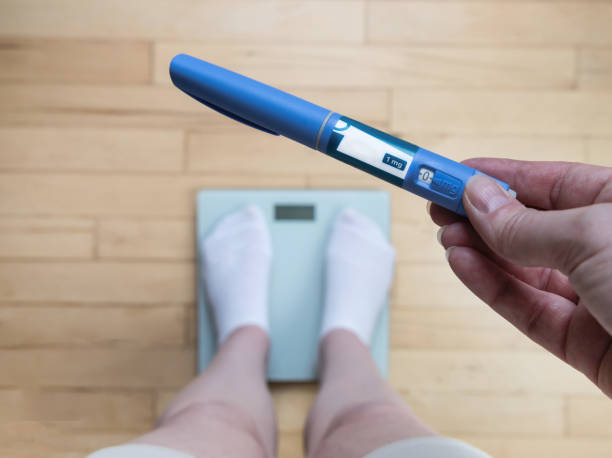
Is this dose actually doing anything?
It’s a question that crosses the mind of almost every person on a GLP-1 medication at some point. Maybe the appetite suppression that felt so strong in the first few weeks has faded. Maybe the side effects never really went away. Maybe you’re losing weight but feeling terrible, or feeling fine but the scale hasn’t budged. Whatever the version, the underlying worry is the same: is this the right dose for me?
The real answer is that dosing GLP-1 medications is not a one-and-done decision. Semaglutide (Ozempic, Wegovy) and tirzepatide (Mounjaro, Zepbound) both follow a titration schedule where you start low and gradually increase. But where you land on that schedule, and how long you stay there, varies wildly from person to person. Your prescriber set a starting path, but your body writes the rest of the story.
According to clinical guidance from obesity medicine specialists, the goal is to find the lowest effective dose. Not the highest dose available. Not the dose your friend takes.
The one where your appetite is manageable, your weight is trending in the right direction, and the side effects aren’t running your life.
Before the detail, the whole article in one table. Find your symptom, read across.
Now the detail behind each row.
Nearly half off everything at Everest Peptides
Everest Peptides' card processor is offline right now, so instead of waiting it out they're running a bank payment sale. Every peptide is 40% off, and code BRAINFLOW stacks another 15% at checkout. Pay with Zelle or Pay by Bank, same day shipping before 3pm ET, every batch third-party tested with the COA on the product page. Rated 4.9 on Trustpilot.
Shop the 40% off sale Code BRAINFLOW at checkout. Zelle and Pay by Bank only during the sale.Signs Your Dose Might Be Too Low
A dose that’s too low doesn’t always look like “nothing is happening.” Sometimes it’s subtle. You’re losing weight, but slowly. You’re less hungry, but not enough to change how much you eat. The medication is doing something, just not enough to matter.
Your appetite came back early
During the first few weeks on a new dose, most people notice a significant drop in appetite. Food noise gets quieter. Cravings ease up. If that effect wore off within two to three weeks of being on the same dose, and you’re not yet at your target weight, it may be time to move up.
This is different from a plateau. A plateau means you’ve been losing weight and it stopped. A dose that’s too low means the appetite suppression itself is fading, which usually happens before the weight loss stalls. You might find yourself thinking about food more, snacking between meals again, or finishing portions that used to feel too big.
You haven’t lost weight in four or more weeks
On an effective dose, most people lose weight consistently for the first several months. If the scale hasn’t moved in a month and you’re still in the early or mid-phase of treatment (not yet at a healthy weight or your goal), your dose may not be strong enough to maintain the calorie deficit your body needs at its current size.
Make sure you rule out other causes first. Water retention, hormonal fluctuations, increased muscle from exercise, and constipation can all mask fat loss on the scale for a couple of weeks. But a true four-week stall in the first six months of treatment usually warrants a dose conversation.
You’re still on the starter dose
Both semaglutide and tirzepatide have starter doses that are not meant to produce results. Semaglutide begins at 0.25 mg weekly. Tirzepatide starts at 2.5 mg. These exist purely to let your body adjust before moving to a dose that has clinical effect. If you’ve been sitting on the starter dose for more than four to six weeks without titrating up, you’re taking a dose that was never designed to do the heavy lifting.
Some telehealth providers or busy clinics are slow to schedule follow-ups, which means patients can end up parked on an ineffective dose for months without realizing it. If that sounds familiar, reach out to your prescriber. Don’t wait for them to call you.
One note for the research-minded reader. The muscle you lose during rapid weight loss is the hardest thing to get back, and it’s the variable most people overlook while they’re focused on the scale. In research and biohacking circles, compounds like BPC-157 and GHK-Cu come up constantly as complementary tools to study alongside that process. Paramount Peptides is where I point BrainFlow readers, made in-house in the USA with an independent COA on every lot, and code BRAINFLOW takes 10% off. Everything is for laboratory research use only and is not a substitute for working with your prescriber.
Signs Your Dose Might Be Too High
More medication is not always better. A dose that’s too high doesn’t help you lose weight faster. It makes you miserable. And when you’re miserable, you eat less than your body needs, skip nutrients, get dehydrated, and potentially create bigger health problems than the ones you started with.
A 2025 study from Harvard Medical School and the CDC found that while serious side effects from semaglutide are uncommon overall, nearly 70% of emergency visits related to the drug involved gastrointestinal problems.
The unexpected finding was that about 17% of ER visits were for dangerously low blood sugar, even in people not taking other diabetes medications. Researchers suggested some of these patients may have been starving themselves because of extreme appetite suppression at higher doses.
Nausea that doesn’t quit
Some nausea is normal when you start a new dose or titrate up. It usually fades within a week or two as your body adjusts. What’s not normal is nausea that lasts more than two to three weeks on the same dose, nausea that prevents you from eating at all, or nausea so bad that you dread injection day.
Persistent severe nausea is your body telling you this is too much. That’s gastrointestinal distress, not the medication “working hard,” and it can lead to dehydration, nutritional deficiencies, and eventually people quitting the medication entirely.
You can’t keep food down
Vomiting after meals, especially if it happens regularly, is a red flag that your dose is too aggressive. GLP-1 medications slow gastric emptying, which is part of how they reduce appetite. But at too high a dose, that slowing can become excessive. Food sits in your stomach too long, and your body’s response is to reject it.
This is not something to push through. Repeated vomiting causes dehydration, mineral loss, and can irritate your throat and esophagus over time. If you’re throwing up more than occasionally after a dose increase, call your prescriber before your next injection. They may drop you back to the previous dose or extend the time between increases.
You’re eating fewer than 800 calories most days
There’s suppressed appetite, and then there’s functionally not eating. If your GLP-1 has killed your appetite so thoroughly that you’re consistently taking in fewer than 800 to 1,000 calories, your dose may be doing more harm than good.
At that calorie level, your body can’t get enough protein to preserve muscle, enough vitamins and minerals to keep your organs running properly, or enough energy to keep your metabolism from tanking. The weight you lose at that point is increasingly muscle, not fat. And muscle loss is what makes regain so likely if you ever reduce or stop the medication.
If eating feels impossible, a protein shake can bridge the gap on the worst days. Orgain Organic Protein goes down easier than solid food when your stomach is staging a protest.
I’ve recommended it to people who were barely eating 600 calories a day and couldn’t face another bite of chicken. Twenty-one grams of protein in a drink you can sip over an hour is sometimes the difference between dangerous undereating and getting through the day with enough fuel to function.
Signs That Aren’t About the Dose at All
Not every problem on a GLP-1 medication is a dosing issue. Sometimes the dose is fine and something else entirely is going on. Mistaking a lifestyle problem for a dose problem leads to unnecessary increases (and unnecessary side effects).
You’re dehydrated
GLP-1 medications reduce thirst right alongside appetite. You’re eating less, drinking less, and getting less water from food. Meanwhile, common side effects like diarrhea and vomiting (especially during dose changes) can drain fluids faster than you replace them.
Dehydration mimics a lot of dose-related symptoms. Fatigue, headaches, dizziness, constipation, brain fog. Before assuming your dose needs to change, check whether you’re drinking enough water. Aim for at least 64 ounces daily.
If plain water feels like a chore, LMNT electrolyte packets make it easier to stay on top of. They replace the sodium, potassium, and magnesium you’re missing from smaller meals, and they taste good enough that you finish the bottle. Deceptively simple fix for what sometimes feels like a medication problem.
Your nutrition tanked
Eating 1,200 calories of crackers and toast is very different from eating 1,200 calories of protein, vegetables, and healthy fats. If the quality of what you’re eating dropped as the quantity dropped, you’re going to feel terrible regardless of what dose you’re on.
A 2025 review published in PMC noted that GLP-1 medications affect gastrointestinal function well beyond simple appetite suppression. They alter how your body absorbs nutrients, how quickly food moves through your system, and how your gut communicates with your brain.
Poor food choices on top of those changes can amplify side effects that have nothing to do with your dose.
That gut connection is part of why BPC-157 keeps surfacing in research circles. It’s studied largely for gut and tissue support, which is the system a GLP-1 leans on hardest. If that’s a direction you end up researching, Paramount carries it research-grade with an Accumark Labs COA on every lot, and code BRAINFLOW takes 10% off. For laboratory research use only.
If you’re feeling off, keep a simple food diary for three days before asking for a dose adjustment. You might find the fix is in the kitchen, not the pharmacy.
Filling nutritional gaps with a daily multivitamin is a practical safety net while you figure things out. Amazon Basics multivitamin gummies cover the basics without adding another pill to swallow, which matters when your stomach is already sensitive.
They’re not a replacement for real food, but they catch the shortfalls that happen when you’re eating half of what you used to.
You’re not sleeping or you’re over-stressed
Sleep deprivation messes with ghrelin and leptin, the two hormones most directly involved in hunger signaling. High stress elevates cortisol, which promotes fat storage and increases cravings. Both of these can overpower the effects of your GLP-1 medication and make it look like the dose isn’t working when really the problem is everything happening around the dose.
The Titration Schedule: What Most People Get Wrong
Both medications follow a similar step-up pattern, moving to a new dose roughly every four weeks. Here is the ladder, with the question to ask yourself at each rung.
Those schedules are guidelines. They’re not contracts. And the biggest mistake people make is treating titration like a race to the top.
If you’re losing weight steadily and tolerating your current dose well, there is zero reason to increase just because the schedule says you can. The goal is the lowest effective dose. Staying at 1 mg of semaglutide when 1 mg is working saves you from side effects, costs less, and leaves room to increase later if you need it.
The second mistake runs the other way, suffering through side effects because you think you’re supposed to. If a dose increase made you violently nauseous for three weeks, you don’t have to white-knuckle it. Going back to the previous dose for another month and then trying again more slowly is a perfectly valid approach. Some prescribers will even do half-step increases for patients who are sensitive.
📌 Keep Reading: The Complete GLP-1 Side Effects Guide
When to Switch Medications Instead of Adjusting Dose
Sometimes the issue isn’t the dose. It’s the drug.
Semaglutide and tirzepatide work a little differently under the hood. Semaglutide only targets one hunger pathway (GLP-1). Tirzepatide targets two (GLP-1 and GIP), which tends to produce greater appetite suppression and more weight loss in clinical trials. Head-to-head data showed average weight loss of about 20% with tirzepatide compared to roughly 14% with semaglutide.
If you’ve maxed out your semaglutide dose and still aren’t seeing adequate results, switching to tirzepatide is a reasonable next step. That’s not a failure on your part. Some people’s bodies simply respond better when both pathways are activated.
The reverse is also true. If tirzepatide side effects are unbearable even at lower doses, semaglutide’s single-receptor approach might be easier to tolerate. There’s no rule that says you have to stick with the first medication prescribed.
One thing to know if you do switch. You restart the titration from the bottom regardless of what dose you were on before. Going from 2.4 mg semaglutide directly to a mid-range tirzepatide dose is not recommended.
Your body needs to adjust to the new drug’s mechanism, and skipping that adjustment phase is how people end up in the ER with severe GI distress.
Questions to Bring to Your Next Appointment
Most prescriber visits for GLP-1 medications last about ten minutes. You can make those minutes count by walking in with specific observations instead of general feelings.
Track These Before Your Next Visit
- Weekly average weight for the last month. Not daily numbers, just the weekly trend. This gives your prescriber data instead of “I feel like it’s not working.”
- When side effects happen and how long they last. “I get nauseous for two days after every injection” paints a very different picture than “I feel nauseous sometimes.”
- Calories and grams of protein on an average day. If tracking sounds like too much effort, photograph your meals for a few days. That visual record is more useful than you’d think.
- Any changes in sleep, stress, exercise, or other medications. Your prescriber can’t factor these in if they don’t know about them.
- Which rung of the ladder you’re on and how long you’ve been there. It sounds obvious. Plenty of people can’t answer it on the spot.
Your prescriber needs to know if you’re undereating. A dose increase on top of 700 daily calories is a bad idea, and that context changes the entire conversation.
And if you’re blending protein shakes to get your intake up on rough appetite days, a Magic Bullet blender sitting on the counter serves as a visual cue to do it. It costs less than a co-pay and the single-serve cup means you’re not committing to a giant batch you won’t finish.
Small tools like that end up being weirdly important when motivation is low and your appetite is fighting you.
The Dose Is a Dial, Not a Switch
The best way to think about GLP-1 dosing is as a dial you’re turning in small increments, not a light switch that’s either on or off. Finding the right setting takes time, honesty with your prescriber, and a willingness to pay attention to what your body is telling you between appointments.
Too low and the medication can’t do its job. Too high and the side effects do more damage than the weight loss is worth. The sweet spot is somewhere in the middle, and it might shift as your body changes during treatment.
You shouldn’t be gritting your teeth through side effects you don’t have to live with, and you shouldn’t sit on a dose that clearly isn’t working just because you feel awkward asking for more. On the flip side, there’s no prize for chasing the maximum dose if a lower one is already doing the job.
The right dose is the one where you’re losing weight, keeping food down, preserving muscle, and still able to live your life without spending every day feeling like garbage.
Holding onto that muscle and managing the skin and recovery side of fast weight loss is where a lot of readers start digging into peptides like GHK-Cu and BPC-157 as complementary research tools. If that becomes your next rabbit hole, Paramount Peptides is who I’d point you to, made in the USA with an independent COA on every lot, and code BRAINFLOW takes 10% off. Research use only, and always alongside your prescriber, never instead of them.
That answer is worth being a little pushy at your next doctor’s visit to find.