
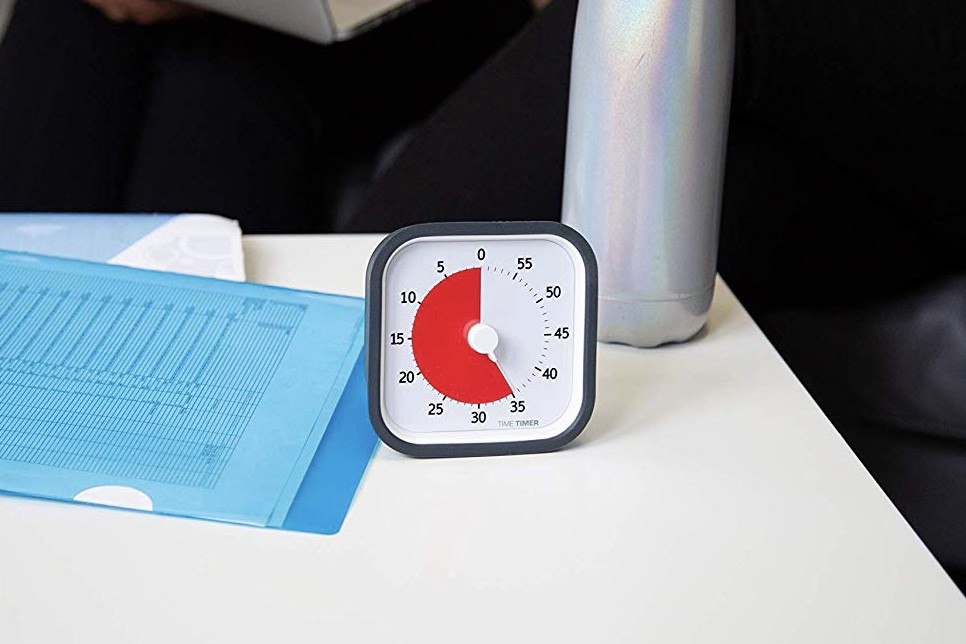
You sit down to study for four hours and somehow get ninety minutes of real work done. The rest evaporates into your phone, a snack run, and rereading the same paragraph while your brain quietly checks out. Sound familiar? That gap between time spent and work done is the exact problem the pomodoro study technique was built to solve, and it was invented by a college student who was failing at studying just as hard as the rest of us.
The method looks almost too simple to matter. Study in focused 25 minute blocks, rest for 5, repeat. But underneath the tomato timer branding sits a surprising amount of cognitive science about why attention collapses during long sessions, and why short structured breaks keep it alive. In the past three years, researchers have finally started testing the technique directly instead of just theorizing about it, and the results are worth knowing before you commit.
So in this guide I’ll walk through how to run the technique properly, what the newest studies found (including the ones that turned up real downsides), why your phone sabotages the whole thing even when it’s face down, and how to bend the intervals when the standard 25/5 split fights your brain instead of helping it.
The 30 Second Version
Study one task for 25 minutes with your phone in another room. Break for 5. After four rounds, break for 20 to 30 minutes. Write distractions on paper instead of chasing them, and tally every finished block. That’s the whole engine. Everything below is how to run it well.
Where the Pomodoro Technique Came From
In the late 1980s, Francesco Cirillo was a first-year university student in Italy drowning in exam prep. By his own account he’d go to class, study all day, come home, and feel like he’d accomplished nothing. One night, frustrated, he made a bet with himself. Could he study, with total focus, for just two minutes? He grabbed the tomato-shaped kitchen timer from his family’s kitchen, wound it, and tried.
That two minute experiment eventually grew into the Pomodoro Technique (pomodoro is Italian for tomato). Cirillo refined the intervals over years of trial and error, settled on 25 minute work blocks, and later taught the method to software teams he was mentoring in the 1990s. They laughed at him. One team tried it anyway, it worked, they talked about it at conferences, and the technique spread through the programming world before spilling into everything else. His original free PDF passed two million downloads, Penguin picked up the book, and it’s now published in more than a dozen languages.
One detail from that history matters more than the rest. Cirillo himself has complained that apps and bloggers boiled his system down to a single instruction, work 25 minutes and rest 5. The full method also involves planning your day in pomodoros, estimating how many blocks each task will take, and logging every interruption. Those unglamorous layers are where a lot of the value hides, and I’ll come back to them.
How the Pomodoro Study Technique Works
All you need is a timer, a task list, and a scrap of paper. The full loop goes like this:
Pick one concrete task
Not “study biology.” Something finishable, like making flashcards for chapter 12 or working through 15 practice problems. Vague tasks give your brain nowhere to aim.
Set a timer for 25 minutes
Work on that task and nothing else. When a stray thought or to-do pops into your head, jot it on your paper and get straight back to work.
Stop when the timer rings
Even mid-sentence. Mark one completed pomodoro on your tally. The hard cutoff is part of the training, not an inconvenience.
Take a 5 minute break, no screens
Stand up, stretch, refill your water, look out a window. The break resets your brain’s grip on the task. Scrolling ruins it.
After four pomodoros, rest for real
Take 15 to 30 minutes. Eat, walk, get sunlight. Then start the next set fresh instead of grinding into a fried afternoon.
One Full Cycle
study
rest
study
rest
study
rest
study
long break
One cycle runs about two and a half hours and contains 100 minutes of true focused study. Two cycles is a serious study day.
A pomodoro is indivisible. That’s the rule people hate most and the one that does the most work. If you pause the timer to answer a text, the block doesn’t count and you start over. Harsh, sure. It’s also the mechanism that retrains your tolerance for boredom, because your brain learns fast that there is no escape hatch for the next 25 minutes, so it may as well settle in.
The hard stop at the end matters too, though for a different reason. Stopping while you still have momentum makes the next block easier to start. Hemingway supposedly used the same trick with writing, always quitting mid-scene so tomorrow’s page was already half alive in his head.
The three rules most people never learn
Cirillo’s book includes a handful of operating rules that almost never survive the trip into timer apps, and they’re what turn a countdown clock into an actual system.
Big tasks get broken down. Anything you estimate at more than four pomodoros splits into smaller pieces. “Write the history paper” becomes “outline arguments,” “draft intro,” “draft body section one,” each sized to a block or two.
Small tasks get batched. Anything under one pomodoro gets grouped with other quick items into a single block. Emailing a professor, printing a lab sheet, and updating your flashcard deck can share one 25 minute session.
A started pomodoro must ring. The block is indivisible. If a real emergency interrupts it, the block is void and you start fresh. No partial credit, which is exactly why the tally means something.
Finish early, keep going. If the task ends with time on the clock, you don’t stop. Review what you just did, quiz yourself on it, or overlearn the material until the ring. For studying this rule is a gift, since review-until-the-bell is basically free retention.
What the Research Says About the Pomodoro Technique
For decades the evidence behind pomodoro was borrowed from general attention research rather than tests of the technique itself. The classic study is a 2011 experiment in Cognition by Ariga and Lleras at the University of Illinois. Participants performed a 50 minute sustained attention task, and as expected, performance sagged steadily over time. Except in one group. People who received two brief mental breaks during the task showed no decline at all.
Their explanation flipped 40 years of thinking about attention. Focus doesn’t drain like a battery, they argued. Your brain habituates to an unchanging goal and simply stops registering it, the same way you stop feeling your shirt on your skin a few seconds after putting it on. A brief diversion deactivates and reactivates the goal, and focus comes back. Every pomodoro break is doing exactly that.
Direct tests of pomodoro-style studying finally arrived in the 2020s, mostly out of Maastricht University in the Netherlands. A 2023 study in the British Journal of Educational Psychology by Biwer and colleagues tracked 87 students during real self-study sessions. Half chose their own break timing, half took systematic pomodoro-style breaks. The structured group reported better concentration, higher motivation, and rated their tasks as less difficult. Students left to their own devices took longer, sloppier breaks and ended the day more fatigued and more distracted.
A 2025 scoping review in BMC Medical Education pulled together 32 studies covering more than 5,000 participants, focused on whether pomodoro helps students retain dense material like anatomy. Across the randomized trials, structured intervals produced roughly 20% lower fatigue along with measurable gains in motivation and resistance to distraction compared with self-paced breaks. Not bad for a kitchen timer.
Now the caveat, because pretending it doesn’t exist is how you end up quitting the method in week two. A 2025 study in Behavioral Sciences from the same Maastricht group, led by Smits and colleagues, compared classic 25/5 pomodoro against Flowtime (break whenever focus naturally fades) and fully self-regulated breaks across 94 students. Pomodoro users showed a faster rise in fatigue and a faster drop in motivation over the session. Overall levels evened out between groups by the end, and task completion didn’t differ, but the pattern suggests rigid intervals grind on some people, especially when the timer keeps yanking them out of flow.
Put all of that together and a fair summary emerges. Structured breaks clearly beat winging it for most students, the fatigue and concentration benefits are real and replicated, and the exact 25/5 ratio is nowhere near sacred. Think of the technique as training wheels for attention. Enormously useful while you build the skill, negotiable once you have it.
Why a Ticking Timer Beats Willpower
Beyond the attention research, the technique quietly exploits several well-documented quirks of human psychology, which is probably why it has outlived hundreds of flashier productivity systems.
Start with Parkinson’s Law, the old observation that work expands to fill the time available for it. Give yourself all evening to outline an essay and the outline will take all evening, padded out with formatting fiddling, snack breaks, and elaborate procrastination rituals. A pomodoro is a timebox, and the ticking 25 minute window compresses the task until the busywork gets squeezed out. Anyone who has watched themselves finish an “hour long” assignment in one urgent pomodoro knows how much air was in the original estimate.
Which leads straight into the planning fallacy, our chronic and well-studied habit of underestimating how long things take. We do it even for tasks we’ve done a dozen times before. Cirillo’s fix was the estimation layer everyone skips. Guess how many pomodoros a task will need, then track how many it consumed. After two weeks of this you develop an almost unsettling accuracy about your own work speed, and exam week planning stops being fiction. That problem set is a four pomodoro job. You have the receipts.
And then there’s the starting problem, which for most students is the whole ballgame. Procrastination researchers keep finding that we avoid tasks because they feel large and aversive, not because we’re lazy. Committing to one 25 minute block is psychologically cheap. You aren’t agreeing to conquer organic chemistry tonight, just to sit with it for 25 minutes. Once you’re in, momentum usually carries you into a second block, and a third. Cirillo’s whole system grew out of a two minute version of this exact trick.
Your Phone Is the Real Boss Fight
Cirillo invented his method before smartphones existed. He was fighting daydreams and roommates. You’re fighting a slot machine engineered by thousands of the smartest behavioral designers alive, so the interruption rules need upgrading.
A widely cited 2017 study from UT Austin tested nearly 800 people on demanding cognitive tasks with their phones either on the desk, in a pocket or bag, or in another room. Phones were silenced in every condition. Nobody was allowed to touch them. The other-room group still outperformed the desk group on working memory measures, and the researchers’ explanation was blunt. Actively not thinking about your phone consumes cognitive resources by itself. They called it brain drain.
Worth knowing, in the spirit of honest evidence, that this finding has had a bumpy replication record, and a 2023 meta-analysis found the effect smaller and less consistent than the original headlines suggested. The practical takeaway survives the debate anyway, because whatever the mere-presence effect turns out to be, a phone you can reach is a phone you will eventually check. During pomodoros mine lives in another room, and every distraction that would have become a 20 minute scroll gets written on paper instead and handled during a break. That single habit, borrowed straight from Cirillo’s interruption log, has done more for my reading depth than any supplement I’ve tried. And I’ve tried plenty.
Pomodoro Intervals Compared
The 25/5 split is a default, not a law. Researchers and practitioners have tested plenty of variations, and the 2025 anatomy review catalogued interval schemes running as long as 90 minute blocks with half hour breaks for very dense material. Time-tracking company DeskTime famously found its most productive users worked in 52/17 rhythms back in 2014, then reran the analysis in 2021 and found top performers had stretched to 112 minute sessions with 26 minute breaks. Different session lengths suit different kinds of studying, and different brains.
My advice is to run classic 25/5 for two full weeks before touching the dials. Most people who tell me pomodoro didn’t work for them never protected the 25 minutes from their phone, which is a different failure entirely, and no interval scheme on earth fixes it.
Using Pomodoros for Studying, Not Just Working
Studying isn’t office work, and a few adjustments make the technique hit considerably harder for learning and retention.
The biggest one is what you put inside the blocks. A timer can’t rescue a bad study method, and rereading highlighted notes for 25 minutes is a bad study method no matter how precisely you time it. Fill your pomodoros with retrieval work instead. Flashcards, practice questions, closed-book summaries from memory, explaining the concept out loud to an empty room. The timer manages your attention while active recall manages your memory, and the combination is worth far more than either alone. Decades of research on distributed practice also means that eight pomodoros spread across four days will beat eight pomodoros crammed into the night before, every single time.
Spend your first block of the day planning. List what needs to get done, estimate each task in pomodoros, and put the hardest or most dreaded subject first while your willpower is fresh. This is the layer of Cirillo’s system that timer apps amputated, and it’s where the planning fallacy correction happens.
Treat the breaks as seriously as the work. The Biwer study found structured breakers stayed fresher partly because their breaks were short and clean, and a five minute TikTok session fails on both counts. It replaces one attention-demanding task with a more addictive one, drags your focus somewhere unrelated, and makes re-entry into studying noticeably harder. Move your body, hydrate, look at something far away. Boring breaks are a feature.
When you hit the long break after four blocks, take it for real. Twenty to thirty minutes, food, a walk, sunlight if you can get it. Memory consolidation benefits from downtime, and grinding through the long break is the classic way a productive morning turns into a useless, fried afternoon. Sleep sits on top of all of this, by the way. Ten flawless pomodoros followed by five hours of sleep is a losing trade, since the consolidation your brain does overnight is where studied material becomes retained material.
A Sample Pomodoro Study Day
Abstract advice only goes so far, so this is what a heavy study day looks like when the system is running properly. Say it’s ten days before finals and you’ve got biochem, statistics, and a paper due.
Notice what that schedule buys you. You finish before most of your classmates have completed their second warm-up scroll at the library, and the afternoon comes guilt free, which turns out to be its own motivation to run it again tomorrow.
Mistakes That Quietly Kill the Method
Having watched a lot of people bounce off pomodoro, the failure patterns are remarkably consistent. The phone stays on the desk, face down, which feels disciplined and changes nothing. The timer becomes a suggestion, paused for one quick text, and once pausing is on the menu the whole training effect collapses. Tasks stay vague, so “study for the midterm” gives the brain nowhere to aim and the block dissolves into shuffling notes.
Tracking gets skipped too, which seems harmless until you realize the running tally of completed blocks is half the motivation engine, and the day-over-day record is the only thing that ever makes you an accurate planner. A visible row of tally marks at 2 pm has talked plenty of people into one more block.
The subtler mistake runs the other direction. Some people follow the hard stop so religiously that they repeatedly kill genuine flow states, and the 2025 Maastricht data suggests that’s a real cost for some brains. A workable compromise once you’re past the beginner stage is to finish the thought or the problem you’re inside, then break. Just watch that “finishing the thought” doesn’t quietly become another 40 minutes, because then you’re not doing pomodoro anymore, you’re doing burnout with extra steps.
Best Pomodoro Timers and Apps
You don’t need an app, and there’s a decent argument you’re better off without one. Cirillo still recommends a physical wind-up timer, partly because the act of winding it commits you to the session, and partly because a dumb timer can’t show you notifications. Any kitchen timer works. So does a basic phone timer, provided the phone then leaves the room.
If you want digital, Pomofocus is a free browser timer with adjustable intervals and a built-in task list, Tomato Timer is about as minimal as software gets, and Forest gamifies the whole thing by growing a virtual tree that dies if you leave the app, which sounds silly until it saves your fourth pomodoro of the day. Pick one and move on. Timer shopping is procrastination wearing a productivity costume, and I say that as someone who once spent an entire evening comparing timer apps instead of studying.
Quick Reference, Screenshot This
Settings. 25 min work, 5 min break, 20 to 30 min long break after four blocks. Beginners can drop to 15 min. Deep work can stretch to 50/10.
Environment. Phone in another room. Paper next to you for stray thoughts. One concrete task per block, hardest subject first.
Rules. A started block must ring. Interrupted blocks are void. Finish early, review until the bell. Tally every completed block.
Breaks. Screen-free, always. Move, hydrate, look far away. Long breaks get food and daylight. Boring breaks are the point.
FAQ
How many pomodoros should I do per day?
Most students land between 8 and 12 completed pomodoros on a heavy day, which works out to roughly 3.5 to 5 hours of true focused work. That sounds low next to a typical “8 hour library day,” but track your real focus during one of those marathon sessions and you’ll find it usually contains less. Clean blocks beat long hours.
Is 25 minutes or 50 minutes better for studying?
Start at 25. It matches the sustained attention research and keeps the barrier to starting low. Move up to 50/10 for deep work like essay writing once you can reliably protect 25 minutes without drifting, and drop to 15 if even 25 feels impossible right now. The interval is a dial, and the anatomy review found schemes from 12 minute micro-blocks to 90 minute deep sessions all producing results in the right context.
Does the pomodoro technique work for ADHD?
Many people with ADHD report it helps a lot, because externalized time and short commitments work with that brain instead of against it. Shorter 15 minute blocks with movement-based breaks are the most common adaptation. Results vary person to person, so treat every interval as adjustable.
What should I do during the 5 minute break?
Anything low-stimulation and away from screens. Stretch, walk to another room, refill water, do a few push-ups, stare out a window. The break exists to rest the task goal in your brain, and scrolling swaps one demanding attention task for a stickier one.
Why is it called the pomodoro technique?
Pomodoro means tomato in Italian, and the whole method is named after the tomato-shaped kitchen timer Francesco Cirillo grabbed for his first two minute focus experiment as a university student in the late 1980s. The timer was the tool on hand, and the name outlived it.
Where can I learn the full technique from its creator?
Cirillo’s official site at pomodorotechnique.com has free getting-started guides and timers, and his book The Pomodoro Technique is on Amazon. The book covers the planning, estimation, and interruption layers that most timer apps leave out, which happen to be the layers that separate people who stick with the method from people who abandon it.
Final Take
The pomodoro study technique has earned its 40 year run. The mechanism holds up under modern attention research, the recent randomized trials show real gains in concentration, motivation, and fatigue resistance over unstructured studying, and the timebox structure attacks procrastination and your own terrible time estimates at the same time. For dense, memorization-heavy material, the 2025 evidence is stronger than it has ever been.
It’s a tool, though, not a religion. Rigid intervals wear on some people, flow states sometimes deserve protection from the timer, and once your focus is trained you may outgrow the 25/5 scaffolding entirely. Run the classic version for two weeks, track everything, exile your phone, and then tune the dials to your own brain. The tomato is just a training device. The prize is an attention span that shows up whether or not anything is ticking.