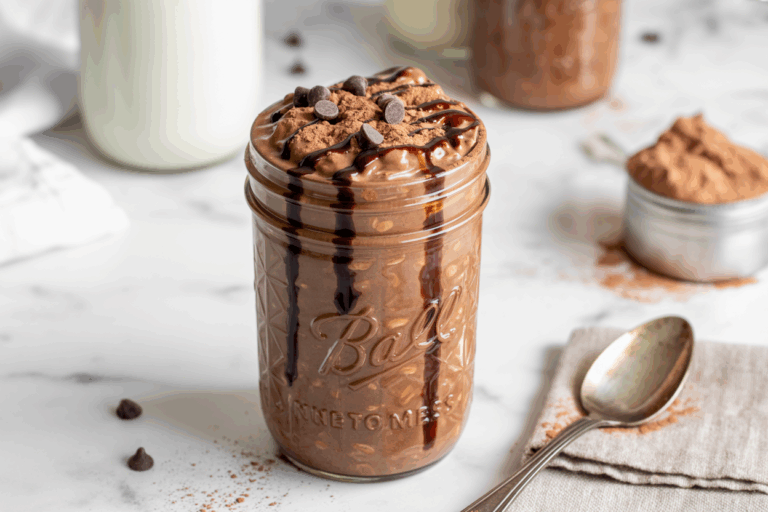
Brownie Batter Protein Overnight Oats

Yield: 1 large serving (or 2 small servings)
Prep Time: 5 minutes
Chill Time: 4 hours minimum (overnight best)
Total Time: 4 hours 5 minutes

Chocolate for Breakfast (Without the Guilt Trip)

This tastes like licking the brownie bowl.

Except it has 25 grams of protein, 10 grams of fiber, and won’t give you a sugar crash at 10 AM. I’ve been eating this three mornings a week for two years, and my cholesterol actually went DOWN. My doctor was confused. I wasn’t.

The 5-Minute Evening Ritual

Here’s the thing about overnight oats – they’re not actually about the oats. They’re about having chocolate pudding waiting for you when you stumble into the kitchen at 6 AM, barely conscious, desperately needing something that doesn’t require thought or effort or cooking or decisions.

Mason jar. Ingredients. Stir. Sleep. Wake up to breakfast.

It’s that simple.

What Goes In The Jar

The Foundation:
– 1/2 cup rolled oats (old-fashioned, not instant – trust me)
– 1 cup milk (any kind works)
– 2 tablespoons Viva Naturals cocoa powder (this brand is smooth, never gritty)
– 1 tablespoon Navitas Organics chia seeds (these gel up perfectly)

The Protein Power:
– 1 scoop protein powder – Optimum Nutrition Vanilla or chocolate both work

The Sweet Spot:
– 1 teaspoon brown sugar OR maple syrup
– Tiny pinch of salt (non-negotiable)

Mix the dry stuff first in your Ball mason jar (the 16oz size is perfect for this). Add the wet stuff. Stir for 30 seconds – really stir, don’t just swirl it around like you’re afraid of it. Every clump of cocoa powder you don’t break up now will haunt you tomorrow morning.

The Science Part (Stay With Me)

Overnight soaking does something magical to oats.

The resistant starch that forms feeds your gut bacteria. The beta-glucan fiber lowers cholesterol. The slow-digesting carbs keep blood sugar steady. But honestly? None of that matters if it doesn’t taste good. And this tastes like brownie batter, so we’re winning on all fronts.

Morning Options

Cold straight from the fridge = chocolate pudding vibes

Microwaved for 60 seconds = warm brownie batter

Your call. Both are correct.

Top with banana slices if you’re feeling healthy. Mini chocolate chips if you’re feeling honest. PB2 powder if you want that peanut butter cup situation.

Let’s Talk Numbers

350 calories gets you:
โ†’ 25g protein (more than 3 eggs)
โ†’ 10g fiber (hello, digestive health)
โ†’ 40g carbs (energy that lasts)
โ†’ 7g fat (mostly from chia seeds)
โ†’ 5g sugar (compared to 35g in an actual brownie)

This is the breakfast that fitness influencers wish they actually enjoyed eating.

The Sunday Night Strategy

5 mason jars. Assembly line. Dry ingredients down the row, then liquids. 15 minutes total. Monday through Friday: handled. This is how adults who have their life together operate. Fake it till you make it.

They last 5 days in the fridge. Don’t push it to 6. I tried. Regrets were had.

Storage Instructions

Refrigerator: Up to 5 days in sealed containers or mason jars. After day 3, the texture gets softer but still delicious.

Freezer: Yes, you can freeze these! Up to 3 months in freezer-safe jars (leave 1 inch headspace for expansion). Thaw overnight in the fridge.

Pro tip: Don’t add fresh fruit toppings until ready to eat. Keep nuts and chocolate chips in separate containers to maintain crunch.

Variations (Because Variety or Whatever)

MINT CHOCOLATE SITUATION: Add 1/4 teaspoon peppermint extract. It’s like eating a York Peppermint Patty for breakfast except your trainer would approve.

ESPRESSO YOURSELF: Tablespoon of instant coffee in the mix. Or check out our Caramel Iced Coffee Protein Shake if you need your caffeine in liquid form.

EXTRA EXTRA: Sometimes I add both chocolate protein powder AND extra cocoa. It’s excessive. It’s unnecessary. It’s perfect.

Troubleshooting Corner

Too thick? Splash of milk.
Too thin? You didn’t wait long enough.
Not chocolatey enough? More cocoa powder. Always more cocoa.
Tastes healthy? Add chocolate chips. Problem solved.

Special Diets (We Don’t Discriminate)

VEGAN: Plant protein + oat milk + maple syrup. Done.

KETO: Sorry, oats aren’t happening. But mix chia seeds, hemp hearts, MCT oil, and cocoa powder. Different but still good.

EXTRA PROTEIN: Stir in Greek yogurt. Now we’re at 35g protein. Your muscles will write thank you notes.

Other Breakfast Options for Chocolate Addicts

Sometimes you want to drink your breakfast instead. That’s where our Maple Pecan Protein Shake comes in – liquid comfort food. Or if you’re into seasonal flavors, the Pumpkin Spice Protein Coffee Shake is basically fall in a blender with caffeine.

Real Talk

I used to skip breakfast. Then I’d eat garbage at 10 AM because I was starving. Then I’d feel guilty. Then I’d restrict lunch. Then I’d binge at dinner. The cycle was exhausting.

These overnight oats broke that cycle.

Not because they’re magic. But because starting your day with something that tastes like dessert but fuels your body properly changes your whole relationship with food. You’re not restricting. You’re not suffering. You’re eating brownie batter for breakfast and crushing your protein goals.

That’s the kind of sustainable healthy eating that actually works long-term.

The Commitment

Tonight, make one jar.

Just one.

Tomorrow morning, eat it and realize breakfast can be this easy and this good. Then Sunday night, make five jars. Monday morning you’ll thank Sunday night you. It’s the gift that keeps on giving.

This recipe turned me into a breakfast person. Not a morning person – let’s not get crazy. But definitely a breakfast person.

Join me in the brownie batter breakfast club. We meet every morning at our respective kitchen counters, eating chocolate oats and feeling superior to people eating sad plain yogurt.

More breakfast wins: Caramel Iced Coffee Protein | Pumpkin Spice Coffee Protein | Maple Pecan Protein

Your future self will thank you. Your taste buds already do.

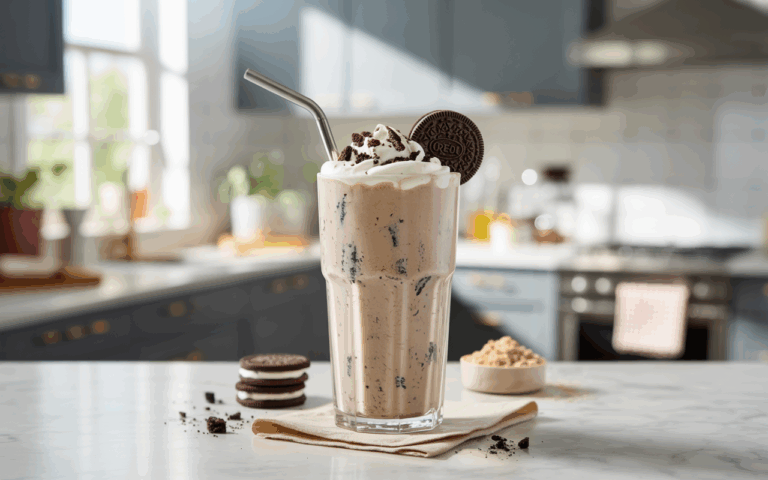
Delicious Cookies and Cream Protein Shake

The 5-Minute Shake That Tastes Like an Oreo Milkshake (25g Protein)

This shake tastes exactly like an Oreo milkshake, takes 5 minutes to make, costs under $2, and delivers 25 grams of muscle-building protein.

No protein powder taste. No chalky texture. Just pure cookies and cream heaven that keeps you full for hours.

I’ve been making this every morning for two years. My husband steals sips. My kids beg for their own. Even my gym trainer asked for the recipe.

Why You’ll Make This Every Day

  • Tastes like dessert for breakfast (seriously, close your eyes and it’s a milkshake)
  • 25g complete protein keeps you full for 4+ hours
  • Under 300 calories with the right ingredients
  • 5 minutes start to finish including cleanup
  • Costs $1.75 vs $12 at smoothie shops
  • Kid-approved (sneak protein into picky eaters)
  • Customizable for any diet (vegan, keto, dairy-free options included)

The Magic Formula

Core Ingredients:

  • 1 cup unsweetened vanilla almond milk (30 calories, creamy base)
  • 1 scoop vanilla protein powder (I use Optimum Nutrition Vanilla Ice Cream – it blends perfectly and doesn’t have that weird aftertaste)
  • 1 heaping cup ice (the secret to milkshake thickness)
  • 2 chocolate sandwich cookies (Oreos or healthier alternatives)

Level-Up Additions:

  • 1 tbsp sugar-free pudding mix (makes it ULTRA creamy)
  • 1/4 tsp xanthan gum (this is the secret to Starbucks-level thickness – a tiny bit goes a long way)
  • Handful of spinach (invisible nutrition boost)
  • 1/4 frozen banana (natural sweetness)

The Perfect Method

Step 1: The Smooth Base

Blend milk, protein powder, and ice for 45 seconds on high. It should be so thick your blender struggles a little. That’s when you know it’s right.

Step 2: Cookie Magic

Break cookies into quarters. Add to blender. Pulse ONLY 3-4 times. You want cookie chunks in every sip, not cookie dust.

Step 3: The Pour

Into your prettiest glass. Top with whipped cream and cookie crumbles if you’re feeling extra. Photo for Instagram. Drink immediately while it’s perfectly cold and thick.

Game-Changing Variations

Thin Mint Obsession

Mint Oreos + 1 drop peppermint extract + chocolate protein powder = Girl Scout cookie in a glass

Birthday Cake Bliss

Golden Oreos + vanilla protein + sprinkles on top = celebration mode activated

Peanut Butter Dream

Regular Oreos + 1 tbsp PB2 powder + chocolate protein = Reese’s cup shake. PB2 works better than regular peanut butter because it doesn’t make the shake too thick.

Coffee Shop Special

Replace 1/4 cup milk with cold brew + vanilla protein + Oreos = cookies & cream frappuccino. If you love coffee protein shakes, try our Caramel Iced Coffee Protein Shake – it’s like having Starbucks for breakfast.

More Fall-Inspired Protein Shakes You’ll Love

Once you master this cookies and cream version, you need to try these seasonal favorites:

Our Pumpkin Spice Protein Coffee Shake combines the best parts of PSL season with your morning protein. It’s basically fall in a glass with 30g of protein.

The Maple Pecan Protein Shake tastes like liquid pecan pie but with macros that actually fit your goals. Perfect when you’re craving something cozy and sweet.

Pro Secrets I’ve Learned

Freeze everything. Frozen cookies, frozen banana pieces, even freeze your almond milk in ice cube trays. Colder = thicker = better.

Double blend method. Blend base ingredients twice – once before ice, once after. Restaurant-quality smooth.

The cottage cheese secret. Add 2 tbsp cottage cheese before blending. Adds 5g protein and makes it incredibly creamy. You’ll never taste it.

Layer your cookies. Save half a cookie to crumble on top. Instagram-worthy every time.

The powder trick. Mix protein powder with a tiny bit of milk first to make a paste, then add everything else. Zero clumps.

Equipment That Makes a Difference

You need a real blender for this shake. A shaker bottle won’t cut it.

I use a Vitamix which makes it perfectly smooth every time, but honestly my friend uses a Ninja blender and gets amazing results too. The Ninja is about 1/3 the price and totally does the job.

The key is having something powerful enough to completely crush ice and blend frozen ingredients smooth.

Exact Nutrition (Because You’re Wondering)

Base Recipe:

  • Calories: 265
  • Protein: 25g
  • Carbs: 24g
  • Fat: 9g
  • Fiber: 3g
  • Sugar: 10g

Compared to Starbucks Cookies & Cream Frappuccino:

  • Calories: 470 (you save 205)
  • Protein: 6g (you get 19g more)
  • Sugar: 67g (you save 57g)
  • Price: $6.95 (you save $5.20)

Meal Prep Like a Boss

Sunday Setup: Pre-portion protein powder into small containers. Break cookies into bags. Freeze almond milk in ice cube trays.

Morning Routine: Dump pre-portioned ingredients into blender. Blend. Pour. Done in under 3 minutes.

Travel Hack: Pack protein powder and cookies in a shaker. Buy milk at your destination. Shake with ice from the hotel.

Special Diet Swaps

Vegan Version:

  • Plant protein powder (Orgain or Vega work great)
  • Almond/oat milk (already vegan)
  • Newman’s Own or Oreo Thins (accidentally vegan)

Keto Version:

  • Unsweetened almond milk
  • Zero-carb protein powder
  • HighKey mini cookies (2g net carbs)
  • Add MCT oil for fat macros (I like Nature’s Way brand – no weird taste)

Extra High Protein (38g):

  • Use Fairlife protein milk (13g)
  • Add 2 tbsp cottage cheese (5g)
  • 1.5 scoops protein powder (30g)

Common Questions Answered

Can I make it the night before?
The texture changes overnight. Make it fresh – it literally takes 5 minutes.

My shake isn’t thick enough?
More ice. Less liquid. Freeze your ingredients. Add 1/4 tsp xanthan gum for guaranteed thickness.

Can kids drink this?
Yes! Use half a scoop of protein for little ones. My 6-year-old loves it.

Best protein powder if you don’t like vanilla?
The Optimum Nutrition Vanilla Ice Cream honestly doesn’t taste like typical vanilla protein – it’s more like actual ice cream. But chocolate works great too.

Your New Morning Routine

Tomorrow morning, make this shake.

Not because you have to. Not because it’s “healthy.” But because you deserve to start your day with something that tastes like dessert and makes you feel amazing.

In 5 minutes, you’ll have a breakfast that tastes better than ice cream, costs less than coffee, and delivers more protein than three eggs.

Save this recipe. Try it tomorrow. Come back and tell me which variation becomes your favorite.

And if you’re ready to expand your protein shake game, check out our Pumpkin Spice, Caramel Iced Coffee, and Maple Pecan protein shakes for more delicious ways to hit your protein goals.

Welcome to the cookies and cream breakfast club. Your mornings will never be the same.

Joe Rogan’s Kettlebell Workouts: The Complete Guide

0

Ever wonder how Joe Rogan maintains his incredible physique in his mid-50s? The answer lies in his brutally effective kettlebell workout that’s breaking the internet. This comprehensive guide reveals the exact routine, proper form, and Pavel Tsatsouline-inspired philosophy that keeps Rogan strong and functional.

Why Joe Rogan Swears by Kettlebells

Joe Rogan’s functional fitness approach isn’t about mirror muscles โ€“ it’s about building real-world strength that translates to the BJJ mat, hunting expeditions, and daily life. When you watch him effortlessly swing that 70-pound bell around on Instagram, you’re seeing years of consistent training distilled into pure functional movement. The man treats fitness like a martial art, where every rep is a technique to master rather than a number to hit.

Full-Body Functional Strength

There’s something primal about kettlebell training that resonates with Rogan’s philosophy. Unlike the isolation machines at your local gym, these cannonballs with handles demand your entire body work as one unit. It’s why fighters and athletes have been using them for centuries. Scientific research backs this up – a 2014 study published in the International Journal of Exercise Science found that kettlebell swings produce a supramaximal level of resistance in the posterior chain, often exceeding values measured during maximal voluntary contraction.

A single kettlebell swing activates your:

  • Posterior chain (glutes, hamstrings, lower back)
  • Core stabilizers
  • Grip strength
  • Cardiovascular system

But here’s what most people miss โ€“ it’s not just about the muscles. When Rogan talks about kettlebells on his podcast, he emphasizes how they teach your body to move as nature intended. You’re not sitting on a machine pushing weight along a fixed path. You’re standing, balancing, and controlling a weight that wants to pull you off center. That’s real-world strength. Research from BMC Sports Science showed that kettlebell training elicited both cardiovascular and neuromuscular responses, making it superior to traditional resistance training for improving functional fitness in obese adults.

The Pavel Tsatsouline Connection

The story of how Rogan discovered his kettlebell philosophy is fascinating. Back in the early 2000s, a former Soviet special forces instructor named Pavel Tsatsouline introduced Americans to “hardstyle” kettlebell training through his groundbreaking book Enter the Kettlebell. Rogan was immediately hooked by Pavel’s counterintuitive approach, which flew in the face of traditional American bodybuilding wisdom.

Pavel’s methodology includes:

  • Never training to failure
  • Focusing on perfect form over max reps
  • Building strength as a skill through frequent practice
  • Using “grease the groove” methodology

Rogan often references Pavel’s analogy about farmers who get incredibly strong without ever going to a gym. They simply perform moderate work consistently, day after day. No screaming, no spotters, no failure sets โ€“ just consistent, quality work. This resonated deeply with Rogan, who was tired of the “no pain, no gain” mentality that left him beat up and injured. When Rogan appeared on JRE Episode #1399 with Pavel Tsatsouline, they discussed how this approach has kept both men injury-free well into their 50s.

Mental Toughness Builder

“Swinging a 70-pound kettlebell is as much mental as physical,” Rogan often says on his podcast. But it goes deeper than just pushing through fatigue. There’s a meditative quality to the rhythmic nature of kettlebell swings that Rogan compares to hitting a heavy bag or running hills.

When you’re 50 swings into a set and your grip is failing, your lungs are burning, and that voice in your head is screaming to quit โ€“ that’s where the real training happens. Not in your muscles, but in your mind. Rogan believes this mental fortitude carries over into every aspect of life, from handling stress at work to pushing through difficult conversations.

Equipment You’ll Need

Let’s talk gear. Rogan isn’t sponsored by any kettlebell company (despite co-founding Onnit), so his recommendations come from genuine experience. He’s broken plenty of cheap bells over the years and learned what matters.

Primary Equipment

The foundation of this workout is simple:

  • Kettlebell: Rogan uses a 70 lb (32 kg) bell, but beginners should start lighter:
    • Men: 35-45 lbs (16-20 kg)
    • Women: 18-26 lbs (8-12 kg)
  • Timer: For tracking rest periods (1-2 minutes between sets)
  • Chalk: Optional but helpful for grip

Now, about that weight selection โ€“ Rogan is adamant that ego has no place in kettlebell training. He’d rather see you nail perfect form with a 35-pound bell than struggle with poor technique at 53 pounds. Remember, even Pavel himself recommends starting conservative.

Rogan’s Preferred Brands

Through years of training, certain brands have proven themselves in Rogan’s home gym:

The key is finding a bell with a comfortable handle width and a smooth finish that won’t tear up your hands. Rogan learned this the hard way after developing calluses “like a mountain climber” from poorly finished bells. Whether you choose Onnit’s stylish kettlebells or go with a more traditional option, prioritize quality over aesthetics.

Optional Extras

While Rogan keeps things minimal, these additions can enhance your training:

  • Exercise mat for floor work
  • Resistance bands for warm-up
  • Foam roller for recovery

The Essential Warm-Up

Before touching that heavy kettlebell, Rogan insists on proper preparation. This isn’t negotiable. As someone who’s dealt with injuries from skipping warm-ups in his younger days, Rogan now treats the warm-up as sacred as the workout itself.

Dynamic Warm-Up Sequence (5 minutes)

The beauty of Rogan’s warm-up is its simplicity. No fancy equipment, no complicated movements โ€“ just basic exercises that prepare your body for the work ahead.

1. Deep Bodyweight Squats – 2 sets of 20 reps

These aren’t your typical quarter squats. Rogan drops his hips below his knees, maintaining an upright torso and keeping his heels firmly planted. The first set might feel stiff, but by the second set, you’ll notice your hips opening up and your ankles becoming more mobile.

Focus points:

  • Full depth (hips below knees)
  • Keep heels planted
  • Opens hips for better swing mechanics

2. Push-Ups – 2 sets of 20 reps

Standard military-style push-ups, chest touching the floor on each rep. Rogan emphasizes controlled movement here โ€“ no bouncing or half-reps. These activate your entire upper body and start engaging the core muscles you’ll need for stability during the workout.

Key elements:

  • Standard form, chest to floor
  • Activates upper body for presses
  • Engages core stabilizers

3. Hip Circles – 10 each direction

Standing with hands on hips, Rogan makes large circles with his hips. This might look silly, but it’s crucial for loosening up the hip joints that will drive every kettlebell movement. Think of it as oiling the hinges before heavy use.

Benefits:

  • Loosens hip joints
  • Prepares for hip hinge movements

4. Arm Swings – 20 forward, 20 backward

Big, controlled arm circles to warm up the shoulders. Rogan learned the importance of this after tweaking his shoulder during a cold kettlebell snatch years ago. These dynamic stretches prepare the joint for the overhead work to come.

Purpose:

  • Warms shoulder joints
  • Prevents injury during overhead moves

The Complete 6-Exercise Routine

Here’s where things get serious. This is the exact routine that Rogan has refined over years of training, influenced by Pavel’s teachings and his own experimentation. Each exercise serves a specific purpose in building functional, athletic strength.

1. One-Arm Kettlebell Swings – 3×10 Each Arm

The foundation of Rogan’s routine and arguably the best full-body exercise ever invented. When Squat University analyzed Rogan’s form, they noted his exceptional hip drive and timing.

Setup & Execution:

Start with your feet slightly wider than shoulder-width, toes pointed slightly outward. The kettlebell should be about a foot in front of you. Rogan emphasizes the importance of the setup โ€“ rush this, and the entire set suffers.

  • Feet shoulder-width apart
  • Grip kettlebell with one hand
  • Hinge at hips (not squat)
  • Drive hips forward explosively
  • Let momentum carry bell to chest height
  • Control the descent

The magic happens in the hip hinge. Rogan describes it as “humping the air” โ€“ crude but accurate. You’re not lifting with your arm; you’re launching the bell with your hips. The arm is just along for the ride.

Rogan’s Key Points:

  • “The power comes from the hips, not the arms”
  • Breathe out forcefully at the top
  • Keep back flat throughout
  • Switch hands after 10 reps

Common Errors to Avoid:

  • Squatting instead of hinging
  • Using arms to lift the weight
  • Hyperextending the back

2. Kettlebell Clean & Press – 3×10 Each Arm

This compound movement builds explosive power and shoulder strength. Rogan calls it “the most athletic” of all kettlebell moves because it requires coordination, timing, and raw power.

Execution:

The clean is where most people struggle. You’re not curling the weight up โ€“ you’re popping it into position with hip drive, just like the swing. The bell should travel close to your body and land softly in the rack position.

  • Start with bell between feet
  • Clean to rack position (elbow tucked, bell at shoulder)
  • Press overhead to full lockout
  • Lower with control
  • Return to starting position

Rogan spent months perfecting his clean technique to avoid bruising his forearms. The key is keeping the bell close and “punching” your hand through the handle as it comes up, rather than letting it flip over and slam into your wrist.

Form Cues:

  • Use hip drive for the clean
  • Keep core tight during press
  • Full lockout at top
  • Smooth transitions between movements

3. Kettlebell Windmill – 3×10 Each Side

Rogan includes this for core strength and shoulder stability โ€“ crucial for grappling. It’s also the movement that makes newcomers look most awkward, which Rogan finds hilarious.

How to Perform:

This isn’t about muscling through the movement. It’s about control, flexibility, and maintaining structural integrity while in a compromised position โ€“ much like defending a submission in BJJ.

  • Press bell overhead with right arm
  • Turn feet 45 degrees left
  • Keep right arm vertical
  • Bend sideways, sliding left hand down leg
  • Return to standing

The windmill challenges your body in ways traditional ab work never could. You’re supporting weight overhead while moving through a significant range of motion. Your obliques, shoulders, and hips all have to work together.

Benefits:

  • Improves thoracic mobility
  • Strengthens obliques
  • Enhances shoulder stability
  • Builds anti-rotation strength

4. Renegade Rows with Push-Ups – 3×10 Each Side

The finisher that “makes you question your life choices,” according to Rogan. He discovered this exercise during a particularly brutal session with his trainer and immediately fell in love with how much it sucked.

The Sequence:

Picture this: you’re in a push-up position, but your hands are gripping kettlebells. Now you have to row each bell while fighting to keep your body from rotating. Then, just when you think you’re done, you do a push-up. That’s one rep. Nine more to go.

  • Plank position with hands on kettlebells
  • Row right bell to hip
  • Row left bell to hip
  • Perform one push-up
  • That’s one rep

The genius of this exercise is how it forces your entire body to work as a unit. Your core fights rotation, your shoulders stabilize, your back pulls, and your chest presses. It’s a full-body ass-kicker disguised as an upper body exercise.

Pro Tips:

  • Wide foot stance for stability
  • Minimize hip rotation
  • Keep core engaged throughout
  • Use lighter bells if needed

5. Turkish Get-Ups – 3×5 Each Side (Advanced Addition)

While not in the original routine, Rogan often adds these for total-body integration. He calls them “the exercise that makes you feel like a baby learning to walk again.”

Key Positions:

The Turkish get-up is actually seven distinct movements blended into one flowing sequence. Rogan breaks it down into checkpoints:

  • Lying to elbow
  • Elbow to hand
  • Hand to knee
  • Knee to standing

Each position requires different muscles to fire while others stabilize. It’s like a full-body puzzle where strength, mobility, and coordination all have to work together. Rogan often jokes that if aliens saw us doing Turkish get-ups, they’d think we were performing some weird religious ritual.

6. Farmer’s Walks – 3×40 yards (Optional Finisher)

Simple but brutal โ€“ just what Rogan loves. He added these after reading about old-time strongmen who built incredible strength just by carrying heavy things.

Execution:

Grab two heavy kettlebells and walk. That’s it. But here’s what happens โ€“ every muscle from your traps to your calves has to work overtime just to keep you upright and moving.

  • Two heavy kettlebells
  • Walk with perfect posture
  • No leaning or swaying
  • Focus on breathing

Rogan uses these as a reality check. You might feel strong doing swings and presses, but can you simply carry heavy weight and walk? It’s humbling and effective.

Rogan’s Training Philosophy

The “Never to Failure” Principle

This is where Rogan’s approach differs radically from typical gym culture. Following Pavel Tsatsouline’s methodology, Rogan treats strength training like practicing a martial art. You wouldn’t throw punches until your form completely breaks down, so why do it with weights?

The approach is counterintuitive in our “go hard or go home” culture. But Rogan swears by it, crediting this philosophy with keeping him injury-free and consistently strong well into his 50s. As detailed in Solar Fightwear’s analysis, Rogan practices:

  • 50% Rule: If you can do 20 reps, do 10
  • Quality Over Quantity: Perfect form on every rep
  • Frequency Over Intensity: Train more often at submaximal loads

Think about it this way โ€“ if you trash yourself every workout, you need days to recover. But if you leave some in the tank, you can train more frequently. Over a month, who gets more quality work done? The person who trains twice a week at maximum intensity or the person who trains four times at 70%?

Progressive Overload Strategy

Rogan didn’t wake up one day swinging 70 pounds. His journey started with a 35-pound bell that felt heavy at the time. The progression was methodical and patient โ€“ qualities that don’t make for exciting Instagram posts but lead to long-term success.

His progression looked like:

  1. Master form with light weight (25-35 lbs)
  2. Increase reps (8โ†’10โ†’12)
  3. Increase weight by 5-10 lbs
  4. Reset reps to 8
  5. Repeat cycle

Notice there’s no mention of testing one-rep maxes or pushing to failure. It’s steady, sustainable progress โ€“ the kind that compounds over years into impressive strength.

Recovery Integration

Rogan treats recovery as seriously as training. This wasn’t always the case โ€“ in his younger days, he believed rest was for the weak. Now he understands that you don’t get stronger during workouts; you get stronger recovering from them.

His recovery protocol has evolved into a science:

  • Post-workout sauna sessions (20 minutes)
  • Cold plunge therapy using tools like The Cold Pod ice bath
  • Stretching and mobility work
  • Adequate protein intake

The sauna and cold plunge aren’t just for recovery โ€“ Rogan views them as mental training too. Sitting in 200-degree heat or submerged in ice water requires the same mental fortitude as grinding through a tough workout.

Scaling for Beginners

Not everyone can jump into Rogan’s routine. Hell, Rogan couldn’t jump into Rogan’s current routine when he started. Here’s how to build up intelligently without destroying yourself in the process.

Week 1-4: Foundation Phase

Your only job these first four weeks is to learn the movements. Forget about weight, forget about feeling tough โ€“ just focus on perfect technique.

  • 2 sets instead of 3
  • 5 reps instead of 10
  • Focus on two-arm swings first
  • Master one exercise before adding others

During this phase, film yourself. Rogan is big on this โ€“ you can’t see your own form in real-time, but video doesn’t lie. Look for common errors like squatting your swings or hyperextending your back. In a recent podcast with Tom Segura and Bert Kreischer, Rogan emphasized the importance of perfect form, saying he uses his phone to film himself and check technique regularly.

Week 5-8: Building Phase

Now that the movements feel natural, it’s time to add some volume. You’re still not chasing fatigue โ€“ you’re chasing quality reps.

  • Progress to 3 sets
  • Increase to 8 reps
  • Add one-arm variations
  • Include all 4 core exercises

This is when it starts feeling like a real workout. Your grip will be challenged, your lungs will burn a bit, and you’ll start understanding why Rogan loves this so much.

Week 9-12: Challenge Phase

Twelve weeks in, you’re ready for the full protocol. But remember โ€“ full protocol doesn’t mean Rogan’s weights. Use what challenges you while maintaining form.

  • Full 3×10 protocol
  • Increase weight by 5-10 lbs
  • Add advanced variations
  • Consider circuit format

By the end of three months, you’ll have built a solid foundation. More importantly, you’ll have developed the discipline and body awareness to train sustainably for years to come.

Common Mistakes to Avoid

Technical Errors

Rogan sees these mistakes constantly when people tag him in their kettlebell videos. They’re trying to impress him with weight or reps, but the form makes him cringe.

  1. Squatting the swing instead of hip hinging โ€“ This turns a posterior chain exercise into a quad-dominant one
  2. Hyperextending the lower back โ€“ Usually from trying to swing too high
  3. Death gripping the handle โ€“ Leads to premature grip failure and torn hands
  4. Ignoring breathing patterns โ€“ Proper breathing is crucial for power and endurance

Programming Mistakes

These errors are less visible but equally damaging to progress:

  1. Too much, too soon โ€“ Build gradually or burn out quickly
  2. Daily max efforts โ€“ Follow the 50% rule for longevity
  3. Skipping warm-up โ€“ Always prepare, no exceptions
  4. Neglecting recovery โ€“ Rest is when you get stronger

Recovery and Results

Let’s talk real expectations. Rogan didn’t build his physique overnight, and neither will you. But with consistency, the changes are dramatic.

What to Expect

First Month:

Your hands will hurt. Your grip will fail. Your hips will be sore in places you didn’t know existed. This is normal. Your body is adapting to a new stimulus, building the foundation for what’s to come.

  • Improved grip strength
  • Better hip mobility
  • Increased work capacity
  • Some muscle soreness

After 3 Months:

This is when people start noticing. Your shoulders look broader, your posture improves, and everyday tasks feel easier. You’re not just stronger โ€“ you’re more capable.

  • Noticeable fat loss
  • Increased muscle definition
  • Better posture
  • Enhanced athletic performance

6+ Months:

Now you understand why Rogan’s been doing this for years. The changes aren’t just physical โ€“ you’re mentally tougher, more disciplined, and confident in your body’s capabilities.

  • Significant strength gains
  • Transformed physique
  • Bulletproof core
  • Mental toughness upgrade

Rogan’s Recovery Protocol

Recovery isn’t passive for Rogan. It’s an active process that’s just as important as the workout itself.

  • Nutrition: High protein, quality carbs post-workout
  • Hydration: Electrolytes and adequate water
  • Sleep: 7-8 hours minimum
  • Active Recovery: Light movement on off days

The JRE Library notes that Rogan’s post-workout meals often include wild game meat, showing how his nutrition and training philosophy align โ€“ both focused on functional, primal approaches. Fewer rounds. Even doing 2 rounds of this circuit is a great workout if 3 is too much initially. Rogan didn’t start with superhero volume โ€“ do what challenges you but doesn’t break you. A comprehensive clinical review published in BMC noted that lumbar compression forces during a 16kg kettlebell swing were well below occupational safety limits and were described as “quite conservative” – making kettlebells safer than many traditional lifts when performed correctly.

Add variety as needed. Once you master these moves, Rogan encourages variety to keep things fun. He often throws in things like Turkish get-ups, goblet squats, or swings with a steel mace. The core idea is functional, full-body moves. Feel free to spice up your kettlebell days with other exercises, especially if you plan to do multiple kettlebell workouts per week.

Joe Rogan’s kettlebell routine is intense, but it’s also flexible in that you can modify it to your level. The key is consistency โ€“ Rogan schedules this kind of training weekly and tracks progress over months and years, not days.

Frequently Asked Questions

Q: How often does Joe Rogan do this kettlebell workout?

A: Rogan typically performs this routine 2-3 times per week, alternating with other training like BJJ, running, and weight lifting. He believes in variety to prevent boredom and overuse injuries.

Q: Can women do Joe Rogan’s kettlebell routine?

A: Absolutely! Start with appropriate weight (18-26 lbs) and follow the same progression principles. Rogan’s trained with plenty of women who smoke him in certain exercises.

Q: Is a 70-pound kettlebell necessary?

A: No. Rogan built up to 70 lbs over years. Start with a weight that challenges you while maintaining perfect form. Even Rogan uses lighter bells when working on new techniques.

Q: How long does the workout take?

A: The full routine takes 30-45 minutes including warm-up and rest periods. Rogan likes that it’s efficient โ€“ maximum results in minimum time.

Q: Can I do this workout every day?

A: Not recommended. Follow Rogan’s approach of 2-3 times weekly for optimal results and recovery. More isn’t always better.

Q: What if I can only afford one kettlebell?

A: Perfect! This entire workout is designed for a single kettlebell. That’s part of the beauty โ€“ minimal equipment, maximum results.

Q: Should I take supplements like Joe Rogan?

A: Focus on whole food nutrition first. Consult a healthcare provider before adding supplements. Rogan’s supplement stack is extensive and personalized to his needs. On his podcast, Rogan has mentioned taking NMN from Renue by Science for energy and anti-aging benefits (code BRAINFLOW saves 10%).

Q: Can beginners start with Joe Rogan’s workout?

A: Yes, but scale appropriately. Start with lighter weight and fewer reps. The program is solid; just adjust the intensity to your level.

Q: What’s the best time to do this workout?

A: Rogan prefers late morning after coffee kicks in, but any time that fits your schedule works. Consistency matters more than timing.

Q: How does this compare to traditional weightlifting?

A: Kettlebells offer more functional, full-body training with cardio benefits โ€“ perfect for real-world strength. It’s not better or worse than barbells, just different. Rogan does both.

Final Thoughts: Embrace the Challenge

Joe Rogan’s kettlebell workout represents more than just exercise โ€“ it’s a philosophy of building functional strength that serves you in life, not just the gym. Whether you’re a martial artist, weekend warrior, or just someone who wants to feel strong and capable, this routine delivers.

The beauty of this program is its simplicity. One bell, six exercises, and the willingness to show up consistently. No fancy equipment, no complex programming, just hard work and patience. It’s a reminder that the best program is the one you’ll actually do.

Remember Rogan’s parting wisdom: “It’s not about being perfect. It’s about being consistent.” He’s missed workouts, had bad days, and sometimes just phones it in. But he always comes back, and that’s what builds lasting strength.

Start where you are, use what you have, and do what you can. The 70-pound kettlebell will be waiting when you’re ready. For now, focus on moving well, recovering smart, and enjoying the process. Because at the end of the day, that’s what keeps Rogan coming back after all these years โ€“ he genuinely loves this stuff.

Ready to start? Grab a kettlebell and join the thousands who’ve transformed their bodies with Joe Rogan’s method.


Disclaimer: Always consult with a healthcare provider before starting any new exercise program. Individual results may vary.

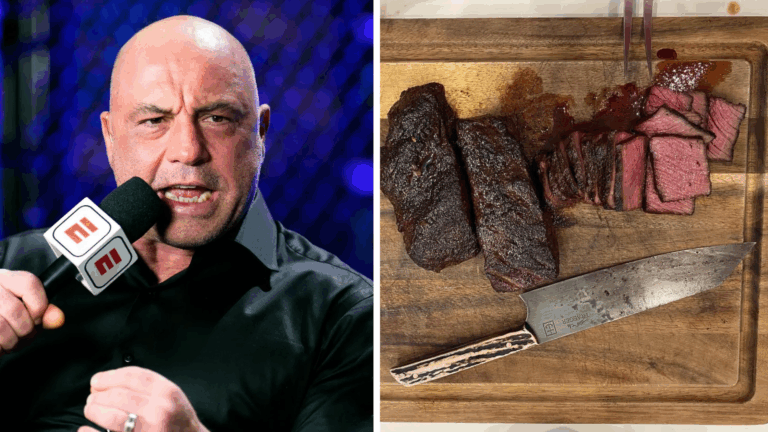
How Joe Rogan Cooks the Perfect Steak (Elk Edition)

0

Rogan spent three hours explaining to Lex Fridman why cooking elk at 225ยฐF for 45 minutes before searing is “the only way that makes sense” and honestly, after trying it myself, the bastard’s right.

This is the same method that made Elon Musk stop mid-chew at 1 AM and ask “what the f*ck is this and why is it so good?” True story. Episode #1609.

Here’s the thing – Rogan’s been perfecting this reverse sear method for years. Started talking about it constantly around 2018, learned it from some YouTube rabbit hole about competition BBQ, and now literally every guest who comes to Austin gets fed this exact meal. The guy has it down to a science.

If you’ve been listening to JRE for any length of time, you know Rogan’s obsessed with elk meat. The guy literally has multiple freezers full of it. And yeah, he’s that guy who actually hunts his own food. But his cooking method? That’s what really gets people talking.

The Reverse Sear Thing (Or Why Rogan’s Steaks Look Better Than Yours)

Look, Rogan’s not cooking your average grocery store ribeye. His freezer is packed with wild game – mostly elk from his hunting trips to Utah and Colorado.

The meat’s lean as hell. Way leaner than beef. Tastes kind of like beef’s cleaner, slightly sweet cousin? Hard to describe if you haven’t had it. Rogan calls it a superfood and honestly won’t shut up about it. Remember when he got Post Malone to try it on episode #1535? Dude was converted instantly.

But here’s the thing – the reverse sear method is what makes these steaks legendary.

Instead of searing first like everyone teaches you, you cook it low and slow FIRST. Then blast it with heat at the end. Sounds backwards, right?

It is. That’s literally why it’s called reverse sear.

I tried this with regular beef first and honestly thought I screwed it up because it looked gray and sad after the low cook phase. Then you hit it with that sear and boom – perfect crust, pink edge to edge. No gray ring of overcooked meat like when you do it the normal way.

What You Actually Need (Spoiler: Not Much)

Rogan’s not doing anything fancy here.

Salt, pepper, garlic powder. That’s it.

Sometimes he’ll use that Flavor God Garlic Lovers seasoning he’s always pushing on Instagram. Or that @pitmasterus OG rub. But 90% of the time? Just the basics.

  • Salt: He uses pink Himalayan because of course he does. Redmond Real Salt is what I use – same mineral content, fraction of the price
  • Black pepper: Coarse ground. Don’t use the pre-ground dust
  • Garlic powder: Not garlic salt. There’s a difference

Sometimes he goes rogue and adds butter at the end. Grass-fed, obviously. The guy’s consistent with his health obsessions. Same reason he takes like 47 supplements a day.

Oh, and the meat should be room temp before you start. Rogan lets it sit out for like 30 minutes which seems excessive but whatever. Pat it dry with paper towels first – this is actually important or your sear will suck.

The man literally said on a podcast once that moisture is “the enemy of the crust.” Direct quote. Can’t remember which episode but it was definitely during one of his cooking rants with Cam Hanes in episode #2050.

Equipment – You Don’t Need a $2000 Grill (But It Helps)

Rogan uses a Traeger Ironwood 650.

Of course he does.

The thing costs more than most people’s rent. But here’s the secret – you can do this in your oven. The Traeger Ironwood 885 is actually better anyway (bigger, same features, often on sale). I’ve done it both ways. The Traeger adds some smoke flavor but honestly? Not worth it if you’re just making steaks occasionally.

What you actually need:

  • Something that holds 225-250ยฐF steady (oven, pellet grill, whatever)
  • A meat thermometer that actually works
  • Cast iron skillet for the sear
  • Tongs

That’s it.

Rogan uses the MEATER Plus wireless thermometer which yeah, costs like $100 but you can monitor it from your couch. Or just get a ThermoPro instant-read for $30 and check it every 10 minutes like a normal person.

The cast iron is non-negotiable though. Get a Lodge 12-inch – it’s like $30 and will outlive you. I tried it with a regular pan once. Don’t. Just don’t.

Actually Cooking the Damn Thing

Alright here’s where people mess this up.

Step 1: Low and slow

Set your oven or grill to 225ยฐF. Rogan sometimes cranks it to 275ยฐF when he’s impatient – I’ve seen it on his Instagram stories.

Put the seasoned steak on a wire rack. If using an oven, put the rack over a baking sheet. Stick your thermometer in the thickest part.

Now wait.

And wait.

This is gonna take 30-45 minutes for a thick steak. Maybe longer. You’re pulling it at 110-115ยฐF internal temp.

Don’t flip it. Don’t mess with it. Just leave it alone.

Step 2: Get your sear ready

When the steak hits about 105ยฐF, start heating your cast iron. High heat. Like, smoking hot. Open your windows.

Add a tablespoon of beef tallow if you have it. Rogan swears by this. Avocado oil works too.

Don’t use olive oil unless you want your smoke alarm going off.

Step 3: The sear

Pull the steak from the oven at 110-115ยฐF.

Into the screaming hot pan. It should sound angry.

45-60 seconds per side. That’s it. Don’t move it around. Don’t press it constantly. Just let it sit and develop that crust. If it’s a thick cut, grab it with tongs and sear the edges too.

Rogan sometimes throws butter in at the end with crushed garlic. Says he learned this from Gordon Ramsay’s appearance on episode #1936 but I’m pretty sure everyone does this.

Step 4: The waiting game

This is the hardest part.

Put it on a cutting board. Tent with foil. Wait 5-10 minutes.

I know you want to cut into it. Don’t.

The internal temp is still rising (it’ll hit about 130-135ยฐF for medium-rare). The juices are redistributing. Rogan explained this whole process in painful detail once and used the phrase “the fibers need to relax” like four times. The man takes his meat seriously.

Step 5: Finally

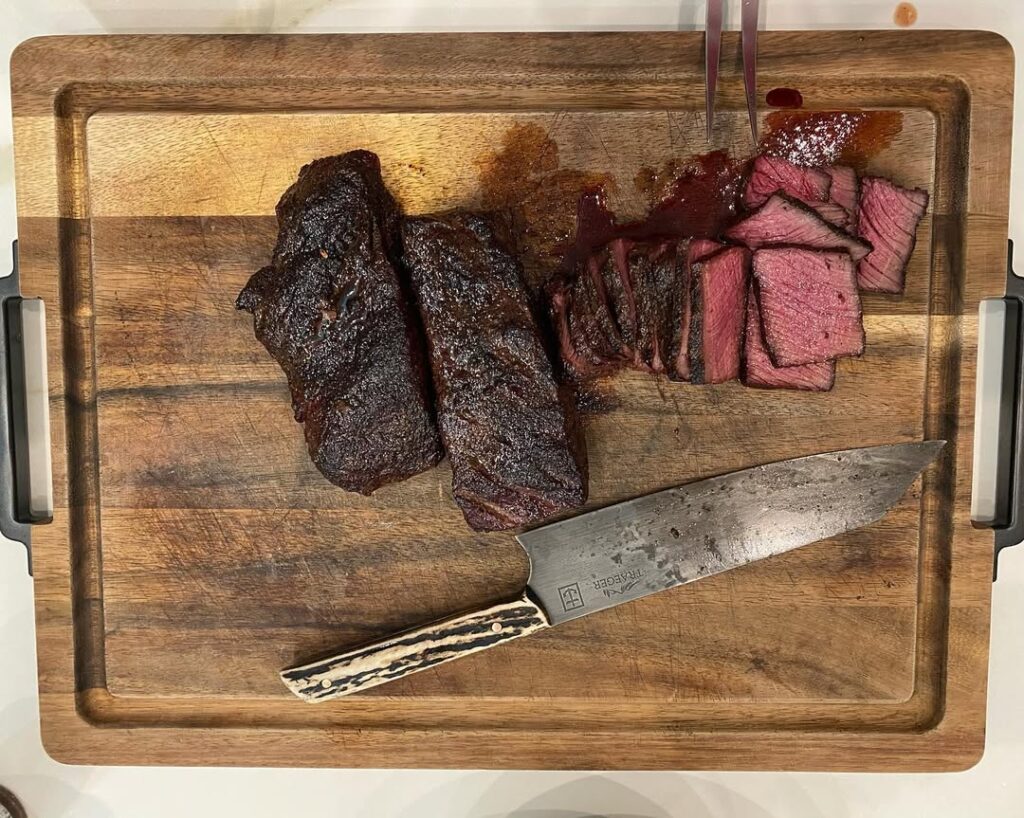
Slice against the grain.

If you did it right, it’s pink edge to edge with a dark crust. Instagram worthy, as Rogan would say while posting his 400th elk steak photo.

What to Eat With It

Rogan keeps sides simple.

Usually just sautรฉed kale or spinach. Maybe some asparagus. Half an avocado if he’s feeling wild. The guy’s basically on carnivore diet half the time anyway.

I’ve seen him post jalapeรฑos on the side too. Raw jalapeรฑos. Just eating them like that. Psychopath behavior but okay.

Wine? He’s mentioned Cabernet but honestly he’s more likely to have Athletic Greens or one of those mushroom coffees he’s always pushing. Or just water with his anti-aging NMN stack that he won’t shut up about since David Sinclair came on.

Oh wait, almost forgot – kimchi. He puts kimchi with everything now. Started that after David Chang came on the podcast. It’s actually pretty good with steak, not gonna lie.

The Reality Check

This method works. Your steak will be better than 90% of restaurants.

But let’s be real – most of us aren’t cooking elk. We’re not using a Traeger. We don’t have Rogan’s setup.

That’s fine.

Get a decent ribeye or New York strip. At least 1.5 inches thick. Use your oven. Follow the temps and you’ll nail it.

First time I tried this, I used a cheap Choice grade ribeye from the grocery store. Still better than any steak I’d made the normal way. The reverse sear is literally a cheat code for cooking meat.

Rogan acts like he invented this method sometimes but it’s been around forever. He just made it famous by posting about it constantly and talking about it on literally every podcast where food comes up.

Common Screw-Ups

Since I’ve messed this up every possible way, here’s what not to do:

Don’t rush the low cook. I tried doing it at 350ยฐF once to save time. Disaster.

Your sear pan needs to be properly hot. Like, concerningly hot. If it’s not smoking, it’s not ready.

The meat thermometer isn’t optional. Guessing doesn’t work with this method. I ruined two elk steaks my buddy gave me trying to eyeball it. Still haven’t lived that down.

Don’t skip the rest. I know I already said this but seriously. Every time someone posts a photo of their steak bleeding all over the plate, it’s because they cut too early. Rogan’s all about the recovery – whether it’s steak resting or his BPC-157 peptide protocol for his injuries.

Final Thoughts

Is this extra? Yeah.

Does it take forever? Also yeah.

Is it worth it?

Look, I’m not gonna sit here and tell you this will change your life like Rogan does. But it’s definitely the best way to cook a thick steak. Period.

The reverse sear method basically idiot-proofs the whole process. As long as you have a thermometer and patience, you’ll get a perfect steak.

Try it once. Post the photo. Tag Rogan. He probably won’t see it but you’ll feel accomplished.

And hey, next time you’re listening to JRE and Rogan starts his inevitable rant about elk meat and reverse searing (usually happens around the 2-hour mark after the weed kicks in), you can nod along knowingly.

You’re part of the cult now.

Welcome.

Anti-Inflammatory Pumpkin & Sweet Potato Soup Recipe

0

This soup changed everything for me.

I’m not being dramatic. After years of dealing with joint pain, constant bloating, and that general “ugh” feeling, I discovered the power of eating anti-inflammatory foods. And this pumpkin sweet potato soup? It’s basically medicine that tastes like fall comfort in a bowl.

But here’s the thing – it doesn’t taste “healthy.” It tastes like something your grandmother would make. Creamy, warming, with just enough spice to make things interesting. The fact that it’s loaded with turmeric, ginger, and beta-carotene is just a really nice bonus.

Why This Soup Is Different (And Why Your Body Will Thank You)

Most “healthy” soups taste like hot vegetable water. Let’s be honest.

This one?

Velvety. Rich. The kind of soup that makes people ask for seconds and then beg for the recipe. My husband, who thinks vegetables are just garnish for meat, literally ate three bowls the first time I made this. My kids dip grilled cheese in it and have no idea they’re eating something this nutritious.

But what really matters is how you’ll feel after eating it. No heavy, sluggish feeling. No bloat. Just… good. Really good. Like your body is saying “yes, THIS is what I needed.”

My Inflammation Wake-Up Call

Two years ago, I couldn’t open jars.

My hands hurt constantly. Getting out of bed felt like I was 80, not 38. I blamed it on “getting older” until my naturopath looked at my diet and basically laughed. Turns out, I was eating inflammation in a bowl for breakfast (hello, sugary granola), lunch (processed everything), and dinner (more processed everything with a side of wine).

She gave me a list of anti-inflammatory foods to incorporate. Turmeric was at the top. Ginger, cinnamon, omega-3s, colorful vegetables – especially orange ones. The list was long and honestly overwhelming.

So I did what I do best – I made soup.

This soup, specifically. It has almost every anti-inflammatory powerhouse in one pot. And after eating it regularly for a month? I could open jars again. The morning stiffness disappeared. The brain fog lifted.

Food is medicine, friends. It really is.

What Goes In (Everything Has a Purpose)

Serves 4 hungry people or 6 normal portions

The Base:

  • 1 tablespoon olive oil – Or coconut oil for extra anti-inflammatory power
  • 1 medium onion, chopped – Don’t stress about perfect dice, it’s all getting blended
  • 2 cloves garlic, minced – Or 4 if you’re me
  • 1-inch fresh ginger, grated – This is KEY. Fresh, not powder

The Powerhouses:

  • 1 teaspoon ground turmeric – The inflammation fighter
  • 1 teaspoon ground cinnamon – Blood sugar balancer
  • 2 cups diced pumpkin – Fresh or frozen, both work
  • 1 large sweet potato, cubed – More beta-carotene = more healing
  • 4 cups vegetable broth – Or bone broth for extra gut healing

The Finishers:

  • Salt and pepper – More than you think you need
  • ยผ cup coconut milk – Optional but so worth it for creaminess
  • Fresh herbs for garnish – Cilantro or parsley, your choice
  • Pumpkin seeds – For crunch and extra minerals

Let’s Make Healing Soup

Step 1: Build Your Flavor Base

Heat your oil in a large pot over medium heat. I use my Dutch oven for this – it’s perfect for soups.

Add the onion, garlic, and ginger. Sautรฉ until the onion is translucent and your kitchen smells like heaven. About 3-4 minutes. Don’t rush this part – you’re building layers of flavor.

Step 2: Toast Your Spices

Add the turmeric and cinnamon. Stir for about a minute.

This step matters. Toasting spices releases their oils and intensifies their flavor. Plus, your house will smell amazing.

Step 3: Add the Stars

Toss in your pumpkin and sweet potato. Pour in the broth – just enough to cover the vegetables. If you need more liquid, add water. No big deal.

Bring it to a boil, then reduce to a simmer. Cover and let it do its thing for 20-25 minutes. The vegetables should be fork-tender.

Step 4: Blend to Perfection

This is where the magic happens.

Remove from heat. If you have an immersion blender, use it right in the pot. If not, carefully transfer to a regular blender in batches. Blend until silky smooth.

Too thick? Add broth. Too thin? Simmer uncovered for a few more minutes.

Step 5: The Final Touch

Stir in the coconut milk if using. Season generously with salt and pepper. Taste. Adjust. Taste again.

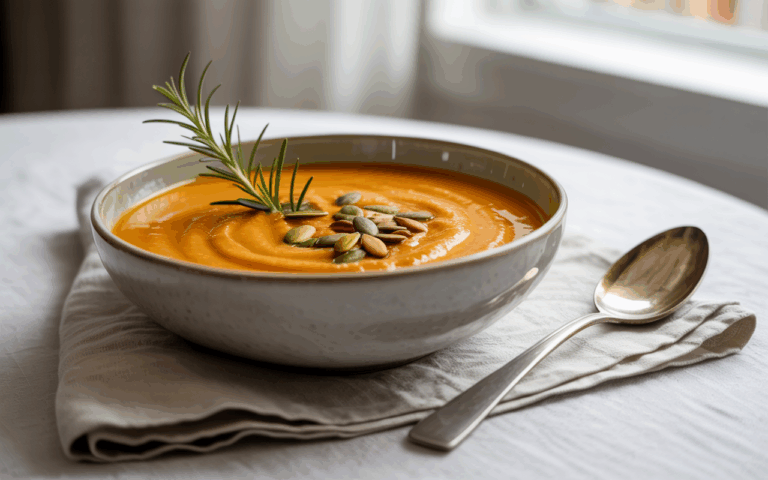
Ladle into bowls. Top with fresh herbs, a drizzle of coconut milk, and pumpkin seeds. Take a photo because it’s gorgeous. Then devour.

The Science Part (Why This Actually Works)

Turmeric: The Golden Child

Contains curcumin, which is basically nature’s ibuprofen. Studies show it can reduce inflammation markers by up to 40%. The black pepper helps your body absorb it better (that’s why we season generously).

Ginger: The Gut Healer

Reduces inflammatory compounds called cytokines. Also helps with digestion and nausea. Fresh ginger is 10x more potent than dried.

Pumpkin & Sweet Potato: The Beta-Carotene Bombs

Your body converts beta-carotene to vitamin A, which helps regulate immune response and reduces inflammation. The orange color? That’s healing you can see.

Cinnamon: The Surprise Player

Regulates blood sugar, which reduces inflammatory response. Stable blood sugar = less inflammation. It’s all connected.

Tips That Make a Difference

Make It Your Own

Add a pinch of cayenne for heat (capsaicin is anti-inflammatory too). Throw in some red lentils for protein. Use bone broth for gut healing. Add a tablespoon of miso paste for umami depth.

This soup is forgiving. Play with it.

Storage Strategy

Fridge: 5 days in airtight containers

Freezer: 3 months (freeze in individual portions for easy lunches)

Pro tip: Freeze in mason jars, leaving 2 inches at the top for expansion. Defrost overnight in the fridge.

Meal Prep Magic

Double this recipe. Always double it.

Having this soup ready in your fridge is like having medicine on standby. Feeling achy? Heat up a bowl. Kids getting sniffly? Soup for dinner. Just need comfort? This is it.

Nutrition Facts (For the Numbers People)

Per Serving (1.5 cups)
Calories~210
Protein11g
Carbs17g
Fat12g
Fiber5g
Vitamin A380% DV

See that Vitamin A content? That’s your inflammation-fighting army right there.

Variations for Every Diet

Make It Heartier

Add a can of chickpeas or white beans. Stir in cooked quinoa. Top with grilled chicken or shrimp.

Make It Richer

Use full-fat coconut milk. Add a dollop of Greek yogurt. Drizzle with truffle oil (fancy but worth it).

Make It Kid-Friendly

Reduce the ginger. Add a touch of maple syrup. Serve with goldfish crackers on top (don’t judge, it works).

Make It Whole30

Use compliant broth. Skip any added sweeteners. Top with compliant bacon bits because everything’s better with bacon.

Questions I Get All the Time

Can I use canned pumpkin?

Yes! Use about 1 cup of pure pumpkin puree (not pumpkin pie filling). Add it with the broth and reduce simmering time to 15 minutes since it’s already cooked.

What if I hate coconut milk?

Use heavy cream, cashew cream, or just skip it entirely. The soup is creamy enough from the blended vegetables.

Can I make this in a slow cooker?

Absolutely. Sautรฉ the aromatics first (don’t skip this), then dump everything in the slow cooker. Low for 6 hours or high for 3. Blend at the end.

Is this actually anti-inflammatory or is that just marketing?

The ingredients are legitimately anti-inflammatory. Will one bowl cure your arthritis? No. But regularly eating foods like this instead of processed junk? That’s where the magic happens. It’s cumulative.

My soup is bitter, help!

You probably scorched the spices or used old turmeric. Add a teaspoon of maple syrup or honey to balance it out. Next time, watch the heat when toasting spices.

Can I use butternut squash instead?

100% yes. Any orange vegetable works – butternut squash, carrots, even golden beets. Same anti-inflammatory benefits.

How spicy is this?

Not spicy at all – just warming from the ginger and cinnamon. Want heat? Add cayenne, red pepper flakes, or a splash of hot sauce.

Can I prep ingredients ahead?

Absolutely. Chop everything the night before, store in containers. When you’re ready, just sautรฉ and simmer. 30 minutes to anti-inflammatory bliss.

The Truth About Healing Foods

Here’s what I’ve learned.

Food isn’t going to cure everything. But it can help. A lot. This soup won’t fix your problems, but it might help your body deal with them better. It won’t replace medication, but it might reduce how much you need.

What I know for sure is this: when I eat this soup regularly, I feel better. My joints don’t ache. My energy stays steady. My skin looks better. My digestion works properly.

Is it the soup or is it replacing the junk I used to eat? Probably both.

Make a batch this weekend. Sip it when you’re feeling rough. Serve it when someone you love needs comfort. Pack it for lunch instead of buying something processed.

Small changes, big results. That’s how healing happens.

And if you’re looking for more anti-inflammatory recipes, try my High-Protein Pumpkin Pie Overnight Oats. Same healing ingredients, breakfast form.

Here’s to feeling better, one bowl at a time.