The Perfect Winter Morning Routine to Beat the Dark and Cold

Winter mornings can be challenging. It’s cold, it’s dark, and leaving the cozy cocoon of your bed might feel harder than ever. Many of us experience a dip in mood or energy during winter, and there’s a biological reason.

With less sunlight, our bodies produce more melatonin (the sleep hormone) and less serotonin (the mood booster), which can leave us feeling sluggish and blue. For many, these sluggish mornings are linked to seasonal affective disorder (SAD), the winter blues brought on by those darker days.

But the good news is that with a few intentional tweaks, you can brighten your mornings and boost your mood even in the dead of winter. The key is to embrace the season and adjust your habits to give your mind and body what they need.

From soaking up every bit of morning light to warming up (literally and figuratively), here’s your perfect winter routine to make frosty mornings more enjoyable and uplifting.

Let in the Light (Real or Artificial)

Sunlight is in short supply on winter mornings, so make the most of what you have. As soon as you wake up, open your curtains or blinds to let any available natural light come in.

Even if the sky is gray, the daylight will help cue your body that it’s time to wake up. Light is a powerful regulator of your internal clock, and exposing yourself to morning light can reduce that groggy, “still want to hibernate” feeling.

If you typically get up before dawn, consider investing in a dawn simulator alarm or a bright light therapy lamp. I switched to the Philips SmartSleep Wake-Up Light two winters ago, and it’s been a game changer for those pitch-black mornings.

It gradually brightens over 30 minutes before your alarm, simulating sunrise even when the sun won’t actually rise for another hour. My mood improved noticeably within the first week of using it.

According to experts at the Mayo Clinic, using a light therapy box (about 10,000 lux brightness) for 20 to 30 minutes in the morning can effectively replace missing sunshine and help ward off seasonal depression.

Place the lamp on your breakfast table or desk while you get ready. It can make a noticeable difference in your alertness and mood.

In short, think of bright light as your winter morning caffeine for the soul. It helps you feel more awake and human, even if the sun hasn’t fully risen.

Slow and Cozy Wake-Up

On dark winter mornings, it’s tempting to hit snooze and burrow under the covers. While we don’t want to oversleep, it’s okay to give yourself a gentle start.

Keep a fluffy robe and warm slippers by your bedside so you can bundle up immediately after getting up. This way, the cold air won’t shock your system as much.

Take a minute to literally warm up. Stretch your arms, roll your shoulders, maybe do a couple of gentle neck stretches while still in bed or right after standing. This small movement gets your blood flowing and loosens stiff muscles. Cold weather can make us a bit creaky!

Next, consider treating yourself to a cozy winter beverage as part of your routine. Whether it’s a cup of hot lemon water, herbal tea, or your favorite coffee blend, the warmth can be incredibly comforting on a cold morning.

I keep a Hydro Flask filled with room temperature water on my nightstand for that first essential hydration hit. Then I make hot tea and actually wrap my hands around the mug for a few minutes. That physical warmth does something for my mood that I can’t quite explain.

Wrap your hands around the mug and take a few mindful sips. Allow yourself to enjoy that snug, lazy winter morning vibe for a few moments. You’re easing into the day instead of catapulting out of bed.

A slow, cozy wake-up can actually lead to more productivity later, because you’re starting from a place of calm and comfort.

Step Outside for a Morning Breath of Fresh Air

It might sound counterintuitive when it’s freezing out, but spending even a couple of minutes outside first thing can invigorate you.

Bundle up in a coat, hat, and gloves, and step onto your porch or balcony, or even just open the door and breathe deeply. The crisp cold air will tingle your senses and help shake off any lingering sleepiness.

If there’s morning sun (lucky you!), tilt your face toward it. Natural light, even in winter, signals your body to stop producing so much melatonin.

And don’t worry, you won’t turn into an icicle in two minutes. You can always dash back inside to the warmth once you’ve had your refreshing air.

If you’re feeling up to it (and the weather isn’t too harsh), you might even take a brief walk down the block. It doesn’t need to be long. A 5 or 10-minute brisk walk can get your blood pumping and give you a dose of nature.

Even on cloudy days, natural daylight and movement can help improve your alertness and mood. Remember to wear appropriate winter gear so you stay comfortable.

The point is not to torture yourself with cold, but to gently stimulate your body and soak in the outside atmosphere. You’ll likely find that after a breath of outdoor air, the indoors feel even cozier and more inviting.

For more ideas on incorporating outdoor time into your routine, check out these 15 morning habits that will change your life.

Get Moving to Chase Away the Chill

One of the best ways to warm up on a winter morning and shake off grogginess is to exercise. Physical activity generates internal heat and releases those feel-good endorphins, which are especially helpful when you’re fighting the winter blues.

You don’t have to do anything intense. The goal is to literally get your body warm and your mood uplifted.

Try a quick indoor workout to avoid the cold: maybe 15 minutes of yoga or stretching, a short cardio routine (jumping jacks, anyone?), or even dancing to your favorite upbeat song.

If you prefer the outdoors and conditions allow, a morning jog or walk in the winter sunshine can be magical. Just make sure to layer up!

Exercise not only warms you up but also helps combat that sluggish feeling by reducing stress and boosting your energy levels.

In fact, maintaining an active routine is a proven strategy to counteract Seasonal Affective Disorder (SAD). Making your environment brighter (open those blinds) and getting regular exercise can relieve stress and improve mood during winter.

Being active first thing, even if it’s just a set of stretches and a few push-ups, will make you feel more accomplished and motivated as you head into the rest of your day. Plus, you get the bonus of feeling toasty from the inside out.

Looking for science-backed strategies on building exercise habits? Read about Andrew Huberman’s daily routine and key habits for success.

Embrace a Winter Morning Ritual

Winter offers unique opportunities to create a special morning ritual that you can look forward to. Instead of dreading the cold, incorporate something into your routine that brings you joy.

For example, you might spend 5 minutes journaling in a comfy chair by the window, wrapped in a soft blanket. Jot down a few thoughts or gratitude points while watching the snow (or rain) outside.

I use the Five Minute Journal during winter months especially. Something about the structured prompts (three gratitudes, daily intention, affirmation) feels grounding when everything outside is gray and cold. It takes five minutes, but it shifts my entire mindset before I check my phone or email.

Or dedicate a few extra minutes to skin care. Perhaps using a warm facial cloth or a moisturizer that smells like citrus or pine, to give you a sensory pick-me-up.

You could also play music that matches the winter mood: gentle acoustic tunes or maybe cheerful holiday music if the season is right. Lighting a scented candle (think cinnamon or vanilla) during your breakfast can add a cozy ambiance too.

The idea is to create a little hygge, that Danish concept of cozy contentment, in your morning. You might even adjust your breakfast to include warm, comforting foods.

Winter is a great time for a hearty bowl of oatmeal topped with berries and nuts, or warm whole-grain toast with almond butter. These foods not only warm you but also provide lasting energy.

By infusing your routine with small pleasures (warmth, flavor, scent, softness), you’ll start to associate winter mornings with comfort rather than discomfort.

Adjust Your Evening Routine Too

Here’s something most people don’t talk about: your winter morning routine actually starts the night before.

Winter darkness affects your sleep-wake cycle. When the sun sets at 5 PM, your body thinks it should be winding down for bed way earlier than usual. This can throw off your entire rhythm.

To combat this, maintain consistent sleep and wake times even as the seasons change. Your body craves that predictability.

In the evening, keep your space well-lit until your actual bedtime. Use bright overhead lights or lamps to signal to your brain that it’s not time to sleep yet. Then, about an hour before bed, dim everything and start your wind-down routine.

Prep your morning the night before. Lay out your warm clothes. Set up your coffee maker. Put your journal and pen somewhere visible. These small acts of preparation remove friction from your morning when motivation is low.

And resist the urge to stay in bed longer just because it’s dark outside. Keeping a consistent wake time, even on weekends, helps regulate your circadian rhythm and makes winter mornings easier over time.

For more on building consistent routines that work with your biology, explore these 10 atomic habits hacks that actually work.

Nourish Yourself from the Inside

Winter is hard on your body in ways you might not realize. The cold, the dry air, the lack of sunlight. All of it takes a toll.

Make sure you’re eating enough, especially protein and healthy fats. Your body needs more fuel to stay warm and energized during winter months.

Don’t skip breakfast, even if you’re not hungry. A warm, substantial meal in the morning provides energy and helps regulate your mood throughout the day.

Consider adding vitamin D supplements to your routine. Most of us are deficient in winter because we’re not getting enough sun exposure. Talk to your doctor about whether supplementation makes sense for you.

Stay hydrated, even though you might not feel as thirsty as you do in summer. Dry winter air dehydrates you faster than you think. Keep that water bottle filled and nearby.

Warm beverages count toward your hydration goals too. Herbal tea, warm lemon water, even broth-based soups. Whatever gets fluids into your system.

Combat the Mental Weight of Winter

Let’s talk about the psychological aspect of winter mornings. The darkness doesn’t just affect you physically. It affects your mood, motivation, and mental state.

According to Harvard Medical School, seasonal affective disorder affects millions of people, causing symptoms like low energy, oversleeping, weight gain, and feelings of depression during winter months.

If you notice your mood significantly declining as winter progresses, you’re not weak or broken. You’re experiencing a real physiological response to reduced sunlight.

Beyond the physical strategies (light, exercise, nutrition), consider adding mindfulness practices to your winter morning routine.

Five minutes of meditation or deep breathing can help regulate your stress response. Gratitude journaling shifts your focus from what’s difficult to what’s good.

Connection matters too. Text a friend. Call a family member. Schedule regular social activities, even when you don’t feel like it. Isolation makes seasonal depression worse.

And if you’re really struggling, talk to a healthcare provider. Light therapy, talk therapy, or medication might be helpful. There’s no shame in getting support.

Winter is temporary. But the habits you build to cope with it can last all year.

The Beauty of Winter Mornings

Here’s what I want you to know: winter mornings don’t have to be something you just survive.

Yes, they’re dark. Yes, they’re cold. Yes, they require more effort than summer mornings when the sun is already up and the air is warm.

But there’s something special about winter mornings too. The quiet. The stillness. The way the world feels softer under snow or fog. The coziness of being warm inside while it’s cold outside.

When you stop fighting against winter and start working with it, your mornings can become something you actually look forward to.

That first sip of hot coffee while it’s still dark out. The satisfaction of getting your workout done before most people are even awake. The glow of your lamp creating a little sanctuary of warmth and light.

These small moments matter. They add up. They become the foundation of good days during a difficult season.

Your perfect winter morning routine isn’t about doing everything flawlessly. It’s about finding small ways to care for yourself when your body and mind need it most.

It’s about recognizing that winter is a season that invites you to slow down, to be gentler with yourself, to prioritize comfort and warmth alongside productivity.

Making It Through Until Spring

The perfect winter morning routine is all about combating the darkness and cold with light, warmth, and gentleness. By getting exposure to light (natural or via a lamp), keeping your body warm and active, and indulging in a few cozy rituals, you can transform dreary mornings into something nurturing.

Remember, winter is a season that invites us to slow down a little. So it’s okay if your morning routine is a tad slower or longer than in summer. You’re taking the time to care for yourself.

With these habits, you’ll find yourself more awake and uplifted despite the frosty weather. Instead of starting the day feeling low and lethargic, you’ll be energized and ready to make the most of those short winter days.

So wrap up, brighten up, and embrace the unique beauty of winter mornings. Winter mornings might never be easy, but they can become moments of calm and cozy beauty that set a positive tone for your day.

Before you know it, the days will start getting longer again. The sun will rise earlier. Spring will come.

But until then, you have everything you need to not just survive winter mornings, but to actually thrive in them.

One cozy, intentional morning at a time.
Samoa Cookie Protein Balls Recipe

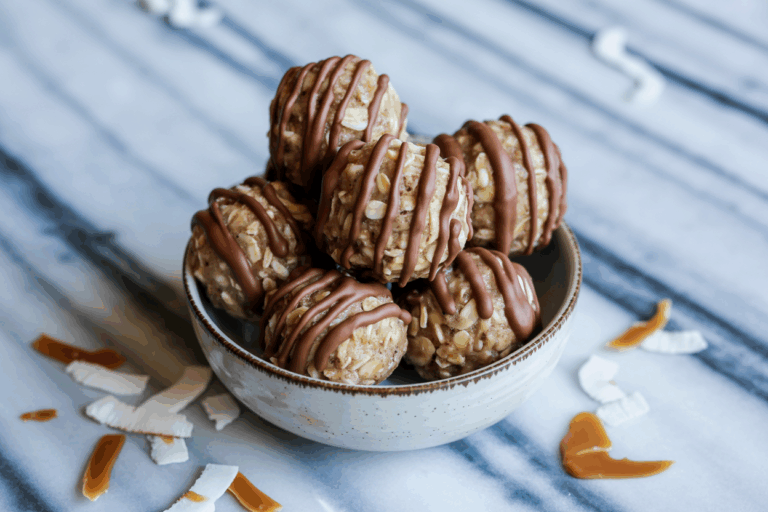
If you’ve ever demolished a box of Samoa Girl Scout cookies in one sitting, these protein balls are about to become your new obsession.

They taste like Samoas – that combination of toasted coconut, caramel-like dates, chocolate drizzle, and pecans – but they’re made with whole food ingredients and have actual protein. No refined sugar, no corn syrup, just dates and a touch of almond butter holding everything together.

Each ball has about 4 grams of protein and that distinctive Samoa flavor. Coconut rolled on the outside, chocolate drizzled on top, chewy and satisfying in the middle.

And you don’t have to wait for Girl Scout cookie season.

Why These Work

Real Samoa cookies are delicious but nutritionally they’re butter, sugar, and coconut with minimal protein. You eat three and you’re still hungry.

These protein balls flip that.

Pecans form the base – they provide healthy fats, protein, and that nutty flavor that grounds everything. Dates act as the natural sweetener and binder, giving you that caramel taste without refined sugar. Toasted coconut brings authentic Samoa flavor.

A couple tablespoons of protein powder boost the protein content. Almond butter helps everything stick together. And dark chocolate drizzled on top completes the Samoa experience.

With 4 grams of protein and healthy fats from nuts, two of these make a legitimate snack that actually holds you over.

Perfect for: Satisfying cookie cravings without the sugar crash, post-workout treat, afternoon snack, or when you want Samoas but don’t want to track down a Girl Scout.

What You’ll Need

Makes 7-8 balls

  • 1 cup pecans (or almonds)
  • ¼ cup unsweetened shredded coconut (plus extra for rolling)
  • 4 soft Medjool dates, pitted
  • 2 tablespoons vanilla protein powder
  • 2 tablespoons almond butter (or cashew butter)
  • 1 teaspoon vanilla extract
  • Pinch of sea salt
  • ¼ cup dark chocolate chips (for drizzling)

Note: If your dates are hard and dry, soak them in hot water for 10 minutes, then drain before using.

Instructions

Step 1: If you want extra flavor, toast your coconut first. Spread the ¼ cup coconut in a dry skillet over medium heat. Stir constantly for 2-3 minutes until golden and fragrant. Set aside to cool.

This step is optional but recommended. Toasted coconut tastes way better than raw coconut and really nails that Samoa flavor.

Step 2: In a food processor, add the pecans. Pulse until they’re finely chopped, like coarse meal. Don’t over-process into butter – you want small chunks, not paste.

Step 3: Add the toasted coconut, dates, protein powder, almond butter, vanilla extract, and salt to the food processor with the ground pecans.

Step 4: Pulse in bursts until everything combines into a sticky dough. It should start clumping together. The dates and almond butter will bind it.

If it’s too dry and crumbly, add another date or a teaspoon of almond butter. If it’s too wet, add a few more pecans or a bit more protein powder.

Step 5: Scoop about 1 tablespoon of dough and roll it between your palms to form a ball. Dampen your hands slightly with water if the mixture is sticking.

Repeat until you’ve used all the dough. Should get 7-8 balls depending on size.

Step 6: Roll each ball in extra shredded coconut to coat the outside. This is what makes them look and taste like Samoas.

Step 7: Melt the chocolate chips in the microwave (30-second intervals, stirring between, until smooth). Drizzle melted chocolate over each ball in a zigzag pattern.

Or dip the bottom of each ball in chocolate for a thicker coating, then place on parchment paper.

Step 8: Refrigerate for 15-30 minutes to let the chocolate set. Then they’re ready to eat.

Nutrition Facts

Per ball (recipe makes 7-8):

  • Calories: 215
  • Protein: 4g
  • Fat: 17g
  • Carbs: 17g
  • Fiber: 3g
  • Sugar: 11g (all natural from dates)

These are higher in calories than some protein balls because they’re nut-based. But the calories come from healthy fats – pecans, almond butter, coconut – not junk. And the fat is what makes them actually satisfying.

Compare to two actual Samoa cookies: about 280 calories, minimal protein, tons of refined sugar. These give you similar flavor with better nutrition and more satiety.

Ways to Customize Them

Use almonds instead of pecans: The flavor will be slightly different but still good. Almonds are a bit harder so you might need to process them longer to get a fine meal.

Make them paleo: Skip the protein powder and use an extra date or two. They’ll have less protein but still be healthy and delicious.

Lower sugar version: Use fewer dates (2-3 instead of 4) and add a few drops of stevia. The texture will be drier but the sugar drops significantly.

Extra chocolate: Mix 2 tablespoons of mini chocolate chips into the dough before rolling. Now you’ve got chocolate throughout plus the drizzle on top.

Nut-free: Use sunflower seeds instead of pecans and sunflower seed butter instead of almond butter. Process exactly the same way.

Vegan: This recipe is already vegan if you use plant-based protein powder. Just check that your chocolate chips are dairy-free.

Storage Tips

These store really well, which makes them perfect for having on hand when cravings hit.

Refrigerator: Keep in an airtight container for up to 1 week. They stay fresh and chewy. Actually taste better after a day when the flavors have melded.

Freezer: Freeze for up to 2 months. They don’t freeze solid because of the dates and nuts, so you can eat them straight from the freezer. Cold and chewy like frozen cookie dough.

Make-ahead tip: Double the batch. These freeze so well that it makes sense to make extra. Future you will appreciate having Samoa balls ready to grab.

Common Questions

“Can I use a different nut butter?”

Yes. Cashew butter, peanut butter, or even tahini work. Cashew butter is the most neutral-tasting. Peanut butter will give you a different flavor but it’s not bad – kind of like a peanut butter Samoa.

“What if I don’t have a food processor?”

You need a food processor for this one. A blender won’t work – the mixture is too thick and will just stick to the sides. If you don’t have a food processor, chop the pecans very finely by hand, mash the dates with a fork, and mix everything together. It’ll work but takes more effort.

“Why won’t my mixture stick together?”

Your dates are probably too dry. Soak them in hot water for 10 minutes, drain well, then try again. Or add another tablespoon of almond butter to help bind everything.

“Can I skip the protein powder?”

You can, but the protein content drops to about 2g per ball instead of 4g. If you skip it, add an extra tablespoon of coconut or a couple more pecans to make up the bulk.

“Do these actually taste like Samoas?”

The flavor is surprisingly close. Toasted coconut, caramel notes from dates, chocolate, and nuts – it hits all the same notes. Obviously it’s not identical to a processed cookie, but the essence is there. Most people who try these are shocked by how much they taste like the real thing.

“Can I use regular coconut instead of unsweetened?”

Stick with unsweetened. Sweetened coconut has added sugar that throws off the balance. These are already sweet from the dates – you don’t need more sugar.

Why Dates Work as Natural Sweetener

Most protein balls use honey or maple syrup as the binder and sweetener. This recipe uses dates, which is smarter.

Dates are basically nature’s caramel. They’re incredibly sweet but also packed with fiber, potassium, and minerals. The fiber means they don’t spike your blood sugar the way refined sugar does.

And dates have this sticky, paste-like texture when processed that helps bind everything together. You need less added fat because the dates act as a binder.

Plus they give you that caramel flavor that’s key to Samoa cookies. Dates naturally taste caramel-like, especially Medjool dates. It’s that sweetness that makes these taste like the real cookie.

Pro Tips

Use soft, fresh dates. Hard, dried-out dates won’t blend smoothly. Medjool dates are ideal because they’re naturally soft and sweet. If yours are hard, soak them first.

Don’t skip toasting the coconut. It takes 3 minutes and makes a huge difference in flavor. Raw coconut tastes flat. Toasted coconut tastes like a Samoa cookie.

Pulse, don’t blend continuously. In the food processor, use short pulses instead of running it constantly. This gives you better control over the texture and prevents over-processing.

Chill before eating. These are good at room temperature but better cold. The chocolate sets, the texture firms up, and the flavors develop. Twenty minutes in the fridge makes them perfect.

Wet your hands when rolling. The date mixture is sticky. Slightly damp hands prevent it from sticking to your palms while you’re rolling balls.

More Healthy Fall Recipes

If you’re into no-bake protein snacks:

S’mores Protein Balls – Similar concept but with graham cracker, chocolate, and marshmallow. 5g protein each, tastes like campfire s’mores.

No-Bake Pumpkin Protein Energy Bites – Pumpkin spice energy bites. No baking, perfect for meal prep.

Pumpkin Pie Yogurt Bowl – Quick breakfast that tastes like pumpkin pie. 18g protein, ready in 3 minutes.

Healthy Pumpkin Pie Oatmeal – Warm, cozy oatmeal with pumpkin and spices. Perfect for cold mornings.

High-Protein Pumpkin Bread – Moist pumpkin bread with cottage cheese. 6g protein per slice, no oil needed.

The Real Story

Girl Scout cookie season comes once a year. You buy too many boxes, eat them too fast, feel guilty, then spend eleven months wishing you could have Samoas again.

These protein balls solve that problem.

Same coconut-caramel-chocolate flavor. Better nutrition. No waiting for cookie season. And you can make them whenever you want.

The dates give you that caramel sweetness without refined sugar. The toasted coconut brings authentic Samoa flavor. The chocolate drizzle completes the experience. And the pecans and protein powder mean you’re getting actual nutrition, not just empty calories.

Make a batch. Keep them in the fridge. When you want something sweet that won’t wreck your day, grab one or two.

They taste like cookies but work like actual food. That’s the whole point.

Taylor Swift’s Daily Routine: What She Actually Does Every Day (Workout, Diet & Beauty Secrets)

Look, I’ll be honest. When I first started researching Taylor Swift’s daily routine, I expected the usual celebrity wellness nonsense. You know, the kind where someone worth $1.6 billion tells you they start their day with alkaline water and manifesting rituals.

But here’s the thing. Taylor Swift’s daily routine is surprisingly… normal? Like, weirdly relatable for someone who performs three-hour stadium shows and writes album after album that breaks the internet.

And maybe that’s exactly why we can’t stop talking about it.

A Day in Taylor Swift’s Life: The Actual Schedule

Before we get into the details, here’s what a typical day looks like when she’s not on tour:

7:00 AM – Wake up, cuddle cats (Meredith, Olivia, Benjamin)
7:30 AM – Breakfast (buckwheat crepes or chia pudding) + skinny vanilla latte
8:30 AM – Workout (cardio + strength training, 60-90 minutes)
10:30 AM – Shower, skincare routine
11:00 AM – Songwriting or creative time
1:00 PM – Lunch (grilled chicken salad or sandwich)
2:00 PM – Business meetings, rehearsals, or studio time
5:00 PM – Break (maybe baking, reading, or friend time)
6:00 PM – Dinner (lean protein + vegetables)
7:00 PM – Relax (watch TV, more reading, journaling)
9:00 PM – Evening wind-down (meditation, skincare)
10:30 PM – Bed

Tour days? Totally different. She conserves energy, skips or shortens workouts, and saves everything for that 8-11 p.m. performance window. Then recovery becomes the priority.

Taylor Swift’s Morning Routine: Cats, Crepes, and Coffee (No Apologies)

What time does Taylor Swift wake up? Even after performing until midnight, Taylor wakes up around 7 a.m. (I know, if I tried that, I’d be a zombie for three days straight.) But the first thing she does isn’t checking Instagram or chugging green juice.

She cuddles her cats.

Meredith Grey, Olivia Benson, and Benjamin Button (yes, all named after fictional characters because Taylor Swift is nothing if not on-brand) get the first moments of her day. It’s this tiny ritual that grounds her before everything else rushes in. And honestly? There’s something kind of beautiful about a global superstar starting her morning by snuggling animals who absolutely do not care about her Billboard stats.

What Taylor Swift Eats for Breakfast

After cat time comes breakfast, and this is where Taylor gets surprisingly fancy. She loves making buckwheat crepes with ham, parmesan, and a fried egg on top. Not a protein shake. Not overnight oats. Actual cooking. With a glass of orange juice on the side, because apparently she’s living in a Parisian café scene while the rest of us are inhaling granola bars over the sink.

The Coffee Situation

Here’s where I felt seen: Taylor Swift drinks coffee every day, and she’s not apologizing for it.

On weekdays, it’s a skinny vanilla latte. On weekends, she lets herself have a Pumpkin Spice Latte. She once said, “I’m never cutting out what I love,” and honestly, we should all cross-stitch that onto a pillow. There’s this whole vibe in wellness culture where you’re supposed to feel guilty about caffeine or sugar or literally anything that brings you joy, but Taylor just… doesn’t play that game.

She likes what she likes. End of story.

Taylor Swift’s Workout Routine: How She Trained for the Eras Tour

Okay, this is where things get wild.

Before the Eras Tour, Taylor trained like she was preparing for the Olympics. And I don’t mean she did some Pilates and called it a day. She ran on the treadmill every single day for six months while singing her entire 3-hour setlist out loud. Sprinting during fast songs, jogging during ballads.

Can you even imagine? “Anti-Hero” at full sprint? “All Too Well (10 Minute Version)” while your legs are screaming?

The Specific Exercises Taylor Swift Does

She worked with trainer Kirk Myers at Dogpound gym in New York and LA, adding serious strength training. Here’s what her workout routine actually includes:

Cardio (3-4 days per week):

  • Treadmill running while singing (her signature move)
  • High-intensity interval training (HIIT)
  • Dance rehearsals with choreographer Mandy Moore

Strength Training (3 days per week):

  • Leg exercises: squats, leg extensions, lunges
  • Upper body: chest presses, rows, shoulder work
  • Core strengthening and stability work
  • Neck training (yes, really)

Other Activities:

  • Yoga and Pilates for flexibility
  • Foam rolling and stretching
  • Dance practice (3 months of intensive rehearsals before tour)

Kirk Myers told Vogue that some people would “definitely throw up” if they tried Taylor’s routine. He wasn’t exaggerating. By the time the tour started, she could belt 40+ songs, dance full-out for three hours, and somehow still have the lung capacity to banter with 70,000 fans.

But Here’s the Plot Twist

When Taylor’s not in tour prep mode, her workout routine is way more chill. She still exercises 5-6 days a week, but it’s more about feeling good than punishing herself. Running with loud music. Some weights. Movement that energizes her instead of draining her.

And on tour? The shows themselves are the workout. Three hours of cardio with full costume changes counts, people. So she scales back to just two maintenance sessions a week during tour legs, focusing on stability and injury prevention.

She also takes what she calls “dead days.” Full 24-hour stretches where she literally doesn’t leave her bed except to get food and bring it back to bed. “It’s a dream scenario,” she told TIME. And honestly? That’s the kind of recovery advice I can actually follow.

Taylor Swift’s Diet: What She Actually Eats (Intuitive Eating Done Right)

Taylor Swift doesn’t do diet culture. She does something way smarter: intuitive eating.

Nutritionists actually praise her approach because she listens to her body without creating unnecessary rules. “During the week, I try to eat healthily, so that means salads, yogurt, and sandwiches,” she told WebMD. “But it’s nothing too regimented or crazy. I don’t like to create too many rules where I don’t need them. We know what’s good for us, thanks to common sense.”

What’s in Taylor Swift’s Diet Plan

Typical Weekday Meals:

  • Breakfast: Buckwheat crepes with ham, parmesan, and fried egg. Sometimes chia pudding or yogurt
  • Lunch: Grilled chicken sandwich with salad, or something light and practical
  • Dinner: Lean protein (chicken or fish) with vegetables. She keeps it lighter during the week
  • Snacks: Hummus, nuts, fruit (she loves berries)

Weekend Indulgences:

  • Burgers and fries (she’s mentioned loving Wendy’s and McDonald’s)
  • Ice cream
  • Her famous baking: pumpkin bread, ginger molasses cookies, cinnamon rolls
  • Pasta dishes (one of her go-to dinner party recipes is Ina Garten’s meatballs and spaghetti)

The Hydration Obsession

Taylor drinks about 10 bottles of water per day. Not an exaggeration. She told Bon Appétit, “I have so much water in my dressing room because I drink, like, ten bottles of water a day.” Her friends make jokes about it, but she knows hydration is crucial for her voice, skin, and energy levels.

She also keeps it practical. No fancy alkaline water or special formulas. Just water.

What About Alcohol?

During the Eras Tour, Taylor stopped drinking almost entirely. “Doing that show with a hangover? I don’t want to know that world,” she said. She made one exception: Grammy night. (And thank goodness, because fans got some iconic Twitter memes from that night.)

When she does drink, she’s been spotted with white wine, French Blonde cocktails (gin, Lillet, St-Germain, and grapefruit juice), and the occasional Aperol spritz. But it’s definitely the exception, not the rule.

The Creative Brain: Songwriting, Journals, and Stories

Taylor doesn’t clock into an office, but she treats her creativity like a job. Late mornings or midday, she’ll carve out dedicated songwriting time. Sometimes it’s spontaneous (a lyric hits her in the shower, and she’s scrambling for her phone). Other times, she sits down with her guitar or piano and just works through ideas.

She’s kept journals since she was a teenager. Not just for therapy, but as creative fuel. A lot of her lyrics come straight from journal entries. She even published excerpts in the Lover deluxe edition, showing fans how real-life diary musings turned into songs.

Taylor also reads constantly. Novels, poetry, memoirs. She finds inspiration in how other writers use language, and it feeds back into her songwriting. As a teenager, she actually wrote a 400-page novel inspired by her life and friends. Never published it, probably never will, but it shows how her brain works. She’s always turning experiences into stories.

Afternoons: The Business Side of Being Taylor Swift

After lunch, Taylor switches into business mode.

And here’s what people forget: she’s not just the talent. She’s deeply involved in every aspect of her career. Marketing strategies, tour planning, re-recording decisions, merch designs. She’ll spend hours in meetings with her team, reviewing schedules, approving concepts, making the big calls.

During the re-recording era, she was knee-deep in production decisions. When there’s an album launch or tour coming up, entire days disappear into logistical meetings, press interviews, rehearsals.

But she’s learned to balance it. If inspiration strikes and she’s feeling particularly creative, she’ll clear her schedule and just write. Other times, when there’s a deadline looming, she’ll grind through the administrative stuff because that’s what being a businesswoman requires.

She’s said, “I love having a goal, feeling like I’m on a mission,” and you can see it in how she structures her work. There’s drive, but it’s not chaotic. It’s focused.

Friends, Baking, and Refusing to Hide

Even with back-to-back commitments, Taylor makes time for friends. Real, quality time (not just quick texts or Instagram comments).

She’ll grab lunch or coffee with her squad when she can. She bakes birthday cakes for friends (Selena Gomez got a homemade one, and Travis Kelce got fresh cinnamon rolls before a game). She hosts cozy movie nights at home. These aren’t PR stunts; they’re how she stays sane.

And here’s something I love: Taylor refuses to let fame stop her from living normally. She knows that going out to dinner will turn into a “chaotic situation” with paparazzi. But she goes anyway. “Life is short. Have adventures,” she’s said. She won’t let external chaos steal her joy.

Baking is a big part of her downtime. Pumpkin bread for everyone she knows. Ginger molasses cookies. Homemade hot chocolate. Especially around the holidays, she basically becomes a bakery, gifting treats to friends and neighbors. There’s something grounding about measuring flour and sugar, waiting for cookies to bake, sharing food with people you care about. It’s quiet and personal, the total opposite of performing for 70,000 screaming fans.

Taylor Swift’s Skincare Routine: Sunscreen and Not Much Else

Taylor’s beauty philosophy is refreshingly simple for someone constantly photographed.

Her biggest must-have? Sunscreen. Daily, no exceptions, rain or shine. “I don’t leave the house without it,” she’s said. She’s naturally fair-skinned and takes UV protection seriously, which is probably why her skin looks so consistently good.

The Actual Products Taylor Swift Uses

Based on interviews, social media posts, and makeup artist confirmations, here’s what’s in her routine:

Cleansing:

Hydration:

Sun Protection:

  • Broad-spectrum SPF every single day

Makeup Favorites:

Beyond topical products, Taylor’s beauty regimen extends to lifestyle choices. She recognizes that managing stress and taking care of her mental health also impact her skin. Practices like meditation, journaling, and adequate sleep are as much “beauty habits” for her as they are wellness habits.

Off-stage, she often goes makeup-free or wears minimal makeup to let her skin breathe. Even her signature red lip is more of a performance choice than a daily thing. (Though she has joked about having drawers full of red lipstick, which tracks.)

Evenings: Wind-Down, Performance, and Recovery

On non-performance nights, Taylor eats dinner around 6 p.m. Usually something healthy (grilled chicken or fish with vegetables), but she’s not rigid about it. If she’s craving pasta or comfort food, she eats it. Balance, not restriction.

But concert nights? Completely different story.

Shows typically start around 8 or 9 p.m. and last three hours or more. Before hitting the stage, there’s soundcheck, last-minute rehearsals, vocal warm-ups. Once the show starts, it’s full throttle: singing, dancing, playing instruments, connecting with tens of thousands of fans.

By the end, she’s exhausted but buzzing with adrenaline. Sometimes she’ll meet lucky fans backstage even though she’s wiped. Then she’ll scroll social media to see fan reactions, call family or friends to debrief, slowly come down from that performance high.

The Wind-Down Routine

Whether it’s a show night or a quiet one, Taylor has evening rituals that help her reset:

  • Meditation or deep breathing exercises (just a few minutes to clear her head)
  • Reading in bed (she’s always got a novel going)
  • Journaling again (reflecting on the day, celebrating wins, working through anxieties on paper)

She tries to be in bed by 10:30 or 11 p.m. on regular nights, aiming for 8 hours of sleep. During tours, bedtime shifts to 1 a.m. or later, but she’ll sleep in to compensate. Her team protects her rest time because her voice and health depend on it.

And here’s a non-negotiable: she removes all her makeup before bed, no matter how tired she is. Clean skin is a fundamental rule. Even after a three-hour show with heavy stage makeup, she takes the time to properly cleanse.

What You Can Actually Steal from Taylor Swift’s Daily Routine

Here’s the thing about celebrity routines: they’re usually either completely unrelatable or suspiciously curated for brand deals.

But Taylor’s routine feels different because it’s not about perfection. It’s about balance.

5 Things You Can Start Tomorrow

1. The Morning Ritual: Start your day with something that brings you joy. For Taylor, it’s cats. For you, it might be coffee on the porch, stretching, or journaling. Just one small moment of happiness before the chaos.

2. Move Your Body (But Make It Fun): You don’t need a celebrity trainer. Taylor’s secret weapon? She found movement she actually enjoys. Singing while running? Dancing? Walking with great music? Do what doesn’t feel like punishment.

3. Intuitive Eating Over Diet Rules: Eat healthy most of the time. Enjoy treats without guilt. Listen to what your body actually wants. Taylor’s “common sense” approach is more sustainable than any restrictive diet.

4. Hydration Is Not Negotiable: Get a water bottle you actually like. Keep it visible. Drink way more water than you think you need. Your skin, voice, and energy levels will thank you.

5. Protect Your Creative Time: Whether you write, paint, cook, or just daydream, carve out time for what feeds your soul. Taylor journals and writes songs. You don’t have to be Taylor Swift to deserve creative space.

The Bottom Line on Taylor Swift’s Daily Routine

What we can actually learn from Taylor’s routine is this: she trains intensely when she needs to, then scales back. She eats healthy most of the time but doesn’t demonize pasta or lattes. She works incredibly hard but also takes full days in bed to recover. She protects her sleep, her friendships, her creative time.

And maybe most importantly: she does things because they bring her joy, not because wellness culture says she should.

Morning cat cuddles? Pure happiness. Baking cookies for neighbors? Meaningful connection. Reading novels before bed? Creative fuel. These aren’t optimized productivity hacks. They’re small rituals that keep her grounded when everything else is spinning.

The routine of a global superstar, it turns out, looks a lot like choosing what matters to you and protecting it fiercely. Early mornings and late nights. Discipline and indulgence. Work and rest. Connection and solitude.

It’s not about doing everything perfectly. It’s about showing up for yourself, even when the world is watching.

And honestly? That might be the most relatable thing about Taylor Swift.

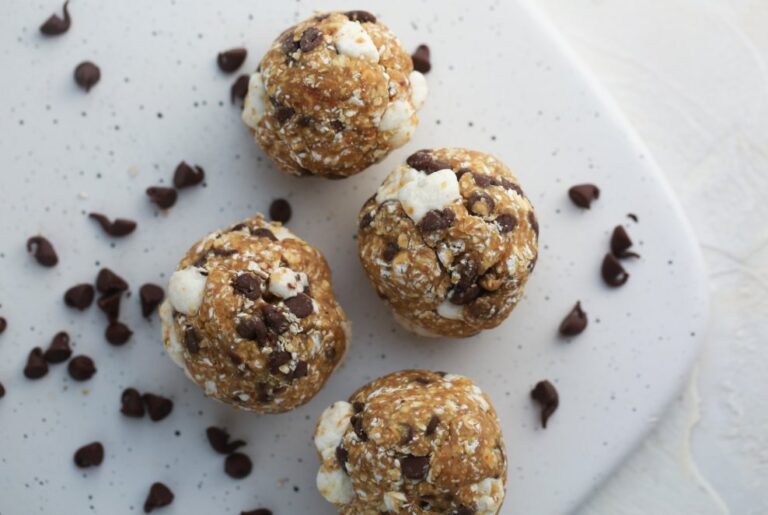
Healthy S’mores Protein Balls

If you’ve ever wanted s’mores but it’s Tuesday afternoon and you’re not standing around a campfire, this is your solution.

These protein balls taste like s’mores – graham cracker, chocolate, marshmallow – but they’re actually made with peanut butter, protein powder, and whole ingredients. Each one has 5 grams of protein and about 100 calories.

No baking required. Just mix everything in a bowl, roll into balls, coat with graham cracker crumbs, drizzle with chocolate. Done in 20 minutes, keeps in the fridge for a week.

They’re chewy like cookie dough with little bits of marshmallow throughout and that distinctive graham cracker coating. Basically s’mores you can eat for a snack without needing a fire.

Why These Work

Traditional s’mores are marshmallow and chocolate sandwiched between graham crackers. Delicious, but nutritionally it’s just sugar.

These protein balls give you the same flavor profile but with actual staying power.

Peanut butter is the base – it provides healthy fats, protein, and acts as the binder. Protein powder bumps up the protein content significantly. Crispy rice cereal gives you that graham cracker crunch. Mini marshmallows scattered throughout provide authentic s’mores flavor.

And then you roll them in actual graham cracker crumbs and drizzle with melted chocolate. So you get the crust and the chocolate coating just like a real s’more.

With 5 grams of protein per ball, these aren’t just candy. Two or three of them make a legitimate snack that will hold you over between meals.

Perfect for: Meal prep snacks, post-workout treat that doesn’t feel like “health food,” satisfying sweet cravings, or when you want s’mores but it’s not camping season.

What You’ll Need

Makes 20-22 balls

For the dough:

  • ½ cup natural peanut butter (smooth, unsalted)
  • ¼ cup honey (or sugar-free honey substitute)
  • ¾ cup vanilla protein powder
  • ¾ cup crispy rice cereal (like brown rice crisps)
  • â…“ cup mini marshmallows, chopped
  • ¼ cup dark chocolate chips (for mixing in)

For coating:

  • ½ cup graham cracker crumbs
  • ¼ cup dark chocolate chips (for drizzling)
  • 1 teaspoon coconut oil (helps chocolate melt smoothly)

Instructions

Step 1: In a large mixing bowl, stir together the peanut butter and honey until smooth.

If your natural peanut butter is stiff, microwave it for 10-15 seconds to soften it. I use Nate’s organic honey because it’s smooth and mixes easily. Makes the whole process way easier.

Step 2: Add the protein powder and stir. The mixture will get thick and dough-like. That’s normal.

I use Orgain vanilla protein powder for these – it’s sweet enough that you don’t need extra sugar, and it doesn’t taste chalky in no-bake recipes.

Step 3: Fold in the crispy rice cereal, chopped mini marshmallows, and ¼ cup chocolate chips.

I use these mini marshmallows from Amazon – they’re the perfect size and chop easily with kitchen scissors. Use your hands at this point. It’s easier to knead everything together than trying to stir with a spoon. The dough should be slightly crumbly but hold together when you squeeze it.

If it’s too dry and won’t stick together, add a teaspoon of water or honey. If it’s too wet and sticky, add a bit more protein powder.

Step 4: Scoop about 1 heaping tablespoon of dough and press it firmly between your hands, then roll into a ball.

The mixture might feel loose because of the cereal, but it’ll compact as you roll. Press firmly. Repeat until you’ve used all the dough – should get about 20-22 balls.

Step 5: Put the graham cracker crumbs in a shallow bowl. Melt the remaining ¼ cup chocolate chips with 1 teaspoon coconut oil in the microwave (30-second intervals, stirring between, until smooth).

Step 6: Roll each ball in the melted chocolate to lightly coat it, then immediately drop it into the graham cracker crumbs and roll to coat all sides.

Work quickly – the chocolate starts setting as soon as it hits the cooler balls. If it gets too thick, microwave it again for 10 seconds.

Step 7: Place the finished balls on a parchment-lined tray or plate. If you have leftover melted chocolate, drizzle it over the tops with a spoon for extra decoration.

Step 8: Refrigerate for 10-15 minutes to let the chocolate firm up. Then they’re ready to eat.

Nutrition Facts

Per ball (recipe makes 21):

  • Calories: 102
  • Protein: 5g
  • Fat: 4.6g
  • Carbs: 11.7g
  • Fiber: 1g
  • Sugar: 6g

Compare that to actual s’mores – usually 150+ calories each with minimal protein and way more sugar. These give you the flavor with better nutrition and portion control.

The combination of protein from the peanut butter and protein powder plus a bit of fat means these actually satisfy sweet cravings instead of just triggering more cravings.

Ways to Customize Them

Nut-free version: Use sunflower seed butter instead of peanut butter. Same measurements, works perfectly. Make sure your protein powder and chocolate chips are also nut-free.

Lower sugar: Use sugar-free honey substitute or reduce honey to 2-3 tablespoons. Use sugar-free marshmallows and stevia-sweetened chocolate chips. Gets you down to about 3-4g sugar per ball.

Extra chocolatey: Use chocolate protein powder instead of vanilla. Add an extra 2 tablespoons of chocolate chips to the dough. Now they’re double chocolate s’mores balls.

No graham crackers: If you can’t find graham cracker crumbs, roll the balls in crushed walnuts, shredded coconut, or just skip the coating entirely. They’re still good, just less s’mores-like.

Vegan: Use maple syrup instead of honey. Use vegan protein powder, vegan marshmallows, and dairy-free chocolate chips. Use any nut or seed butter.

Add-ins: Throw in a tablespoon of ground flaxseed or chia seeds for extra fiber and omega-3s. Or add a teaspoon of vanilla extract to the peanut butter mixture for more depth.

Storage Tips

These store really well, which makes them perfect for meal prep.

Refrigerator: Keep in an airtight container for up to 1 week. They stay soft and chewy. The graham cracker coating might lose a tiny bit of crunch over time, but the flavor is still great.

Freezer: These freeze beautifully. Store in a freezer bag for up to 3 months. You can eat them straight from the freezer (they’re like frozen candy) or let them thaw for 10 minutes at room temp.

Portion control tip: Freeze them in individual servings. Pull out 2-3 balls at a time instead of having the whole batch sitting in your fridge tempting you.

Common Questions

“Can I use almond butter instead of peanut butter?”

Yes. Almond butter, cashew butter, sunflower seed butter – any nut or seed butter works. The texture and protein content are similar. Just use unsweetened, unsalted varieties.

“Why won’t my dough stick together?”

Either your peanut butter is too dry, or you added too much protein powder. Add honey or water one teaspoon at a time and knead it in until the dough holds together when squeezed.

“Can I skip the marshmallows?”

You can, but they won’t taste like s’mores anymore. The marshmallows are what make it authentic. If you must skip them, add an extra 2 tablespoons of honey for sweetness and texture.

“Do these need to be refrigerated?”

Yes. The honey and chocolate will get too soft at room temperature, especially in warm weather. They hold their shape best when chilled.

“What if I don’t have crispy rice cereal?”

Use quick oats instead. The texture will be different – more like oatmeal cookie dough than s’mores – but they’ll still be good. You might need to add a teaspoon of milk to help everything bind.

“Are these actually healthy or just less unhealthy?”

They’re legitimately better than regular s’mores. Real peanut butter provides protein and healthy fats. Protein powder boosts protein content. You’re using honey instead of corn syrup. The portion is controlled – one ball instead of eating three full s’mores. Not health food, but a smarter treat.

Why Protein Balls Work for Snacking

Most snacks are either high in protein but taste boring, or taste great but leave you hungry 30 minutes later.

Protein balls solve this problem. The combination of protein, healthy fats, and a bit of carbs creates actual satiety. You’re not just satisfying a sweet tooth – you’re giving your body something that keeps you full.

With 5 grams of protein and about 5 grams of fat per ball, two or three of these will tide you over for 2-3 hours. That’s the difference between a snack and just eating sugar.

Plus they’re portable. Throw a couple in a container, toss it in your bag. You’ve got a snack that doesn’t need refrigeration for a few hours and actually tastes good.

Pro Tips

Press firmly when rolling. The dough feels crumbly at first because of the cereal and marshmallows. Really squeeze it in your palms before rolling. It’ll compact and hold together.

Chill the dough if it’s too sticky. If your kitchen is warm and the dough is sticking to your hands, refrigerate it for 10 minutes before rolling. Makes it way easier to work with.

Use parchment paper. When you’re coating the balls with chocolate and graham crackers, it gets messy. Parchment paper makes cleanup easier and prevents sticking.

Cut marshmallows small. Big marshmallow chunks make the balls harder to roll and can cause them to fall apart. Use kitchen scissors to chop mini marshmallows into smaller pieces.

Don’t skip the coconut oil in the chocolate. It helps the chocolate melt smoothly and stay fluid longer while you’re coating the balls. Without it, the chocolate seizes up too fast.

More Healthy Fall Recipes

If you’re into no-bake protein snacks and fall flavors:

No-Bake Pumpkin Protein Energy Bites – Similar concept but with pumpkin and pumpkin spice. No baking, perfect for meal prep.

Healthy Pumpkin Pie Oatmeal – If you want something warm. Steel-cut oats with pumpkin and spices, ready in 25 minutes.

Pumpkin Pie Yogurt Bowl – Quick protein-packed breakfast that tastes like pumpkin pie. 18g protein, 3 minutes to make.

High-Protein Pumpkin Bread – Moist pumpkin bread with cottage cheese and protein powder. 6g protein per slice.

Greek Yogurt Pumpkin Muffins – Grab-and-go pumpkin muffins. 184 calories each, naturally sweetened, freezer-friendly.

The Bottom Line

Most “healthy” desserts either taste like cardboard or require seventeen specialty ingredients you’ll never use again.

These s’mores protein balls use normal ingredients – peanut butter, honey, protein powder, cereal, graham crackers, chocolate. Things you probably have or can easily get.

And they actually taste like s’mores. Not “healthy s’mores” or “s’mores-inspired” – they taste like the real thing. Graham cracker coating, chocolate drizzle, marshmallow bits throughout, chewy texture.

The difference is you’re getting 5 grams of protein per ball instead of just sugar. And they’re portion-controlled – one or two satisfies the craving without demolishing your whole day nutritionally.

Make a batch on Sunday. Keep them in the fridge. You’ve got snacks for the week that taste like campfire treats but actually have staying power.

No campfire required. No guilty feeling afterward. Just s’mores you can eat whenever you want them.

“That Girl” Morning Routine Explained: How to Make It Actually Work

If you spend any time on TikTok or Instagram, you’ve probably heard about the “That Girl” morning routine. It’s a viral wellness trend that showcases an idealized morning in the life of a young woman who seemingly has it all together.

Imagine waking up at dawn in silky pajamas, making a perfectly balanced breakfast (think green smoothie or avocado toast), journaling in a cute planner, doing a full workout in a matching athleisure set, then gliding into a productive workday while looking effortlessly polished.

“That girl” is essentially about becoming the best version of yourself: healthy, organized, and aesthetically on-point. The trend has racked up millions (even billions) of views, inspiring many to revamp their routines.

It’s aspirational for sure, but it also begs the question: Is it realistic? Here, we’ll break down what the “That Girl” morning routine is, why it’s so popular, and how you can capture its positive spirit without falling into the trap of perfectionism.

What Does the “That Girl” Morning Routine Look Like?

In the social media world, being “that girl” means starting your day in a way that screams ultimate productivity and wellness.

According to the viral videos, a typical “That Girl” morning might go like this: She wakes up around 5:00 or 6:00 AM (no snoozing, of course), immediately makes her bed in her sunlit, minimalist bedroom, and slips into a stylish workout outfit.

She drinks a glass of lemon water or herbal tea, then spends time journaling her goals and practicing a few calming affirmations. Next, she does a workout, perhaps yoga or a quick jog, followed by a nutritious, photogenic breakfast (often a plant-based smoothie bowl or oatmeal topped with fruit).

Skincare is a must. She applies her serums and sunscreen, maybe even does a face mask, leaving her skin glowing. By 8 AM, she’s already checked off a dozen things: workout done, healthy breakfast eaten, house tidy, mind centered.

She might even snap a well-composed photo of her oatmeal or desk setup to post with a motivational caption. It’s the Pinterest-perfect morning, designed to set a tone of success for the rest of the day.

It’s easy to see why this routine is appealing: who wouldn’t want to be the person who has exercised, cleaned, and self-reflected all before the workday starts?

The aesthetics are beautiful and the habits themselves (eating healthy, exercising, planning your day) are actually great for you. The “That Girl” trend emphasizes discipline, self-care, and positivity. Essentially, it’s saying you can become that girl, the one who seemingly has her life together, by following these morning steps.

The Appeal and the Problem

The “That Girl” routine taps into something we all want: control, clarity, and confidence. When your mornings feel chaotic, the idea of a structured, beautiful routine feels like the answer to everything.

And honestly? Some of the habits are genuinely helpful. Waking up with intention, moving your body, eating well, and setting goals can absolutely improve your life.

But here’s where it gets tricky.

However, it’s important to peel back the Instagram filter and recognize that the “That Girl” routine, as portrayed online, is an ideal, not always attainable in real life.

Therapists have voiced concerns that chasing this ultra-curated routine can actually do more harm than good if taken too far. Why? Because life isn’t always picture-perfect.

When we set an impossibly high standard for ourselves every single morning, we’re bound to feel guilty or “less than” when reality doesn’t match the highlight reel.

According to psychologists, any routine that sets an unattainable ideal can end up undermining your self-esteem. In other words, comparing your real-life morning (perhaps wrangling kids while the coffee brews and you’re still in pajamas) to a TikTok star’s choreographed routine can lead to unnecessary stress.

The “That Girl” trend has also been criticized for promoting a one-size-fits-all approach and glossing over privileges. Not everyone has a spacious, sun-drenched apartment, expensive skincare products, or two free hours in the morning to devote to wellness.

For some, waking up at 5 AM and doing all those things is simply not feasible. And that’s okay!

There’s also a mental health aspect: if someone tries to follow this routine to the letter and slips up (say, oversleeps or skips the workout), they might feel like they’ve failed, when in fact they’re just human.

Social media can make it seem like everyone is flawlessly living this routine, but remember it’s a curated illusion. Even the influencers posting these videos have off days (they just don’t show them).

So, if you’ve tried and struggled to be “that girl,” take a breath. It doesn’t mean you’re lazy or doing something wrong. It might mean that the routine as advertised isn’t a perfect fit for your unique life. And that’s normal.

The goal should be to take inspiration from the trend without letting it turn into a source of anxiety or negative self-comparison.

Creating Your Version of the Trend

Despite the potential downsides, the core idea behind “That Girl,” wanting to improve your mornings and take care of yourself, is positive. You can absolutely craft a morning routine that makes you feel like the best version of you, without it becoming an unhealthy obsession.

The key is personalization and balance.

Keep the healthy habits, ditch the all-or-nothing mindset. It’s wonderful to incorporate exercise, healthy eating, journaling, and skincare into your morning if those things appeal to you. These habits really can boost your mood and efficiency.

In fact, studies show that maintaining a regular routine (especially one that aligns with daytime hours) is linked to better sleep and mental health. So go ahead and wake up a bit earlier to stretch or write your to-do list, just remember you don’t have to do everything every day.

Maybe you exercise on Monday, Wednesday, Friday mornings, and on other days you use that time to read or simply rest. That’s perfectly fine.

For more realistic approaches to morning routines, check out these 15 morning habits that will change your life without the pressure of perfection.

Adapt to Your Lifestyle

If you’re a student or a working mom, your mornings will look different from a full-time influencer’s. Your routine should serve you, not the other way around.

Maybe “that girl” wakes up at 5 AM, but you might find 7 AM is early enough for you to get some peace before the day’s chaos begins.

Perhaps you love the idea of journaling but have zero interest in making green juice, then journal but stick to your regular coffee. The point is to choose elements that genuinely improve your wellbeing.

If a cold shower or a 6-mile run at dawn isn’t your jam, you have permission to skip it!

I wake up around 6:30 AM, not 5:00. I don’t make my bed immediately because I let my bedroom air out first. My breakfast is simple, usually eggs and toast, not an Instagram-worthy smoothie bowl. And you know what? My mornings still feel good.

I do use a few tools that genuinely help. The Philips SmartSleep Wake-Up Light makes waking up so much easier because it simulates sunrise instead of jolting me awake. I keep a Hydro Flask by my bed so drinking water first thing actually happens. And I journal in my Five Minute Journal, which takes exactly five minutes, not thirty.

These aren’t the only “right” products or the only “right” routine. They’re just what works for me. Your version might look completely different.

Focus on How Your Mornings Feel, Not How They Look

The social media posts focus heavily on aesthetics: the clean desk, the pretty smoothie bowl, the sunlit yoga mat. Try shifting your focus to the internal: do you feel more energized and calm when you do XYZ in the morning?

If yes, great, keep it. If not, don’t force it because you think you “should.”

Your morning routine is for you, not for an audience. For example, maybe drawing or listening to music while you get ready brings you joy. That might not be in the typical “That Girl” script, but if it makes your morning better, it belongs in your routine.

I’ve noticed that the mornings I feel best aren’t the ones where I checked every box. They’re the ones where I felt present. Where I actually tasted my breakfast instead of scrolling through my phone. Where I stretched because my body wanted to, not because I was supposed to.

That’s the stuff that matters. Not whether your lemon water is in the right glass or your workout clothes match.

Give Yourself Grace

Even as you build good habits, remember you’re not a robot. There will be days when your alarm goes off and you absolutely cannot peel yourself out of bed for that 6 AM workout, or days when you intended to journal but the baby woke up early or you had to answer a work call.

It’s okay!

The real “that girl” (the happiest, healthiest version of you) knows that consistency is important but so is flexibility. Life happens, and part of a successful routine is learning to bounce back without self-criticism.

One skipped workout or a morning of chaos doesn’t undo your progress. According to Psychology Today, the power of routines comes from their consistency over time, not perfection on any given day.

I’ve had mornings where I slept through my alarm, grabbed a granola bar, and rushed out the door. Did I feel as good as when I follow my routine? No. But did the world end? Also no.

The difference between someone who maintains healthy habits and someone who doesn’t isn’t that the first person never messes up. It’s that they don’t let one bad morning derail everything.

For practical strategies on building habits that stick, even when life gets messy, read these 10 atomic habits hacks that actually work.

What “That Girl” Should Actually Mean

Here’s what I think “that girl” should really be about: It’s not about the matching workout set or the aesthetic breakfast. It’s about being someone who takes care of herself in a way that feels sustainable and authentic.

“That girl” is someone who:

  • Listens to her body instead of forcing it into someone else’s routine
  • Prioritizes her wellbeing without needing it to look perfect
  • Shows up for herself consistently, even when it’s not Instagrammable
  • Adjusts her habits based on what actually makes her feel good
  • Extends grace to herself on hard days
  • Finds joy in the process, not just the outcome

That version of “that girl” is actually attainable. And she looks different for everyone.

Maybe you’ll become your version of “that girl” who wakes up at 7 AM, walks her dog, does a 5-minute meditation, and makes a killer cup of coffee before logging on to work. That can be just as amazing as someone else’s hour-long superroutine.

Remember that the true spirit of this trend is self-improvement and self-care. When approached with a balanced mindset, those are wonderful things.

As long as your morning routine leaves you feeling nourished, accomplished, and ready to take on the day, you are doing it right, whether or not it would get likes on Instagram.

Building Your Own “That Girl” Routine

If you want to create a morning routine inspired by this trend (minus the pressure), here’s a more realistic framework:

Start with one or two habits, not ten. Maybe just drinking water when you wake up and doing five minutes of stretching. That’s it. Do those two things consistently for two weeks.

Once those feel automatic, add something else. Maybe a short walk or journaling. Build slowly.

Choose habits that match your energy level and schedule. If you’re not a morning person, don’t force yourself to wake up at 5 AM. If you hate running, don’t make running part of your routine. Pick things you’ll actually want to do.

Make it easy. Lay out your workout clothes. Prep your journal and pen the night before. Fill your water bottle. Remove as much friction as possible.

Track without judgment. Keep a simple check mark system for your habits. But if you miss a day, don’t spiral. Just note it and move on.

Adjust as you go. After a month, evaluate. What’s working? What feels like a chore? Keep what serves you, drop what doesn’t.

For insights into how high-performers structure their mornings without the Instagram pressure, explore Andrew Huberman’s daily routine and key habits for success.

The Reality Check Nobody’s Posting

Let me tell you what my “That Girl” mornings actually look like versus what they’d look like on social media.

Social media version: Woke up refreshed at 6 AM, did a 30-minute yoga flow as the sun rose, made a beautiful breakfast, journaled three pages of profound thoughts, and started work feeling zen and accomplished.

Reality: Woke up at 6:15 AM after hitting snooze once. Did about 10 minutes of stretching while half-watching the news. Ate scrambled eggs at the counter while mentally running through my to-do list. Wrote one page in my journal, mostly complaining about my hip hurting. Forgot to drink my water until halfway through my shower. Still felt pretty good by the time I sat down at my desk.

Both versions are valid. But only one gets posted online.

The gap between those two versions is where the anxiety lives. Where the feeling of “I’m not doing it right” comes from. Where the comparison trap snaps shut.

Close that gap by remembering that everyone’s reality is messier than their content. Everyone.

Embrace the Inspiration, Not the Comparison

The “That Girl” morning routine trend is ultimately a mix of inspiration and fantasy. It’s great to be inspired, to say “I’d love to start my day more intentionally, I’d love to feel as put-together as she looks.”

Let that drive you to add positive changes to your morning. But avoid getting caught in the comparison trap.

Your goal isn’t to recreate someone else’s life. It’s to enhance your own. Use these trends as a menu of ideas, not a strict recipe.

Take what resonates. Leave what doesn’t. Build something that fits your actual life, not the life you think you should be living.

Because here’s the secret: “That Girl” isn’t a specific routine or aesthetic. She’s anyone who shows up for herself consistently in whatever way works for her.

She might wake up at 5 AM or 8 AM. She might do yoga or lift weights or just walk around the block. She might journal or meditate or just sit quietly with her coffee. She might have it all together or be figuring it out as she goes.

The only thing that makes her “that girl” is that she’s trying. Consistently. Imperfectly. Authentically.

And honestly? You’re probably already closer to being “that girl” than you think.

The Real Transformation

The “That Girl” morning routine is a compelling template of healthy habits, but it’s not one-size-fits-all. Feel free to take the best parts, the focus on health, discipline, and self-care, and make them work for your life.

At the same time, let go of any pressure to be perfect. The best morning routine is the one that makes you feel happy, healthy, and prepared for your day.

If that means a green smoothie and sunrise yoga, fantastic. If it means coffee, a hot shower, and a few deep breaths of gratitude, that’s equally fantastic.

By crafting a routine that is authentically yours, you’ll become “that girl,” not the one from the internet, but the one who is the best version of you.

And that is truly the goal.

So start tomorrow. Not with a complete overhaul, but with one small thing that makes your morning feel a little bit better. Build from there. Be patient with yourself. Adjust as needed.

Before you know it, you’ll have created your own version of “that girl.” The sustainable one. The realistic one. The one who actually enjoys her mornings instead of performing them.

That’s the girl worth becoming.