
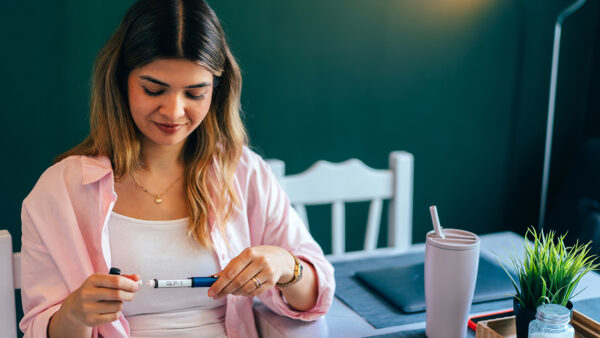
I used to treat shot day like a storm warning. Clear the calendar, stock the fridge, brace for impact. After about six months of doing this every week, I finally figured out that most of the misery wasn’t the medication itself. It was everything I was doing, or not doing, around it.
My first few months, I’d inject on a random Tuesday with zero plan and then act shocked when Wednesday fell apart. Once I built a real routine around the day instead of just surviving it, the dread mostly disappeared.
Whether you’re on Ozempic, Wegovy, Mounjaro, or Zepbound, the rhythm of a good shot day is basically the same. Get the timing right, eat the right things at the right moments, and the day stops feeling like something to survive.
Why Shot Day Feels Different From Every Other Day
There’s a real reason the 24 to 48 hours after your dose feel rougher than the rest of the week. GLP-1 medications slow down how fast your stomach empties, which is part of why they curb appetite so effectively. Right around the time your dose hits peak concentration in your system, that slowdown is also at its strongest.
A systematic review and meta-analysis quantified just how much this effect varies by drug and dose, and found gastric emptying delays were consistently measurable across GLP-1 receptor agonists, with tirzepatide showing some of the most pronounced effects at higher doses.
A separate meta-analysis of tirzepatide trials found gastrointestinal side effects, nausea especially, cluster heavily in the first days after a dose increase and then taper as your body adjusts.
None of this means you’re doing something wrong. Your body is doing exactly what the medication is designed to make it do, just a little too enthusiastically right after injection.
One more thing worth knowing. GI side effects are the number one reason people quit GLP-1s early, ahead of cost, ahead of needle anxiety. A review covering gastrointestinal adverse effects across this drug class called it the main driver of discontinuation.
That’s a big deal, because it means a decent shot day routine isn’t some extra credit project. For a lot of people, it’s the difference between sticking with treatment long enough to see results and quitting in month two over something that was fixable.
Dose Increase Weeks Are a Different Animal
Quick thing nobody explains well up front. Your dose doesn’t stay the same. It steps up every four weeks or so on a set titration schedule, and the week you move up is almost always rougher than the three weeks before it.
I made the mistake of judging my entire experience on the medication off one brutal increase week, early on, and nearly asked my doctor to pull me off it. Glad I didn’t. The next three weeks at that same dose were fine. If you’re stepping up, give yourself a few extra days of grace before you decide how you feel about the new dose.
Don’t book anything big the week of a step-up if you can help it, even if your regular shot days have felt easy for months. Treat an increase week like it’s your first shot all over again, because your gut is about to relearn the whole thing.
Pick Your Shot Day on Purpose
Most people just inject on whatever day their pharmacy happened to fill the script, then wonder why Tuesdays feel cursed. Pick the day on purpose instead. You want 24 hours after with nothing on the calendar that matters.
I do mine Friday around 6pm. Saturday’s rough, Sunday I’m back to normal, and nobody at work ever has to know. If your weekends are the busy part of your week, flip it. There’s no rule that says Friday, that’s just when it works for most schedules.
The Night Before
Eat a real dinner. Not the sad desk salad you’re hoping will hold you over, an actual meal with protein in it. Your appetite is about to vanish for a day or two, and showing up to that already behind on food makes everything worse.
Drink your water the night before, too. Most people are already a little dehydrated by the time they inject and don’t even know it.
Right Before the Injection
You don’t need an empty stomach, and you don’t need a full meal either. Something plain, half a banana, a few crackers, works better than nothing for most people. Skip anything fried or heavy right beforehand. Learned that one the hard way after Chipotle.
Switch up where you inject each week. Abdomen, thigh, upper arm, rotate through them. Doesn’t do anything for nausea. Saves you from the lumpy, tender spot that shows up after months of hitting the same square inch.
The First Few Hours After
Usually nothing happens right away. This is your window. Get something bland into you while you still can, toast, rice, a scrambled egg, whatever’s easy.
Water too, but sip it. Chugging a full glass on a stomach that’s already slowing down is how you end up uncomfortable an hour later for no reason.
When the Nausea Shows Up
Somewhere in the 6 to 24 hour range, for a lot of people. Not everyone gets hit, and it fades fast once you’re a few weeks into a dose, but when it shows up, it shows up.
Ginger has decades of research behind it for nausea. Chemo patients and pregnant women have been using it for this exact reason long before GLP-1s existed. I keep Prince of Peace ginger chews in my bag now. Cheap, doesn’t melt, works.
Cold and bland beats warm and anything when your stomach’s off. Applesauce, a popsicle, crackers. Skip whatever’s cooking on the stove, the smell alone can set you off. And stay sitting up for a bit after you eat. Lying down on a slow stomach is just asking for it.
Does It Matter if You’re on Semaglutide or Tirzepatide?
A little. Tirzepatide (Mounjaro, Zepbound) works on two gut hormone pathways instead of one, which is part of why it tends to produce more weight loss on average. It can also come with a slightly different side effect texture than semaglutide (Ozempic, Wegovy).
The head-to-head trial comparing the two, published in the New England Journal of Medicine, found gastrointestinal side effects were broadly similar between the drugs, with tirzepatide’s top dose running a bit higher than semaglutide’s. Not a massive gap, and not a reason to pick one over the other on shot day grounds alone.
Every routine in this article applies the same regardless of which pen you’re using. The mechanism causing the rough patch is close enough between the two that the fix doesn’t change.
Don’t Forget Electrolytes
Plain water stops being enough once you’re eating less and maybe fighting nausea on top of it. Sodium, potassium, magnesium, all of it drains faster than normal on a day like this.
I started keeping LMNT electrolytes around specifically for shot days, not just workouts, and the foggy, washed-out feeling the next day got noticeably better.
Getting Through the Rest of the Day
Keep the rest of the day boring on purpose. Not the day to try the new restaurant or hit a hard lift. A walk is fine, even helps. Save the real workout for a day you’re not fighting your own stomach.
Sleep is a mixed bag on shot night. Some people crash, some lie there with a queasy stomach and a racing brain. If it’s the second one, a cool room and ditching your phone for the last half hour helps more than it sounds like it would.
What About Coffee and Alcohol?
Coffee on an empty, slowed-down stomach is a rough combination. It doesn’t have to be off the table entirely, just don’t make it your first thing with nothing else in your system. Eat a few bites first.
Alcohol’s the bigger one. It lowers your nausea threshold, dehydrates you further, and tends to hit harder than usual when your stomach’s already running slow. Skip it the night of your shot. Not forever, just that one night.
The Next 24 to 48 Hours
Appetite stays low for a day or two, sometimes longer. Keep eating small amounts anyway, even when nothing sounds good. Three bites every few hours beats nothing until dinner shows up on your radar again.
If every single dose wipes you out for three-plus days, or you can’t keep fluids down at all, call whoever prescribed it. That’s not something to white-knuckle through. Dose adjustments exist for exactly this.
Your First Few Shots Are the Hardest Ones
If you’re brand new to this, give yourself a break. The first one or two injections tend to hit harder than anything that comes after, partly because your body hasn’t adjusted yet and partly because you’re bracing for it mentally the whole time, which never helps.
By shot four or five, most people have a rhythm. You know your own warning signs, you know what food sits right, you stop treating the whole day like an event. That part gets easier faster than people expect walking in.
Your Shot Day Checklist
Here’s everything from above, condensed into something you can glance at the morning of instead of digging back through this whole article.
Little Things That Make Shot Day Worse
None of these are dramatic mistakes. They’re just small habits that quietly make a rough day rougher, and most people don’t connect the dots until they stop doing them.
- Injecting on an empty stomach because you forgot to eat, then wondering why you feel worse by afternoon.
- Scheduling something important the next morning and hoping you’ll feel fine.
- Drinking coffee as your only fluid intake for the day. It doesn’t count the same way water does.
- Skipping protein entirely because nothing sounds appealing. Even a small amount is better than none.
- Pushing through a hard workout the same day instead of giving your body the lighter day it’s asking for.
- Never rotating injection sites, then wondering why one spot feels tender and lumpy every single week.
- Writing off a bad increase week as a sign the medication isn’t working, instead of giving the new dose a couple weeks to settle.
Traveling on Shot Day
Shot day doesn’t pause for a flight or a road trip, and it’s worth planning around if you can’t move the date. Pack your pen in its original box with the manufacturer’s cold pack if you’re flying, and keep it in your carry-on rather than checked luggage. Temperature swings in a cargo hold can ruin it.
If you’re going to be in transit during the rough window, bring your own bland snacks instead of hoping an airport or gas station has something your stomach will tolerate. A travel pack of crackers and a couple ginger chews takes up no space and solves a problem before it starts.
When you can, avoid injecting the night before an early flight. Jet lag plus a slow stomach is a combination nobody enjoys, and a day of buffer on either side makes travel so much easier.
FAQ
What should I eat right before my GLP-1 shot?
Something light and plain, like crackers, toast, or a small piece of fruit. Avoid heavy, greasy, or spicy food right before injecting.
What day of the week is best for a GLP-1 injection?
Whichever day gives you the lowest-stakes 24 hours afterward. Friday evening works for a lot of people since the roughest patch lands on a weekend.
How long does nausea last after a GLP-1 shot?
Heaviest in the first 24 hours, then it tapers. It gets noticeably easier after the first several weeks at any given dose.
Should I drink more water than usual on shot day?
Yes. Staying ahead of hydration, with electrolytes included if you’re nauseous or eating less, makes a real difference in how you feel the next day.
Where can I buy electrolytes for shot day?
The LMNT electrolytes referenced above are a simple, portable option to keep stocked specifically for shot days.
Is it normal to feel worse on shot day even months into treatment?
Some residual effect is common even after you’ve adjusted to a dose, though it’s usually milder than it was early on. If it’s not improving at all over time, or it’s severe, mention it to your prescriber.
Can I work out on the day of my injection?
Light movement is fine and can help. Save the hard training session for a day or two later when you’re not also managing a slow stomach.
Does Mounjaro or Zepbound feel different than Ozempic on shot day?
Slightly. Tirzepatide can run a touch rougher on the GI side at its higher doses than semaglutide, based on head-to-head trial data, but the day-of routine that helps is the same either way.
It Gets Easier
It’s bad for a month or two at a new dose, then it mostly isn’t. Protect the day, eat on purpose instead of by accident, and stay ahead on fluids instead of catching up at 9pm wondering why you feel like garbage.
None of this is complicated. It’s just a handful of small habits, repeated on the same day every week, until shot day stops being the thing you dread and turns into just another Friday.
This article is for educational purposes only and is not medical advice. Talk to your prescriber about any side effects you’re experiencing, especially nausea that doesn’t improve or prevents you from keeping fluids down.
This article contains affiliate links. BrainFlow may earn a commission on qualifying purchases at no additional cost to the reader. We only recommend sources we trust.