BPC-157 has become one of the most talked-about peptides in regenerative medicine. Athletes use it to speed up tendon recovery. People with gut issues take it hoping to heal their intestinal lining. But one question keeps coming up: should you take BPC-157 orally or inject it?
The answer depends on what you are trying to treat. Oral and injectable BPC-157 work through the same mechanisms, but they reach different tissues at different rates. This guide breaks down the research on both forms, compares their effectiveness for specific conditions, and covers the practical details of dosing, reconstitution, and sourcing.
Nearly half off everything at Everest Peptides
Everest Peptides' card processor is offline right now, so instead of waiting it out they're running a bank payment sale. Every peptide is 40% off, and code BRAINFLOW stacks another 15% at checkout. Pay with Zelle or Pay by Bank, same day shipping before 3pm ET, every batch third-party tested with the COA on the product page. Rated 4.9 on Trustpilot.
Shop the 40% off sale Code BRAINFLOW at checkout. Zelle and Pay by Bank only during the sale.The Short Answer
Injectable BPC-157 absorbs faster and delivers more peptide into the bloodstream. It works better for musculoskeletal injuries like tendons, ligaments, and muscles. Oral BPC-157 theoretically targets gut issues more directly since the peptide originates in gastric juice, but real-world reports on gut healing are mixed. Most users report better results with injectable for nearly everything.
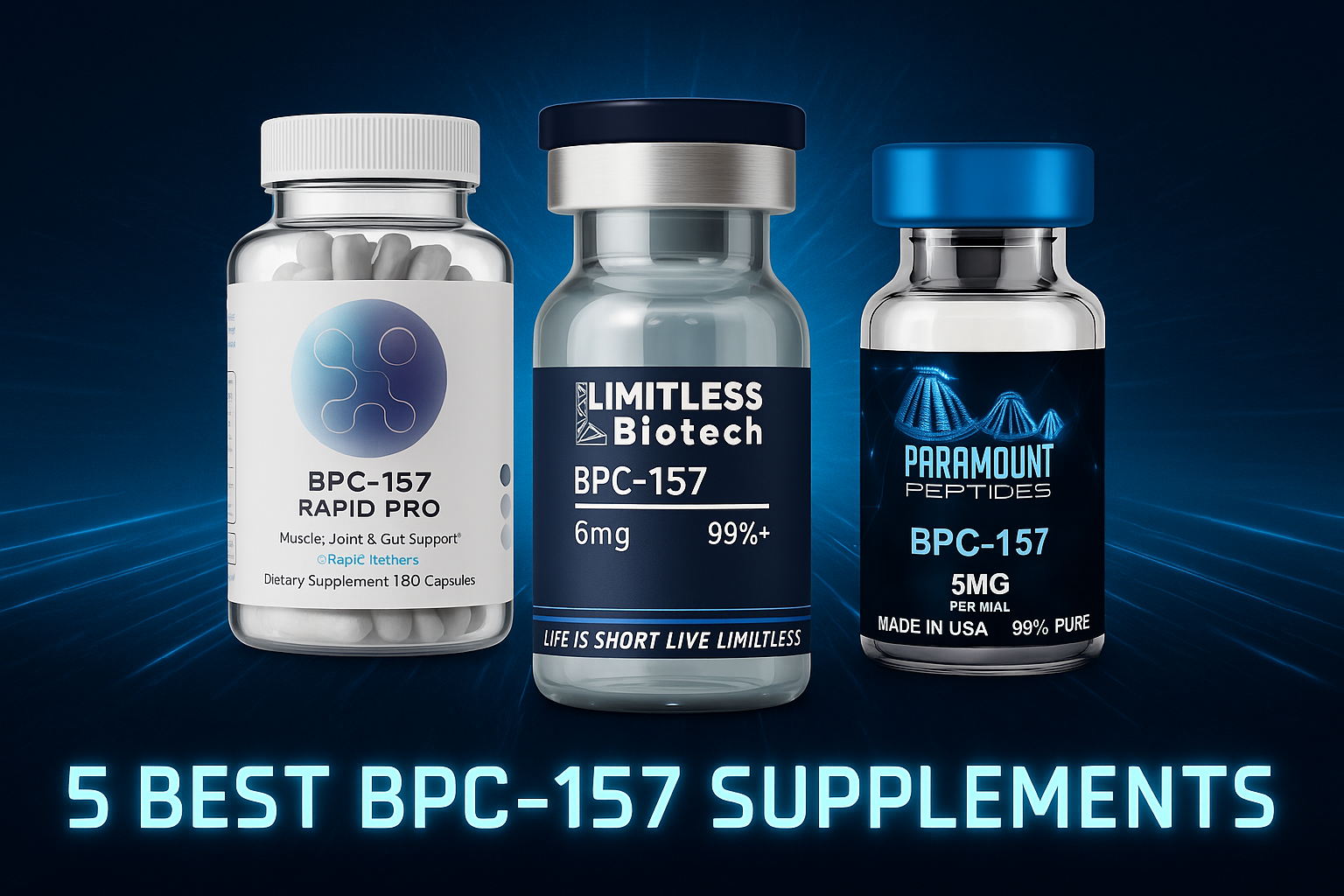
For the version most likely to work, go injectable. If needles are a dealbreaker and gut issues are the main concern, oral is worth trying. Enhanced formulations like Infiniwell’s Rapid Pro BPC-157 use improved delivery systems that may increase absorption compared to standard capsules.
What Is BPC-157?
BPC-157 stands for Body Protection Compound-157. It is a synthetic peptide made up of 15 amino acids, originally isolated from a protein found in human gastric juice. The principal researcher behind most BPC-157 studies is Dr. Predrag Sikiric at the University of Zagreb in Croatia, who discovered it in 1993.
What makes BPC-157 unusual is its stability. Research shows it remains stable in human gastric juice for over 24 hours, which is remarkable for a peptide. Most peptides get destroyed by stomach acid within minutes. This stability is why oral administration is even a conversation with BPC-157 when it would be pointless for most other peptides.
The peptide has been studied for wound healing, tissue repair, gut protection, and recovery from various injuries. Over 100 animal studies exist showing positive effects. The catch? Only three small human studies have been published, and they all come from the same research group.
Related Reading: Complete Guide to BPC-157: Benefits, Dosage & What the Research Says
How BPC-157 Works
BPC-157 operates through multiple pathways regardless of how you take it:
- Angiogenesis: It activates VEGF receptors and stimulates new blood vessel formation, which accelerates healing by improving blood flow to damaged tissue
- Growth factor signaling: Studies show BPC-157 upregulates growth hormone receptor expression in tendon fibroblasts, which may explain its tissue repair effects
- Nitric oxide modulation: It influences the NO system in ways that protect tissues and promote healing
- Anti-inflammatory effects: It reduces inflammatory markers and protects cells from oxidative stress
The mechanisms appear identical whether you inject it or swallow it. The difference comes down to how much gets where, and how fast.
Injectable BPC-157: What the Research Shows
Injectable BPC-157 is the most studied form. Nearly all animal research uses either intraperitoneal (into the abdominal cavity), intramuscular, or subcutaneous injection.
A 2022 pharmacokinetics study measured what happens after injection. The findings:
- Half-life is short (15-30 minutes in rats, 5-30 minutes in dogs)
- Peak concentration hits within 3-9 minutes after intramuscular injection
- Absolute bioavailability after intramuscular injection was 14-19% in rats and 45-51% in dogs
That 45-51% bioavailability in dogs is likely closer to what humans experience. It means roughly half of what you inject actually makes it into systemic circulation and can get to work on your tissues.
Tendon and Ligament Healing
This is where injectable BPC-157 has the strongest evidence. A study on transected Achilles tendons in rats found that BPC-157 treatment resulted in full recovery with improved biomechanical properties, better functional outcomes, superior collagen formation, and faster reestablishment of tendon integrity.
Research into the mechanism showed BPC-157 accelerates tendon fibroblast outgrowth, improves cell survival under stress, and increases cell migration through the FAK-paxillin pathway. Translation: it helps tendon cells move to the injury site and survive long enough to repair the damage.
A 2025 systematic review of BPC-157 in orthopedic sports medicine found consistent positive outcomes across muscle transection models, tendon injuries, ligament tears, and even bone healing. The reviewers noted that despite doses ranging from 6 μg/kg to 20 mg/kg across different studies, beneficial effects were consistently observed.
How to Inject BPC-157
Two injection methods are commonly used:
Subcutaneous (SubQ): Inject into belly fat, thigh, or upper arm. The peptide distributes systemically from there. This is easier for beginners and works well for general healing support.
Intramuscular (IM): Inject directly into or near the injured muscle or tendon. This provides more targeted delivery for localized injuries. If you have a specific tendon issue, injecting close to that area may produce faster results.
The general principle: inject as close to the injury as you safely can for localized problems. For systemic support, belly fat works fine.
Oral BPC-157: The Theory vs Reality
BPC-157 was discovered in gastric juice. It stays stable in stomach acid for 24+ hours. Logically, oral administration should be perfect for gut issues.
The research partially supports this. Reviews of BPC-157’s effects on the gastrointestinal tract show it heals esophageal lesions, protects against NSAID-induced damage, improves sphincter function, and accelerates healing of intestinal anastomoses. Multiple studies have used oral administration successfully.
A study on medial collateral ligament healing found that oral BPC-157 (given in drinking water) was equally effective as intraperitoneal injection for healing transected ligaments over 90 days. Both routes produced consistent functional, biomechanical, and histological improvements.
The Oral Bioavailability Problem
Nobody has actually measured oral bioavailability of BPC-157 in a published study. The peptide survives stomach acid, but surviving digestion and absorbing into the bloodstream are different things.
Some companies claim standard BPC-157 has around 3% oral bioavailability, while newer arginate forms allegedly reach 90%. These numbers get repeated everywhere, but no peer-reviewed data supports them. They appear to originate from manufacturer claims, not independent research.
What we do know from animal studies: oral BPC-157 works for some conditions. The question is whether it works as well as injectable, and for which conditions.
The Gut Healing Paradox
Despite BPC-157 originating from gastric juice and theoretically being ideal for gut healing, user reports on oral BPC-157 for gut issues are surprisingly poor.
Forum threads show users complaining they cannot find a single report of someone curing gastritis or ulcers with oral BPC-157 despite the peptide being studied for exactly that purpose. Meanwhile, reports of injectable BPC-157 healing tendons and muscles are abundant.
This disconnect between theory and practice is worth noting. The animal studies on gut healing used controlled conditions and specific injury models. Real-world gut issues are messier and may not respond the same way.
Head-to-Head Comparison
When to Choose Injectable BPC-157
Injectable is the better choice for:
- Tendon injuries: Achilles, rotator cuff, patellar tendonitis, tennis elbow, golfer’s elbow
- Muscle strains and tears: Any acute or chronic muscle injury
- Ligament damage: MCL, ACL (though not a replacement for surgery), ankle sprains
- Joint issues: Inflammation, cartilage support, post-surgical recovery
- When speed matters: If you need the fastest possible healing response
- Localized injuries: Anything where you can inject close to the problem
The research is clearest here. Studies on wound healing consistently show BPC-157 accelerates recovery in tendons, ligaments, muscle, bone, and skin when injected.
For injectable BPC-157, quality matters. Paramount Peptides offers a 10mg vial with third-party testing and COA verification. Use code BRAINFLOW for 15% off.
Best Injectable BPC-157
Paramount Peptides BPC-157 10mg
Third-party tested, lyophilized powder with COA verification
Get BPC-157 10mgUse code BRAINFLOW for 15% off
When to Choose Oral BPC-157
Oral makes more sense for:
- Gut-specific issues: Leaky gut, IBS, gastritis, ulcers, NSAID-induced GI damage, inflammatory bowel conditions
- Convenience priority: Travel, busy schedules, no access to sterile supplies
- Needle aversion: If injections are a complete dealbreaker
- General wellness maintenance: Lower-dose systemic support over longer periods
- Esophageal issues: GERD, reflux, esophagitis
If you go the oral route, consider formulations designed for better absorption. Infiniwell’s Rapid Pro BPC-157 uses an enhanced delivery system that may improve bioavailability compared to standard capsules. Use code IW15 for 15% off your first order.
Best Oral BPC-157
Infiniwell Rapid Pro BPC-157
Enhanced absorption formula designed for maximum oral bioavailability
Get Rapid Pro BPC-157Use code IW15 for 15% off first order
Related Reading: 4 Best BPC-157 Capsules on the Market (In-Depth Review)
Can You Use Both Together?
Yes. Some practitioners recommend dual protocols for complex situations.
Example protocol:
- Oral: 500 mcg daily for gut support and systemic effects
- Injectable: 250-500 mcg subcutaneously near injury site for localized healing
This makes sense if you are dealing with both gut issues and a musculoskeletal injury, or if you want systemic support while targeting a specific problem area. There is no research specifically on combined protocols, but anecdotally users report no issues with this approach.
Related Reading: Wolverine Peptide Stack Complete Guide (BPC-157 + TB-500)
Dosing Protocols
Injectable Dosing
| Body Weight | Daily Dose |
|---|---|
| Under 150 lbs | 200-300 mcg |
| 150-200 lbs | 300-400 mcg |
| Over 200 lbs | 400-500 mcg |
Frequency is typically once daily, though some people split into two doses 12 hours apart for acute injuries. Cycle length is usually 4-8 weeks on, 2-4 weeks off.
Oral Dosing
Standard oral doses range from 250-500 mcg once or twice daily. Some protocols go up to 1,000 mcg daily for gut healing. Take on an empty stomach, 30-60 minutes before meals.
For sublingual administration (holding liquid under the tongue for 60-90 seconds before swallowing), absorption may be somewhat better than straight swallowing since some peptide can absorb through the oral mucosa.
Reconstitution for Injectable
If you are using lyophilized (freeze-dried) powder:
- Clean the vial stopper with an alcohol swab
- Draw bacteriostatic water into a syringe (use BAC water, not sterile water, for multi-use vials)
- Inject slowly down the vial wall, not directly onto the powder
- Gently swirl or roll to dissolve. Never shake.
- Let sit 5-10 minutes until fully dissolved
- Solution should be clear. Discard if cloudy.
Common reconstitution: 5 mg powder + 5 mL bacteriostatic water = 1 mg/mL concentration. At this concentration, 0.25 mL (25 units on an insulin syringe) = 250 mcg.
How Long Until Results?
This varies significantly by administration route and condition.
Injectable Timeline
- 1-2 days: Initial reduction in inflammation and pain (commonly reported)
- 3-5 days: Noticeable improvement in acute injuries
- 1-2 weeks: Significant improvement in tendon and joint pain
- 2-4 weeks: Major healing progress for acute injuries
- 4-6+ weeks: Required for chronic conditions
Oral Timeline
- 7-10 days: Some users report reduced gut symptoms
- 3-6 weeks: Potential tissue healing for chronic inflammation
The faster onset with injectable is one of its main advantages. If you need quick results, oral is not the way to go.
Side Effects and Safety
BPC-157 has a remarkably clean safety profile in animal studies. The 2025 systematic review noted that across all studies, no toxic effects were reported. Researchers could not establish a lethal dose even at extremely high amounts.
Reported side effects are generally mild and transient:
Injectable:
- Injection site pain, redness, or swelling
- Mild dizziness or lightheadedness
- Temporary fatigue
- Mild nausea
- Headaches (less common)
Oral:
- Nausea (especially at higher doses)
- Digestive discomfort
- Bloating
The big caveat: human safety data is extremely limited. Only about 30 people total have been studied in published trials. Long-term effects are completely unknown. The animal safety profile is reassuring, but animals are not humans.
The VEGF Question
BPC-157 promotes angiogenesis (new blood vessel formation) through VEGF pathways. Some people worry this could theoretically promote tumor growth. The research has not shown this, and some studies even suggest anti-tumor effects, but this remains an open question without long-term human data.
If you have active cancer or a history of certain cancers, discuss with your oncologist before using any peptide that affects angiogenesis.
Quality and Sourcing
This matters more than most people realize. Research has found that a significant percentage of peptide supplements are contaminated, contain incorrect amino acid sequences, or exceed endotoxin safety thresholds.
What to look for:
- Third-party Certificate of Analysis (COA) with batch-specific testing
- HPLC purity verification of 98% or higher (99%+ preferred)
- Mass spectrometry confirming molecular identity
- Endotoxin testing (especially for injectable)
- Verifiable reviews and reputation
Red flags:
- No COA provided or COA does not match lot number
- Purity below 95%
- Unusually low prices
- Cryptocurrency-only payment
- No verifiable customer feedback
For oral BPC-157, Infiniwell’s Rapid Pro BPC-157 provides third-party testing and uses an enhanced delivery system designed to improve absorption. Use code IW15 for 15% off your first order. For injectable, Paramount Peptides offers a 10mg vial with COA verification. Code BRAINFLOW saves 15%.
BPC-157 Salt Forms Explained
You will see different salt forms marketed:
BPC-157 Acetate: The standard form used in most research. Works well for injection. Claims of very low oral bioavailability (around 3%) circulate but lack published verification.
BPC-157 Arginate: A newer form supposedly developed for better oral bioavailability. Some sources claim it reaches 90% oral bioavailability, but I could not find peer-reviewed studies confirming this. The arginine salt may provide additional stability and absorption benefits.
BPC-157 Sodium: Another salt form occasionally seen. Less common than acetate.
Bottom line: if you are injecting, standard acetate is fine. For oral use, arginate formulations may offer advantages, but treat the specific bioavailability claims with skepticism until better data exists.
Legal Status
BPC-157 exists in a gray area legally:
- United States: Not FDA-approved for any medical use. Sold as a research chemical. Legal to purchase but technically not for human consumption.
- WADA/Sports: Banned in all competitive sports under the peptide hormones category.
- NCAA: Banned substance.
- Most Countries: Similar unregulated status. Not approved as a drug, sold as research material.
If you compete in tested sports, do not use BPC-157 regardless of the form.
Frequently Asked Questions
Is oral or injectable BPC-157 better?
Injectable is more effective for most uses, especially musculoskeletal injuries. It has higher bioavailability, faster onset, and more research support. Oral may be better for gut-specific issues due to direct contact with the digestive tract, though real-world reports are mixed.
What is the bioavailability of oral BPC-157?
Unknown. No published study has quantified oral bioavailability in humans or animals. Claims range from 3% for standard acetate to 90% for arginate forms, but these numbers lack peer-reviewed verification. We know BPC-157 survives stomach acid, but actual absorption rates remain unmeasured.
How long does BPC-157 take to work?
Injectable users often report initial effects within 1-2 days and significant improvement within 1-2 weeks. Oral users typically report slower onset, with noticeable effects at 1-2 weeks and meaningful changes at 3-6 weeks.
Can you take BPC-157 orally and inject it at the same time?
Yes. There are no known interactions between the two routes. Some practitioners recommend combined protocols for complex situations requiring both systemic and localized effects.
Does oral BPC-157 work for tendon injuries?
Probably, but less effectively than injectable. One study showed oral BPC-157 healed ligament injuries comparably to injection over 90 days, but this was in rats with controlled conditions. For tendon injuries, injectable remains the preferred choice based on both research and user reports.
Is BPC-157 safe?
Animal studies show an excellent safety profile with no established lethal dose. However, human safety data is extremely limited (about 30 people total in published studies). Long-term effects are unknown. Use at your own risk and ideally under medical supervision.
Does BPC-157 need to be refrigerated?
Lyophilized (freeze-dried) powder can be stored at room temperature or refrigerated. Once reconstituted with bacteriostatic water, it must be refrigerated and used within 2-4 weeks. Oral capsules are typically stable at room temperature. Oral liquids usually require refrigeration after opening.
Where do you inject BPC-157?
For systemic effects, subcutaneous injection into belly fat is standard. For localized injuries, inject as close to the affected tissue as safely possible. Rotate injection sites to avoid irritation.
What is BPC-157 arginate?
BPC-157 arginate is a salt form of the peptide combined with arginine. It was developed to improve oral bioavailability compared to the standard acetate form. Manufacturers claim significantly higher absorption rates, though peer-reviewed verification of these claims is lacking.
Can BPC-157 cause cancer?
No evidence suggests BPC-157 causes cancer. Some studies even suggest anti-tumor effects. However, because BPC-157 promotes angiogenesis (new blood vessel formation), theoretical concerns exist about its use with active tumors. No long-term human studies exist to definitively answer this question.
The Bottom Line
If you are dealing with a tendon, muscle, ligament, or joint injury and want the best chance of results, injectable BPC-157 is the way to go. The research is stronger, the bioavailability is higher, and user reports are more consistently positive.
If your primary concern is gut health, oral BPC-157 makes theoretical sense given the peptide’s origin in gastric juice. Just temper your expectations since real-world results for gut healing are not as impressive as you might expect from the animal research.
For convenience without needles, Infiniwell’s Rapid Pro BPC-157 offers an enhanced oral formulation that may bridge some of the bioavailability gap. They also offer a BPC LX Pro oral spray for sublingual absorption. Use code IW15 for 15% off your first order.
Whichever route you choose, source from reputable suppliers with third-party testing, start with lower doses to assess tolerance, and remember that BPC-157 remains an experimental peptide without FDA approval or extensive human safety data. The animal research is promising, but we are still in early days of understanding how this peptide works in humans.
References
- He M, et al. Pharmacokinetics, distribution, metabolism, and excretion of body-protective compound 157. Front Pharmacol. 2022;13:1026182.
- Gwyer D, Wragg NM, Wilson SL. Gastric pentadecapeptide body protection compound BPC 157 and its role in accelerating musculoskeletal soft tissue healing. Cell Tissue Res. 2019;377(2):153-159.
- Chang CH, et al. The promoting effect of pentadecapeptide BPC 157 on tendon healing involves tendon outgrowth, cell survival, and cell migration. J Appl Physiol. 2011;110(3):774-780.
- Staresinic M, et al. Gastric pentadecapeptide BPC 157 accelerates healing of transected rat Achilles tendon. J Orthop Res. 2003;21(6):976-983.
- Cerovecki T, et al. Pentadecapeptide BPC 157 (PL 14736) improves ligament healing in the rat. J Orthop Res. 2010;28(9):1155-1161.
- Seiwerth S, et al. Stable Gastric Pentadecapeptide BPC 157 and Wound Healing. Front Pharmacol. 2021;12:627533.
- Xue XC, et al. Protective effects of pentadecapeptide BPC 157 on gastric ulcer in rats. World J Gastroenterol. 2004;10(7):1032-1036.
- Sikiric P, et al. Stable gastric pentadecapeptide BPC 157: novel therapy in gastrointestinal tract. Curr Pharm Des. 2011;17(16):1612-1632.
- Chang CH, et al. Pentadecapeptide BPC 157 Enhances the Growth Hormone Receptor Expression in Tendon Fibroblasts. Molecules. 2014;19(11):19066-19077.
- Vukojevic J, et al. Emerging Use of BPC-157 in Orthopaedic Sports Medicine: A Systematic Review. HSS J. 2025;21(1):1-16.
Medical Disclaimer: This content is for informational purposes only and does not constitute medical advice. BPC-157 is not FDA-approved for human use. Consult a healthcare provider before using any peptide. This article contains affiliate links.