Dr. Peter Attia has become something of a legend in longevity circles. As the host of The Peter Attia Drive podcast and author of the bestseller Outlive, he’s built a following of people hungry for science-backed strategies to extend not just lifespan, but healthspan.
What makes Attia compelling isn’t just his medical credentials or his ability to dissect complex research. It’s that he actually walks the walk. His daily routine reads like a masterclass in optimization, yet somehow maintains a human quality that makes it feel achievable rather than robotic.
From his pre-dawn wake-up to his remarkably early bedtime, every habit serves a purpose. In this deep dive, we’ll explore how this physician structures his days for maximum longevity, examining the morning rituals, afternoon workouts, and evening practices that form the backbone of his approach to living well.
Morning Routine
Peter Attia’s alarm rarely gets a chance to go off. Most days, he’s naturally awake between 4 and 5 a.m., a schedule that would horrify night owls but works perfectly for his biology. “It is not uncommon for me to wake up at 4 a.m. and go to bed at 8 p.m.,” he has said, treating those quiet predawn hours as sacred time.
But here’s where Attia surprises people. Instead of immediately diving into work during what he calls the “golden hours” of 4 to 7 a.m., he often chooses family over productivity. It’s a choice that reveals his priorities. For those interested in optimizing their own mornings, you might also find value in Andrew Huberman’s optimal morning routine, which shares some similar principles.
The very first thing he does upon waking? Hydrate. Not coffee, not checking his phone, but a glass of water mixed with electrolytes, often using something like Biosteel sports hydration mix. This simple act kickstarts his system after hours of dehydration during sleep. Only after proper hydration does the rest of his morning unfold.
The Meditation Practice
Attia’s approach to meditation is refreshingly practical. Using apps like 10% Happier or Sam Harris’s Waking Up, he spends about 20 minutes in practice. But his perspective on why he meditates is particularly insightful. “If I meditate for 20 minutes in a day, I’m not meditating for those 20 minutes… I’m meditating for the other 23 hours and 40 minutes,” he explains.
This isn’t about achieving some mystical state. For Attia, it’s mental training, pure and simple. The ripple effects of those morning minutes shape how he handles stress, maintains focus, and navigates decision-making throughout the entire day.
Supplements and Nutrition Strategy
While many people stumble to the coffee maker first thing, Attia has a different priority: his supplement stack. Every single morning, without fail, he takes AG1 (Athletic Greens). “Having a foundational program like AG1 makes it easier to go on autopilot and get the important, essential nutrients… I take a scoop of AG1 every day, regardless of what else I’m eating,” Attia notes.
His morning supplement routine goes well beyond a greens powder though. The lineup includes magnesium (specifically SlowMag), Carlson Super Omega-3 fish oil, vitamin D, baby aspirin, methylated B vitamins, and Pendulum’s Glucose Control probiotic. It might seem excessive to some, but Attia views it as insurance. Good nutrition is one of what he calls the “five pillars” of longevity, and he’s not leaving it to chance. For a complete breakdown of his supplement protocol, check out Dr. Peter Attia’s full supplement stack.
Coffee as Ritual
Only after hydration and supplements does caffeine enter the picture. Attia’s coffee routine borders on ceremonial. He crafts a French press with additions that would make baristas curious: a dash of chicory, a sprinkle of cinnamon, and a hint of vanilla. If you’re looking to upgrade your morning coffee ritual, this French press delivers consistently excellent results.
“Making a really good French press is something I like to do,” he says, often preparing a cup for his wife as well. The cinnamon isn’t just for flavor. Research suggests it can improve insulin sensitivity, turning his morning brew into yet another tool for metabolic health. This careful approach to coffee, coming after proper hydration and paired with breakfast rather than consumed on an empty stomach, shows his thoughtful approach to even simple pleasures.
Protein-Powered Breakfast
Forget intermittent fasting trends. Attia currently prioritizes protein above all else at breakfast, and his morning meal is substantial. Eight eggs is standard fare. Usually four whole eggs and four whites, served alongside buttered toast. If that sounds like a lot, that’s because it is. Attia aims for roughly one gram of protein per pound of body weight daily, and breakfast is where he starts stacking those numbers.
Sometimes he’ll add a protein shake to the mix, blending unsweetened almond milk with 50 grams of protein powder (he’s mentioned Promix as a favorite brand) and some berries. He’s observed that most people “are not getting sufficient amounts of protein to preserve lean mass,” a mistake that becomes increasingly costly as we age.
What makes his breakfast special isn’t just the macros though. It’s a family affair. Despite being someone who could easily maximize every minute for productivity, Attia deliberately keeps breakfast time sacred for his kids. Work can wait. Family can’t. After the children head to school, then and only then does his workday begin.
There’s something else worth noting about Attia’s mornings. He’s an archer and racing simulator enthusiast, and sometimes he’ll spend a few minutes with these hobbies before diving into professional work. “Archery will always keep you honest when it comes to focus and stillness,” he once observed. These aren’t time wasters but skill maintainers, activities that train concentration while bringing genuine enjoyment.
Deep Work Sessions
By mid-morning, Attia shifts into professional mode. A student of Cal Newport’s “Deep Work” philosophy, he blocks out time for cognitively demanding tasks when his mental energy peaks. This might mean writing for his blog, preparing for a podcast interview, or seeing patients in his longevity practice.
He approaches these work blocks with surgical precision, minimizing distractions and focusing completely on the task at hand. Years of medical training taught him to concentrate under pressure, and he applies that same intensity to his current work. By lunchtime, he’s often accomplished what others might consider a full day’s worth of high-priority tasks.
Afternoon Routine
The afternoon marks a dramatic shift in Attia’s day. This is when physical training takes center stage.
The Centenarian Decathlon Philosophy
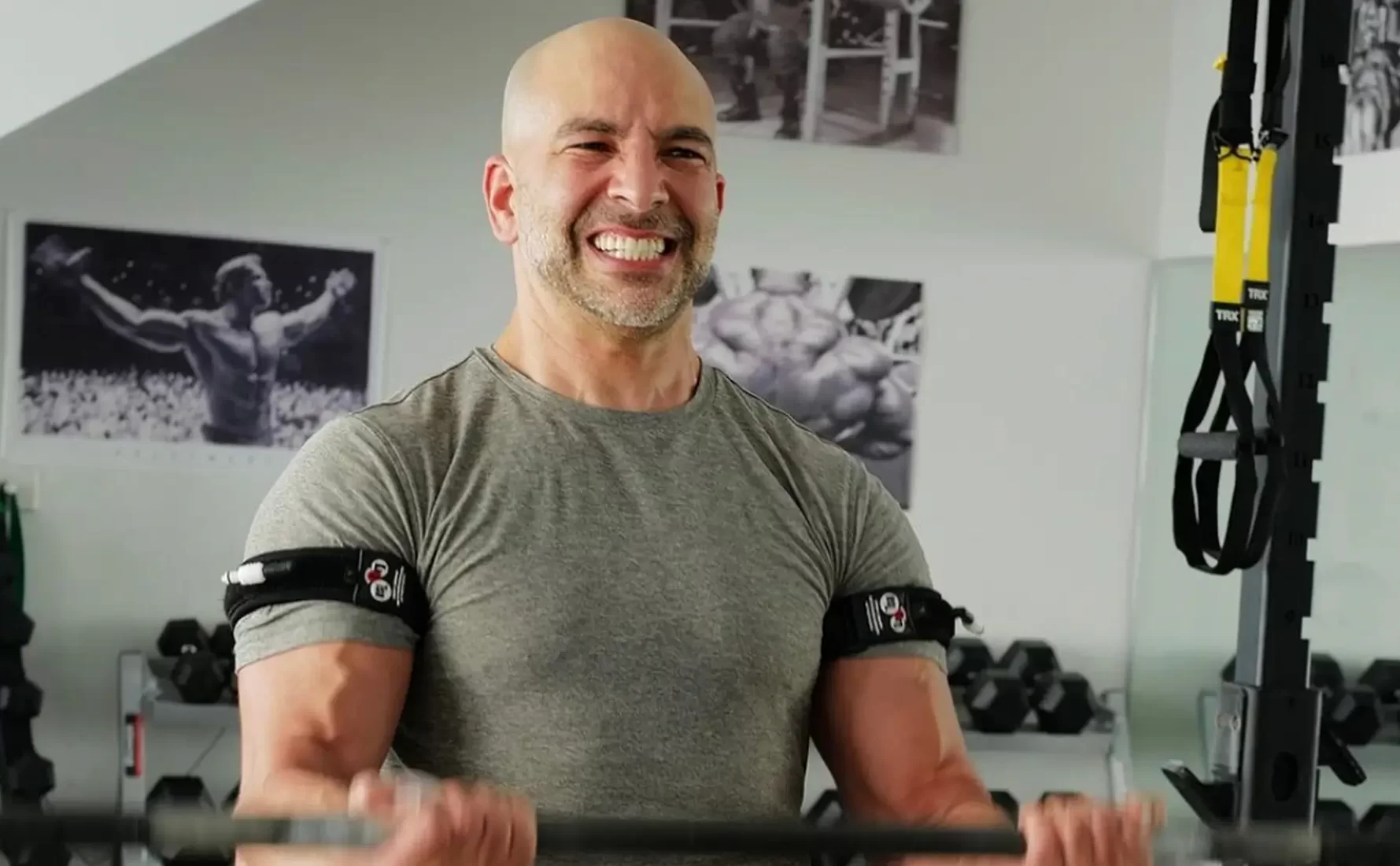
Attia works out seven days a week, a schedule that might sound obsessive until you understand his framework. He’s not training for a beach body or a powerlifting meet. He’s training to be what he calls a “kick-ass 100-year-old.”
The concept is brilliantly simple. Attia encourages everyone to list ten physical tasks they want to be able to do in their final decades. His own list includes practical things like hiking a hilly trail, getting up from the floor using just one arm, hoisting luggage into an overhead bin, and carrying grocery bags up stairs. He calls this the “Centenarian Decathlon,” and every workout is designed to preserve these capabilities.
His training splits into four essential categories: stability, strength, aerobic efficiency, and anaerobic performance. Here’s what a typical week looks like in Attia’s gym:
Monday brings lower body strength training after his mandatory 10-minute stability warm-up. Tuesday shifts to Zone 2 cardio, that sweet spot of moderate intensity where you can still hold a conversation. Wednesday targets upper body strength. Thursday returns to Zone 2. Friday hits lower body again. Saturday combines Zone 2 with a brutal 30-minute Zone 5 interval session. Sunday somehow fits in both more Zone 2 and upper body work. For those interested in the science behind his approach, explore Peter Attia’s cardiovascular fitness protocol in detail.
The stability work deserves special mention. Every single day, before any other exercise, Attia spends ten minutes on what might look like simple movements. Core activation, balance drills, and something called DNS (dynamic neuromuscular stabilization). He describes it as “retraining movement patterns we learned as little kids.” It’s not sexy, but it’s the foundation that keeps him injury-free despite the intense volume.
Attia has called exercise “by far the most potent longevity drug,” and he means it. No pill, supplement, or medical intervention comes close to exercise’s impact on delaying death and preventing decline. In Outlive, he writes, “This isn’t an eight-week program—it’s a lifelong pursuit.”
Rucking and Real-World Training
While gym work forms his foundation, Attia’s favorite “hidden gem” exercise is rucking. He’ll throw a 60-pound weight in a backpack and hike hills. He told Oprah Winfrey in an interview that this simple activity brilliantly combines cardio with strength training while mimicking real-life demands.
Sometimes he’ll wear a weighted vest for walks or set a treadmill to a steep incline with his ruck. Every exercise connects to his Centenarian Decathlon. He’s not doing arbitrary movements. He’s practicing for the physical demands of living.
After exercise, Attia makes a point of cooling down and recovery. He might spend a few minutes with a foam roller or doing active stretching to aid muscle recovery. While not daily, he also utilizes gadgets or techniques for recovery when needed – for instance, he monitors his heart rate variability and recovery through devices like the Oura Ring, and if he has access, he might do occasional cold therapy or sauna sessions (Attia has discussed that while not a daily habit for him, he acknowledges emerging research on their benefits). However, the cornerstone of his recovery strategy is actually quite simple: adequate nutrition and sleep, which he guards zealously.
Strategic Lunch
Lunch stays relatively light, especially post-workout. A massive salad topped with grilled chicken is typical. Mixed greens, cherry tomatoes, cucumber, olive oil and balsamic, plus a serious portion of protein. Some days he’ll have his famous “Peter Kaufman shake” instead, a caloric bomb of almond milk, heavy cream, Promix protein powder, almond butter, specialized carb powder, and berries.
Attia tracks his intake meticulously using apps like Carbon, aiming for about 2,700-2,800 calories daily with 45-50 grams of protein per meal across four meals. He focuses on what he calls nutritional biochemistry: adequate protein, quality fats, abundant micronutrients from vegetables. No rigid diet ideology, just sound principles.
He asks three key questions about diet: “Are you undernourished or overnourished? Are you undermuscled or adequately muscled? Are you metabolically healthy or not?” His own answers guide every food choice.
His views on fasting have evolved significantly. Once an enthusiast of extended fasts, even week-long quarterly fasts, he’s pulled back. “Most people do not consume enough protein… the RDA is not sufficient as we age,” he warns. While he might still do occasional 16:8 intermittent fasting, maintaining muscle mass takes priority over any fasting protocol.
Afternoon Productivity
Post-lunch often means returning to work. Maybe recording a marathon podcast episode for The Drive, researching for newsletters, or consulting on complex longevity cases. Attia structures these sessions carefully, never scheduling mentally demanding tasks back-to-back. A writing block, then a walk. A podcast recording, then lighter administrative work. This rhythm maintains energy through the afternoon while ensuring he wraps up work in time for his evening routine.
Evening Routine
If mornings are about activation, evenings are engineered for deceleration.
Early Family Dinner
Dinner happens early in the Attia household, usually between 5 and 6 p.m. This timing isn’t random. With an 8:30 p.m. bedtime target, he wants digestion complete well before sleep.
A typical dinner might feature grilled salmon over a huge salad (he’s mentioned literally eating “a huge salad with one pound of salmon”), or a six-egg omelet loaded with vegetables when breakfast wasn’t egg-heavy. Sometimes it’s a curry stir-fry with tofu and vegetables, or a simple steak with salad. The constants remain: high protein, abundant vegetables, minimal refined carbohydrates.
He’ll occasionally indulge in sushi, savoring seaweed salad and sashimi with maybe a couple rolls. If hunger strikes later, a handful of macadamia nuts or an apple with almond butter might appear. But generally, dinner marks the end of eating for the day.
The Alcohol Equation
Attia’s relationship with alcohol is fascinating. “I love tequila. I love mezcal. I love really good wine, and I love really dark Belgian beer,” he admits. Yet most nights, he doesn’t drink at all.
When he does indulge, it’s strategic. One drink maximum, two on very rare occasions, and never close to bedtime. He tracks alcohol’s impact using his Oura Ring, noting how even moderate drinking raises his heart rate and disrupts heart rate variability during sleep. His rule? No more than seven drinks per week, often far fewer.
“Alcohol serves no nutritional or health purpose but is a purely hedonistic pleasure that needs to be managed,” he states. “If you’re going to drink, make it really fricking worthwhile… be mindful about it. You’ll enjoy it more and suffer fewer consequences.”
Evening Learning
After dinner comes family time. Games with the kids, homework help, bedtime stories. By 8 p.m., the household starts winding down.
Attia is a voracious reader, typically juggling two books simultaneously. One might be historical nonfiction like Bill Browder’s Red Notice, the other something philosophical like Don Miguel Ruiz’s The Four Agreements. “I’m wired in such a way that I can’t help but try to know more each day,” he says. This isn’t just entertainment. It’s continued education, a way to “sharpen the saw” as he puts it.
He reads for 30 minutes to an hour, using physical books or a Kindle rather than bright screens. This reading time serves as a bridge between the day’s intensity and the calm needed for sleep. He also wears blue-light blocking glasses in the hour or two before bed to filter out stimulating light.
Sleep: The Non-Negotiable
If exercise is Attia’s most potent longevity drug, sleep is the foundation everything else builds upon. He targets eight hours nightly and has engineered his environment to achieve it.
By 8:30 p.m., he’s in bed or nearly there. The bedroom becomes a cave. An OOLER cooling mattress pad keeps the bed temperature optimal. Blue-light blocking glasses filter evening light exposure. The Alaska Bear silk sleep mask ensures complete darkness. “Incredible darkness in the actual room at night… I use this thing called the Alaska Bear shade,” he notes, because even tiny amounts of light can impair melatonin production.
His sleep supplement protocol varies based on need. Magnesium L-threonate (specifically Magtein brand) is the nightly constant, helping relax muscles and nerves. If he feels wired, he might add glycine (2 grams of Thorne brand) or ashwagandha (600 mg). Occasionally, low-dose melatonin (2-5 mg) or phosphatidylserine (600 mg) join the mix. “I keep a few sleep aids by my bed to use when needed,” he says, emphasizing that phosphatidylserine particularly helps when stress elevates nighttime cortisol.
Furthermore, Attia practices what sleep scientists call good sleep hygiene: his late evenings are kept calm and free of intense work or bright screens. He might do some light stretching or breathing exercises to relax. He keeps a Hydro Flask of water by the bed for hydration if needed, but generally avoids large amounts of fluid right before bed to minimize nighttime awakenings. All notifications on devices are off; in fact, Attia often leaves his phone outside the bedroom or on Do Not Disturb to avoid any disruptions. He also uses a sleep tracker (the Oura Ring) to monitor his sleep quality and quantity. By tracking metrics like sleep stages, heart rate, and movement, he can adjust his routine if needed (for instance, if he notices his deep sleep is lacking, he might examine evening caffeine or stress levels). Over time, he’s dialed in a system that works: he typically achieves near 8 hours of sleep from roughly 8:30 p.m. to 4:30 a.m., allowing him to wake up naturally before his alarm on most days feeling refreshed.
Finally, Attia even has protocols for special circumstances like travel. To combat jet lag, he will begin shifting his schedule to the destination time zone as soon as he boards a flight, use fasting strategically on travel days, and may utilize supplements like melatonin or even prescription wakefulness agents (in small doses) if absolutely needed to adjust sleep cycles. But on a normal night at home, the combination of a consistent early bedtime, a cool dark environment, and targeted supplements leads to high-quality sleep – which is the foundation upon which he can build those intense days again and again. As Attia often emphasizes, good sleep is non-negotiable. It affects everything from insulin sensitivity to cognitive function to exercise recovery. Chronic sleep deprivation accelerates aging at every level. By treating sleep as sacred, Attia ensures he can maintain his intense routine day after day, year after year.
Conclusion
Peter Attia’s daily routine reveals something profound about the pursuit of longevity. It’s not about perfection or deprivation. It’s about intentionality.
Yes, his 4 a.m. wake-ups and seven-day workout schedule might seem extreme. But notice the balance. Family breakfast matters as much as fasting protocols. A good book ranks alongside supplements. The occasional tequila has its place, carefully managed but genuinely enjoyed.
What can we mere mortals take from Attia’s approach?
First, protein and nutrition matter more than most realize. The RDA isn’t enough as we age. Supplements fill gaps, but whole foods come first. Track what you eat, at least initially, to understand where you stand.
Second, exercise isn’t optional. It’s medicine. More powerful than any drug for extending healthspan. Build stability, strength, and endurance. Train for the physical tasks you want to perform at 100, not the body you want at 30.
Third, mornings set the tone. Whether it’s 4 a.m. or 7 a.m., how you start matters. Hydrate first. Move with intention. Protect time for what’s important, whether that’s meditation, family, or focused work.
Fourth, evening routines directly impact tomorrow’s performance. Early dinners, minimal alcohol, blue light management, cool dark bedrooms. These aren’t biohacker gimmicks. They’re evidence-based practices that compound over time.
Finally, stay curious and keep adapting. Attia’s routine today differs from five years ago. As science evolves and his body changes, so does his approach. Rigidity kills progress. Experimentation drives optimization.
Peter Attia shows us that longevity isn’t about living forever. It’s about maintaining vitality, capability, and joy for as long as possible. His routine might seem regimented, but it’s actually a framework for freedom. Freedom from disease, disability, and decline. Freedom to play with grandchildren, pursue passions, and contribute meaningfully well into our later decades. For a complete guide to his philosophy and methods, Outlive offers the full blueprint.
We don’t need to copy Attia’s routine wholesale. But we can adopt his mindset: every choice either builds or erodes our future capacity. By making more choices that build, we stack the odds in favor of not just a longer life, but a better one.
As Attia might say, it’s not about the years in your life, but the life in your years. His daily routine is simply his method for maximizing both. For those interested in comparing approaches, you might also explore Dr. David Sinclair’s supplement list for longevity to see how different experts tackle similar goals.
References
Peter Attia’s Daily Routine in 2025
Peter Attia’s workout routine: A science-backed approach to longevity and health | Nucleus
Peter Attia’s Workout Routine: How to Workout to Live Longer
Peter Attia’s Daily Routine & Outlive Book Summary · Colin Keeley
Am I fooling myself? – Peter Attia
Exercising for Longevity | Peter Attia, M.D.