
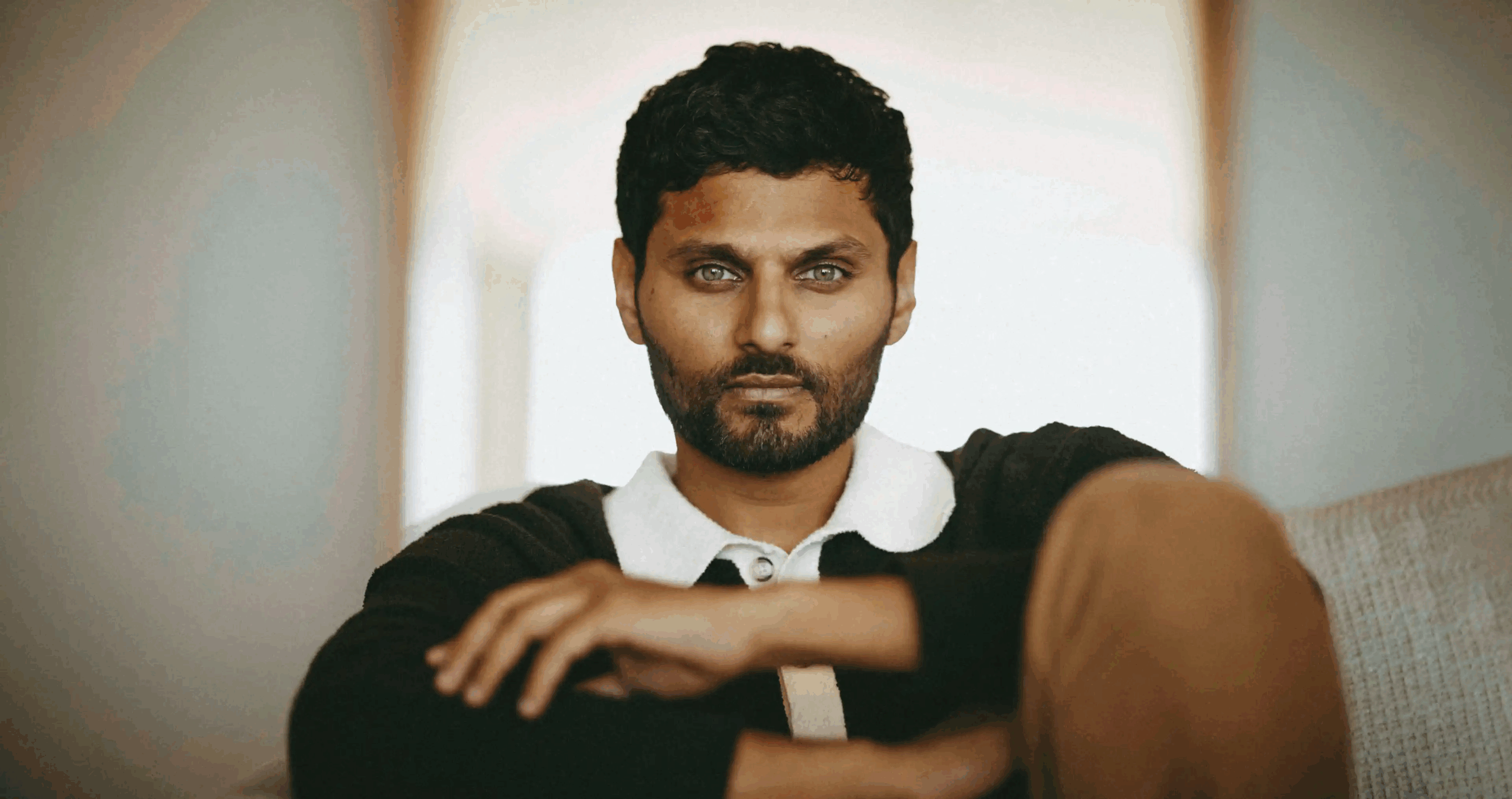
I’ll be honest with you. When I first heard about Jay Shetty’s morning routine, I rolled my eyes so hard I nearly saw my own brain. Another guru telling me to wake up at 5 AM? Another person insisting that gratitude journals would fix my life?
But here’s the thing. Shetty isn’t just some wellness influencer who stumbled into success. He spent three years as a Vedic monk, living in ashrams across India and London, studying ancient wisdom before bringing it back to regular people like us. And when millions of people swear by someone’s method, well, maybe there’s something worth examining.
His approach is called the T.I.M.E. method. It stands for Thankfulness, Insight, Meditation, and Exercise. Each morning, Shetty dedicates about an hour to these four practices, and he claims this single hour shapes his entire day. The neuroscience backs him up on this, which surprised me more than anything.
Let me walk you through what he actually does, why it works according to research, and how you can steal the parts that’ll work for your life.
The T.I.M.E. Method at a Glance:
- T = Thankfulness (5-10 min): Gratitude practice before getting out of bed
- I = Insight (7-10 min): Reading, listening, or learning something meaningful
- M = Meditation (15 min): Breathwork + visualization + intention-setting
- E = Exercise (20-30 min): Any movement that gets your heart pumping
Total time: 60 minutes (or start with 20 minutes doing 5 min of each)
What Makes Shetty’s Approach Different
Most morning routines feel like punishment. You’re supposed to journal for twenty minutes, meditate until your legs go numb, do a CrossFit workout, read a chapter of some dense book, and somehow make it to work on time. It’s exhausting just thinking about it.
Shetty’s method is different because each component serves a specific neurological purpose. He’s not just throwing random wellness activities at the wall. The order matters. The combination matters. And honestly? You can start with just five minutes of each part and still see results.
The T.I.M.E. framework emerged from his years studying with monks, but he’s translated it for those of us who didn’t give up our careers to live in silent contemplation. According to his book Think Like a Monk (which I highly recommend) and countless podcast interviews, this routine helped him transition from monastic life back to the chaos of modern work without losing his center.
T is for Thankfulness (And It’s Not What You Think)
Here’s where Shetty starts every single morning, before his feet even hit the floor.
Gratitude practice. I know, I know. You’ve heard this a thousand times. But stick with me because the way he does it actually rewires your brain chemistry in measurable ways.
The moment he wakes up, still in bed, Shetty thinks of three specific things he’s grateful for. Not generic stuff like “I’m grateful for my family.” More like “I’m grateful that my daughter laughed at my terrible joke yesterday” or “I’m grateful that the coffee shop guy remembered my order.” Specific, recent, detailed.
Why does this work? Your brain has what neuroscientists call a negativity bias. We evolved to scan for threats, so we naturally focus on what’s wrong, what’s missing, what might hurt us. Starting your day with gratitude literally activates different neural pathways.
Research from UCLA’s Mindfulness Awareness Research Center shows that gratitude practices light up two key brain regions:
- Ventral striatum: Your reward processing center
- Medial prefrontal cortex: Associated with social bonding and decision-making
When you practice gratitude, you’re essentially giving your brain a hit of dopamine and serotonin before you’ve even made coffee.
What the research shows:
- Lower cortisol levels after just 3 weeks of daily practice (Frontiers in Psychology study)
- 25% increase in happiness after 10 weeks (UC Berkeley research)
- Better sleep quality across participants (multiple studies)
But here’s what Shetty emphasizes that most people miss: you can’t just go through the motions. You need to actually feel the gratitude, let it wash over you for a few seconds. That emotional component is what triggers the neurochemical response.
Some mornings he writes in a gratitude journal. Other mornings he texts someone a thank you message. The format doesn’t matter as much as the genuine feeling behind it. I personally use this gratitude journal that I found on Amazon—it’s super affordable and has really helped me stay consistent with the practice.
If you’re thinking “I don’t have time for this,” consider that it takes maybe two minutes. Less time than scrolling Instagram in bed, which is probably making you feel worse anyway.
How to start (Thankfulness edition):
- Beginner: Think of 3 specific things while still in bed (2 minutes)
- Intermediate: Write 3-5 things in a gratitude journal each morning
- Advanced: Text or call someone to thank them directly
Common mistakes to avoid:
- Being too generic (“I’m grateful for my family” vs. “I’m grateful my son shared his lunch with a new kid at school”)
- Rushing through without feeling the emotion
- Doing it while scrolling your phone
I is for Insight (Feed Your Brain Something Worth Chewing On)
After gratitude, Shetty spends about seven to ten minutes engaging with something that expands his mind.
This isn’t about forcing yourself to read Dostoyevsky at 6 AM. It’s about consciously choosing what goes into your head first thing in the morning, before the world starts throwing information at you.
Shetty might read a few pages of a book. Listen to part of a podcast. Read a thoughtful article. Watch a short educational video. The key is that it’s something that makes him think, something that offers a new perspective or deepens his understanding of something important.
He’s big on not checking his phone for notifications or emails during this time. The moment you open Instagram or read work emails, you’ve handed control of your mental state to external forces. You’re reacting instead of intentionally creating your mindset.
There’s solid science behind starting your day in “input mode” rather than “output mode.” Your brain is freshest in the morning, especially right after sleep when you’ve cleared out cellular waste through the glymphatic system (basically, your brain’s overnight cleaning service). This is when you have the most cognitive capacity for learning and retention.
Research from the University of Michigan found that people who engaged in morning learning activities showed better attention and cognitive flexibility throughout the day compared to those who dove straight into reactive tasks. Another study in Nature Neuroscience demonstrated that learning new information early in the day led to better long-term memory consolidation.
Shetty often gravitates toward spiritual texts, philosophy, or personal development content. But the “Insight” component is personal to your goals. If you’re learning Spanish, this could be your Duolingo time. If you’re interested in cooking, maybe you read a cookbook or watch a chef demonstrate a technique. If you’re trying to understand investing, you could read financial analysis.
The point is active engagement with ideas, not passive scrolling. If you’re looking to protect your eyes during morning reading sessions, I use these blue light blocking glasses from Amazon—they’re super affordable and have made a huge difference in reducing eye strain.
Warren Buffett famously spends his mornings reading newspapers and reports for hours. Oprah Winfrey reads spiritual texts with her breakfast. They’re both doing versions of Shetty’s “Insight” step, feeding their brains quality input before the day demands output. Similarly, Jeff Bezos prioritizes morning reading time as part of his routine before making any major decisions.
How to start (Insight edition):
- Beginner: Listen to a 5-minute educational podcast while making coffee
- Intermediate: Read 5-10 pages of a book that challenges you
- Advanced: Combine reading with note-taking or journaling insights
Good sources for morning insight:
- Books on philosophy, psychology, or your professional field
- Educational podcasts (TED Talks, On Purpose with Jay Shetty)
- Long-form articles from quality publications
- Online courses or instructional videos
Avoid:
- Social media scrolling
- News that triggers anxiety without offering solutions
- Work emails (save these for after your routine)
M is for Meditation (Where the Real Magic Happens)
This is the centerpiece of Shetty’s routine, and honestly, the part that intimidated me most at first.
He spends about fifteen minutes in meditation each morning, often incorporating breathwork. For someone coming from a monk background, this probably feels like barely any time. For the rest of us? Fifteen minutes of sitting still feels like an eternity.
But here’s what changed my perspective: Shetty breaks it down into chunks. He usually does about seven minutes of breathwork, followed by a few minutes of gratitude meditation (deepening the thankfulness from step one), and then visualization or intention-setting for the day.
His go-to breathwork pattern is simple: breathe in for four counts, breathe out for four counts. Sometimes he extends the exhale to six or eight counts. That’s it. Nothing fancy, no complicated pranayama techniques required.
Why this matters (the science part):
Slow, rhythmic breathing activates your vagus nerve, which is like a biological off-switch for your stress response. When you breathe slowly and deeply, you stimulate the parasympathetic nervous system (your body’s “rest and digest” mode).
What happens in your brain:
- After 5 minutes: Anxiety drops, mood improves (Stanford University research)
- After 8 weeks: Your amygdala (fear center) literally shrinks (Harvard study)
- Long-term: Increased gamma waves = better problem-solving (PNAS research)
The Harvard study by Dr. Sara Lazar is particularly wild. They used brain imaging on people who completed an eight-week meditation program and found actual structural changes. The amygdala became less dense while the prefrontal cortex showed increased connectivity.
In plain English? Meditation physically changes your brain to make you less reactive and more thoughtful.
During the visualization portion, Shetty thinks about how he wants to show up that day. Not what he wants to accomplish, but who he wants to be. Maybe it’s “I want to approach every conversation with curiosity” or “I want to stay calm even when things get chaotic.”
This isn’t woo-woo nonsense. Sports psychologists have used visualization techniques with Olympic athletes for decades. When you mentally rehearse something, your brain activates similar neural pathways as if you were actually doing it. You’re essentially pre-loading the behavioral pattern you want to follow.
If fifteen minutes feels impossible, start with three. Seriously. Shetty constantly emphasizes that consistency beats duration. Three minutes every single day will change your brain more than thirty minutes once a week. This aligns with what Dr. Andrew Huberman recommends in his morning routine—short, consistent practices over sporadic intense sessions.
How to start (Meditation edition):
- Beginner: 3-5 minutes of simple breathing (4 counts in, 4 counts out)
- Intermediate: 7 minutes breathwork + 3 minutes gratitude reflection
- Advanced: 7 minutes breathwork + 3 minutes gratitude + 5 minutes visualization
Shetty’s breathwork pattern:
- Sit comfortably (chair or floor, doesn’t matter)
- Close your eyes or soften your gaze
- Breathe in through your nose for 4 counts
- Breathe out through your nose for 4-6 counts
- Repeat for 5-10 minutes
- When your mind wanders (it will), gently return to the breath
What to visualize:
- How you want to show up in challenging situations today
- The qualities you want to embody (patience, courage, curiosity)
- One specific intention for how you’ll interact with others
E is for Exercise (Move Your Body, Wake Your Mind)
The final component is physical movement, and this is where Shetty gets his blood pumping.
As a former monk, his days used to start with yoga. Now he typically hits the gym for a workout. But he’s clear that the specific type of exercise doesn’t matter nearly as much as the act of moving your body intentionally.
Could be a run. A bike ride. Weightlifting. A dance session in your living room. Even twenty minutes of vigorous yoga or a brisk walk counts.
Here’s why this step comes last in his sequence. By the time you’ve done gratitude, learning, and meditation, you’re mentally awake but physically still. Exercise bridges that gap, energizing your body to match your prepared mind.
From a neurochemistry perspective, morning exercise is like taking a cocktail of performance-enhancing drugs, except they’re all naturally produced by your body.
What your brain releases during exercise:
- Endorphins: Natural pain relievers that create euphoria
- Dopamine: Motivation and reward chemical
- Norepinephrine: Focus and alertness booster
- Endocannabinoids: Yes, your body makes its own cannabis-like compounds that reduce anxiety
What the research shows:
- 12 minutes of exercise can reduce depression symptoms (American Journal of Psychiatry)
- Regular aerobic exercise increases hippocampal volume, improving memory (University of British Columbia study)
- Morning workouts give you 4+ extra hours of productivity (Richard Branson’s claim, backed by energy research)
But there’s another benefit Shetty talks about that most people miss. Exercise is a form of positive stress. Your heart rate increases, you breathe harder, you might feel uncomfortable. But you’re choosing this discomfort, and your body adapts by becoming stronger.
Psychologist Kelly McGonigal’s research at Stanford shows that when you reframe stress as enhancing rather than debilitating, your physiological response actually changes. Your blood vessels stay relaxed instead of constricting, and your heart works more efficiently. By voluntarily stressing your body through exercise each morning, you’re essentially training yourself to handle all the involuntary stress that’ll come at you during the day.
Shetty views his morning workout as moving meditation. He’s not zoned out listening to podcasts or watching TV on the treadmill. He’s present with the physical sensations, using the time to continue processing his intentions from the meditation session.
Tim Cook, Apple’s CEO, is in the gym by 5 AM every day. Oprah does cardio and strength training each morning. Richard Branson credits his morning workouts for giving him four additional hours of productivity each day. They’re all tapping into the same principle: physical energy drives mental performance. For a more detailed breakdown of science-backed exercise timing, check out Andrew Huberman’s complete fitness protocol.
How to start (Exercise edition):
- Beginner: 10-minute brisk walk around your neighborhood
- Intermediate: 20 minutes of yoga, jogging, or bodyweight exercises
- Advanced: 30-45 minute gym session or intense home workout
Exercise options that work:
- Yoga (what Shetty did as a monk)—I use this Manduka yoga mat and absolutely love it
- Running or jogging
- Weightlifting or resistance training
- Cycling (stationary or outdoor)
- Dancing to music in your living room
- High-intensity interval training (HIIT)
- Swimming
- Even vigorous household chores count
Shetty’s approach:
- Stay present with the physical sensations
- Use it as moving meditation, not distraction time
- Focus on how your body feels, not just “getting it done”
What You Actually Need to Get Started
Required:
- ☑ Your body
- ☑ Your breath
- ☑ 20-60 minutes
- ☑ A quiet space (bedroom, living room, wherever)
Optional but helpful:
- □ Journal and pen for gratitude/insights
- □ Meditation app (Insight Timer, Headspace, Calm)
- □ Comfortable workout clothes
- □ Books or podcasts queued up
- □ Water bottle
- □ Philips Wake-Up Light to make waking up easier (this one has been a game-changer for me)
Not required:
- ✗ Expensive equipment
- ✗ Gym membership
- ✗ Perfect conditions
- ✗ Being a “morning person”
Making T.I.M.E. Work for Real Life
Okay, so that’s the full routine. Gratitude, learning, meditation, movement. One hour total, usually done before most people are even awake.
But let’s be real. You might have kids who need breakfast. You might work early shifts. You might genuinely not be a morning person, despite what productivity gurus insist.
Shetty’s philosophy is flexible. He’s said in interviews that if you can only do five minutes of each component, that’s twenty minutes total, and it’ll still make a significant difference. The research supports this. Even brief exposures to these practices create neurological changes over time.
Start with what’s easiest. If meditation feels intimidating, maybe begin with just the gratitude practice for a week. Once that’s automatic, add the insight component. Build gradually rather than trying to overhaul your entire morning in one shot.
Some people prefer different orders. Maybe you need movement first to wake yourself up, then you’re ready for meditation. That’s fine. The acronym T.I.M.E. is memorable, but it’s not sacred. Mel Robbins uses a similar approach but starts with movement to overcome what she calls “activation energy.”
The crucial part is intentionality. Shetty often quotes his mentor: “How you start your day is how you live your day.” If you start reactive, checking notifications and emails before you’ve even gotten dressed, you’re training your brain to be reactive all day. If you start intentional, choosing what gets your attention first, you’re training your brain to stay in control.
Your First Week: A Realistic Approach
If you want to try this, here’s what actually works for beginners:
Week 1: Gratitude only
- Three things, first thing in the morning
- Before you check your phone
- Write them down or think them with real attention
- That’s it
Week 2: Add Insight
- Keep the gratitude practice
- Add 5 minutes of reading or listening to something educational
- Could be a podcast while making coffee
Week 3: Add Meditation
- Keep gratitude + insight
- Add 3-5 minutes of simple breathing
- Four counts in, four counts out
- Your mind will wander (totally normal)
Week 4: Add Movement
- Now you’re doing all four components
- Even 10 minutes of exercise counts
- A quick walk, some push-ups, whatever gets your heart rate up
By the end of a month, you’ve built the full routine gradually. It doesn’t feel like a massive overhaul of your life because you’ve eased into it.
The research on habit formation from BJ Fogg at Stanford shows that small, easy wins create momentum. Start tiny, make it easy, celebrate the wins. That’s how behaviors actually stick.
What the Science Really Says
I’ve mentioned research throughout, but let me pull it together.
A meta-analysis published in Psychological Bulletin reviewed over 200 studies on morning routines and found strong correlations between structured morning practices and improved mental health outcomes, particularly lower anxiety and depression scores.
The combination of gratitude, mindfulness, and exercise specifically has been studied together. Research from the University of California, Berkeley found that people who practiced all three showed 32% greater resilience to stressors compared to control groups.
Dr. Andrew Huberman, a neuroscientist at Stanford, emphasizes morning light exposure and early-day physical activity as crucial for setting your circadian rhythm. While Shetty doesn’t specifically mention light exposure, his routine naturally gets people up and moving during morning hours, which accomplishes the same thing. For more on optimizing your morning with science-backed supplements that support mental clarity, check out Dr. Huberman’s complete supplement guide.
The values affirmation research from social psychology (studies by David Sherman and Geoffrey Cohen) shows that even brief morning reflections on core values reduce physiological stress responses and improve decision-making under pressure. Shetty’s intention-setting during meditation taps into this same mechanism.
Comparing Shetty’s Routine to Other Popular Methods
If you’re familiar with Hal Elrod’s “Miracle Morning” (the S.A.V.E.R.S. method), you’ll notice significant overlap. Elrod’s framework includes Silence, Affirmations, Visualization, Exercise, Reading, and Scribing. That’s basically Shetty’s T.I.M.E. broken into more components, with journaling added.
Robin Sharma’s “5 AM Club” follows a 20/20/20 formula: twenty minutes of exercise, twenty minutes of reflection, twenty minutes of learning. Again, we’re seeing the same core elements arranged slightly differently.
| Element | Shetty | Hal Elrod | Robin Sharma | Tim Ferriss |
|---|---|---|---|---|
| Gratitude/Reflection | ✓ | ✓ | ✓ | ✓ |
| Movement/Exercise | ✓ | ✓ | ✓ | ✓ |
| Learning/Reading | ✓ | ✓ | ✓ | ✓ |
| Meditation/Silence | ✓ | ✓ | ✓ | ✓ |
The convergence isn’t coincidental. These four elements address fundamental human needs: meaning, growth, centeredness, and vitality.
What this tells us is that successful people from completely different backgrounds and philosophies have independently converged on similar morning practices. Shetty brings his monk training perspective, Elrod brings his sales and entrepreneurship angle, Sharma brings his leadership coaching experience, yet they all ended up recommending gratitude, movement, learning, and stillness.
The universality suggests these aren’t arbitrary habits. They’re addressing fundamental human needs: the need for meaning (gratitude), growth (learning), centeredness (meditation), and vitality (movement).
The Real Transformation Happens in the Margins
Here’s what nobody tells you about morning routines. The benefit isn’t really about those sixty minutes. It’s about how those sixty minutes influence the other fifteen hours of your day.
When you start with gratitude, you’re more likely to notice positive things throughout the day. Your reticular activating system (the part of your brain that filters information) literally starts highlighting more of what you’re grateful for. It’s like when you buy a red car and suddenly see red cars everywhere. They were always there; you’re just noticing them now.
When you start with learning, your mind stays curious. You’re more likely to ask questions, consider different perspectives, see problems as puzzles to solve rather than threats to avoid.
When you start with meditation, you build a gap between stimulus and response. Someone cuts you off in traffic, and instead of immediately honking and cursing, you have a split second of awareness where you can choose your reaction. This concept mirrors Mel Robbins’ “Let Them” theory—letting go of what others do and focusing on your response.
When you start with movement, you carry that energy forward. You’re more likely to take the stairs, more likely to stay engaged in meetings, less likely to crash at 2 PM reaching for your third coffee.
Shetty talks about this as “winning the morning.” It’s not about productivity hacks or squeezing more tasks into your day. It’s about entering your day from a place of fullness rather than scarcity, intention rather than reaction.
When It Doesn’t Work (And That’s Okay)
Let me be straight with you. Some days you’ll sleep through your alarm. Some days your kid will wake up sick and need you immediately. Some days you’ll just really not feel like doing any of this.
Shetty himself has talked about this. He’s not perfect. He’s missed days.
The actual goal:
- Not perfection → general pattern over time
- Not never missing a day → returning to the practice when you do
- Not rigid schedule → flexible framework you adapt
What to do when you miss:
- Don’t “make it up” with a double session
- Don’t beat yourself up
- Just start again the next morning
What if mornings genuinely don’t work?
Some people do better with evening routines. If you’re a night owl and this morning structure feels like torture, do your T.I.M.E. routine at 9 PM instead. The principles still work regardless of when you do them.
The Bottom Line
Jay Shetty’s morning routine isn’t revolutionary because it contains brand new ideas. Humans have been practicing gratitude, seeking knowledge, meditating, and moving their bodies for thousands of years.
What makes it powerful is the combination, the intentionality, and the accessibility. He’s packaged ancient wisdom in a way that works for modern life. An hour each morning, four simple practices, measurable results.
The neuroscience backs it up. The anecdotal evidence from millions of people backs it up. And honestly? The simplicity is what makes it sustainable.
You don’t need special equipment. You don’t need to buy courses or apps (though there are tools that can help if you want them). You just need to decide that the first hour of your day belongs to you, not to your phone, not to your inbox, not to the chaos that’s inevitably coming.
Shetty often says that meditation isn’t about stopping thoughts; it’s about training attention. The same applies to this entire routine. It’s training your attention to focus on what matters before the world demands your attention for everything else.
Try it for thirty days. Not perfectly, just consistently. See if you notice differences in your stress levels, your energy, your patience with people, your clarity in decisions. See if that hour in the morning gives you back more hours in the day because you’re operating from a clearer, calmer place.
At worst, you’ll have spent a month being more grateful, learning more, staying calmer, and moving your body. That’s not a bad worst-case scenario.
Frequently Asked Questions
How long does Jay Shetty’s morning routine take?
The complete T.I.M.E. routine: 60 minutes
- Thankfulness: 10 minutes
- Insight: 10 minutes
- Meditation: 15 minutes
- Exercise: 25 minutes
Beginner version: 20 minutes
- 5 minutes per component
- Still creates neurological benefits with consistency
- Easier to maintain long-term
Can I do the T.I.M.E. steps in a different order?
Yes, absolutely. Many people prefer:
- Exercise FIRST (if they need movement to wake up)
- Meditation at NIGHT (if evenings are calmer)
- Insight during COMMUTE (audiobooks/podcasts)
The key is finding what makes you most likely to stick with it. Shetty cares more about consistency than sequence.
What if I’m not a morning person?
Shetty’s philosophy is about intentionality, not specific timing. If you naturally function better in the evening, do your T.I.M.E. routine at 9 PM instead of 6 AM. The neurological benefits of gratitude, learning, meditation, and movement don’t depend on the sun’s position.
Do I need apps or special equipment?
Nope. You can do the entire routine with zero equipment. Some people find meditation apps like Headspace or Insight Timer helpful for guided sessions, and journals can be nice for gratitude practice, but they’re not required. Your body, your breath, and your attention are all you really need.
What type of exercise does Jay Shetty do?
Shetty typically does gym workouts now, though he practiced yoga extensively during his monk years. He emphasizes that the specific exercise type matters less than moving your body intentionally. Running, yoga, weightlifting, dancing, or even a brisk 15-minute walk all work. Choose something you’ll actually do consistently.
How long before I’ll notice results?
Most people report feeling calmer and more focused within the first week, though that could be placebo effect. The neuroscience research shows measurable brain changes after about 8 weeks of consistent meditation practice. For other components like gratitude and exercise, studies show benefits emerging within 2-3 weeks of daily practice.
What if I can only do one part of T.I.M.E.?
Start there. If you can only commit to five minutes of gratitude each morning, do that consistently before adding anything else. Research shows that small, consistent habits create momentum better than ambitious plans that fall apart after three days. Build gradually.
Does it have to be exactly one hour?
Not at all. Shetty designed T.I.M.E. as a flexible framework. Some days he does longer sessions, some days shorter. The pattern matters more than the precision. Even doing 5 minutes of each component (20 minutes total) creates benefits according to the research.
Can kids do this routine?
Modified versions work well for children. Even young kids can name things they’re grateful for, listen to stories (the Insight component), do simple breathing exercises, and play actively. Shetty has mentioned adapting practices for his own daughter. Keep it playful and age-appropriate.
What should I read or listen to for the Insight portion?
Whatever genuinely interests you and makes you think. Shetty gravitates toward philosophy and spiritual texts, but you might prefer science articles, biographies, poetry, or educational podcasts. The key is active engagement with ideas, not passive entertainment. Avoid social media scrolling or news that just triggers anxiety without offering solutions.