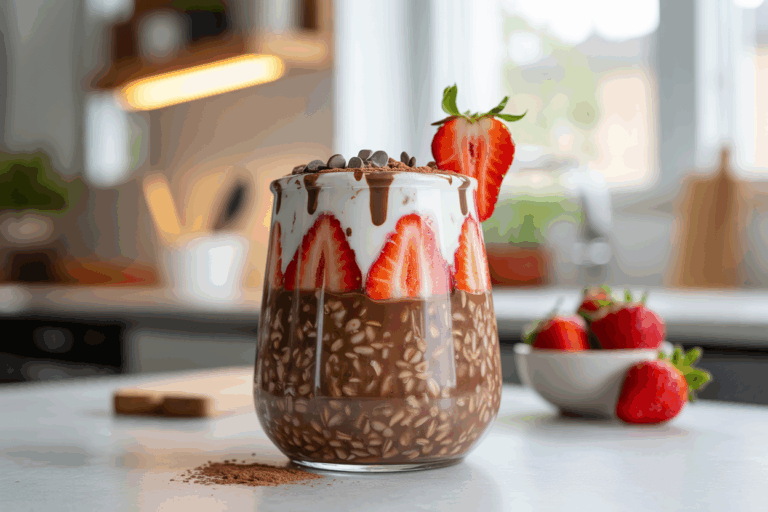
Chocolate Strawberry Protein Overnight Oats (20g Protein, No Cooking Required)

Remember when you were a kid and you’d dump Nesquik into your cereal milk, then add strawberries on top and think you were some kind of breakfast genius? Well, turns out you were onto something.

These chocolate strawberry protein overnight oats are basically that childhood breakfast fantasy all grown up. Except now it has 20+ grams of protein, no sugar crash, and you can meal prep it on Sunday while half-watching Netflix.

The best part? You literally make them before bed, and breakfast is waiting for you in the morning. It’s like having a breakfast fairy, except the fairy is just you from last night being responsible.

Why Chocolate Strawberry Overnight Oats Beat Regular Oatmeal

Look, I used to be that person standing over the stove at 6 AM, stirring oatmeal and trying not to let it bubble over while simultaneously packing lunches and finding matching socks. It was chaos.

Then my gym buddy introduced me to overnight oats and honestly? Game changer. No cooking, no watching the pot, no scrubbing burnt oatmeal off the bottom of a pan. Just grab a jar from the fridge and go.

But here’s what really sold me – these taste like dessert. Like, legitimately taste like you’re eating chocolate-covered strawberries for breakfast. My teenager actually asked if she could have “that chocolate stuff” for breakfast. When your teen voluntarily requests oatmeal? You know you’ve won.

Ingredients for Chocolate Strawberry Overnight Oats

One serving, perfect for a mason jar. Double or triple if you’re meal prepping (which you should be, trust me).

The Base:

  • ½ cup old-fashioned rolled oats (not instant – they turn to mush)
  • ½ cup milk of choice (I use unsweetened almond, but any works)
  • ¼ cup plain Greek yogurt (this is your protein powerhouse)
  • 1 tablespoon Anthony’s unsweetened cocoa powder (the good stuff, not hot chocolate mix)
  • ½ teaspoon vanilla extract
  • 1 tablespoon honey or maple syrup (optional – I usually skip it)
  • 1 teaspoon BetterBody organic chia seeds (they make everything thick and pudding-like)
  • ½ cup strawberries (frozen work perfectly – they thaw overnight)

The Protein Boost (Optional but Recommended):

Morning Toppings:

  • Fresh strawberry slices
  • Crushed pistachios or almonds
  • Dark chocolate shavings (because Monday mornings need chocolate)
  • Dollop of Greek yogurt

How to Make Chocolate Strawberry Overnight Oats

This takes literally 5 minutes. I timed it. You spend more time scrolling TikTok before bed than this takes to make.

Step 1: Mix Your Base

In a mason jar or bowl (I prefer Ball mason jars because you can see the pretty layers), combine oats, milk, Greek yogurt, cocoa powder, vanilla, sweetener if using, and chia seeds. Stir it all up until the cocoa powder isn’t leaving weird clumps. It’ll look too liquidy. That’s normal. The oats are thirsty little things.

If you’re using protein powder, add it now with an extra splash of milk. Mix really well – protein powder likes to clump if you don’t show it who’s boss.

Step 2: Add the Strawberries

Gently fold in most of your strawberries. Save a few for the top if you’re feeling fancy. If using frozen berries (which I always do because who has fresh strawberries at 10 PM on a Sunday?), just toss them in frozen. They’ll thaw overnight and release these amazing strawberry juices that swirl through the chocolate. It’s magic.

Pro tip: You can also layer this – oat mixture, strawberries, more oat mixture. Makes it look all Pinterest-worthy.

Step 3: The Overnight Part

Slap a lid on that jar and stick it in the fridge. That’s it. You’re done. Go to bed knowing breakfast is handled.

The magic happens while you sleep. The oats soften up, the chia seeds turn everything thick and pudding-like, and all those flavors get cozy together. It needs at least 6 hours, but honestly, these are even better after a full 8-10 hours.

Step 4: Morning Glory

In the morning, grab your jar and give it a stir. It’ll be thick, creamy, and smell like chocolate heaven. If it’s too thick (sometimes chia seeds go overboard), add a splash of milk. Too thin? Add a spoonful of Greek yogurt.

Top with whatever makes you happy. Fresh strawberry slices, some crushed nuts for crunch, maybe a drizzle of almond butter if you’re feeling extra. Or just eat it straight from the jar in your car. No judgment here.

Storage and Meal Prep Tips

These keep for up to 4 days in the fridge, which makes them perfect for meal prep. Every Sunday night, I make four jars – Monday through Thursday breakfast, done.

By Friday, they can get a little too soft for my taste, so I usually make something else. But four days of grab-and-go breakfast? I’ll take it.

You can eat them cold (surprisingly refreshing, especially in summer) or warm them up for about a minute in the microwave if you prefer hot oatmeal. Just remove the lid first. Learned that one the hard way.

Nutrition Facts That’ll Make You Happy

Per serving (with protein powder):

  • Calories: 320-350
  • Protein: 22-25g (without protein powder: 12g)
  • Fiber: 10g (hello, happy digestion)
  • Sugar: 12g (all from fruit and a touch of honey)

Compare that to a coffee shop muffin with 400+ calories, 5g protein, and 30g sugar. Yeah, these win.

The combination of protein, fiber, and complex carbs means you’ll actually stay full until lunch. No 10 AM snack attack, no energy crash, just steady energy all morning.

Recipe Variations to Keep Things Interesting

Once you nail the basic recipe, you can play around with flavors. Here’s what I rotate through:

Chocolate Peanut Butter: Skip the strawberries, add a tablespoon of peanut butter and top with banana slices. Tastes like a Reese’s cup.

Double Chocolate: Add chocolate chips to the mix and use chocolate protein powder. For when you really need chocolate in your life.

Chocolate Raspberry: Swap strawberries for raspberries. The tartness with the chocolate is incredible.

Mocha: Add a teaspoon of instant coffee to the mix. Your breakfast and caffeine in one jar.

Troubleshooting Common Issues

Because sometimes overnight oats don’t cooperate.

Too watery: You probably used instant oats (they don’t absorb liquid the same way) or too much milk. Next time, use less liquid or add an extra tablespoon of chia seeds.

Too thick/dry: The chia seeds got ambitious. Just stir in some milk until you get the consistency you want.

Protein powder tastes chalky: Mix it with the milk first to make a slurry, then add to the oats. Also, not all protein powders are created equal – find one you actually like the taste of.

Not sweet enough: Add more honey/maple syrup, or try vanilla protein powder instead of unflavored. A mashed banana also adds natural sweetness.

Why This Recipe Actually Works for Busy Mornings

Here’s the thing – we all know we should eat a healthy breakfast. But between getting kids ready, walking the dog, and trying to look somewhat presentable for that 9 AM meeting, breakfast usually loses.

These overnight oats remove every single breakfast excuse. Too tired to cook? No cooking required. No time? Grab and go. Don’t like healthy food? These taste like dessert.

I’ve been making these for two years now, and they’ve literally changed my mornings. No more drive-through runs, no more sad protein bars, no more skipping breakfast and then eating everything in sight at lunch.

Just a jar of chocolate strawberry goodness that makes me feel like I have my life together. Even when I definitely don’t.

Give them a try this Sunday. Make one jar, see how it goes. I bet you anything that by next Sunday, you’ll be meal prepping four jars and wondering why you didn’t start this sooner.

Because sometimes the best breakfast is the one you made yesterday.

More High-Protein Overnight Oats Recipes

If you’re loving these chocolate strawberry overnight oats, you need to try these other overnight oats recipes that make mornings easier:

Pumpkin Cheesecake Protein Overnight Oats – Like eating pumpkin pie for breakfast, but with 25g protein. These taste so indulgent you’ll forget they’re healthy.

Brownie Batter Protein Overnight Oats – For serious chocolate lovers. These are basically brownies you can eat for breakfast without any guilt.

High-Protein Pumpkin Pie Overnight Oats – All the cozy fall spices with a massive protein boost. Perfect when you’re craving something seasonal.

Tiramisu Protein Overnight Oats – Coffee, chocolate, and that creamy tiramisu flavor. It’s like having Italian dessert for breakfast.

Each recipe follows the same simple overnight method – mix before bed, wake up to breakfast. No cooking, no morning stress, just grab and go.
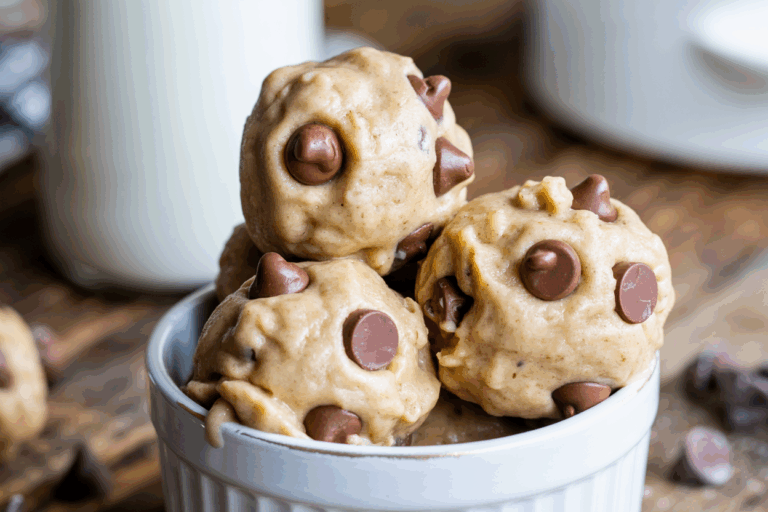
Greek Yogurt Cookie Dough Bites (No-Bake High-Protein Recipe)

Last Tuesday at 11 PM, I stood in my kitchen with a spoon in one hand and a mixing bowl in the other, doing that thing we all pretend we don’t do. You know exactly what I’m talking about. Raw cookie dough, straight from the bowl, telling myself “Just one more spoonful” while my brain whispered about salmonella and my jeans reminded me, they’re already snug.

But here’s where it gets interesting – what if I told you there’s a way to have that exact same cookie dough experience without any of the guilt, weird stomach feelings, or safety concerns? And what if it actually had enough protein to count as a legit snack?

I’m talking about Greek yogurt cookie dough bites, and honestly, they’ve ruined regular cookie dough for me. In the best possible way.

Why Greek Yogurt Cookie Dough Bites Are Actually Healthy

So my friend Sarah – she’s the one who meal preps on Sundays and actually uses her gym membership – she tried these last month. Her exact text to me was: “These are dangerous. I just ate six while watching Netflix and realized I basically had a protein shake’s worth of nutrition.”

That’s the thing about these little balls of joy. They taste like you’re cheating on your healthy eating plan, but you’re actually doing your body a favor. Each bite has about as much protein as half an egg, except it tastes like… well, cookie dough.

The secret? Greek yogurt. I know, I know – Greek yogurt in cookie dough sounds about as appealing as cauliflower pizza crust did five years ago. But stick with me here.

Ingredients for Greek Yogurt Cookie Dough Bites

Let me paint you a picture of how simple this is. Remember those no-bake cookies your mom used to make when it was too hot to turn on the oven? These are even easier.

The Main Players:

  • ½ cup plain Greek yogurt (the thick stuff – none of that watery nonsense)
  • ½ cup almond flour (or oat flour if you’re not on the almond flour train) – I use Bob’s Red Mill almond flour because it has the perfect texture for these
  • 2 tablespoons peanut butter or almond butter (whatever’s in your pantry)
  • 2 tablespoons maple syrup (honey works too, but maple syrup just hits different)
  • 1 teaspoon vanilla extract
  • Pinch of salt (don’t skip this – it’s what makes sweet things taste sweeter)
  • 3 tablespoons mini chocolate chips (because we’re not monsters)

The Maybe-Add-These-If-You’re-Feeling-Fancy:

  • A scoop of vanilla protein powder (for when you really want to flex on regular cookie dough)
  • Dash of cinnamon (makes everything taste like a hug)
  • Some coconut flakes for rolling (Instagram-worthy and delicious)

How to Make Cookie Dough Bites with Greek Yogurt

Okay, so here’s how this goes down. And when I say simple, I mean my 8-year-old niece made these last weekend with minimal supervision.

Step 1: The Mix

Grab a bowl – doesn’t even need to be a fancy one. Dump in your Greek yogurt, almond flour, nut butter, maple syrup, vanilla, and that pinch of salt. Now stir like you mean it. For about a minute, it’s going to look wrong. Like, really wrong. Then suddenly, magic happens and it transforms into this thick, doughy mixture that looks exactly like cookie dough.

The texture thing is real, by the way. First time I made these, I almost gave up after 30 seconds of stirring because it looked like a hot mess. Trust the process.

Step 2: Chocolate Chip Time

Fold in those chocolate chips with the enthusiasm of someone who just remembered chocolate exists. If you’re adding protein powder or getting wild with cinnamon, now’s your moment.

Step 3: The Freezer Trick

Here’s something I learned the hard way – pop that bowl in the freezer for 15-20 minutes. Just do it. I tried rolling these straight away once and ended up with Greek yogurt finger paint. Not cute. The freezer firms everything up just enough to make rolling a breeze.

While you’re waiting, maybe clean up a bit. Or scroll through Pinterest. I won’t judge.

Step 4: Roll Baby Roll

Take about a tablespoon of dough and roll it between your palms. You’re aiming for balls about the size of a bouncy ball. You know, those ones from the quarter machines at the grocery store? That size.

You should get about 12 balls, give or take. My husband somehow only gets 8 because his “tablespoon” is apparently more like a serving spoon. We’re working on it.

Step 5: The Finishing Touch

If you want to get fancy (and why wouldn’t you?), roll these babies in some shredded coconut, crushed nuts, or even cocoa powder. It’s like putting a bow on a present – not necessary, but it makes everything feel special.

How to Store Cookie Dough Bites

In theory, these keep in the fridge for up to 5 days in an airtight container. In practice? I’ve never had them last more than three days. They’re just too good cold – like little bites of cookie dough ice cream.

I swear by these glass meal prep containers for storing them. The airtight lids keep them fresh, and glass doesn’t hold onto flavors like plastic does. Plus you can see your pretty protein balls through the sides, which honestly makes me happy every time I open the fridge.

You can also freeze them for up to a month. Frozen ones are incredible, by the way. Like those expensive protein balls from Whole Foods, except you made them for about 40 cents each instead of $3.

Nutrition Information

Each of these little balls packs about 60-70 calories and 3-4 grams of protein. Compare that to actual cookie dough, which is basically butter and sugar with a prayer of nutrition, and you start to see why these are game-changers.

The Greek yogurt brings probiotics to the party (hello, happy gut), while the almond flour adds vitamin E and healthy fats. The nut butter? More healthy fats and protein. Even the maple syrup, in its small amount, brings some minerals along for the ride.

But honestly? The best part is how they make you feel after eating them. No sugar crash, no heavy feeling, no “why did I eat that?” regret. Just satisfied and energized.

Troubleshooting Cookie Dough Bites

Because let’s be real – sometimes they don’t.

If your dough is too wet and won’t hold together, add another tablespoon of almond flour. Still too wet? Maybe your Greek yogurt was the runny kind. Add flour until it feels right.

Too dry and crumbly? Your almond flour might be super absorbent, or maybe you got a little generous with it. Add yogurt a teaspoon at a time until it comes together.

Not sweet enough for your taste? Drizzle in a bit more maple syrup, or if you’re watching sugar, a few drops of liquid stevia works magic.

Recipe Variations

Once you nail the basic recipe, the world becomes your cookie dough playground.

My sister makes a birthday cake version with rainbow sprinkles mixed in and rolled in more sprinkles on the outside. It’s ridiculous and wonderful.

There’s a peanut butter cup version where you use all peanut butter and add mini peanut butter chips along with the chocolate. It tastes exactly like a Reese’s, except you can eat six without hating yourself.

Around fall, I make a snickerdoodle version – skip the chocolate chips, add cinnamon to the dough, roll in cinnamon sugar. It’s like September in a bite.

Final Thoughts

Making these at home isn’t just about saving money (though you’re saving a ton compared to those $3-per-ball things at health food stores). It’s about that little moment of pride when you realize you just made something delicious and nutritious with your own hands.

It’s about having a healthy snack ready when that 3 PM slump hits, or when the kids come home asking for “something sweet,” or when you just need a little treat that won’t derail your whole day.

These Greek yogurt cookie dough bites aren’t going to change your life. But they might just change your snack game. And sometimes, that’s exactly the kind of small victory we need.

Try them this weekend. Make them with your kids, or while dancing alone in your kitchen, or during that Sunday meal prep you keep saying you’re going to start. Once you realize how easy and delicious these are, you’ll wonder why you ever stood in your kitchen at 11 PM eating regular cookie dough.

Though between you and me? Sometimes I still do. Old habits, you know? But at least now I have a better option sitting in my fridge, ready whenever that cookie dough craving strikes.

More Protein Ball Recipes You’ll Love

If you’re obsessed with these Greek yogurt cookie dough bites (and honestly, who wouldn’t be?), I’ve got a whole collection of protein ball recipes that’ll keep your snack game strong:

Cottage Cheese Brownie Batter Protein Balls – These taste like brownies but pack even more protein thanks to cottage cheese. I know, cottage cheese in a dessert sounds weird, but trust me on this one.

Birthday Cake Batter Protein Balls – Basically a party in your mouth. These have sprinkles and everything. My kids request these for their actual birthdays now.

Chai Spiced Protein Energy Balls – When you want something a little different. All those warming spices make these perfect for fall, or really anytime you need a cozy snack.

Each recipe takes the same no-bake approach – because who has time to turn on the oven for a snack? Mix, roll, eat. That’s the kind of recipe I can get behind.

5 Signs Your NAD+ Levels Are Low (And How to Boost Them Naturally)

0

NAD+ levels drop by 50% by age 40, and most people have no idea it’s happening. This cellular coenzyme powers every energy-producing reaction in your body, from converting breakfast into fuel to repairing DNA damage. Yet it silently declines with each passing decade, taking your vitality with it.

The symptoms start subtly. Maybe you need that second cup of coffee to get going. Perhaps your workouts leave you sore for days instead of hours. Your focus isn’t quite as sharp, and that 3 PM energy crash hits harder than it used to. These aren’t just signs of “getting older” – they’re red flags that your NAD+ is running dangerously low.

Here’s what the latest research reveals about NAD+ deficiency, how to recognize the warning signs, and most importantly, what you can do to restore your levels.

What Is NAD+ and Why Your Levels Drop With Age

Your body runs on NAD+. Not metaphorically. Literally. Every single cell needs this molecule to convert breakfast into actual energy, and without it, you’re basically running your iPhone on 2% battery while trying to stream Netflix.

Research from Cell journal shows we lose about half our NAD+ by age 40. Half. Imagine your salary getting cut in half but your bills staying the same. That’s what your cells are dealing with.

The weird part? Most doctors don’t test for it. Insurance doesn’t cover it. And until recently, nobody really knew what to do about it anyway.

But the symptoms… oh, the symptoms are everywhere.

5 Clear Signs Your NAD+ Levels Are Low

Sign #1: Chronic Fatigue That Won’t Go Away

You know that feeling when you wake up tired? Like someone forgot to plug you in overnight? That’s sign number one that your NAD+ levels are low.

Your mitochondria, those tiny power plants in your cells, need NAD+ to function. When NAD+ drops, your mitochondrial complex I activity tanks by 40%. In human terms? You’re trying to run a marathon on a tricycle.

My friend described it perfectly: “It’s not sleepy-tired. It’s cellular-tired. Like my atoms are exhausted.”

A 2019 Nature Communications trial showed people with 30% lower NAD+ had 25% less grip strength. They walked slower. They just… couldn’t.

Sign #2: Brain Fog and Memory Problems

Remember trying to think through a bad hangover? That mental molasses feeling? Low NAD+ levels create something similar, minus the questionable texts to your ex.

Your brain is a glutton for NAD+. It uses 20% of your body’s supply despite being just 2% of your weight. Nature Neuroscience research discovered NAD+ maintains neuronal calcium balance. Without it, your neurons basically start misfiring like a badly-tuned engine.

The numbers are sobering: processing speed drops 15-20%. Working memory shrinks by 2-3 digits. You know that thing where you walk into a room and forget why? That’s a sign your NAD+ levels are low at a cellular level.

People with low NAD+ showed 8% smaller hippocampi in brain scans. That’s your memory center literally shrinking.

Sign #3: Sleep Problems and Insomnia

Here’s something they don’t tell you about aging: it’s not that you need less sleep. It’s that your body forgets how to sleep properly when NAD+ levels are low.

NAD+ controls your circadian rhythm through something called the CLOCK:BMAL1 complex. (Yes, your body literally has a gene called CLOCK. Scientists aren’t always creative with names.) NAD+ levels swing by 50% throughout the day, orchestrating when you feel alert or sleepy.

When NAD+ drops, this whole system goes haywire. Cell Metabolism data shows NAD+-deficient people wake up 23% more at night. Their deep sleep, the really restorative stuff, drops by 35%.

You’re not imagining it. You really are sleeping worse than you did at 25.

Sign #4: Mood Changes and Depression

This one’s sneaky because we blame everything else first. Stress. Work. That neighbor who mows at 7 AM on Saturdays.

But low NAD+ levels directly affect neurotransmitter production through the kynurenine pathway. (Stay with me here, this matters.) When NAD+ drops, your body literally can’t make enough serotonin. Research found a 30-40% reduction in serotonin synthesis when NAD+ is low.

The kicker? Biological Psychiatry’s longitudinal study tracked people for five years. Those with bottom-quartile NAD+ levels were nearly three times more likely to develop major depression.

It’s not just in your head. Well, technically it is, but at a molecular level.

Sign #5: Weak Immune System and Slow Recovery

Remember being 20 and bouncing back from anything? A cold lasted maybe two days. Hangovers were gone by noon. Now? Different story. This is another sign your NAD+ levels are low.

NAD+ fuels DNA repair through enzymes called PARPs. When something damages your DNA (which happens thousands of times daily) PARPs rush in like a cellular repair crew. But they need NAD+ to work. PARP activity can consume 90% of your cellular NAD+ during stress.

Without enough NAD+, damage accumulates. Low NAD+ means 60% slower wound healing. You’re literally 2.2 times more likely to get sick.

My marathon friend? He’d been getting every bug his kids brought home from school. Thought it was just parent life. Nope. It was cellular depletion.

How to Boost NAD+ Levels Naturally: Evidence-Based Methods

Alright, enough doom and gloom. Here’s what actually works to boost NAD+ levels. If you’re following Dr. David Sinclair’s longevity protocol, you already know NAD+ is the foundation of anti-aging science.

Boost NAD+ Through Diet and Nutrition

You can get NAD+ precursors from food, just not enough to fix a real deficiency. Still worth doing to naturally boost NAD+ levels:

Wild salmon packs 18.8mg niacin per 100g. Grass-fed liver (if you can stomach it) has 16.5mg. Portobello mushrooms deliver 7.6mg. Studies showed 35mg daily niacin increased NAD+ by 30% over two months.

Turkey’s interesting: 390mg tryptophan per 100g, which your body converts to NAD+ through the de novo pathway. Spirulina has even more at 929mg, though good luck eating that much pond scum.

Exercise to Increase NAD+ Levels

Not all exercise boosts NAD+ equally. Cell Metabolism studies nailed down the specifics on how to boost NAD+ levels through movement:

HIIT works best. Four rounds of 4-minute intervals at 85-95% max heart rate increased muscle NAD+ by 127% after six weeks. That’s not a typo. Over double.

Zone 2 cardio (that conversational pace where you can still talk but would rather not) increased mitochondrial NAD+ by 38% after three months. Less dramatic but more sustainable for most people looking to boost NAD+ levels naturally.

My friend started with just walking. Twenty minutes daily. Even that helped boost his NAD+ levels.

Sleep Optimization for Higher NAD+ Levels

Research quantified what happens: less than 6 hours sleep drops NAD+ by 23% within a week. One week.

Seven to nine hours maintains baseline NAD+ levels. Deep sleep specifically correlates with NAD+ synthesis. The correlation is strong enough that sleep quality alone can predict NAD+ status in many cases.

Lifestyle Changes That Boost NAD+ Levels

Saunas. I know, I know, sounds like wellness nonsense. But Finnish researchers in JAMA found 4-7 weekly sauna sessions (20 minutes at 80°C) increased NAD+ by 40%.

Cold exposure works too to boost NAD+ levels. Eleven minutes weekly in 14°C water increased NAD+ by 35% through brown fat activation.

You don’t need a fancy cold plunge. Cold showers work. Start with 30 seconds.

NAD+ Supplements: What Actually Works

Fine, let’s talk supplements to boost NAD+ levels. This is where things get really interesting, and where my friend saw the biggest changes. I’ve done a complete review of Renue by Science’s NMN if you want the deep dive, but here’s what you need to know.

NMN (Nicotinamide Mononucleotide): The game-changer for my marathon buddy. Studies showed 250-500mg daily increased muscle NAD+ by 40%. But here’s what made the real difference: he switched to Renue by Science’s Pure NMN Powder.

Why powder over capsules? Bioavailability. When you take it sublingually (under the tongue), it bypasses the digestive system and hits your bloodstream directly. Plus, at 100 grams, you’re getting a 3-4 month supply for less than most brands charge for a single month. The purity testing on every batch sealed the deal for him. No fillers, no BS, just pure NMN that actually works.

Quick tip: Mix a quarter teaspoon (about 500mg) in water first thing in the morning. Hold it under your tongue for 30 seconds before swallowing. Some people split the dose morning and evening, but my friend got better results taking it all at once before breakfast.

Ready to feel 25 again? Get Renue by Science’s Pure NMN Powder and use code BRAINFLOW for 10% off your order. My friend wishes he’d started this years ago.

NR (Nicotinamide Riboside): The other heavy hitter. Clinical trials used 1000mg daily and saw 60% NAD+ increase in eight weeks. But not all NR is created equal. Renue by Science’s Lipo NR capsules use liposomal technology, which means the NR is wrapped in the same material as your cell membranes.

Translation? Your body actually absorbs it instead of destroying it in stomach acid. Regular NR has maybe 30% bioavailability. Liposomal? We’re talking 90%+. You’re literally getting three times more bang for your buck.

My friend alternates between NMN and NR every few months. Keeps the pathways fresh, he says. The science supports this cycling approach too. For a complete protocol, check out my review of Renue’s Total NAD+ Restoration Protocol.

Stop wasting money on NR that doesn’t absorb. Grab Renue by Science’s Lipo NR and use code BRAINFLOW to save 10% instantly.

Here’s what nobody mentions about how to boost NAD+ levels with supplements: you NEED methylation support. NAD+ synthesis depletes methyl groups faster than a teenager depletes your refrigerator. Without proper methylation support, you’re essentially creating a traffic jam in your cells.

Enter Renue by Science’s TMG. This isn’t just any TMG. Each capsule packs 500mg of pure trimethylglycine, and they’ve added the methylated forms of B12 and folate that your body can actually use.

Most people take one capsule for every 250mg of NMN or NR. So if you’re on 500mg NMN daily, pop two TMG capsules. Simple math, massive difference. My friend noticed the difference within days. Without TMG, he felt wired but tired. With it? Smooth, sustained energy all day.

Don’t sabotage your NAD+ protocol. Add Renue by Science’s TMG and save 10% with code BRAINFLOW. Your methylation pathways will thank you.

Who Should Be Careful When Boosting NAD+ Levels

Cancer patients should avoid NAD+ boosters as they might fuel tumor growth. Anyone with MTHFR mutations needs methylation support first (another reason that TMG is crucial). If you’re on SSRIs, the kynurenine pathway interaction could be problematic when trying to boost NAD+ levels.

Side effects are mild. About 8% get nausea, 5% flushing, 12% feel paradoxically tired the first few days. Usually at doses over 1000mg. Start low, go slow.

Testing and Monitoring Your NAD+ Levels

Monthly cost runs $50-150 for supplements to boost NAD+ levels. Economic analysis calculated maintaining youthful NAD+ could save $3,200 annually in healthcare costs.

Testing NAD+ levels costs $200-500 depending on method. Most people don’t test; they just track symptoms. If you’re dropping $100+ monthly on supplements, spending $300 once to confirm you actually need them seems reasonable.

The Bottom Line on Low NAD+ Levels

Six months later, my friend’s back to running. Not marathons yet, but solid 10Ks. The brain fog lifted first, within three weeks of starting NMN to boost his NAD+ levels. Energy came back gradually. Sleep improved around month two.

Was it just the supplements? Probably not. He changed everything: diet, exercise, stress management. But addressing his low NAD+ levels seemed to be the missing link that made everything else work.

The thing is, we’re all losing NAD+ right now. This second. It’s not a maybe, it’s biology. The question isn’t whether you’ll need to boost NAD+ levels, but when.

My friend wishes he’d known the signs of low NAD+ levels at 35 instead of discovering them at 42. The exhaustion he blamed on kids and work? The brain fog he attributed to stress? The sleep issues he thought were just “getting older”? All signs his NAD+ levels were low.

You don’t have to accept feeling like garbage as your new normal. Your cells are literally screaming for help. Maybe it’s time to learn how to boost NAD+ levels and actually listen.

Ready to reclaim your energy? Start with Renue by Science’s Pure NMN Powder, add their Lipo NR for maximum absorption, and don’t forget the TMG to keep everything running smoothly. Use code BRAINFLOW for 10% off everything. Your future self will thank you.

7 Anti-Aging Secrets Every Woman Over 30 Should Know

0

Last week, I ran into my college roommate at Trader Joe’s. Haven’t seen her in fifteen years. She grabbed my arm, leaned in close, and whispered, “Okay, what are you doing? You look exactly the same.”

I laughed because honestly? I’m 43 and definitely don’t look the same. But I do know what she meant. While we’ve both earned our laugh lines (thank you, motherhood), my skin hasn’t taken the beating I expected after four decades on this planet.

The truth is, I learned most of what I know about aging well through expensive mistakes. Like that $400 snail mucin serum that did absolutely nothing except make my husband question my sanity. Or the year I thought tanning beds were somehow “safer” than the sun. (Spoiler: they’re not. They’re actually worse.)

But between the disasters and the desperate 2 AM Google searches, I figured out what actually works. Not the Instagram-filter version of anti-aging, but the real stuff that makes you feel good when you catch your reflection in harsh department store lighting.

That Time I Learned Sunscreen Was Actually Magic

I used to think sunscreen was just for the beach. This is embarrassing to admit now, but in my twenties, I genuinely believed that if I wasn’t actively trying to tan, I didn’t need SPF.

Then I saw this photo.

Australian researchers photographed 900 people’s faces, tracked them for four years, and compared daily sunscreen users to occasional users. The daily users’ skin aged 24% less. Twenty-four percent! That’s basically hitting pause on aging for five years out of every four.

Here’s what changed my whole routine: realizing that 80% of what we call “aging” is actually just sun damage. Those brown spots my mom calls age spots? Sun damage. The leathery texture on my chest from years of tank tops? Sun damage. Even some of those deep wrinkles around my eyes – yep, sun damage.

Now I’m religious about it. Every single morning, even in January, even when I’m working from home. About a quarter teaspoon just for my face (yes, I measured once because I’m that person). And I don’t forget my neck and hands anymore, because nothing ages you faster than young-looking face attached to crepey neck and spotted hands.

My holy grail products? EltaMD UV Clear for everyday – it never pills under makeup and doesn’t sting my eyes. When I need something more heavy-duty, La Roche-Posay Anthelios is my ride-or-die.

Quick story: My dermatologist once told me that if she could only recommend one anti-aging product for the rest of her career, it would be sunscreen. Not retinol, not vitamin C, not some $500 cream. Just regular, boring sunscreen. That stuck with me.

My Skincare Routine (After Years of Getting It Wrong)

You know what nobody tells you? Your thirties and forties are when all your skincare sins come home to roost.

I spent my twenties washing my face with whatever was on sale and calling it good. Sometimes I’d sleep in my makeup. (I know, I know.) My idea of moisturizer was whatever sample came free with my Clinique purchase.

Then around 35, it was like my face just… gave up. Suddenly I had dark spots, fine lines that didn’t disappear when I stopped squinting, and this weird dullness that no amount of highlighter could fix.

What Actually Works (Morning Edition)

Here’s my current morning situation, refined through roughly a thousand trial-and-error experiments:

First, I barely wash my face. Just water if my skin’s dry, maybe a gentle cleanser if I feel grimy. This was hard to accept because we’re all programmed to scrub ourselves clean, but morning skin doesn’t need aggressive cleansing.

Then comes the vitamin C serum. Studies show vitamin C can boost collagen production eight-fold. Eight! I use La Roche-Posay’s version because it has salicylic acid too, which helps with my occasional hormonal breakouts. (Yes, you can still get acne in your forties. Nature has a twisted sense of humor.)

Next, peptides. If you haven’t jumped on the peptide train yet, what are you waiting for? These little amino acid chains basically text your skin cells saying “make more collagen, please.” The Ordinary’s “Buffet” with Copper Peptides costs less than my monthly coffee budget but makes my skin look plumper within weeks.

Moisturizer with niacinamide comes next – this ingredient is having a moment for good reason. It does everything: brightens, strengthens your skin barrier, calms inflammation. Then sunscreen, always sunscreen.

The Night Shift (Where the Real Work Happens)

Evening is when I go harder. Double cleansing changed my life – oil cleanser first to melt off sunscreen and makeup, then a gentle water-based one. It sounds excessive until you see the gunk that comes off even when you thought your face was clean.

But here’s where I learned to be strategic. You can’t use all the active ingredients every night unless you want to look like a molting snake. So I rotate:

Monday and Thursday are retinoid nights. Tuesday and Friday, I use an AHA/BHA exfoliant. Wednesday and Saturday get peptide treatments. Sunday? My skin gets a break with just hydration.

This whole routine sounds complicated written out, but it takes maybe five minutes. Less time than I spend scrolling TikTok before bed.

The Retinoid Reality Check

Let me tell you about my first retinoid experience. I’d read all these articles calling retinoids the “gold standard” for anti-aging, so naturally I slathered on prescription-strength tretinoin every night for a week.

Bad idea.

My face basically fell off. Okay, not literally, but the peeling, the redness, the burning – I looked like I’d been skiing in a blizzard without goggles. For a month.

Here’s what I wish someone had explained: retinoids are incredible, but you have to respect them. They’re the only thing proven to actually reverse photoaging, not just prevent it. But they’re also demanding little divas that require a proper introduction to your skin.

Start slow. Like, slower than you think. The Ordinary’s Retinol 0.5% is perfect for beginners – strong enough to work, gentle enough not to destroy your face. Use it twice a week for a month, then three times, then work your way up.

The sandwich method saved my skin: moisturizer first, wait ten minutes, apply retinoid, wait again, more moisturizer. Yes, it’s high-maintenance, but so is recovering from a chemical burn on your face.

For those ready to level up, RoC Retinol Correxion Deep Wrinkle Serum is the sweet spot between gentle and effective. Clinical studies show visible results in 12 weeks, and unlike prescription versions, you won’t need to hide indoors while your skin adjusts.

Food (Or: How I Learned to Stop Worrying and Love Salmon)

Remember when we all thought fat-free everything was the answer? God, the things we did to ourselves in the name of health.

These days, my approach to eating for my skin is way simpler: eat real food, lots of plants, and enough protein to keep everything from sagging. Revolutionary, right?

But seriously, once I started paying attention, I noticed direct correlations. That week I lived on conference room pizza? My skin looked gray. The month I did that green smoothie challenge? People kept asking if I’d had work done.

Your daily hits should include at least a cup of berries (those anthocyanins protect collagen like tiny bodyguards), two cups of leafy greens for vitamin K (goodbye, dark circles), and fatty fish twice a week. I know, I know – not everyone loves salmon. But your skin cells literally use those omega-3s to build their protective barriers.

The Supplement Situation

Research on collagen supplements finally proved what beauty editors have been saying forever: they actually work. But you need the right dose (2.5-10g daily) and quality matters. Vital Proteins Collagen Peptides dissolves invisibly in coffee – I’ve been sneaking it into my husband’s mug for two years and he has no idea why his joints stopped creaking.

The new kid on the block is NMN, which sounds like a text abbreviation but actually boosts NAD+ levels that tank as we age. Renue by Science’s Lipo NMN uses liposomal delivery, which means it actually gets absorbed instead of just making expensive pee. Use code BRAINFLOW for 10% off. (Want the full scoop? Check out my complete review here.)

Don’t forget the basics either. NOW Vitamin D3 because most of us are deficient, and Nordic Naturals Ultimate Omega if you can’t stomach fish twice a week.

For more options, I’ve compiled guides on the best anti-aging supplements specifically for women and what longevity experts like Dr. Sinclair actually take.

Exercise (But Not the Way You Think)

Can we talk about how toxic fitness culture is for women over 35? Everything’s about “getting your body back” or “fighting aging.” Like our bodies are broken things that need fixing instead of incredible machines that have carried us through decades of life.

Here’s what changed everything for me: discovering that exercise literally makes your telomeres longer. Those are the little caps on your DNA that shorten as you age. Regular exercisers have telomeres equivalent to people nine years younger. Nine years!

But it’s not about crushing yourself at CrossFit. The sweet spot is surprisingly moderate: about 150 minutes of cardio weekly (that’s just over 20 minutes daily), plus two strength training sessions. Walking counts. Dancing in your kitchen counts. Chasing your kids around the playground definitely counts.

The game-changer for me was strength training. We lose 3-8% of our muscle mass every decade after 30. But lifting weights twice a week can completely reverse that. Plus, muscle burns calories even when you’re sleeping, which is basically the dream.

About That Face Yoga Thing…

I was skeptical. Really skeptical. But then Northwestern University did an actual study where women did facial exercises for 30 minutes daily. After 20 weeks, they looked three years younger.

So now I do this ridiculous cheek-lifting exercise while I’m stuck in traffic. I push my tongue against the roof of my mouth to firm my neck while answering emails. My kids think I’m insane, but my jowls are defying gravity, so who’s laughing now?

Sleep (The One Thing I Can’t Hack My Way Around)

You want to know the cruelest joke about aging? The worse you sleep, the older you look, but the older you get, the harder it becomes to sleep well. Thanks, universe.

Between 11 PM and 4 AM, your skin goes into overdrive: producing collagen, repairing sun damage, cranking out new cells three times faster than during the day. Miss this window regularly, and you’re basically aging in fast-forward.

I learned this the hard way during my “I’ll sleep when I’m dead” thirties. Turns out, you’ll also look half-dead if you don’t sleep. Those under-eye bags became permanent residents. My skin got this grayish cast that no amount of bronzer could fix.

Now I treat sleep like a part-time job. Bedroom at 65-68°F (your body temperature needs to drop for quality sleep). Blackout curtains that make the room cave-dark. Same bedtime every night, even weekends, even when Netflix drops a new season of something addictive.

The game-changer was following what I call the 3-2-1 rule: three hours before bed, no more food. Two hours before, no more work. One hour before, no more screens. Sounds strict, but my skin looks five years younger and I actually dream again.

Stress (The Silent Ager Nobody Talks About)

Chronic stress can age you ten years at the cellular level. Ten years! That deadline, that difficult relative, that endless mental load of managing everyone’s everything – it’s literally wearing your face.

But here’s where traditional advice fails us. “Just meditate!” they say. “Practice self-care!” As if we can namaste our way out of real-life stress while juggling work, family, and the approximately 47 other things on our daily list.

What actually works? Micro-doses of calm throughout the day. Five minutes of deep breathing while your coffee brews. A walk around the block between Zoom calls. And this sounds weird, but I keep a playlist of videos that make me laugh-cry, and I watch one every day. Laughter actually reduces inflammatory markers. Your crow’s feet might get deeper, but the rest of your face will thank you.

The secret weapon nobody mentions? Saying no. No to the PTA position you don’t want. No to the friend who only calls to complain. No to perfectionism that nobody else even notices. Every “no” is a tiny act of rebellion against the stress that ages us.

Here’s What I Know Now

After all these years, all these products, all these experiments on my own face, you know what the real secret is?

Consistency beats everything else.

The friend who’s used the same basic routine for 20 years looks better than the one who tries every new miracle cure. The woman who walks daily outshines the one who does extreme workouts sporadically. Small, boring, daily habits compound into extraordinary results.

Start with sunscreen. Just sunscreen. Do that for a month until it’s automatic. Then add one thing. Then another. In a year, you’ll have transformed your skin without overwhelming your life or your budget.

I still don’t look 25. I don’t want to. I’ve earned this face – the laugh lines from a thousand silly moments with my kids, the forehead creases from concentrating on work I love, even the tiny scar above my eyebrow from that ill-advised attempt at cutting my own bangs in 2020.

But I do look good. Good in that way where people say, “You look really happy” instead of “You look tired.” Good in that way where I can leave the house without makeup and not feel like I need to apologize for my face.

That college roommate in Trader Joe’s? She asked for my secret, and I told her the truth: there’s no secret. Just science, consistency, and the radical act of actually taking care of yourself in a world that’s constantly demanding you take care of everything else first.

Your future face is being determined by what you do today. Make it count.

10 Atomic Habits Hacks That Actually Work

0

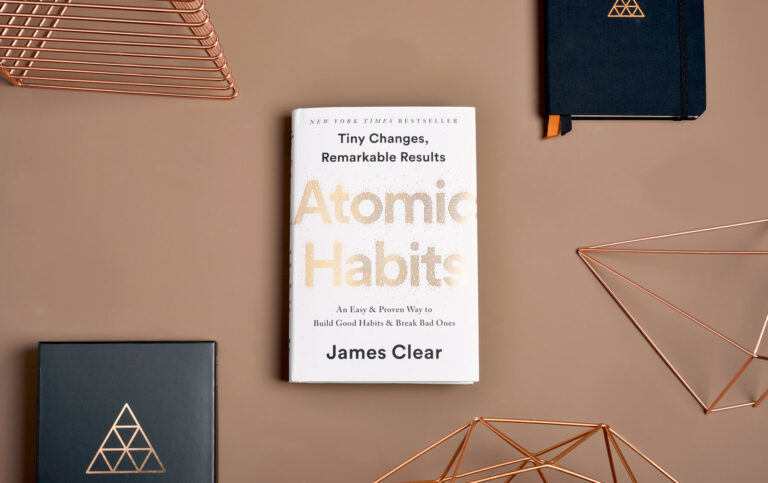
I’ve read Atomic Habits four times.

Not because I’m a slow learner, but because each reading revealed strategies I’d missed while frantically highlighting everything the first time through. After two years of testing James Clear’s methods, I can tell you exactly which hacks create real change and which ones sound good on paper but fail in practice.

These aren’t just theories. These are the battle-tested strategies that survived my chaotic schedule, my Netflix addiction, and my world-class ability to rationalize why tomorrow is always the better day to start.

1. The 1% Rule: Why Tiny Changes Create Massive Results

The Math That Changes Everything

Forget dramatic transformations. They’re unsustainable and usually end with you eating an entire pizza while binge-watching shows about people with their lives together.

Here’s what actually works: improving by just 1% daily.

James Clear’s research shows that 1% daily improvement compounds to make you 37 times better after one year. Not 37 percent. Thirty-seven TIMES.

How I Actually Apply This

Writing: Instead of “write a chapter,” my goal became “write one paragraph better than yesterday.” Some days that meant 100 words. Other days, 1,000. The pressure disappeared, and my output tripled.

Fitness: Rather than committing to hour-long workouts, I started with one extra push-up each day. Day 1: 1 push-up. Day 30: 30 push-ups. Day 100: I was doing full workouts without thinking about it.

Learning: One new Spanish word daily on Duolingo. That’s it. A year later, I can hold basic conversations.

The Hidden Power of Micro-Progress

What makes this work isn’t the math—it’s the psychology.

Small wins trigger dopamine releases that make you want to continue. You’re literally hacking your brain’s reward system to crave improvement rather than resist it.

The best part? You can’t fail at 1% improvement. It’s so small that your brain doesn’t activate its resistance mechanisms. No overwhelm. No procrastination. Just progress.

2. Systems Beat Goals Every Time

The Problem with Goals

Everyone has goals. That’s not what separates successful people from everyone else.

You know what does? Systems.

In Atomic Habits, Clear puts it bluntly: “You do not rise to the level of your goals. You fall to the level of your systems.”

Research from Dominican University found that people with written systems and processes are 42% more likely to achieve their objectives than those with goals alone.

Building Systems That Actually Work

Instead of: “Lose 20 pounds”
Create this system:

  • Meal prep every Sunday (2 hours)
  • Track calories with MyFitnessPal (5 minutes daily)
  • Walk 10,000 steps (tracked automatically)
  • Weigh yourself same time weekly

Instead of: “Read 52 books this year”
Create this system:

  • Read during morning coffee (20 minutes)
  • Audiobook during commute (30 minutes)
  • Physical book before bed (no screens)
  • Always have next book ready

The System I Use for Everything

I call it the “Three Pillars System”:

  1. Trigger: What starts the behavior?
  2. Process: What specific actions do I take?
  3. Tracking: How do I measure progress?

Every successful habit in my life follows this structure. No exceptions.

Even Jeff Bezos’ morning routine follows a similar systematic approach—he doesn’t schedule meetings before 10 AM to protect his high-quality thinking time, creating a system that prioritizes decision-making over reactive tasks.

3. Identity Change: The Ultimate Habit Hack

Become the Person, Then Do the Thing

This completely revolutionized how I think about change.

Stop saying “I want to run a marathon.” Start saying “I am a runner.”

The difference seems semantic. It’s not.

The Psychology Behind Identity-Based Habits

Research in behavioral psychology confirms that identity-behavior alignment is one of the strongest predictors of lasting change. When actions align with self-concept, they require less willpower to maintain.

How to Reshape Your Identity

Step 1: Decide who you want to be

  • Not “I want to quit smoking” but “I’m a non-smoker”
  • Not “I want to write a book” but “I’m a writer”
  • Not “I want to get fit” but “I’m an athlete”

Step 2: Prove it with small wins

  • Non-smokers don’t buy cigarettes (small win)
  • Writers write one sentence (small win)
  • Athletes take the stairs (small win)

Step 3: Let success change your story

  • Each small win is a vote for your new identity
  • Enough votes, and you believe it
  • Once you believe it, the behavior becomes automatic

The Identity Shift That Changed Everything

I stopped saying “I’m trying to eat healthy” and started saying “I don’t eat processed food.”

The mental shift was immediate. “Trying” implies struggle and potential failure. “I don’t” is a declaration of who you are. There’s no decision to make because the decision has already been made at the identity level.

4. Habit Stacking: The Effortless Way to Build Multiple Habits

The Formula That Never Fails

After [CURRENT HABIT], I will [NEW HABIT].

That’s it. That’s the whole system.

Why This Works

Your brain already has neural pathways for existing habits. Habit stacking leverages these pathways instead of trying to build new ones from scratch.

It’s like catching a ride with a friend who’s already going your direction instead of calling a separate Uber.

My Current Habit Stacks

Morning Stack:

  • Make coffee → Review daily priorities (while it brews)
  • Drink coffee → Journal three gratitudes
  • Finish coffee → 5-minute meditation

This mirrors how successful people structure their mornings. Andrew Huberman’s morning routine uses similar stacking with sunlight exposure followed by movement, while Mel Robbins’ approach chains high-fives in the mirror to other morning habits.

Work Stack:

  • Open laptop → Close all tabs from yesterday
  • Check email → Process inbox to zero
  • Finish email → Write for 25 minutes (Pomodoro)

Evening Stack:

  • Close laptop → Prep tomorrow’s clothes
  • Brush teeth → Floss (obviously)
  • Get in bed → Read instead of scrolling

Advanced Stacking Strategy

Layer habits by difficulty. Start with the easiest habit right after your strongest existing habit. This creates momentum that carries through harder behaviors.

My workout stack:

  • Put on gym clothes (easy) →
  • Drive to gym (medium) →
  • Complete workout (hard)

By the time I face the hard part, I’m already invested.

5. Environment Design: Make Success Inevitable

Your Space Controls Your Behavior

Willpower is overrated. Environment design is underrated.

Clear’s research shows that behavior change is 3x more likely when environmental cues support the desired action.

The Optimization Audit I Do Monthly

For good habits—make them obvious:

  • Water bottle on desk (drink more water)
  • Gym bag by door (exercise after work)
  • Book on nightstand (read before bed)
  • Fruit at eye level in fridge (healthy snacking)

For bad habits—make them invisible:

  • Phone in another room at night (better sleep)
  • Junk food on highest shelf (or don’t buy it)
  • TV remote in drawer (less mindless watching)
  • Social media apps deleted or buried in folders

The Nuclear Option That Works

I gave my wife the Netflix password and told her not to give it to me on weekdays.

Extreme? Maybe. Effective? Absolutely.

Sometimes you need to completely remove the option to fail.

Digital Environment Hacks for 2025

  • Use Focus modes on iPhone/Android to hide distracting apps during work
  • Install Freedom app to block websites
  • Set your phone to grayscale (makes it less addictive)
  • Use separate user accounts for work and personal on your computer

6. The Two-Minute Rule: Start So Small You Can’t Say No

The Rule That Beats Procrastination

When starting a new habit, it should take less than two minutes.

Not the whole habit. Just the starting ritual.

Examples That Actually Work

“Read more” becomes: Open book and read one page

“Exercise daily” becomes: Put on workout clothes

“Meditate” becomes: Sit on cushion and take three breaths

“Write a novel” becomes: Open document and write one sentence

“Learn guitar” becomes: Pick up guitar and play one chord

The Psychology of Starting

The hardest part of any habit is starting. Not doing. Starting.

Once you’re in motion, momentum takes over. Physics applies to behavior: an object in motion tends to stay in motion.

Studies on task initiation show that 87% of people who start a task for “just two minutes” continue beyond the minimum.

My Two-Minute Victories

Running: My rule was “put on running shoes and step outside.” I’ve never once stopped there. The average run? 3 miles.

Writing: “Open laptop and write one sentence.” This article started with that rule. You’re reading sentence #847.

Cleaning: “Set timer for 2 minutes and pick up anything in sight.” My apartment has never been cleaner.

7. Accountability Systems: External Pressure That Works

The Truth About Accountability

Self-accountability is a myth for most people.

External accountability is what actually creates change.

Three Levels of Accountability

Level 1: Public Declaration

  • Post your goal on social media
  • Tell friends and family
  • Success rate: 65% (according to the American Society of Training and Development)

Level 2: Accountability Partner

  • Regular check-ins with specific person
  • Shared goals work best
  • Success rate: 76%

Level 3: Financial Stakes

  • Put money on the line
  • Use apps like StickK or Beeminder
  • Success rate: 85%+

A meta-analysis of commitment device studies found that financial incentives combined with public accountability increase success rates by up to 3x compared to willpower alone.

My Accountability Stack

  1. Workout buddy: We text each other gym selfies or pay $20
  2. Writing group: Weekly word count submissions or you’re out
  3. Financial commitment: $50 to charity I hate if I miss meditation 3 days straight

The threat of donating to a politician I despise has perfect consistency.

Digital Age Accountability

  • Share Apple Watch activity with friends
  • Join Strava for running/cycling accountability
  • Use Habitica to gamify habits with friends
  • Create a WhatsApp group for daily habit check-ins

8. Immediate Rewards: Hack Your Brain’s Reward System

The Biological Problem

Your brain evolved to prioritize immediate rewards over future benefits.

That’s why scrolling Instagram feels better than studying, even though studying has better long-term outcomes.

Engineering Immediate Gratification

For exercise:

  • Amazing playlist you ONLY hear at gym
  • Post-workout smoothie ritual
  • Track workout in app (dopamine hit from logging)

For saving money:

  • Transfer saved amount to visible “fun fund”
  • Visual progress bar for financial goals
  • Celebrate every $100 saved

For healthy eating:

  • Food photos for Instagram (social validation)
  • Points system (10 points per healthy meal)
  • New recipe = reward experience

The Seinfeld Strategy

Jerry Seinfeld’s productivity secret: Don’t break the chain.

Get a calendar. Mark an X for each day you do your habit. After a few days, you have a chain. Your only job: don’t break it.

The visual representation becomes its own reward. Studies on visual progress monitoring show that people who track habits visually are 2x more likely to maintain them long-term. I use a habit tracking app, but a physical calendar works better for many people.

My Reward Hacks

  • Podcast episodes only while walking (makes me crave walks)
  • Favorite coffee shop after morning writing session
  • New book after finishing current one
  • Weekend movie only if weekly habits hit 80%+

9. The “Never Miss Twice” Rule

The Most Important Rule in the Book

Missing once is an accident. Missing twice is the start of a new pattern.

This single rule has saved more of my habits than any other strategy.

Why Perfection Kills Progress

Research on habit formation shows that missing a single day has virtually no impact on long-term habit formation. Missing two days? Success rate drops by 40%.

How to Implement Never Miss Twice

Step 1: Accept that you’ll miss sometimes

  • Travel happens
  • Sickness happens
  • Life happens

Step 2: Plan your comeback before you need it

  • Set reminder for next day
  • Lower the bar for comeback day
  • Pre-commit to specific time

Step 3: Track your recovery rate

  • Not your perfect days
  • Your bounce-back speed
  • This is what actually matters

My Recovery Protocols

Missed workout: Next day = 10 minute walk minimum
Missed meditation: Next day = 60 seconds minimum
Missed writing: Next day = 50 words minimum

Lower bar ensures success, which rebuilds momentum.

10. The Weekly Review: Continuous Optimization

The Habit Most People Skip

Reviewing and refining your habits is a habit itself.

Without it, you’re flying blind.

My Sunday Habit Audit

Questions I ask:

  1. Which habits felt easy this week?
  2. Which habits required maximum willpower?
  3. What environmental changes would help?
  4. Are these habits still serving my goals?
  5. What needs to be adjusted or eliminated?

The 80/20 Analysis

Every month, I identify:

  • 20% of habits creating 80% of results (double down)
  • 20% of habits causing 80% of struggle (eliminate or modify)

This keeps my habit portfolio optimized.

Red Flags to Watch For

  • Habits taking longer than planned
  • Habits you dread
  • Habits without clear benefits
  • Habits that conflict with other habits
  • Habits you only do for others

When you spot these, it’s time to pivot.

Your 30-Day Implementation Plan

Week 1: Foundation

  • Pick ONE habit to focus on
  • Apply the two-minute rule
  • Design your environment
  • Track daily (just mark yes/no)

Week 2: Stack and Strengthen

  • Add habit stacking
  • Increase duration slightly (2 minutes → 5 minutes)
  • Add one immediate reward
  • Find accountability partner

Week 3: Identity Integration

  • Start using identity language (“I am…”)
  • Share progress publicly
  • Apply never miss twice rule
  • Conduct first weekly review

Week 4: Optimization

  • Analyze what’s working
  • Adjust environment again
  • Add second habit (if first is solid)
  • Plan next month’s progression

The Bottom Line

Atomic Habits isn’t about motivation or willpower. It’s about designing systems that make success inevitable.

Start with one habit. Make it stupidly small. Stack it onto something you already do. Reward yourself immediately. Never miss twice. Review weekly.

That’s it. That’s the whole system that changed my life.

The book is worth reading (multiple times), but these 10 hacks are what you’ll actually use. Save this article. Reference it weekly. Most importantly, start today.

Not tomorrow. Not Monday. Today.

Pick one hack. Apply it to one habit. Take one action.

Your future self will thank you. Mine certainly does.