You know that moment when you can’t decide between gingerbread cookies and oatmeal cookies? This recipe solves that problem permanently.
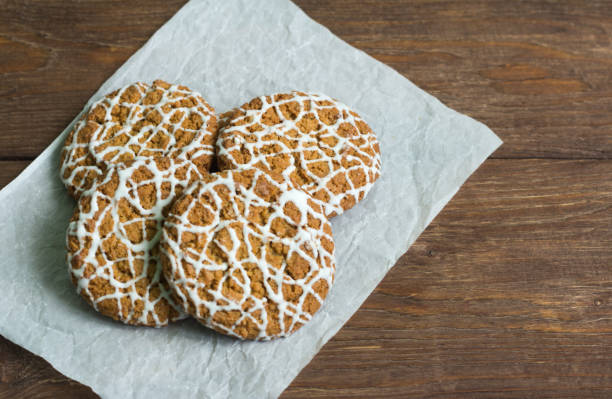
These iced gingerbread oatmeal cookies are thick, soft, and loaded with molasses and warming spices – then topped with a sweet vanilla glaze that hardens into that perfect bakery-style finish. But here’s what makes them different: zero refined flour, zero refined sugar in the cookies themselves, and somehow they still taste like you spent all afternoon in a fancy bakery. They’re made with oats, whole wheat flour, maple syrup, and molasses – ingredients that actually do something good for your body while tasting incredible.
The texture is what gets people. Chewy but not dense. Substantial but not heavy. And that gingerbread flavor? It’s all there – the deep molasses richness, the warming ginger kick, the cinnamon comfort – all finished with a sweet vanilla glaze.
If you love traditional gingerbread cookies, you should also try these healthy gingerbread cookies – they’re soft, chewy, and perfect for decorating with cookie cutters.
Why These Work Better Than Regular Gingerbread Cookies
Most gingerbread recipes rely on white flour and white sugar to carry the flavor. These don’t need that crutch.
The oats create moisture and chewiness while adding fiber and protein. Whole wheat pastry flour keeps things tender without the refined carbs. And the sweetness comes entirely from maple syrup and molasses – no granulated sugar anywhere in the cookie base.
Here’s what that means for you: no blood sugar spike and crash. No afternoon energy slump. Just steady, sustained energy from real ingredients.
Each cookie (with icing) has about 105 calories. You could eat two of these and still be well under the calorie count of a single Starbucks cookie. Not that anyone’s counting, but it’s nice to know.
The best part? They’re a one-bowl recipe. No mixer needed. You can have cookie dough ready in 20 minutes, and most of that is just stirring.
What You’ll Need
This makes about 15 cookies.
Dry Ingredients:
- 1 cup instant oats (quick-cooking oats work best here)
- ¾ cup whole wheat flour
- 1½ teaspoons ground ginger
- 1 teaspoon cinnamon
- ⅛ teaspoon nutmeg
- ⅛ teaspoon ground cloves
- 1½ teaspoons baking powder
- ¼ teaspoon salt
Wet Ingredients:
- 2 tablespoons coconut oil or butter, melted and cooled
- 1 large egg white, room temperature
- 1 teaspoon vanilla extract
- ¼ cup unsulphured molasses, room temperature
- ¼ cup pure maple syrup, room temperature
- 2-3 tablespoons milk (dairy or almond)
Vanilla Icing (Not Optional – This Is What Makes Them Special):
- ½ cup powdered sugar
- 1-2 tablespoons milk
- ¼ teaspoon vanilla extract
- Pinch of salt
A note on oats: instant oats are key. They’re finer than rolled oats, which helps these cookies hold together. If you only have rolled oats, pulse them a few times in a food processor to break them down.
The egg white keeps these lower in fat and calories while still binding everything together. If you want to use a whole egg instead, just reduce the milk by 1 tablespoon to compensate for the extra moisture from the yolk.
Let’s Make These
Step 1: Mix Your Dry Ingredients
In a mixing bowl, whisk together the oats, whole wheat flour, baking powder, ginger, cinnamon, nutmeg, cloves, and salt. Make sure everything’s evenly distributed – you want those spices in every bite.
Step 2: Combine Your Wet Ingredients
In another bowl, whisk the melted coconut oil (or butter), egg white, and vanilla until smooth. Make sure your oil isn’t too hot or it’ll cook the egg white, which is weird.
Step 3: Add the Natural Sweeteners
Stir the molasses into your wet mixture first, then add the maple syrup. Both should be at room temperature – cold molasses will cause your melted oil to solidify into clumps, and nobody wants to deal with that.
The mixture will be thick and dark. That’s exactly right.
Step 4: Bring It Together
Pour your dry ingredients into the wet ingredients. Stir gently until everything’s just combined. The dough will be moist and sticky – don’t panic. That’s how it should look.
Stop stirring as soon as you don’t see any dry streaks. Overmixing develops gluten, which makes cookies tough instead of tender.
Step 5: Chill the Dough
Cover the bowl and stick it in the fridge for 30 minutes. This step does two things: it lets the oats absorb moisture (which improves texture), and it firms up the dough so the cookies don’t spread into pancakes in the oven.
While you’re waiting, preheat your oven to 325°F and line a baking sheet with parchment paper or a silicone mat.
Step 6: Shape the Cookies
After chilling, the dough will be much easier to work with. Use a spoon or cookie scoop to drop about 15 equal portions onto your prepared baking sheet. Each should be roughly 2 tablespoons of dough.
Here’s the thing: this dough doesn’t spread much on its own. You need to flatten each mound with a spatula or the back of your spoon into a disk about ⅜-inch thick. If you skip this step, you’ll end up with tall, dome-shaped cookies that don’t bake evenly – and the icing won’t look as good.
Step 7: Bake
Slide them into the oven for 10-12 minutes. The edges will turn lightly golden and the centers might look slightly soft. That’s perfect.
Don’t overbake these. Seriously. They firm up as they cool, and if you bake them until they look “done,” they’ll be dry and crumbly once they cool down.
Step 8: Cool Completely
Let the cookies sit on the baking sheet for about 10 minutes. They’re delicate when hot, so this resting period prevents them from breaking apart when you move them.
After 10 minutes, transfer them to a wire rack to cool completely. This is critical – you must wait until they’re completely cool before icing, or the glaze will melt and slide right off.
Step 9: Make the Vanilla Icing
In a small bowl, whisk together the powdered sugar, 1 tablespoon of milk, vanilla extract, and a pinch of salt. The mixture should be thick but pourable. If it’s too thick, add another teaspoon of milk at a time until you reach the right consistency. If it’s too thin, add a bit more powdered sugar.
You want it to be thick enough that it won’t run off the cookies, but thin enough that it spreads smoothly.
Step 10: Ice the Cookies
Once the cookies are completely cool, it’s time for the best part. You have two options:
Option 1 – Drizzle: Transfer the icing to a zip-top bag, snip off a tiny corner, and drizzle in a zigzag pattern across each cookie. This gives you that classic iced oatmeal cookie look.
Option 2 – Dip: Dip the top of each cookie directly into the icing bowl, let the excess drip off, then place back on the wire rack. This gives you full coverage and looks more polished.
Let the icing set for about 30-60 minutes. It will harden to a smooth, slightly shiny finish. Don’t stack or store the cookies until the icing is completely dry to the touch.
How These Taste
The first thing you notice is the texture. They’re soft and chewy with just enough structure to hold together. Not cakey, not crunchy – right in that perfect middle zone.
Then the flavor hits. Deep molasses sweetness balanced by sharp ginger and warm cinnamon. There’s a subtle nuttiness from the oats and whole wheat flour that adds complexity without being obvious. And that vanilla icing? It adds just the right amount of sweetness and that bakery-style finish that makes these feel special.
They taste like the holidays. Like cold mornings and warm kitchens and the kind of comfort that only comes from spices and sweetness.
And because the cookies themselves are made with whole grains and natural sweeteners, you can enjoy the icing guilt-free. The small amount of powdered sugar on top is the only refined sugar in the entire recipe.
Storage and Make-Ahead Tips
Once the icing is completely set, these keep well in an airtight container for 4-5 days at room temperature. Layer them with parchment paper between layers to prevent sticking. They actually taste even better the next day once the flavors have had time to meld.
You can freeze the un-iced cookies. Stack them with parchment paper between layers, seal in a freezer bag, and they’ll keep for up to 3 months. Thaw at room temperature, then ice them fresh.
If you want to prep ahead, you can make the dough, chill it, then freeze the whole bowl covered in plastic wrap. When you’re ready to bake, thaw it in the fridge overnight, then proceed with shaping and baking.
Don’t freeze iced cookies – the icing doesn’t thaw well and can become sticky or weepy.
Why Natural Sweeteners Make a Difference
Maple syrup and molasses aren’t just sugar by another name. They come with minerals and antioxidants that refined sugar doesn’t have.
Molasses contains iron, calcium, and potassium. Maple syrup has manganese and zinc. It’s not like these cookies are a health supplement, but when you’re going to eat something sweet anyway, you might as well get a few nutrients along with it.
More importantly, natural sweeteners have more complex flavors than white sugar. Molasses brings that deep, almost smoky richness. Maple syrup adds a subtle warmth. Together, they create depth that plain sugar can’t match.
Variations You Should Try
Extra ginger: If you’re a ginger fanatic, bump it up to 2 teaspoons. Some people can’t get enough of that spicy kick.
Add chocolate drizzle: After the vanilla icing sets, melt some dark chocolate and drizzle it over the top. Ginger and dark chocolate is an underrated combination.
Make them vegan: Use a flax egg (1 tablespoon ground flaxseed mixed with 3 tablespoons water, let sit 5 minutes) instead of the egg white. For the icing, use plant-based milk. The texture will be slightly different but still good.
Protein boost: Add 2 tablespoons of vanilla protein powder to the dry ingredients. You might need an extra tablespoon of milk to compensate for the dryness.
Gluten-free: Use certified gluten-free oats and swap the whole wheat flour for a 1:1 gluten-free baking blend. The texture will be a bit more delicate, but they’ll still work.
Cream cheese icing: Mix 2 oz softened cream cheese with ¼ cup powdered sugar and a splash of milk for a tangy twist on the classic vanilla icing.
When to Make These
Obviously, they’re perfect for the holidays. The icing makes them feel special enough for cookie exchanges, holiday parties, or gift boxes.
But honestly, these are good any time you want a cookie that looks impressive without requiring hours of decorating. The simple drizzle or dip method takes minutes but looks bakery-professional.
They’re also great for meal prep. Make a batch on Sunday and you’ve got grab-and-go snacks for the entire week. The icing actually helps them stay fresh longer by sealing in moisture.
And if you’re bringing something to a cookie exchange or holiday party, these stand out. They look polished (because of the icing), they taste incredible, and when people ask for the recipe, you get to be the person who made the “healthy” cookies that nobody realized were healthy.
Speaking of holiday parties, if the season is stressing you out, check out these 10 tips to avoid holiday stress. Because baking should be fun, not another source of anxiety.
The Real Reason to Make These
There’s something satisfying about making cookies that are actually made from real ingredients. No weird additives. No ingredient list that reads like a chemistry experiment. Just oats, flour, spices, and natural sweeteners doing what they’re supposed to do.
These cookies prove you don’t need refined sugar or white flour to make something delicious. The whole grains add flavor and nutrition. The natural sweeteners bring complexity. And the result is a cookie that tastes better and makes you feel better than the conventional version ever could.
Plus, your kitchen will smell amazing while they’re baking. That’s worth the effort right there.
More Healthy Holiday Recipes
If you’re into the gingerbread flavor profile, you need to try these high-protein gingerbread pancakes – they deliver 30g of protein per stack and taste like dessert for breakfast.
For overnight meal prep, these gingerbread overnight oats are clutch. Mix them before bed, wake up to breakfast that’s ready to eat.
And if you want more fall-inspired recipes, this high-protein pumpkin French toast and healthy chocolate chip pumpkin bread are both worth making.
Nutrition Facts
Per cookie (based on 15 cookies, with icing):
- Calories: 105
- Protein: 2g
- Carbohydrates: 20g
- Fiber: 1g
- Sugar: 11g
- Fat: 2g
- Saturated Fat: 2g
- Sodium: 80mg
- Iron: 0.9mg
- Potassium: 110mg
Bottom Line
These iced gingerbread oatmeal cookies are the kind of recipe you’ll make over and over. They’re easy, they look impressive, and they deliver on flavor without requiring you to sacrifice your health goals.
The texture is perfect. The flavor is complex and satisfying. The icing makes them feel special. And the ingredient list is full of things you can actually pronounce.
Make them this week. Your kitchen will smell like the holidays, you’ll have a batch of bakery-style cookies that you can actually feel good about eating, and everyone who tries them will ask for the recipe. That’s a rare combination, and it’s worth taking advantage of.
Now grab your mixing bowl and let’s get started.