
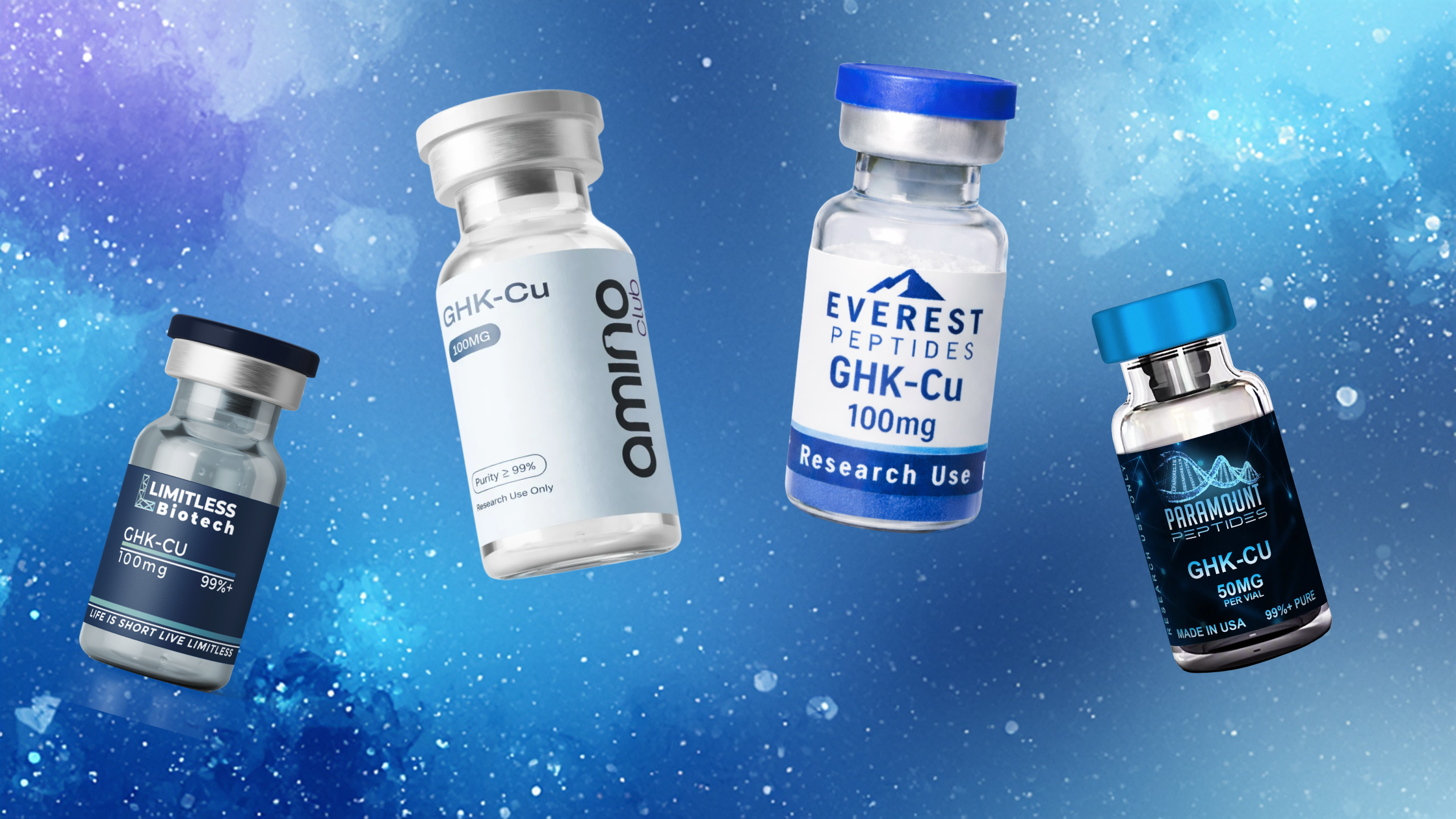

Peptides have gone fully mainstream. Reddit, biohacking podcasts, anti-aging clinics, your cousin’s group chat. And out of everything getting attention right now, GHK-Cu is one of the most popular research peptides on the market.
The interest makes sense. GHK-Cu is a copper-binding tripeptide your body already produces naturally, and researchers have studied it for its potential effects on collagen synthesis, wound repair, hair follicle signaling, skin regeneration, and anti-inflammatory pathways. It influences the expression of roughly 31% of the human genome. For three amino acids and a copper ion, that’s a wild amount of biological activity.
The problem is sourcing. The peptide market is flooded with vendors and quality varies massively. Some companies publish full third-party testing data. Others slap “99% purity” on the label and hope you don’t check. I’ve been ordering GHK-Cu for my own research for over two years and I’ve tried enough vendors to know which ones deliver and which ones cut corners.
This is the short list. Four vendors, ranked in order, with real prices, real purity data, and my actual ordering experience. All products discussed are for laboratory and research use only.
GHK-Cu comes in a few forms. Topical serums, oral capsules, and lyophilized powder for reconstitution. For research purposes, the powder is the standard. It gives you the most control over concentration, and the purity is verifiable through third-party COAs in a way that pre-mixed products usually aren’t.
After sourcing from over a dozen vendors and comparing purity data, pricing, and testing transparency within the BrainFlow team, these are the top four we keep coming back to.
Top 4 GHK-Cu Peptides
- Best Overall: Everest Peptides
- Best Runner-Up: Amino Club
- Most Established: Paramount Peptides
- Best Selection: Limitless Life Nootropics
How We Ranked These Vendors
I evaluated every vendor across six categories. No single factor decided the ranking. It’s the combination that matters.
- Purity and Testing: Third-party HPLC analysis and mass spectrometry verification. Published COAs with batch numbers, lab names, and testing dates. A 2012 paper in Oxidative Medicine and Cellular Longevity confirmed that GHK-Cu’s biological activity depends on proper copper complexation. Bad product means bad results.
- Pricing and Value: Cost per milligram, not sticker price. A $50 vial of 50mg is $1.00/mg. A $40 vial of 100mg is $0.40/mg. The math matters.
- Product Selection: Vial sizes, blends (GLOW, KLOW), and supplies like bacteriostatic water.
- Shipping and Ordering: Speed, tracking, and whether the website actually works.
- Reputation: How long they’ve been around, what reviews say, and whether they’ve had quality issues.
- Customer Support: Can you reach someone if there’s a problem?
The 4 Best GHK-Cu Peptides in 2026
1. Everest Peptides – Best Overall 🏆
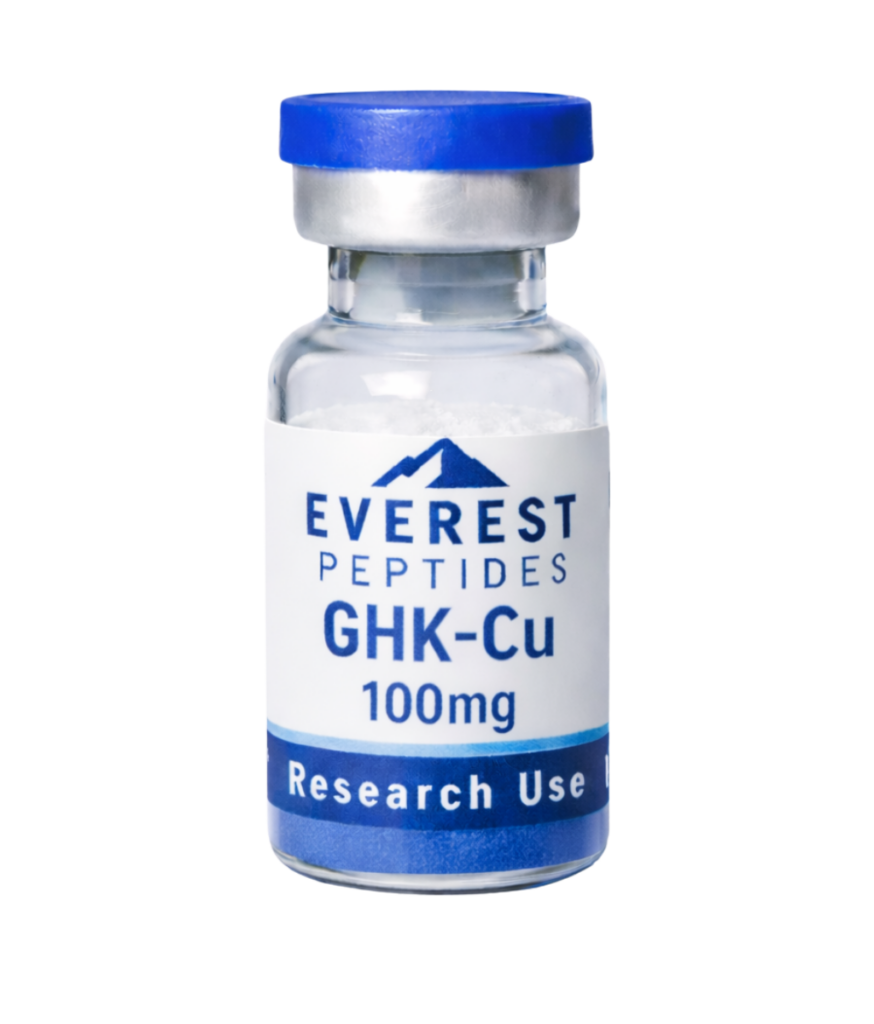
Everest had the highest purity of any vendor we tested. Their GHK-Cu came back at 99.86% through Freedom Diagnostics, and the full COA is posted right on the product page. No login required, no chasing support emails. You can verify it yourself before you buy.
Most vendors sell GHK-Cu in 50mg vials for $50 to $65. Everest sells a 100mg vial for $49.99, currently on sale for $39.99. With code BRAINFLOW for 10% off on top of that, you’re looking at roughly $0.36/mg. That’s the lowest cost per milligram I’ve found from any vendor with real, published third-party testing.
To put that in perspective: Paramount charges $1.00/mg before discounts. Limitless runs $0.90/mg. Amino Club lands around $0.58/mg at base price. Everest is in a different tier on value, and they didn’t cut corners on testing to get there.
Their site is also one of the more well-designed peptide websites I’ve come across. Clean layout, fast loading, easy to find products, and the COA database is right in the main navigation. Most peptide vendor sites look like they were built in 2011 and never updated. Everest actually feels like a real e-commerce experience. Shipping runs about 2-4 business days. Free shipping at $150. Orders ship within 24 hours with tracking. For research use only.
- GHK-Cu 100mg: $49.99 (on sale $39.99)
- Purity: 99.86% (HPLC verified by Freedom Diagnostics)
- COA: Published on product page, batch-specific
- Cost per mg (with code): ~$0.36/mg
- Shipping: Within 24 hours, free on $150+
- For laboratory and research use only
If you’re going to buy GHK-Cu from one place, this is it. I’ve sent a lot of readers to Everest and the feedback has been consistently good. One reader reported their support email replied within 10 minutes on a Sunday! Nobody’s come back telling me the product was under-dosed or the COA didn’t match. The purity number speaks for itself. 99.86% from Freedom Diagnostics, an independent American lab, with the documentation right there on the product page for anyone to verify.
The only real con is catalog size. Everest doesn’t carry hundreds of compounds like Limitless does. But for GHK-Cu specifically, they’re beating everyone else on the metrics that actually matter: purity, price, testing transparency, and shipping speed. That’s the whole list.
For research use only
🏆
GHK-Cu | Everest Peptides
100mg · 99.86% Purity · On Sale $39.99
Tested by Freedom Diagnostics · Full COA on Product Page · Ships in 24hrs
The vendor I order from most. Highest purity on this list, best price per mg, and every COA is right there on the product page from an independent American lab. I send everyone here who asks me where to source GHK-Cu.
Shop GHK-Cu at Everest PeptidesFor laboratory research use only
2. Amino Club – Best Runner-Up
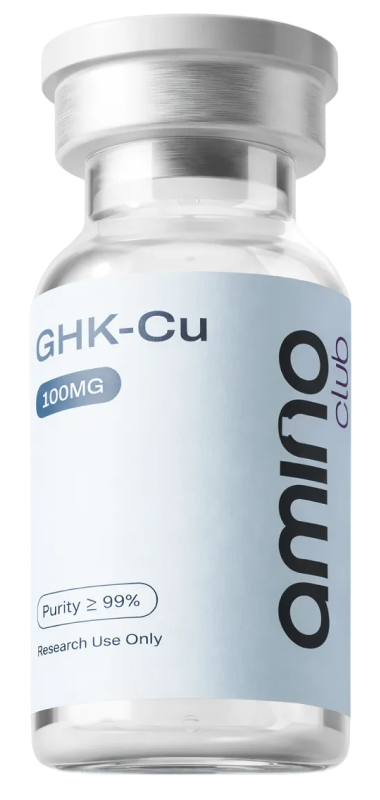
Amino Club is a U.S.-based vendor that’s earned a solid reputation quickly. They’ve got strong Trustpilot reviews, responsive customer support, and the biggest discount code I’ve seen any peptide vendor offer. The 20% off with BRAINFLOW makes their already-competitive pricing hard to beat.
They sell GHK-Cu in two sizes: 50mg for $29.99 and 100mg for $57.99. With code BRAINFLOW for 20% off, the 100mg drops to about $46.39 and the 50mg goes to $23.99. That $23.99 entry point is the cheapest way to try GHK-Cu if you want to start small before committing to a larger vial.
Each batch is tested by accredited third-party labs, and COAs are available before you purchase. All products are lyophilized. They ship same-day on orders placed before 2PM EST, and multiple reviewers mention receiving orders the very next day. The website is easy to use, checkout is quick and painless, and their support team responds fast when you actually need them. For research use only.
- GHK-Cu 50mg: $29.99 ($23.99 with code)
- GHK-Cu 100mg: $57.99 ($46.39 with code)
- Testing: Accredited third-party labs, COAs available pre-purchase
- Cost per mg (100mg with code): ~$0.46/mg
- Shipping: Same-day before 2PM EST
- For laboratory and research use only
Amino Club is the one I recommend to people who want to test GHK-Cu without spending a lot upfront. The 50mg at $23.99 with code is a low-risk starting point. And the shipping speed is a real plus. I’ve placed orders on a Monday morning and had product in hand by Wednesday, which is faster than most vendors manage.
The 20% discount code is a big deal too. Most peptide vendors offer 10-15% at best. That extra 5-10% adds up if you’re ordering regularly. The only reason Amino Club isn’t #1 is that Everest gives you more product for less money at the 100mg level and publishes a COA from a named lab directly on the product page. But it’s a close call.
For research use only
3. Paramount Peptides – Most Established
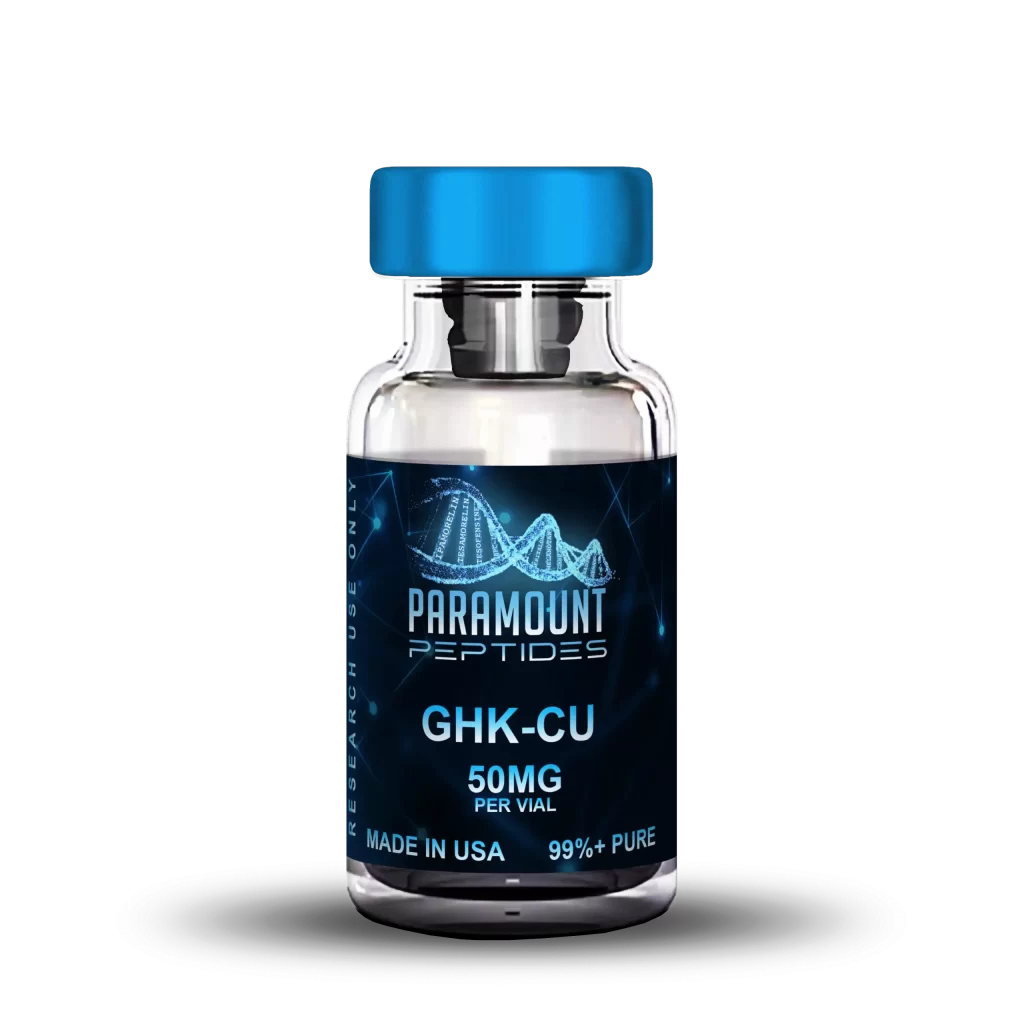
Paramount Peptides has been around for over 12 years. They operate out of Southern California and they actually synthesize their peptides in-house. That’s not the norm. Most vendors in this space are buying finished product from overseas manufacturers and reselling it. Paramount is doing their own synthesis, their own purification, and their own QC. That matters.
Their standalone GHK-Cu is a 50mg vial for $50. At $1.00/mg before the discount code, it’s the most expensive per-milligram option on this list. But you’re paying for vertically integrated manufacturing and a purity guarantee that nobody else offers: if their product fails an HPLC test at any licensed facility, they’ll refund your order AND reimburse the $100 testing fee. That’s a bold promise.
Where Paramount pulls ahead of everyone else is blends. They carry GLOW (GHK-Cu + BPC-157 + TB-500) in multiple sizes and KLOW (GHK-Cu + KPV + BPC-157 + TB-500) for researchers running multi-peptide protocols. They also sell sublingual strips, tablets, and topicals. If your research involves anything beyond standalone GHK-Cu, Paramount has options nobody else on this list can match.
The shipping is the one knock. 48 hours for processing and 7+ days for delivery. Compared to Amino Club’s next-day arrivals, that feels slow. But if you’re not in a rush and you want American-made product from a lab that’s been operating since before most peptide vendors existed, Paramount earns its spot. For research use only.
- GHK-Cu 50mg: $50.00
- GLOW 50: GHK-Cu 30mg + BPC-157 10mg + TB-500 10mg
- GLOW 70: GHK-Cu 50mg + BPC-157 10mg + TB-500 10mg
- KLOW 80: GHK-Cu 50mg + KPV 10mg + BPC-157 10mg + TB-500 10mg
- Manufacturing: In-house synthesis, Southern California
- Purity Guarantee: Full refund + $100 testing fee if HPLC fails at any licensed lab
- Cost per mg (with code): ~$0.90/mg for standalone GHK-Cu
- Shipping: 48hr processing, 7+ day delivery, free at $300+
- For laboratory and research use only
Paramount is the right pick if you want product made by the people selling it, not imported and relabeled. The purity refund guarantee is something I haven’t seen any other vendor offer. They’re basically saying: take our product to any licensed HPLC lab in the country, and if the results don’t match, we’ll pay for the test and refund your full order. That takes confidence.
If your research involves GLOW or KLOW protocols, Paramount is the only vendor on this list selling those pre-blended. You’d have to source three or four separate vials from other vendors and do the mixing yourself to get the same formulation they put in one vial.
For research use only
4. Limitless Life Nootropics – Best Selection
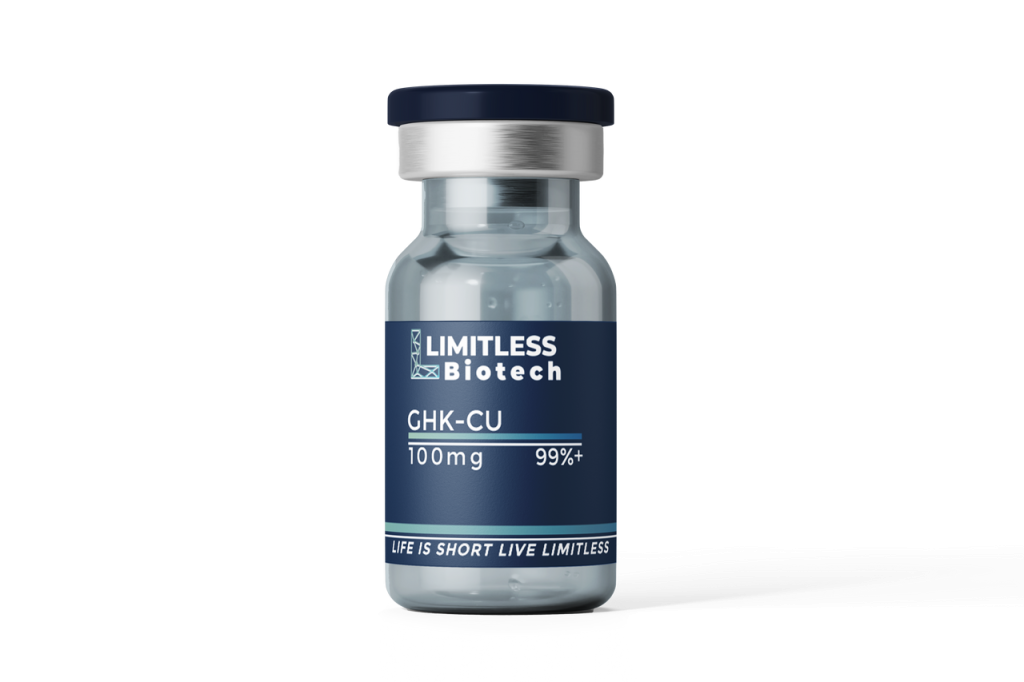
Limitless Life Nootropics (now rebranded as Limitless Biotech) has been in the research peptide space longer than most vendors. Their catalog is huge. Peptides, capsules, blends, bioregulators, sprays, ampoules, powders. They organize everything by research category (dermatological, cognitive, immune, metabolic), which is helpful if your work spans multiple compound types.
For GHK-Cu, they offer a 100mg vial at $89.99 and a 200mg option for larger-scale work. There’s a built-in bulk discount: 5% off at 5-9 vials, 10% off at 10-14, and 15% off at 15+. With code BRAINFLOW for 10% off on a single vial, you’re at about $0.81/mg. Not cheap, but you’re getting something the other vendors don’t offer: triple testing.
Every compound from Limitless is tested for purity (HPLC), endotoxins, and sterility. That three-layer testing protocol is unusual in the RUO space. Their purity standard is ≥98.5%, with most batches hitting ≥99%. They claim GMP-compliant, USA-based manufacturing. For laboratory research use only.
- GHK-Cu 100mg: $89.99
- GHK-Cu 200mg: Available for large-scale research
- Purity: ≥98.5% standard, ≥99% typical (HPLC)
- Testing: HPLC + endotoxin + sterility (triple tested)
- Bulk Discounts: 5% (5-9), 10% (10-14), 15% (15+)
- Cost per mg (with code): ~$0.81/mg
- For laboratory and research use only
Limitless is the vendor for people who need a one-stop shop. If you’re sourcing GHK-Cu alongside ten other compounds, it’s easier to consolidate everything into one order. The triple testing is also a real advantage for researchers doing injectable work where endotoxin and sterility data actually matters.
The trade-off is price. At $89.99 for 100mg, you’re paying more than double what Everest charges for the same amount. The extra testing partially justifies the premium, but for anyone focused primarily on GHK-Cu, the value gap is hard to ignore. If you’re sourcing five or six different peptides for a research protocol though, consolidating everything into one Limitless order with bulk discounts starts making more sense financially.
For research use only
What Is GHK-Cu (And Why It’s Getting So Much Attention)
GHK-Cu is a copper-binding tripeptide made of three amino acids (glycine, histidine, lysine) complexed with a copper(II) ion. Molecular weight: 401.91 g/mol. CAS number: 89030-95-5. Your body produces it naturally, with the highest concentrations found in blood plasma, saliva, and urine.
Dr. Loren Pickart first isolated it from human plasma in 1973. He was studying liver disease and noticed that plasma from younger people caused older liver tissue to behave like younger tissue. After years of work, he identified GHK-Cu as the responsible molecule. That kicked off five decades of research that’s still accelerating today.
At age 20, your plasma GHK-Cu levels sit around 200 ng/mL. By 60, they’ve dropped to about 80 ng/mL. That decline tracks almost perfectly with reduced regenerative capacity in aging. Your body produces less of the molecule exactly when it could use more of it.
A 2018 review in the International Journal of Molecular Sciences found that GHK-Cu influences expression of roughly 31% of the human genome, stimulating 59% and suppressing 41% of those affected genes. In preclinical models, researchers have observed effects on collagen and elastin synthesis, wound closure, hair follicle signaling, inflammatory markers, and antioxidant enzyme activity.
One finding that gets cited constantly: a study by Abdulghani et al. found that topical GHK-Cu increased collagen production in 70% of volunteers, outperforming both vitamin C (50%) and retinoic acid (40%). A 2015 review in BioMed Research International cataloged GHK-Cu’s effects across skin, lung, bone, liver, and GI tissue repair models. In rat wound studies, GHK-Cu treatment increased collagen synthesis ninefold.
The copper isn’t optional. It’s what makes the molecule work. Copper acts as a redox-active cofactor in enzymatic reactions tied to collagen cross-linking, antioxidant defense, and blood vessel formation. But free copper is toxic and causes oxidative damage. GHK-Cu functions as a safe copper delivery system, bringing the mineral where it’s needed without the toxicity that unbound copper ions cause. Research published in Cosmetics (2018) documented both the regenerative and potential anti-cancer actions of the copper peptide complex.
Recent research has pushed into unexpected territory too. A 2025 study demonstrated that intranasal GHK-Cu improved memory performance and reduced amyloid plaque burden in Alzheimer’s mouse models. For a molecule discovered in blood plasma fifty years ago, it keeps showing up in new contexts.
GHK-Cu Quality Guide: What to Check Before You Buy
The difference between good GHK-Cu and bad GHK-Cu isn’t visible. You can’t tell by looking at the vial. It shows up in the testing data, and a lot of vendors are hoping you won’t bother checking.
Common Quality Problems
Residual TFA (trifluoroacetic acid) from synthesis is the most frequent issue. TFA is a solvent used in peptide manufacturing, and traces remain unless specifically removed. High TFA content means you’re getting less actual peptide per milligram than the label says. Some vendors also sell GHK without copper and market it as GHK-Cu. The molecular weight difference is only about 60 daltons, so you won’t catch it unless you check the mass spectrometry data on the COA. Real GHK-Cu should show 401.91 g/mol, not 341.38.
Reading a COA
A legitimate Certificate of Analysis includes: a batch number matching your product, HPLC purity percentage (98% minimum, 99%+ preferred), mass spectrometry confirming the correct molecular weight, the name of the testing laboratory, and a recent test date. If any of those are missing, it’s not a real COA. It’s a marketing prop.
The lab name is the big one. “Tested in-house” or “internally verified” means the vendor is grading their own homework. Third-party testing from a named, accredited laboratory is what you want. Everest uses Freedom Diagnostics. Limitless uses certified third-party labs and publishes endotoxin and sterility data alongside purity. Paramount runs continuous HPLC on both raw materials and finished products. These are the kinds of details that separate real quality control from window dressing.
Quick Checklist
- HPLC purity ≥98% (premium is ≥99%)
- Mass spec confirming MW of 401.91 g/mol
- Third-party lab name on the COA (not just “tested in-house”)
- Batch-specific documentation, not a generic template
- Lyophilized powder (most stable for storage)
- Proper storage guidance (unreconstituted: -20°C; reconstituted: 2-8°C, use within 2-4 weeks)
- Endotoxin testing if doing injectable research
This is why I keep going back to Everest. Every item on that checklist is covered. Freedom Diagnostics COA right on the product page. 99.86% purity. No guessing required.
FAQ
What is GHK-Cu studied for in research?
Researchers study GHK-Cu for its effects on collagen synthesis, wound repair, tissue regeneration, hair follicle signaling, and anti-inflammatory pathways. A 2015 review documented activity across skin, lung, bone, liver, and GI tissue models. All products are sold for laboratory and research use only.
How should GHK-Cu be stored?
Lyophilized GHK-Cu stores at -20°C and stays stable for 12 to 24 months. Once reconstituted with bacteriostatic water, keep it refrigerated at 2-8°C and use within 2 to 4 weeks. Don’t freeze reconstituted peptide.
What’s the difference between GHK and GHK-Cu?
GHK is the tripeptide alone (MW 341.38 g/mol). GHK-Cu is the same tripeptide bound to a copper(II) ion (MW 401.91 g/mol). The copper is what drives the biological activity seen in research. Check the COA for the correct molecular weight to confirm you’re getting the copper-complexed form.
Is GHK-Cu the same thing as copper peptides in skincare?
Yes, same molecule. Copper Tripeptide-1 on a skincare label is GHK-Cu. The difference is format. Skincare products use 0.3-1% concentrations in topical bases. Research-grade GHK-Cu is sold as lyophilized powder for reconstitution.
What purity level should I look for?
Minimum 98% for research-grade product. 99%+ is premium. Anything below 95% is a red flag. Verify through a third-party COA, not just a number on the product page.
How much does research-grade GHK-Cu cost?
Between $0.36/mg and $1.00/mg depending on vendor and vial size. Everest Peptides currently has the best price at $39.99 for 100mg on sale. Larger vials and discount codes always bring the per-milligram cost down.
The Bottom Line
GHK-Cu has more published research behind it than most peptides people are paying twice as much for. The interest is deserved. But the research doesn’t mean anything if the product you’re buying is under-dosed, missing copper, or tested by nobody.
I’ve ordered from all four of these vendors. I’ve compared COAs, done the price-per-milligram math, tracked shipping times, and placed enough repeat orders to know who’s consistent. Every vendor here sells real, tested GHK-Cu. The ranking comes down to who delivers the best combination of purity, price, and reliability over time.
If I’m placing an order tomorrow, it’s going to Everest Peptides. 100mg at $39.99 on sale. 99.86% purity verified by Freedom Diagnostics. COA posted right on the product page where you can check it yourself. Code BRAINFLOW for 10% off at checkout. No other vendor on this list matches that combination of price, purity, and transparency.
Amino Club is the best alternative for flexible sizing and the deepest discount code. Paramount Peptides is the pick for in-house manufactured product and GLOW/KLOW blends. And Limitless Life Nootropics makes sense if you need the widest catalog and triple-tested quality.
All four are solid. But if you’re asking me, start with Everest.
For research use only