
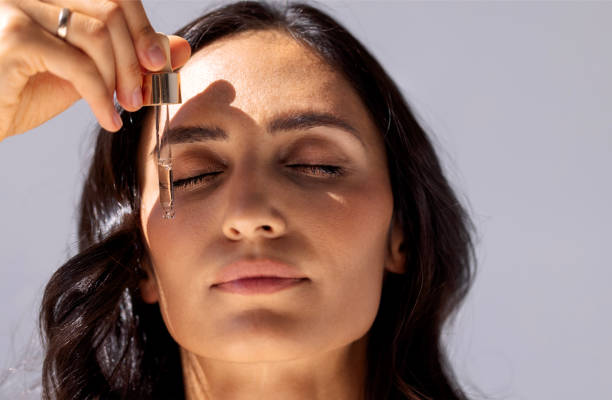

Somewhere around 40, the math changes. The skincare routine that worked for a decade stops delivering. Recovery from workouts takes longer. Sleep gets lighter. And that low-grade tiredness that used to come and go starts hanging around permanently.
Most women are told this is just what aging looks like. And yeah, aging plays a role. But what rarely gets explained is why it happens at the cellular level, and what you can actually do about it beyond swapping your moisturizer or adding another supplement to the pile.
Peptides are where things get interesting. Not random ones, and not all at once. But a targeted stack of three peptides can address the specific biological shifts that speed up after 40, from collagen loss to gut inflammation to fading sleep quality. This is the stack BrainFlow readers ask about more than any other, and the one I keep coming back to myself.
If you are new to peptides, do not worry. This guide breaks everything down in plain language, including what each peptide does, how to use them, and exactly where to buy.
What Actually Changes After 40
Collagen loss speeds up dramatically around perimenopause. Before that, you lose about 1% per year. Annoying but manageable. Once estrogen starts dropping, that number jumps hard. Research shows women can lose up to 30% of their skin collagen within the first five years of menopause. Skin gets thinner. Elasticity drops. Wounds heal slower.
Growth hormone has been declining since your thirties, but by 40 the effects are harder to brush off. Less GH means slower recovery, easier fat storage (especially that stubborn midsection weight), reduced muscle tone, and lighter sleep. Your body still makes it, just not as much, and the signals telling your pituitary to release it are getting weaker.
Gut health often takes a hit during this window too. Hormonal shifts can mess with your gut lining, increase inflammation, and change the microbiome in ways that feel like they came out of nowhere. New food sensitivities. Bloating that was never a problem before. Brain fog and mood dips that seem unrelated to digestion but actually trace straight back to the gut.
None of these are separate issues. They connect through the same underlying shift: your body’s signaling molecules are declining. The repair signals are getting quieter. The instructions your cells need to keep skin firm, gut healthy, and tissues strong are fading.
Hormone replacement therapy helps with some of this. But HRT does not restore collagen signaling, gut lining repair, or telomere maintenance. Peptides fill the gaps that hormones cannot reach. And unlike HRT, most peptides can be cycled short-term without long-term dependency.
The Core Stack: GHK-Cu + BPC-157 + Epithalon
After a lot of testing and feedback from hundreds of readers, these three peptides cover the most ground for women over 40. Each targets a different system, and together they build a foundation that addresses skin, gut, sleep, and cellular aging at the same time.
Quick overview before we go deeper:
- GHK-Cu resets collagen and elastin production at the gene expression level
- BPC-157 repairs gut lining, calms inflammation, and speeds up tissue healing
- Epithalon restores natural melatonin production and supports telomere health
You do not have to start all three at once. A lot of women pick one, see how they respond over a cycle, and layer in the others later. But the full stack is where the compounding benefits really show up.
GHK-Cu: The Skin and Tissue Reset
GHK-Cu is a copper-binding tripeptide your body already makes. At 20 you have about 200 ng/mL in your blood. By 60, that drops to around 80 ng/mL. That decline lines up almost perfectly with visible skin aging, and women who seem to age slower than their peers almost always have higher baseline levels of the peptides that drive tissue renewal.
What makes GHK-Cu special is the scope of what it does. It influences over 4,000 human genes tied to tissue repair, antioxidant defense, and inflammation control. That is not a typo. Four thousand genes.
One clinical trial showed a 28% increase in collagen density after three months of topical use. Other studies found it improved skin thickness and elasticity at levels comparable to prescription retinoids, without the irritation, peeling, or sensitivity that makes retinol miserable for a lot of women over 40.
The key insight: your fibroblasts (the cells that make collagen) have not died. They are still there. They just stopped getting the signal to work. GHK-Cu restores that signal and resets gene expression patterns toward a younger profile. A review in BioMed Research International covered how it modulates collagen, elastin, and glycosaminoglycan synthesis at the cellular level.
Infiniwell makes a GHK-Cu serum that a lot of our readers love for topical application. For research-grade GHK-Cu, I get mine from Paramount Peptides. They have been my go-to vendor for years. Lab tested, consistent quality, and code BRAINFLOW saves 10%.
See also: GHK-Cu Complete Guide: Benefits, Dosage, and Research
BPC-157: The Gut and Tissue Healer
If GHK-Cu is the skin reset, BPC-157 is the internal repair crew. It was discovered in human stomach acid and works as part of your body’s own gut protection system. Unlike most peptides that break down instantly in gastric juice, BPC-157 stays intact. That is why oral delivery actually works for gut applications.
After 40, BPC-157 matters for two big reasons:
- Gut lining repair. Hormonal shifts during perimenopause often trigger increased intestinal permeability, new food sensitivities, bloating, and inflammation that was never an issue before. BPC-157 supports mucosal barrier repair, reduces inflammatory cytokines, and promotes tight junction integrity. It fixes the lining itself, not just the symptoms on top of it.
- Tissue healing everywhere else. Joint pain, tendon issues, and slow recovery become way more common after 40. BPC-157 promotes blood vessel growth and growth factor signaling across tendons, ligaments, muscles, and nerves. A 2021 review in Frontiers in Pharmacology covered its wound healing effects across multiple tissue types.
The part most people underestimate is the gut-brain connection. Your gut makes about 90% of your body’s serotonin. When gut inflammation messes with that production, the effects show up as brain fog, mood swings, low motivation, and poor sleep. Fixing the gut with BPC-157 often improves things that seem totally unrelated to digestion.
A lot of women in their forties describe feeling “off” without being able to pin it on anything specific. Not sick, not depressed, just not sharp. Low-grade gut inflammation driving disruption through the gut-brain axis is often behind that feeling, and BPC-157 goes after it at the source.
For oral BPC-157, Infiniwell’s BPC-157 Rapid Pro is what I use and what our readers trust. Physicians recommend it. SNAC absorption tech keeps the peptide intact through the stomach. Code BRAINFLOW saves 15%. If you want the research-grade route, Paramount carries it as Pentadecapeptide (same compound, renamed). Code BRAINFLOW saves 10%.
Best Oral BPC-157
Infiniwell’s BPC-157 Rapid Pro delivers 500mcg per capsule with SNAC absorption tech. No needles, no mixing. Code BRAINFLOW saves 15%.
Epithalon: The Sleep and Longevity Peptide
Epithalon is the least talked-about peptide in most stacks, but for women over 40 it might be the most impactful. It works on your pineal gland, boosting natural melatonin production. That matters because melatonin output drops with age, and by your forties you are probably already feeling it.
Lighter sleep. Waking up at 3 AM for no reason. Eight hours in bed but never feeling rested. These are not just stress symptoms. They are often signs that melatonin production has dropped below the level your body needs for deep, restorative sleep cycles.
Epithalon also does something no other peptide in this stack can: it activates telomerase, the enzyme that maintains telomere length. Telomeres are the protective caps on the ends of your chromosomes. They shorten every time a cell divides, and when they get too short, the cell stops working or dies. That shortening is one of the primary biological drivers of aging.
Women tend to have longer telomeres than men on average, but that advantage narrows after menopause. Estrogen protects telomere length, and when estrogen drops, telomere loss speeds up. Epithalon may help offset that by keeping telomerase more active during the years your body needs it most.
Why sleep matters so much in this stack: skin repair happens during deep sleep. Growth hormone peaks during deep sleep. Gut healing accelerates during deep sleep. Fixing sleep does not just make you feel better. It amplifies every other peptide you are running.
I get my Epithalon from Paramount Peptides. Same vendor, same quality, same code BRAINFLOW for 10% off.
Worth reading: Epithalon Complete Guide: Benefits, Dosage, and Research
Optional Add-On: Glow (GHK-Cu + TB-500 Blend)
If you want to take the skin and tissue healing side of this stack up a notch, Paramount carries a blend called Glow that combines GHK-Cu with TB-500 in a single product. It is designed for exactly the kind of multi-system repair that women over 40 are looking for.
GHK-Cu handles the collagen and gene expression reset we already covered. TB-500 adds a tissue repair layer by driving cell migration to damaged areas and promoting blood vessel growth. Together they cover skin rejuvenation and musculoskeletal healing in one product instead of two separate vials.
TB-500 is particularly useful for women dealing with joint stiffness, tendon issues, or slow recovery on top of their skin concerns. It is the same compound used in the popular Wolverine Stack (BPC-157 + TB-500), but paired here with GHK-Cu for a more skin and recovery-focused approach. Code BRAINFLOW saves 10% at Paramount.
Related: Wolverine Stack Guide: BPC-157 + TB-500
How to Run This Stack
There is no single “correct” protocol, and dosing depends on your goals, sensitivity, and experience. But here is a practical approach if you are new to peptides:
- Month 1: Start with one peptide only (GHK-Cu or oral BPC-157). Get a feel for how your body responds before adding anything else.
- Month 2-3: Layer in the second peptide. A lot of women start GHK-Cu and BPC-157 together, then add Epithalon in month two or three.
- Cycle length: Four to eight weeks on, then two to four weeks off before your next cycle.
- Tracking: Keep a simple daily log of sleep quality, energy, skin, digestion, and mood. Subtle changes become obvious patterns by week three.
Running all three at the same time is fine once you know how each affects you individually. They work on different systems and do not compete with each other. GHK-Cu handles skin. BPC-157 handles gut and musculoskeletal repair. Epithalon handles sleep and cellular aging. No overlap.
Quick note on the oral route for BPC-157, since it matters for women who are new to this. Most peptides require subcutaneous injection, which is a barrier for a lot of people. BPC-157 is one of the few peptides stable enough to survive stomach acid, making it perfect for gut-targeted delivery and for anyone who wants to skip needles entirely. Two capsules a day is the standard approach.
Pairing with basic supplements makes a real difference too. Vitamin C alongside GHK-Cu means your fibroblasts have both the signal and the raw material for collagen. Magnesium supports the sleep improvements from Epithalon. L-glutamine pairs well with BPC-157 for gut repair. Protein at 0.7 to 1 gram per pound of body weight gives your body the amino acids to build with.
See also: BPC-157 Dosage Calculator and Protocol Guide
What Results Actually Look Like
Based on what our readers report, here is a rough timeline:
- Week 1-2: Better sleep (Epithalon kicks in fast), reduced bloating (BPC-157), subtle skin texture shifts (GHK-Cu)
- Week 3-4: Skin firmness and glow become visible. Gut symptoms keep improving. Energy and mood lift as sleep deepens.
- Week 5-8: Collagen improvements are noticeable to other people. Joint comfort improves. An overall sense of vitality that is hard to put into words but easy to feel.
Sleep improvements from Epithalon tend to show up fastest, often within the first week. Gut changes from BPC-157 usually take two to four weeks. Skin changes from GHK-Cu take the longest to see, but when they arrive they tend to stick around past the end of the cycle because the underlying gene expression has shifted.
The biggest surprise readers mention is not any single improvement. It is the domino effect. Better sleep leads to better skin repair which leads to more energy which leads to better workouts which leads to improved mood. When multiple systems improve at the same time, everything compounds. Women on HRT who add peptides tend to see amplified results on skin and body composition. The hormones handle one layer, the peptides handle another.
One caveat: women with their basics dialed in (nutrition, sleep habits, hydration, foundational supplements) respond faster. Peptides amplify what your body is already doing. If the basics are off, there is less to amplify.
Safety
BPC-157 has one of the cleanest safety profiles in the peptide space. A 2025 systematic review found no adverse effects across several organ systems in preclinical studies. GHK-Cu is a naturally occurring peptide with decades of topical and research use data. Epithalon has been studied in longevity research since the 1990s with a clean record.
None of these are FDA-approved for human therapeutic use. They are classified as research peptides. If you are on HRT, blood thinners, or anything that affects immune function, talk to your doctor before starting. Peptides can interact with existing protocols in unpredictable ways.
Women on HRT should pay particular attention. BPC-157 and GHK-Cu do not directly affect hormone levels, but adding any new compound to a hormonal protocol deserves a conversation with whoever is managing your HRT. Most integrative physicians are familiar with these peptides at this point.
Sourcing matters enormously. A degraded product is not just useless. It can cause reactions that have nothing to do with the actual peptide. Only buy from vendors that publish third-party lab results on every batch.
Side effects from quality peptides at standard doses are generally mild. Occasional nausea with BPC-157 on an empty stomach, temporary injection site redness with GHK-Cu, and rarely a headache during the first few days of Epithalon. Most women report no side effects at all. If something feels wrong, stop and reassess before continuing.
Where to Buy Everything in This Stack
Here is exactly what I use and recommend:
- GHK-Cu (research-grade) from Paramount Peptides. This is where I get all my research peptides and where I send my readers. Lab tested, consistent batch to batch, and they carry a huge catalog beyond just this stack. Code BRAINFLOW saves 10%. You will need to create an account to view pricing.
- Epithalon from Paramount Peptides. Same vendor, same quality. Code BRAINFLOW for 10% off.
- Pentadecapeptide (BPC-157 research-grade) from Paramount Peptides. Same compound, renamed. Good option if you want research-grade BPC alongside your oral protocol. Code BRAINFLOW saves 10%.
- BPC-157 Rapid Pro (oral) from Infiniwell. Best oral BPC on the market. 500mcg per capsule with SNAC absorption tech. No needles. Code BRAINFLOW saves 15%.
- GHK-Cu serum from Infiniwell. Great topical option for skin without injecting. Layer it into your existing skincare routine morning or night.
- Glow (GHK-Cu + TB-500 blend) from Paramount Peptides. Combines skin rejuvenation and tissue repair in one product. Code BRAINFLOW saves 10%.
Paramount is where I get all of my peptides and where I have been sending BrainFlow readers for years. My readers and I trust them because their lab testing is transparent, their products are consistent, and their customer service actually responds when you have questions. They carry tons of other great products beyond what is in this stack, so once you create an account you can browse their full catalog and find whatever you need.
Wrapping It Up
Aging after 40 is real. The collagen loss, the sleep changes, the gut shifts, the slower recovery. All of it is happening. But none of it is happening because your body forgot how to heal and rebuild. The machinery is still there. The signals just got quieter.
This stack turns them back up. GHK-Cu tells your skin to start producing collagen again. BPC-157 tells your gut lining to repair itself. Epithalon tells your pineal gland to make more melatonin so your sleep actually does its job. Three peptides, three systems, one goal: give your cells the instructions they stopped getting on their own.
You do not need a clinic or a prescription. You need a trusted vendor, a clear plan, and patience. The results are not overnight. But when they arrive, they tend to be the kind of changes that make you wonder why you waited so long.
Start with one. See how you feel. Add the next when you are ready. Track everything in a simple daily log so you can spot the patterns instead of guessing. And give each peptide a full four to six week cycle before deciding if it works. Cells move at their own pace, and the women who give them room to work are the ones who message me three months later saying they wish they had started sooner.
See also: Best GHK-Cu Face Serums