
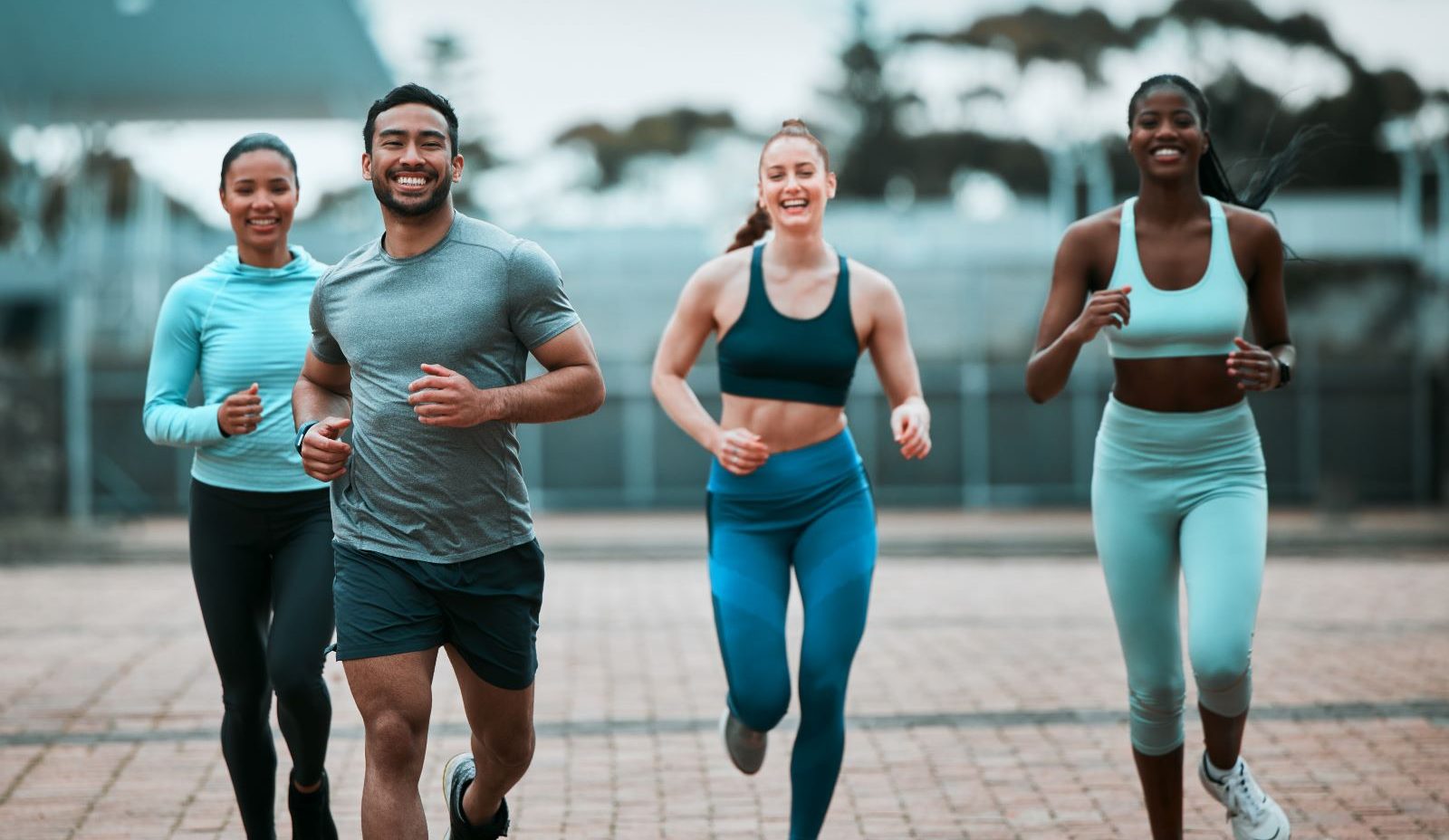
Spend enough time around genuinely fit people—not influencers, not gym bros, but regular humans who’ve maintained their health for decades—and you start noticing patterns. They don’t obsess over calories. They rarely talk about their “diet.” They’re not white-knuckling their way through life, resisting temptation at every turn.
What they do have is a collection of habits so ingrained they barely think about them anymore. Behaviors that stack the deck in their favor day after day, year after year. None of it is glamorous. Most of it is boring. But boring works.
These are the ten habits that show up over and over again.
1. They Treat Sleep Like It’s Non-Negotiable
Ask a fit person what their secret is and they’ll probably mention sleep before they mention the gym. Not because it sounds virtuous, but because they’ve learned—usually the hard way—that everything falls apart without it. Cravings get worse. Workouts suffer. Motivation disappears. The body simply doesn’t recover or function well on insufficient rest.
Research backs this up. A study published in the Annals of Internal Medicine found that sleep-deprived dieters lost significantly less fat than those who slept adequately, even when eating the same number of calories. The under-rested group lost more muscle instead. Sleep isn’t a luxury that fit people indulge in—it’s the foundation everything else is built on.
Most aim for seven to nine hours and protect that time the way they’d protect an important meeting. Phones get charged in another room. Bedtimes stay consistent even on weekends. It sounds rigid until you realize how much easier everything else becomes when you’re actually rested. If falling asleep is the issue, many swear by magnesium glycinate—it’s one of the few supplements with actual research behind it for sleep quality.
2. They Move Every Day, Whether or Not They “Work Out”
There’s a difference between exercise and movement, and fit people understand this intuitively. Exercise is structured—a run, a lifting session, a class. Movement is everything else. Walking to grab coffee instead of driving. Taking stairs without thinking about it. Pacing during phone calls. Standing while working. Parking farther away not as a “hack” but because it genuinely doesn’t register as an inconvenience anymore.
This baseline activity level matters more than most people realize. Researchers call it NEAT—non-exercise activity thermogenesis—and it can account for hundreds of calories daily. More importantly, it keeps the body functioning well between workouts. Fit people don’t sit for eight hours and then try to undo it with forty-five minutes on a treadmill. They stay in motion throughout the day because sitting still for too long actually feels uncomfortable to them.
Related: The Perfect One-Hour Morning Routine
3. They Eat Protein at Almost Every Meal
Not because they’re tracking macros or following a bodybuilding protocol. Fit people eat protein consistently because they’ve noticed it keeps them fuller longer, stabilizes their energy, and makes it easier to maintain muscle as they age. Over time it just becomes automatic—eggs or Greek yogurt at breakfast, chicken or fish or beans at lunch and dinner, maybe some cottage cheese or a handful of nuts as a snack.
The science supports this habit. Protein has the highest thermic effect of any macronutrient, meaning your body burns more calories digesting it. It also triggers satiety hormones more effectively than carbs or fat. But fit people don’t usually think about it in those terms. They just know that a meal without protein leaves them hungry an hour later, so they stopped eating meals without protein.
For most people, this means roughly 25-40 grams per meal depending on body size and activity level. That looks like a palm-sized portion of meat or fish, a cup of Greek yogurt, three or four eggs, or a combination of plant sources. Nothing complicated. Just consistent.
4. They Drink Water Like It’s Their Job
Carry a water bottle everywhere. Drink a full glass first thing in the morning. Have water with every meal. Fit people do all of this almost unconsciously because at some point they connected the dots between hydration and how they feel. Dehydration shows up as fatigue, brain fog, false hunger signals, and poor workout performance long before it shows up as actual thirst.
They’re not religious about hitting some specific ounce count. They just drink water consistently throughout the day and pay attention to the color of their urine (pale yellow means adequately hydrated, darker means drink more). It’s unsexy advice that works better than any supplement. Most have a water bottle they bring everywhere—something like the Owala FreeSip that’s easy to drink from one-handed. Having water within arm’s reach makes drinking it automatic.
Related: 10 Atomic Habits Hacks That Actually Work
5. They Don’t Diet—They Have Eating Patterns
Fit people who’ve stayed fit for years almost never describe themselves as being “on a diet.” They have a way of eating that works for them, and they stick to it most of the time without much drama. Maybe they eat big salads at lunch. Maybe they don’t keep chips in the house. Maybe they have dessert on weekends but not weeknights. Whatever their specific patterns, the key is that these patterns are sustainable defaults, not temporary restrictions.
This is fundamentally different from the diet mindset, which treats healthy eating as a temporary punishment to endure until you reach some goal weight. That approach has a near-perfect failure rate because it relies on willpower, and willpower always runs out. Fit people have instead built eating habits that don’t require much willpower at all. The decision has already been made. They’re just following the pattern.
The specific patterns vary wildly from person to person. Some eat three meals with no snacking. Some graze throughout the day. Some skip breakfast. Some eat the same lunch every single day for years because it’s easy and they like it. What works matters less than whether you can sustain it. Fit people have found their version and stopped searching for something better.
6. They Strength Train (Even If They Don’t Look Like It)
The fittest people over forty almost always do some form of resistance training—weights, machines, bodyweight exercises, resistance bands, something. Not necessarily to get big or look a certain way, but because they understand what happens without it. Muscle mass declines roughly 3-5% per decade after thirty. Bone density drops. Metabolism slows. Strength training is the closest thing we have to a fountain of youth, and fit people figured this out.
This doesn’t mean spending two hours a day in a gym. Many fit people lift for twenty to forty minutes, two or three times a week, and that’s enough to maintain muscle and strength. The workout itself matters less than the consistency. Some use barbells at a gym—honestly, a basic gym membership is one of the best investments you can make. Others prefer adjustable dumbbells at home. Some do push-ups and pull-ups in their garage. The tool is irrelevant as long as they’re progressively challenging their muscles over time.
What’s notable is how uncomplicated most of these routines are. Squats, hinges, pushes, pulls, carries—the fundamental movement patterns humans have always done. Fit people tend to master the basics rather than constantly chasing novelty. They’ve been doing some version of the same simple routine for years because it works and they can sustain it.
Related: Andrew Huberman’s Fitness Protocol: The Complete Guide
7. They Walk Way More Than You’d Expect
Walking doesn’t get the respect it deserves because it doesn’t feel hard enough to “count.” But talk to long-term fit people and many will tell you their daily walk is sacred. Morning walks, evening walks, walks after meals, walking meetings—they find ways to put one foot in front of the other throughout the day.
The research on walking is remarkable. Regular walkers have lower rates of heart disease, diabetes, certain cancers, and all-cause mortality. Walking after meals blunts blood sugar spikes. Walking in nature reduces cortisol levels. And unlike intense exercise, walking doesn’t spike appetite or require recovery. You can do it every single day without wearing your body down. Fit people have figured out that the unsexy habit of walking might be the single highest-return health behavior available.
Related: The 5-Minute Rule Changed How I Get Things Done
8. They Have Stress Outlets That Aren’t Food or Alcohol
Everyone deals with stress. The difference is what happens next. For a lot of people, stress leads directly to the pantry or the liquor cabinet. For fit people, stress leads somewhere else—a workout, a walk, a conversation with a friend, a few minutes of deep breathing, journaling, time in nature, playing with a dog. They have systems in place for processing difficult emotions that don’t involve numbing out with food or booze.
This isn’t about moral superiority or iron willpower. Fit people have simply learned, often through trial and error, that using food or alcohol to cope with stress creates more problems than it solves. So they’ve built other outlets. The workout becomes the stress relief. The evening walk replaces the second glass of wine. It’s a substitution, not a deprivation.
Related: 15 Daily Habits That Will Change Your Life
9. They’re Consistent, Not Perfect
Here’s what might be the most important distinction between fit people and everyone else: fit people don’t aim for perfection. They aim for consistency. They miss workouts sometimes. They eat pizza and ice cream. They have weeks where sleep goes sideways or stress takes over or life just gets chaotic. The difference is they don’t let a bad day become a bad week, or a bad week become a bad month.
They’ve internalized the idea that fitness is about what you do most of the time, not what you do occasionally. One skipped workout doesn’t matter. One indulgent meal doesn’t matter. What matters is the pattern over months and years. So when they fall off, they get back on without guilt or drama. They don’t “start over Monday.” They start over at the next meal, the next morning, the next opportunity.
This ability to recover quickly from setbacks is more valuable than any specific diet or workout program. It’s what separates people who maintain their fitness for decades from people who are perpetually “getting back on track.” Some find that tracking helps—a fitness tracker like Whoop can reveal patterns you’d otherwise miss and make consistency feel more like a game than a grind.
10. They Think in Years, Not Weeks
People who stay fit for decades have a completely different time horizon than people who are constantly starting and stopping. They’re not trying to lose ten pounds before summer. They’re not doing a 30-day challenge. They’re building habits they can sustain for the rest of their lives, and they’re patient enough to let those habits compound.
This long-term thinking changes everything. It makes extreme approaches less appealing because extreme approaches don’t last. It makes small improvements more valuable because small improvements add up. A fit person might spend an entire year just working on their sleep habits, knowing that better sleep will make everything else easier for the next forty years. That kind of patience is rare, but it’s the foundation of lasting health.
The people who look good at sixty didn’t figure out some secret the rest of us don’t have access to. They just started earlier and kept going longer. They treated health like a lifelong project rather than a problem to be solved and forgotten about.
The Common Thread
Look back at all ten of these habits and you’ll notice something: none of them require exceptional discipline. Fit people aren’t grinding through life with gritted teeth. They’ve just removed most of the daily decisions around health by building habits and systems and environments that make healthy choices the path of least resistance. They’ve made it easier to do the right thing than the wrong thing.
That’s the real secret, if there is one. It’s not about trying harder. It’s about setting up your life so you don’t have to try so hard. Build the habits. Let them run on autopilot. Free up your willpower for things that actually require it.
And give it time. These habits didn’t develop overnight for fit people, and they won’t for you either. But a year from now, you’ll be glad you started building them today.