
By the time most people reach their 40s, the molecule that quietly powers nearly every cell in their body is running lower than it did at 25. That molecule is NAD+, and a growing stack of human research shows it tends to fall as we age, especially in hard-working tissues like muscle and brain.
You will see headlines claiming NAD+ drops by 50% by age 40. The reality is more interesting. The decline is real in several tissues, but the exact size of it is still debated, and a sharp 2021 review in Nutrients argued the field keeps repeating a number the human data does not fully support yet.
What is not in question: NAD+ matters enormously, it falls with age in places that affect how you feel, and there are proven ways to push it back up.
Below is the real science on low NAD+, the signs worth paying attention to, and what actually moves the needle, ranked from free and proven to buy a supplement.
What NAD+ Actually Is (And Why It Runs Your Whole Body)
NAD+ stands for nicotinamide adenine dinucleotide. It works like the spark that lets your mitochondria turn breakfast into usable energy. Without it, the chemistry that produces ATP simply stalls.
Energy is only half the job. NAD+ is also a required ingredient for two enzyme families that keep cells healthy: sirtuins, which regulate aging and metabolism, and PARPs, which rush in to repair damaged DNA. Both burn through NAD+ to do their work.
More than 500 reactions in the body depend on NAD+, which is why researchers describe it as both an electron carrier and a central signaling hub. When it gets scarce, a lot of systems feel it at once.
The catch? Your doctor almost certainly does not test for it, insurance does not cover it, and there is no agreed-upon normal range. Most people only learn about NAD+ after they start digging into why they feel older than the calendar says.
Does NAD+ Really Decline With Age?
Short answer: yes, but it is tissue-specific, not one body-wide number.
The strongest human evidence comes from skeletal muscle. Researchers measured NAD+ in muscle biopsies from young and older adults and found it clearly lower in the older group, even when both groups exercised the same amount. The drop was worse in physically impaired older adults and almost absent in athletic ones.
One detail from that work is hard to forget. Muscle NAD+ tracked so closely with movement that the team could draw a direct line between a person’s daily step count and how much NAD+ was sitting in their muscle.
So the picture is real, just messier than the marketing. NAD+ goes down where it matters, the size of the drop depends on the tissue and the person, and lifestyle moves a lot of it.
5 Signs Your NAD+ Levels Might Be Low
One caveat before the list. None of these signs proves low NAD+ on its own. They are nonspecific, meaning many other things can cause them, and only a lab test measures NAD+ directly. Each one does have a real biological link to NAD+ worth understanding.
Sign 1: Fatigue That Sleep Does Not Fix
This is the classic one. You sleep eight hours and still feel like someone forgot to plug you in.
The mechanics line up. NAD+ is the molecule your mitochondria use to produce ATP, the actual fuel your cells spend. When NAD+ runs low, energy production becomes less efficient, and the tissues with the highest energy demand notice first.
Muscle is the cleanest example. In the human biopsy work above, the older adults with the lowest muscle NAD+ were also the most physically impaired. Less cellular fuel, less drive to move. That is chemistry, not laziness.
Sign 2: Brain Fog and Slipping Focus
The brain is one of the most energy-hungry organs you own, and it leans hard on NAD+ to keep neurons firing cleanly.
NAD+ inside the living human brain can now be measured and changed. Using a 7 Tesla scanner, researchers at the University of Pennsylvania detected brain NAD+ and watched it rise just four hours after a single dose of an NAD+ precursor. Brain NAD+ is dynamic, not fixed.
When it sags, the foggy, one-step-behind feeling many people pin on stress or age may have a metabolic layer underneath it.
Sign 3: Sleep That Got Worse As You Aged
Most people never hear about this connection. NAD+ is wired straight into your internal clock.
The body’s master timekeeper, a protein pair called CLOCK and BMAL1, helps control the enzyme that recycles NAD+. In turn, NAD+ feeds back on that clock. The two rise and fall together across the day, syncing your alertness and your sleep drive.
When that loop gets sloppy with age, the timing of sleep frays. You wake more, deep sleep thins out, and 3 a.m. starts looking familiar. The signal telling your body when to sleep is simply weaker than it used to be.
Sign 4: Low Mood You Cannot Pin On Anything
This one is sneaky because we blame everything else first. Work. Stress. The neighbor who mows at 7 a.m. on Saturday.
The link runs through tryptophan, the same amino acid in your Thanksgiving turkey. Your body can build NAD+ from tryptophan through the kynurenine pathway. The problem is that chronic inflammation, which climbs with age, pulls tryptophan down that same pathway and away from making serotonin, a key mood chemical.
Low-grade inflammation, strained NAD+ production, and dips in mood tend to travel together. The biology is tightly intertwined, even though no supplement is a treatment for depression.
Sign 5: Slow Recovery and Catching Every Bug
At 22, a cold lasted two days and a hard workout left you sore for an afternoon. Somewhere along the way, recovery slowed down.
NAD+ sits at the center of this too. Every time your DNA takes a hit, and that happens constantly, PARP enzymes spend NAD+ to fix it. As damage accumulates with age, those repair crews draw down more and more of the supply.
Add in inflammaging, the slow simmer of immune activity that builds over decades, and you get a body spending more NAD+ on damage control with less left for everything else. Recovery, immunity, and resilience all draw from the same account.
Can You Actually Test Your NAD+ Levels?
Sort of, but temper your expectations. A handful of specialty labs offer blood NAD+ testing, usually in the 200 to 500 dollar range, and the methods are not standardized. There is no clinical normal range the way there is for cholesterol.
Most people skip the test and track how they feel instead, which is reasonable. That said, if you are about to spend 100 dollars a month on supplements, paying once for a baseline is not a bad idea.
The bigger point: you can raise NAD+ without ever testing it, and the free methods come first.
How to Raise NAD+ Naturally (Backed by Research)
Before anyone reaches for a jar of powder, know that lifestyle does the heaviest lifting here, and the human data on it is some of the strongest in the whole field.
Move Your Body (The Most Proven Lever)
If you do one thing for your NAD+, exercise. The effect in humans is not subtle.
A 12-week trial put young and older adults through aerobic and resistance training and found it reversed the age-related decline in NAMPT, the rate-limiting enzyme your muscle uses to recycle NAD+. Resistance training raised NAMPT by roughly 25 to 30 percent in the older participants.
Earlier work in previously sedentary adults saw NAMPT protein jump by well over 100 percent after only a few weeks of structured training. The body is good at rebuilding its own NAD+ machinery once you ask it to.
You do not need to be an athlete. That step-count correlation means walking counts. Start with 20 to 30 minutes a day and build from there.
Eat for NAD+ (Food First)
Your body builds NAD+ from B3 vitamins (niacin) and from tryptophan, so some foods pull more weight than others:
- Niacin-rich options: wild salmon, tuna, poultry, grass-fed liver, and peanuts
- Tryptophan sources: turkey, eggs, dairy, and pumpkin seeds
- Trace NAD+ precursors: milk, edamame, broccoli, and cabbage carry small natural amounts of NR and NMN
The limitation is real, though. Food gives you precursors, not a flood. The amounts of NMN and NR in food are tiny, which is exactly why concentrated supplements exist. Diet supports a healthy baseline. It will not single-handedly fix a real deficit.
Protect Your Sleep and Circadian Rhythm
Because NAD+ and your internal clock run on the same loop, sleep is not only a casualty of low NAD+. It is also a lever you control.
Keep a consistent sleep and wake time, get morning light, and aim for seven to nine hours. Chronic short sleep and a scrambled schedule throw the CLOCK and BMAL1 rhythm off, the same machinery that helps time NAD+ recycling. Steady sleep keeps that system humming.
Heat, Cold, and Fasting (Promising, Less Proven)
Sauna use, cold exposure, and time-restricted eating all activate stress-response pathways that overlap with NAD+ and sirtuin biology, and plenty of people in the longevity world swear by them.
Stay clear-eyed about the evidence, though. Direct human NAD+ data on saunas and cold plunges is thin next to the exercise research. Treat them as reasonable bonuses, not headline strategies. The broader health upside of heat and cold exposure is well documented even where the NAD+ angle is still early.
NAD+ Supplements: What the Human Trials Actually Show
Now for the part most people scroll down for. You cannot swallow NAD+ itself very effectively, so supplements use precursors that your body converts. The two that matter most are NMN and NR. My breakdown of Dr. David Sinclair’s longevity protocol spends most of its time here, because NAD+ is the foundation it is built on.
Keep one thing in mind through this whole section: the trials are consistent that these precursors raise blood NAD+, and far less consistent that they change how healthy people feel. We will come back to why that matters.
Throughout this section I point to two vendors worth your money: Renue by Science for batch-tested NMN, NR, and TMG, and Paramount Peptides for research-grade biofermented NAD. Both honor code BRAINFLOW for 10% off, and there are quick links to each below.
NMN (Nicotinamide Mononucleotide)
NMN sits one step closer to NAD+ in the production line than NR, which is part of its appeal.
The human data is solid on safety and on raising NAD+. One trial gave older men 250 mg of NMN daily for up to 12 weeks and saw blood NAD+ and its metabolites climb, with no meaningful side effects and some shifts in muscle measures. Most human studies land in the 250 to 500 mg per day range, which makes a sensible target.
Many people prefer a pure powder taken sublingually, held under the tongue, because it skips some of the digestive breakdown.
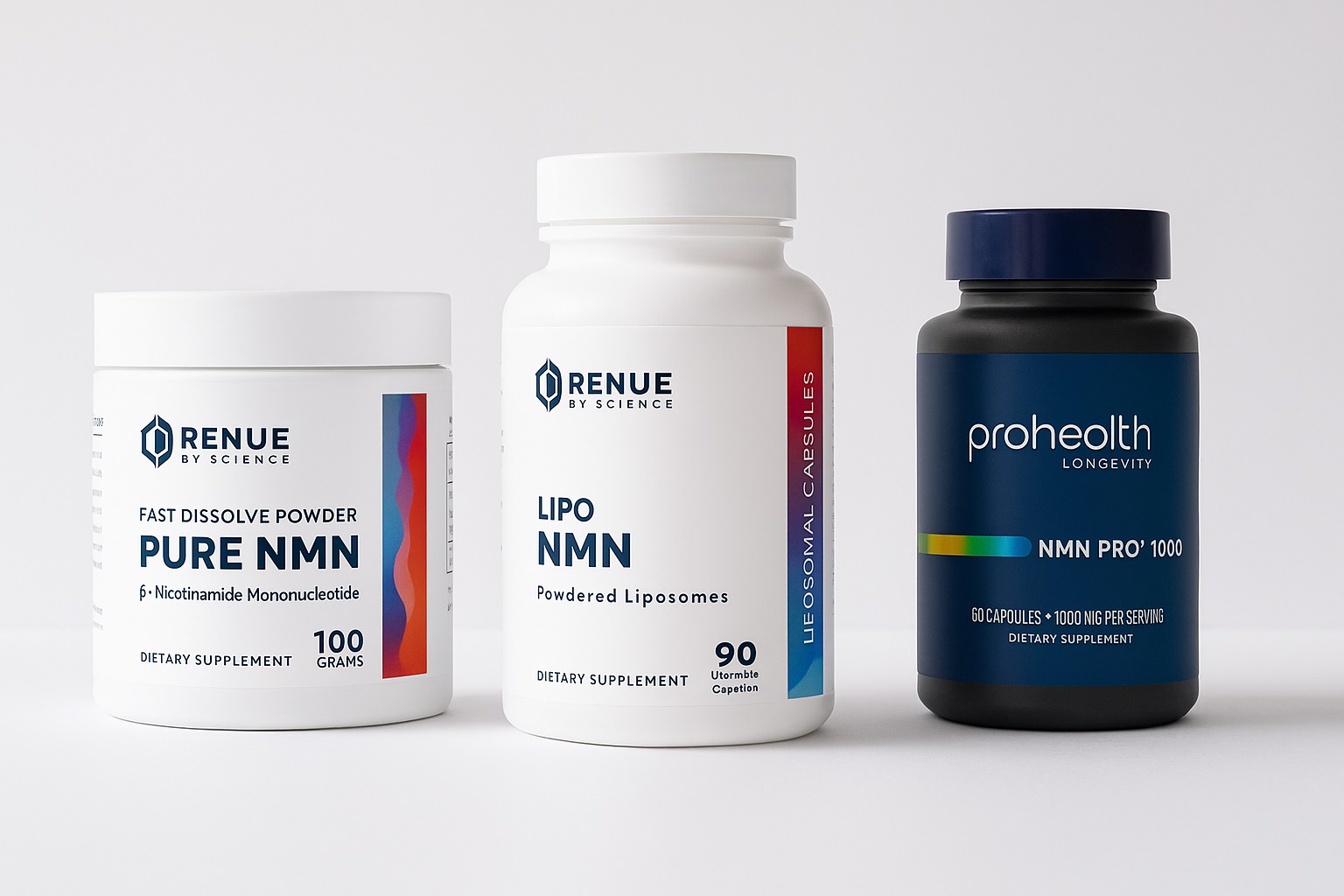
For a clean, batch-tested option, Renue by Science Pure NMN Powder is the one I keep coming back to. A 100 gram jar runs roughly three to four months, purity is tested per batch, and there are no fillers. I covered the details in my full Renue NMN review if you want the granular version. Mix about a quarter teaspoon in water first thing in the morning and use code BRAINFLOW for 10% off.
Trusted NAD+ Brand
Renue by Science
Batch-tested NMN, liposomal NR, and TMG, built around real bioavailability. Start with the Pure NMN Powder and add the rest as you go.
Shop Renue NMN →Use code BRAINFLOW for 10% off your entire order.
NR (Nicotinamide Riboside)
NR is the most studied NAD+ precursor in humans, with the longest safety track record.
In one well-known trial, an NR-based formula raised whole-blood NAD+ by about 40 percent at the standard dose and 90 percent at double dose, sustained across eight weeks. The most striking recent result came from the NICE trial in Nature Communications, where NR meaningfully improved how far people with peripheral artery disease could walk in six minutes. Adding resveratrol on top did nothing extra.
Not all NR is equal. Standard NR takes a beating in stomach acid. Liposomal versions wrap it in the same kind of material as your cell membranes, which protects it on the way in. That is the logic behind Renue by Science Lipo NR, built for higher absorption than a bare capsule.
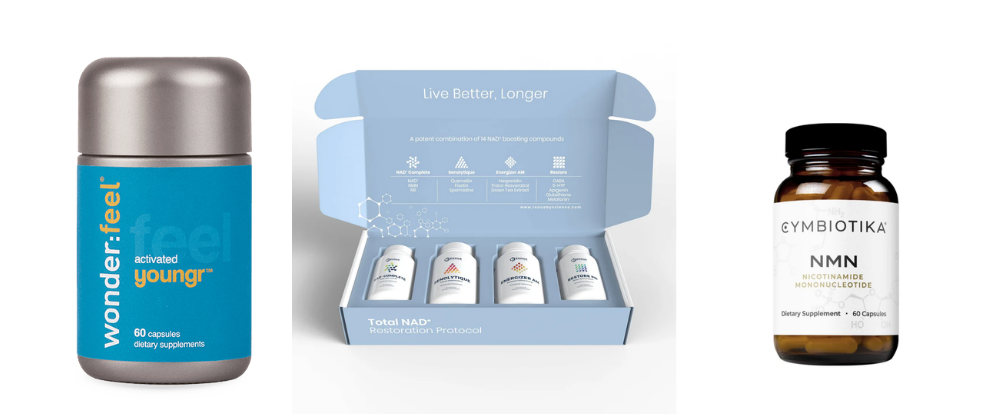
A lot of people cycle between NMN and NR every few months. There is no hard rule, but rotating precursors keeps both salvage routes active. I walk through a full stacking plan in my Total NAD+ Restoration Protocol review. Code BRAINFLOW saves you 10% on the Lipo NR too.
Do Not Skip Methylation Support (TMG)
Most supplement labels leave this part out. Building and using NAD+ consumes methyl groups, and over time that can tax your body’s methylation budget. It matters more if you take higher precursor doses or carry an MTHFR variant.
TMG (trimethylglycine) is the usual fix, often paired with methylated B12 and folate. A common rule of thumb is one 500 mg TMG capsule for roughly every 250 mg of NMN or NR. So 500 mg of NMN pairs with two TMG capsules.
Renue by Science TMG bundles all three in one capsule, which keeps the routine simple. Code BRAINFLOW takes 10% off.
Want NAD Directly? Research-Grade Biofermented NAD
NMN and NR are precursors. Some people in the research community prefer to supplement NAD itself, usually in a biofermented form produced through a natural fermentation process rather than chemical synthesis.
Oral absorption of straight NAD is still debated, which is why precursors remain the default for most beginners. If you want to experiment with NAD directly at a research-grade purity, Paramount Peptides NAD 1000mg Biofermented is a strong option. You will need to create a free account to view pricing, and code BRAINFLOW saves 10%.
Research-Grade NAD
Paramount Peptides
Prefer NAD directly? Their biofermented NAD 1000mg is research-grade purity, fermentation-derived rather than synthetic. Create a free account to view pricing.
Shop Paramount NAD →Use code BRAINFLOW to save 10%.
What About NAD+ IV Drips?
NAD+ IV therapy is everywhere now, from longevity clinics to wellness spas. It delivers NAD+ straight into the bloodstream, sidestepping digestion entirely.
The realistic take: it can raise circulating NAD+, the infusions are slow and can feel uncomfortable, they are expensive, and the controlled long-term human evidence for the anti-aging claims is still limited. For most people, consistent oral precursors plus exercise are a far better value.
The Honest Part: Who Actually Benefits?
This is the section supplement ads tend to skip, which is exactly why the rest of this article is worth trusting.
A 2024 systematic review and meta-analysis of NMN trials pooling 12 studies and over 500 people reached a blunt conclusion: NMN reliably raises blood NAD+, but most of the clinically meaningful outcomes were not significantly better than placebo.
One review of NR and exercise went further, arguing that in healthy people NAD+ precursors may not improve muscle metabolism or performance at all, and that the real payoff likely shows up in people who are actually NAD+ deficient, such as the elderly or those managing disease.
Use that as a filter rather than a reason to quit. If you are 25, healthy, and active, a precursor may do very little you can feel. If you are older, sedentary, recovering, or metabolically struggling, the upside is more plausible. The clearest wins in trials so far have come from people with a real deficit to close, like the walking improvement in artery-disease patients.
NAD+ support is a reasonable bet, not a miracle, and it works best stacked on top of the free habits that already carry the strongest evidence.
Who Should Be Cautious With NAD+ Boosters
These are widely used supplements with good safety records, but they are not for everyone, and this is general information rather than medical advice. Talk to your doctor first if any of these apply to you:
- Cancer history: the data is mixed, since NAD+ fuels both healthy cells and, in theory, tumor cells. Clear it with your oncologist.
- MTHFR variant: methylation support like TMG becomes more important, so build it in from the start.
- Serotonin-affecting medications: the kynurenine pathway connection is worth a quick conversation with your prescriber.
- Pregnancy or nursing: there is not enough safety data, so most people pause supplementation.
Side effects are usually mild and dose-related: occasional nausea, flushing, or feeling oddly tired in the first few days, most common at higher doses. The standard advice holds. Start low, go slow, and add one thing at a time so you know what is doing what.
Is NMN Even Legal? The 2025 FDA Reversal
If you tried to buy NMN a couple of years ago and found it had vanished from Amazon, here is what happened and what changed.
In 2022, the FDA decided NMN could not be sold as a dietary supplement, on the technical grounds that it had been authorized for study as a drug. After a multi-year fight led by the Natural Products Association, the agency reversed course. In letters dated September 29, 2025, the FDA confirmed that NMN is not excluded from the dietary supplement definition, and it reiterated that position in December 2025.
In plain terms, NMN is now lawful to sell and buy as a supplement in the United States, and it is back on major retailers. It is still classified as a New Dietary Ingredient, so companies carry notification requirements, but the categorical ban is gone.
One note for readers outside the US: Europe still treats NMN under its Novel Food rules and has not given it the same green light, so availability varies by country.
Where to Buy NAD+ Supplements (And Why Quality Matters)
Even during the years NMN was officially in limbo, plenty of products stayed on shelves, and a lot of them were of unknown purity. That is the real risk with this category. You are paying for an active compound you cannot see, so third-party testing is not optional.
That is the main reason I point readers to Renue by Science. They test every batch, publish purity data, focus on bioavailability, and price the larger formats sensibly. For a starting stack, the combination below covers the bases, and code BRAINFLOW takes 10% off all of it:
- Pure NMN Powder for your core precursor
- Lipo NR for absorption and rotation
- TMG for methylation support
If you would rather supplement NAD directly at research-grade purity, Paramount Peptides NAD 1000mg Biofermented is the option to look at, also 10% off with code BRAINFLOW.
Frequently Asked Questions About Low NAD+
At what age does NAD+ start dropping?
The decline appears gradual and tissue-dependent rather than tied to one birthday. Human muscle studies show clearly lower NAD+ in older adults compared to young ones, and the gap widens in people who are inactive. Most experts describe a steady downward drift across midlife rather than a sudden cliff.
NMN vs NR, which is better?
Both reliably raise blood NAD+ in human trials. NR has the longer safety record and the most published studies. NMN sits one step closer to NAD+ in the pathway. There is no decisive head-to-head winner, which is part of why many people rotate between them.
How long until I feel a difference?
Blood NAD+ can rise within weeks, and trials commonly run 8 to 12 weeks. Subjective changes, when they happen, tend to be gradual rather than dramatic. Keep the caveat in mind: healthy, active people may notice little, while those with a real deficit are likelier to feel something.
Can I just take niacin instead?
Niacin does raise NAD+ and costs far less, but at effective doses it commonly causes uncomfortable flushing, and it works through a slightly different route. NMN and NR were developed partly to raise NAD+ without that flush. Niacin is a legitimate option for some people, just not a perfect substitute.
Do NAD+ supplements actually extend lifespan?
In animals, NAD+ precursors have extended healthy lifespan in multiple studies. In humans, there is no proof of lifespan extension yet. The accurate framing is healthspan support backed by mechanism and short-term trials, not a proven longevity drug.
Your NAD+ Action Plan
If you want the short version, work top to bottom. The first items are free and best supported, the later ones are optional add-ons:
- Move daily. Mix walking, some cardio, and resistance training. This is the most proven NAD+ lever you have.
- Fix your sleep. Consistent timing, morning light, seven to nine hours.
- Eat the precursors. Build meals around niacin and tryptophan-rich foods.
- Add a precursor if you are older or deficient. Start with NMN or NR at 250 to 500 mg per day.
- Pair it with TMG. Roughly one 500 mg capsule per 250 mg of precursor.
- Reassess after 8 to 12 weeks. Track energy, sleep, and recovery, and adjust.
The Bottom Line on Low NAD+
NAD+ is one of the most important molecules you have never had measured. It powers your energy, repairs your DNA, runs your internal clock, and it does tend to fall with age in the tissues that shape how you feel day to day.
The fatigue, the fog, the lighter sleep, the slower recovery: none of these is automatically a diagnosis, but each has a real biological tie to NAD+, and the research linking them keeps getting stronger.
One line is worth remembering above the rest. The best-proven way to support NAD+ is free. Move daily, sleep on a schedule, eat real food, and you rebuild the machinery yourself. Supplements like NMN and NR reliably raise NAD+ and make a sensible add-on, especially as you get older, as long as you go in with realistic expectations and good-quality products.
You do not have to accept feeling older than you are. Start with the free levers today, layer the rest on top, and give your cells the raw material they have been quietly running short on.
This article is for educational purposes only and is not medical advice. NAD+ precursors are not intended to diagnose, treat, cure, or prevent any disease. Talk to a qualified healthcare provider before starting any new supplement, especially if you are pregnant, nursing, managing a medical condition, or taking medication.