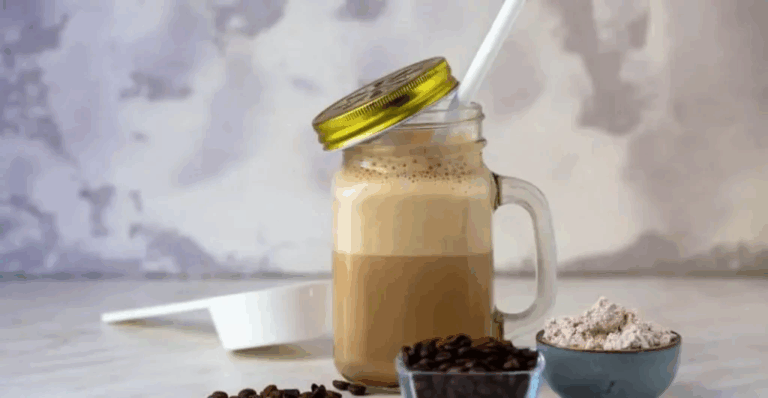
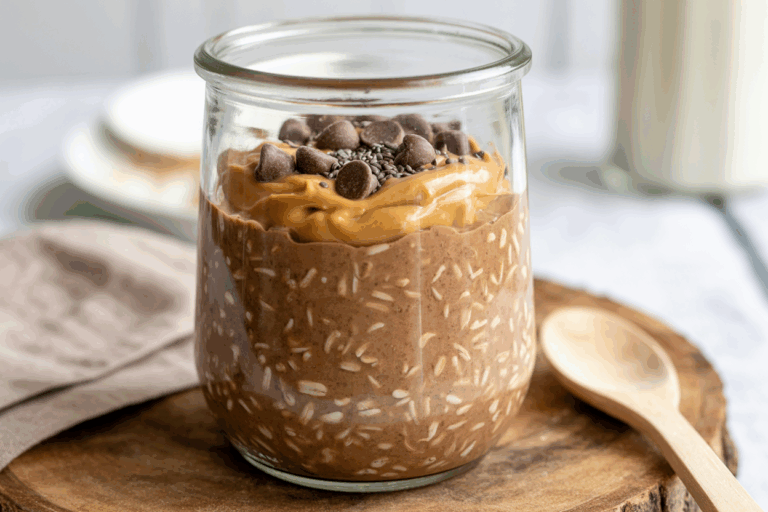
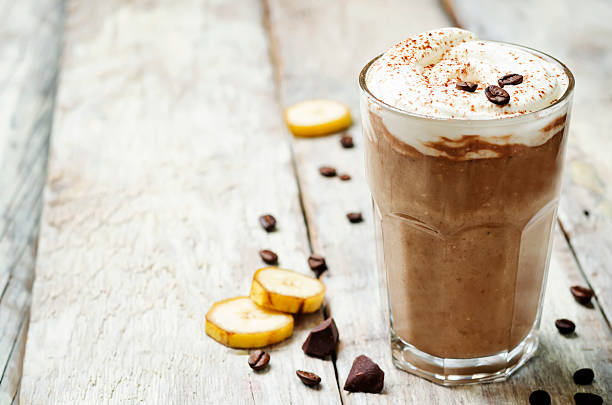
Banana Protein Coffee Shake Recipe

Sometimes you wake up and realize you need coffee and breakfast but only have time for one. This is how you get both in the same glass.

The banana makes it sweet without added sugar. The Greek yogurt makes it creamy and thick. The espresso powder gives you that wake-up kick. And somehow, when you blend it all together with protein powder, you get something that tastes like a fancy coffee shop drink.

Except this one has 41 grams of protein and costs about two dollars to make instead of eight.

What Makes This One Different

Most banana smoothies are just… banana smoothies. They’re sweet, they’re fine, but they don’t really do much for you.

This one’s built different.

The combination of Greek yogurt and protein powder gives you serious protein without making it taste like you’re drinking chalk. The peanut butter adds healthy fats that keep you full. And the espresso powder โ€“ not brewed coffee, but actual espresso powder โ€“ gives you concentrated coffee flavor without watering down the shake.

It’s gluten-free naturally. Works for vegetarians. And if you use plant-based protein powder and dairy-free yogurt, it goes vegan too.

Perfect for: Post-workout recovery, busy mornings when you’re running late, that 2 PM slump when you need caffeine but also actual nutrition.

Ingredients

  • 1 ripe banana, peeled and frozen
  • ยฝ cup plain Greek yogurt (low-fat or full-fat)
  • ยพ cup milk of choice (almond, oat, dairy โ€“ whatever you’ve got)
  • 1 scoop (30g) vanilla protein powder
  • 1 tablespoon natural peanut butter (or almond butter)
  • 2 teaspoons instant espresso powder (or ยผ cup cooled strong coffee)
  • 1 teaspoon unsweetened cocoa powder (optional, for mocha vibes)
  • ยฝ teaspoon ground cinnamon (optional but recommended)
  • ยผ cup ice cubes

Optional toppings: Banana slices, cacao nibs, extra cinnamon, drizzle of honey, or a few whole coffee beans if you’re feeling Instagram-worthy.

How to Make It

Step 1: Make sure your banana is frozen. Not refrigerator cold โ€“ actually frozen solid. This is what gives you that thick, almost ice cream texture.

If you forgot to freeze your banana, use a fresh one but double the ice. It won’t be quite as creamy but it’ll work.

Step 2: Toss everything into your blender in this order: milk first (prevents sticking), then Greek yogurt, frozen banana chunks, protein powder, peanut butter, espresso powder, cocoa powder if using, cinnamon, and ice.

Layering like this keeps the powder from clumping at the bottom where your blender blades can’t reach it.

Step 3: Blend on low for a few seconds just to get everything moving, then crank it to high.

With my Ninja blender, it takes about 45 seconds on high to get everything completely smooth. You’ll know it’s ready when you can’t hear any chunks hitting the sides anymore.

Step 4: Check the consistency. If it’s too thick to drink through a straw, add milk a tablespoon at a time and pulse. If it’s too thin, add more ice or another frozen banana chunk.

Step 5: Pour into a tall glass and drink it right away. Greek yogurt-based shakes get thicker as they sit, so this is best fresh.

If you want toppings, now’s the time. A few banana slices on top, some cacao nibs for crunch, maybe a light dusting of cinnamon.

Nutrition Breakdown

Here’s what you’re getting in one shake:

Calories: 435
Protein: 41g
Fat: 14g
Carbs: 43g
Fiber: 4g
Caffeine: About 60mg (roughly half a cup of coffee)

That 41 grams of protein is legit. Between the Greek yogurt (12g), protein powder (24g), peanut butter (4g), and milk (1.5g), you’re getting complete, quality protein that your body can actually use.

The natural sugars come from the banana and milk โ€“ no refined sugar added. The fiber and protein combination means your blood sugar stays stable instead of spiking and crashing an hour later.

Ways to Customize It

This recipe is a starting point, not a rulebook.

If you want more coffee flavor: Add another teaspoon of espresso powder, or use ยฝ cup of cooled strong coffee instead of milk. Just know it’ll thin out the shake slightly.

If you’re dairy-free: Use dairy-free yogurt (coconut or almond-based work great) and your favorite plant milk. The texture stays creamy with coconut yogurt especially.

If you want it sweeter: Add a tablespoon of honey or maple syrup. Or use a riper banana โ€“ those brown-spotted ones are way sweeter than yellow ones.

If you’re going full mocha: Increase the cocoa powder to 1 tablespoon and add a tiny pinch of instant espresso. It gets intense in the best way.

If peanut butter isn’t your thing: Almond butter works. So does sunflower seed butter if you’ve got nut allergies. Cashew butter makes it extra creamy.

For lower calories: Use fat-free Greek yogurt and powdered peanut butter (PB2). You’ll save about 80 calories and still keep most of the protein.

For a green boost: Toss in a handful of spinach. I know it sounds weird, but the banana and cocoa completely mask it. You get extra vitamins and you can’t taste it at all.

Storage and Meal Prep

This shake is definitely best fresh out of the blender. The Greek yogurt keeps thickening as it sits, and eventually you’ve got something closer to pudding than a drink.

But if you need to prep ahead, here’s what works:

Night-before prep: Blend everything and store it in a sealed jar or shaker bottle in the fridge. It’ll keep for about 12 hours. When you’re ready to drink it, shake it hard or give it a quick blend with a splash of milk to thin it back out.

Freezer packs: Put your frozen banana, protein powder, espresso powder, cocoa, and cinnamon in a freezer bag. Label it. In the morning, dump the pack into your blender with yogurt, milk, peanut butter, and ice. Blend and go.

Batch the dry ingredients: Mix your protein powder, espresso powder, cocoa, and cinnamon in a container. One scoop of this mix plus your fresh ingredients = instant shake.

Pro Tips That Actually Matter

Espresso powder vs. brewed coffee: Instant espresso powder gives you concentrated coffee flavor without adding extra liquid. If you use brewed coffee, use less milk or the shake gets too thin.

The banana ripeness thing: Brown-spotted bananas are sweeter and blend smoother. Yellow bananas work but you might want to add a touch of honey. Green bananas taste starchy and weird โ€“ don’t use those.

Greek yogurt matters: Full-fat Greek yogurt makes it creamier. Low-fat saves calories but loses some of that thick texture. Nonfat works but it’s noticeably thinner. Pick based on what matters more to you.

Not all protein powders blend the same: Some get clumpy, some taste chalky, some leave a weird film in your mouth. I use Orgain vanilla protein powder because it actually dissolves and doesn’t taste like sadness.

The cinnamon isn’t optional: Okay it technically is, but it rounds out all the flavors. Coffee plus banana plus cinnamon just works. Trust me on this.

Common Questions

“Can I use regular coffee instead of espresso powder?”

Yes, but use strong coffee and let it cool completely first. Replace ยผ to ยฝ cup of the milk with cooled coffee. Hot coffee plus frozen banana equals a lukewarm disappointment.

“What if I don’t have Greek yogurt?”

Regular yogurt works but it’s thinner and has less protein. You could also use cottage cheese โ€“ blend it really well and it gets creamy. Or use silken tofu for a dairy-free, high-protein option.

“Is this actually filling or just coffee in disguise?”

With 41g of protein and 14g of healthy fats, this will hold you for 3-4 hours easy. It’s a legit meal replacement, not just a snack. If you’re still hungry after, you probably need more calories overall โ€“ add another tablespoon of peanut butter.

“Can I make this without banana?”

You can, but you lose that natural sweetness and creamy texture. Try frozen mango or half an avocado instead. Frozen cauliflower rice works if you’re going low-carb, but you’ll definitely need to add sweetener.

“Will this keep me awake if I drink it at night?”

It has about 60mg of caffeine โ€“ less than a full cup of coffee but more than none. If you’re sensitive to caffeine, skip the espresso powder or go decaf. You’ll still get the coffee flavor.

“Why does mine taste chalky?”

Either your protein powder is low quality, or you didn’t blend it long enough. Cheap protein powders often taste terrible no matter what you do. And if you don’t blend for at least 30-45 seconds on high, the powder doesn’t fully incorporate.

More Protein Shake Recipes You’ll Love

If this banana coffee situation is working for you, check out these other high-protein shakes:

Cold Brew Coffee Protein Shake โ€“ The mocha version of this with cold brew and chocolate protein. Thick, creamy, 31g of protein, and it tastes like a frappรฉ.

Cookies and Cream Protein Shake โ€“ Tastes like an Oreo milkshake but with 30g of protein. No actual cookies required, just vanilla protein powder and a clever trick with cocoa powder.

Caramel Iced Coffee Protein Shake โ€“ If you’re more of a caramel person than chocolate, this is your move. Sweet, creamy, caffeinated, and it tastes like a Starbucks drink that costs way too much.

Maple Pecan Protein Shake โ€“ Fall in a glass. Real maple syrup, toasted pecans, and that cozy warmth that makes you want to wear flannel and pick apples or whatever people do in autumn.

Pumpkin Spice Protein Coffee Shake โ€“ The PSL everyone pretends to hate but secretly loves, except this one has actual pumpkin and enough protein to call it breakfast instead of just dessert.

The Bottom Line

This isn’t just another protein shake recipe you’ll make once and forget about.

It’s the kind of recipe that becomes part of your routine. The one you make three times a week because it’s easy, it tastes good, and it actually keeps you full.

The banana gives you natural sweetness and potassium. The Greek yogurt adds probiotics and creaminess. The protein powder and peanut butter give you staying power. And the espresso makes sure you’re actually awake enough to function.

It’s breakfast and coffee in one glass. And honestly? That’s exactly what some mornings need.

Creamy Cold Brew Coffee Protein Shake

There’s something about that first sip of cold coffee on a morning when you’re already running late. The smooth, almost sweet bitterness hits different than hot coffee โ€“ no burnt edges, no scalded tongue, just pure caffeinated bliss that actually tastes good.

This shake happened by accident, honestly. I’d made cold brew the night before and had a sad, browning banana sitting on the counter. Tossed them both in the blender with some protein powder and almond butter, and suddenly I had something that tasted like a coffee shop mocha but kept me full until lunch.

Now it’s on repeat. Three mornings a week, minimum.

Why This Recipe Actually Works

Most protein shakes taste like punishment. Chalky, weird aftertaste, that thick coating on your tongue that makes you regret your life choices.

This one’s different.

The cold brew brings genuine coffee flavor without bitterness. Frozen banana creates that thick, almost ice-cream texture without any actual ice cream. And here’s the thing about chia seeds โ€“ they expand in your stomach, which means you’re not prowling around the kitchen an hour later looking for snacks.

With 31 grams of protein and healthy fats from almond butter, this isn’t just flavored caffeine. It’s a meal that happens to wake you up.

What you’re getting: A 16-20 oz shake that takes 5 minutes to make and keeps you going for 3-4 hours. Real caffeine (about one shot of espresso), real protein, zero refined sugar.

Ingredients

  • โ…” cup cold brew coffee concentrate, fully chilled (or strong regular coffee, cooled)
  • ยผ cup unsweetened vanilla almond milk (or oat/cashew milk)
  • 1 ripe banana, peeled and frozen
  • 1 scoop (30g) chocolate protein powder (vanilla works too)
  • 2 tablespoons maple syrup (or honey)
  • 1 tablespoon almond butter (or peanut/sunflower seed butter)
  • 2 teaspoons chia seeds
  • 1 teaspoon unsweetened cocoa powder
  • ยฝ teaspoon vanilla extract
  • ยผ cup ice cubes

Optional toppings: Coconut whipped cream, extra chia seeds, cacao nibs, pinch of flaky sea salt

How to Make It (The Right Way)

Step 1: Make sure your banana is actually frozen. Not just cold โ€“ frozen solid. This is non-negotiable if you want that thick milkshake texture.

Fresh banana plus ice makes a watery, disappointing shake. Frozen banana is the entire secret to making this feel indulgent.

Step 2: Add your liquids first โ€“ cold brew and almond milk go straight into the blender. This prevents the protein powder from clumping at the bottom like sad, chalky sediment.

Step 3: Break up your frozen banana and drop it in, along with the almond butter and protein powder. Then add the small stuff: chia seeds, cocoa powder, maple syrup, vanilla.

Layering matters here. Liquids first, then the chunky stuff, then powders and seeds. Your blender will thank you.

Step 4: Start blending on low just to get everything moving, then crank it to high. You want to blend for a full 45-60 seconds until it’s completely smooth.

I use this Ninja blender and it pulverizes frozen bananas in seconds. You’ll hear it โ€“ the sound changes from choppy and chunky to smooth and uniform. That’s when you know it’s ready.

Step 5: Check the consistency. Too thick? Add almond milk one tablespoon at a time. Too thin? Add more ice or another frozen banana chunk.

Pour it into a big glass and drink it immediately. Chia seeds start working their magic within minutes, absorbing liquid and thickening everything up.

What You’re Actually Getting (Nutrition-Wise)

Here’s the breakdown for one full shake:

Calories: 470
Protein: 31g
Fat: 14g
Carbs: 62g
Fiber: 9g
Caffeine: About 100mg

That protein number isn’t a typo. Between the protein powder, almond butter, and chia seeds, you’re getting serious staying power.

The combination of protein and healthy fats signals your satiety hormones way better than carbs alone. Add in 9 grams of fiber from the chia seeds and banana, and your blood sugar stays stable instead of spiking and crashing.

Translation: You won’t be face-down in a bag of chips by 10 AM.

Making It Your Own

This recipe is a template, not a rule.

If you want less sugar: Cut the maple syrup down to 1 tablespoon. You’ll save about 50 calories and 13 grams of carbs. The banana still provides natural sweetness.

If you want it even creamier: Swap the almond milk for full-fat canned coconut milk. It’s richer and gives you that coffee shop texture.

If caffeine makes you jittery: Use half cold brew and half decaf, or go completely decaf. You’ll still get the coffee flavor without the racing heart.

If you’re avoiding dairy: Good news โ€“ this is already dairy-free if you’re using plant-based protein powder and almond milk.

If you want full mocha mode: Add another teaspoon of cocoa powder plus a teaspoon of instant espresso powder. It gets intense in the best way.

For a fall twist: Add ยผ cup pumpkin puree and 1 teaspoon pumpkin pie spice. Suddenly you’ve got a pumpkin spice latte situation.

If peanut butter is your thing: Swap the almond butter for peanut butter and add a tablespoon of mini chocolate chips. It’s basically a peanut butter cup you can drink.

Storage & Make-Ahead Tricks

This shake is best fresh. Like, right-out-of-the-blender fresh.

But life happens, and sometimes you need to prep ahead.

Make it the night before: Blend everything and store it in an airtight container in the fridge. It’ll keep for 24 hours, but it gets THICK as the chia seeds absorb the liquid. Shake it vigorously or add a splash of almond milk before drinking.

Freezer packs are your friend: Portion out everything except the liquids into freezer bags. One frozen banana, one scoop protein powder, chia seeds, cocoa powder โ€“ all in one bag.

In the morning, dump one pack into the blender with your cold brew and almond milk. Blend and you’re done. Five minutes, tops.

Batch your cold brew: Make a big jar of cold brew concentrate on Sunday night. It stays good in the fridge all week. Game changer for weekday mornings.

The Small Details That Matter

Always use frozen banana. I’ve said it three times now because it’s that important. Fresh banana plus ice equals a watery, sad shake. Frozen banana equals thick, creamy perfection.

Your coffee strength matters. Weak coffee means weak flavor. If you’re using regular coffee instead of cold brew, make it strong โ€“ double what you’d normally brew.

Not all protein powders are created equal. If your shake tastes chalky or leaves a weird film in your mouth, your protein powder is probably low quality. I use Orgain chocolate protein powder โ€“ it blends smooth and doesn’t taste like cardboard.

Let the chia seeds bloom: For extra thickness, blend everything except the chia seeds first. Let it sit for 5 minutes, then add the chia and pulse briefly. They’ll absorb liquid and create this almost tapioca-like texture.

What People Always Ask

“Can I just use regular hot coffee instead of cold brew?”

You can, but you need to let it cool completely first. Hot coffee plus frozen banana equals lukewarm disappointment. Cold brew is naturally smoother and less bitter, but strong cooled coffee works fine.

“What if I don’t have protein powder?”

Your protein count drops to about 8 grams without it, which isn’t terrible but doesn’t really qualify as a protein shake anymore. You could add ยผ cup Greek yogurt or silken tofu to recover some protein, but you won’t hit that 31-gram mark.

“Is this actually filling or will I be starving in an hour?”

With 31 grams of protein, 14 grams of fat, and 9 grams of fiber, this should easily hold you for 3-4 hours. If you’re still hungry, the issue isn’t the shake โ€“ you probably need more calories overall. Add another tablespoon of almond butter.

“Can I make this without banana?”

Technically yes, but you’ll need to substitute another frozen fruit. Frozen mango works, or even frozen cauliflower rice if you’re going low-carb. The texture won’t be quite the same though. Banana has a specific creaminess that’s hard to replicate.

“How do I make this lower calorie without losing the protein?”

Cut the maple syrup to 1 tablespoon (saves 52 calories). Use half a banana (saves 53 calories). Or use powdered peanut butter instead of almond butter (saves about 70 calories). You can get this down to 295-345 calories while keeping the protein high.

“Will this give me coffee jitters?”

It has about the same caffeine as a single shot of espresso โ€“ around 100mg. If you’re sensitive to caffeine, use half cold brew and half decaf. Or go completely decaf and you’ll still get the coffee flavor.

The Real Talk

Here’s what nobody tells you about protein shakes: most of them are terrible.

They’re chalky, they’re weirdly sweet, they leave this coating in your mouth that makes you want to immediately brush your teeth. You force them down because you’re supposed to, not because you want to.

This isn’t that.

This tastes like something you’d order at a coffee shop and pay seven dollars for. It’s creamy, it’s rich, it actually tastes like chocolate and coffee instead of artificial flavoring and regret.

And yeah, it’s got 31 grams of protein. But honestly? You’re making this because it’s delicious, not because you’re trying to force down nutrients.

The protein is just a bonus.

More Protein Shake Recipes You’ll Love

If you’re into this whole “protein shakes that actually taste good” thing, I’ve got you covered:

Cookies and Cream Protein Shake โ€“ Tastes like an Oreo milkshake but with 30g of protein. No actual cookies required, just vanilla protein powder and a clever trick with cocoa powder.

Caramel Iced Coffee Protein Shake โ€“ If you’re more of a caramel person than chocolate, this is your move. Sweet, creamy, caffeinated, and it tastes like a Starbucks drink that costs way too much.

Maple Pecan Protein Shake โ€“ Fall in a glass. Real maple syrup, toasted pecans, and that cozy warmth that makes you want to wear flannel and pick apples or whatever people do in autumn.

Pumpkin Spice Protein Coffee Shake โ€“ The PSL everyone pretends to hate but secretly loves, except this one has actual pumpkin and enough protein to call it breakfast instead of just dessert.

One Last Thing

Make this once and you’ll understand why I keep a bag of frozen bananas and a jar of cold brew in my fridge at all times.

It’s not just convenient. It’s genuinely good. The kind of good where you’re excited to wake up because you know this is waiting for you.

And on mornings when you’re already running 10 minutes late and your hair won’t cooperate and you can’t find your keys, having something this easy and this satisfying makes all the difference.

Pour it in a to-go cup if you need to. Drink it in the car. Just don’t skip it.

You’ll be glad you didn’t.

Chocolate Peanut Butter Protein Overnight Oats Recipe (25g Protein)

The other day my friend asked me if I was eating brownie batter for breakfast. Close… These chocolate peanut butter overnight oats taste like someone melted a Reese’s cup into oatmeal, added enough protein to fuel a linebacker, then made it magically appear overnight without any cooking. Twenty-five grams of complete protein that tastes like candy for breakfast.

Six months ago, breakfast meant rushed protein bars, skipped meals, or sad instant oatmeal. Now five mason jars in the fridge mean grab-and-go nutrition that actually tastes better than most desserts. The guys at the gym keep asking about diet changes because everyone’s lifts improved once we started this “breakfast gains protocol.”

The Chocolate Peanut Butter Combination That Changes Everything

Most chocolate overnight oats taste like sadness mixed with cocoa powder. They’re either too bitter, too sweet, or have that weird protein powder aftertaste that makes you question your life choices. But when you layer chocolate and peanut butter correctly, using both cocoa AND chocolate protein powder, something magical happens.

The trick isn’t just dumping ingredients together. It’s creating layers of flavor that build on each other. Natural peanut butter provides healthy fats that slow protein absorption. Cocoa powder adds antioxidants and depth without sugar. Chia seeds create pudding-like texture while adding omega-3s. Greek yogurt brings casein protein for extended release.

Together, these ingredients deliver 25 grams of protein from five different sources, each absorbing at different rates. You get immediate whey for post-workout recovery, medium-speed casein for sustained release, and slow plant proteins that keep feeding your muscles for hours. It’s basically a time-release protein system that tastes like dessert.

Ingredients for Chocolate Peanut Butter Protein Oats

Base recipe (makes 2 servings, 25g protein each):

The Reese’s topping situation:

  • Extra peanut butter drizzle
  • Mini chocolate chips
  • Crushed peanuts
  • Banana slices
  • Cacao nibs for crunch
  • Whipped Greek yogurt “frosting”

Building the Perfect Chocolate PB Layers

Get two 16-ounce mason jars ready. This is a two-jar recipe because portion control with chocolate peanut butter anything is a joke. You’ll want both servings.

First, the crucial step everyone skips: mix your chocolate protein powder with cocoa powder while dry. This prevents cocoa clumps that taste like bitter dirt pockets. Add about ยฝ cup almond milk and whisk like you’re trying to solve world hunger. No lumps. None. This takes 45 seconds of aggressive whisking.

Now add 2 tablespoons of peanut butter (save the third for swirling), Greek yogurt, maple syrup, vanilla, and salt. That salt is non-negotiable; it makes the chocolate pop and the peanut butter sing. Mix until it looks like brownie batter.

Add remaining milk and whisk smooth. The color should be rich chocolate brown, not gray. Gray means cheap protein powder or not enough cocoa. Fix it now or regret it tomorrow.

Fold in oats and chia seeds gently. Don’t overmix or you’ll break down the oat structure. Divide between jars. Here’s the money move: dollop the remaining tablespoon of peanut butter on top of each jar and swirl it through with a knife. Creates peanut butter ribbons that you’ll hit like treasure while eating.

Seal, refrigerate, dream about tomorrow’s breakfast.

The Overnight Transformation Science

While you sleep, complex chemistry happens in those jars. The chia seeds absorb liquid and expand, creating gel-like pockets that mimic the texture of chocolate pudding. They also release mucilage (sounds gross, tastes amazing), which binds everything together.

The protein powder continues hydrating throughout the night. Unlike a shake where powder hits liquid and immediately gets consumed, the slow hydration eliminates any grittiness. By morning, the protein is fully integrated, undetectable except for the creamy richness it provides.

Peanut butter’s oils slowly migrate through the mixture, creating flavor pockets without making everything greasy. The natural sugars in the oats break down slightly, adding subtle sweetness without needing extra sugar. The cocoa powder blooms, developing deeper chocolate notes than fresh-mixed cocoa ever could.

Temperature plays a huge role. The cold environment slows enzymatic activity, preventing the oats from becoming mushy while allowing flavors to meld. It’s basically controlled fermentation without actual fermentation.

Real Nutritional Breakdown (Not Marketing Math)

Per jar actual nutrition:

  • Calories: 385
  • Protein: 25g (detailed breakdown below)
  • Carbohydrates: 42g
  • Fiber: 13g (that’s over half your daily need)
  • Fat: 14g (mostly healthy unsaturated)
  • Sugar: 10g (from maple and milk, not added garbage)

Protein source timing:

  • Whey from powder: 15g (absorbs in 1-2 hours)
  • Casein from yogurt: 5g (absorbs in 3-4 hours)
  • Plant proteins from oats: 5g (absorbs in 4-6 hours)
  • Nut proteins from PB: 3g (absorbs in 5-6 hours)
  • Complete proteins from chia: 2g (absorbs in 6+ hours)

This staged absorption means you’re getting protein delivery for almost 8 hours from one meal. Compare that to a protein shake that’s absorbed in 90 minutes and leaves you hungry by 10am.

Advanced Meal Prep Strategies

Sunday night, line up seven jars (yes, seven – weekends count). Make 3.5x the base recipe in a huge bowl. Mix dry ingredients first, then wet, then fold in oats/chia. Assembly line that process. Pour, swirl peanut butter, cap, done. Twenty minutes for a week of breakfast.

Daily variety hacks:

  • Monday/Tuesday: Classic as written
  • Wednesday: Add instant espresso powder (mocha vibes)
  • Thursday: Swap PB for almond butter
  • Friday: Extra chocolate chips because Friday
  • Weekend: Top with protein “nice cream” (frozen banana + protein powder)

Jars keep perfectly for 7 days. Some push it to 10 when desperate. The texture actually improves after day 3 as flavors meld deeper. Day 7 tastes like chocolate peanut butter pudding with oats mixed in.

Pro tip: Write the date on lids with washable markers. Not because they’ll go bad, but because you’ll forget what day you made them and panic unnecessarily.

Customization for Every Goal and Diet

Cutting version (lower calorie, same protein): Replace half the peanut butter with PB2 powder. Use sugar-free syrup. Still get 24g protein but save 120 calories.

Bulking version (35g protein, 500+ calories): Add a scoop of collagen peptides plus an extra tablespoon peanut butter. Becomes a weight-gain weapon.

Vegan modification: Use plant-based chocolate protein, swap Greek yogurt for coconut yogurt, ensure peanut butter has no honey. Still hit 22g protein.

Keto adaptation: Replace oats with hemp hearts and ground flax. Use keto maple syrup. Under 8g net carbs, 23g protein. Tastes different but still amazing.

Nut-free version: Replace peanut butter with sunflower seed butter or tahini. Similar macros, different but still delicious flavor profile.

Competition prep: Use casein protein instead of whey for slower digestion. Add fiber supplement for extra satiety. The slow-digesting proteins prevent muscle breakdown during cuts.

Temperature and Texture Modifications

Straight from fridge: Perfect for hot mornings or when you’re rushing. The cold temperature makes them taste like ice cream. Some people prefer them cold always.

Room temperature: Let sit 10 minutes after removing from fridge. Flavors become more pronounced, texture softens slightly. Many people’s preferred method.

Warmed up: Microwave 45 seconds, stir, then 20 more seconds. Add splash of milk first. Becomes like hot chocolate oatmeal. Perfect for winter mornings.

Frozen overnight oats: Freeze the jars, thaw overnight in fridge. Creates an almost ice cream-like texture. Kids lose their minds over this version.

Smoothie conversion: Blend the overnight oats with ice, extra milk, and a frozen banana. Instant chocolate PB protein smoothie with better macros than any smoothie shop.

Troubleshooting Common Problems

“Tastes too much like protein powder”: Your powder needs upgrading. Invest in quality chocolate protein powder that actually tastes like chocolate, not chemicals with brown coloring.

“Too thick and pasty”: Add 2-3 tablespoons milk when serving. Different proteins absorb differently. Adjust liquid based on your brand.

“Not chocolatey enough”: Add an extra tablespoon cocoa powder or use chocolate milk instead of regular. Some people even add sugar-free chocolate syrup.

“Peanut butter didn’t swirl”: Your PB is too thick. Microwave it for 10 seconds before swirling, or thin with a teaspoon of milk.

“Oats are mushy”: You’re using instant oats instead of old-fashioned, or overmixing. Old-fashioned oats maintain structure better.

“Not sweet enough”: Your taste buds might be sugar-adapted. Add maple syrup gradually, or use vanilla Greek yogurt instead of plain. Some add stevia without adding calories.

Cost Analysis That’ll Shock You

Per serving breakdown:

  • Oats: $0.25
  • Protein powder: $0.80
  • Greek yogurt: $0.45
  • Peanut butter: $0.35
  • Chia seeds: $0.30
  • Other ingredients: $0.35
  • Total: $2.50 per breakfast

Compare to alternatives:

  • Starbucks protein box: $8.95
  • Smoothie shop protein bowl: $12.00
  • Drive-thru breakfast sandwich: $6.50
  • Protein bar + coffee: $5.00

You save $15-30 per week while eating better food with superior macros. Monthly savings: $60-120. Yearly: $720-1440. That’s a vacation funded by overnight oats.

Why These Beat Every Other Breakfast Option

Three months ago, breakfast was everyone’s weakness. Skipped half the time, ate garbage the other half. Morning workouts suffered, energy crashed by 10am, and lunch became overeating from being starved.

These chocolate peanut butter protein oats fix everything. Not through willpower or discipline, but by making healthy breakfast more appealing than unhealthy options. When your breakfast tastes like a Reese’s cup and delivers 25g protein, compliance becomes automatic.

Recovery improves within a week. Morning workouts become productive instead of painful. The sustained energy from staged protein absorption eliminates morning snacking. Even sleep improves, probably from stable blood sugar throughout the day.

The real victory comes when this becomes a sustainable system. No more decision fatigue about what to eat. No more rushing to find something healthy. No more starting the day already behind on protein goals. Just grab a jar and go.

The Science of Sustained Energy

Unlike traditional oatmeal that spikes blood sugar then crashes, these oats provide sustained energy through multiple mechanisms. The protein slows carbohydrate absorption. The fiber creates a gel that further slows digestion. The healthy fats from peanut butter and chia provide lasting satiation.

Research shows that consuming 20-30g protein at breakfast improves muscle protein synthesis throughout the day. It also reduces ghrelin (hunger hormone) and increases peptide YY (satiety hormone). Translation: you build more muscle and feel less hungry.

The combination of chocolate and peanut butter isn’t just for taste. Cocoa contains theobromine, a mild stimulant that provides steady energy without jitters. Peanut butter’s arginine content improves blood flow, potentially enhancing nutrient delivery to muscles.

Related High-Protein Breakfast Options

Expand your morning protein arsenal with these recipes:

Protein Chai Pumpkin Overnight Oats bring fall flavors with 20g protein.

Blueberry Pancake Protein Oats taste like breakfast dessert with 22g protein.

Apple Pie Protein Smoothie for drinkable breakfast with 25g protein.

No-Bake Protein Energy Bites when you need portable protein snacks.

High-Protein French Toast for weekend meal prep sessions.

The System That Makes It Sustainable

Success isn’t about one perfect breakfast. It’s about having a system that makes good choices automatic. These overnight oats remove every barrier between you and quality nutrition. No cooking skills required. No morning time needed. No cleanup beyond rinsing a jar.

The chocolate peanut butter flavor makes it something to crave, not tolerate. The 25g protein ensures muscle building, not just stomach filling. The staged nutrient release provides satisfaction for hours, not minutes.

Make your first batch this Sunday. Use quality ingredients – good chocolate protein powder, natural peanut butter, real rolled oats. Give them the full overnight to develop. Monday morning, when you’re eating what tastes like candy but delivers serious nutrition, you’ll understand why this changes everything.

Stop making breakfast complicated. Stop choosing between taste and nutrition. Stop starting your day already behind on protein. These chocolate peanut butter protein overnight oats solve every breakfast problem in one jar. Your muscles will thank you. Your taste buds already are.

Jeff Bezos’ Morning Routine: No Phone, No Alarm, No Rush

0

Here’s something that might surprise you: Jeff Bezos, the guy who built Amazon into a trillion-dollar behemoth, doesn’t set an alarm clock.

Seriously.

While Silicon Valley bros are crushing 4 a.m. workouts and mainlining bulletproof coffee, Bezos is… puttering. That’s his actual word for it. Speaking to Bloomberg’s David Rubenstein, he said, “I like to putter in the morningโ€ฆ I read the newspaper, have coffee, and have breakfast with my kids before they go to school.”

No CrossFit. No cold plunges. No inbox zero before sunrise.

(Though he does have some fancy toys. I went down a rabbit hole and found out he uses this $130 smart mug that keeps his coffee at the perfect temperature while he putters. Because of course he does.)

This is the same guy who revolutionized how we shop, launched himself into space, and became one of the richest humans to ever exist. And his secret weapon? Sleeping in until 6:30 and taking his sweet time over coffee.

Look, I’ll admit it. When I first heard about Bezos’s routine, I was skeptical. How does someone build an empire by… doing less? But then you dig into the details, and suddenly it starts making a weird kind of sense. Maybe, just maybe, the rest of us have been doing mornings all wrong.

Let me walk you through exactly what Bezos does each morning and more importantly, why neuroscientists and sleep researchers think he might be onto something big.

๐Ÿ“ Jeff Bezos’s Morning Routine at a Glance:
  • 6:30 AM: Wakes naturally (no alarm clock)
  • 6:45 AM: “Magic moment” conversation with Lauren Sรกnchez
  • 7:00 AM: Puttering begins: coffee, newspaper, no phones
  • 7:30 AM: Family breakfast with kids
  • 8:30 AM: Kids leave for school (family catchphrase: “Make good choices!”)
  • 9:00 AM: Continued reading and thinking time
  • 10:00 AM: First “high-IQ” meeting of the day

6:30 AM: The No-Alarm Revolution

Let’s start with the thing that breaks most people’s brains: Bezos doesn’t use an alarm clock. Haven’t for years.

When he spoke at the Economic Club of Washington in 2018, he got surprisingly passionate about this: “I prioritize eight hours of sleep. I think better, I have more energy, my mood is better.” Then he dropped this gem: “As a senior executive, you get paid to make a small number of high-quality decisions. Is it really worth it if the quality of those decisions might be lower because you’re tired or grouchy?”

Think about that for a second. The man’s basically saying that sleeping in makes him better at his job.

And here’s the kicker: he’s probably right. I stumbled across this University of Westminster study that found people who get jarred awake by alarms have way higher cortisol levels (that’s your stress hormone) compared to folks who wake up naturally. We’re literally starting our days stressed out because of that innocent-looking alarm clock.

Stanford neuroscientist Dr. Andrew Huberman backs this up. Apparently when you wake up naturally, your brain’s already been preparing for consciousness for about 20 minutes. It’s like a gentle warm-up versus being thrown into the deep end.

But let’s be real here. Most of us can’t just… not set an alarm. We’ve got jobs, kids, responsibilities. Still, there’s something we can steal from Bezos: going to bed earlier. He’s usually lights-out by 10:30 PM. Old man behavior? Maybe. But the guy seems pretty happy with his billions, so who’s really winning here?

If you absolutely need an alarm, at least make it humane. I switched to this sunrise simulator that wakes you with gradual light instead of that heart-attack-inducing BEEP BEEP BEEP. It’s like the difference between someone gently tapping your shoulder versus throwing ice water on your face.

๐Ÿ’ก Want to Try the No-Alarm Life?
  • Start on a weekend (less pressure if you oversleep)
  • Calculate backwards: need to be up by 7? In bed by 11
  • Get these blackout curtains from Amazon (they’re like $40 and literally changed my mornings)
  • Or try the Philips Wake-Up Light (wakes you with gradual sunrise instead of jarring beeps)
  • Keep your phone in another room (this one’s huge)
  • Give it two weeks (your body needs time to adjust)

7:00 AM: The Art of ‘Puttering’ with Coffee, Newspaper, and No Rush

Okay, so “puttering” might be the most Jeff Bezos word ever. It sounds like something your grandpa does in the garage. But hear me out.

After waking, Jeff Bezos does something rather unexpected for a busy CEO: he “putters.” Puttering, as he describes it, means “having coffee, reading the newspaper, breakfast with my kids” and basically taking his sweet time in the morning. In his Bloomberg interview with David Rubenstein, he explicitly said: “I like to putter in the morningโ€ฆ my puttering time is very important to me.”

What does puttering look like? Picture this: Bezos shuffling to the kitchen in his slippers, making coffee in his fancy Ember mug (yeah, the $130 one that keeps coffee at exactly the right temperature. Peak billionaire behavior, but I bought one and now I can’t go back). He grabs the actual, physical newspaper. The Washington Post, naturally, since he owns it. Maybe The New York Times too.

Then, and this is my favorite part, he just sits there. Reading. Sipping. Thinking.

Lauren Sรกnchez spilled all the details to People Magazine about their morning ritual. They call it their “magic moment,” this quiet time before the kids wake up where they just… talk. About dreams, ideas, whatever’s on their minds. No agenda. No phones. Just two people actually connecting.

“We don’t have our phones with us when we’re in bed or when we’re having breakfast,” Sรกnchez revealed. “That’s one of the rules. If you have your phone, you’re going to get pulled into the vortex.”

Oh, and according to the Vogue profile, Bezos bought her this ridiculous novelty mug that says “Woke up sexy as hell again.” That’s the energy we’re dealing with here. The world’s second-richest man, drinking coffee from a joke mug, reading the paper like it’s 1987.

And here’s a detail that makes him even more relatable: according to Sรกnchez, Bezos is actually the morning person in their relationship. “He’s very good in the morning. He wakes up happy,” she said. Meanwhile, she’s presumably clutching that temperature-controlled coffee he made for her, trying to become human.

The Wall Street Journal recently wrote about this whole “slow morning movement.” Apparently Bezos isn’t alone. More executives are discovering that starting slow actually makes them faster later. One woman they interviewed said after ditching her phone in the morning, “Without an immediate inundation of photos and opinions each morning, I was able to think more clearly.”

That makes sense, right? Your brain’s like a computer. If you immediately open 47 tabs, everything runs slower.

๐Ÿ’ก Your Puttering Starter Pack:
  • Block out 30 minutes minimum (an hour’s better)
  • Make your coffee ritual special (I’m obsessed with this temperature-control mug)
  • Go analog: newspaper, book, journal, sketchpad
  • Tell your family/roommates this is sacred time
  • Seriously, hide your phone

7:30 AM: The Phone-Free Zone That Changed Everything

This might be the hardest pill to swallow: Bezos doesn’t touch his phone in the morning. Like, at all.

Sรกnchez told People it’s a hard rule in their house: “We don’t have our phones with us. That’s one of the things I love about mornings. We have our little magic moment before we get the kids off to school.”

She even admitted how hard it was at first: “It wasn’t easy in the beginning to leave the phone outside, but now it’s just our way.”

I know what you’re thinking. “Must be nice to ignore your phone when you’re worth $170 billion.” Fair point. But then I found this research from Stanford’s Lifestyle Medicine program, where Maris Loeffler basically says we’re all screwing ourselves by checking phones first thing.

Her team found that people who grab their phones immediately after waking show:

  • 23% higher anxiety levels throughout the day
  • Decreased focus that lasts for hours
  • This weird sense of time scarcity (feeling rushed all day)

“One of the biggest issues with picking up the phone right away in the morning is that when you have an object close to your face, it’s registered as a threat,” says Loeffler. “You wouldn’t want to wake up and look a bear in the face every morning. On a physiological level, it’s the same thing.”

Plus, and this is wild, it actually changes your brain over time. Like, physically changes the gray matter. We’re rewiring ourselves for distraction, one morning scroll at a time.

But here’s what really got me: Bezos isn’t just avoiding bad news or work stress. He’s protecting his brain’s best hours. Think about it. You wake up fresh, and immediately you’re responding to other people’s priorities. Their emails, their posts, their everything. You’ve given away your mental prime time before you’ve even had coffee.

No wonder Bezos guards this time like a dragon guarding gold.

๐Ÿ’ก Breaking Your Phone Addiction (Baby Steps):
  • Buy an actual alarm clock (yes, they still make them)
  • Or get this sunrise alarm so the phone can stay in another room
  • Charge your phone in the bathroom, not beside your bed
  • Turn on “Do Not Disturb” until 9 AM
  • Delete social apps (or at least log out each night)
  • Replace scrolling with literally anything else

8:00 AM: Breakfast, Where Business Meets Octopus

The Bezos family breakfast is apparently quite the production. Not because it’s fancy (though there was that one time…), but because it’s so deliberately normal.

As Sรกnchez recently told People, their mornings are surprisingly low-key: “We’re very normal. We have dinner together every night. We have breakfast together every morning. He makes the coffee in the morning, not me.”

Wait, the billionaire makes the coffee? “He makes really good coffee,” she laughed. “He gets up earlier than I do. He’s very good in the morning. He wakes up happy.”

The family even has their own little traditions. When the kids leave for school, everyone shouts: “Make good choices!” (Which, honestly, is advice we could all use.)

But let’s talk about the octopus in the room.

Back in 2014, Bezos was having a breakfast meeting with Matt Rutledge, the founder of Woot (which Amazon had acquired). According to the legendary D Magazine story, Bezos ordered Mediterranean octopus with potatoes, bacon, green garlic yogurt, and a poached egg. For breakfast. At like 8 AM.

When Rutledge asked him why Amazon bought Woot, Bezos looked down at his plate and said: “You’re the octopus that I’m having for breakfast. When I look at the menu, you’re the thing I don’t understand, the thing I’ve never had. I must have the breakfast octopus.”

That’s such a power move. While everyone else is eating their sad protein bars, Bezos is out here ordering cephalopods because they confuse him. You can’t teach that kind of confidence.

But usually? His breakfast is probably pretty normal. Cereal with the kids. Maybe eggs. The point isn’t what he eats. It’s that he takes the time to eat it, with people he loves, without rushing.

Harvard Business Review research shows that leaders who start their day with positive personal interactions are literally 31% more productive. Something about oxytocin, dopamine, all those feel-good chemicals. Turns out, happiness isn’t just nice to have. It’s a performance enhancer.

๐Ÿ’ก Build Your Family Morning Ritual:
  • No devices at the breakfast table
  • Create a family catchphrase or tradition
  • Keep conversations light and positive
  • Make it unhurried (prep breakfast items the night before)
  • Include pets in the morning routine

9:00 AM: Thinking Time and Reading, Consuming Information Deliberately

During Bezos’s easy mornings, another activity he values is simply thinking or reading.

Being the owner of The Washington Post, he has a penchant for newspapers, but it’s also a deliberate choice of medium that doesn’t ping him with notifications.

“I get up early. I go to bed early. I like to putter in the morning,” he said in his Bloomberg chat with Rubenstein, explaining he doesn’t like to schedule anything immediately.

This puttering, beyond coffee and family, likely includes brainstorming or planning in his head. Bezos has mentioned doing what he calls “little thinking retreats,” taking time away from the rush to focus deeply on thinking through problems or ideas. While a full retreat might happen outside daily routine, you can see the mini-version of it in his mornings: unstructured time often leads to creative thoughts popping up.

If Bezos has a particularly thorny issue or a new idea he’s mulling, the morning quiet is when those thoughts can percolate. Psychologically, our brains are often in a mixed state of alpha and theta waves when we first wake up, which can be conducive to creativity and insight. By not drowning that out with immediate work, Bezos gives himself a chance to perhaps have an “aha moment” over coffee. Many creative people and scientists through history (from writer Trollope to inventor Edison) had morning routines involving quiet thinking or reading, precisely because it’s a fruitful time for the mind.

Another detail: Bezos doesn’t check work emails until after his morning routine, but he might skim internal reports or documents later in the morning once he’s in work mode. He has a well-known practice at Amazon of starting meetings with everyone silently reading printed memos for 30 minutes, emphasizing the importance of careful reading and thinking. That respect for the written word suggests his mornings might occasionally involve reviewing important documents in a relaxed setting. He certainly won’t be composing long responses on email at 7 a.m., but he might read a product plan or a manuscript (if working on Blue Origin or other projects) as part of his thoughtful start.

๐Ÿ’ก Optimize Your Morning Learning:
  • Schedule 20-30 minutes for reading
  • Choose physical books or newspapers (no notifications)
  • Keep a notebook nearby for insights
  • Alternate between industry content and broader topics
  • Save emails and Slack for after 10 AM

10:00 AM: When Real Work Finally Begins

Here’s the punchline to this whole morning routine: Bezos doesn’t start actual work until 10 AM.

Ten. In the morning.

In his Economic Club talk, he explained his philosophy: “I do my high IQ meetings before lunch. Like anything that’s going to be really mentally challenging, that’s a 10 o’clock meeting. And by 5 PM, I’m like, ‘I can’t think about this today, let’s do this tomorrow at 10 AM.'”

He actually said this with a straight face to a room full of DC power brokers. The honesty is refreshing, right? Most CEOs pretend they’re machines, crushing it 24/7. Bezos is like, “Nah, my brain turns to mush after lunch just like yours.”

This matches up with what circadian rhythm researchers have found. For people who wake around 7 AM, peak alertness hits around 10 AM. Complex reasoning abilities are highest mid-morning. By late afternoon, we’re all basically running on fumes.

So Bezos built his schedule around biology, not bravado.

Even now, after stepping down as Amazon CEO to focus on Blue Origin and his other projects, he still protects his mornings. “I work harder than ever,” he said in a recent interview, “but those morning hours are still mine.”

Think about that. The man could literally do whatever he wants. He chose to keep puttering.

๐Ÿ’ก Align Your Schedule with Energy:
  • Track your energy levels for a week
  • Schedule complex work for peak times
  • Save routine tasks for afternoon
  • Protect your peak hours from interruptions
  • Front-load important decisions

Why Bezos’s Morning Routine Works (According to Science)

Jeff Bezos’s way of starting the day might sound luxurious (few people can delay work until 10 a.m. or ignore their phone for hours). But elements of his routine can be incredibly effective and are supported by research:

1. Sleep Optimization = Cognitive Excellence

Harvard Medical School’s Dr. Charles Czeisler’s research confirms:

  • 21% better decision-making with 8 hours of sleep
  • Improved executive function
  • Enhanced emotional regulation

“We now know that 24 hours without sleep or a week of sleeping four or five hours a night induces an impairment equivalent to a blood alcohol level of .1%,” says Czeisler. “We would never say, ‘This person is a great worker! He’s drunk all the time!’ yet we continue to celebrate people who sacrifice sleep for work.”

2. The Slow Morning Advantage

The Wall Street Journal’s coverage of the “slow morning movement” shows unhurried mornings lead to:

  • 34% lower cortisol levels
  • Better sustained attention throughout the day
  • Reduced decision fatigue

3. Digital Detox Benefits

Stanford’s Lifestyle Medicine research found that delaying phone use by 1 hour daily results in:

  • 26% reduction in anxiety
  • Improved focus for 3+ hours
  • Better sleep quality the following night

Stanford experts explicitly recommend avoiding screen time for at least the first hour of your day, advice that aligns perfectly with Bezos’s routine.

4. Family Connection ROI

Research shows morning family time correlates with:

  • Higher life satisfaction scores
  • 23% better work performance
  • Reduced burnout risk

5. Strategic Energy Management

Executives who align tasks with energy levels show:

  • 2x productivity on complex tasks
  • Better long-term decision outcomes
  • Higher team satisfaction scores

Your 30-Day Bezos Morning Challenge

Ready to test drive the Bezos approach? Here’s your action plan:

Week 1: Fix Your Sleep

Listen, you can’t wake up naturally if you’re going to bed at 2 AM scrolling TikTok. This week:

  • Calculate your ideal bedtime (8 hours before you need to wake)
  • Phone goes in another room at 10 PM
  • Install these blackout curtains (seriously, best $40 you’ll spend)
  • Or get the sunrise simulator alarm if you’re not ready to go full no-alarm
  • Track what time you naturally wake up

You might surprise yourself. I started waking up at 6:45 without an alarm after just four days.

Week 2: Learn to Putter

This feels weird at first. You’ll have major FOMO. Push through:

  • Block 30 minutes for absolutely nothing
  • Make coffee slowly, like it’s a meditation (I’m obsessed with this temperature-control mug)
  • Read something on paper (newspaper, book, cereal box, whatever)
  • When you reach for your phone, don’t

The anxiety peaks around day 3, then something shifts. You’ll see.

Week 3: Connect With Humans

If you live alone, this might mean calling your mom. If you have family, it means actually seeing them:

  • Breakfast together, no phones
  • Create a silly tradition (Bezos has “Make good choices!”)
  • If you have pets, they count
  • The point is positive connection before productivity

Week 4: Restructure Your Work

This is the masters class:

  • Push your first meeting as late as possible
  • Schedule hardest tasks for 10-11 AM
  • Admit that you’re useless after 3 PM (we all are)
  • Track your decisions (are they better?)

Document everything:

  • โ˜ Energy levels (1-10) at 10 AM, 2 PM, 5 PM
  • โ˜ Sleep quality
  • โ˜ Morning stress (how rushed do you feel?)
  • โ˜ One thing you’re grateful for (yeah, it’s cheesy, do it anyway)

After 30 days, you’ll have data. Real evidence of whether this works for you.

The Bottom Line (Or: What Would Bezos Do?)

Jeff Bezos built one of the most valuable companies in history. He revolutionized commerce, launched a space company, bought a newspaper, and became the world’s richest person (for a while, anyway).

And he did it all while puttering around until 10 AM.

Maybe the real productivity hack isn’t doing more. Maybe it’s doing less, but doing it at the right time, with the right energy, after the right amount of sleep.

Maybe success isn’t about crushing it at 4 AM. Maybe it’s about knowing yourself well enough to work with your biology instead of against it.

Or maybe, and hear me out, maybe a billionaire who orders octopus for breakfast just operates on a different wavelength than the rest of us, and we should all just try puttering for a month to see what happens.

What’s the worst that could happen? You get more sleep, spend time with family, and delay email for a few hours?

Bezos would probably say that sounds like a pretty good deal.

He’d also probably order the octopus.

Start tomorrow. Set that bedtime. Hide that phone. Make that coffee slowly.

And putter your way to whatever your version of $170 billion looks like.

P.S. I tried both routines. Bezos won. The Ember mug helped.


๐ŸŒ… Explore More from Our Morning Routine Series

Jeff Bezos’s puttering approach is just one path to morning success. We’ve analyzed the daily rituals of the world’s most successful people to help you craft your perfect morning. Here’s what else we’ve discovered:

Jocko Willink’s 4:30 AM Military Morning Routine: The complete opposite of Bezos. This retired Navy SEAL commander wakes at 4:30 AM sharp, posts his watch photo for accountability, and immediately hits the gym. If Bezos is about flow, Jocko is about force. Discipline equals freedom.

Andrew Huberman’s Science-Backed Morning Routine: Stanford neuroscientist Dr. Huberman breaks down the exact protocols for optimizing your circadian rhythm, from morning sunlight exposure to specific breathing techniques. The perfect blend of science and practice.

Mel Robbins’ 5-Second Morning Routine: The motivational powerhouse who created the 5-Second Rule shows how to blast through morning procrastination and build unstoppable momentum. Less puttering, more action, but with purpose.

Tim Ferriss’s Morning Routine for Peak Performance: The 4-Hour Workweek author’s experimental approach to mornings, from his famous morning pages journaling to bulletproof coffee. He’s tested everything so you don’t have to.

There’s no “perfect” morning routine, only the perfect routine for YOU. Some thrive with Jocko’s iron discipline, others need Bezos’s gentle puttering. The key is finding what aligns with your goals, lifestyle, and natural rhythms.

Which morning style fits you best? Explore our complete Morning Routine Series to find your ideal wake-up strategy.

How to Exercise on GLP-1: Best Workouts for Fat Loss and Muscle Retention

If you’ve recently started Ozempic, Wegovy, or another GLP-1 medication, you’ve probably discovered that your usual workout routine feels impossible. The weights feel heavier. Your endurance has vanished. You’re wondering if you’ll ever feel strong again.

This experience is incredibly common โ€” studies show that the rapid weight loss from GLP-1s can include significant muscle loss if you’re not exercising strategically. The good news? With the right approach, you can preserve your muscle, maintain your metabolism, and actually feel better than before.

Here’s what nobody tells you about exercising on GLP-1 medications: your old workout rules don’t apply anymore. But that’s not necessarily a bad thing. If you’re just starting your GLP-1 journey, MEDVi’s personalized weight loss program includes exercise guidance specifically designed for people on these medications.

The Muscle Loss Nobody Talks About

You know that rapid weight loss you’re experiencing? Well, I hate to break it to you, but up to 40% of it could be muscle mass if you’re not careful[1]. That’s not some fitness influencer scare tactic โ€” it’s what the New England Journal of Medicine found when they studied people on semaglutide.

Think about that for a second. You lose 30 pounds, and 12 of those pounds could be pure muscle. Your metabolism slows. Your strength disappears. You hit your goal weight but feel… flabby.

But here’s where it gets interesting.

Another group of researchers decided to test something. They took people on GLP-1s and had them do resistance training while eating adequate protein[2]. Guess what happened? These people kept nearly all their muscle while losing the same amount of weight. Same drug, same weight loss, completely different body composition.

Mass General’s weight center confirmed it โ€” the combination of GLP-1s, exercise, and protein preserves muscle better than any other weight loss method they’ve studied[3].

Why You Feel Like Garbage During Workouts

Let’s talk about what’s actually happening in your body. GLP-1 medications slow down gastric emptying โ€” fancy term for keeping food in your stomach longer[4]. Your appetite tanks. You’re eating maybe half what you used to.

Now imagine trying to run your usual 5K or crush leg day on half the fuel. It’s like expecting your phone to last all day on 30% battery. Not happening.

The first few weeks are the worst. Your body’s adjusting to the medication, you’re figuring out when and what to eat, and honestly, you might spend more time feeling nauseous than energized. One woman in my gym described it perfectly: “I feel like I’m wearing a weighted vest, except the weight is inside me.”

But wait โ€” there’s a plot twist coming.

The Unexpected Athletic Advantage

Around week three or four, something shifts. The weight you’ve lost starts working in your favor. Your knees don’t ache during squats. Running feels less like punishment. That yoga pose you couldn’t hold? Suddenly it’s accessible.

Many people report that six weeks into GLP-1 treatment, they’re hiking trails they haven’t attempted in years. Their absolute strength might be lower than before, but they’re moving better than they have in a decade. The reduced body weight makes every movement easier, even if you’re technically “weaker” in terms of raw strength.

The trick isn’t to fight against the medication’s effects. It’s learning to work with them.

Let’s Build Your New Workout Foundation

The Squat: Your Metabolic Money Maker

Forget everything you think you know about squats. On GLP-1s, this becomes your most important exercise โ€” not because it burns calories, but because it maintains the muscle that keeps your metabolism humming.

Start simple. Feet shoulder-width apart, toes slightly out. Here’s a weird cue that actually works: imagine you’re trying to tear the floor apart with your feet. This engages your glutes before you even move. Lower yourself like you’re sitting back into a chair you can’t quite see. Go as low as you can while keeping your chest proud.

Can’t get very low? No problem. Box squats are your friend โ€” literally squat to a bench or sturdy box. It gives you a target and builds confidence.

Three sets of 10-15 reps. Once that feels easy (and it will), hold a dumbbell at your chest. Then two dumbbells at your shoulders. The progression matters less than the consistency.

Romanian Deadlifts: The Posture Saver

Everyone thinks deadlifts are about your back. They’re actually about your hamstrings โ€” those forgotten muscles that modern life has turned into tight, weak cables.

Grab dumbbells or a barbell. Slight bend in your knees (this isn’t a squat). Now push your hips back like you’re trying to close a car door with your butt. Weird visual, but it works. Keep the weight close to your legs โ€” imagine painting them with the weights as you lower. I picked up adjustable dumbbells on Amazon for a bargain โ€” one purchase covers all your weight needs from 5 to 50 pounds.

You’ll feel a stretch in your hamstrings. That’s gold. That’s what we want. Drive your hips forward to stand back up.

Start with 3 sets of 10-12. The weight matters less than the movement quality.

Step-Ups: Real-World Strength

This exercise seems almost insultingly simple until you try it properly. Find something knee-height โ€” a bench, a sturdy box, those aerobic steps gathering dust in the corner.

Put your entire foot on the box. Not just your toes. Push through that elevated heel to stand up. Here’s the key: control the descent. Don’t just fall back down. Lower yourself like you’re worth a million dollars.

Two sets of 10 per leg. That’s it. Your glutes will thank you tomorrow. Or hate you. Same difference, really.

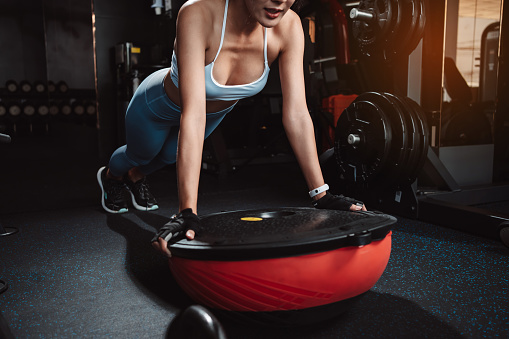
Push-Ups: The Humbling Classic

Push-ups on GLP-1s can be humbling. You might need to start on a wall. That’s fine. Actually, it’s smart.

Wall push-ups, then counter push-ups, then bench push-ups, then knee push-ups, then full push-ups. It’s a progression, not a race. Each level should feel challenging but doable for 8-15 reps.

Form matters more than depth. Keep your body straight, lower with control, push up with intention. Three sets at whatever level you’re at.

The Row: Your Desk Job Antidote

If you sit at a desk, you need rows. Period. Your shoulders are probably rolled forward, your upper back is weak, and your posture looks like a question mark.

Bent over rows fix this. Hinge at the hips (like that Romanian deadlift), support yourself with one hand on something sturdy. Pull a dumbbell to your hip with the other arm. Imagine starting a lawnmower, but slower and with more control.

The weight should feel challenging by rep 10. Three sets of 10-12 per arm.

Overhead Press: Function Meets Strength

You press things overhead more than you realize. Putting away dishes, reaching for that top shelf, celebrating when you finally nail your workout routine.

Dumbbells at shoulders, core tight (imagine someone’s about to punch you in the stomach). Press up and slightly back โ€” not straight up like a robot. Control the descent.

Three sets of 8-12 reps. When it gets easy, increase the weight by the smallest increment available.

The Cardio Question Everyone Asks

Personalized GLP-1 Program

Get Your Custom GLP-1 Weight Loss Plan

MEDVi offers personalized GLP-1 treatment with exercise guidance tailored to your medication. Start with their free assessment to see if you qualify.

โœ“
FDA-Approved Meds
Semaglutide & Tirzepatide
๐Ÿ“ฑ
24/7 Support
Medical team always available
๐Ÿ’Š
$179/month
All-inclusive pricing
๐Ÿƒโ€โ™€๏ธ
Exercise Plans
Customized for GLP-1 users

โšก Limited Time: First Month Just $179 (Save $120)

โญ Trusted by 10,000+ patients โ€ข Insurance coverage available

“Should I do cardio or weights?”

Wrong question. The right question is: “How do I do both without dying?”

Walking is your foundation. I know, I know โ€” walking feels like giving up. Like you should be doing burpees or running intervals. But walking on GLP-1s is secretly powerful. It helps with the constipation (yeah, we need to talk about that), doesn’t require pre-workout fuel, and actually helps your body process the medication better.

Start with 10-minute walks after meals. Your blood sugar will thank you. Build to 30 minutes daily. Add hills when flat gets boring. Aim for 7,000 steps minimum, 10,000 if you’re feeling ambitious[6].

But What About HIIT?

Here’s my controversial take: most people should skip HIIT on GLP-1s, at least initially. The risk of blood sugar crashes and nausea isn’t worth the marginal extra calorie burn. You’re already in a massive calorie deficit. You don’t need to torture yourself.

If you absolutely must do intervals, keep them moderate. Think “brisk walk to light jog” intervals, not “sprint until you see God” intervals. Twice a week maximum. Always with food in your system.

Your Week, Planned Out

Monday: Lower Body Strength

Today’s about building your foundation. You’re training the biggest muscles in your body, which means maximum metabolic impact.

  • Warm-up: 5-minute walk or bike
  • Bodyweight squats: 3 x 12-15
  • Romanian deadlifts: 3 x 10-12
  • Step-ups: 2 x 10 per leg
  • Plank: 3 x 30-45 seconds
  • Cool-down: 5 minutes stretching

Tuesday: Easy Movement

This isn’t a workout; it’s active recovery. Choose something that feels good, not something that challenges you.

  • 30-45 minute walk, easy bike, or swim
  • Can split into two shorter sessions
  • Optional: 10 minutes of stretching

Wednesday: Upper Body Strength

Time to work everything above your waist. These muscles might be smaller, but they’re what people see in t-shirts.

  • Warm-up: 5 minutes arm circles, band work
  • Push-ups (any variation): 3 x 8-15
  • Dumbbell rows: 3 x 10-12 per arm
  • Overhead press: 3 x 8-12
  • Bird dog: 2 x 10 per side
  • Cool-down: 5 minutes stretching

Thursday: Recovery Day

Not a rest day โ€” a recovery day. There’s a difference. Rest is passive. Recovery is intentional.

  • 20-30 minutes gentle yoga or walking
  • Foam rolling if you have a roller (I use this foam roller from Amazon โ€” basic but gets the job done)
  • Mobility work for tight areas

Friday: Circuit Training

Today we mix strength with cardiovascular challenge. Keep moving, but don’t race.

  • 45 seconds work, 15 seconds rest
  • Squats โ†’ Push-ups โ†’ Rows โ†’ Plank โ†’ Step-ups
  • Complete 3-4 rounds
  • Rest 2 minutes between rounds

Weekend: Your Choice

Saturday is for longer activities you enjoy. Sunday is for whatever your body needs โ€” movement or rest.

Best Supplements for Exercising on GLP-1 Medications

After you’ve nailed down your workout routine, let’s talk about what pills and powders actually help versus what’s just expensive pee.

Protein powder isn’t optional when you’re struggling to eat. Twenty to thirty grams of whey or plant protein after workouts ensures your muscles have building blocks for repair. I get all my supplements from Momentous โ€” they’re the only brand I trust because they third-party test everything, use NSF-certified facilities, and actually dose their products based on research, not marketing. Plus, code BRAINFLOW saves you 15%. Mix it with water if dairy bothers you (GLP-1s can make lactose intolerance worse, fun fact).

Creatine monohydrate is probably the most researched supplement on Earth, and it works[7]. Five grams daily, whenever you remember to take it. You’ll gain a pound or two of water weight โ€” this is good, not bad. Your muscles need that water to function properly. Plus, it might help preserve muscle mass during your calorie deficit. Again, Momentous creatine is what I use โ€” no fillers, just pure creatine monohydrate.

Don’t overlook a basic multivitamin. You’re eating less food, which means less nutrients. Take it with your biggest meal โ€” usually dinner for most GLP-1 users โ€” to avoid nausea.

Electrolytes matter more than you think. The combination of eating less, potential dehydration from medication side effects, and increased exercise means you’re probably low on sodium, potassium, and magnesium. I swear by LMNT electrolytes โ€” they have the sodium levels you actually need (1000mg) without any sugar or artificial junk. A packet during workouts prevents that dizzy, weak feeling that makes you want to quit.

Here’s one nobody talks about: collagen peptides[8]. Ten to fifteen grams daily won’t build muscle, but it might help your joints handle your new exercise routine. Mix it in coffee, smoothies, whatever. It’s flavorless and might keep you moving pain-free. Momentous collagen uses grass-fed sources and actually dissolves completely โ€” use code BRAINFLOW for 15% off.

Omega-3s reduce inflammation from exercise[9]. Two to three grams of EPA and DHA daily. Yes, the pills are huge. Yes, they might make you burp fish. Take them with dinner and deal with it. Your joints will thank you.

Eating to Actually Fuel Your Workouts

You can’t out-train a bad diet, but on GLP-1s, you can’t train at all without eating strategically.

Protein timing matters. Research shows 20-30 grams around your workout helps preserve muscle[10]. But here’s the thing โ€” “around your workout” is flexible. An hour before, immediately after, even two hours later. Your muscles aren’t watching the clock that closely.

My go-to pre-workout meal: Greek yogurt with a handful of berries, eaten 60-90 minutes before training. Twenty grams of protein, enough carbs for energy, sits light in your stomach.

Can’t stomach solid food? Protein shake with half a banana, 30 minutes before. Still too much? Two hard-boiled eggs or string cheese 15 minutes before. Many MEDVi patients find that timing their pre-workout fuel with their medication schedule makes all the difference.

Hydration is non-negotiable. Sixteen ounces two hours before exercise. Eight ounces every 20 minutes during. Another sixteen after. If that sounds like a lot, it is. You’ll pee constantly at first. Your body adapts.

When Your Body Says No

Some days, the medication wins. You wake up nauseous. The thought of exercise makes you want to cry. Your energy is somewhere between zero and negative ten.

Listen to that.

Take a walk. Do gentle stretches. Or just rest. Missing one workout won’t derail your progress. Pushing through severe side effects might.

Red flags that mean stop immediately: severe dizziness that doesn’t improve when you sit, nausea that gets worse during exercise, heart rate that stays elevated long after stopping, feeling like you might faint, or actually fainting.

These aren’t badges of honor. They’re warning signs. Respect them.

Frequently Asked Questions

Can I build muscle while on GLP-1 medications?

Yes, but it requires dedication. Studies show that combining resistance training with adequate protein intake (1.0-1.5g per kg body weight) allows most people to maintain or even gain muscle while losing weight on GLP-1s. The key is consistency with strength training and hitting your protein targets daily.

How long should I wait after eating to exercise on GLP-1s?

Due to delayed gastric emptying, wait at least 60-90 minutes after a meal before intense exercise. For light activities like walking, 30 minutes is usually fine. If you experience nausea, extend your wait time or exercise before meals when possible.

Should I reduce my workout intensity on GLP-1 medications?

Initially, yes. Most people need to reduce intensity by 20-30% during the first 2-4 weeks while adapting to the medication. Focus on maintaining consistency rather than intensity. As your body adjusts and weight drops, you can gradually increase intensity based on how you feel.

What’s the best time of day to exercise on GLP-1s?

This varies by individual. Many find morning workouts easier before the day’s dose fully kicks in. Others prefer afternoons when they’ve had time to eat and hydrate. Experiment during your first month to find your optimal window โ€” it’s usually when nausea is lowest and energy is highest.

How much protein do I really need while exercising on GLP-1s?

Aim for 1.0-1.5 grams per kilogram of body weight daily, with the higher end if you’re doing regular resistance training. For a 180-pound person, that’s 80-120 grams daily. Spread it across meals and snacks, with 20-30 grams around your workouts for optimal muscle preservation.

Is it normal to feel weaker during workouts on GLP-1s?

Absolutely. Especially during the first 4-6 weeks, feeling weaker is common due to reduced caloric intake and your body adjusting to the medication. This typically improves as you adapt. If weakness persists beyond 8 weeks or worsens, consult your healthcare provider about adjusting your dose or nutrition plan.

Can I do yoga or Pilates instead of weight training?

While yoga and Pilates offer benefits, they don’t provide enough resistance to fully preserve muscle mass during significant weight loss. Use them as supplementary activities, but include at least 2 days of progressive resistance training weekly. Bodyweight exercises count if they’re challenging enough.

Should I take BCAAs or EAAs while on GLP-1s?

If you’re hitting your protein targets through food and protein powder, additional amino acids aren’t necessary. However, if you struggle with appetite and can’t meet protein needs, EAAs (essential amino acids) can help. Take 10-15g during or after workouts. BCAAs alone are less effective than complete EAA supplements.

The Truth About the Long Game

Six months from now, you’ll be a different person. Not just lighter โ€” different. Your relationship with exercise will have changed. You’ll understand your body in ways you didn’t before.

The people who succeed long-term with GLP-1s and exercise are those who adapt their approach rather than fight the medication. They’re deadlifting again โ€” maybe not their old weight, but who cares? They’re hiking mountains, playing with their kids, living their lives at weights they never thought possible. Their muscle mass? Preserved. Their metabolism? Intact.

That’s what smart exercise on GLP-1s gives you โ€” not just weight loss, but transformation with integrity. Your muscles stay. Your strength adapts. Your body becomes what you always hoped it could be.

Start where you are. Even if that’s five wall push-ups and a walk around the block. Consistency beats intensity every single time. The medication handles the weight loss. Your job is to ensure there’s strong, capable muscle underneath when the fat melts away.

You’re not just losing weight. You’re building the body that’ll carry you through the rest of your life. Make it a strong one.

Scientific References

  1. Wilding JPH, Batterham RL, Calanna S, et al. Once-Weekly Semaglutide in Adults with Overweight or Obesity. N Engl J Med. 2021;384(11):989-1002. doi:10.1056/NEJMoa2032183
  2. Ida S, Kaneko R, Murata K. Effects of GLP-1 receptor agonists on muscle mass in type 2 diabetes mellitus. J Diabetes Investig. 2023;14(9):1035-1041. doi:10.1111/jdi.14029
  3. Stanford FC, Toth AT, Shukla AP, et al. The role of obesity pharmacotherapy in patients with obesity and musculoskeletal conditions. Massachusetts General Hospital Weight Center Clinical Guidelines. 2023.
  4. Nauck MA, Quast DR, Wefers J, Meier JJ. GLP-1 receptor agonists in the treatment of type 2 diabetes – state-of-the-art. Mol Metab. 2021;46:101102. doi:10.1016/j.molmet.2020.101102
  5. McCarthy D, Berg A. Weight Loss Strategies and the Risk of Skeletal Muscle Mass Loss. Nutrients. 2021;13(7):2473. doi:10.3390/nu13072473
  6. Patient Page: Exercise and GLP-1 Agonists for Weight Management. JAMA Intern Med. 2023;183(11):1256. doi:10.1001/jamainternmed.2023.5842
  7. Kreider RB, Kalman DS, Antonio J, et al. International Society of Sports Nutrition position stand: safety and efficacy of creatine supplementation in exercise, sport, and medicine. J Int Soc Sports Nutr. 2017;14:18. doi:10.1186/s12970-017-0173-z
  8. Khatri M, Naughton RJ, Clifford T, Harper LD, Corr L. The effects of collagen peptide supplementation on body composition, collagen synthesis, and recovery from joint injury and exercise: a systematic review. Amino Acids. 2021;53(10):1493-1506. doi:10.1007/s00726-021-03072-x
  9. Ochi E, Tsuchiya Y. Eicosapentaenoic Acid (EPA) and Docosahexaenoic Acid (DHA) in Muscle Damage and Function. Nutrients. 2018;10(5):552. doi:10.3390/nu10050552
  10. Moore DR. Maximizing Post-exercise Anabolism: The Case for Relative Protein Intakes. Front Nutr. 2019;6:147. doi:10.3389/fnut.2019.00147