

📋 Key Takeaways
- CoQ10 powers your cells — It’s essential for ATP production (cellular energy) and acts as a powerful antioxidant. Your heart, brain, and muscles have the highest concentrations.
- Production declines with age — Blood levels at 65 are roughly half what they were at 25. Statins accelerate this decline by blocking the same pathway your body uses to produce CoQ10.
- Form matters less than formulation — A well-designed ubiquinone can outperform a cheap ubiquinol. Look for oil-based softgels with absorption enhancers.
- Clinical evidence is strong — The Q-SYMBIO trial showed 50% reduction in cardiac events with 300mg daily. Multiple studies support benefits for energy, heart health, and fertility.
- Quality indicators to look for — Kaneka source, third-party testing (USP/NSF), oil-based delivery, and absorption enhancers like BioPerine or liposomal technology.
CoQ10 is one of those supplements that actually has solid science behind it — not just for one thing, but for heart health, energy production, statin support, migraine prevention, and even fertility.
The problem? The supplement aisle is flooded with options at wildly different price points, and the marketing makes it nearly impossible to know what actually matters. Ubiquinol vs ubiquinone. Liposomal vs standard. Kaneka vs generic. It’s a lot.
I spent way too many hours comparing formulations, digging through clinical trials, and calculating price-per-milligram so you don’t have to. This guide covers everything from budget-friendly options to the premium stuff biohackers swear by.
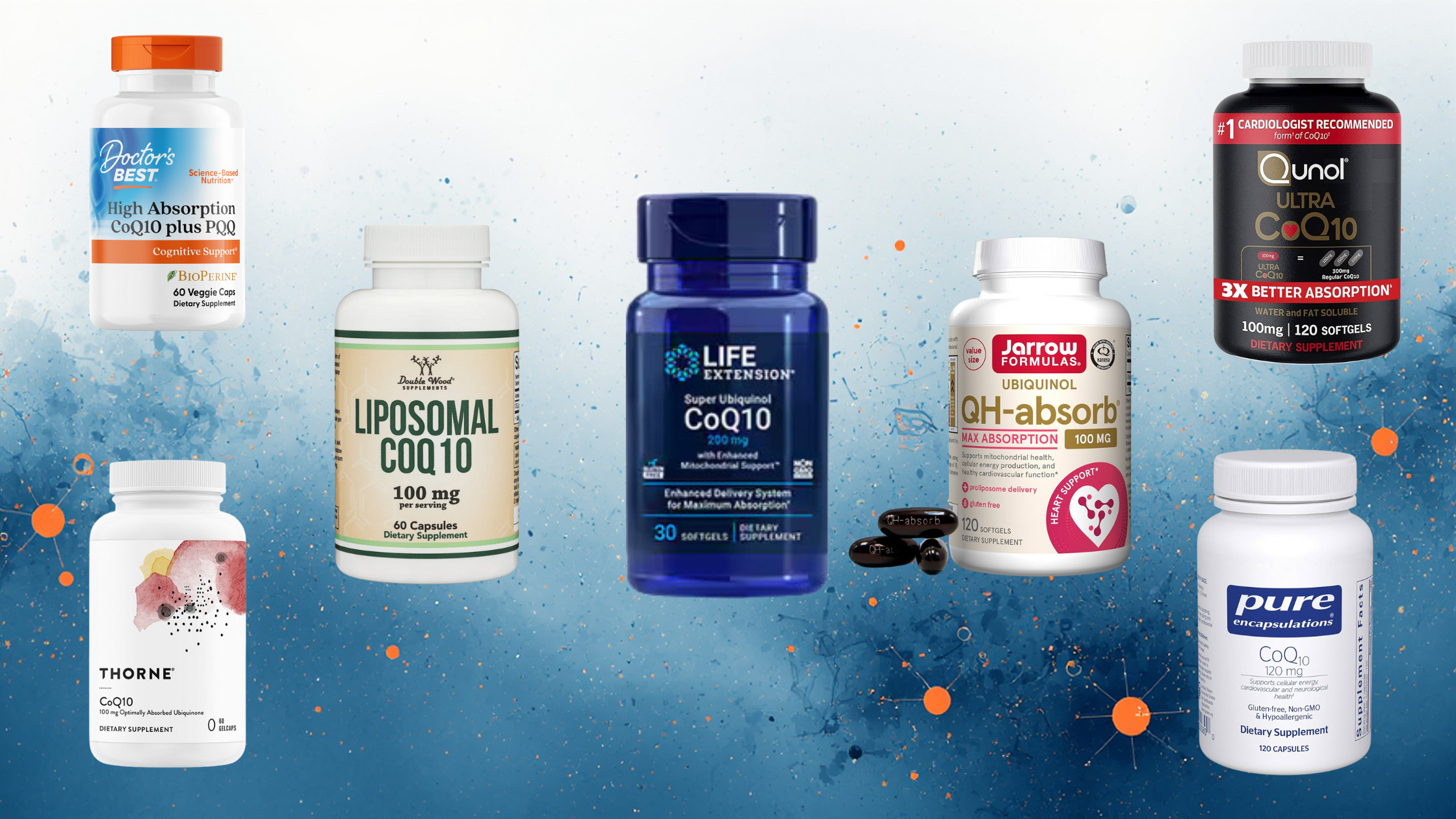
Our Top Picks
- Best Overall – Life Extension Super Ubiquinol
- Best Absorption – Doublewood Liposomal CoQ10
- Best Value – Doctor’s Best High Absorption
- Best Ubiquinol – Jarrow QH-Absorb
- Best for Statin Users – Qunol Ultra
- Best Quality – Thorne CoQ10
- Best Hypoallergenic – Pure Encapsulations
The 7 Best CoQ10 Supplements, Reviewed
1. Life Extension Super Ubiquinol CoQ10 with Enhanced Mitochondrial Support
Best Overall | ⭐ 4.8/5 (2,400+ Amazon reviews)
Form: Ubiquinol (Kaneka) | Dose: 100mg | Count: 60 softgels | Testing: ConsumerLab verified | Price: ~$0.58/serving
This is what I’d take if money weren’t a factor. Life Extension pairs Kaneka ubiquinol with shilajit, a compound that enhances mitochondrial CoQ10 levels beyond what CoQ10 alone achieves. The combination addresses both CoQ10 status and mitochondrial efficiency.
ConsumerLab has verified this product. Life Extension’s manufacturing standards are pharmaceutical-grade. They also offer 50mg and 200mg versions depending on your needs.
Pros:
- Kaneka ubiquinol – the gold standard source
- Shilajit enhances mitochondrial CoQ10 beyond supplementation alone
- ConsumerLab verified for purity and potency
- Certificate of Analysis available on website
- Multiple dose options (50mg, 100mg, 200mg)
Cons:
- Premium pricing (~$35-40 for 60 softgels)
- Softgels may be large for some users
- Contains soy lecithin (not suitable for soy allergies)
Best for: Optimization-focused people who want the most comprehensive mitochondrial support and don’t mind paying for it. Also solid for heart health given the ubiquinol form.
2. Doublewood Liposomal CoQ10
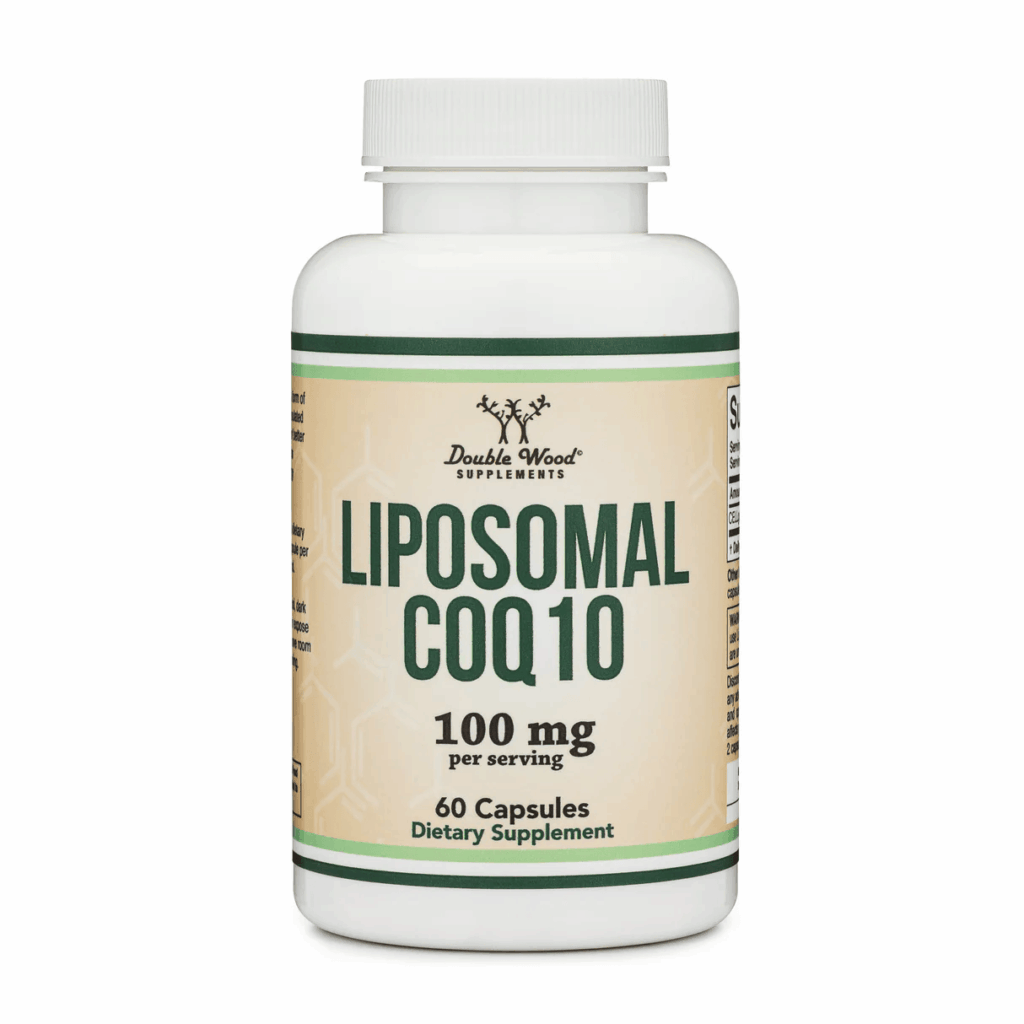
Best Absorption | ⭐ 4.6/5
Form: Ubiquinone (Liposomal) | Dose: 100mg | Count: 60 capsules | Testing: Third-party tested USA | Price: ~$0.33/serving
Liposomal delivery is the absorption king. By wrapping CoQ10 in phospholipid spheres, it bypasses typical digestive breakdown and delivers the nutrient directly to cells. Doublewood’s version is vegan-friendly, third-party tested, and manufactured in the USA.
The liposomal approach means you don’t need to take it with food containing fat – the delivery system handles absorption on its own. That’s a nice convenience factor if you’re not always eating fatty meals.
Pros:
- Liposomal delivery bypasses digestive breakdown
- No need to take with fatty food
- Vegan-friendly formula
- Good value for liposomal technology
- USA manufactured with third-party testing
Cons:
- Ubiquinone form (not ubiquinol)
- Less stable than traditional softgels – store properly
- Newer product with fewer long-term reviews
Best for: Anyone prioritizing absorption above all else. People with digestive issues that might impair normal CoQ10 uptake. Those who prefer vegan supplements.
3. Doctor’s Best High Absorption CoQ10 with BioPerine
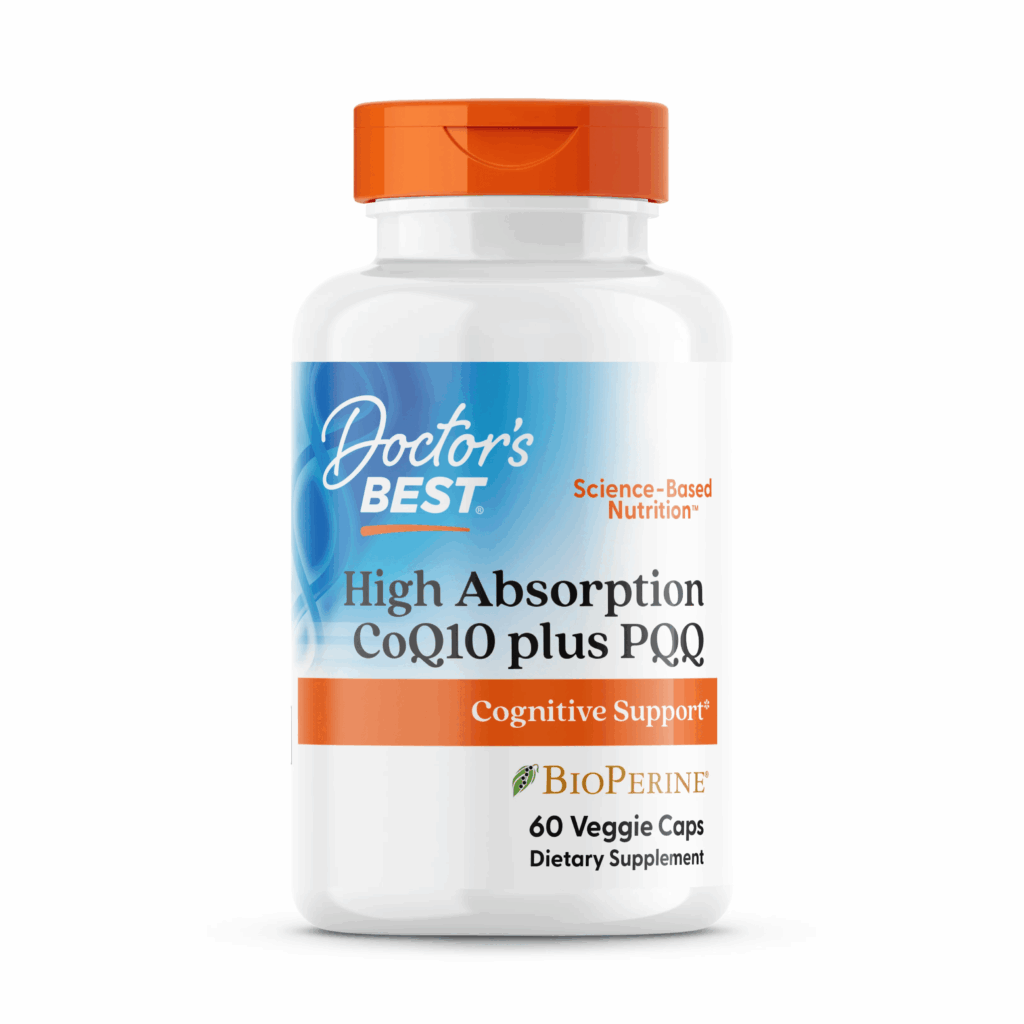
Best Value | ⭐ 4.7/5 (28,000+ Amazon reviews)
Form: Ubiquinone | Dose: 100mg | Count: 120 softgels | Testing: USP Verified | Price: ~$0.12/serving
At around $13-18 for 120 softgels, Doctor’s Best delivers exceptional value without cutting corners. USP Verified (independent testing), naturally fermented CoQ10, and BioPerine added for approximately 30% better absorption based on published research.
With 28,000+ Amazon reviews and a 4.7-star rating, this is one of the most trusted budget options available. The olive oil base provides proper fat-soluble delivery.
Pros:
- Exceptional value – under $0.15 per serving
- USP Verified for quality assurance
- BioPerine enhances absorption ~30%
- Naturally fermented, pharmaceutical-grade CoQ10
- 28,000+ positive reviews on Amazon
Cons:
- Ubiquinone form (may be less optimal for 60+ age group)
- Contains soy lecithin
- Some reports of softgels melting in hot weather during shipping
Best for: Budget-conscious buyers who still want quality. First-time CoQ10 users testing the waters. Anyone who wants solid value without overthinking it.
4. Jarrow Formulas QH-Absorb 100mg
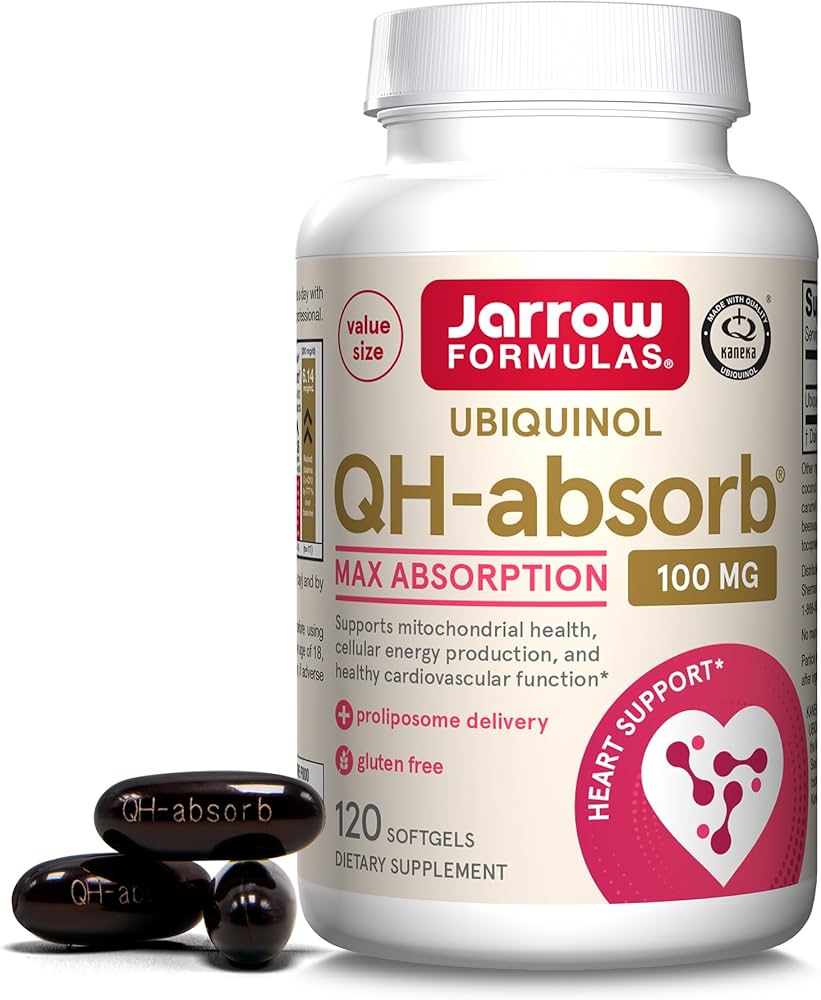
Best Ubiquinol | ⭐ 4.7/5 (8,500+ Amazon reviews)
Form: Ubiquinol (Kaneka) | Dose: 100mg | Count: 120 softgels | Testing: Jarrow in-house + external | Price: ~$0.37/serving
Jarrow’s ubiquinol uses a proliposomal delivery system they claim increases blood levels by 222% at 100mg daily and 777% at 300mg daily. Those numbers come from their own research, so take them with appropriate skepticism – but Jarrow has a solid reputation and uses Kaneka ubiquinol.
At around $40-48 for 120 softgels, it’s the best value quality ubiquinol option. If you’ve decided you want ubiquinol but don’t want to pay Life Extension or Pure Encapsulations prices, this is your pick.
Pros:
- Kaneka ubiquinol – gold standard source
- Proliposomal delivery for enhanced absorption
- Best value in the ubiquinol category
- 120-count bottle lasts 4 months at standard dosing
- No major allergens
Cons:
- Absorption claims based on company’s own research
- Some users report softgels sticking together
- Contains bovine gelatin (not vegetarian)
Best for: Adults over 50 who want ubiquinol without premium pricing. Fertility focus (ubiquinol may support egg and sperm quality). Anyone who’s tried ubiquinone and wants to see if ubiquinol works better for them.
5. Qunol Ultra CoQ10 100mg
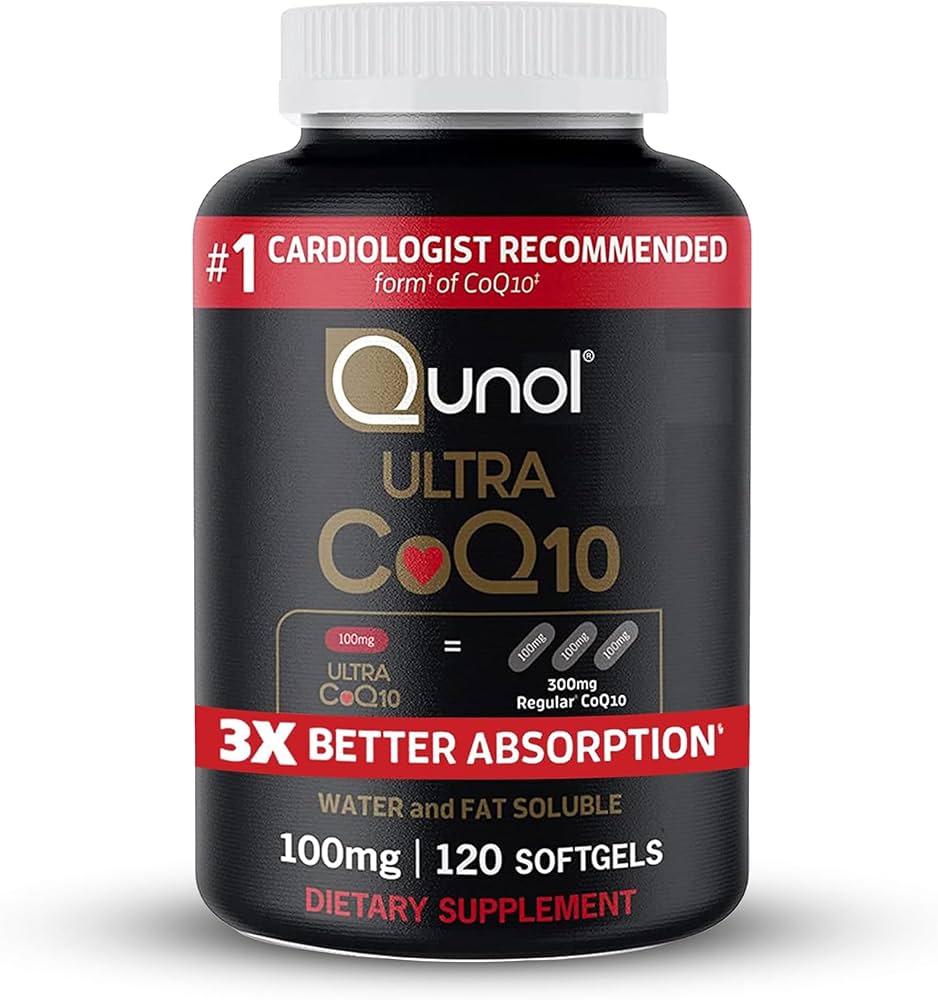
Best for Statin Users | ⭐ 4.7/5 (45,000+ Amazon reviews)
Form: Ubiquinone (water + fat soluble) | Dose: 100mg | Count: 120 softgels | Testing: Company testing | Price: ~$0.20/serving
Qunol’s claim to fame is their patented water AND fat-soluble formula. Most CoQ10 only dissolves in fat, which limits absorption. Qunol’s solubility technology showed 3x better absorption in clinical trials they funded.
It’s the #1 cardiologist-recommended brand (according to their marketing, based on IQVIA surveys). At $20-28 for 120 softgels, it hits a sweet spot between budget and premium. With 45,000+ reviews, it’s also the most popular option on Amazon.
Pros:
- Patented water + fat soluble formula
- 3x better absorption in company trials
- #1 cardiologist-recommended form (per IQVIA survey)
- Most-reviewed CoQ10 on Amazon (45,000+)
- Gluten-free, no artificial additives
Cons:
- Absorption claims from company-funded research
- Ubiquinone form (not ubiquinol)
- Some users report large pill size
Best for: Statin users who want specifically marketed support. People who want better-than-basic absorption without paying ubiquinol prices. Heart health focus.
6. Thorne CoQ10 (Q-Best)
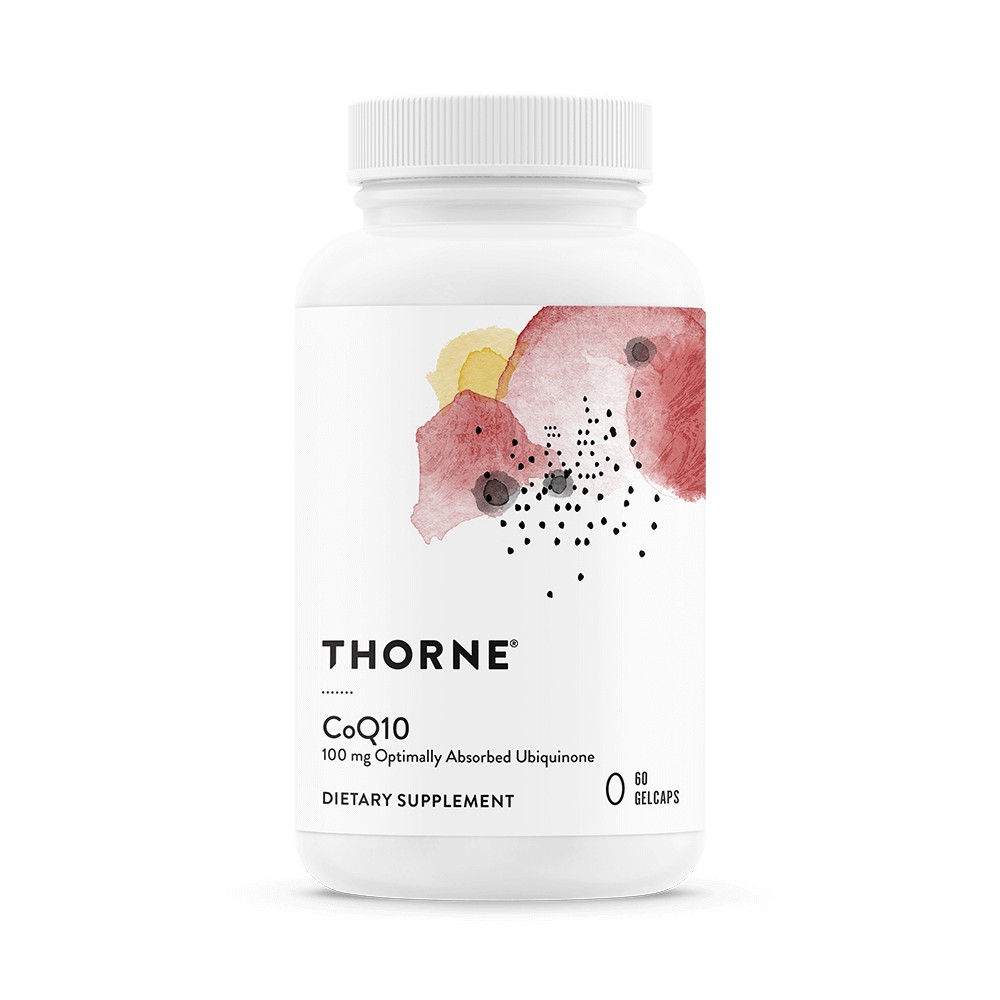
Best Quality | ⭐ 4.6/5 (3,200+ Amazon reviews)
Form: Ubiquinone (crystal-free) | Dose: 100mg | Count: 60 gelcaps | Testing: 4 rounds internal + NSF available | Price: ~$0.65/serving
Thorne takes the opposite approach from ubiquinol marketers. They use ubiquinone but in a proprietary crystal-free form they claim absorbs 3x better than ubiquinol. Their argument: stability matters, and ubiquinol degrades while ubiquinone doesn’t.
What I trust about Thorne: they’re used by over 100 professional sports teams and run every batch through four rounds of testing. Their quality control is legitimate. At $36-42 for 60 gelcaps it’s not cheap, but you’re paying for pharmaceutical-grade manufacturing.
Pros:
- Trusted by 100+ professional sports teams
- 4 rounds of testing per batch
- Crystal-free formula for superior absorption
- NSF Certified for Sport versions available
- Pharmaceutical-grade manufacturing
Cons:
- Premium pricing (~$0.65 per 100mg)
- Ubiquinone form (though they argue it’s superior)
- Contains soy monoglycerides
Best for: Quality-obsessed buyers. Athletes (NSF Certified for Sport versions available). Thorne loyalists who already use their other products.
7. Pure Encapsulations Ubiquinol-QH
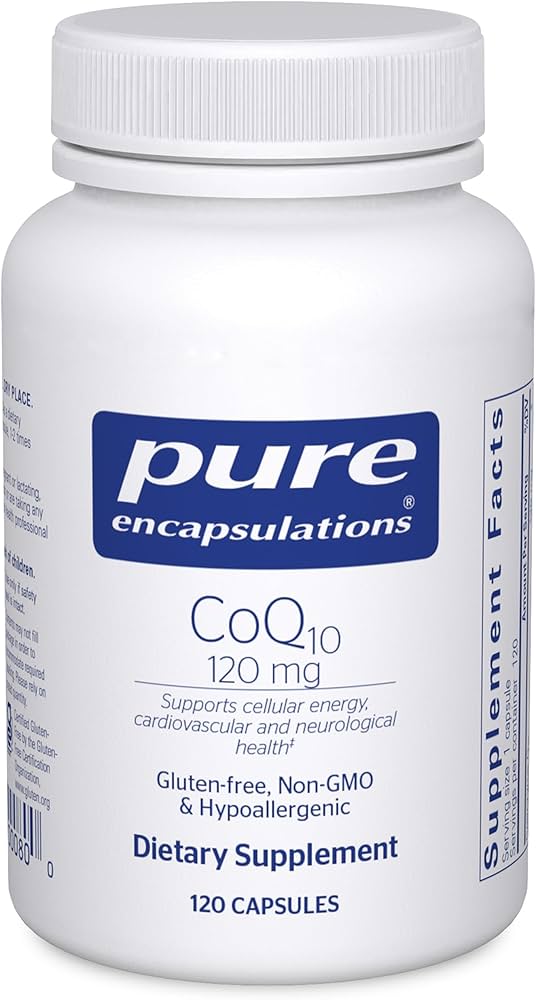
Best Hypoallergenic | ⭐ 4.6/5 (1,100+ Amazon reviews)
Form: Ubiquinol (Kaneka) | Dose: 100mg | Count: 60 softgels | Testing: Extensive third-party verification | Price: ~$1.00/serving
Pure Encapsulations is the brand doctors recommend for sensitive patients. No artificial colors, no preservatives, no common allergens. Kaneka ubiquinol in a clean formula.
At $55-68 for 60 softgels, it’s the most expensive option on this list. You’re paying for the purity standards and the brand’s reputation in clinical settings – they’re the #1 most recommended professional supplement brand according to Nutrition Business Journal surveys.
Pros:
- #1 practitioner-recommended professional brand
- Kaneka ubiquinol – gold standard source
- Free from all common allergens
- No artificial colors, preservatives, or fillers
- Ideal for multiple chemical sensitivities
Cons:
- Most expensive option (~$1.00 per 100mg)
- Only 60-count bottles available
- Some users report mild digestive sensitivity
Best for: People with multiple sensitivities or allergies. Patients whose doctors specifically recommend this brand. Those who need pharmaceutical-grade purity and are willing to pay for it.
Complete Comparison Chart
| Product | Form | Dose | Count | Key Feature | Rating |
|---|---|---|---|---|---|
| Life Extension Super Ubiquinol | Ubiquinol | 100mg | 60 | Shilajit + Kaneka | 4.8/5 |
| Doublewood Liposomal | Ubiquinone | 100mg | 60 | Liposomal delivery | 4.6/5 |
| Doctor’s Best | Ubiquinone | 100mg | 120 | BioPerine + USP | 4.7/5 |
| Jarrow QH-Absorb | Ubiquinol | 100mg | 120 | Proliposomal Kaneka | 4.7/5 |
| Qunol Ultra | Ubiquinone | 100mg | 120 | Water + fat soluble | 4.7/5 |
| Thorne CoQ10 | Ubiquinone | 100mg | 60 | Crystal-free formula | 4.6/5 |
| Pure Encapsulations | Ubiquinol | 100mg | 60 | Hypoallergenic | 4.6/5 |
How We Evaluated These Supplements
We analyzed 25+ CoQ10 supplements across five key criteria, consulting with pharmacists and reviewing clinical literature to ensure accuracy:
- Efficacy (35%) – Form (ubiquinol vs ubiquinone), delivery system, absorption enhancers, clinical dosing
- Quality (25%) – Third-party testing (USP, NSF, ConsumerLab), Kaneka sourcing, manufacturing standards
- Value (20%) – Price per 100mg serving, bottle size, subscription discounts
- Safety (10%) – Clean ingredient lists, allergen considerations, drug interaction transparency
- User Experience (10%) – Pill size, taste, Amazon/retailer ratings, customer feedback patterns
Ubiquinol vs Ubiquinone: What Actually Matters
This is where supplement marketing loves to confuse people. Let me simplify it.
Ubiquinone is the oxidized form. It’s been studied for decades, it’s stable, and it’s cheaper. Your body converts it to the active form (ubiquinol) after absorption.
Ubiquinol is the reduced (active) form. It’s what your cells actually use. It’s less stable and costs 2-3x more.
The marketing pitch for ubiquinol is that it’s “already active” so you absorb more. There’s some truth to this – a 2014 study in Clinical Pharmacology in Drug Development found ubiquinol increased plasma CoQ10 levels 1.5x better than ubiquinone in older adults. [5]
But here’s what the marketing leaves out: formulation matters more than form. A well-designed ubiquinone product using crystal dispersion technology actually showed 52% higher bioavailability than ubiquinol in one study. The oil base, the softgel delivery, the manufacturing process – these often matter more than whether you’re buying the oxidized or reduced form.
The evidence-based approach:
- Under 40: Save your money, get a quality ubiquinone
- 40-60: Either form works if the product is well-formulated
- Over 60: Ubiquinol probably worth the premium since conversion efficiency declines with age
- Heart failure or serious health conditions: Go with ubiquinol to reduce any absorption variables
Key Ingredients That Enhance CoQ10 Absorption
Not all CoQ10 supplements absorb equally. These ingredients significantly impact bioavailability:
Oil-Based Carriers (Essential) – CoQ10 is fat-soluble. A 2019 study in Nutrition demonstrated oil-based softgels absorb 3.3x better than powder capsules. [6] Look for olive oil, MCT oil, or sunflower oil in the ingredient list.
BioPerine (Black Pepper Extract) – Research published in the Journal of Medicinal Food demonstrated that piperine increases CoQ10 absorption by approximately 30%. Doctor’s Best uses this approach.
Shilajit – This Himalayan compound enhances mitochondrial CoQ10 levels beyond what CoQ10 alone achieves. A 2012 study in the Journal of Alzheimer’s Disease found shilajit combined with CoQ10 increased ATP production more than either compound alone. [9] Life Extension pairs it with their ubiquinol for synergistic mitochondrial support.
Liposomal Delivery – Encapsulating CoQ10 in phospholipid spheres protects it from digestive breakdown and enables direct cellular uptake. Doublewood uses this technology.
Kaneka Source – The only US manufacturer of CoQ10, using natural yeast fermentation. Products specifying “Kaneka Ubiquinol” or “Kaneka QH” use this pharmaceutical-grade source.
Who Benefits Most from CoQ10
- Adults over 50 – Natural production decline begins in your 20s and accelerates after 50
- Statin users – These medications block CoQ10 synthesis along with cholesterol production
- People on depleting medications – Beta-blockers, thiazide diuretics, oral contraceptives, tricyclic antidepressants, and certain diabetes medications
- Those with heart failure or cardiovascular concerns – Strong clinical evidence supports 200-300mg daily
- Migraine sufferers – 300mg daily reduced frequency by 30-50% in clinical trials
- Couples trying to conceive – Especially women over 35 (egg quality) and men with motility concerns
- Endurance athletes – May support recovery and reduce exercise-induced oxidative stress
How to Choose the Right CoQ10 Supplement
Use this decision framework based on your situation:
If you’re on a budget: Doctor’s Best. USP verified, BioPerine for absorption, under $15 for 120 softgels. Hard to beat.
If you’re over 60: Jarrow QH-Absorb or Life Extension Super Ubiquinol. Ubiquinol bypasses age-related conversion inefficiency.
If you take statins: Qunol Ultra or Doctor’s Best. Both are well-absorbed ubiquinone options at reasonable prices.
If you have food sensitivities: Pure Encapsulations. The cleanest formula with no common allergens.
If you’re optimizing everything: Life Extension Super Ubiquinol. The shilajit combination provides mitochondrial benefits beyond CoQ10 alone.
If you’re an athlete needing NSF certification: Thorne CoQ10. Their NSF Certified for Sport versions are trusted by professional teams.
If absorption is your priority: Doublewood Liposomal. Bypasses digestive breakdown entirely.
CoQ10 Dosing Guide by Goal
| Goal | Dose | Notes |
|---|---|---|
| General wellness / anti-aging | 100-200mg daily | Take with food containing fat |
| Statin users | 100-300mg daily | Higher end if experiencing muscle symptoms |
| Heart failure | 300mg daily (100mg 3x) | Based on Q-SYMBIO trial showing 50% reduction in cardiac events |
| Cardiovascular protection (elderly) | 200mg + selenium 200mcg | Based on KISEL-10 trial showing 54% mortality reduction |
| Migraine prevention | 300mg daily (100mg 3x) | Takes 2-3 months to see effects |
| Male fertility | 200-400mg daily | Run for 3-6 months (full sperm cycle) |
| Female fertility / IVF | 200-600mg daily | Start 60-90 days before cycle |
| Athletic performance | 200-300mg daily | Modest evidence; 6+ weeks for effects |
Split larger doses across the day rather than taking all at once. CoQ10 is fat-soluble, so always take it with a meal containing some fat – breakfast with eggs or dinner works well.
Timeline: When to Expect Results
CoQ10 isn’t like caffeine — you won’t feel an immediate boost. Benefits develop gradually as your cells replenish their CoQ10 stores:
- Blood levels stabilize: 2-4 weeks
- Energy/general wellness: Subtle, develops over 2-4 weeks. Many people only notice when they stop taking it.
- Blood pressure effects: 4-12 weeks
- Heart health benefits: 8-12 weeks for measurable changes
- Migraine reduction: 2-3 months minimum
- Fertility (egg quality): 60-90 days (this is how long eggs take to mature)
- Statin muscle symptoms: 2-4 weeks for some relief, longer for full benefit
If you want to know if CoQ10 is “working,” the real test is to take it consistently for 3+ months, then stop for 2 weeks. Most people notice a dip in energy or general wellbeing that they didn’t realize CoQ10 was providing.
Drug Interactions and Safety
CoQ10 is generally very safe – the observed safe level is 1,200mg daily, way more than anyone takes. But there are interactions worth knowing:
Warfarin (blood thinners): CoQ10 has a similar structure to Vitamin K and may reduce warfarin’s effectiveness. If you’re on blood thinners, talk to your doctor and monitor INR closely.
Blood pressure medications: CoQ10 may have additive blood pressure lowering effects. Good news if that’s your goal, but monitor your BP especially when starting.
Diabetes medications: May enhance blood sugar reduction. Monitor glucose more frequently if adding CoQ10.
Chemotherapy: Mixed evidence. Some oncologists recommend it, others advise against. Always check with your oncologist before adding any supplements during cancer treatment.
Statins: Not an interaction per se – statins deplete CoQ10, so supplementing makes sense. But some people report the combination works better when they take them at different times of day.
Potential Side Effects (Rare):
- Mild digestive upset, nausea, or diarrhea (usually resolves with lower doses)
- Insomnia if taken late in the day
- Headaches (uncommon)
- Skin rash (rare)
CoQ10 Stacking Protocols (For Biohackers)
CoQ10 works synergistically with several other compounds if you’re building a mitochondrial support stack:
The Classic Mitochondrial Stack:
- CoQ10 (100-200mg)
- PQQ (10-20mg) – supports mitochondrial biogenesis
- L-Carnitine (500-2000mg) – shuttles fatty acids into mitochondria
- Alpha-lipoic acid (300-600mg) – antioxidant, supports mitochondrial function
- B vitamins – essential cofactors for energy production
The NAD+ Stack:
- NMN or NR (250-500mg)
- Resveratrol (250-500mg with fat)
- CoQ10 (100-200mg)
Research suggests NMN combined with other mitochondrial nutrients is 1.6-1.7x more effective than NMN alone. CoQ10 fits naturally into longevity-focused stacks.
For Cardiovascular Support:
- CoQ10 (200-300mg)
- Omega-3s (2-4g EPA/DHA)
- Magnesium (300-400mg)
- Selenium (200mcg) – based on KISEL-10 study
The Clinical Evidence: Key Studies
The evidence base for CoQ10 is stronger than most supplements. Here are the landmark trials:
Q-SYMBIO (2014): 420 patients with heart failure took 300mg CoQ10 daily for 2 years. Results: 50% reduction in major cardiac events compared to placebo. This was the first supplement to show mortality benefit in heart failure in over a decade. [1]
KISEL-10 (2013): 443 elderly Swedish participants took 200mg CoQ10 plus 200mcg selenium for 4 years. Results: 54% reduction in cardiovascular death. Follow-up studies showed benefits persisting 12 years later. [2]
Migraine Prevention (2002, 2005): Multiple trials show 300mg daily reduces migraine frequency by 30-50% after 2-3 months. A 2005 randomized controlled trial in Neurology found CoQ10 reduced attack frequency from 4.4 to 3.2 per month compared to placebo. [3, 10]
Male Fertility (2013): A meta-analysis in the Journal of Urology found CoQ10 supplementation significantly improved sperm concentration, motility, and morphology. Doses ranged from 200-300mg daily for 3-6 months. [7]
Female Fertility/Egg Quality (2018): Research published in Fertility and Sterility showed CoQ10 supplementation (600mg daily) improved ovarian response in women with diminished ovarian reserve undergoing IVF. [11]
Blood Pressure (2007): A meta-analysis of 12 clinical trials found CoQ10 supplementation reduced systolic blood pressure by up to 17 mmHg and diastolic by up to 10 mmHg in hypertensive patients. [12]
Statin Myopathy (2018): The evidence here is more mixed – a meta-analysis in the Journal of the American Heart Association reviewed 12 trials and found modest but inconsistent benefits for statin-induced muscle symptoms. The biological rationale is solid (statins block CoQ10 synthesis), but the clinical evidence isn’t as consistent as supplement marketers suggest. [4]
Parkinson’s Disease (2002): A multicenter randomized trial found that 1200mg daily CoQ10 slowed functional decline in early Parkinson’s disease by 44% compared to placebo. However, a larger 2014 follow-up trial (QE3) did not replicate these findings, so evidence remains inconclusive. [13]
Frequently Asked Questions
What is CoQ10 and why do I need it?
CoQ10 (Coenzyme Q10) is a naturally occurring antioxidant found in every cell of your body. It’s essential for producing ATP (cellular energy) and protecting cells from oxidative damage. Your body makes CoQ10 naturally, but production declines with age – levels at 65 are roughly half what they were at 25.
What’s the best form of CoQ10 to take?
For most people under 50, well-formulated ubiquinone is fine and saves money. For those over 60 or with absorption concerns, ubiquinol may be worth the premium. More important than the form: make sure it’s in an oil-based softgel or liposomal delivery, not a powder-filled capsule.
How much CoQ10 should I take daily?
100-200mg for general wellness. 300mg for heart health, migraines, or statin support. Up to 600mg for fertility optimization. Higher doses should be split across 2-3 servings. Always take with food containing fat for better absorption.
Can I take CoQ10 with my statin?
Yes, and many cardiologists recommend it. Statins block the same pathway that produces CoQ10, so supplementation makes biological sense. Some people take them at different times of day, though there’s no strong evidence this matters.
Does CoQ10 give you energy?
Not like caffeine does. CoQ10 supports cellular energy production at the mitochondrial level. Benefits are gradual and often only noticed when you stop taking it. If you’re looking for an immediate energy boost, CoQ10 isn’t it.
What time of day should I take CoQ10?
With any meal containing fat. Morning or midday is often preferred since CoQ10 supports energy production – some people report sleep disturbances if taken late evening. Consistency matters more than timing.
Is CoQ10 safe long-term?
Yes. It’s naturally present in your body and has been used in clinical trials for years at doses up to 1,200mg without significant safety concerns. The main caution is warfarin interaction and checking with your oncologist during cancer treatment.
Is ubiquinol really better than ubiquinone?
It depends. Ubiquinol shows better absorption in older adults and those with certain health conditions. But quality ubiquinone formulations with good delivery systems can match or exceed ubiquinol absorption. Age and budget are the main factors – under 50, save the money; over 60, ubiquinol may be worth it.
Can CoQ10 help with fertility?
Research suggests CoQ10 may support egg quality in women over 35 and sperm health in men. Doses of 200-600mg daily for 60-90 days are typically used in fertility protocols. It’s not a magic bullet, but it’s one of the better-supported supplements for reproductive health.
What’s the difference between Kaneka and regular CoQ10?
Kaneka is the only US manufacturer of CoQ10, using natural yeast fermentation. Generic CoQ10 is often synthetically produced in China with less rigorous quality control. Most premium brands (Life Extension, Jarrow, Pure Encapsulations) use Kaneka as their source.
Why is my CoQ10 orange/brown colored?
CoQ10 is naturally orange-colored. If your softgels are clear or white, they may contain very little actual CoQ10, or it’s been bleached. Quality products will have that characteristic orange/amber color.
Can CoQ10 help with blood pressure?
Studies show CoQ10 supplementation can modestly lower systolic blood pressure by 11-17 mmHg in people with hypertension. [12] It’s not a replacement for blood pressure medication but may provide additional support.
Does CoQ10 help with migraines?
Yes, this is one of the better-supported uses. Multiple clinical trials show 300mg daily reduces migraine frequency by 30-50% after 2-3 months of consistent use. It’s often used alongside magnesium and riboflavin for migraine prevention.
How long does it take for CoQ10 to work?
Blood levels stabilize in 2-4 weeks, but noticeable benefits for energy may take 4-8 weeks. For specific conditions like migraines or heart health, expect 2-3 months for meaningful improvement.
Can I take CoQ10 while pregnant?
There’s insufficient safety data for pregnancy. Some fertility specialists recommend it before conception, but most advise discontinuing once pregnancy is confirmed. Always consult your OB-GYN.
What medications deplete CoQ10?
Statins are the most well-known, but other medications also deplete CoQ10: beta-blockers, thiazide diuretics, tricyclic antidepressants, oral contraceptives, certain diabetes medications, and some chemotherapy drugs.
Can I take CoQ10 with other supplements?
Yes, CoQ10 works synergistically with many supplements including omega-3s, PQQ, L-carnitine, alpha-lipoic acid, and B vitamins. It’s commonly stacked in mitochondrial and longevity protocols.
The Bottom Line
If you asked me to pick just one: Doctor’s Best offers the best balance of quality, absorption (via BioPerine), and price. You can find it at any pharmacy or Amazon, it’s reasonably priced, and the USP verification means you’re getting what the label claims.
If you want the premium option: Life Extension Super Ubiquinol with shilajit is the most comprehensive mitochondrial support formula. It’s expensive but justified if optimization is your priority.
If absorption is your top concern: Doublewood Liposomal or Qunol Ultra both offer enhanced delivery systems at reasonable prices.
If you have sensitivities: Pure Encapsulations is the cleanest formula available, worth the premium if you react to additives in other supplements.
Disclosure: This article contains affiliate links. We only recommend products we’d take ourselves or give to family. See our full editorial policy.
References
- Mortensen SA, et al. The effect of coenzyme Q10 on morbidity and mortality in chronic heart failure (Q-SYMBIO). JACC Heart Fail. 2014;2(6):641-649.
- Alehagen U, et al. Cardiovascular mortality and N-terminal-proBNP reduced after combined selenium and coenzyme Q10 supplementation (KISEL-10). Int J Cardiol. 2013;167(5):1860-1866.
- Rozen TD, et al. Open label trial of coenzyme Q10 as a migraine preventive. Cephalalgia. 2002;22(2):137-141.
- Qu H, et al. Effects of Coenzyme Q10 on Statin-Induced Myopathy: An Updated Meta-Analysis of Randomized Controlled Trials. J Am Heart Assoc. 2018;7(19):e009835.
- Langsjoen PH, Langsjoen AM. Comparison study of plasma coenzyme Q10 levels in healthy subjects supplemented with ubiquinol versus ubiquinone. Clin Pharmacol Drug Dev. 2014;3(1):13-17.
- López-Lluch G, et al. Bioavailability of coenzyme Q10 supplements depends on carrier lipids and solubilization. Nutrition. 2019;57:133-140.
- Lafuente R, et al. Coenzyme Q10 and male infertility: a meta-analysis. J Assist Reprod Genet. 2013;30(9):1147-1156.
- Office of Dietary Supplements – National Institutes of Health. Coenzyme Q10 Fact Sheet for Health Professionals.
- Carrasco-Gallardo C, et al. Shilajit: a natural phytocomplex with potential procognitive activity. Int J Alzheimers Dis. 2012;2012:674142.
- Sándor PS, et al. Efficacy of coenzyme Q10 in migraine prophylaxis: a randomized controlled trial. Neurology. 2005;64(4):713-715.
- Xu Y, et al. Pretreatment with coenzyme Q10 improves ovarian response and embryo quality in low-prognosis young women with decreased ovarian reserve. Fertil Steril. 2018;109(1):105-111.
- Rosenfeldt FL, et al. Coenzyme Q10 in the treatment of hypertension: a meta-analysis of the clinical trials. J Hum Hypertens. 2007;21(4):297-306.
- Shults CW, et al. Effects of coenzyme Q10 in early Parkinson disease: evidence of slowing of the functional decline. Arch Neurol. 2002;59(10):1541-1550.
Medical Disclaimer: This content is for informational purposes only and is not medical advice. Consult your healthcare provider before starting any supplement, especially if you take medications or have health conditions. Last reviewed January 2026.