
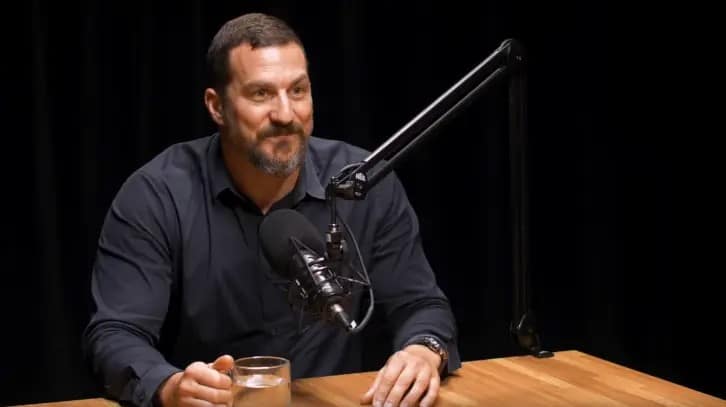

I’ve been following Andrew Huberman’s routines for over three years now, and here’s what I’ve learned: the guy is meticulous. Every single thing he does – from the moment he wakes up to when his head hits the pillow – is backed by neuroscience research. And honestly? Most of it works.
Huberman is a neuroscientist and tenured professor at Stanford who runs the Huberman Lab podcast. He’s become the go-to source for science-backed health protocols, and his daily routine is basically a masterclass in optimizing your brain and body.
I’ve compiled everything he’s shared across hundreds of podcast episodes, newsletters, and interviews into one complete breakdown. Fair warning: this is detailed. But that’s the point. Huberman doesn’t do vague advice.
Quick Reference: Huberman’s Daily Timeline
Here’s the skeleton of his day. We’ll break down each piece below.
Now let’s get into the why behind each of these.
Morning Protocol (5:30am – 10:00am)
Huberman’s mornings are engineered. Every step serves a specific neurological purpose.
Wake-Up: No Alarm, Natural Rise
He wakes between 5:30 and 6:30am without an alarm. This isn’t just preference – waking naturally means you’re emerging from a lighter sleep phase rather than being jolted out of deep sleep. The result is less grogginess and more stable energy throughout the day.
If you need an alarm, Huberman suggests setting it for the latest acceptable time rather than hitting snooze repeatedly. Those fragmented sleep chunks between snoozes are basically worthless. He discussed this extensively in his guest series with sleep expert Dr. Matt Walker, where they covered optimal sleep structure and why fragmented sleep sabotages recovery.
The Morning Hydration Stack
First thing he does: drinks water. Two full glasses minimum. You lose a surprising amount of fluid overnight through breathing and sweating, and dehydration tanks cognitive performance fast.
But he doesn’t just drink plain water. His morning “wake-up cocktail” has three components:
- Water – 16-32oz to rehydrate
- AG1 (Athletic Greens) – covers baseline vitamins, minerals, and probiotics
- Electrolytes (LMNT) – sodium, potassium, magnesium for neural function
Why electrolytes first thing? Huberman puts it simply: “The nervous system and neurons particularly depend on electrolytes to fire properly.” Your brain literally runs on salt. Starting the day with electrolytes helps everything from focus to mood.
NSDR: The 20-Minute Brain Reset
Before doing anything demanding, Huberman spends 10-20 minutes on Non-Sleep Deep Rest (NSDR). This is usually a guided Yoga Nidra session while still in bed.
NSDR isn’t meditation exactly – it’s a specific relaxation protocol backed by serious research. A 2002 study published in Cognitive Brain Research (Kjaer et al.) used PET scans to show that Yoga Nidra increases dopamine release in the brain by up to 65%. Huberman has cited this study multiple times, including in his episode on Tools to Enhance Working Memory & Attention, where he explained how NSDR can restore dopamine reserves depleted by stress or poor sleep.
A more recent 2024 study in Nature Scientific Reports confirmed that Yoga Nidra creates distinct brain connectivity patterns different from regular rest or sleep – validating what Huberman has been saying for years.
There are free NSDR scripts on YouTube (Huberman has released several himself). You don’t need an app or subscription. Just lie down, follow the audio, and let your nervous system reset before the day begins.
Morning Sunlight: The Non-Negotiable
Within the first hour of waking, Huberman goes outside for 10-15 minutes of sunlight exposure. He’s called this “the single best thing you can do” for energy, mood, metabolism, and sleep quality that night.
The science: bright light in your eyes triggers a cortisol spike (the healthy morning kind) and sets your circadian clock. This timing affects everything downstream – when you’ll feel tired, when you’ll be most alert, how well you’ll sleep. In his episode with Dr. Samer Hattar, Chief of the Section on Light and Circadian Rhythms at the National Institute of Mental Health, Huberman explored how light powerfully shapes mood, sleep, and mental health by aligning our internal circadian clock.
The protocol varies by weather:
- Sunny day: 5-10 minutes of direct sun
- Overcast: 15-20 minutes (clouds filter light intensity)
- Before sunrise: Use bright indoor lights, then get outside as soon as the sun’s up
No sunglasses during this. You need the light hitting your retinas. And no, looking through a window doesn’t count – glass filters out too much of the relevant wavelengths.
Cold Exposure: The Dopamine Hack
After sunlight, Huberman does a cold shower or plunge. Typically 1-3 minutes at 40-55°F, about 3-4 times per week.
This isn’t about being tough. Cold exposure causes a massive spike in norepinephrine, adrenaline, and dopamine. In his Episode 66 on Deliberate Cold Exposure, Huberman cited a study published in the European Journal of Applied Physiology (Šrámek et al., 2000) showing that cold water immersion at 14°C increased plasma dopamine concentrations by 250% and norepinephrine by 530%. Unlike caffeine, this elevation lasts for hours without a crash.
He expanded on the metabolic and mental health benefits in his conversation with Dr. Susanna Søberg, who conducted the research establishing minimum thresholds for cold exposure benefits.
Huberman credits regular cold exposure with improving his focus, metabolism, and mental resilience. The discomfort is the point. You’re training your brain to stay calm and functional under stress.
If you’re starting out, even 30 seconds of cold at the end of a regular shower works. Build up from there.
Morning Workout (Fasted)
Huberman typically works out between 7:30 and 9:00am, still fasted (he won’t eat until around 1pm). His weekly training split looks like this:
On strength days, he takes cognitive enhancers 30-60 minutes before training:
- Alpha-GPC (300mg) – boosts acetylcholine for mind-muscle connection
- L-Tyrosine (500mg) – supports dopamine for motivation and focus
Between sets, he uses a breathing technique called the physiological sigh: two quick inhales through the nose, then a long exhale through the mouth. This rapidly lowers heart rate and helps recovery between efforts. A 2023 Stanford study published in Cell Reports Medicine (which Huberman co-authored) found that just 5 minutes of cyclic sighing daily produced greater improvements in mood and reduction in physiological arousal than mindfulness meditation.
→ See also: Andrew Huberman’s Complete Fitness Protocol
Delayed Caffeine: Why He Waits Until 10am
Here’s one that surprises people: Huberman doesn’t touch caffeine until 90-120 minutes after waking. His first cup isn’t until around 10am.
The reason is adenosine. This chemical builds up while you sleep and makes you feel groggy in the morning. Your body naturally clears it in the first couple hours after waking. If you drink caffeine immediately, you’re just masking the adenosine – it’s still there, and when the caffeine wears off, it hits you all at once. That’s the afternoon crash.
Huberman broke down the complete science in his Episode 101 on Using Caffeine to Optimize Mental & Physical Performance. He explained that morning sunlight triggers a cortisol spike that can clear residual adenosine – but if you drink caffeine immediately, you block this natural process and set yourself up for an afternoon crash.
By waiting, Huberman lets the adenosine clear naturally. When he does have caffeine, it amplifies his alertness rather than just blocking tiredness. He prefers yerba mate over coffee – says it gives smoother energy with less dehydration.
Midday Protocol (10:00am – 5:00pm)
Deep Work Blocks
After caffeine kicks in, Huberman tackles his most demanding cognitive work. This is when he writes, researches, and does anything requiring sustained focus. He saves meetings, emails, and lighter tasks for later when mental energy naturally dips.
The key insight: schedule your hardest thinking for when you’re biologically primed for it. For most people following Huberman’s light/wake protocol, that’s mid-to-late morning.
First Meal Around 1pm (Intermittent Fasting)
Huberman practices intermittent fasting with a feeding window of roughly 12-16 hours. His first meal typically comes around 1pm – about 12 hours after his previous dinner.
This midday meal is usually protein-focused with vegetables. He keeps carbs relatively low during the day unless it follows an intense workout. After a heavy leg session, for example, he’ll add rice or potatoes to replenish glycogen. On easier days, it’s mostly meat and vegetables.
→ See also: Andrew Huberman’s Diet Breakdown
Afternoon NSDR (When Needed)
If energy dips around 3pm (and it does for most people), Huberman will do another 10-20 minute NSDR session. He’s described this as hitting a “reset button” for the afternoon. Even a short session can restore focus and mood for the remaining work hours.
This isn’t a nap. It’s a guided relaxation that keeps you conscious but deeply rested. Many people find it works better than coffee for afternoon slumps.
Evening Protocol (5:00pm – Bedtime)
Evening Cardio (Some Days)
On days without a morning strength workout, Huberman often does cardio around 6:30pm. He’s mentioned that cardio may actually be more beneficial in the evening than weight training – it doesn’t interfere with sleep the way intense lifting can.
This is typically 30-60 minutes of zone-2 work: jogging, rowing, or cycling at a conversational pace. Nothing too intense. The goal is cardiovascular health and active recovery, not exhaustion.
Dinner: Carbs for Sleep
Huberman’s dinner strategy is the opposite of what most people do. While he keeps carbs low during the day, his evening meal is starch-heavy: pasta, rice, potatoes.
The reasoning: carbohydrates increase serotonin and tryptophan, which help you fall asleep. By front-loading protein during the day (for alertness) and back-loading carbs at night (for sleep), you’re working with your body’s natural rhythms rather than against them.
He avoids heavy red meat at dinner since it digests slowly and can disrupt sleep. Instead, he opts for fish, chicken, or lighter proteins alongside those starchy carbs and vegetables.
Dinner happens around 7pm – roughly 3-4 hours before bed. This gives time for digestion before sleep.
Light Management: Red Lights After 9pm
Starting around 9pm, Huberman switches all his lighting to red or amber. He’s said this practice “greatly improved” his sleep quality.
The science: blue and bright white light suppress melatonin production. Red/amber wavelengths don’t. By switching to dim, warm lighting in the hours before bed, you’re letting your brain produce the melatonin it needs for deep sleep.
His specific advice: “Avoid viewing bright lights – especially bright overhead lights – between 10pm and 4am. Use only as much light as needed. Candlelight and moonlight are fine.”
He uses actual red party bulbs in lamps around the house. Simple and cheap. Some people use blue-blocking glasses instead, which also work.
The Sleep Supplement Stack
About 30-60 minutes before bed, Huberman takes his sleep supplement stack. He’s said this combination “greatly improved his ability to fall and stay asleep.” He outlined this complete protocol in his Sleep Toolkit episode, which remains one of the most comprehensive resources on science-backed sleep optimization.
The core three (magnesium, theanine, apigenin) he takes every night. Glycine, GABA, and myo-inositol get rotated in a few times per week. He doesn’t use melatonin regularly – considers it more useful for jet lag than daily sleep.
Momentous is Huberman’s official supplement partner – they make versions of all these formulated to his specs. Code BRAINFLOW saves 15%.
→ See also: Andrew Huberman’s Sleep Cocktail: Complete Breakdown
Lights Out: 10:30-11:00pm
With supplements taken and red lights on, Huberman winds down with quiet activities – usually reading something non-stimulating. No screens. By 10:30-11:00pm, he’s asleep.
He aims for 7-8 hours, which means waking naturally around 5:30-6:30am to start the cycle again. His bedroom is kept very dark and cool – both important for sleep quality.
Huberman calls sleep “the best nootropic.” Every other protocol in his routine – the light exposure, the exercise timing, the supplement stack – ultimately serves one goal: optimizing those 7-8 hours of recovery.
Complete Supplement Schedule
Here’s everything Huberman takes, organized by timing. Click any supplement name to shop it directly.
For the complete breakdown of everything he takes and why, check out our full guide to Andrew Huberman’s supplements.
Momentous is Huberman Lab’s official supplement partner. They carry his sleep stack, cognitive enhancers, and foundational supplements – all formulated to his specifications.
Save 15% with code BRAINFLOW →Key Protocols Explained
The Physiological Sigh (Instant Calm)
Huberman uses this breathing technique throughout the day, especially between workout sets or during stressful moments. It’s the fastest way to lower your heart rate voluntarily.
How to do it: Take a deep breath in through your nose, then without exhaling, take a second shorter inhale on top of it (your lungs will feel very full). Then exhale slowly and completely through your mouth.
One or two of these can shift you from stressed to calm in under a minute. Huberman has called it “the fastest real-time tool for reducing stress.” He covered the complete science behind this in his episode on How to Breathe Correctly for Optimal Health, Mood, Learning & Performance.
NSDR vs. Meditation vs. Napping
People often confuse these. Here’s how Huberman distinguishes them:
- Meditation – Active focus practice. You’re directing attention (to breath, mantra, etc.)
- NSDR/Yoga Nidra – Passive relaxation. You follow a guide and let go of control. Brain enters a state similar to sleep but you stay conscious.
- Napping – Actual sleep. Can cause grogginess if too long or timed wrong.
NSDR gives many of the restorative benefits of sleep without the grogginess risk. That’s why Huberman uses it as a tool rather than napping.
Why Morning Sunlight Matters So Much
Of everything in Huberman’s routine, he’s most emphatic about morning light. It affects:
- Cortisol timing (energy and alertness)
- Melatonin timing (when you’ll feel sleepy)
- Dopamine levels (mood and motivation)
- Metabolism and body temperature rhythms
Miss this window consistently and everything downstream suffers. Get it right and the rest of the day falls into place more easily. If you only adopt one thing from Huberman’s routine, make it this.
FAQ: Huberman’s Daily Routine
Between 5:30 and 6:30am, naturally without an alarm. He prioritizes consistent wake times to maintain circadian rhythm stability.
Adenosine (the chemical that makes you feel tired) builds up during sleep. Your body naturally clears it in the first 90-120 minutes after waking. If you drink caffeine immediately, you mask the adenosine without clearing it – leading to an afternoon crash when the caffeine wears off. Waiting lets you clear it naturally, so caffeine amplifies alertness rather than just blocking tiredness.
His nightly stack includes Magnesium L-Threonate (145mg), L-Theanine (100-400mg), and Apigenin (50mg). On 3-4 nights per week, he adds Glycine (2g) and GABA (100mg). He takes these 30-60 minutes before bed. Momentous makes these formulated to his specs – code BRAINFLOW saves 15%.
Yes. He typically fasts 12-16 hours, eating his first meal around 1pm and finishing dinner by 7-8pm. He works out fasted in the morning and saves starchy carbohydrates for his evening meal to promote better sleep.
1-3 minutes at 40-55°F, about 3-4 times per week. He usually does this in the morning after sunlight exposure. Studies show cold water can increase dopamine by up to 250% for several hours without a crash.
Non-Sleep Deep Rest is a guided relaxation protocol similar to Yoga Nidra. Huberman does 10-20 minutes in the morning and sometimes again in the afternoon if energy dips. It’s different from meditation – you follow audio guidance and let go rather than actively focusing. Research shows it can restore dopamine and reduce cortisol.
Blue and bright white light suppress melatonin production, making it harder to fall asleep. Red/amber light doesn’t have this effect. By switching to red bulbs around 9pm, Huberman allows his brain to produce melatonin naturally, improving both sleep onset and quality.
Starchy carbohydrates (rice, pasta, potatoes) with vegetables and lighter proteins like fish or chicken. He intentionally eats more carbs at night because they increase serotonin and tryptophan, which promote sleep. He avoids heavy red meat at dinner since it digests slowly.
Bottom Line
Huberman’s routine is comprehensive, but you don’t need to adopt everything at once. If I had to prioritize, these are the highest-impact habits:
- Morning sunlight – 10-15 minutes within an hour of waking
- Delayed caffeine – wait 90-120 minutes after waking
- Consistent sleep/wake times – anchor your circadian rhythm
- Dim lights after sunset – especially avoiding overhead lights
- The sleep supplement stack – magnesium, theanine, apigenin
Start with those five. Once they’re habits, layer in cold exposure, NSDR, and the workout timing. The full routine takes months to dial in, but each piece adds value on its own.
The underlying principle is simple: work with your biology instead of against it. Light in the morning, darkness at night. Stress early, recovery later. Every protocol serves that rhythm.
Related Reading
Every supplement Huberman takes with dosages, timing, and the science behind each one.
His full workout split, exercise selection, and training philosophy broken down.
Deep dive into his sleep supplement stack and the research behind each ingredient.
Sources: This article draws from multiple Huberman Lab podcast episodes and peer-reviewed research including: Sleep Toolkit | Deliberate Cold Exposure (Ep. 66) | Caffeine Optimization (Ep. 101) | Šrámek et al. (2000) European Journal of Applied Physiology | Kjaer et al. (2002) Cognitive Brain Research | Stanford Breathing Study (2023) Cell Reports Medicine