

📋 Key Takeaways
- Form matters more than marketing — Triglyceride (TG) and re-esterified triglyceride (rTG) forms absorb 40-50% better than cheaper ethyl esters. If the label doesn’t specify form, assume ethyl ester.
- Total fish oil ≠ omega-3s — A “1000mg fish oil” capsule may contain only 300mg of actual EPA+DHA. Always check the Supplement Facts panel for combined EPA and DHA amounts.
- IFOS 5-star is the gold standard — This certification tests for potency, purity, oxidation, and contaminants. Nearly 50% of fish oils exceed oxidation limits, so third-party testing matters.
- Most healthy adults need 500-1000mg EPA+DHA daily — Higher doses (2-4g) are used for triglyceride reduction and require physician supervision.
- Fish burps signal quality issues — Rancid or poorly formulated fish oil causes burps. Quality products in triglyceride form with proper enteric coating shouldn’t cause this.
Let me save you from making a $40 mistake: that giant bottle of fish oil at Costco might be the worst value in the store.
Not because it’s bad fish oil. But because you’d need to take 4-5 capsules to match what a quality concentrated formula delivers in one or two. By the time you factor in the actual EPA and DHA per dollar, the “bulk deal” costs more than the premium stuff.
I’ve spent the last month digging through clinical trials, IFOS certifications, and oxidation reports to find which fish oils actually deliver what they promise. The supplement industry loves to hide behind confusing labels, so I’ll show you exactly how to read them and which products are worth your money.
Whether you’re here for heart health, brain optimization, or your doctor mentioned omega-3s for your triglycerides, this guide cuts through the noise.
Best Fish Oil Supplements at a Glance
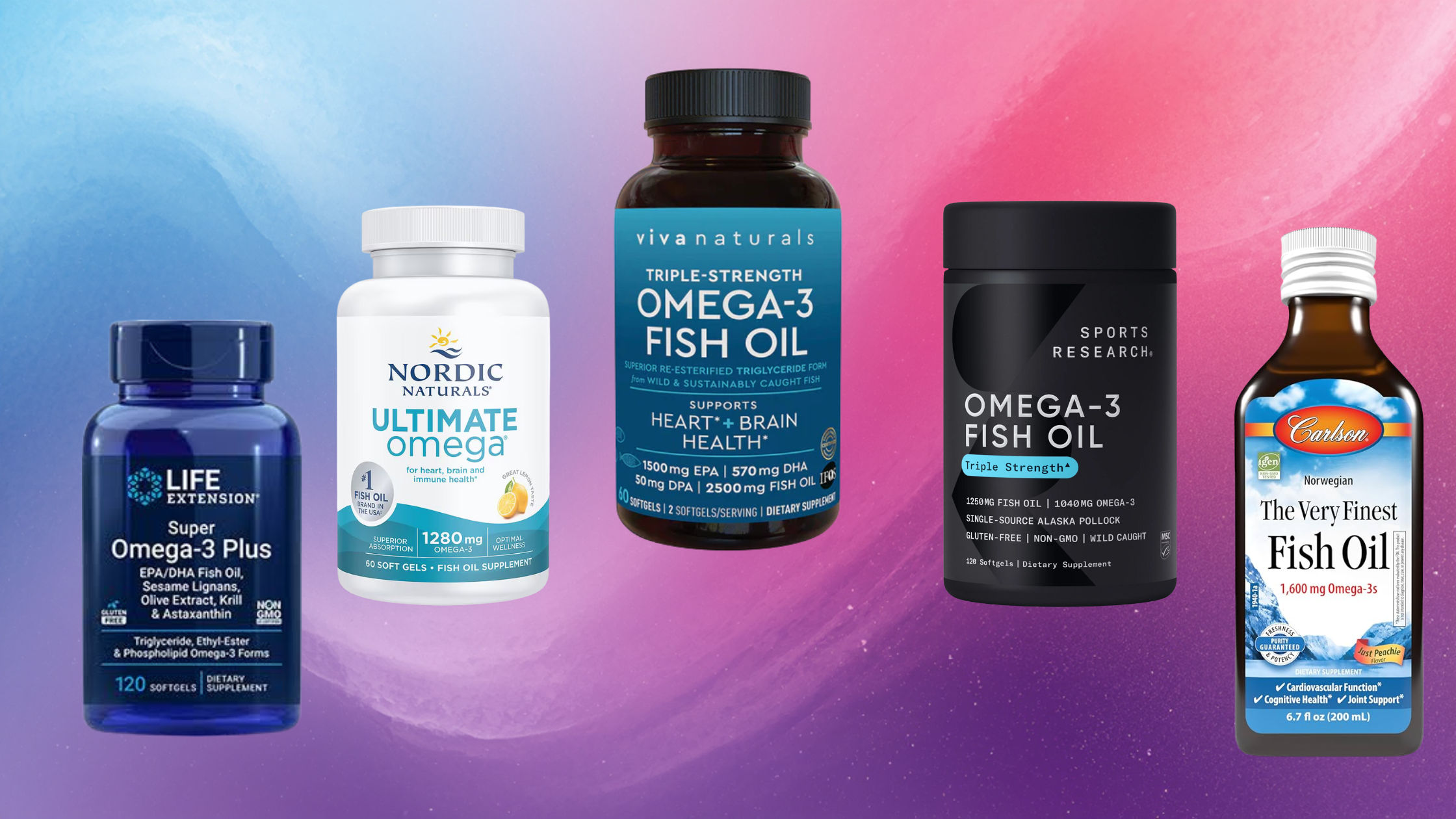
- Best Overall: Viva Naturals Triple Strength
- Best Premium: Nordic Naturals Ultimate Omega
- Best for Sustainability: Sports Research Triple Strength
- Best Liquid: Carlson The Very Finest Fish Oil
- Best for Biohackers: Life Extension Super Omega-3 Plus
- Best Budget: Nature Made Burp-Less Ultra Omega-3
- Best for Athletes: Thorne Super EPA
- Best Vegan: Nordic Naturals Algae Omega
How We Tested and Ranked These Fish Oil Supplements
We analyzed 30+ fish oil supplements across six criteria, cross-referencing IFOS certifications, ConsumerLab reports, and clinical literature:
- Omega-3 Form & Bioavailability (30%) — Triglyceride vs ethyl ester form, absorption enhancers, EPA:DHA ratios
- Purity & Testing (25%) — IFOS certification, oxidation markers (TOTOX), heavy metal testing, COA availability
- Potency & Value (20%) — Actual EPA+DHA per serving, price per gram of omega-3, not per capsule
- Sustainability (10%) — MSC or Friend of the Sea certification, fish sourcing, environmental practices
- User Experience (10%) — Fish burps, pill size, taste, Amazon ratings across 1000+ reviews
- Transparency (5%) — Batch-specific COAs, clear labeling of form and source
How to Choose the Best Fish Oil Supplement
Here’s the dirty secret of fish oil marketing: “1000mg Fish Oil” on the front label means almost nothing. What matters is how much EPA and DHA is inside that 1000mg. The rest is saturated fat and other fatty acids that provide zero omega-3 benefits.
A typical drugstore fish oil delivers only 300mg of combined EPA+DHA per 1000mg capsule. A concentrated formula delivers 700-900mg. You’d need three drugstore capsules to match one quality capsule.
Here’s how to read a fish oil label correctly:
- Flip to the Supplement Facts panel (ignore the front label entirely)
- Find EPA and DHA listed separately in milligrams
- Add them together for total beneficial omega-3s
- Note the serving size (often 2-3 capsules, not one)
- Divide price by total omega-3s to get your actual cost per gram
When you do this math, “cheap” fish oil often costs more than premium options.
Triglyceride vs Ethyl Ester: The Absorption Gap Nobody Talks About
Fish oil comes in different molecular forms, and this dramatically affects how much your body actually absorbs.
Natural Triglyceride (TG) is how omega-3s exist in fish. Your body recognizes this form and absorbs it efficiently. The downside: TG oils max out around 30% omega-3 concentration, so you need bigger or more capsules.
Ethyl Ester (EE) is created by removing the glycerol backbone to concentrate the omega-3s. This allows higher potency (up to 90% concentration) but comes with a catch: your body doesn’t absorb it as well. Studies show EE forms have 40-50% lower bioavailability than triglyceride forms. [1]
Re-esterified Triglyceride (rTG) is the best of both worlds. It starts as ethyl ester for concentration, then gets converted back to triglyceride form for absorption. You get high potency AND high bioavailability. Premium brands like Nordic Naturals, Viva Naturals, and Sports Research use this form.
Bottom line: If a label doesn’t specify “triglyceride” or “rTG” form, assume it’s ethyl ester. You’ll need to take more to achieve the same blood levels.
The Oxidation Problem: Why Fresh Fish Oil Matters
Here’s something that should concern you: studies have found that nearly 50% of tested fish oil products exceed recommended oxidation limits. [2] Oxidized fish oil doesn’t just taste bad and cause fish burps — it may actually be pro-inflammatory and raise LDL cholesterol, the opposite of what you’re trying to achieve.
Oxidation is measured by three markers:
- Peroxide Value (PV) — Measures primary oxidation. Should be ≤5 meq/kg.
- Anisidine Value (AV) — Measures secondary oxidation. Should be ≤20.
- TOTOX Value — Combined oxidation score (2×PV + AV). Should be ≤26, excellent products score under 10.
The IFOS (International Fish Oil Standards) certification tests every batch for these markers. Products with IFOS 5-star ratings have passed the most stringent purity and freshness tests available. This is why we weight third-party testing heavily in our evaluations.
Signs your fish oil may be rancid:
- Strong fishy, sour, or cardboard-like smell
- Bitter or off taste (bite a capsule to test)
- Cloudy, discolored oil
- Soft, mushy capsules instead of firm ones
- Frequent fish burps (quality oil shouldn’t cause this)
The 8 Best Fish Oil Supplements of 2025
1. Viva Naturals Triple Strength Omega-3
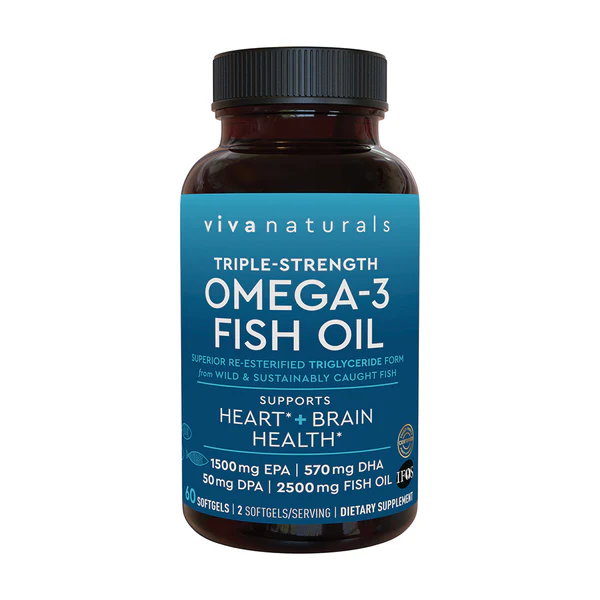
Best Overall | ⭐ 4.6/5 (11,000+ Amazon reviews)
EPA: 1,500mg | DHA: 570mg | Total Omega-3: 2,250mg | Form: rTG | Serving: 2 softgels | Certifications: IFOS 5-star, Labdoor A (96.1) | Price: ~$0.44/serving
Viva Naturals wins our top spot because it delivers what actually matters: the most omega-3s per dollar in a rigorously tested product. With 2,250mg total omega-3s per serving (including an impressive 1,500mg EPA), this delivers therapeutic dosing in just two capsules.
The IFOS 5-star certification and Labdoor A grade (96.1 score) confirm this isn’t cutting corners to hit that price point. They use the rTG form for superior absorption, source from wild-caught small fish (anchovies, sardines, mackerel), and include natural lemon oil to prevent fish burps.
For context: you’d need 7-8 capsules of standard drugstore fish oil to match what two Viva Naturals capsules deliver. When you calculate price per gram of omega-3, this beats products that cost twice as much per bottle.
Pros:
- Highest omega-3 content per serving on this list (2,250mg)
- IFOS 5-star certified for purity and potency
- Re-esterified triglyceride form for 40-50% better absorption
- Exceptional value when calculated per gram omega-3
- High EPA ratio ideal for inflammation and heart health
Cons:
- Large softgels may be difficult for some to swallow
- High EPA:DHA ratio not ideal if you specifically need more DHA
- Some users report occasional fishy aftertaste
Best for: Anyone who wants the best combination of quality, potency, and value. Those needing higher EPA for inflammation, cardiovascular support, or mood. People tired of taking 4+ capsules daily to hit therapeutic doses.
2. Nordic Naturals Ultimate Omega
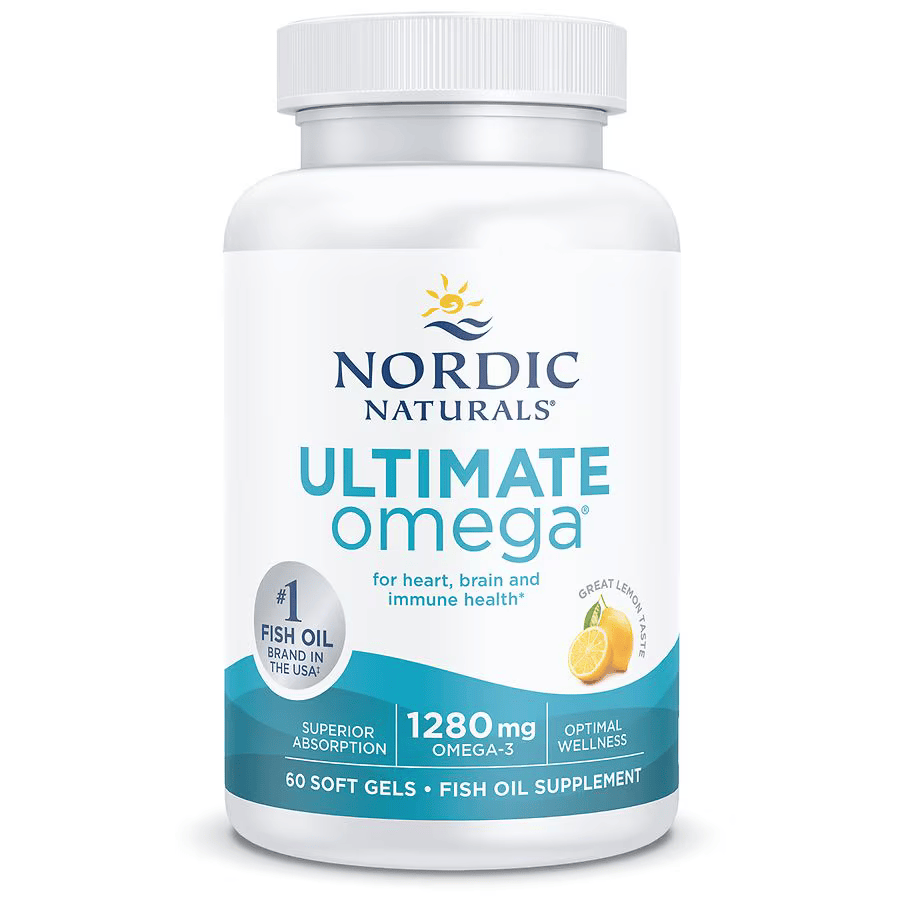
Best Premium | ⭐ 4.6/5 (47,000+ Amazon reviews)
EPA: 650mg | DHA: 450mg | Total Omega-3: 1,280mg | Form: rTG | Serving: 2 softgels | Certifications: Friend of the Sea, Non-GMO, COA available | Price: ~$0.37/serving
Nordic Naturals appears as the #1 pick across Healthline, Good Housekeeping, Yahoo Health, and most other major publications for good reason. They’ve built their reputation on transparency and quality control that goes beyond industry standards.
Every batch is third-party tested, and you can scan the QR code on any bottle to see the actual Certificate of Analysis for your specific product. Their fish oil is sourced from wild-caught sardines and anchovies, processed in their own Norwegian facility that runs on biofuel, and delivered in the highly bioavailable triglyceride form.
The lemon flavoring is subtle enough to prevent any fishy aftertaste without being artificial-tasting. At 1,280mg omega-3s per two-softgel serving, you’re getting solid dosing from the most trusted name in fish oil.
Pros:
- Batch-specific COA via QR code — industry-leading transparency
- Triglyceride form for superior absorption
- Friend of the Sea certified sustainability
- Natural lemon flavor prevents fish burps
- 47,000+ positive Amazon reviews
Cons:
- Lower omega-3 per serving than Viva Naturals
- Softgels are fairly large
- Two capsules per serving (not one)
Best for: Those who want the most recognized, trusted name in fish oil with verifiable quality. People who prioritize brand reputation and transparency over maximum potency per dollar.
3. Sports Research Triple Strength Omega-3
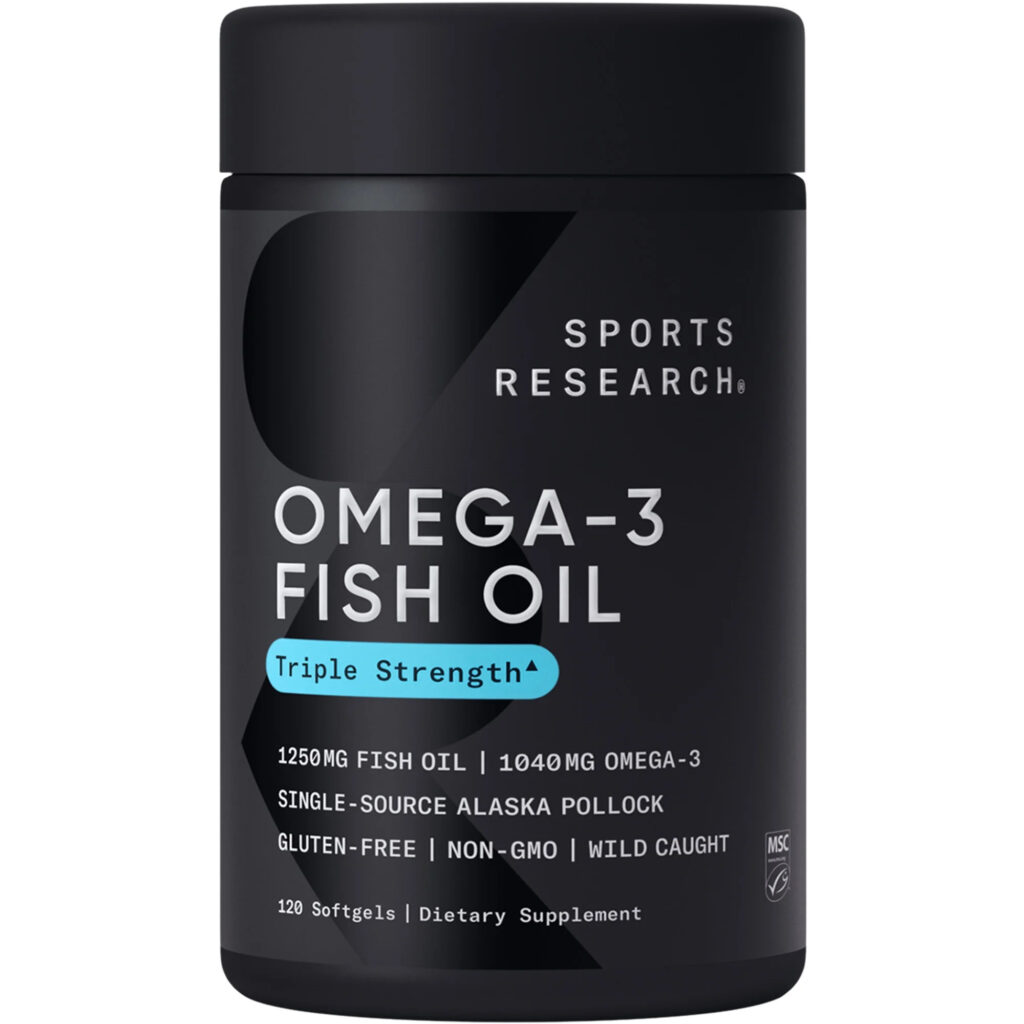
Best for Sustainability | ⭐ 4.6/5 (38,000+ Amazon reviews)
EPA: 690mg | DHA: 460mg | Total Omega-3: 1,250mg | Form: rTG | Serving: 1 softgel | Certifications: IFOS 5-star, MSC Certified, Non-GMO | Price: ~$0.31/serving
Sports Research stands out for its sustainability credentials. Their fish oil comes from MSC (Marine Stewardship Council) certified Alaska Pollock fisheries — the gold standard for sustainable wild-caught seafood. If you care about ocean health alongside your own health, this is the choice.
Beyond sustainability, the product delivers: IFOS 5-star certified, rTG form, and a one-softgel serving size that makes daily compliance easy. At 1,250mg omega-3s per single capsule, you’re getting solid dosing without multiple pills.
The Alaska Pollock sourcing is interesting — it’s a larger fish than anchovies but still relatively low on the food chain, meaning lower contaminant accumulation. Sports Research’s 10-step refinement process removes any remaining impurities.
Pros:
- MSC certified sustainable Alaska Pollock
- IFOS 5-star certified
- One softgel per serving (convenient)
- Traceable sourcing
- 38,000+ positive reviews
Cons:
- Lower total omega-3s than Viva Naturals
- Softgels are quite large
- Some reports of fishy aftertaste
Best for: Environmentally-conscious buyers who want verified sustainable sourcing. Those who prefer a one-pill-per-day routine. Good middle ground between premium quality and value.
4. Carlson The Very Finest Fish Oil (Liquid)
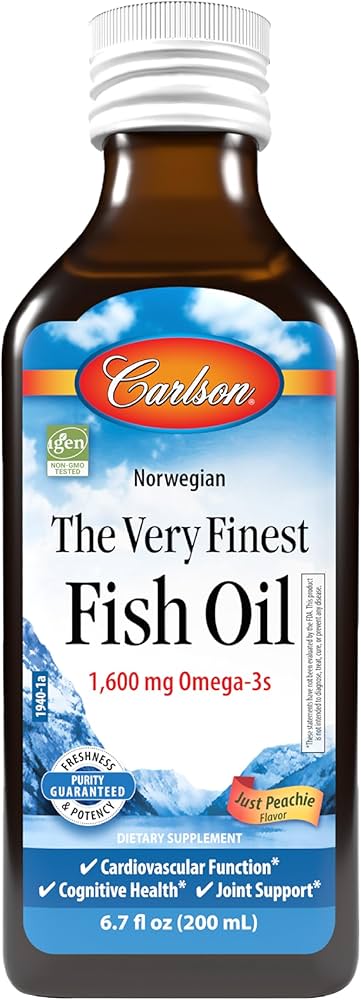
Best Liquid | ⭐ 4.7/5 (15,000+ Amazon reviews)
EPA: 800mg | DHA: 500mg | Total Omega-3: 1,600mg | Form: TG | Serving: 1 teaspoon (5ml) | Certifications: IFOS certified, Non-GMO | Price: ~$0.60/serving
If you hate swallowing pills — or need higher doses that would require too many capsules — liquid fish oil is the answer. Carlson has been making fish oil since 1965 and their liquid formula has won multiple taste awards.
One teaspoon delivers 1,600mg of omega-3s from wild-caught Norwegian fish. The lemon (or orange) flavor actually tastes pleasant rather than just masking fishiness. You can take it straight, mix into smoothies, or drizzle on food.
Carlson uses a nitrogen-flush bottling process that displaces oxygen and prevents oxidation. This is why their liquid fish oil stays fresh much longer than competitors. Just refrigerate after opening and use within 100 days.
Pros:
- Award-winning taste — actually pleasant
- Easy to take for pill-averse people
- IFOS certified
- Nitrogen-flushed for freshness
- Multiple flavor options (lemon, orange, mixed berry)
Cons:
- Must refrigerate after opening
- Less convenient for travel
- Higher price per serving than capsules
- Shorter shelf life once opened
Best for: Anyone who struggles with pills. Those needing high doses (2-4g/day) for triglyceride management. Parents giving fish oil to children. People who want to add omega-3s to smoothies or food.
5. Life Extension Super Omega-3 Plus
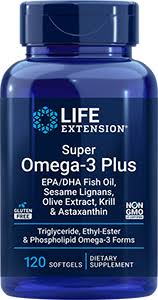
Best for Biohackers | ⭐ 4.6/5 (3,500+ Amazon reviews)
EPA: 750mg | DHA: 510mg | Total Omega-3: 2,520mg | Form: TG + Krill | Serving: 4 softgels | Certifications: IFOS, Non-GMO, COA available | Price: ~$0.52/serving
Life Extension takes the kitchen-sink approach: their Super Omega-3 Plus combines fish oil with krill oil, olive polyphenols (equivalent to 4+ tablespoons of EVOO), sesame lignans, and astaxanthin. It’s designed for comprehensive cardiovascular and antioxidant support.
The olive extract provides hydroxytyrosol, a polyphenol with strong research behind its cardiovascular benefits. The krill oil adds phospholipid-bound omega-3s for brain penetration. The astaxanthin serves as a potent antioxidant that also protects the omega-3s from oxidation.
Yes, it’s four softgels per serving. But you’re getting a multi-ingredient formula that would otherwise require several separate supplements.
Pros:
- Multi-ingredient cardiovascular formula
- Olive polyphenols + krill + astaxanthin included
- COA available for every batch
- Life Extension’s pharmaceutical-grade standards
- Natural lemon flavor
Cons:
- Four softgels per serving
- More expensive than single-ingredient fish oils
- Contains shellfish (krill) — not for shellfish allergies
Best for: Biohackers and optimizers who want comprehensive cardiovascular support in one product. Those following Mediterranean-style protocols. People who would otherwise stack multiple supplements.
6. Nature Made Burp-Less Ultra Omega-3
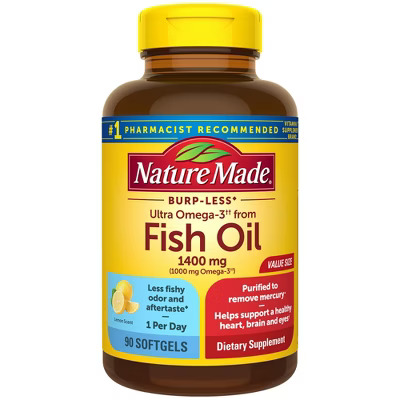
Best Budget | ⭐ 4.7/5 (18,000+ Amazon reviews)
EPA: 683mg | DHA: 252mg | Total Omega-3: 1,400mg | Form: EE (enteric coated) | Serving: 1 softgel | Certifications: USP Verified | Price: ~$0.21/serving
Nature Made delivers the best balance of affordability and verified quality. The USP Verified mark means an independent lab has confirmed the product contains what’s on the label, is free from harmful contaminants, and was made according to FDA manufacturing standards.
At about $0.21 per serving with 1,400mg omega-3s in a single softgel, the value is hard to beat. Yes, it’s ethyl ester form (not triglyceride), but the enteric coating helps with absorption and eliminates fish burps for most people.
This is the #1 pharmacist-recommended fish oil brand according to Pharmacy Times surveys. If your doctor recommends fish oil and you want something affordable from a trusted name, this is the safe choice.
Pros:
- USP Verified — gold standard for quality assurance
- One softgel per serving
- Enteric coating prevents fish burps
- Available everywhere (pharmacies, grocery stores)
- #1 pharmacist recommended brand
Cons:
- Ethyl ester form (lower bioavailability than TG)
- Lower DHA content relative to EPA
- Large softgel size
Best for: Budget-conscious buyers who want verified quality. Those just starting fish oil supplementation. Anyone who wants a trusted pharmacy brand they can pick up anywhere.
7. Thorne Super EPA
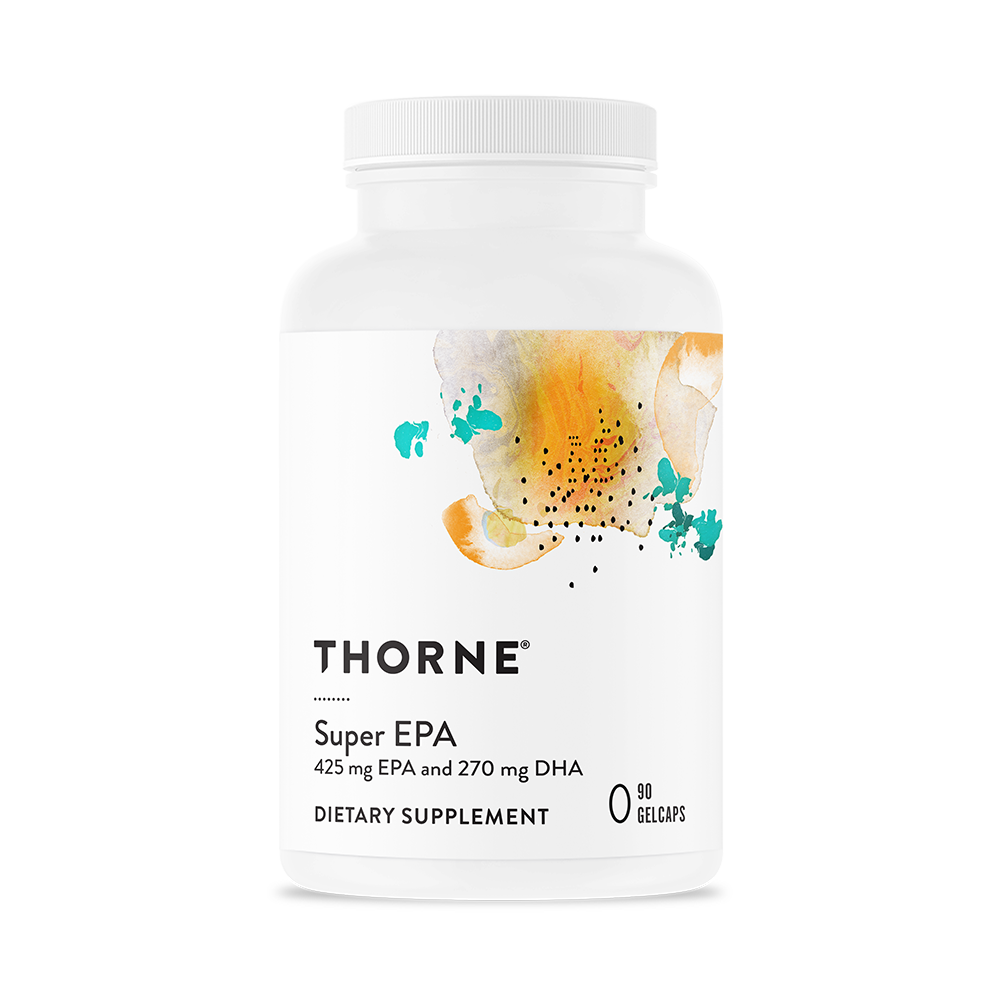
Best for Athletes | ⭐ 4.6/5 (2,800+ Amazon reviews)
EPA: 425mg | DHA: 270mg | Total Omega-3: 750mg | Form: EE | Serving: 1 gelcap | Certifications: NSF Certified for Sport | Price: ~$0.40/serving
For competitive athletes subject to drug testing, Thorne’s NSF Certified for Sport designation is essential. This certification means every batch is tested for 270+ substances banned by major sports organizations including WADA, NFL, MLB, NHL, and NCAA.
Thorne supplies fish oil to over 100 professional sports teams and multiple Olympic athletes. Their quality control includes four rounds of testing per batch. The “Super EPA” formula emphasizes EPA over DHA, which research suggests may be more beneficial for exercise-induced inflammation and recovery.
The per-capsule omega-3 content is lower than some competitors, so you may need 2-3 capsules to hit higher doses. But for athletes, the NSF certification is non-negotiable.
Pros:
- NSF Certified for Sport — tested for 270+ banned substances
- Trusted by 100+ pro sports teams
- Four rounds of testing per batch
- High EPA ratio for inflammation
- Smaller capsule size than most
Cons:
- Lower omega-3 per capsule (need 2-3 for full dose)
- Ethyl ester form
- Premium pricing
Best for: Competitive athletes, Olympians, and professionals subject to drug testing. Anyone who needs absolute certainty their supplement won’t cause a positive test. Recovery-focused training protocols.
8. Nordic Naturals Algae Omega
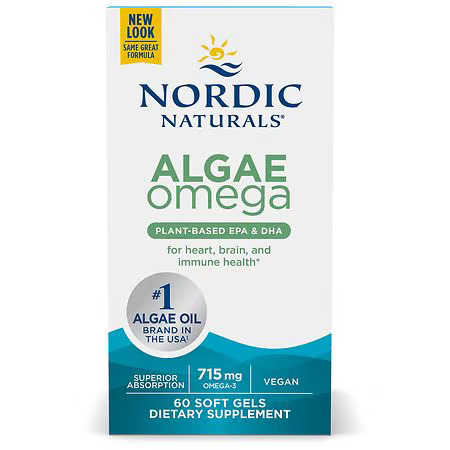
Best Vegan | ⭐ 4.5/5 (3,200+ Amazon reviews)
EPA: 195mg | DHA: 390mg | Total Omega-3: 715mg | Form: Algal oil | Serving: 2 softgels | Certifications: Vegan certified, Non-GMO, COA available | Price: ~$0.67/serving
Here’s something most people don’t realize: fish don’t actually make omega-3s. They get them from eating algae. Algae-based supplements cut out the middleman, delivering EPA and DHA directly from the original source — with zero ocean ecosystem impact.
Nordic Naturals’ Algae Omega is cultivated in controlled tanks, completely eliminating concerns about mercury, PCBs, and other ocean contaminants. It’s also genuinely sustainable — no fish populations harmed.
The omega-3 content is lower than fish-based options, with a DHA-heavy ratio (390mg DHA vs 195mg EPA). This makes it particularly good for brain health and pregnancy, where DHA is the priority.
Pros:
- 100% plant-based, vegan certified
- Zero ocean ecosystem impact
- No contaminant concerns (grown in tanks)
- High DHA ratio ideal for brain health
- Nordic Naturals quality standards
Cons:
- Lower total omega-3s than fish oil
- Higher cost per gram of omega-3
- Lower EPA (not ideal for inflammation focus)
- May need multiple servings for therapeutic doses
Best for: Vegans, vegetarians, and those avoiding animal products. Pregnant women prioritizing DHA. People concerned about ocean sustainability. Those with fish allergies who still want EPA/DHA.
Fish Oil Supplement Comparison Chart
| Product | EPA+DHA | Form | Serving | Certification | Rating |
|---|---|---|---|---|---|
| Viva Naturals Triple Strength | 2,070mg | rTG | 2 softgels | IFOS 5-star | 4.6/5 |
| Nordic Naturals Ultimate Omega | 1,100mg | rTG | 2 softgels | Friend of the Sea | 4.6/5 |
| Sports Research Triple Strength | 1,150mg | rTG | 1 softgel | IFOS, MSC | 4.6/5 |
| Carlson The Very Finest (Liquid) | 1,300mg | TG | 1 tsp | IFOS | 4.7/5 |
| Life Extension Super Omega-3 Plus | 1,260mg | TG+Krill | 4 softgels | IFOS | 4.6/5 |
| Nature Made Burp-Less | 935mg | EE | 1 softgel | USP Verified | 4.7/5 |
| Thorne Super EPA | 695mg | EE | 1 gelcap | NSF Sport | 4.6/5 |
| Nordic Naturals Algae Omega | 585mg | Algal | 2 softgels | Vegan, Non-GMO | 4.5/5 |
Fish Oil Dosing Guide: How Much Do You Actually Need?
The optimal dose depends entirely on your health goals. Here’s what the research supports:
| Goal | EPA+DHA Dose | Notes |
|---|---|---|
| General health maintenance | 500-1,000mg/day | Equivalent to 2 fatty fish meals weekly |
| Heart disease (secondary prevention) | 1,000mg/day | American Heart Association recommendation |
| Triglyceride reduction | 2,000-4,000mg/day | FDA-approved indication; requires physician supervision |
| Depression/mood support | 1,000-2,000mg/day | Higher EPA ratio (≥60%) shows best results |
| Rheumatoid arthritis/joint pain | 2,500-3,000mg/day | Reduces morning stiffness, may decrease NSAID need |
| Pregnancy/breastfeeding | 200-300mg DHA minimum | Critical for fetal brain development |
| Eye health (dry eye) | 1,000-2,000mg/day | May take 3+ months to see improvement |
FDA upper limit: Stay under 3,000mg/day of combined EPA+DHA without physician supervision. Up to 5,000mg/day may be used under medical guidance for specific conditions.
EPA vs DHA: Which Ratio Do You Need?
EPA and DHA serve different functions in your body. Choosing the right ratio can optimize results for your specific goals:
Higher EPA (2:1 or greater EPA:DHA) is better for:
- Depression and mood disorders — EPA shows stronger antidepressant effects [3]
- Inflammation and joint pain
- Cardiovascular protection (based on REDUCE-IT trial)
- Exercise recovery
Higher DHA (1:1 or DHA-dominant) is better for:
- Brain health and cognitive function — DHA is the primary omega-3 in brain tissue
- Pregnancy and infant development
- Eye health (DHA concentrates in the retina)
- Age-related cognitive decline prevention
For general health: A balanced ratio works fine. Most fish oils naturally lean slightly EPA-heavy, which is appropriate for most adults.
Does Fish Oil Actually Work? What the Research Shows
Fish oil research is more nuanced than supplement marketing suggests. Here’s what the landmark trials found:
REDUCE-IT (2019): The trial that changed cardiovascular guidelines. 8,179 statin-treated patients with elevated triglycerides took 4g/day of pure EPA (icosapent ethyl/Vascepa). Results: 25% relative reduction in cardiovascular events including heart attacks, strokes, and cardiac death. [4]
Important caveat: The mineral oil placebo may have inflated results by raising LDL in the control group. Also, atrial fibrillation hospitalizations increased slightly (3.1% vs 2.1%).
VITAL (2019): The largest primary prevention trial (25,871 healthy adults) found no significant reduction in major cardiovascular events with 1g/day fish oil. However, subgroup analysis showed 28% reduction in heart attacks (P=0.003), 50% reduction in fatal MI, and 40% reduction among those with low fish intake. [5]
STRENGTH (2020): Used 4g/day of EPA+DHA combination and showed zero cardiovascular benefit while increasing atrial fibrillation. This raised questions about whether DHA negates EPA’s benefits. [6]
The takeaway: Low doses (1g/day) in healthy people show minimal cardiovascular benefit. Higher doses (2-4g/day) in at-risk populations — especially those not already eating fish — show meaningful effects. Pure EPA may be more effective than EPA+DHA combinations for cardiovascular protection, though this remains debated.
How to Stop Fish Oil Burps
Fish burps happen when oil breaks down in your stomach rather than your intestines. The oil floats on stomach contents near your esophageal sphincter, releasing volatile compounds when you burp. Here’s how to prevent it:
- Choose enteric-coated capsules — They dissolve in your intestines, bypassing stomach breakdown entirely
- Use triglyceride form — Better absorption means less undigested oil causing problems
- Take with food — Especially fat-containing meals (eggs, avocado, nuts) to mix with stomach contents
- Freeze your capsules — Delays breakdown in the stomach (don’t constantly remove and replace)
- Split high doses — Take half in the morning, half at dinner
- Take at night — Sleep through any aftertaste
Red flag: Heavy lemon or citrus flavoring may mask rancidity. If a product needs strong flavoring to be palatable, question its freshness.
What Supplements Stack Well With Fish Oil?
Fish oil pairs synergistically with several other compounds:
The Cardiovascular Stack:
- Fish oil (1-2g EPA+DHA)
- CoQ10 (100-200mg) — especially if on statins
- Magnesium (300-400mg)
- Vitamin K2 (100-200mcg MK-7)
The Brain Health Stack:
- Fish oil (1g+ with higher DHA ratio)
- Phosphatidylserine (100-300mg)
- Bacopa monnieri (300mg)
- Lion’s mane (500-1000mg)
The Anti-Inflammatory Stack:
- Fish oil (2-3g with higher EPA ratio)
- Curcumin with piperine (500-1000mg)
- SPMs (Specialized Pro-resolving Mediators) for resolution phase
Fish Oil Side Effects and Drug Interactions
Fish oil is generally very safe, but there are interactions worth knowing:
Blood thinners (warfarin, aspirin, clopidogrel): Fish oil has mild blood-thinning effects. A large retrospective study of 573 warfarin patients found fish oil did NOT significantly alter INR control or bleeding incidence at typical doses. [7] However, inform your doctor and stop 1-2 weeks before surgery.
Blood pressure medications: Fish oil may have additive blood pressure lowering effects. Monitor BP when starting, especially at higher doses.
Diabetes medications: Fish oil may affect blood sugar at very high doses. Monitor glucose if taking 3g+/day.
Potential side effects (uncommon):
- Fish burps, fishy aftertaste (sign of quality issues)
- Mild GI upset, loose stools at high doses
- Increased bleeding risk at very high doses
- Atrial fibrillation risk may increase slightly at 4g+/day
Fish Oil vs Krill Oil vs Algae Oil
How do the alternatives compare?
Fish Oil delivers the highest omega-3 concentration per dollar. Available in TG, EE, and rTG forms. The most extensively researched form with the largest clinical evidence base.
Krill Oil provides omega-3s bound to phospholipids, which may enhance brain penetration. Contains astaxanthin (antioxidant). Lower total omega-3s per serving but potentially better absorbed. More expensive per gram of omega-3. Best for: brain health focus, those who prefer smaller capsules.
Algae Oil is the vegan option that delivers EPA and DHA directly from the original source (fish get their omega-3s from eating algae). Zero ocean ecosystem impact, zero contaminant concerns. Typically DHA-dominant. Best for: vegans, pregnancy, sustainability focus, fish allergy.
How Long Does Fish Oil Take to Work?
- Blood omega-3 levels increase: 2-4 weeks
- Red blood cell membrane saturation: 3-6 months
- Optimal Omega-3 Index (8%+): 4-6 months of consistent use
- Triglyceride reduction: 2-4 weeks at therapeutic doses
- Blood pressure effects: 8-12 weeks
- Joint pain improvement: 2-3 months
- Mood/depression effects: 3-8 weeks
- Dry eye improvement: 3+ months
Fish oil is a long-game supplement. Don’t expect dramatic overnight changes — the benefits accumulate over months as omega-3s incorporate into cell membranes throughout your body.
Fish Oil Supplement FAQs
How much fish oil should I take daily?
For general health, aim for 500-1,000mg of combined EPA+DHA daily — equivalent to eating fatty fish twice weekly. Those with heart disease should target 1,000mg/day (AHA recommendation). Triglyceride reduction requires 2-4g/day under physician supervision. FDA recommends staying under 3g/day without medical oversight.
When is the best time to take fish oil?
Always take with a meal containing fat — this dramatically improves absorption regardless of the time of day. Morning vs evening doesn’t significantly affect absorption. For joint pain, some find evening dosing reduces morning stiffness. For fish burp prevention, taking at night lets you sleep through any aftertaste.
Is fish oil safe during pregnancy?
Yes, and beneficial. DHA is critical for fetal brain and retinal development, with the greatest need during the third trimester. Studies show maternal DHA supplementation leads to higher cognitive scores in children and reduces preterm birth risk by 11%. Aim for 200-300mg DHA minimum daily. Avoid cod liver oil due to vitamin A toxicity risk.
Should I refrigerate fish oil?
Refrigerate liquid fish oil after opening — exposure to air accelerates oxidation. Use opened liquid within 3 months. Capsules are more stable but benefit from cool, dark, dry storage. Refrigeration is optional for capsules but recommended in warm climates or if experiencing fish burps (frozen capsules delay stomach breakdown).
What’s the difference between fish oil and cod liver oil?
Fish oil comes from the flesh of fatty fish and provides pure EPA and DHA. Cod liver oil comes from fish liver and contains high levels of vitamins A and D in addition to omega-3s. Cod liver oil dosage is limited by vitamin content — taking enough for therapeutic omega-3 doses could cause vitamin A toxicity. Choose fish oil when you need omega-3s without vitamin concerns.
Can I take fish oil with blood thinners?
Generally yes at normal doses. A large study found fish oil under 3g/day can safely be taken with warfarin, aspirin, or clopidogrel without significantly altering INR or increasing bleeding. However, always inform your doctor, and stop fish oil 1-2 weeks before any scheduled surgery.
Why does my fish oil cause burping?
Fish burps usually indicate either rancid oil or poor formulation. Quality fish oil in triglyceride form with proper manufacturing shouldn’t cause significant burping. Try: enteric-coated capsules, taking with fatty food, freezing capsules, or switching brands. Persistent fish burps despite these measures suggest the product may be oxidized.
Is more EPA or DHA better?
It depends on your goal. Higher EPA (2:1+ ratio) is better for depression, inflammation, heart health, and exercise recovery. Higher DHA is better for brain health, pregnancy, eye health, and cognitive function. For general health, a balanced ratio works well. Most fish oils are naturally EPA-dominant.
How do I know if my fish oil is rancid?
Cut open a capsule and smell/taste the oil. Fresh fish oil should have minimal odor — perhaps a faint ocean smell. Rancid oil smells strongly fishy, sour, or like cardboard, and tastes bitter. Visual signs include cloudy, discolored oil or soft, mushy capsules. Nearly 50% of products exceed oxidation limits, so this test is worth doing.
What does IFOS 5-star mean?
IFOS (International Fish Oil Standards) is the most comprehensive fish oil certification. Each star represents passing a different category: (1) meets contaminant standards, (2) omega-3 concentration exceeds 60%, (3) passes oxidation tests, (4) PCBs and dioxins within limits, (5) heavy metals tested. Five stars means the product passed all categories.
Which Fish Oil Supplement Should You Buy?
After testing and analyzing over 30 fish oil supplements, the differences between quality products and mediocre ones are clear. The best fish oil supplements share a few key traits: they use the triglyceride or re-esterified triglyceride form for superior absorption, carry third-party certifications like IFOS 5-star or USP Verified, and deliver enough EPA and DHA per serving that you’re not swallowing a handful of pills every day.
Price per bottle is meaningless — what matters is price per gram of actual omega-3s. When you run those numbers, many “budget” fish oils end up costing more than premium options because of their low concentration. A quality concentrated formula delivers 1,000-2,000mg of EPA+DHA in one or two capsules, while cheap drugstore brands require 4-5 capsules to hit the same dose.
For most people, the sweet spot is an IFOS-certified fish oil in rTG form with at least 1,000mg combined EPA+DHA per serving. Athletes need NSF Certified for Sport products. Vegans should look for algae-based options. And anyone who hates swallowing pills will be better served by a quality liquid formula.
Whatever you choose, consistency matters more than perfection. A good fish oil taken daily will outperform the “perfect” fish oil sitting unopened in your cabinet. Pick one from our list above, take it with a fat-containing meal, and give it 3-6 months to see the full benefits.
Disclosure: This article contains affiliate links. We only recommend products we’d take ourselves or give to family. See our full editorial policy.
References
- Dyerberg J, et al. Bioavailability of marine n-3 fatty acid formulations. Prostaglandins Leukot Essent Fatty Acids. 2010;83(3):137-141.
- Albert BB, et al. Fish oil supplements in New Zealand are highly oxidised and do not meet label content of n-3 PUFA. Sci Rep. 2015;5:7928.
- Sublette ME, et al. Meta-analysis of the effects of eicosapentaenoic acid (EPA) in clinical trials in depression. J Clin Psychiatry. 2011;72(12):1577-1584.
- Bhatt DL, et al. Cardiovascular Risk Reduction with Icosapent Ethyl for Hypertriglyceridemia (REDUCE-IT). N Engl J Med. 2019;380(1):11-22.
- Manson JE, et al. Marine n−3 Fatty Acids and Prevention of Cardiovascular Disease and Cancer (VITAL). N Engl J Med. 2019;380(1):23-32.
- Nicholls SJ, et al. Effect of High-Dose Omega-3 Fatty Acids vs Corn Oil on Major Adverse Cardiovascular Events (STRENGTH). JAMA. 2020;324(22):2268-2280.
- Bender NK, et al. Effects of marine fish oils on the anticoagulation status of patients receiving chronic warfarin therapy. J Thromb Thrombolysis. 1998;5(3):257-261.
- GOED (Global Organization for EPA and DHA Omega-3s). Voluntary Monograph for Omega-3 Products. Version 5. 2019.
- Harris WS. The Omega-3 Index: From Biomarker to Risk Marker to Risk Factor. Curr Atheroscler Rep. 2009;11(6):411-417.
- Stonehouse W, et al. DHA supplementation improved both memory and reaction time in healthy young adults. Am J Clin Nutr. 2013;97(5):1134-1143.
- Carlson SE, et al. DHA supplementation and pregnancy outcomes. Am J Clin Nutr. 2013;97(4):808-815.
Medical Disclaimer: This content is for informational purposes only and is not medical advice. Consult your healthcare provider before starting any supplement, especially if you take medications or have health conditions. Last reviewed January 2026.