
BPC-157 capsules vs spray-which delivery method actually works better? I get this question constantly, and the honest answer is: it depends entirely on what you’re trying to heal.
BPC-157 oral capsules work best for gut healing and GI issues. BPC-157 sublingual sprays get more peptide into systemic circulation faster, making them better for tendons, joints, and muscles. And the fact that either oral BPC-157 option works at all comes down to something unusual-it’s one of the few peptides that can actually survive stomach acid.
Most peptides get destroyed within minutes of hitting your digestive system. BPC-157 stays intact for over 24 hours. That’s not marketing-it’s documented in peer-reviewed research. This stability opens up delivery options that simply don’t exist for other therapeutic peptides.
I’ll break down how each BPC-157 delivery method works and when you’d actually want to use one over the other.
Nearly half off everything at Everest Peptides
Everest Peptides' card processor is offline right now, so instead of waiting it out they're running a bank payment sale. Every peptide is 40% off, and code BRAINFLOW stacks another 15% at checkout. Pay with Zelle or Pay by Bank, same day shipping before 3pm ET, every batch third-party tested with the COA on the product page. Rated 4.9 on Trustpilot.
Shop the 40% off sale Code BRAINFLOW at checkout. Zelle and Pay by Bank only during the sale.Why BPC-157 Can Be Taken Orally (When Most Peptides Can’t)
Your digestive system is basically a peptide destruction machine. Stomach acid at pH 1-3 kicks off hydrolysis, then pepsin, trypsin, and chymotrypsin systematically cut peptide bonds apart. Most peptides end up with less than 1% bioavailability when swallowed.
BPC-157 dodges this through its molecular structure. The 15-amino acid sequence (GEPPPGKPADDAGLV) contains four proline residues, including a rare triple-proline sequence at positions 3-5. These prolines create structural “kinks” that physically block enzymes from accessing the peptide backbone-imagine a key bent at weird angles that no lock-picking tool can grip.
There’s also an evolutionary logic here. BPC-157 comes from a larger protective protein naturally found in human gastric juice-it literally evolved to survive stomach acid because that’s its native environment.
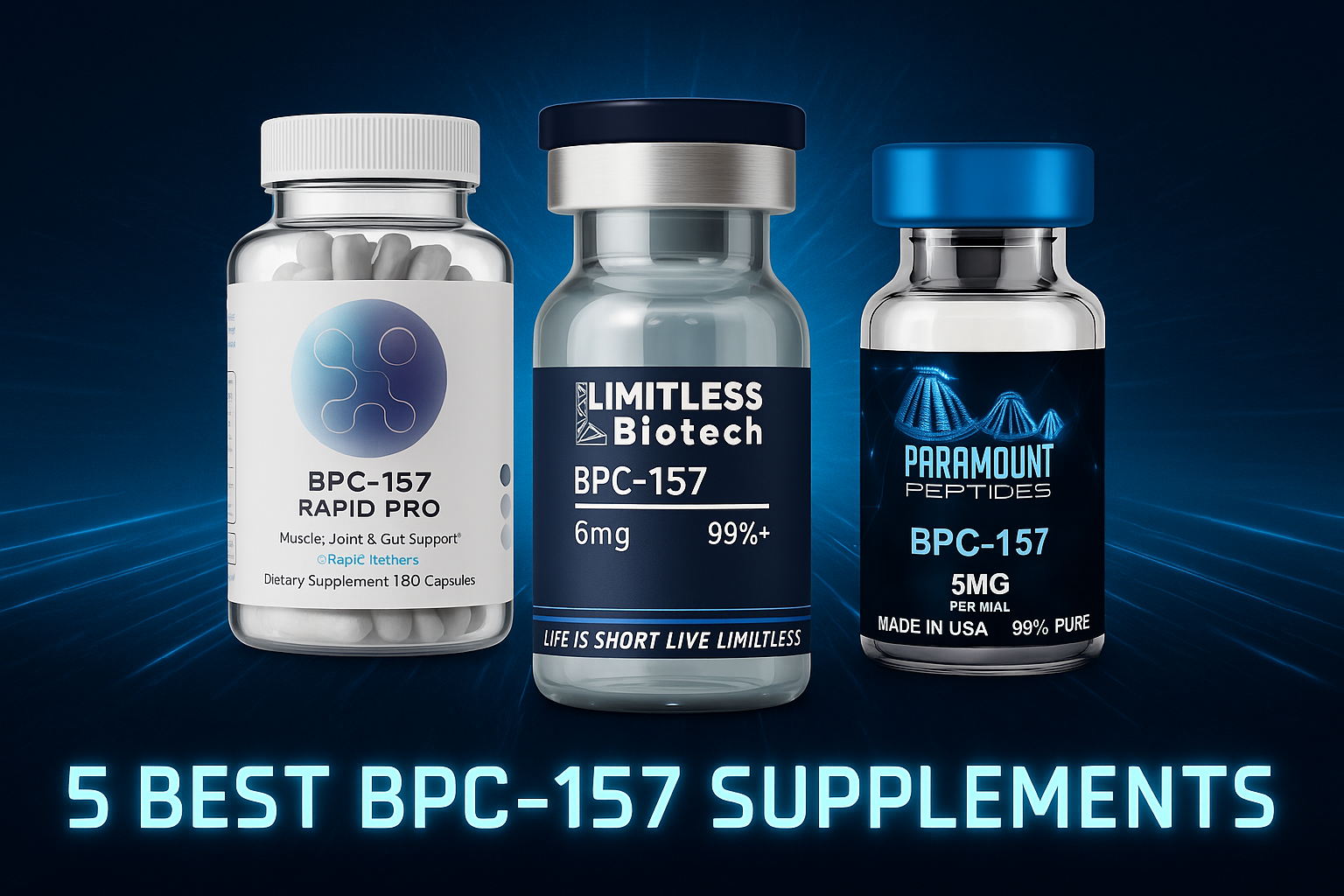
→ See also: 5 Best BPC-157 Supplements (Tested and Reviewed)
How BPC-157 Oral Capsules Work
When you swallow a BPC-157 capsule, the peptide travels through your entire digestive tract before absorption. Pharmacokinetic studies show intramuscular injection yields 14-19% bioavailability in rats and 45-51% in dogs, with peak plasma concentrations hitting within 3 minutes. Oral administration gives you lower systemic bioavailability-but that’s actually fine depending on your goals.
If you’re targeting gut healing, lower systemic absorption doesn’t matter. Your GI tract is the therapeutic target, and BPC-157 does its work locally before it ever hits your bloodstream. Research comparing routes found oral delivery equally effective as injection for healing gastric ulcers, intestinal fistulas, and surgical anastomosis sites.
A ligament healing study in the Journal of Orthopaedic Research found equivalent functional, biomechanical, and histological outcomes whether BPC-157 was given by injection, orally in drinking water, or topically-all at the same 10 μg/kg dose. The route mattered less than getting adequate peptide to where it needed to go.
Once BPC-157 does absorb systemically, it processes fast. Elimination half-life is under 30 minutes. Your liver’s cytochrome P450 enzymes break the peptide into metabolites, eventually yielding free amino acids. Within an hour, most of what’s circulating is proline rather than intact peptide.
Rapid-Release vs Delayed-Release Capsules
Modern BPC-157 capsules come in two main formats targeting different parts of your digestive system.
Rapid-release formulations dissolve quickly in your stomach, giving immediate exposure to the upper GI tract. This makes sense for gastric ulcers, NSAID-induced damage, esophageal issues, or anything affecting the stomach and duodenum.
Delayed-release capsules use enteric coating that stays intact through stomach acid, only dissolving when pH rises in the small intestine. This targets lower GI problems: inflammatory bowel disease, colonic healing, or leaky gut affecting the ileum and colon.
InfiniWell’s capsule line incorporates SNAC (salcaprozate sodium) at 3mg per capsule in their Pro formulations. SNAC is a pharmaceutical-grade absorption enhancer originally developed to improve oral peptide delivery-it protects peptides from enzymatic degradation while increasing intestinal membrane permeability.
🧬 InfiniWell BPC-157 (Oral Capsules & Spray)
SNAC-enhanced capsules with pharmaceutical-grade absorption technology. Choose Rapid Pro for upper GI, Delayed Pro for lower GI, or BPC-Lx Spray for systemic absorption.
→ Use code IW15 for 15% off
How BPC-157 Sublingual and Oral Sprays Work
Spray formulations take a completely different approach. Instead of navigating your digestive tract, they target the oral mucosa-specifically the sublingual region under your tongue.
The sublingual area offers superior permeability compared to other oral surfaces. Its non-keratinized epithelium contains membrane coating granules that produce polar lipids enabling drug passage. More importantly, sublingual absorption bypasses first-pass hepatic metabolism entirely.
In practice: drug absorbed through the sublingual mucosa drains into venous blood flowing directly into the superior vena cava. It reaches systemic circulation without passing through the liver. This avoids both GI degradation and hepatic processing-the two main barriers to peptide bioavailability.
The catch? Baseline sublingual bioavailability for unenhanced peptide formulations is only 1-2%. That’s where delivery technology makes a real difference.
Research on lipid-based enhancement shows dramatic improvements. Studies using cyclodextrin derivatives achieved 57.1% bioavailability for sublingual delivery-a 192% improvement over oral administration of the same compound. Lipid encapsulation protects peptides from degradation while improving transport across mucosal membranes.
InfiniWell’s BPC-Lx Pro oral spray uses their LipoEmulsion technology for this exact purpose. Each serving delivers 500 mcg (4 sprays of 125 mcg each), suspended in a lipid emulsion matrix of MCT oil and sunflower lecithin. You spray directly into your mouth, hold briefly for sublingual absorption, then swallow-capturing both mucosal and residual GI uptake.
→ See also: 5 Best BPC-157 Sprays (Nasal and Oral Compared)
Nasal Spray and the Nose-to-Brain Pathway
Nasal delivery accesses something oral formulations can’t: a direct route to your central nervous system that bypasses the blood-brain barrier entirely.
Two neural pathways connect your nasal cavity to your brain. The olfactory nerve pathway carries drugs from olfactory neurons through axonal transport to the olfactory bulb. The trigeminal nerve pathway provides direct connections from nasal mucosa to brainstem regions.
Human studies demonstrated that intranasally administered peptides accumulated in cerebrospinal fluid within 10-80 minutes-way faster than possible through peripheral circulation. This makes nasal spray interesting for BPC-157’s documented interactions with dopaminergic and serotonergic systems.
The limitation? Humans have olfactory epithelium covering only 3-5% of nasal cavity surface area (compared to 50% in rodents). Animal studies often show more pronounced nose-to-brain transport than translates to human outcomes. Still, for neurological targets, nasal delivery offers theoretical advantages that oral routes can’t match.
BPC-157 Bioavailability: Capsules vs Spray Compared
Here’s how the delivery methods stack up based on peptide pharmacology research:
| Delivery Method | Estimated Bioavailability | First-Pass Bypass | Best For |
|---|---|---|---|
| Subcutaneous injection | 77-95% | Yes | Systemic, localized tissue |
| Nasal spray (enhanced) | 20-40% | Yes | CNS, systemic |
| Sublingual spray (lipid-enhanced) | 15-50% | Yes | Systemic, rapid onset |
| Oral capsule (enhanced) | 5-20% | No | GI tract, systemic |
| Oral capsule (standard) | 2-10% | No | GI tract |
These estimates come from general peptide pharmacokinetics and enhancement technology studies. Direct comparative human bioavailability data for BPC-157 specifically across all routes doesn’t exist in peer-reviewed literature.
Here’s what matters though: bioavailability percentage alone doesn’t determine therapeutic effectiveness. For gut healing, oral capsules with “lower” systemic bioavailability actually deliver higher local drug concentrations at the therapeutic target. The ligament healing study found equivalent outcomes across routes because adequate peptide reached the site of action regardless of delivery method.
BPC-157 Benefits: What the Research Shows
Before choosing a delivery method, it helps to understand what BPC-157 actually does. The peptide’s benefits stem from its ability to modulate multiple healing pathways simultaneously.
Gut healing and protection: BPC-157 accelerates healing of gastric ulcers, intestinal damage, and inflammatory bowel conditions. It protects against NSAID-induced GI damage and helps repair leaky gut by strengthening tight junctions between intestinal cells.
Tendon and ligament repair: The peptide promotes fibroblast outgrowth and collagen organization, speeding recovery from tendon injuries, sprains, and surgical repairs. Animal studies show faster return to baseline function after Achilles tendon transection.
Muscle healing: BPC-157 accelerates muscle fiber regeneration and reduces scar tissue formation after injury. It also counteracts muscle wasting from certain drugs and conditions.
Joint support: Research demonstrates improved healing of cartilage damage and reduced inflammation in joint tissues. Some users report reduced pain and improved mobility with chronic joint issues.
Neuroprotective effects: BPC-157 interacts with dopaminergic and serotonergic systems, showing protective effects against certain neurotoxins in animal models. Early research suggests potential for nerve regeneration.
Blood vessel formation: The peptide promotes angiogenesis (new blood vessel growth), which supports tissue repair by improving nutrient and oxygen delivery to damaged areas.
When to Choose BPC-157 Capsules vs Spray
Choose Oral Capsules For:
Gastrointestinal conditions. The evidence base most strongly supports oral BPC-157 for gut-related issues. Phase II clinical trials tested oral BPC-157 for inflammatory bowel disease. Preclinical studies demonstrated healing of gastric ulcers (outperforming famotidine at 400-800 ng/kg doses), intestinal anastomosis, colocutaneous fistulas, and NSAID-induced GI damage.
The peptide’s cytoprotective mechanism-operating through Egr-1 gene expression, VEGF upregulation, and nitric oxide system modulation-acts most directly when delivered to the gut lining.
Use rapid-release capsules for upper GI conditions: gastric ulcers, esophageal issues, stomach inflammation.
Use delayed-release capsules for lower GI conditions: IBD, colonic healing, leaky gut affecting the ileum and colon.
Choose Oral Spray For:
Systemic effects and faster onset. When targeting tissues beyond the GI tract-tendons, ligaments, joints, muscles-sublingual spray’s first-pass bypass delivers more intact peptide to systemic circulation. Absorption happens in minutes rather than 30+ minutes for capsules, which matters when peak peptide levels count.
LipoEmulsion technology’s lipid encapsulation also protects against the proteolytic enzymes that would otherwise degrade circulating peptide, potentially extending effective half-life beyond the sub-30-minute measurement for unprotected BPC-157.
Consider Nasal Spray For:
Neurological targets. Though less commercially available, nasal BPC-157 theoretically offers advantages for neuroprotection, cognitive effects, or conditions involving the central nervous system. The direct nose-to-brain pathway bypasses blood-brain barrier limitations, though human data specifically supporting nasal BPC-157 effectiveness remains limited.
→ See also: 4 Best BPC-157 Capsules on the Market
How Lipid Encapsulation Actually Works
You’ll see “lipid-enhanced” on a lot of BPC-157 products. Here’s what that actually means in practice.
Self-emulsifying drug delivery systems (SEDDS) spontaneously form emulsions when mixed with aqueous media, creating protective lipid droplets. The key: pepsin, trypsin, and chymotrypsin can’t enter the oily interior to cleave enclosed peptides. The lipid shell acts as a physical barrier against enzymatic attack.
Studies on lipid nanodispersions show up to 50-fold bioavailability enhancement for hydrophilic peptides through several mechanisms:
Lymphatic transport: Lipid carriers route absorption through intestinal lymphatics, completely bypassing hepatic first-pass metabolism.
Enhanced membrane permeation: Lipid digestion products transiently modify tight junctions, increasing paracellular transport.
Mucus penetration: Lipid nanoparticles improve passage through the mucus layer that otherwise blocks peptide contact with absorptive epithelium.
Sustained release: Controlled liberation from lipid matrices extends the absorption window.
InfiniWell’s LipoEmulsion technology applies these principles specifically to BPC-157 delivery. The MCT/lecithin base creates stable lipid vesicles that protect the enclosed peptide while facilitating membrane interaction for improved mucosal uptake.
The Research Picture
BPC-157 has 544+ publications from 1993-2024, though systematic reviews note that 35 of 36 included studies were preclinical. The most robust pharmacokinetic data comes from a 2022 study in Frontiers in Pharmacology establishing half-life, distribution, and metabolic pathways in rats and dogs. Most research originates from a Croatian team at the University of Zagreb (Sikiric, Seiwerth, and colleagues).
Human data is limited but growing. A 2025 pilot study established IV BPC-157 safety at 10-20 mg doses in two healthy volunteers. A 12-patient retrospective found 7 of 12 patients reporting symptom improvement exceeding 6 months following intra-articular injection for knee pain. Phase II trials for inflammatory bowel disease demonstrated safety without reported toxicity.
What’s still missing: direct human bioavailability comparison between oral and injectable routes, independent replication of the Croatian findings, completed Phase III trials, and peer-reviewed verification of commercial product absorption claims.
💉 Limitless Life Nootropics (Injectable BPC-157)
Prefer injection for maximum bioavailability? Limitless offers third-party tested BPC-157 vials and BPC-157 nasal spray for nose-to-brain delivery.
→ Use code BRAINFLOW for 15% off
BPC-157 Dosing Protocols (Oral and Spray)
Standard dosing follows human equivalent calculations from effective animal doses. Research used 10 μg/kg intraperitoneally; extrapolating via body surface area conversion yields approximately 1.6 μg/kg for humans, or roughly 112 mcg for a 70 kg adult. Commercial products typically contain 250-500 mcg per capsule, providing meaningful safety margin above calculated minimums.
Common protocols:
- General support: 250-500 mcg once daily
- Active healing: 500 mcg twice daily (1000 mcg total)
- Intensive protocols: Up to 1500 mcg daily in divided doses
- Duration: 4-8 week cycles with 2-4 week breaks between
Timing considerations: Take capsules on an empty stomach for best absorption (30 minutes before meals or 2 hours after). For sprays, hold under the tongue for 60-90 seconds before swallowing. Some users split doses morning and evening; others take the full dose at once. For injury recovery, timing doses closer to physical activity may help target healing to stressed tissues.
InfiniWell pricing runs approximately $150-160 for a 30-day supply at standard twice-daily dosing. The spray format offers convenience (no pills, portable, temperature-stable) while capsules provide precise dosing and established absorption kinetics.
Where to Buy BPC-157 Capsules and Sprays
Quality matters with peptides-you want third-party testing, proper storage, and transparent sourcing. These are the BPC-157 products I’ve used and recommend:
InfiniWell (Oral Products):
- BPC-157 Rapid Pro – 500 mcg capsules with SNAC, rapid-release for upper GI (use code IW15)
- BPC-157 Delayed Pro – 500 mcg capsules with SNAC, enteric-coated for lower GI (use code IW15)
- BPC-Lx Pro Spray – 500 mcg per serving, LipoEmulsion sublingual formula (use code IW15)
Limitless Life Nootropics (Injectable):
- BPC-157 Vials – third-party tested injectable for maximum bioavailability (use code BRAINFLOW)
- BPC-157 Nasal Spray – nose-to-brain pathway for CNS targets (use code BRAINFLOW)
FAQ: BPC-157 Capsules vs Spray
Is BPC-157 spray or capsules better?
Neither is universally “better” – it depends on your target. BPC-157 capsules deliver higher local concentrations to the GI tract, making them superior for gut healing. BPC-157 spray bypasses liver metabolism and absorbs faster, making it better for systemic targets like tendons, ligaments, and joints. Research shows equivalent healing outcomes across routes when adequate peptide reaches the target tissue.
What is the bioavailability of oral BPC-157?
Standard oral BPC-157 capsules have estimated bioavailability of 2-10%, while enhanced formulations with SNAC reach 5-20%. Sublingual BPC-157 spray with lipid enhancement achieves 15-50% bioavailability. However, for gut healing applications, systemic bioavailability matters less since the peptide acts locally in the GI tract before absorption.
Should I take BPC-157 rapid-release or delayed-release capsules?
Rapid-release BPC-157 capsules dissolve in the stomach and work best for upper GI conditions: gastric ulcers, NSAID damage, esophageal inflammation, stomach issues. Delayed-release capsules use enteric coating to survive stomach acid, releasing in the small intestine – better for IBD, colonic healing, leaky gut, and lower GI problems. Use code IW15 for 15% off either option.
How long does BPC-157 take to work?
Many users report noticeable effects within 1-2 weeks, though full benefits typically develop over 4-8 weeks of consistent use. Animal studies show healing improvements starting within days. Spray formulations absorb within minutes (peak levels in 10-30 minutes), while capsules take 30-60 minutes to reach peak absorption. Most protocols recommend 4-8 week cycles.
Can I take BPC-157 capsules and spray together?
Yes, some people combine both delivery methods – especially if targeting both gut healing and systemic tissue repair simultaneously. Since they use different absorption pathways (GI tract vs sublingual), the mechanisms don’t compete. Just track your total daily BPC-157 dose across both products. A common approach: capsules in the morning for gut support, spray before activity for joint/tendon benefits.
Why can BPC-157 be taken orally when other peptides can’t?
BPC-157’s molecular structure contains four proline residues, including a rare triple-proline sequence that creates conformational “kinks” blocking enzymatic attack. Most peptides get degraded by stomach acid and digestive enzymes within minutes – BPC-157 remains stable for over 24 hours in gastric juice. It also derives from a protein naturally found in human gastric juice, meaning it evolved to survive its native stomach environment.
Bottom Line
BPC-157’s unusual gastric stability creates genuine oral delivery options that don’t exist for typical therapeutic peptides. The choice between BPC-157 capsules vs spray comes down to what you’re targeting.
For gut healing: Capsules deliver superior local concentrations at the therapeutic target. Choose rapid-release for upper GI or delayed-release for lower GI. (Use code IW15 for 15% off InfiniWell.)
For systemic tissue healing: Oral spray offers faster sublingual absorption, or go with injectable BPC-157 for maximum bioavailability. (Use code BRAINFLOW for 15% off Limitless.)
The scientific evidence, though predominantly preclinical, consistently shows equivalent effectiveness across administration routes when appropriate doses reach the therapeutic target. Match the delivery method to your specific goal, and you’re optimizing for the biology rather than chasing bioavailability percentages.
Medical Disclaimer: This article is for educational purposes only and is not medical advice. BPC-157 is not FDA-approved for any medical condition. Consult a healthcare provider before starting any peptide protocol. Individual results vary.
Affiliate Disclosure: This article contains affiliate links. We may earn a commission if you purchase through these links at no extra cost to you.