
If you’ve recently started Ozempic, Wegovy, or another GLP-1 medication, you’ve probably discovered that your usual workout routine feels impossible. The weights feel heavier. Your endurance has vanished. You’re wondering if you’ll ever feel strong again.
This experience is incredibly common — studies show that the rapid weight loss from GLP-1s can include significant muscle loss if you’re not exercising strategically. The good news? With the right approach, you can preserve your muscle, maintain your metabolism, and actually feel better than before.
Here’s what nobody tells you about exercising on GLP-1 medications: your old workout rules don’t apply anymore. But that’s not necessarily a bad thing. If you’re just starting your GLP-1 journey, MEDVi’s personalized weight loss program includes exercise guidance specifically designed for people on these medications.
Table of Contents
- The Muscle Loss Nobody Talks About
- Why You Feel Like Garbage During Workouts
- The Unexpected Athletic Advantage
- Let’s Build Your New Workout Foundation
- The Cardio Question Everyone Asks
- Your Week, Planned Out
- Best Supplements for Exercising on GLP-1 Medications
- Eating to Actually Fuel Your Workouts
- When Your Body Says No
- Frequently Asked Questions
- Scientific References
The Muscle Loss Nobody Talks About
You know that rapid weight loss you’re experiencing? Well, I hate to break it to you, but up to 40% of it could be muscle mass if you’re not careful[1]. That’s not some fitness influencer scare tactic — it’s what the New England Journal of Medicine found when they studied people on semaglutide.
Think about that for a second. You lose 30 pounds, and 12 of those pounds could be pure muscle. Your metabolism slows. Your strength disappears. You hit your goal weight but feel… flabby.
But here’s where it gets interesting.
Another group of researchers decided to test something. They took people on GLP-1s and had them do resistance training while eating adequate protein[2]. Guess what happened? These people kept nearly all their muscle while losing the same amount of weight. Same drug, same weight loss, completely different body composition.
Mass General’s weight center confirmed it — the combination of GLP-1s, exercise, and protein preserves muscle better than any other weight loss method they’ve studied[3].
Why You Feel Like Garbage During Workouts
Let’s talk about what’s actually happening in your body. GLP-1 medications slow down gastric emptying — fancy term for keeping food in your stomach longer[4]. Your appetite tanks. You’re eating maybe half what you used to.
Now imagine trying to run your usual 5K or crush leg day on half the fuel. It’s like expecting your phone to last all day on 30% battery. Not happening.
The first few weeks are the worst. Your body’s adjusting to the medication, you’re figuring out when and what to eat, and honestly, you might spend more time feeling nauseous than energized. One woman in my gym described it perfectly: “I feel like I’m wearing a weighted vest, except the weight is inside me.”
But wait — there’s a plot twist coming.
The Unexpected Athletic Advantage
Around week three or four, something shifts. The weight you’ve lost starts working in your favor. Your knees don’t ache during squats. Running feels less like punishment. That yoga pose you couldn’t hold? Suddenly it’s accessible.
Many people report that six weeks into GLP-1 treatment, they’re hiking trails they haven’t attempted in years. Their absolute strength might be lower than before, but they’re moving better than they have in a decade. The reduced body weight makes every movement easier, even if you’re technically “weaker” in terms of raw strength.
The trick isn’t to fight against the medication’s effects. It’s learning to work with them.
Let’s Build Your New Workout Foundation
The Squat: Your Metabolic Money Maker
Forget everything you think you know about squats. On GLP-1s, this becomes your most important exercise — not because it burns calories, but because it maintains the muscle that keeps your metabolism humming.
Start simple. Feet shoulder-width apart, toes slightly out. Here’s a weird cue that actually works: imagine you’re trying to tear the floor apart with your feet. This engages your glutes before you even move. Lower yourself like you’re sitting back into a chair you can’t quite see. Go as low as you can while keeping your chest proud.
Can’t get very low? No problem. Box squats are your friend — literally squat to a bench or sturdy box. It gives you a target and builds confidence.
Three sets of 10-15 reps. Once that feels easy (and it will), hold a dumbbell at your chest. Then two dumbbells at your shoulders. The progression matters less than the consistency.
Romanian Deadlifts: The Posture Saver
Everyone thinks deadlifts are about your back. They’re actually about your hamstrings — those forgotten muscles that modern life has turned into tight, weak cables.
Grab dumbbells or a barbell. Slight bend in your knees (this isn’t a squat). Now push your hips back like you’re trying to close a car door with your butt. Weird visual, but it works. Keep the weight close to your legs — imagine painting them with the weights as you lower. I picked up adjustable dumbbells on Amazon for a bargain — one purchase covers all your weight needs from 5 to 50 pounds.
You’ll feel a stretch in your hamstrings. That’s gold. That’s what we want. Drive your hips forward to stand back up.
Start with 3 sets of 10-12. The weight matters less than the movement quality.
Step-Ups: Real-World Strength
This exercise seems almost insultingly simple until you try it properly. Find something knee-height — a bench, a sturdy box, those aerobic steps gathering dust in the corner.
Put your entire foot on the box. Not just your toes. Push through that elevated heel to stand up. Here’s the key: control the descent. Don’t just fall back down. Lower yourself like you’re worth a million dollars.
Two sets of 10 per leg. That’s it. Your glutes will thank you tomorrow. Or hate you. Same difference, really.
Push-Ups: The Humbling Classic
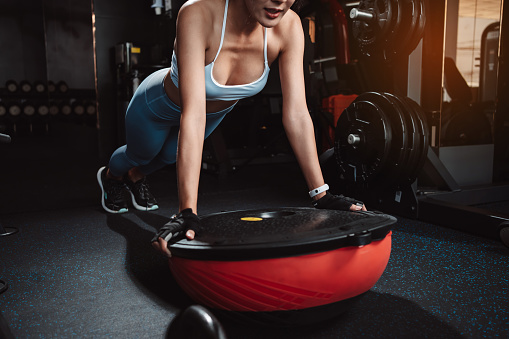
Push-ups on GLP-1s can be humbling. You might need to start on a wall. That’s fine. Actually, it’s smart.
Wall push-ups, then counter push-ups, then bench push-ups, then knee push-ups, then full push-ups. It’s a progression, not a race. Each level should feel challenging but doable for 8-15 reps.
Form matters more than depth. Keep your body straight, lower with control, push up with intention. Three sets at whatever level you’re at.
The Row: Your Desk Job Antidote
If you sit at a desk, you need rows. Period. Your shoulders are probably rolled forward, your upper back is weak, and your posture looks like a question mark.
Bent over rows fix this. Hinge at the hips (like that Romanian deadlift), support yourself with one hand on something sturdy. Pull a dumbbell to your hip with the other arm. Imagine starting a lawnmower, but slower and with more control.
The weight should feel challenging by rep 10. Three sets of 10-12 per arm.
Overhead Press: Function Meets Strength
You press things overhead more than you realize. Putting away dishes, reaching for that top shelf, celebrating when you finally nail your workout routine.
Dumbbells at shoulders, core tight (imagine someone’s about to punch you in the stomach). Press up and slightly back — not straight up like a robot. Control the descent.
Three sets of 8-12 reps. When it gets easy, increase the weight by the smallest increment available.
The Cardio Question Everyone Asks
“Should I do cardio or weights?”
Wrong question. The right question is: “How do I do both without dying?”
Walking is your foundation. I know, I know — walking feels like giving up. Like you should be doing burpees or running intervals. But walking on GLP-1s is secretly powerful. It helps with the constipation (yeah, we need to talk about that), doesn’t require pre-workout fuel, and actually helps your body process the medication better.
Start with 10-minute walks after meals. Your blood sugar will thank you. Build to 30 minutes daily. Add hills when flat gets boring. Aim for 7,000 steps minimum, 10,000 if you’re feeling ambitious[6].
But What About HIIT?
Here’s my controversial take: most people should skip HIIT on GLP-1s, at least initially. The risk of blood sugar crashes and nausea isn’t worth the marginal extra calorie burn. You’re already in a massive calorie deficit. You don’t need to torture yourself.
If you absolutely must do intervals, keep them moderate. Think “brisk walk to light jog” intervals, not “sprint until you see God” intervals. Twice a week maximum. Always with food in your system.
Your Week, Planned Out
Monday: Lower Body Strength
Today’s about building your foundation. You’re training the biggest muscles in your body, which means maximum metabolic impact.
- Warm-up: 5-minute walk or bike
- Bodyweight squats: 3 x 12-15
- Romanian deadlifts: 3 x 10-12
- Step-ups: 2 x 10 per leg
- Plank: 3 x 30-45 seconds
- Cool-down: 5 minutes stretching
Tuesday: Easy Movement
This isn’t a workout; it’s active recovery. Choose something that feels good, not something that challenges you.
- 30-45 minute walk, easy bike, or swim
- Can split into two shorter sessions
- Optional: 10 minutes of stretching
Wednesday: Upper Body Strength
Time to work everything above your waist. These muscles might be smaller, but they’re what people see in t-shirts.
- Warm-up: 5 minutes arm circles, band work
- Push-ups (any variation): 3 x 8-15
- Dumbbell rows: 3 x 10-12 per arm
- Overhead press: 3 x 8-12
- Bird dog: 2 x 10 per side
- Cool-down: 5 minutes stretching
Thursday: Recovery Day
Not a rest day — a recovery day. There’s a difference. Rest is passive. Recovery is intentional.
- 20-30 minutes gentle yoga or walking
- Foam rolling if you have a roller (I use this foam roller from Amazon — basic but gets the job done)
- Mobility work for tight areas
Friday: Circuit Training
Today we mix strength with cardiovascular challenge. Keep moving, but don’t race.
- 45 seconds work, 15 seconds rest
- Squats → Push-ups → Rows → Plank → Step-ups
- Complete 3-4 rounds
- Rest 2 minutes between rounds
Weekend: Your Choice
Saturday is for longer activities you enjoy. Sunday is for whatever your body needs — movement or rest.
Best Supplements for Exercising on GLP-1 Medications
After you’ve nailed down your workout routine, let’s talk about what pills and powders actually help versus what’s just expensive pee.
Protein powder isn’t optional when you’re struggling to eat. Twenty to thirty grams of whey or plant protein after workouts ensures your muscles have building blocks for repair. I get all my supplements from Momentous — they’re the only brand I trust because they third-party test everything, use NSF-certified facilities, and actually dose their products based on research, not marketing. Plus, code BRAINFLOW saves you 15%. Mix it with water if dairy bothers you (GLP-1s can make lactose intolerance worse, fun fact).
Creatine monohydrate is probably the most researched supplement on Earth, and it works[7]. Five grams daily, whenever you remember to take it. You’ll gain a pound or two of water weight — this is good, not bad. Your muscles need that water to function properly. Plus, it might help preserve muscle mass during your calorie deficit. Again, Momentous creatine is what I use — no fillers, just pure creatine monohydrate.
Don’t overlook a basic multivitamin. You’re eating less food, which means less nutrients. Take it with your biggest meal — usually dinner for most GLP-1 users — to avoid nausea.
Electrolytes matter more than you think. The combination of eating less, potential dehydration from medication side effects, and increased exercise means you’re probably low on sodium, potassium, and magnesium. I swear by LMNT electrolytes — they have the sodium levels you actually need (1000mg) without any sugar or artificial junk. A packet during workouts prevents that dizzy, weak feeling that makes you want to quit.
Here’s one nobody talks about: collagen peptides[8]. Ten to fifteen grams daily won’t build muscle, but it might help your joints handle your new exercise routine. Mix it in coffee, smoothies, whatever. It’s flavorless and might keep you moving pain-free. Momentous collagen uses grass-fed sources and actually dissolves completely — use code BRAINFLOW for 15% off.
Omega-3s reduce inflammation from exercise[9]. Two to three grams of EPA and DHA daily. Yes, the pills are huge. Yes, they might make you burp fish. Take them with dinner and deal with it. Your joints will thank you.
Eating to Actually Fuel Your Workouts
You can’t out-train a bad diet, but on GLP-1s, you can’t train at all without eating strategically.
Protein timing matters. Research shows 20-30 grams around your workout helps preserve muscle[10]. But here’s the thing — “around your workout” is flexible. An hour before, immediately after, even two hours later. Your muscles aren’t watching the clock that closely.
My go-to pre-workout meal: Greek yogurt with a handful of berries, eaten 60-90 minutes before training. Twenty grams of protein, enough carbs for energy, sits light in your stomach.
Can’t stomach solid food? Protein shake with half a banana, 30 minutes before. Still too much? Two hard-boiled eggs or string cheese 15 minutes before. Many MEDVi patients find that timing their pre-workout fuel with their medication schedule makes all the difference.
Hydration is non-negotiable. Sixteen ounces two hours before exercise. Eight ounces every 20 minutes during. Another sixteen after. If that sounds like a lot, it is. You’ll pee constantly at first. Your body adapts.
When Your Body Says No
Some days, the medication wins. You wake up nauseous. The thought of exercise makes you want to cry. Your energy is somewhere between zero and negative ten.
Listen to that.
Take a walk. Do gentle stretches. Or just rest. Missing one workout won’t derail your progress. Pushing through severe side effects might.
Red flags that mean stop immediately: severe dizziness that doesn’t improve when you sit, nausea that gets worse during exercise, heart rate that stays elevated long after stopping, feeling like you might faint, or actually fainting.
These aren’t badges of honor. They’re warning signs. Respect them.
Frequently Asked Questions
Can I build muscle while on GLP-1 medications?
Yes, but it requires dedication. Studies show that combining resistance training with adequate protein intake (1.0-1.5g per kg body weight) allows most people to maintain or even gain muscle while losing weight on GLP-1s. The key is consistency with strength training and hitting your protein targets daily.
How long should I wait after eating to exercise on GLP-1s?
Due to delayed gastric emptying, wait at least 60-90 minutes after a meal before intense exercise. For light activities like walking, 30 minutes is usually fine. If you experience nausea, extend your wait time or exercise before meals when possible.
Should I reduce my workout intensity on GLP-1 medications?
Initially, yes. Most people need to reduce intensity by 20-30% during the first 2-4 weeks while adapting to the medication. Focus on maintaining consistency rather than intensity. As your body adjusts and weight drops, you can gradually increase intensity based on how you feel.
What’s the best time of day to exercise on GLP-1s?
This varies by individual. Many find morning workouts easier before the day’s dose fully kicks in. Others prefer afternoons when they’ve had time to eat and hydrate. Experiment during your first month to find your optimal window — it’s usually when nausea is lowest and energy is highest.
How much protein do I really need while exercising on GLP-1s?
Aim for 1.0-1.5 grams per kilogram of body weight daily, with the higher end if you’re doing regular resistance training. For a 180-pound person, that’s 80-120 grams daily. Spread it across meals and snacks, with 20-30 grams around your workouts for optimal muscle preservation.
Is it normal to feel weaker during workouts on GLP-1s?
Absolutely. Especially during the first 4-6 weeks, feeling weaker is common due to reduced caloric intake and your body adjusting to the medication. This typically improves as you adapt. If weakness persists beyond 8 weeks or worsens, consult your healthcare provider about adjusting your dose or nutrition plan.
Can I do yoga or Pilates instead of weight training?
While yoga and Pilates offer benefits, they don’t provide enough resistance to fully preserve muscle mass during significant weight loss. Use them as supplementary activities, but include at least 2 days of progressive resistance training weekly. Bodyweight exercises count if they’re challenging enough.
Should I take BCAAs or EAAs while on GLP-1s?
If you’re hitting your protein targets through food and protein powder, additional amino acids aren’t necessary. However, if you struggle with appetite and can’t meet protein needs, EAAs (essential amino acids) can help. Take 10-15g during or after workouts. BCAAs alone are less effective than complete EAA supplements.
The Truth About the Long Game
Six months from now, you’ll be a different person. Not just lighter — different. Your relationship with exercise will have changed. You’ll understand your body in ways you didn’t before.
The people who succeed long-term with GLP-1s and exercise are those who adapt their approach rather than fight the medication. They’re deadlifting again — maybe not their old weight, but who cares? They’re hiking mountains, playing with their kids, living their lives at weights they never thought possible. Their muscle mass? Preserved. Their metabolism? Intact.
That’s what smart exercise on GLP-1s gives you — not just weight loss, but transformation with integrity. Your muscles stay. Your strength adapts. Your body becomes what you always hoped it could be.
Start where you are. Even if that’s five wall push-ups and a walk around the block. Consistency beats intensity every single time. The medication handles the weight loss. Your job is to ensure there’s strong, capable muscle underneath when the fat melts away.
You’re not just losing weight. You’re building the body that’ll carry you through the rest of your life. Make it a strong one.
Scientific References
- Wilding JPH, Batterham RL, Calanna S, et al. Once-Weekly Semaglutide in Adults with Overweight or Obesity. N Engl J Med. 2021;384(11):989-1002. doi:10.1056/NEJMoa2032183
- Ida S, Kaneko R, Murata K. Effects of GLP-1 receptor agonists on muscle mass in type 2 diabetes mellitus. J Diabetes Investig. 2023;14(9):1035-1041. doi:10.1111/jdi.14029
- Stanford FC, Toth AT, Shukla AP, et al. The role of obesity pharmacotherapy in patients with obesity and musculoskeletal conditions. Massachusetts General Hospital Weight Center Clinical Guidelines. 2023.
- Nauck MA, Quast DR, Wefers J, Meier JJ. GLP-1 receptor agonists in the treatment of type 2 diabetes – state-of-the-art. Mol Metab. 2021;46:101102. doi:10.1016/j.molmet.2020.101102
- McCarthy D, Berg A. Weight Loss Strategies and the Risk of Skeletal Muscle Mass Loss. Nutrients. 2021;13(7):2473. doi:10.3390/nu13072473
- Patient Page: Exercise and GLP-1 Agonists for Weight Management. JAMA Intern Med. 2023;183(11):1256. doi:10.1001/jamainternmed.2023.5842
- Kreider RB, Kalman DS, Antonio J, et al. International Society of Sports Nutrition position stand: safety and efficacy of creatine supplementation in exercise, sport, and medicine. J Int Soc Sports Nutr. 2017;14:18. doi:10.1186/s12970-017-0173-z
- Khatri M, Naughton RJ, Clifford T, Harper LD, Corr L. The effects of collagen peptide supplementation on body composition, collagen synthesis, and recovery from joint injury and exercise: a systematic review. Amino Acids. 2021;53(10):1493-1506. doi:10.1007/s00726-021-03072-x
- Ochi E, Tsuchiya Y. Eicosapentaenoic Acid (EPA) and Docosahexaenoic Acid (DHA) in Muscle Damage and Function. Nutrients. 2018;10(5):552. doi:10.3390/nu10050552
- Moore DR. Maximizing Post-exercise Anabolism: The Case for Relative Protein Intakes. Front Nutr. 2019;6:147. doi:10.3389/fnut.2019.00147


2 Comments