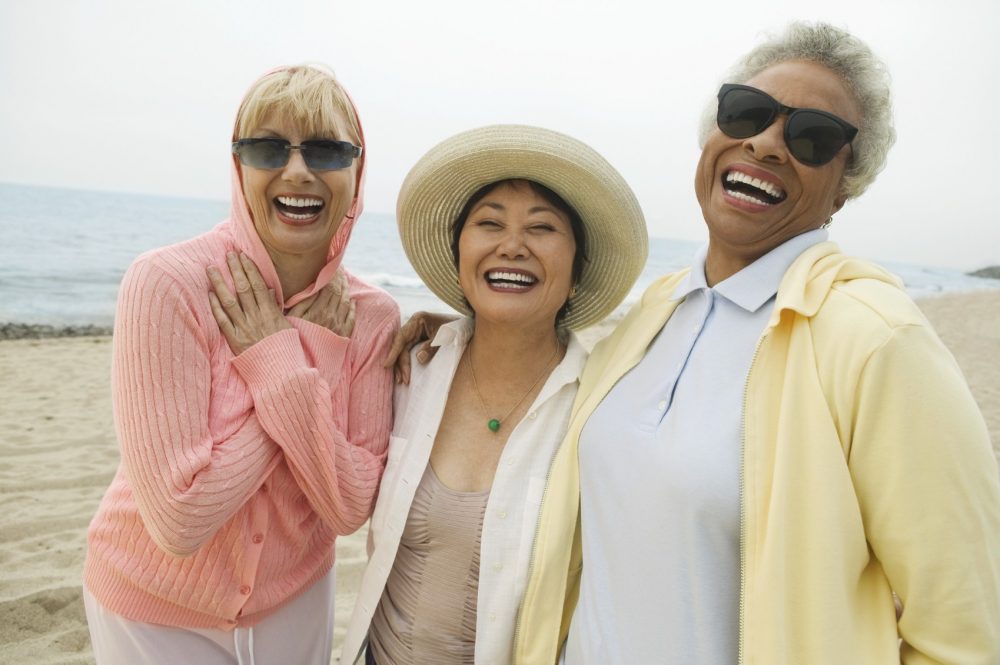
Last week, I ran into my college roommate at Trader Joe’s. Haven’t seen her in fifteen years. She grabbed my arm, leaned in close, and whispered, “Okay, what are you doing? You look exactly the same.”
I laughed because honestly? I’m 43 and definitely don’t look the same. But I do know what she meant. While we’ve both earned our laugh lines (thank you, motherhood), my skin hasn’t taken the beating I expected after four decades on this planet.
The truth is, I learned most of what I know about aging well through expensive mistakes. Like that $400 snail mucin serum that did absolutely nothing except make my husband question my sanity. Or the year I thought tanning beds were somehow “safer” than the sun. (Spoiler: they’re not. They’re actually worse.)
But between the disasters and the desperate 2 AM Google searches, I figured out what actually works. Not the Instagram-filter version of anti-aging, but the real stuff that makes you feel good when you catch your reflection in harsh department store lighting.
That Time I Learned Sunscreen Was Actually Magic
I used to think sunscreen was just for the beach. This is embarrassing to admit now, but in my twenties, I genuinely believed that if I wasn’t actively trying to tan, I didn’t need SPF.
Then I saw this photo.
Australian researchers photographed 900 people’s faces, tracked them for four years, and compared daily sunscreen users to occasional users. The daily users’ skin aged 24% less. Twenty-four percent! That’s basically hitting pause on aging for five years out of every four.
Here’s what changed my whole routine: realizing that 80% of what we call “aging” is actually just sun damage. Those brown spots my mom calls age spots? Sun damage. The leathery texture on my chest from years of tank tops? Sun damage. Even some of those deep wrinkles around my eyes – yep, sun damage.
Now I’m religious about it. Every single morning, even in January, even when I’m working from home. About a quarter teaspoon just for my face (yes, I measured once because I’m that person). And I don’t forget my neck and hands anymore, because nothing ages you faster than young-looking face attached to crepey neck and spotted hands.
My holy grail products? EltaMD UV Clear for everyday – it never pills under makeup and doesn’t sting my eyes. When I need something more heavy-duty, La Roche-Posay Anthelios is my ride-or-die.
Quick story: My dermatologist once told me that if she could only recommend one anti-aging product for the rest of her career, it would be sunscreen. Not retinol, not vitamin C, not some $500 cream. Just regular, boring sunscreen. That stuck with me.
My Skincare Routine (After Years of Getting It Wrong)
You know what nobody tells you? Your thirties and forties are when all your skincare sins come home to roost.
I spent my twenties washing my face with whatever was on sale and calling it good. Sometimes I’d sleep in my makeup. (I know, I know.) My idea of moisturizer was whatever sample came free with my Clinique purchase.
Then around 35, it was like my face just… gave up. Suddenly I had dark spots, fine lines that didn’t disappear when I stopped squinting, and this weird dullness that no amount of highlighter could fix.
What Actually Works (Morning Edition)
Here’s my current morning situation, refined through roughly a thousand trial-and-error experiments:
First, I barely wash my face. Just water if my skin’s dry, maybe a gentle cleanser if I feel grimy. This was hard to accept because we’re all programmed to scrub ourselves clean, but morning skin doesn’t need aggressive cleansing.
Then comes the vitamin C serum. Studies show vitamin C can boost collagen production eight-fold. Eight! I use La Roche-Posay’s version because it has salicylic acid too, which helps with my occasional hormonal breakouts. (Yes, you can still get acne in your forties. Nature has a twisted sense of humor.)
Next, peptides. If you haven’t jumped on the peptide train yet, what are you waiting for? These little amino acid chains basically text your skin cells saying “make more collagen, please.” The Ordinary’s “Buffet” with Copper Peptides costs less than my monthly coffee budget but makes my skin look plumper within weeks.
Moisturizer with niacinamide comes next – this ingredient is having a moment for good reason. It does everything: brightens, strengthens your skin barrier, calms inflammation. Then sunscreen, always sunscreen.
The Night Shift (Where the Real Work Happens)
Evening is when I go harder. Double cleansing changed my life – oil cleanser first to melt off sunscreen and makeup, then a gentle water-based one. It sounds excessive until you see the gunk that comes off even when you thought your face was clean.
But here’s where I learned to be strategic. You can’t use all the active ingredients every night unless you want to look like a molting snake. So I rotate:
Monday and Thursday are retinoid nights. Tuesday and Friday, I use an AHA/BHA exfoliant. Wednesday and Saturday get peptide treatments. Sunday? My skin gets a break with just hydration.
This whole routine sounds complicated written out, but it takes maybe five minutes. Less time than I spend scrolling TikTok before bed.
The Retinoid Reality Check
Let me tell you about my first retinoid experience. I’d read all these articles calling retinoids the “gold standard” for anti-aging, so naturally I slathered on prescription-strength tretinoin every night for a week.
Bad idea.
My face basically fell off. Okay, not literally, but the peeling, the redness, the burning – I looked like I’d been skiing in a blizzard without goggles. For a month.
Here’s what I wish someone had explained: retinoids are incredible, but you have to respect them. They’re the only thing proven to actually reverse photoaging, not just prevent it. But they’re also demanding little divas that require a proper introduction to your skin.
Start slow. Like, slower than you think. The Ordinary’s Retinol 0.5% is perfect for beginners – strong enough to work, gentle enough not to destroy your face. Use it twice a week for a month, then three times, then work your way up.
The sandwich method saved my skin: moisturizer first, wait ten minutes, apply retinoid, wait again, more moisturizer. Yes, it’s high-maintenance, but so is recovering from a chemical burn on your face.
For those ready to level up, RoC Retinol Correxion Deep Wrinkle Serum is the sweet spot between gentle and effective. Clinical studies show visible results in 12 weeks, and unlike prescription versions, you won’t need to hide indoors while your skin adjusts.
Food (Or: How I Learned to Stop Worrying and Love Salmon)
Remember when we all thought fat-free everything was the answer? God, the things we did to ourselves in the name of health.
These days, my approach to eating for my skin is way simpler: eat real food, lots of plants, and enough protein to keep everything from sagging. Revolutionary, right?
But seriously, once I started paying attention, I noticed direct correlations. That week I lived on conference room pizza? My skin looked gray. The month I did that green smoothie challenge? People kept asking if I’d had work done.
Your daily hits should include at least a cup of berries (those anthocyanins protect collagen like tiny bodyguards), two cups of leafy greens for vitamin K (goodbye, dark circles), and fatty fish twice a week. I know, I know – not everyone loves salmon. But your skin cells literally use those omega-3s to build their protective barriers.
The Supplement Situation
Research on collagen supplements finally proved what beauty editors have been saying forever: they actually work. But you need the right dose (2.5-10g daily) and quality matters. Vital Proteins Collagen Peptides dissolves invisibly in coffee – I’ve been sneaking it into my husband’s mug for two years and he has no idea why his joints stopped creaking.
The new kid on the block is NMN, which sounds like a text abbreviation but actually boosts NAD+ levels that tank as we age. Renue by Science’s Lipo NMN uses liposomal delivery, which means it actually gets absorbed instead of just making expensive pee. Use code BRAINFLOW for 10% off. (Want the full scoop? Check out my complete review here.)
Don’t forget the basics either. NOW Vitamin D3 because most of us are deficient, and Nordic Naturals Ultimate Omega if you can’t stomach fish twice a week.
For more options, I’ve compiled guides on the best anti-aging supplements specifically for women and what longevity experts like Dr. Sinclair actually take.
Exercise (But Not the Way You Think)
Can we talk about how toxic fitness culture is for women over 35? Everything’s about “getting your body back” or “fighting aging.” Like our bodies are broken things that need fixing instead of incredible machines that have carried us through decades of life.
Here’s what changed everything for me: discovering that exercise literally makes your telomeres longer. Those are the little caps on your DNA that shorten as you age. Regular exercisers have telomeres equivalent to people nine years younger. Nine years!
But it’s not about crushing yourself at CrossFit. The sweet spot is surprisingly moderate: about 150 minutes of cardio weekly (that’s just over 20 minutes daily), plus two strength training sessions. Walking counts. Dancing in your kitchen counts. Chasing your kids around the playground definitely counts.
The game-changer for me was strength training. We lose 3-8% of our muscle mass every decade after 30. But lifting weights twice a week can completely reverse that. Plus, muscle burns calories even when you’re sleeping, which is basically the dream.
About That Face Yoga Thing…
I was skeptical. Really skeptical. But then Northwestern University did an actual study where women did facial exercises for 30 minutes daily. After 20 weeks, they looked three years younger.
So now I do this ridiculous cheek-lifting exercise while I’m stuck in traffic. I push my tongue against the roof of my mouth to firm my neck while answering emails. My kids think I’m insane, but my jowls are defying gravity, so who’s laughing now?
Sleep (The One Thing I Can’t Hack My Way Around)
You want to know the cruelest joke about aging? The worse you sleep, the older you look, but the older you get, the harder it becomes to sleep well. Thanks, universe.
Between 11 PM and 4 AM, your skin goes into overdrive: producing collagen, repairing sun damage, cranking out new cells three times faster than during the day. Miss this window regularly, and you’re basically aging in fast-forward.
I learned this the hard way during my “I’ll sleep when I’m dead” thirties. Turns out, you’ll also look half-dead if you don’t sleep. Those under-eye bags became permanent residents. My skin got this grayish cast that no amount of bronzer could fix.
Now I treat sleep like a part-time job. Bedroom at 65-68°F (your body temperature needs to drop for quality sleep). Blackout curtains that make the room cave-dark. Same bedtime every night, even weekends, even when Netflix drops a new season of something addictive.
The game-changer was following what I call the 3-2-1 rule: three hours before bed, no more food. Two hours before, no more work. One hour before, no more screens. Sounds strict, but my skin looks five years younger and I actually dream again.
Stress (The Silent Ager Nobody Talks About)
Chronic stress can age you ten years at the cellular level. Ten years! That deadline, that difficult relative, that endless mental load of managing everyone’s everything – it’s literally wearing your face.
But here’s where traditional advice fails us. “Just meditate!” they say. “Practice self-care!” As if we can namaste our way out of real-life stress while juggling work, family, and the approximately 47 other things on our daily list.
What actually works? Micro-doses of calm throughout the day. Five minutes of deep breathing while your coffee brews. A walk around the block between Zoom calls. And this sounds weird, but I keep a playlist of videos that make me laugh-cry, and I watch one every day. Laughter actually reduces inflammatory markers. Your crow’s feet might get deeper, but the rest of your face will thank you.
The secret weapon nobody mentions? Saying no. No to the PTA position you don’t want. No to the friend who only calls to complain. No to perfectionism that nobody else even notices. Every “no” is a tiny act of rebellion against the stress that ages us.
Here’s What I Know Now
After all these years, all these products, all these experiments on my own face, you know what the real secret is?
Consistency beats everything else.
The friend who’s used the same basic routine for 20 years looks better than the one who tries every new miracle cure. The woman who walks daily outshines the one who does extreme workouts sporadically. Small, boring, daily habits compound into extraordinary results.
Start with sunscreen. Just sunscreen. Do that for a month until it’s automatic. Then add one thing. Then another. In a year, you’ll have transformed your skin without overwhelming your life or your budget.
I still don’t look 25. I don’t want to. I’ve earned this face – the laugh lines from a thousand silly moments with my kids, the forehead creases from concentrating on work I love, even the tiny scar above my eyebrow from that ill-advised attempt at cutting my own bangs in 2020.
But I do look good. Good in that way where people say, “You look really happy” instead of “You look tired.” Good in that way where I can leave the house without makeup and not feel like I need to apologize for my face.
That college roommate in Trader Joe’s? She asked for my secret, and I told her the truth: there’s no secret. Just science, consistency, and the radical act of actually taking care of yourself in a world that’s constantly demanding you take care of everything else first.
Your future face is being determined by what you do today. Make it count.