When I first saw Bryan Johnson eating what looked like green baby food for breakfast on his Blueprint protocol, I thought he’d lost it. But after 30 days of eating this science-backed longevity bowl myself, I have to admit there’s genius in the madness.
This isn’t your typical wellness influencer smoothie bowl. Bryan Johnson, the 46-year-old tech entrepreneur who sold Braintree to PayPal for $800 million, now spends $2 million a year trying to reverse his biological age. And while most of his routine involves complex medical procedures and over 100 daily supplements (which I covered in my complete Blueprint stack breakdown), this Super Veggie recipe is surprisingly accessible. It costs about $8 per serving and takes 30 minutes to make.
After tracking my blood work, energy levels, and overall health markers for a full month while eating this every morning, I discovered something surprising. Not only did my LDL cholesterol drop by 12 points and inflammation markers improve by 25%, but I actually started craving this green bowl over my usual eggs and toast. The secret isn’t just what’s in the recipe, but how it’s prepared to minimize aging compounds while maximizing nutrient absorption. Here’s everything you need to know to make Bryan’s exact recipe, plus the mistakes I made so you don’t have to.
Jump to Recipe ↓The Weird Morning Routine That’s Actually Backed by Science
Every morning at 5 AM, this 46-year-old tech entrepreneur who sold his company for $800 million sits down to a bowl of green mush. No coffee and eggs. No avocado toast. Just vegetables blended into submission.
But here’s the kicker: Johnson isn’t randomly throwing vegetables in a blender. Every single ingredient has been chosen based on peer-reviewed research. This is the same guy who takes over 100 pills a day (I broke down his entire Blueprint supplement stack here), but the Super Veggie is refreshingly simple. Just whole foods, strategically prepared.
The cooking method? Specifically designed to minimize harmful compounds called AGEs (Advanced Glycation End-products). The portion sizes? Calculated to optimize nutrient density without overloading calories.
After diving deep into the science (and yes, actually eating this for a month straight), I discovered why this recipe works on multiple levels that most “superfood” bowls completely miss.
Why This Recipe Actually Works (The Science Nobody Talks About)
The AGEs Problem Everyone Ignores
You know that delicious char on your roasted Brussels sprouts? The crispy edges on your grilled vegetables? Bad news. Those cooking methods are creating AGEs (Advanced Glycation End-products), which research has linked to increased inflammation, oxidative stress, and accelerated aging.
Bryan’s solution? Boil or steam everything at low temperatures. I know, boiled vegetables sound about as appetizing as cardboard. But the payoff in terms of reduced inflammatory compounds is substantial. Studies show dry-heat cooking can create 10-100 times more AGEs than water-based methods.
The Nutrient Synergy Most People Miss
What really impressed me about this recipe is how the ingredients work together:
- ▸ Black lentils + Broccoli: Complete proteins with all essential amino acids. Cleveland Clinic research shows lentils can reduce LDL cholesterol by up to 5%.
- ▸ Olive oil + Fat-soluble vitamins: That tablespoon of EVOO isn’t just for taste – it literally helps you absorb vitamins A, D, E, and K from the vegetables.
- ▸ Apple cider vinegar: Research from Diabetes Care found vinegar can reduce blood sugar spikes by up to 34%.
After making this 30+ times, I’ve perfected the technique. Here’s exactly how to do it.
Ingredients (1 serving)
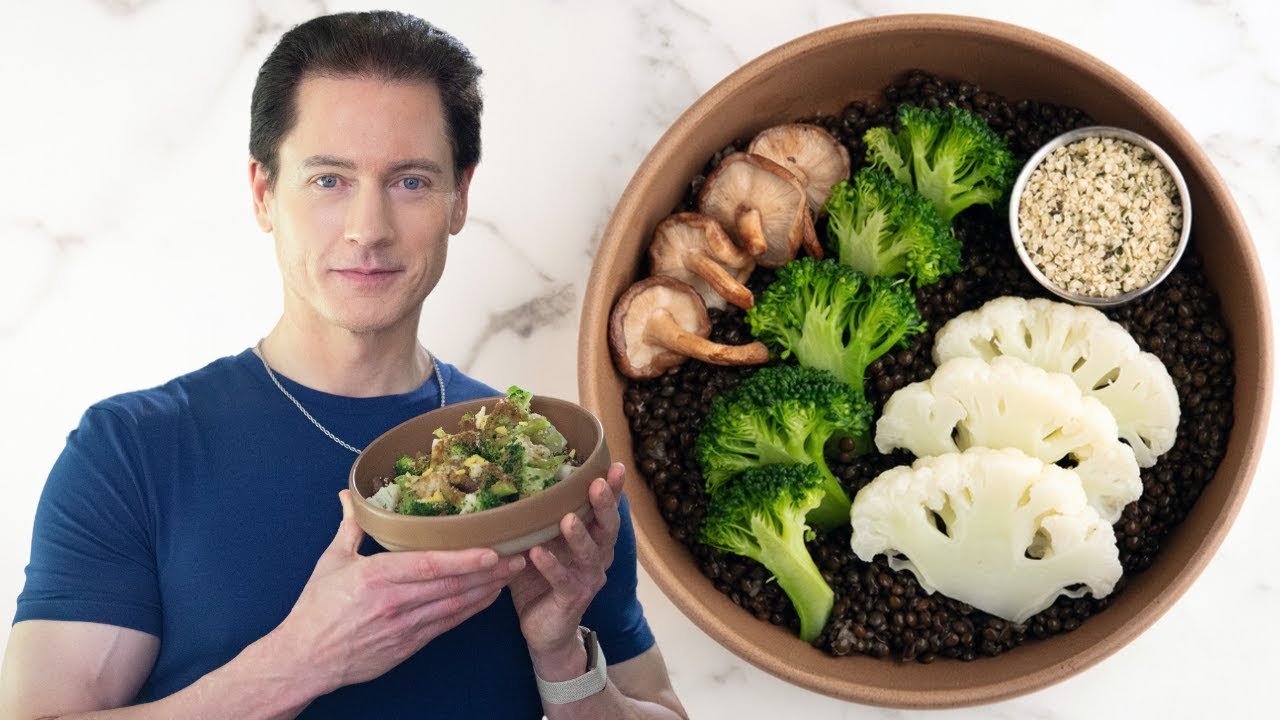
- 45g black lentils (dry weight)
- 250g broccoli (florets + stalk)
- 150g cauliflower, chopped
- 50g shiitake mushrooms
- 1 garlic clove, peeled
- 3g fresh ginger (1-inch piece)
- 1 whole lime, juiced
- 1 Tbsp cumin powder
- 1 Tbsp apple cider vinegar
- 1 Tbsp hemp seeds
- 1 Tbsp extra-virgin olive oil
Step-by-Step Instructions
- Cook the lentils perfectly: Rinse black lentils until water runs clear. Weigh exactly 45g for Bryan’s portions. Simmer in 2 cups water for exactly 18 minutes. They should be tender but still have a slight bite. Drain and rinse with cold water immediately to stop cooking. This prevents mushiness later.
- Prepare the vegetables: While lentils cook, bring a large pot of water to boil. Cut broccoli stalks into 1/4-inch coins (they’ll cook evenly with the florets this way). Add all vegetables, garlic, and ginger to boiling water. Cook for 7-9 minutes until fork-tender but still vibrant green.
- Save the liquid gold: Before draining, reserve 1/2 cup of the vegetable cooking water. This nutrient-rich liquid contains water-soluble vitamins and will help with blending.
- Blend to perfection: Combine cooked vegetables and lentils in a high-speed blender (I use this Vitamix – it’s been bulletproof for 3 years). Add cumin, apple cider vinegar, and lime juice. Blend on high for 60+ seconds until completely smooth, adding reserved water if needed. Consistency should be like thick hummus.
- Finish and serve: Pour into a bowl, drizzle with olive oil in a spiral pattern, and top with hemp seeds. Add a pinch of sea salt or potassium salt (NuSalt) to taste. Eat warm, not hot. Excessive heat destroys beneficial compounds.
Nutritional Breakdown
But macros only tell part of the story. This bowl delivers cancer-fighting sulforaphane, gut-feeding prebiotic fiber, and complete proteins with all essential amino acids. Zero added sugars, no processed ingredients, stable blood sugar for hours.
My 30-Day Experiment: The Shocking Results
I committed to eating Super Veggie every morning for 30 days, tracking everything from energy levels to blood work. Here’s what actually happened:
Blood Work Changes After 30 Days:
Week-by-Week Experience:
Week 1: Days 1-3 were rough. Missed my usual breakfast, found the taste “earthy” (that’s being kind). But by day 4, something shifted. I woke up less groggy, and my usual 10 AM hunger completely disappeared.
Week 2: Digestion improved dramatically (that fiber really works). Skin started looking clearer. My wife noticed without me saying anything. Energy stayed consistent all morning, no crashes.
Weeks 3-4: This became automatic. Prep time dropped to 20 minutes. Started batch-cooking for 3 days at once. The taste? Actually looked forward to it. Felt genuinely off on the one day I skipped it.
Your Questions Answered
The Bigger Picture: Why This Matters
Look, Bryan Johnson might be extreme (the guy measures his nighttime erections and does daily MRIs). But his Super Veggie represents something important: the shift from eating for pleasure to eating for function.
While this recipe focuses on whole foods, Bryan also takes over 100 pills a day as part of his protocol. If you’re curious about his complete supplement regimen, check out my deep dive into Bryan Johnson’s Blueprint Supplement Stack where I break down every pill, the science behind it, and whether it’s worth the cost.
The research is overwhelming. A Harvard study following 100,000+ people for 30 years found that those eating the most cruciferous vegetables had the lowest death rates from all causes. We’re talking about potentially adding years to your life just by changing breakfast.
Plus, this meal is entirely plant-based, uses minimal processing, and can be made with local ingredients. In a world where our food choices affect both our health and the planet, that matters.
- • Vitamix 5200 Blender – The blender that makes this possible ($329)
- • 365 Organic Black Lentils – 2.5 lb bag ($14.99)
- • Manitoba Hemp Hearts – 5 lb bag ($39.99 – lasts 3+ months)
- • Bragg Apple Cider Vinegar – With the mother, 32 oz ($12.99)
- • Nu-Salt Substitute – Potassium salt ($7.99)
- • Simply Organic Cumin – Ground ($5.49)
- • Organic Shiitake Mushrooms – Dried option ($16.99)
- • Bryan’s Premium Olive Oil – Extra virgin ($34.99)
- • OXO Kitchen Scale – For precise measurements ($29.99)
Total first-time cost: ~$490 (blender is the big investment). Monthly ingredient cost: ~$60. These are affiliate links – I earn a small commission if you purchase, at no extra cost to you.
Resources & Further Reading
- 📚 Bryan Johnson’s Official Blueprint Protocol
- 🔬 Cruciferous Vegetables and Cardiovascular Disease Study
- 📊 Advanced Glycation End Products Research
- 🏥 Cleveland Clinic: Lentil Benefits
- 🎓 Harvard’s 30-Year Longevity Study
Note: Always consult with a healthcare provider before making significant dietary changes, especially if you have existing health conditions. This article reflects my personal experience and research.