Three years ago, I ordered my first bottle of Renue by Science Liposomal Trans-Resveratrol on a whim. David Sinclair wouldn’t shut up about it, I was already taking their NMN, and I figured why not complete the stack.
I didn’t expect much. Honestly, I’d tried resveratrol before from Amazon brands and felt absolutely nothing. Expensive grape extract that did exactly what skeptics said it would: nothing detectable.
But here I am, 1,100+ days later, still taking it every single morning. Not because I’m hoping it works. Because I know what happens when I stop.
This review is the result of three years of daily use, multiple breaks (some intentional, some because I forgot to reorder), and obsessive tracking of everything from skin quality to Oura ring data to workout recovery. I’ll tell you exactly what I’ve experienced, what the research actually shows, how to take it properly, and whether it’s worth adding to your longevity stack in 2026.
Product at a Glance
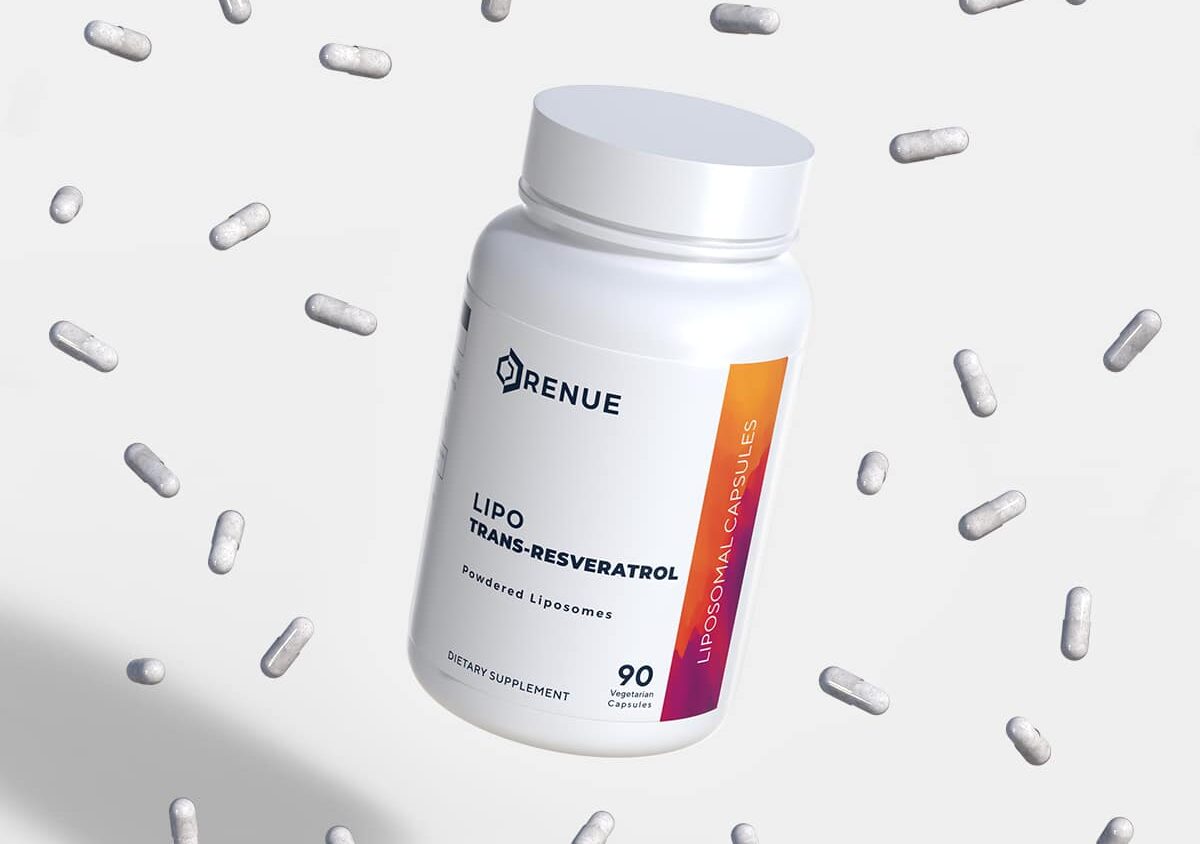
Product: Renue by Science Lipo Resveratrol
Form: Powdered liposomal capsules
Active ingredient: 250mg trans-resveratrol per capsule
Delivery method: Liposomal (phospholipid encapsulation)
Bottle size: 90 capsules (3-month supply)
Price: $41.95 (~$0.47/day)
With discount: ~$37.75 with code FLOW10 (~$0.42/day)
Testing: Four rounds of third-party testing per batch
Best for: Longevity stacks, NMN pairing, skin health, inflammation
Why I Started: The Sinclair Protocol and the NMN Connection
If you’ve spent any time in longevity circles, you’ve heard of Dr. David Sinclair. The Harvard geneticist has been publicly taking resveratrol with NMN for over a decade, and his research on sirtuins basically put resveratrol on the biohacking map.
Here’s the simplified version of why these two work together:
NMN (nicotinamide mononucleotide) boosts NAD+ levels in your cells. NAD+ is the fuel that powers cellular repair, energy production, and DNA maintenance. As we age, NAD+ levels drop dramatically, and supplementing with NMN helps restore them.
Resveratrol activates sirtuins, specifically SIRT1, the proteins that actually use that NAD+ to do useful things. Research published in Cell Metabolism shows resveratrol essentially “turns on” the longevity genes that NAD+ then fuels. A review of over 244 clinical trials confirms resveratrol’s ability to modulate these pathways in humans.
Think of it this way: NMN is the gasoline, resveratrol is the ignition. Having one without the other is like owning a sports car with no keys, or keys with no car. They’re designed to work together.
I was already taking Renue’s NMN and noticing real benefits, so adding their resveratrol felt like the obvious next step. Same company, same quality standards, same liposomal delivery technology. The stack was incomplete without it.
The Bioavailability Problem (Why Most Resveratrol Is Worthless)
Here’s what nobody tells you when you buy that $15 resveratrol bottle from Amazon: you’re probably wasting your money.
Standard resveratrol supplements have catastrophically poor bioavailability. Clinical research confirms that when you swallow a regular resveratrol capsule, your gut and liver metabolize the vast majority of it before it ever reaches your cells. We’re talking 1-2% absorption rates. You’re essentially paying for expensive urine.
This is the dirty secret of the supplement industry. The molecule works in lab studies, so companies slap it in a capsule and sell it. Whether it actually gets absorbed? Not their problem.
Sinclair himself addressed this by taking his resveratrol mixed with yogurt or olive oil because dietary fat improves absorption somewhat. But Renue’s liposomal formulation takes a fundamentally different approach.
They encapsulate the resveratrol molecules in phospholipid spheres, essentially tiny fat bubbles that mimic your cell membranes. Instead of getting broken down in digestion, these liposomes merge directly with your cells and deliver the resveratrol inside. It’s the same delivery technology used in some pharmaceutical drugs because it actually works.
Is this just marketing? I was skeptical too. So I ran my own experiment.
Before switching to Renue, I’d tried three different “premium” resveratrol brands from Amazon over about 8 months total. Price range of $25-45 per bottle. I felt absolutely nothing from any of them. No energy changes, no skin improvements, no recovery benefits. Just expensive pills that did nothing detectable.
Within two weeks of starting Renue’s liposomal version, I noticed my skin looking different. Within a month, my girlfriend asked what I’d changed about my skincare routine. I hadn’t changed anything except adding this supplement.
That’s not a controlled study. But when you feel nothing from multiple products and then feel obvious changes from one specific product, it’s hard to ignore.
What I Actually Notice After 3+ Years of Daily Use
I’m not going to claim resveratrol cured diseases or reversed my biological age by 20 years. I’m deeply suspicious of supplement reviews that read like miracle testimonials. What I can tell you is exactly what I’ve consistently noticed over three years of daily use, tracked with both subjective observations and objective data where possible.
Skin Quality (The Most Obvious Benefit)
This is the benefit that made me a believer, and it’s the one other people actually comment on.
I’m 36 now. Before starting resveratrol at 33, my skin was… fine. Nothing special. I’d get random dry patches, especially in winter. My complexion was uneven. I looked tired even when I wasn’t. Standard stuff for a guy in his 30s who doesn’t have a 10-step skincare routine.
About three weeks into taking Renue’s resveratrol, I noticed my skin looked more hydrated. Not dramatically different, but like I’d been drinking more water or getting better sleep. The dry patches I’d get on my forehead and around my nose stopped appearing. My overall complexion evened out.
By month two, my girlfriend asked what I was doing differently. She thought I’d started using a new moisturizer or something. I hadn’t. The only change was the resveratrol.
Three years later, I genuinely think I look younger than I did at 33. Not dramatically, but the kind of difference where old friends say “you look good” without being able to pinpoint why. My skin has this underlying health to it that wasn’t there before. People at work have asked about my skincare routine. I just take resveratrol and wash my face with basic cleanser. That’s it.
The science backs this up. Resveratrol’s antioxidant properties help neutralize free radicals that damage skin cells. Research shows it supports collagen production, reduces inflammation, and protects against UV-induced damage. These aren’t cosmetic effects; it’s actually improving skin health at the cellular level.
When I’ve run out and gone without for 10+ days, my skin is the first thing that suffers. It gets duller, drier, less vibrant. Takes about a week back on to recover. This pattern has repeated multiple times over three years. At this point, I’m certain the connection is real.
Sustained Energy (Not Stimulant Energy)
I want to be clear about what I mean by “energy” because this isn’t like caffeine or a pre-workout.
Resveratrol doesn’t give you a buzz. You don’t feel it kick in. What I notice is more consistent energy throughout the day. Fewer of those 2-3pm crashes where I’m reaching for another coffee or struggling to focus on anything requiring mental effort.
Before resveratrol (and NMN), my energy pattern looked like this: good morning, okay late morning, crash after lunch, forced recovery with caffeine, decent late afternoon, tired by 7pm. Pretty standard for someone in their 30s.
Now it’s more like: good morning, good late morning, slight dip after lunch but nothing dramatic, productive afternoon without extra caffeine, still functional at 8-9pm. The peaks aren’t higher, but the valleys are way shallower.
This makes sense mechanistically. Resveratrol supports mitochondrial function and reduces oxidative stress, helping your cells produce energy more efficiently. It’s not adding energy from outside like caffeine does. It’s optimizing what your body already produces.
Combined with NMN, the effect is more pronounced. I genuinely feel like I have more bandwidth to get through demanding days without hitting a wall. My Oura ring data backs this up. My “readiness” scores have been consistently higher since adding resveratrol to my NMN stack, averaging 78-82 vs. 71-75 before.
Workout Recovery
I lift 4-5 days a week, mostly compound movements with some conditioning work. Recovery matters a lot when you’re training that frequently, especially as you get older.
At 33, before resveratrol, a heavy leg day would leave me sore for 3-4 days. Squatting Monday meant I wasn’t squatting again until Friday at earliest. DOMS (delayed onset muscle soreness) would peak around 48 hours and linger.
Now at 36, after three years of resveratrol, I recover noticeably faster. Same training intensity, but DOMS peaks lower and clears faster. I can hit legs Monday and be ready to train them again Thursday without residual soreness limiting my performance. That’s a meaningful difference in training frequency and volume over time.
Research supports resveratrol’s anti-inflammatory effects. It modulates NF-κB and other inflammatory pathways, reducing the inflammatory response to training stress. I’m not claiming I recover like a 20-year-old, but I definitely recover better than I did three years ago despite being three years older.
I also notice less general achiness. That low-grade joint stiffness I used to wake up with most mornings? Mostly gone. My shoulders and knees feel better than they did in my early 30s. Could be the resveratrol’s anti-inflammatory effects, could be better training, probably both.
Mental Clarity and Focus
This one’s harder to quantify, but I’d describe it as “less brain fog.” Especially in the afternoons when I used to get mentally sluggish.
My work involves a lot of writing and strategic thinking. Before resveratrol, I’d hit a wall around 2-3pm where complex tasks felt impossible. I’d switch to mindless admin work or just give up and scroll Twitter. Real productive work was a morning thing.
Now I can push productive work into the afternoon without the same mental resistance. I still prefer morning for the hardest stuff, but afternoons aren’t the wasteland they used to be.
Whether this is direct (resveratrol does cross the blood-brain barrier and has been studied for neuroprotection) or indirect (better energy = better focus), I can’t say for sure. A 2025 review confirmed resveratrol’s anti-inflammatory and antioxidant effects in brain tissue, so there’s plausible mechanism for direct cognitive benefits.
Sleep Quality
I didn’t expect this one, but my Oura ring data tells a consistent story.
Since adding resveratrol (alongside NMN), my deep sleep has increased from an average of 45-55 minutes to 65-80 minutes per night. REM sleep is up too. My sleep efficiency scores improved from the low 80s to consistently 88-92%.
I can’t isolate resveratrol from NMN here since I take both. But the improvement coincided with adding resveratrol to my existing NMN protocol, and it’s been consistent for three years. Something in the stack is helping, and resveratrol’s effects on inflammation and oxidative stress could plausibly improve sleep quality.
What Happens When I Stop Taking It
I’ve unintentionally run this experiment multiple times over three years. Sometimes I forget to reorder. Sometimes I travel and don’t bring enough. Here’s the consistent pattern:
Days 1-3: No noticeable difference. Makes sense since resveratrol has some accumulation in tissues.
Days 4-7: Subtle changes. Energy feels slightly less stable. Nothing dramatic.
Days 8-14: Skin starts looking duller. That “healthy glow” fades. Afternoon energy crashes return. Recovery from workouts takes longer. The low-grade morning stiffness comes back.
Days 14+: Full return to pre-resveratrol baseline. It’s like the benefits never happened.
Getting back on takes about a week to start noticing improvements again, two weeks to feel fully back to normal.
This pattern has repeated at least five times over three years. At this point, I don’t need studies to convince me it works. I’ve run the study on myself, repeatedly, with consistent results.
My Current Protocol (Exactly How I Take It)
Here’s my exact daily protocol after three years of optimization:
Timing: Every morning, within 30 minutes of waking, with breakfast. I take it alongside my Renue NMN. They’re the foundation of my longevity stack.
Dosage: One capsule daily (250mg of liposomal trans-resveratrol). Some biohackers go higher, up to 500-1000mg. I’ve experimented with two capsules (500mg) and didn’t notice additional benefits that justified doubling my cost. One capsule has been my sweet spot for three years.
With food: Always. Even though the liposomal delivery helps with absorption, I take it with a meal that includes some fat. Usually eggs and avocado, sometimes yogurt. The fat may help absorption further, and taking it with breakfast makes it a consistent habit I never forget.
What I take it with:
- Renue Liposomal NMN (500mg)
- Renue Liposomal Resveratrol (250mg) — this product
- Fish oil (2g EPA/DHA)
- Vitamin D3 + K2 (5000 IU / 200mcg)
Cycling: I don’t cycle resveratrol. Some people cycle NMN (5 days on, 2 off), but I take resveratrol every single day without breaks. The benefits seem to build over time, and as I mentioned, I notice degradation when I stop. Consistency is key with this one.
Storage: Cool, dry place away from direct sunlight. I keep mine in a drawer in my kitchen. Renue’s liposomal formulation is stable at room temperature, unlike some NMN products that need refrigeration.
The Science: What Resveratrol Actually Does
For those who want to understand the mechanism beyond “it activates sirtuins,” here’s a deeper dive.
Resveratrol is a polyphenol, a type of plant compound with antioxidant properties. It’s found naturally in grapes, berries, peanuts, and red wine. (Yes, this is why “a glass of red wine is good for you” became a thing, though you’d need to drink absurd amounts to get a therapeutic dose. We’re talking 100+ glasses daily. Don’t try this.)
At the molecular level, resveratrol’s primary mechanism is activating sirtuins, specifically SIRT1. Sirtuins are proteins that regulate cellular health, metabolism, inflammation, and aging. They’re sometimes called “longevity genes” because of their role in the pathways that extend lifespan in animal studies and correlate with human healthspan.
But resveratrol does more than just poke sirtuins. The research shows multiple mechanisms:
Cardiovascular Effects
A meta-analysis of randomized controlled trials found resveratrol significantly improves endothelial function (how well your blood vessels expand and contract) and may support healthy blood pressure and cholesterol levels. This is one of the most robust areas of resveratrol research.
Metabolic Benefits
Clinical research published in 2022 showed benefits for blood sugar regulation and insulin sensitivity. Resveratrol activates AMPK, sometimes called the “metabolic master switch,” which helps regulate how your body uses and stores energy.
Brain and Cognitive Function
Studies in Alzheimer’s patients showed resveratrol may slow cognitive decline. A 2025 comprehensive review confirmed its anti-inflammatory and antioxidant effects in brain tissue, suggesting neuroprotective benefits that could help maintain cognitive function as we age.
Inflammation
Multiple studies confirm resveratrol reduces inflammatory markers through modulation of NF-κB and other signaling pathways. Chronic inflammation underlies basically every disease of aging, so this is significant.
Skin and Aging
Research shows resveratrol protects against UV damage, supports collagen production, and reduces oxidative stress that accelerates skin aging. This explains the skin benefits I and many others notice.
Safety Profile
A 2024 systematic review of all clinical trials found resveratrol is safe at doses up to 5g/day, way higher than what anyone actually takes. The 250mg I take daily is well within the safe range with an enormous margin.
The total body of research is substantial. Over 244 clinical trials have been conducted on resveratrol to date, with more ongoing. This isn’t some trendy compound with two mouse studies behind it. The evidence base is real.
Why Renue by Science Specifically
I’ve tried other resveratrol supplements. Generic Amazon brands, a couple “premium” options, even one expensive brand from a longevity-focused company. None of them produced noticeable effects.
Renue by Science is different for several reasons:
Liposomal delivery that actually works: I’ve beaten this drum already, but it’s the main differentiator. Standard resveratrol has maybe 1-2% bioavailability. Liposomal formulations can dramatically improve this. The difference isn’t subtle. I feel nothing from regular capsules and notice obvious effects from Renue’s version.
Trans-resveratrol specifically: There are two forms of resveratrol: cis and trans. Trans-resveratrol is the biologically active form that actually does things in your body. Cis-resveratrol is basically inactive. Cheap brands often don’t specify which form they use (hint: it’s usually a mix heavy on the useless cis form). Renue uses pure trans-resveratrol.
Serious third-party testing: They do four rounds of testing on every batch: identity (is this actually resveratrol?), purity (how pure is it?), potency (is the dose accurate?), and contaminants (any heavy metals, microbes, etc.?). Certificates of Analysis are available for verification. In an industry full of sketchy operators selling pixie dust, this matters.
Track record: Renue has been in the longevity supplement space since 2016. They’re not some fly-by-night brand that popped up to capitalize on a trend. Their NMN products are among the most respected in the biohacking community, and they apply the same standards to everything they make.
Reasonable pricing: At $41.95 for a 90-count bottle (3-month supply), you’re paying about $0.47 per day. With code FLOW10 for 10% off, that drops to around $0.42 per day. For a high-quality liposomal resveratrol from a reputable company with real testing, that’s fair.
Powdered liposomal format: Unlike liquid liposomals that can taste terrible and degrade quickly, Renue’s powdered liposomal technology is stable, tasteless when swallowed properly, and travels easily. I’ve taken this stuff on international trips without issues.
| ✓ Pros | ✗ Cons |
|---|---|
| Liposomal delivery for dramatically better absorption | More expensive than generic capsules |
| Pure trans-resveratrol (the active form) | Subtle effects (not like caffeine) |
| Four rounds of third-party testing per batch | Bitter if capsule dissolves in mouth |
| 90-day supply per bottle | Benefits take weeks to notice |
| Established company (since 2016) | Requires consistent daily use |
| Pairs perfectly with their NMN | |
| Stable powdered format (travels well) | |
| Noticeable skin, energy, recovery benefits |
How Renue Compares to Other Resveratrol Products
I’ve tested several resveratrol products over the years. Here’s how they compare:
Generic Amazon brands ($15-25): Felt nothing from any of them. Likely poor bioavailability, questionable sourcing, probably cis-resveratrol mixed in. Waste of money in my experience.
Thorne ResveraCel ($50-60): Combines resveratrol with nicotinamide riboside (NR). Good company, good testing. But standard capsule delivery, so bioavailability is still limited. I noticed less effect than from Renue’s liposomal version at similar doses.
Life Extension Optimized Resveratrol ($30-35): Decent product, includes quercetin for synergy. But again, standard capsule format. Effects were minimal for me compared to liposomal.
Renue by Science Liposomal ($42 or ~$38 with FLOW10): The only resveratrol I’ve tried where I consistently notice and feel the effects. The liposomal delivery makes a real difference. This is what I’ve stuck with for three years.
The pattern across all my testing: standard capsules do nothing detectable, liposomal delivery produces noticeable results. Bioavailability isn’t a marketing gimmick. It’s the difference between a supplement working and being expensive filler.
Potential Side Effects
I’ve experienced zero negative side effects in over three years of daily use. No digestive issues, no headaches, no weird interactions with anything else I take. Nothing.
That said, some people report:
- Mild stomach upset: Usually from taking it on an empty stomach. Taking with food typically resolves this.
- Nausea: Rare, usually at higher doses. The 250mg in Renue’s product is well-tolerated by most people.
- Diarrhea: Also rare and usually dose-dependent. Not something I’ve experienced.
These side effects seem uncommon and typically resolve as your body adjusts or with dose reduction.
Important interactions to know about:
Blood thinners: Resveratrol has mild blood-thinning properties. If you’re on anticoagulants like warfarin, heparin, or even daily aspirin, talk to your doctor before adding resveratrol.
Liver conditions: While resveratrol is generally liver-friendly, people with existing liver conditions should consult a doctor first.
Hormone-sensitive conditions: Resveratrol has weak estrogenic activity. If you have hormone-sensitive conditions, get medical guidance.
Pregnancy/nursing: Not enough research exists. Avoid or get explicit medical approval.
Surgery: Stop resveratrol 2 weeks before scheduled surgery due to blood-thinning effects.
Who Should Consider Resveratrol
Based on three years of personal experience and reviewing the research, resveratrol makes sense for:
Anyone already taking NMN or NR: If you’re boosting NAD+ with NMN or nicotinamide riboside, adding resveratrol to activate sirtuins is the logical complement. This is the Sinclair stack for a reason. They’re designed to work together.
People focused on longevity: The anti-aging research on resveratrol goes deeper than almost any other supplement. If healthspan and aging well matter to you, this should be on your radar.
Anyone wanting skin benefits: This was honestly a pleasant surprise for me. The skin improvements alone might be worth it for some people. If you’re spending money on topical skincare, adding oral resveratrol attacks aging from the inside.
People dealing with inflammation: Whether from training, chronic conditions, or just getting older, resveratrol’s anti-inflammatory effects are well-documented and noticeable.
Those who want science-backed supplements: Over 244 clinical trials. Real human research, not just mouse studies. If you’re tired of supplements that are 90% hype, resveratrol has actual evidence behind it.
Anyone over 30 concerned about aging: NAD+ levels start declining significantly in your 30s. The earlier you start supporting these pathways, the better your trajectory.
Who Should Skip It
Resveratrol probably isn’t for you if:
You expect instant results: This isn’t caffeine. You won’t feel it kick in. Benefits accumulate over weeks and months. If you need immediate feedback to stay motivated, you’ll probably quit before seeing results.
You’re on blood thinners: The interaction risk isn’t worth it without medical supervision.
You’re pregnant or nursing: Not enough safety data exists.
You’re not willing to take it consistently: Sporadic use won’t produce results. This is a daily commitment for months to years.
You’re looking for a magic pill: Resveratrol supports longevity pathways. It’s not going to overcome a terrible diet, no exercise, chronic stress, and poor sleep. It’s an optimization on top of fundamentals, not a replacement for them.
What to Expect: Month-by-Month Timeline
Based on my experience and what I’ve seen in the longevity community:
Week 1-2: Nothing obvious. You’re building tissue levels. Don’t expect to feel different.
Week 3-4: Subtle skin improvements may start. Slightly better energy stability. Easy to dismiss as placebo.
Month 2: Skin benefits become more apparent. Other people might comment. Energy improvements feel more consistent. Recovery from workouts may feel slightly better.
Month 3: Full effects realized. This is when you should assess whether it’s working for you. Consider stopping for 2 weeks to see what changes. If you notice degradation, you know it’s doing something.
Month 6+: Effects maintain. Benefits feel like your new normal. You forget what it was like before. Running out and going without for a week reminds you.
Year 1+: Long-term benefits potentially accumulating. The longevity effects aren’t something you’ll “feel” but may be happening at the cellular level. Skin, energy, and recovery benefits remain consistent.
Final Verdict: Worth It After 3+ Years?
Yes. Without hesitation.
Renue by Science’s Liposomal Trans-Resveratrol has earned a permanent spot in my daily stack. It’s one of the few supplements where I can clearly tell when I stop taking it. The skin benefits alone justify the cost for me, but combined with better energy, improved recovery, and the long-term longevity potential? Easy call.
At $0.42/day with the discount code, it’s cheaper than a cup of coffee. And unlike that coffee, the benefits compound over time instead of creating dependence.
If you’re on the fence, here’s my suggestion: commit to 90 days. Not 30. Thirty days isn’t enough time. Take it consistently every morning with food, ideally alongside NMN if you’re already taking it. Track how you feel, how you look, how you recover. Take photos of your skin at the start.
Then try stopping for two weeks.
You’ll probably reorder immediately. I did.
Use code FLOW10 for 10% off your order at Renue by Science.
Frequently Asked Questions
What’s the best time to take resveratrol?
Morning with breakfast works best for most people. Taking it with food that includes some fat (eggs, avocado, yogurt, olive oil) may improve absorption even further. Some people take it at night, but I prefer morning since it’s part of my NMN stack and easier to remember as part of a breakfast routine.
Can I take resveratrol with NMN?
Yes, this is actually the ideal combination. NMN boosts NAD+ levels while resveratrol activates the sirtuins that use NAD+. They’re synergistic by design, the Sinclair stack. I take both every morning from Renue by Science.
How long until I notice effects?
Give it at least 4-6 weeks for subtle effects, 90 days for a real assessment. This isn’t caffeine that you feel in 20 minutes. It’s supporting cellular processes that compound over time. I noticed skin improvements around week 2-3, energy improvements took longer. The real test is stopping for 2 weeks and seeing what degrades.
Why liposomal resveratrol instead of regular capsules?
Bioavailability. Standard resveratrol has catastrophically poor absorption, maybe 1-2%. Most gets destroyed in digestion before reaching your cells. Liposomal delivery encapsulates the resveratrol in phospholipid spheres that merge with cell membranes, dramatically improving how much actually gets used by your body. I felt nothing from regular capsules and notice clear effects from liposomal.
What’s the difference between trans and cis resveratrol?
Trans-resveratrol is the biologically active form that produces the health benefits seen in research. Cis-resveratrol is essentially inactive. Cheap supplements often don’t specify which form they use or contain mostly cis. Renue by Science uses pure trans-resveratrol.
Are there any side effects?
I’ve had none in 3+ years. Some people report mild digestive issues initially, usually from taking it on an empty stomach. Taking with food typically resolves this. If you have liver conditions or take blood thinners, consult your doctor first.
Is Renue by Science a legit company?
Yes. They’ve been in the longevity supplement space since 2016, do four rounds of third-party testing on every batch, and are well-respected in the biohacking community. I’ve used their products for years without issues. They’re one of the few supplement companies I actually trust.
Does resveratrol need to be taken with fat?
For standard capsules, yes. Fat significantly improves absorption. For liposomal resveratrol, the delivery system already handles absorption, but taking with a meal that includes fat probably doesn’t hurt and makes it easier to remember.
Can I take resveratrol if I’m on medication?
Resveratrol has mild blood-thinning properties, so avoid combining with anticoagulants (warfarin, heparin) or daily aspirin without medical guidance. It may also interact with some liver-metabolized medications. When in doubt, ask your doctor.
What’s the ideal dose?
Research uses doses ranging from 150mg to 1500mg daily. For liposomal resveratrol with better absorption, 250mg (one Renue capsule) is a good starting point and what I’ve taken for three years. Some people go higher, but I haven’t found additional benefits from doubling the dose.
Does Renue by Science have a discount code?
Yes! Use code FLOW10 for 10% off your entire order. Works on all their products including NMN, resveratrol, and their other liposomal supplements.
Should I cycle resveratrol?
I don’t. Unlike some supplements where cycling may help maintain sensitivity, resveratrol benefits seem to accumulate over time with consistent use. I take it daily without breaks and notice degradation when I stop. The research also uses continuous supplementation protocols.
Is resveratrol worth it if I already eat well and exercise?
Yes. Resveratrol isn’t replacing good habits. It’s optimizing on top of them. Even with perfect diet and exercise, NAD+ levels decline with age and sirtuins need activation. If anything, fit people who already have the fundamentals dialed in are the ones who’ll benefit most from this level of optimization.
RELATED READING:
- My Renue by Science NMN Review
- Dr. David Sinclair’s NMN & Resveratrol Protocol
- Dr. David Sinclair’s Complete Supplement Stack
- Best NAD+ Supplements (2026 Guide)
- Dr. Andrew Huberman’s Supplement List
Last updated: January 2026. I purchase and test these products myself. This article contains affiliate links—if you buy through them, I earn a commission at no extra cost to you.