
In today’s hyper-connected world, productivity isn’t just about doing more—it’s about doing what matters. After reviewing thousands of productivity books over the years, we’ve discovered that the best ones share a common thread: they transform how you think about work and life.
The productivity landscape has evolved dramatically. Remote work, digital distractions, and the constant pressure to “hustle” have made effective time management more crucial than ever. Yet the fundamentals remain unchanged: focus, habits, and systems.
We’ve curated this list of game-changing productivity books that have stood the test of time. Each one offers unique insights that can revolutionize how you approach your daily tasks and long-term goals.
Whether you’re struggling with procrastination, seeking work-life balance, or simply want to level up your efficiency, these books provide actionable strategies that actually work.
6 Life-Changing Productivity Books That Actually Work in 2025
1. Getting Things Done: the art of stress-free productivity
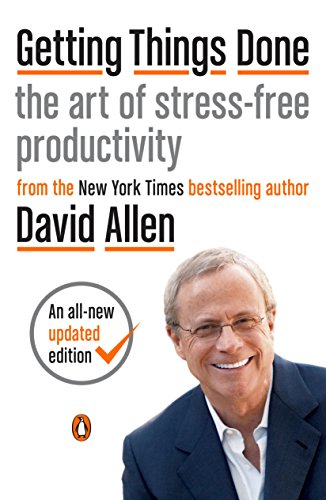
David Allen’s Getting Things Done remains the gold standard for personal productivity systems. First published in 2001, it has sold millions of copies and spawned an entire productivity movement.
The core principle is brilliantly simple: get everything out of your head and into a trusted external system. Allen argues that our brains are for having ideas, not holding them. When you try to mentally track dozens of tasks, you create unnecessary stress and reduce your ability to focus. Research from Scientific American confirms that mental clutter significantly impairs cognitive performance.
The GTD methodology introduces concepts like the “two-minute rule” (if something takes less than two minutes, do it now) and the importance of defining clear next actions for every project. These principles have become foundational in modern productivity thinking.
What makes this book essential reading in 2025 is its adaptability. While technology has evolved dramatically since its publication, the GTD system works seamlessly with everything from paper notebooks to sophisticated task management apps. It’s not about the tools—it’s about the mindset.
2. The Power of Habit
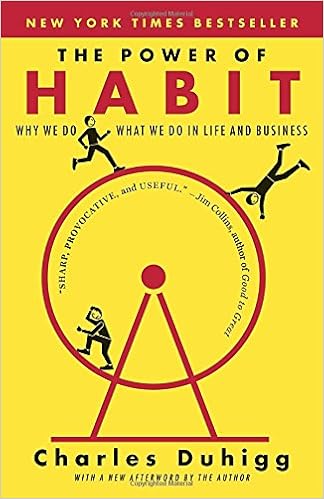
Charles Duhigg’s The Power of Habit revolutionized how we think about personal change. This Pulitzer Prize-winning journalist didn’t just write another self-help book—he delivered a masterclass in behavioral science.
The book’s central insight is the “habit loop”: cue, routine, and reward. Once you understand this framework, you can systematically change any behavior. Duhigg backs this up with fascinating case studies from Procter & Gamble’s marketing strategies to the transformation of Alcoa under Paul O’Neill. Studies published in the National Institutes of Health have validated the neurological basis of habit formation that Duhigg describes.
What sets this book apart is its scientific rigor. Duhigg spent years researching neuroscience and psychology to understand why we do what we do. He shows that willpower alone isn’t enough—you need to understand the mechanics of habit formation.
The practical applications are endless. Want to exercise regularly? Identify your cue (laying out workout clothes), establish a routine (morning run), and create a reward (smoothie afterward). This systematic approach transforms vague goals into concrete actions.
Years after publication, The Power of Habit remains essential reading because habits compound over time. Master the art of habit formation, and you’ve essentially learned how to reprogram your life for success.
3. Eat That Frog!

Brian Tracy’s Eat That Frog! offers a counterintuitive approach to productivity: do your worst task first. With over 2 million copies sold, this compact guide has helped countless professionals overcome procrastination.
The title comes from a Mark Twain quote about eating a live frog first thing in the morning—after that, everything else seems easy. Tracy applies this metaphor to our daily work, arguing that we should tackle our most challenging or important task when our energy is highest.
The book introduces 21 practical techniques for conquering procrastination. From the ABCDE method of prioritization to the Law of Three (identifying your three most important tasks), each strategy is designed to help you focus on high-impact activities.
What makes Tracy’s approach particularly effective is its simplicity. In an era of complex productivity systems and apps, Eat That Frog! brings us back to basics: identify what matters most and do it first. No excuses, no elaborate setups.
The book is especially valuable for chronic procrastinators and perfectionists. By forcing yourself to complete your “frog” early, you build momentum that carries through the entire day. It’s a powerful psychological hack that transforms dread into accomplishment.
4. The Productivity Project
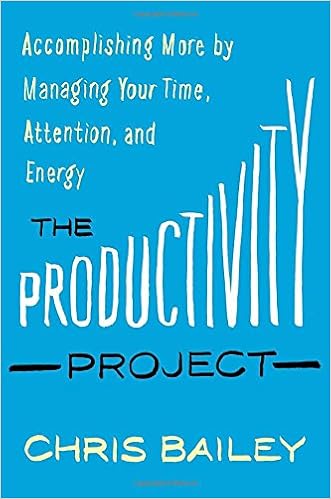
Chris Bailey took an unconventional path after college: he turned down lucrative job offers to spend a year becoming a human productivity guinea pig. The Productivity Project chronicles his fascinating journey and the insights he gained.
Bailey’s experiments ranged from extreme to enlightening. He worked 90-hour weeks, then cut back to 20. He lived in total isolation for 10 days. He survived on minimal sleep, eliminated caffeine and sugar, and even practiced meditation for hours daily. Each experiment was meticulously tracked and analyzed.
What emerged from this year-long project were three core elements of productivity: time, attention, and energy. Bailey discovered that managing these three resources is far more important than any specific technique or tool. You can have all the time in the world, but without attention and energy, you’ll accomplish nothing.
The book’s strength lies in its evidence-based approach. Bailey doesn’t just share opinions—he provides data from his experiments and interviews with leading researchers like Charles Duhigg and David Allen. This scientific rigor sets it apart from typical productivity advice.
Perhaps the most valuable lesson is Bailey’s emphasis on intentionality. Productivity isn’t about being busy; it’s about accomplishing what you intend to accomplish. This shift in perspective can transform how you approach both work and life.
5. Greater Balance, Greater Reward

Jeff Kooz’s Greater Balance, Greater Reward stands out because it’s not just another productivity manual—it’s a personal transformation story that readers can actually relate to.
Like many young professionals, Kooz found himself trapped in a cycle of stress, poor health, and burnout after college. He struggled with obesity, anxiety, and the feeling that life was spinning out of control. Traditional self-help advice failed him repeatedly until he discovered a different approach.
The turning point came through what Kooz calls his “aha moment”—a realization that led him to lose 50 pounds in 90 days and maintain that weight loss for over a decade. But the physical transformation was just the beginning. Using the same five-step system, he’s accomplished seemingly impossible goals like recording albums in three months and writing entire books in just three days.
What makes this book valuable is its systematic approach to problem-solving. Kooz doesn’t promise overnight miracles. Instead, he provides a practical framework that can be applied to any challenge, whether it’s health, creativity, or productivity.
The five-step system emphasizes balance as the foundation of productivity. When your life is in balance—physically, mentally, and emotionally—you naturally become more productive. It’s a holistic approach that resonates in our era of burnout and work-life imbalance.
6. The Compound Effect
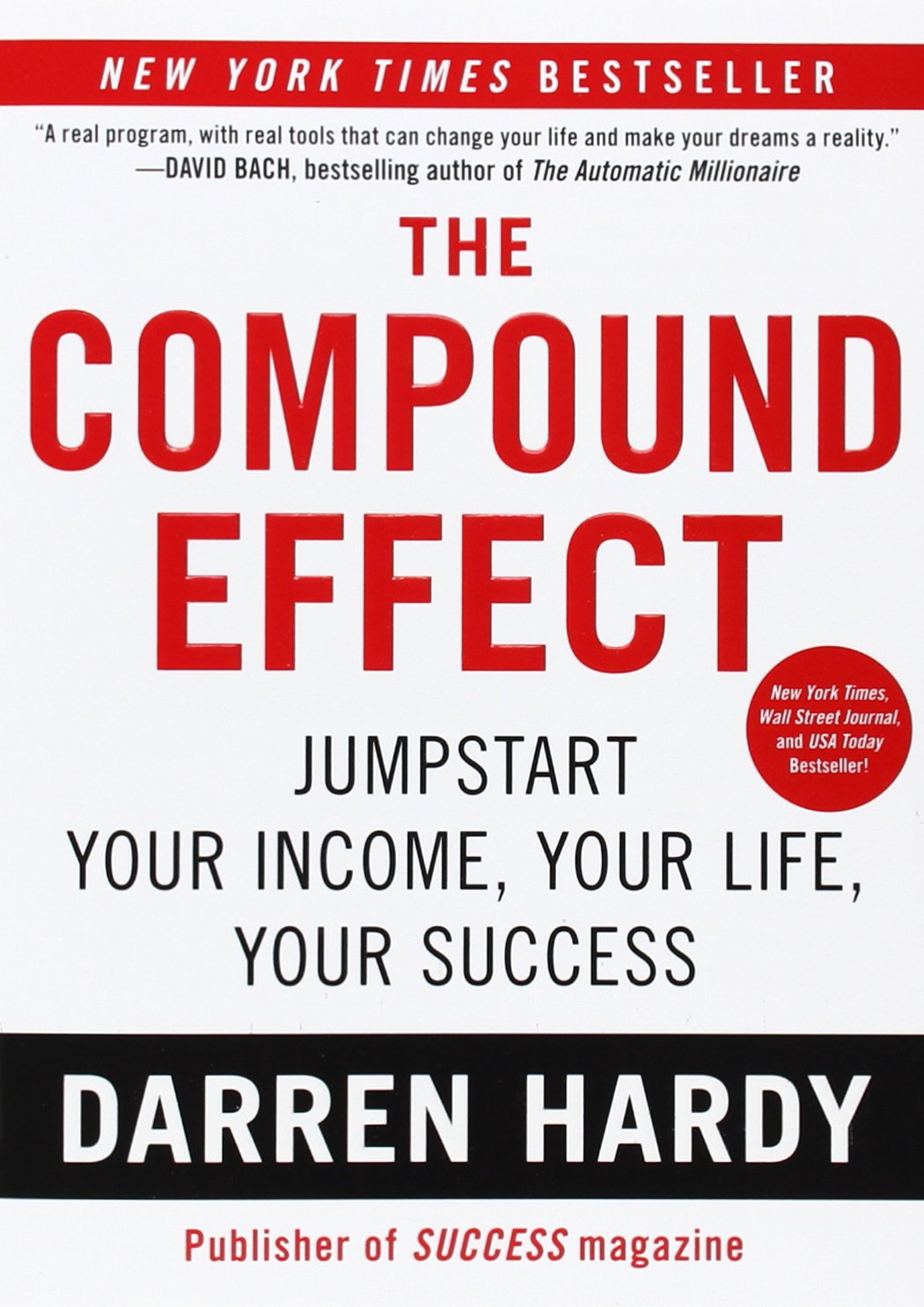
Darren Hardy’s The Compound Effect delivers a powerful message wrapped in simplicity: small, consistent actions create extraordinary results over time. As the former publisher of Success Magazine, Hardy distilled decades of interviews with top achievers into this fundamental principle.
The book’s premise challenges our instant-gratification culture. Hardy argues that success isn’t about massive action or dramatic changes. Instead, it’s about making slightly better choices consistently. A 1% improvement daily compounds into remarkable transformation over months and years.
Hardy illustrates this with compelling examples. Two friends start with identical lives. One watches 30 minutes less TV daily and reads instead. Another eats 125 fewer calories per day. Fast forward three years, and their lives look completely different. The reader becomes wiser and more successful; the dieter is 40 pounds lighter.
What sets this book apart is its focus on personal responsibility. Hardy doesn’t promise shortcuts or hacks. He emphasizes that every choice—no matter how small—either moves you toward your goals or away from them. There’s no neutral ground.
The Compound Effect includes practical tools like tracking sheets and daily routines that successful people use. But the real value lies in the mindset shift: understanding that today’s choices create tomorrow’s reality. It’s a philosophy that transforms how you view every decision, from what you eat for breakfast to how you spend your evenings.
Start Your Productivity Journey Today
These six books represent different approaches to productivity, but they share a common truth: lasting change comes from understanding yourself and building better systems. Whether you start with GTD’s organizational approach or The Compound Effect’s philosophy of small changes, the key is to begin.
Remember, reading about productivity isn’t the same as being productive. Pick one book that resonates with your current challenges, implement its core strategies for at least 30 days, and track your results. The best productivity system is the one you’ll actually use.
Your future self will thank you for investing in these timeless principles today. Which book will you start with?